8 Key Projects Launched at EthCC 2023: New Directions Spanning Infrastructure to Applications
TechFlow Selected TechFlow Selected
8 Key Projects Launched at EthCC 2023: New Directions Spanning Infrastructure to Applications
Ethereum conferences are not just for the Ethereum community—teams from various ecosystems take advantage of this opportunity to showcase their developments.
 Navigating Web3 tides with focused insights
Written by: William Peaster, Jack Inabinet
Translated by: TechFlow

With the grand opening of EthCC 2023, Paris is buzzing with Ethereum community energy. Known for its deep technical focus on Ethereum and its ecosystem, this event has become a launchpad for major advancements—and this year is no exception. With so many launches and new features to keep track of, let’s walk through the most significant developments from EthCC 2023 (in no particular order).
1. Lens V2
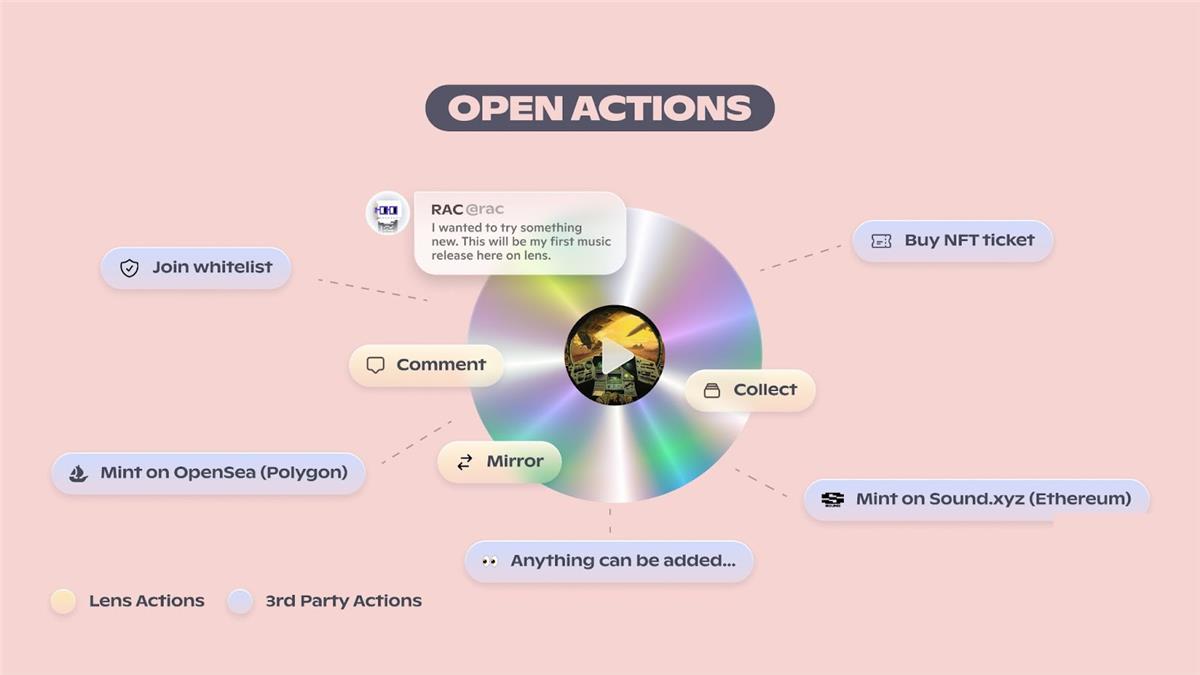
At EthCC, Lens Protocol unveiled details of their V2 upgrade—a major step forward in realizing their vision of an open, decentralized social layer for the web, powered by a suite of new features.
At the core of Lens V2 is the concept of "open actions," enabling users and developers to "bring your own smart contract" to execute any external smart contract operation on any Lens publication—even cross-chain activities.
Additionally, Lens V2 introduces a new profile management system supporting the ERC-6551 token standard—known as "token-bound accounts"—which allows users to store NFTs within other NFTs. As a result, you can now directly store all your collected content on Lens inside your Lens profile itself.
2. UniswapX
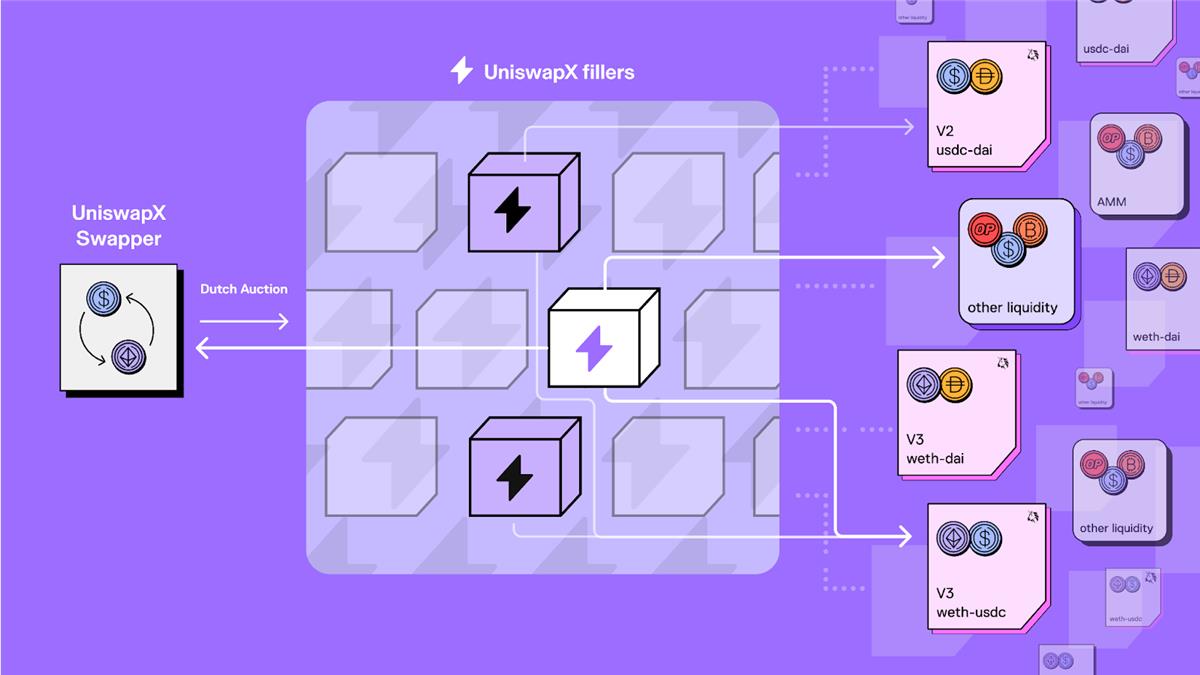
Uniswap launched its new UniswapX system at EthCC—an open-source protocol designed to take cryptocurrency trading into the next generation.
In short, UniswapX relies on a novel Dutch auction mechanism called “Dutch orders,” where trade prices start above the current market rate and gradually decline over time, incentivizing “fillers” to execute the order as soon as it becomes profitable.
However, UniswapX outsources its complex on-chain and off-chain routing needs to third-party fillers (i.e., market makers). This dynamic design aims to help traders find the best possible price. Additionally, UniswapX seeks to improve the trading experience in other key ways—such as gasless transactions, cost-free failed trades, and protection against maximum extractable value (MEV).
3. Chainlink CCIP
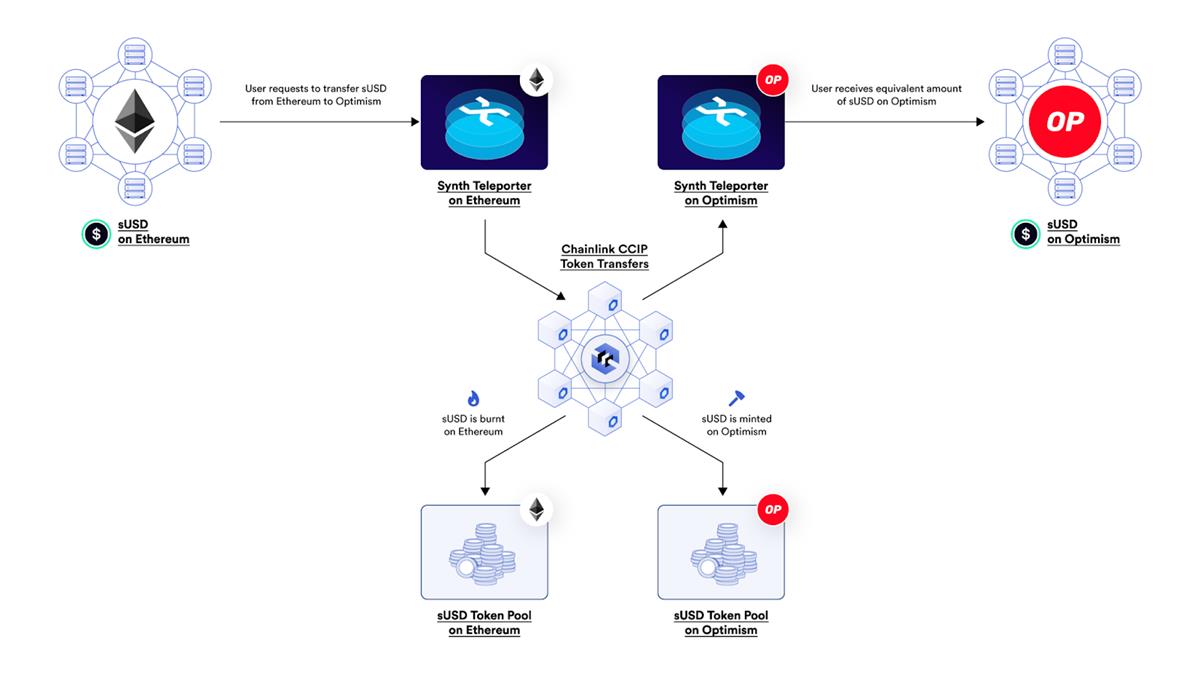
Another major highlight at EthCC this week was Chainlink—the leading data oracle network in the crypto economy—announcing the mainnet launch of its Cross-Chain Interoperability Protocol (CCIP).
The protocol is designed to enable seamless communication across different blockchain networks, initially supporting Ethereum, Optimism, Polygon, and Avalanche, and already adopted by DeFi giants like Aave and Synthetix.
Chainlink co-founder Sergey Nazarov compared CCIP to “TCP/IP for finance,” aiming to create a stronger, more flexible DeFi ecosystem. One practical application is the new Synthetix Teleporter system, which uses the protocol to burn and mint sUSD between Ethereum and Optimism.
4. Starknet Appchains

We’ve seen a wave of L2 teams rushing to leverage permissionless development on their rollup stacks.
Optimism has Superchain, Arbitrum has Orbit, zkSync has Hyperchains. While each team may differ in openness or underlying architecture, they share similar principles. Though the Starknet team typically prefers to “show, then tell,” they’ve broken that mold by adding Starknet to this list. At EthCC, they just announced “Appchains,” with the first Starknet Appchain expected to reach mainnet very soon.
These app-specific blockchains will allow teams to build customized chains, retaining public Starknet’s advantages—like native account abstraction and extremely high TPS—while avoiding congestion and implementing features not supported on public chains, such as unique fee market logic.
5. Gnosis Pay + Gnosis Card
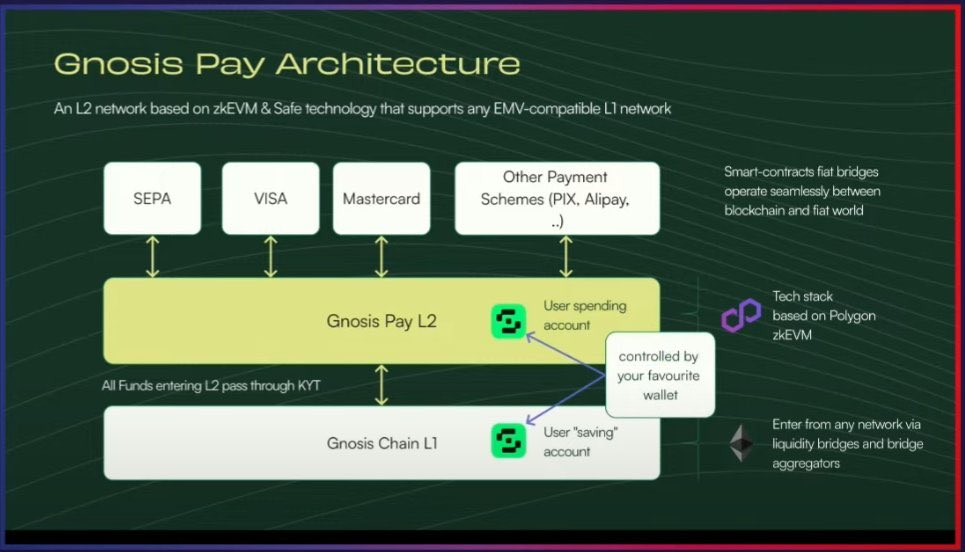
Ready to spend some internet money banklessly? Gnosis just launched Gnosis Pay and the Gnosis Card at EthCC. The former is a decentralized payment network connecting Web3 to mainstream payment systems, while the latter is a Visa debit card directly linked to an on-chain self-custodial wallet.
Specifically, the Gnosis Card allows users to enjoy the best of both worlds: full self-custody of crypto while still being able to easily spend from their holdings—without needing to first send funds to a centralized exchange, sell for USD, withdraw to a bank account, and transfer to PayPal, etc.
As for Gnosis Pay, the system will use Gnosis Chain as the L1 for “user savings accounts,” and a new Polygon Supernet-based L2 as the “user spending account.”
6. Mantle Mainnet Alpha
This week, the L2 project Mantle Network launched its mainnet alpha at EthCC. This early stage aims to provide developers with a platform to build and test their applications ahead of a full mainnet rollout.
Mantle stands out due to its modular design: it uses its own execution layer, Ethereum L1 for settlement, and EigenLayer for data availability (DA). This modular approach represents a growing trend in Ethereum scaling, and Mantle is pioneering it.
7. Linea Mainnet Alpha
Speaking of L2 mainnet alphas, on July 18 at EthCC, the ConsenSys team officially joined the scaling race by opening public access to its Linea zkEVM alpha.
This “zkEVM” style represents the next frontier in the L2 ecosystem, combining zero-knowledge (zk) proofs with full Ethereum Virtual Machine (EVM) equivalence to achieve high accessibility and scalability.
Moreover, since Linea is now the L2 solution for popular ConsenSys projects like MetaMask and Infura, it enjoys strong distribution advantages.
8. EVM Compatibility Efforts
Ethereum conferences aren’t just for the Ethereum community—teams from various ecosystems use these events to showcase their progress, especially projects related to Ethereum.
Both Tezos and Solana are making efforts to make it easier for Ethereum developers to migrate to their chains, announcing upgrades during EthCC week. Tezos introduced Etherlink at EthCC—a solution compatible with the EVM that settles on its chain. Meanwhile, Solana announced Solang, a compiler allowing developers to write smart contracts on Solana using Solidity.
Solidity is Ethereum’s native language, and both chains are taking steps to support contract development in this language. These efforts reflect their ongoing competition with Ethereum, acknowledging the moat created by Ethereum’s EVM, and offering developers the flexibility of Solidity coding—a necessary move to attract Ethereum-native dApp deployments.
Overall, the advancements announced at this year’s EthCC are pushing forward multiple fronts within the Ethereum ecosystem.
As we continue tracking these developments and assessing their impact across the broader crypto landscape, one conclusion is clear: Ethereum’s future will expand in every direction—from DeFi to Web3 social!
Join TechFlow official community to stay tuned
Telegram:https://t.me/TechFlowDaily
X (Twitter):https://x.com/TechFlowPost
X (Twitter) EN:https://x.com/BlockFlow_News
 Bankless