Cowboy Ventures founder: How to pitch your startup idea to investors?
TechFlow Selected TechFlow Selected
Cowboy Ventures founder: How to pitch your startup idea to investors?
In recent years, investors have begun paying closer attention to non-traditional founders.
 Navigating Web3 tides with focused insights
Compiled by: TechFlow
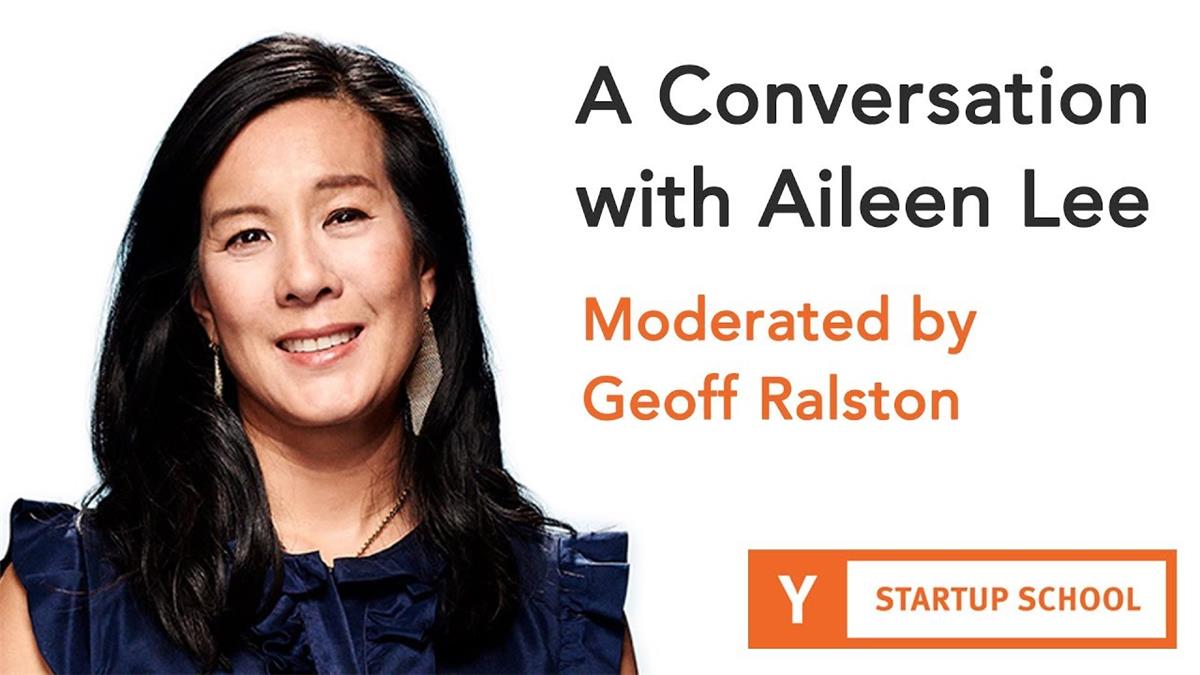
Note: This article is part of the TechFlow series "YC Startup Class Chinese Notes" (updated daily), dedicated to collecting and organizing Chinese translations of YC courses. The twenty-first installment features Aileen Lee, founder of Cowboy Ventures, and her online lecture titled "Female Founders, Unconventional Founders, and Investor Expectations."
Background of Cowboy Ventures
Cowboy Ventures is an early-stage venture capital firm founded in 2012 and headquartered in Palo Alto, California. The firm's vision is to support entrepreneurs who use technology and innovation to improve the world, providing them with funding, resources, and expertise.
Cowboy Ventures invests in sectors including consumer tech, enterprise services, digital health, fintech, artificial intelligence, and machine learning. Its portfolio includes many successful startups such as Airbnb, Coinbase, Guild Education, Plaid, Redfin, and Unison.
The firm’s co-founder, Aileen Lee, is a renowned venture capitalist who previously served as a partner at the legendary VC firm Kleiner Perkins Caufield & Byers. She is also one of Silicon Valley’s most influential women. Cowboy Ventures focuses on long-term investments and strives to build deep partnerships with startups, offering strategic guidance and operational support.
Retail Career
I am a first-generation immigrant; my parents are both Chinese. Growing up in a very traditional household, we had nothing—my parents saved money to buy a Chinese restaurant, and everyone in the family worked there. I grew up in New Jersey and always thought immigrants were archetypal entrepreneurs because you arrive in this country with nothing and must figure out how to find work, housing, and make a living.
To me, being an entrepreneur meant doing more than anyone else while simultaneously doing less than anyone else. Immigrants need that same mindset. I was lucky—my parents deeply valued education, and I eventually got into MIT, where I began a fully immersive academic journey.
Afterward, I spent several years in investment banking because it genuinely interested me. Later, I lived in China for a year teaching English and studying Mandarin. During business school, I became particularly fascinated by brands and consumer brands—how they generate high-quality organic customers.
Back when the internet wasn’t widespread, I used to read Fast Company and Inc magazines to discover rising and emerging companies, then looked them up in phone books and called them directly. I’d even search microfilm for old magazine issues.
After business school, I joined Gap. My family didn’t like that I was working at Gap—they felt all that education shouldn’t lead to retail. But I was passionate about it and excited to work alongside brilliant people. At the time, Gap was a talent magnet in retail. The smartest planners, merchants, and visual designers all worked there.
I worked at Gap for three years in various operational roles:
- I worked on supply chain projects, trying to track down inventory.
- Then I spent a year as Chief of Staff (CoS), from helping prepare public board meetings to ensuring executives had good parking spots when visiting stores.
- In 1999, I helped run Gap’s online division, uncertain whether to focus on Old Navy or Banana Republic.com, unsure if ".com" would even last.
*TechFlow note: GAP (originally “The Gap”) is one of America’s largest apparel companies. Founded in 1969 with just a handful of employees, it now operates over 3,200 stores across five brands (GAP, Banana Republic, Old Navy, Athleta, Intermix), generates over $13 billion in annual revenue, and employs 165,000 people worldwide. It’s hard to talk about McFashion without mentioning GAP.
A Chief of Staff (CoS) is a senior executive role in complex organizations. The CoS acts as a coordinator and primary assistant to key figures, such as top leaders. Typically, the CoS serves as a buffer between the CEO and direct reports from business units.
Working at Kleiner Perkins
During the dot-com boom, many things happened. Later, I wanted to join a tech company, so I sent my resume around and eventually interviewed at Kleiner Perkins. They might have found hiring a woman novel, but I had prior CEO experience, which helped me transition into venture capital.
At Kleiner Perkins, I worked closely with partner John Doerr for four to five years—we were highly successful. John is a legend in venture capital. We collaborated with Google and Amazon and met incredible people.
I loved reading every business plan sent to Kleiner Perkins, but I often felt I lacked sufficient operating experience—especially not having been a VC-backed CEO myself.
Then an opportunity arose. A digital media company we invested in needed a CEO, and they asked me to step in. I took a two-year leave from Kleiner Perkins to run the company. It was a great experience—the model looked strong in 2007, we raised a $20 million Series B, but by 2008, we ended up cutting staff in half.
Still, we learned to thrive through adversity. We eventually acquired two competitors, installed a stronger CEO, and I returned to Kleiner Perkins. I feel fortunate—it was a tough path.
*TechFlow note: Kleiner Perkins is a venture capital firm founded in 1972 and based in Menlo Park, California. It has invested in numerous prominent tech companies including Google, Amazon, AOL, Compaq, and Sun Microsystems. Additionally, Kleiner Perkins emphasizes green tech and clean energy investments, achieving significant success in these areas.
Advice for CEOs
I have many thoughts. First, I’m a normal person who enjoys connecting with others. I believe this trait can translate into strong management skills. In the past, I managed small teams, but not extensively. However, as a CEO or leader, your first job is to convince people to join your company—a completely different challenge. I found this much harder than expected. You face employees with diverse personalities—engineering leads, marketing heads, sales VPs, fundraising managers—each with unique strengths and weaknesses requiring tailored management approaches. You must find effective communication styles and rhythms to inspire them and bring out their best. That requires shifting your own mindset.
Another issue: As a startup CEO, I took on many new responsibilities. For example, I’d never hired salespeople before or created compensation structures for them. When you get comp right, rewarding others can still backfire unexpectedly. I hired many types of people—experienced and inexperienced alike. You must decide whether to bet on unproven talent and assign them suitable tasks—this isn’t easy. In sales, we had to spend time qualifying leads and closing unsustainable accounts.
I learned a lot, mostly the hard way. Sometimes I felt like a failure—especially during my MBA program when I procrastinated and failed to complete assignments. While my resume may look impressive, I know my shortcomings well.
I believe people can change, evolve, and learn. Giving second chances is essential because time helps people grow better. Being a venture investor requires optimism.
When making early-stage investments, you need to engage with raw, undiscovered, and uncommon people and situations to understand what drives innovation.
At Cowboy Ventures, people spend half their time building products and the other half researching and exploring.
To be an unconventional employer, people must embrace you as such. When deciding to raise funds, you must be a natural storyteller—share your story and invite others into your company’s journey. This skill applies widely: hiring talent, convincing customers, or raising capital. Practice is key. Improve by seeking feedback from friends, getting help from Sequoia partners and others, and participating in YC feedback sessions.
Investor Expectations
You should pay close attention when approaching critical milestones like seed or Series A rounds. If professional investors—whether seed funds or major VCs—invest in you, you’re expected to deliver certain returns to justify their fund economics. In recent venture investing, achieving a 4x return is crucial. If you raise $100 million, you need to figure out how to generate $400 million in returns to raise your next fund. This means finding two to four truly exceptional companies among 30 different investments to balance the portfolio. These 2–4 companies must each deliver at least $1 billion or more in returns.
Our first investment was $40 million for 10% ownership. When the company exited at a $400 million valuation, we recovered our entire fund. But this only works for seed rounds. Once you reach Series A, expectations scale up—these funds typically manage $500 million or $800 million. So they need 10% of an $8 billion company to return the fund.
Historically, most funds don’t end up owning 50% of their portfolio companies. They usually have two or three billion-dollar outcomes and a large number of companies worth nearly zero. So investors look at you and think: “Is this one of the companies I’ll back this year? Can it become my big winner?” They’re not thinking about building a $200 million or $300 million company—they’re asking whether this founder can build a multibillion-dollar company. Therefore, your short-term execution and narrative must align.
This is what institutional investors are thinking.
Understanding the math behind venture capital is crucial for founders because it explains why the person across the table asks certain questions about your business. Only then do you understand their motivations.
However, not everyone can exit a single angel round with a $40 million payout. Often, angel investors lack the expertise of professional VCs—they can’t guide you on scaling your company’s market presence. They aren’t professionals; they’re just wealthy individuals who write checks and say, “Stay in touch,” then move on.
While sometimes you have to do what’s necessary, you should always try to position yourself with better options. This applies to fundraising sequence and team-building. If you want to build a fast-growing company and progress through Series A and B, institutional investors can help connect you with future partners. Many founders forget this—you have to do everything yourself, and it’s rarely discussed during fundraising.
When starting a company, you inevitably need to fundraise—pitch your story to professional investors. Fundraising is humbling. So during fundraising, you must show investors your value to earn their support and capital.
Gender Bias
When I started Cowboy Ventures, I was alone. I could sense their hesitation toward me, which made me nervous. Now, having gone through it, I know every fund gets some allocation. Even the hottest companies face rejections.
If you send us your business plan or we have a conversation, we strive to respond clearly—telling you whether we’re a fit and why not—rather than just smiling politely. Many need this transparency. You need feedback from many VCs, but they may fear giving honest reasons—if you succeed later, they want to call you back pretending they were just too busy, or they don’t want you to think they made a mistake by passing.
Leadership matters in fundraising. Investors may smile, but their job is to understand what you’re doing. They won’t join your first fund round. They’re too conservative—so proceed with caution.
So I decided to create a process: screen everyone via phone calls before meeting, ensuring they understand seed funds and the industry. Sometimes this works efficiently; sometimes it doesn’t.
allraise: Building a Diverse and Inclusive Tech Ecosystem
We know research shows women face greater challenges gaining trust. Even when saying the exact same thing, women don’t make the same impression as men. It’s deeply unfair, but we all have biases. I hope people treat men and women equally.
I recall a study by Penn and MIT where slides were presented on PowerPoint with voiceover tracks, and MBA students were asked to invest $100 or $1,000. They ran an AB test—same slides, male vs. female narrators.
One slide featured a man narrating a script about raising two daughters. Male students were significantly more likely to invest in the male founder. We must address gender bias at every stage of life—elementary school, middle school, adulthood. We need to act because we’ve historically ignored and avoided discussing it.
Some people just want to be liked, while others earn trust through integrity. We should focus on ensuring entire teams embody these qualities, not just individuals.
allraise.org is a nonprofit dedicated to advancing and accelerating women’s success in the tech ecosystem.
We provide services related to venture capital, diversity, and inclusion to help women and underrepresented minorities enter the field. We offer space and training for female founders and match them with companies seeking more diverse teams.
We encourage founders to sign up as Change Makers—advocating for diversity and inclusion on boards and helping build stronger company cultures. We believe in the power of faith and diversity and aim to spread them globally.
Finally, entrepreneurship isn’t just storytelling—it requires math and results. We aim to help founders better understand the mathematical and outcome components of venture capital.
In short, we’re committed to building a more inclusive and diverse tech ecosystem.
How to Present Your Startup Idea to Investors?
As a founder raising capital, showcase your team—talk about who you are, why you started the company, and your background or experience relevant to solving the problem. Then explain the problem itself and its scale. Investors typically seek billion-dollar problems. Define your addressable market clearly—because if you can only capture 10% of it, the total market might be too small for VCs. They want markets of at least $5 billion or more, so they can assess potential profitability if you succeed.
Next, present your product or solution—what you’ve built, how it works, and what makes it unique. Highlight major benefits, ideally showing a 10x improvement, since only dramatic differences motivate people to try something new.
Discuss the competitive landscape, but be careful with wording—don’t disparage other companies. Be honest and transparent rather than misleading investors or board members.
Finally, provide a financial plan—typically a three-year forecast including revenue numbers, P&L, gross margins, customer acquisition costs, and spending on marketing, R&D, and advertising. Also project how much cash you’ll burn over the next three years. These are the core elements you need to cover in your pitch.
It’s helpful to include a summary slide. If you’ve taken public speaking or presentation classes, you’ve heard: “Tell them what you’ll tell them, then tell them, then tell them what you told them.” Start with a number or use a slide like Canton’s that says, “Here’s the essence of our work.” Then unfold the full story—e.g., “Across 30 companies, you typically end up with two winners and many duds.” Ask LPs for data to validate feasibility. Study other funds’ data—analyze their winners, founders’ backgrounds, how they met, birth order, past employers, etc. While gathering such insights is important, creating a clear spreadsheet listing every company worth over $1 billion in the past decade—with details like university attended, number of co-founders, age at founding, previous companies—helps identify common success patterns more accurately.
Yet collecting such data isn’t easy. Eventually, you create a spreadsheet listing all companies valued above $1 billion in the past ten years, recording each detail systematically. Though the dataset of 39 companies is often outlier-prone and statistically insignificant, it still reveals useful insights. For instance, most successful companies have co-founders with tight personal bonds and shared backgrounds. Analysis also shows consumer-focused founders tend to start companies younger than enterprise founders.
Ultimately, summarize everything into a concise concept. Try to find one word or phrase describing companies that reached $1 billion in value within a decade. Words like “home run” or “big hit” don’t quite fit. Finally, you land on a magical term—“unicorn”—that perfectly captures those rare, extraordinarily successful companies. Entrepreneurship isn’t just about doing the right things or having the right background and experience—it also involves luck and timing, almost like alchemy.
How to View Non-Traditional Founders?
For early-stage startups, there’s little data available at the seed phase. You may not have shipped a product, acquired customers, or even completed your team. But you can talk to investors about your passion for the problem and the insights and experiences you’ve gained. Investors care more about whether you have the courage and skills to overcome obstacles and succeed in the field.
Recently, investors have begun paying more attention to non-traditional founders. My friend Alee Rosenthal is fundraising with a focus on supporting overlooked entrepreneurs. We now realize investors can’t keep fishing from the same pool—and successful companies no longer need moats to thrive.
Richard Kirby conducted insightful analysis showing diversity in venture capital has become a major issue—not just in gender and race, but also in investors’ educational backgrounds. If most investors come from a few elite schools like Stanford and Harvard, their perspectives and thinking become limited, preventing them from discovering highly promising startups. We need more people from diverse backgrounds entering venture capital to ensure broader diversity and opportunity.
Rational Selection of Investors
When choosing venture investors, decisions should be based on rational criteria, not just gut feeling. We recommend conducting reference checks on two fronts.
When considering investing in a company, we typically conduct background checks—not criminal checks, but assessments of the founder’s past work experience, strengths, weaknesses, and challenges faced.
Similarly, when multiple investors are available, you must evaluate compatibility. For founders, choosing the right investor is critical because the relationship often lasts years.
When selecting investors, consider advice from other successful entrepreneurs. For example, a company we recently backed at Y Combinator consulted other founders when choosing their investors.
The Ceiling for Startups
I believe a startup’s ceiling is closely tied to market conditions and the choices founders make during fundraising. That’s why I wouldn’t accept the first offer. With each funding round, imagine the dilution you’ll face—it may not be the only kind of dilution you experience. From experience, a good rule is that with each round (B, C, D, E…), your ownership will decline, and over time you may sell 20% to 30% of the company.
Another factor: how many funding rounds companies in your sector typically require. Many assume they’ll go from Series B upward to Series F. But reality is often messier. Focus on how much money you need, not how many rounds you’ll do.
If there are gaps between funding rounds, that’s fine. But without gaps, you risk facing angry investors stuck with you long-term—a toxic relationship. So choosing the right investor is vital. You need to build a sustainable, long-term partnership.
Finally, recognize that few people react positively when someone they spoke to 15 minutes ago outperforms them. That’s reality—we must face it and act accordingly.
How to Approach Venture Capitalists?
In the startup world, cold outreach remains extremely common. For investors, they often gauge your interest based on the market you mention in your email and the situation you describe, measuring your company’s value in pounds per square inch.
Traditional venture capital relies on having access to many potential deals, but most people don’t know investors. These startups sit on Sand Hill Road, unknown to anyone, yet they still have business plans. That’s why building networks is crucial for startups seeking warm introductions.
I think this is partly why people use cold outreach as a filter. If you don’t know how to initiate, find motivation, and build connections, you might not become a successful entrepreneur. I’ve tried both ways. What matters is realizing how small the world is—everyone knows someone. By identifying mutual connections—even a few shared contacts—you can establish links more easily than you’d think.
Are Female-Led Startups Valued 84% Lower Than Male-Led Ones?
A study found that startups founded by women are valued 84% lower than those led by men. Unclear whether this holds true across the industry. In fact, only two women appear on the unicorn founder list.
Of course, if you average across the entire venture capital landscape, this gap may normalize. But it’s worth noting that many paper-thin successes rely on female co-founders holding equity.
If the most valuable companies lack female co-founders with equity, and we consider these the industry’s top performers, then the study’s conclusion is justified.
Viewing this as an apples-to-oranges comparison, analysis suggests part of the reason female-led startups are undervalued is bias.
I believe women can excel at founding companies. We can work to eliminate biases among investors. We can also help female founders improve storytelling and pitching skills.
I’ve had the privilege of working with highly competitive women who successfully attracted bidding wars from investors. Valuations were relatively high—for example, multiples tied to revenue or burn rate, often influenced by the founder’s vision and storytelling ability.
How Should Startups Define Their Minimum Viable Product?
I believe our goals align with those of investors. We all want to help companies enter the market quickly to gather feedback and validate product-market fit.
We also help companies identify their minimum viable product and determine essential features. For example, when hearing hoofbeats, some immediately want to build both Android and iPhone apps—but we wait for market validation before deciding whether to include those features.
I believe we can collaborate effectively—pushing product development forward, adjusting based on feedback to achieve optimal results while conserving cash. We won’t waste time or money building unnecessary features before understanding what’s truly needed.
Join TechFlow official community to stay tuned
Telegram:https://t.me/TechFlowDaily
X (Twitter):https://x.com/TechFlowPost
X (Twitter) EN:https://x.com/BlockFlow_News
 深潮TechFlow