








Orca Community AMA Recap: Latest Updates and Future Plans for the Orca DEX Protocol
TechFlow Selected TechFlow Selected
Orca Community AMA Recap: Latest Updates and Future Plans for the Orca DEX Protocol
This event invited Yibo from Orca to share insights on topics including DEX user experience (UX), and the pros and cons of different liquidity solutions.
 Navigating Web3 tides with focused insights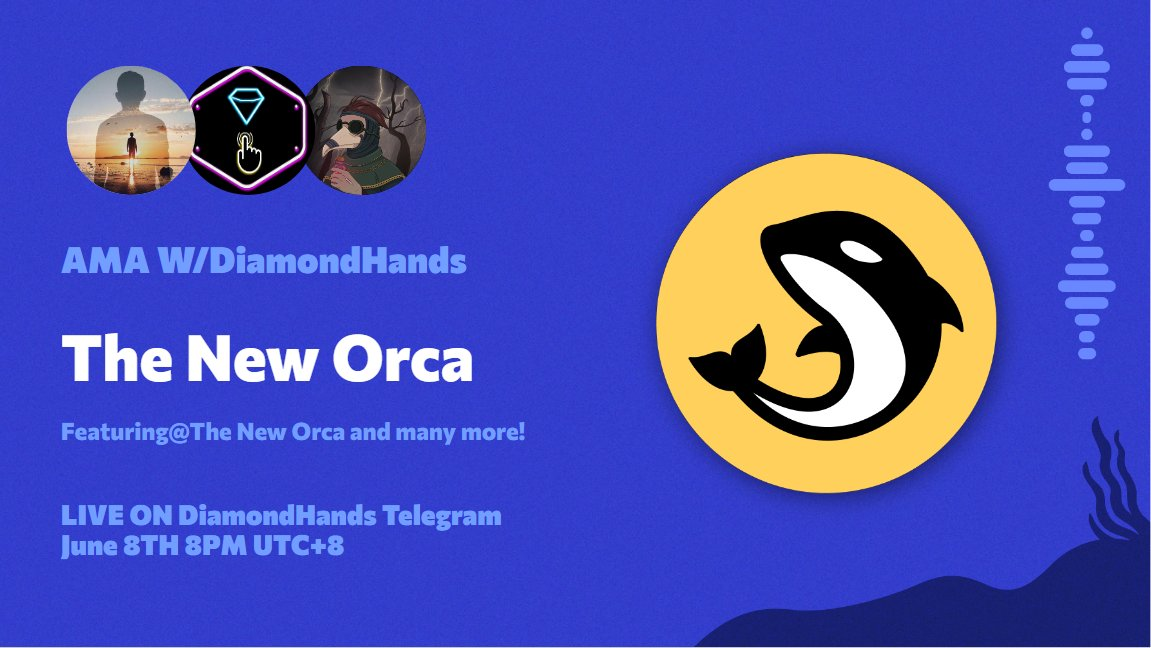
Orca recently launched a new version, featuring upgrades in user experience and liquidity solutions. We've invited Yibo from Orca to share insights in this event. Yibo entered the industry in 2017 and is now the Head of Orca's Chinese-speaking region. Together with Yibo, we’ll explore topics such as DEX UX experiences and comparisons between different liquidity models.
Below is the transcript of this AMA:
Q1: Could you briefly introduce the Orca project?
Yibo: Orca is a DEX protocol offering pure AMM functionality, enabling users to trade and provide liquidity in the most user-friendly way possible. We have our own liquidity pools, which are highly beneficial for integrators, traders, and liquidity providers (LPs).
Additionally, Orca hosts the largest and deepest concentrated liquidity pool in the Solana ecosystem, delivering better prices for users and improved capital efficiency for LPs.
Q2: The team behind a project is also crucial. Could you introduce the Orca team members?
Yibo: Orca was co-founded in early 2021 by Yutaro Mori and Grace Kwan (Ori). The team now has over 30 employees. Our engineering team graduated from top computer science institutions such as Stanford, University of Michigan–Ann Arbor, and University of Waterloo, and have previously worked at leading tech companies like Amazon and Google. The strategy team, including Ori, is also highly talented, with multiple graduates from top international universities and extensive experience in business consulting, design, and finance.
Here’s a closer look at some key team members:
-
Yutaro: An experienced software engineer with deep expertise in blockchain protocols. Prior to Orca, Yutaro worked on Ethereum 2.0 and UMA, and spent years at MongoDB, a database architecture company. He has strong knowledge in blockchain technology, mathematics, and macroeconomics.
-
Grace (Ori): A versatile professional who seamlessly transitions between software engineering and UX design, specializing in making complex technical layers accessible through intuitive design. She holds a Bachelor’s and Master’s degree in Computer Science from Stanford University. Before founding Orca, she worked for years at Coursera, a leading edtech company, and IDEO, a world-renowned design firm.
-
Kiko: Director of Growth, with extensive experience in management consulting, product design, and operations. Kiko’s career spans three continents—Asia, North America, and Oceania. Beyond building solid business expertise at companies like Deloitte, Mattel, and IDEO, she brings deep cultural understanding of both Eastern and Western markets.
Q3: How should we understand Orca’s flagship liquidity pool?
Yibo: Orca’s liquidity pool is the largest and deepest concentrated liquidity pool in the Solana ecosystem. By allowing liquidity providers to concentrate their funds within specific price ranges, the pool enables them to earn a higher share of trading fees and incentives, promoting more efficient capital allocation.
More importantly, deeper liquidity around the actual trading price leads to significantly lower slippage. Additionally, Orca allows users to create custom pools and freely choose fee tiers, offering greater flexibility to serve a broader range of users across the Solana ecosystem.
Q4: What advantages does this concentrated liquidity model offer users? And what new applications can be built on top of it?
Yibo: Concentrated liquidity offers users superior capital efficiency and better exchange rates when trading token pairs. Orca provides an easy-to-use SDK, making it convenient for developers to build on top. Potential projects include:
-
Active Liquidity Management: Concentrated pools offer additional flexibility in capital allocation for LPs but require more active management strategies.
-
Permissionless Lending: Can leverage time-weighted average prices (TWAP) from each pool to support lending for long-tail tokens.
-
PnL Calculator: When depositing into whirlpool pools, users receive a unique NFT representing their concentrated liquidity position. A PnL calculator will allow users to easily track profits and losses.
Q5: We’ve heard that Orca recently released a new version. What are the main improvements in this upgrade?
Yibo: Orca is known for its human-centered design—an approach rare in the crypto space. The new Orca continues this DNA, making on-chain cryptocurrency trading accessible even to complete beginners. New features include:
-
Price charts
-
Transaction history
-
Helpful error messages
-
Price comparison with Jupiter
-
NFT profile avatars
-
Engaging and refined visual design
On reliability, this is also a major leap forward. On-chain transactions often fail during high volatility—but this is exactly where the new Orca excels! Under the hood, the upgraded platform includes several technical enhancements:
-
A completely new frontend built with Next.js, planned to be open-sourced after the next major release
-
A fully custom “smart router” that routes trades across up to six liquidity pools to deliver better prices
-
Shorter confirmation times and easier retry options
-
More accurate stats and pricing APIs
-
Dynamic priority fees
Compared to most trading interfaces, these improvements mean users don’t need to manually adjust settings. Just input what you want—e.g., “Buy 10 SOL with USDC”—and let Orca handle the rest.
In short: It just works.
Q6: Can you share Orca’s next steps and upcoming plans?
Yibo: Our next step is Orca Pro.
Years after the first CLMM launch, tools for learning effective liquidity management are still missing.
Orca Pro will offer active traders:
-
Tutorials to learn the art of CLMM liquidity management;
-
Tools to effectively estimate returns.
Together, these open peer-to-peer market-making to a wider audience. The interface will feel familiar to centralized exchange users, reinforcing Orca’s competitive edge: concentrated liquidity AMMs can deliver order-book-like experiences with superior computational and capital efficiency.
But the journey to becoming a top-tier protocol doesn’t end here! Other initiatives are underway, applying Orca’s human-centered design principles to new financial domains. Whether you're a trader, market maker, or builder, Orca makes it simple.
Q7: After Uniswap V3 open-sourced its code, many DeFi projects have joined the race toward concentrated liquidity. Meanwhile, platforms like Trader Joe and iZUMi are innovating with their own LB and DL-AMM models. What do you see as the future direction of DeFi innovation, and how does Orca maintain its competitive advantage?
Yibo: After V3 went open-source, many fork projects emerged, but I haven’t seen truly revolutionary innovations that could drive the next wave of DeFi. Compared to Uniswap V3, Trader Joe V2 and izumi represent upgrades to the concentrated liquidity (CLMM) model, primarily improving the LP side—which is great.
I believe the future of DeFi innovation lies more in foundational interaction models and protocol composability. Today’s DeFi Lego infrastructure is relatively mature. While changing fundamental interaction models is difficult, enhancing composability or upgrading existing functions is more achievable. Orca has maintained a dominant position in the Solana ecosystem, largely due to our relentless focus on user experience. The seamless interaction and convenient features offered by Orca are evident to every user who loves the platform.
Q8: How do you define "foundational interaction models and protocol composability"?
Yibo: Foundational interaction models refer to upgrades in current AMM interaction formulas, aiming to balance efficiency and slippage. Composability refers to tighter integration and synergy among protocols—enabling the DeFi Lego to be stacked higher and more securely.
Q9: After the FTX collapse, many projects on Solana fled to other chains or adopted cross-chain deployments. Most projects today revolve around Ethereum and Layer 2s. Will Orca go cross-chain? Or could you share your strategic thinking on choosing Solana and future public chain expansion?
Yibo: Indeed, the FTX incident was a major blow to many projects on Solana. However, Orca received no investment from Alameda, and no external organization controls Orca’s treasury, so our impact was minimal. Currently, Orca has no plans to go cross-chain—we remain focused on building within the Solana ecosystem. Solana’s high performance and strong technical team are key reasons why Orca chose Solana and continues to grow here. We believe Solana will continue to shine in the future!
Community Questions
Q1: Does providing liquidity on Orca result in different impermanent loss compared to Uniswap?
Yibo: Impermanent loss is a challenge all AMMs face. With concentrated liquidity, narrower price ranges lead to higher capital efficiency and allow LPs to capture more fees and rewards. However, they also expose LPs to higher impermanent loss. Since both Uniswap V3 and Orca use concentrated liquidity, the calculation method for impermanent loss is essentially the same.
Q2: What is the project’s current revenue situation and primary income sources?
Yibo: Orca’s primary revenue source is trading fees. A portion flows into the Orca Climate Governance Fund, which currently holds over $1.6M. The remainder goes into Orca’s treasury. Over the past six months, Orca has earned 70%–80% of Solana’s network fees, with total trading volume exceeding $34.7 billion.
Join TechFlow official community to stay tuned
Telegram:https://t.me/TechFlowDaily
X (Twitter):https://x.com/TechFlowPost
X (Twitter) EN:https://x.com/BlockFlow_News
 深潮TechFlow


