








Orca: Solana's "smoothest" DEX ushers in concentrated liquidity market making
TechFlow Selected TechFlow Selected
Orca: Solana's "smoothest" DEX ushers in concentrated liquidity market making
What changes do Whirlpools bring?
 Navigating Web3 tides with focused insights
How did you hear about ORCA?
Some know it for its strong backing: led by Polychain, Placeholder, and Three Arrows Capital, with participation from Sino Global, Coinbase Ventures, and Solana Capital.
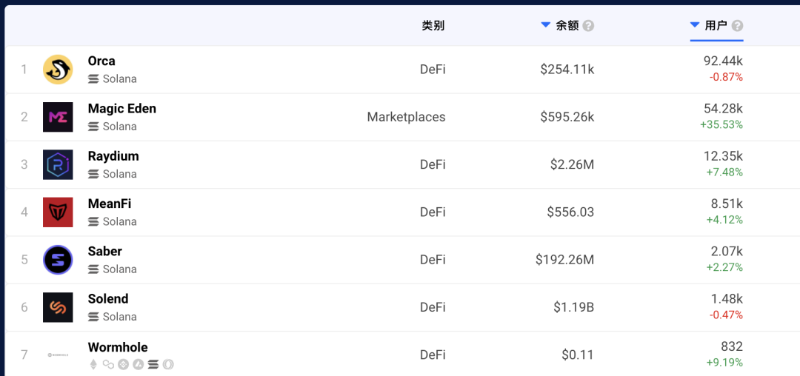
Others recognize it for its impressive metrics—consistently ranking as the top DEX in user numbers within the Solana ecosystem.
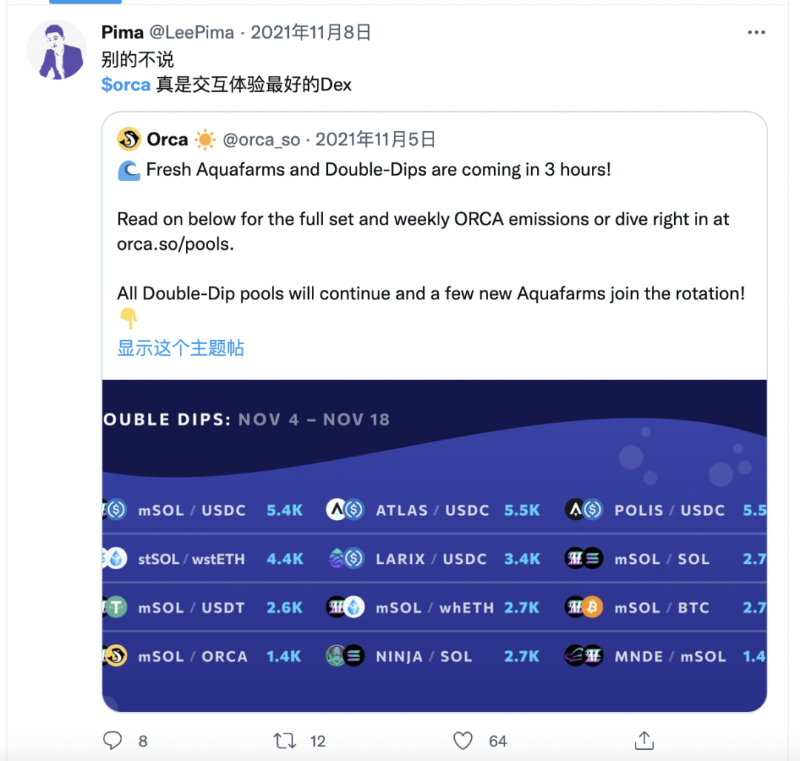
Some became interested after a passing mention by a crypto influencer—for example, Continue Capital's founder once tweeted that "Orca is the best-optimized DEX for user interaction."
In short, Orca is an AMM-based decentralized exchange built on the Solana network. Guided by the philosophy of "DEX for people, not programs," it has quickly risen to become one of the leading DEXs in the Solana ecosystem.
According to DeFiLlama data, Orca’s TVL stands at $434 million, making it the second-largest AMM after Raydium.
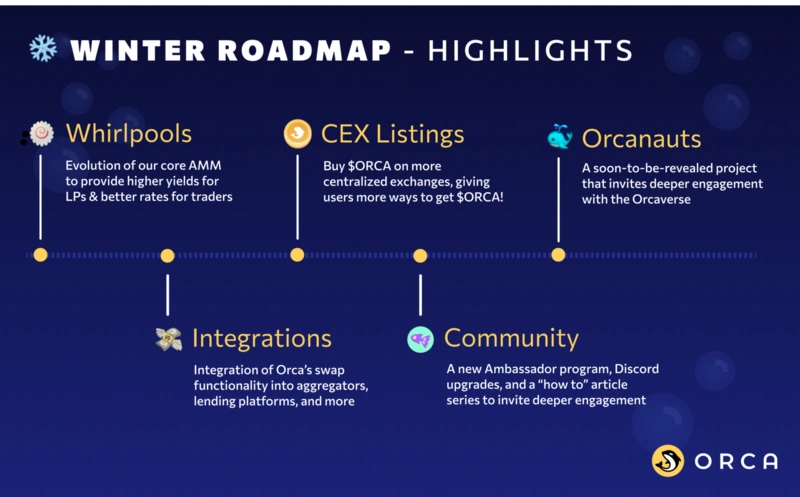
Beyond its solid team and funding, Orca has steadily executed its roadmap. Starting in late March, it began testing a concentrated liquidity market-making AMM similar to Uniswap V3—called Whirlpools—and officially launched it to the public on April 25.
What are Whirlpools? And what changes do they bring?
Whirlpools: Concentrated Liquidity
DeFi is fundamentally a business of capital efficiency.
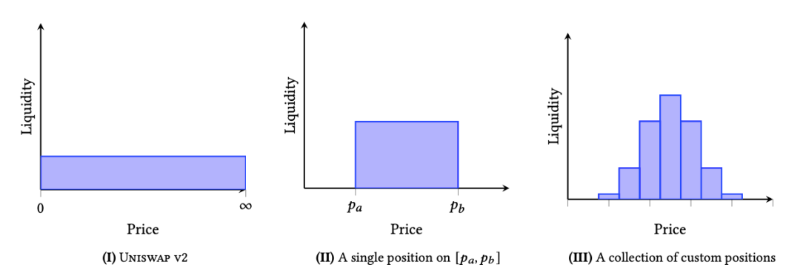
Most agree that Uniswap V3’s innovation—concentrated liquidity provision—offers far better capital efficiency than the classic x*y=k constant product market maker (CPMM) model.
Under this new model, liquidity providers (LPs) can choose to concentrate their liquidity within specific price ranges. Instead of spreading liquidity uniformly across a 0-to-infinity curve, LPs can focus it around the most frequently traded prices near the current market rate, dramatically increasing capital efficiency and earning higher market-making returns.
Yet most AMMs have failed to follow Uniswap V3’s lead, continuing to use basic models. One reason: implementing concentrated liquidity requires complex formulas to manage overlapping liquidity positions from different users—especially difficult on non-EVM chains like Solana, where direct forking isn't possible and development in Rust adds complexity.
Additionally, learning from past "vampire attacks" by AMMs like Sushiswap, Uniswap proactively protected its core code. Uniswap V3’s core is licensed under the Business Source License (BSL), restricting commercial use for two years. With high development barriers and no easy forking, concentrated liquidity remains rare, making Orca’s achievement in launching Whirlpools on a non-EVM chain a significant technical feat.
Following Uniswap V3, Orca’s Whirlpools are among the few AMMs globally offering concentrated liquidity. LPs can define preferred price ranges, deepen trading depth around the mid-price, and earn higher fees and additional incentives with the same amount of capital.
Moreover, operating on Solana gives Orca Whirlpools a distinct advantage: rebalancing and adjusting price ranges amid market volatility is much simpler and cheaper compared to Ethereum-based Uniswap V3, with minimal concern over gas fee losses.
On April 25, Whirlpools opened to all users. Shortly after, Solana’s Chief Communications Officer shared an update: Orca had become the third most active contract interaction address on the entire Solana network.
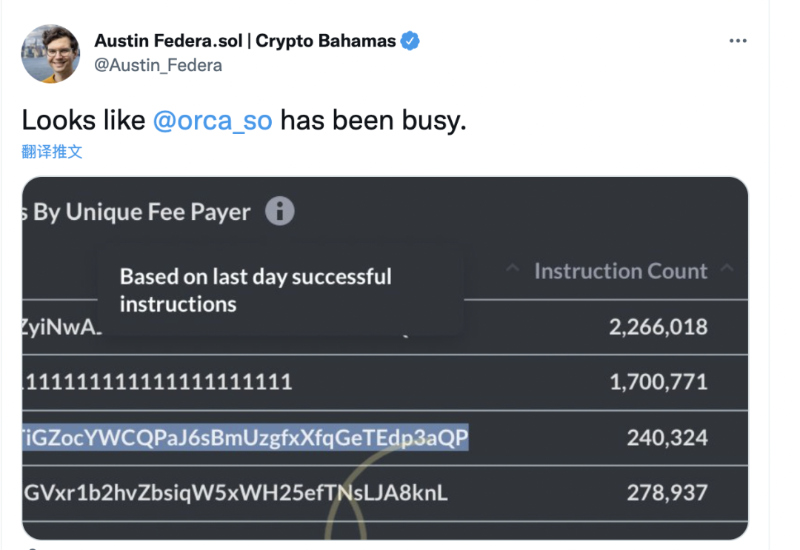
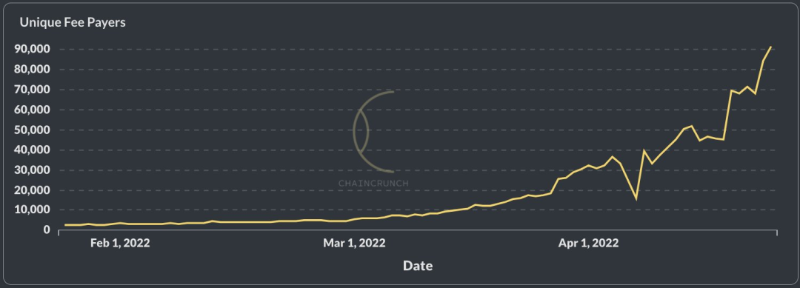
Looking at unique fee-paying addresses on-chain, Orca’s interactions have consistently grown, achieving exponential growth in April.
Team and Backers
Orca’s core development team consists of 20 members, co-led by Yutaro Mori and Grace Kwan (known in the community as Ori), who head the engineering and strategy teams respectively.
Yutaro is a seasoned crypto developer who contributed to ETH 2.0’s Golang client and the well-known synthetic assets protocol UMA. Including Yutaro, Orca’s engineering team has six developers, most of whom graduated from top North American universities renowned for computer science and have worked at major tech firms like Amazon and Google.
Ori holds a bachelor’s and master’s degree in Computer Science from Stanford University and previously served as an interaction designer at IDEO Tokyo. She personally designed Orca’s iconic whale logo. Alongside Ori, the strategy team includes six members, many with experience at top-tier consulting and design firms such as McKinsey.
In 2021, Orca raised $18 million in Series A funding backed by prominent institutions, including lead investors Polychain, Placeholder, and Three Arrows Capital, alongside participants such as Sino Global, Collab+Currency, Coinbase Ventures, and Solana Capital.
On April 25, Arthur, partner at DeFiance Capital, tweeted that the leading DEX token on a major blockchain has an FDV under $200 million. Considering traction and team strength (crypto natives and Stanford CS graduates), he noted they could easily raise $500 million in a primary round—yet some large emerging billion-dollar funds haven’t recognized this opportunity, still investing in unaudited L1 DEXs valued at over $100 million pre-launch.
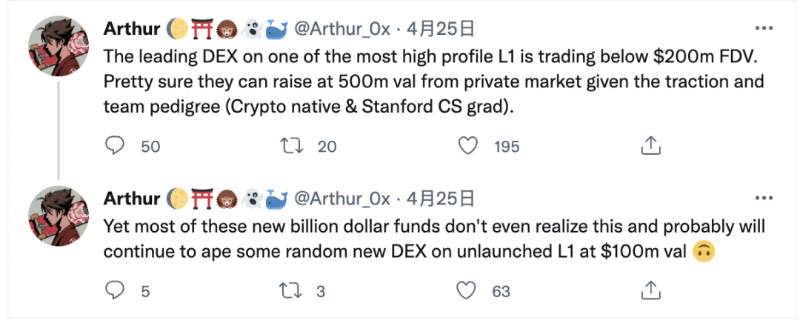
Top DEX on an L1, FDV around $200 million, founders being crypto natives and Stanford CS grads… This is practically a direct reference to Orca.
Orca’s Competitive Position and Advantages
Within Solana’s DeFi ecosystem, Orca operates independently, not integrated into Serum—the largest project on Solana. Rather than relying on bulky strategic alliances, Orca focuses solely on perfecting AMM DEX technology and services. With smooth, highly visual, and intuitive UI/UX, it aims directly at dethroning Raydium as Solana’s leading AMM.
Raydium’s traditional liquidity pools have a 24-hour trading volume to liquidity ratio of 7.5%.

Orca’s Whirlpools, using concentrated liquidity, achieve a 24-hour trading volume to liquidity ratio as high as 47%, demonstrating a massive improvement in capital efficiency over traditional AMM pools.
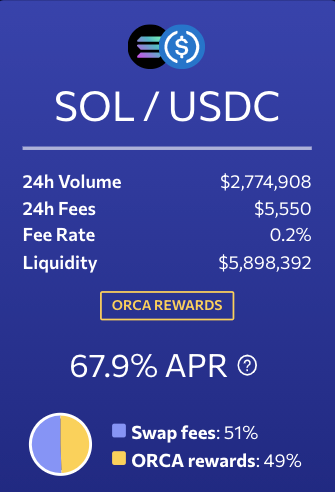
Currently, Orca ranks third in DEX TVL within the Solana ecosystem, with a Marketcap/TVL ratio between 0.08–0.09, indicating strong growth potential.
Whirlpools have opened new avenues for Orca to grow both TVL and trading volume.
Community Perspectives
FTX Tseng, Solana TW Community Admin
I’ve been using Orca since Q2 last year and have always been a supporter.
Orca’s UI and UX are outstanding across the entire Solana ecosystem.
Excellent UI Design: Beyond fast response times and an aesthetically pleasing interface, Orca displays your wallet assets directly in the sidebar after connecting—eliminating the need to open Phantom just to check your balance. This reduces steps and enhances convenience.
User Experience: Since DeFi 2020, most liquidity mining requires users to first mint LP tokens and then stake them separately to earn rewards. This extra “staking” step harms UX. Orca broke this pattern by designing smart contracts that start generating rewards immediately upon minting LP tokens (in standard pools) or NFTs (in Whirlpools). This thoughtful innovation delivers a smoother, more user-friendly experience. Orca truly embodies the “human-first, easy-to-use” principle, which I deeply appreciate.
Providing liquidity on Orca Whirlpools is extremely seamless. Educational videos and clear instructions help newcomers unfamiliar with concentrated liquidity (like Uniswap V3) get started. The system also provides helpful guidance when setting price ranges.
For swap users, Whirlpools have indeed offered more competitive slippage.
Looking ahead, I hope Orca becomes the AMM with the highest TVL and trading volume on Solana. Specifically, Whirlpools’ high capital efficiency could attract significant stablecoin TVL. Additionally, I hope the Orca community actively engages in forum discussions and protocol governance (e.g., designing lock-up mechanisms). A project’s future shouldn’t be decided by the team alone—active community involvement is essential. Ultimately, I look forward to Orca reclaiming its all-time high this year!
Brave Song, Founder of Solana Chinese Community
As a heavy Stepn user, I run every day to earn money—and inevitably interact with Orca, as it hosts the highest trading volume for GST (Stepn rewards) globally.
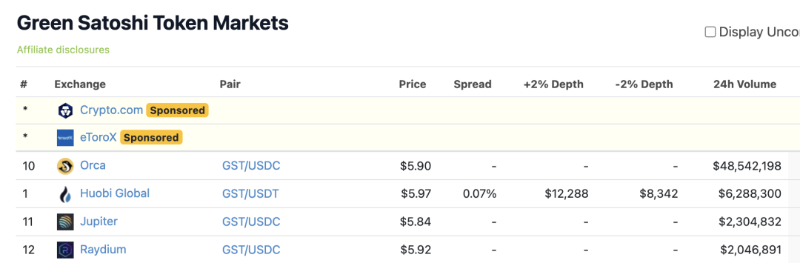
What impresses me most about Orca is its smoothness and aesthetic appeal—progressing beyond mere functionality toward human-centered design. This is exactly what most Web3.0 products lack today: visual appeal and great user experience. In this regard, both Stepn and Orca excel.
Currently, Whirlpools’ market-making yields are very attractive—offering both LP income and Orca rewards. If I were to suggest improvements, I’d like to see more utility added to the ORCA token instead of continuous inflation. For example, integrating with NFTs or adopting the trendy “ve-token” economic model could enhance value capture and reward long-term holders more effectively.
Appendix: Step-by-Step Guide to Using Whirlpools
Orca’s website is exceptionally clean, transparent, and highly visual. It’s also incredibly user-friendly—no need to launch a separate app like many other DeFi protocols. All actions, including selecting and managing different liquidity pools, can be done directly on the frontend.
Let’s walk through the comfortable flow of using Orca Whirlpools.
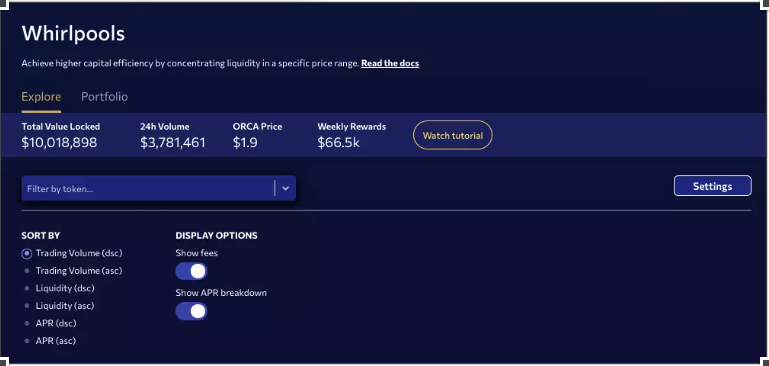
Upon entering the site, you’ll see two options in the top-left: traditional Pools and the new Whirlpools (concentrated liquidity). After selecting Whirlpool, click Settings on the right. Under Display Options, you can enable detailed APR and fee rate information.
Under Explore, each pool displays a clear pie chart showing how yield is distributed—how much comes from trading fees, how much from ORCA, MNDE, WLDO staking rewards, and how much from market-making itself.
For instance, in the largest SOL/USDC pool, 71% of returns currently come from market-making. Whirlpools currently offer only two fee tiers: 0.01% for similar assets (e.g., different USD stablecoins or wrapped versions of the same token), and 0.2% for dissimilar pairs.
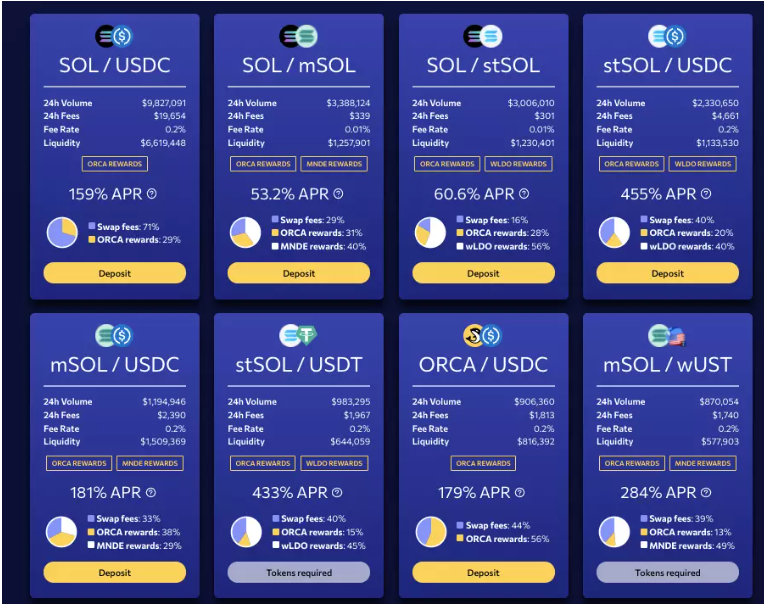
Click Deposit on any pool (we'll demonstrate with SOL/USDC) to enter the price range setup page. You’ll see three options: Conservative, Standard, and Custom:
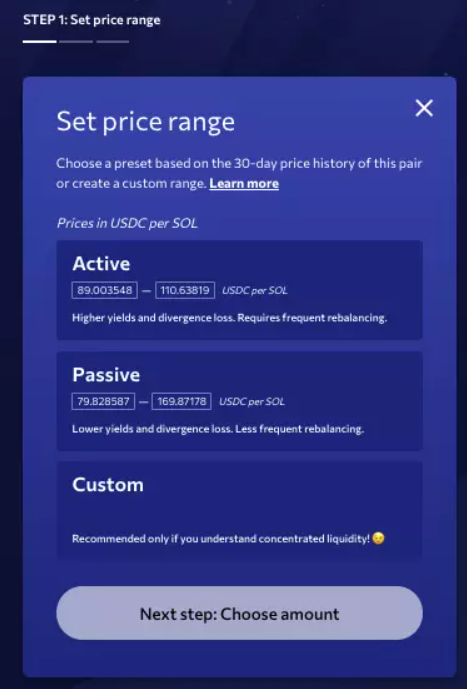
The default Active (aggressive) option offers a narrower range: lower bound set at 30-day low divided by 1.75, upper bound at 30-day high multiplied by 1.75.
The default Passive (conservative) option uses a wider range: lower bound at 30-day low divided by 2.5, upper bound at 30-day high multiplied by 2.5.
The team is continuously refining these defaults based on user feedback and encourages experienced LPs to use the Custom option. Let’s proceed with Custom.
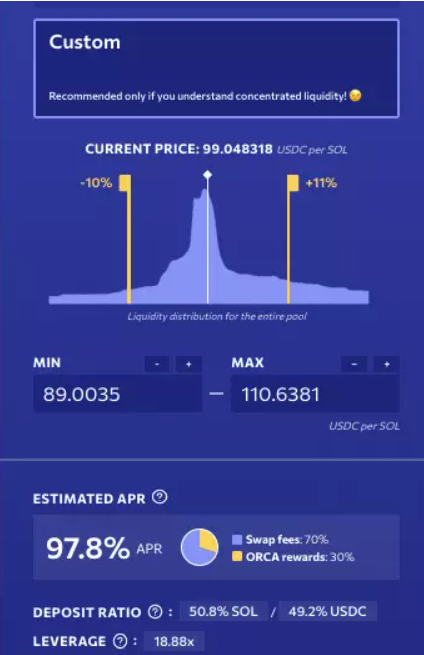
On the custom page, you can see the state of liquidity distribution, current price, required capital percentage, leverage ratio, and estimated APR. A narrower price range means higher leverage and potentially higher rewards, but also greater risk of being out of range and losing earnings.
Note: price ranges cannot be set arbitrarily. Users must select from a discrete set of ticks spaced at 1% intervals across the full pool range.
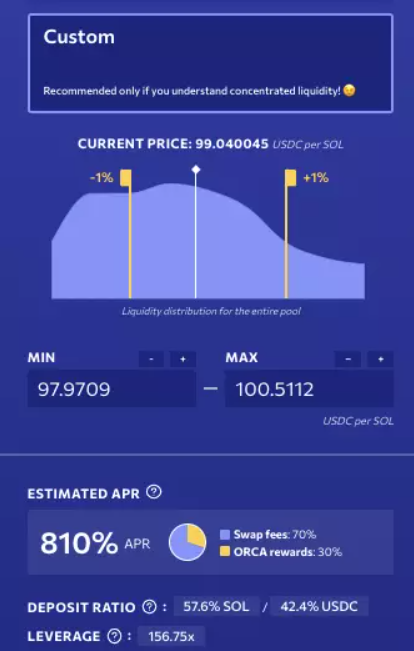
You can manually input upper and lower bounds—the system will snap to the nearest tick—or simply drag the yellow bar to adjust the range visually. Here, I’ve set it to ±1% around the current price. As shown below, the preview updates APR and LEVERAGE clearly. The required dual-token ratio adjusts accordingly. A tighter range yields higher APR and reward weighting.
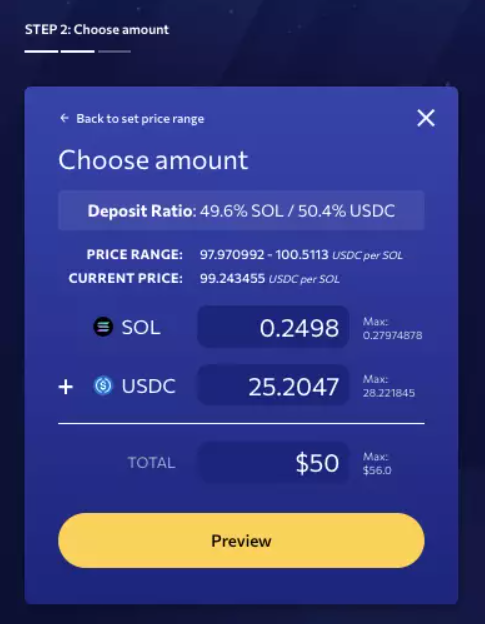
Next, specify the amount of liquidity to provide. Entering one field automatically calculates the other based on your earlier ratio, preventing input errors. You can also click Max to auto-fill based on your wallet balance. We’ll enter 50 in total and click Preview to continue.
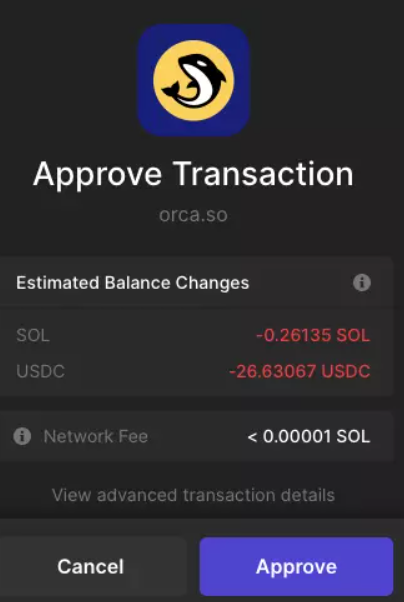
Then go to the preview page and confirm the transaction authorization.
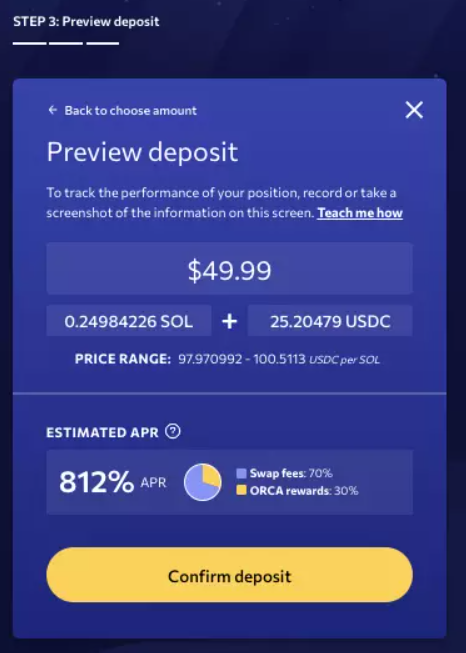
After confirming via your wallet, the process is essentially complete—you can now begin earning market-making rewards.
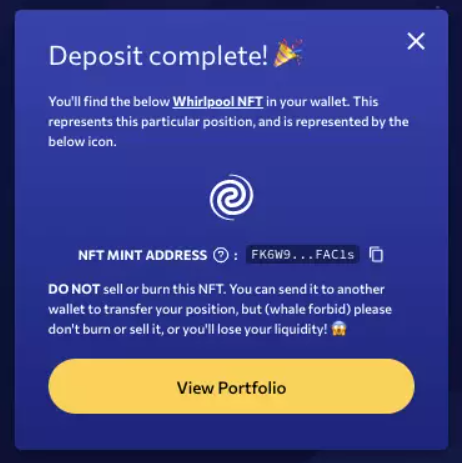
You’ll receive a confirmation message and a Whirlpool NFT representing your LP position. This NFT is transferable—but transferring it also transfers redemption rights.
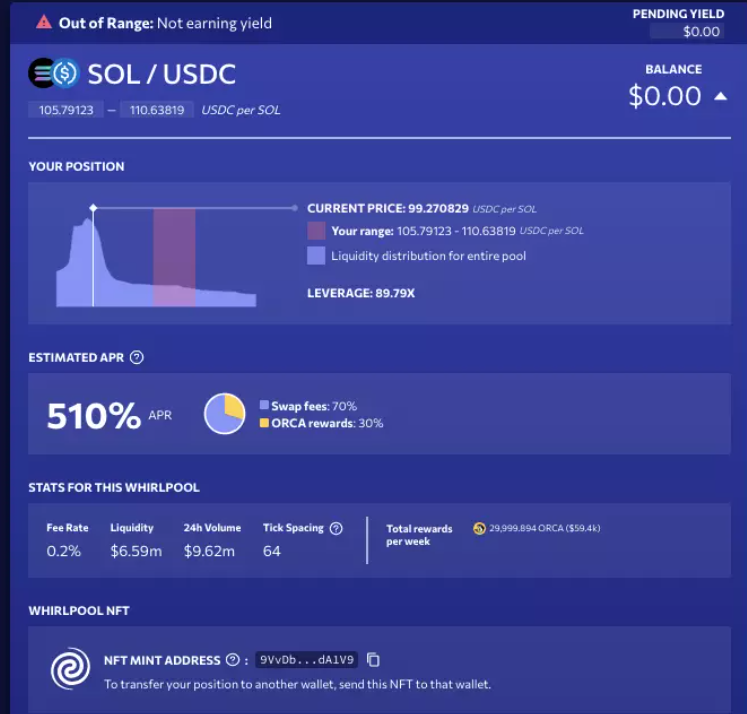
An interesting feature: after withdrawing liquidity, you can choose not to burn the NFT, preserving your original price range settings. Later, you can reuse those parameters without reconfiguring—just like the image below shows an empty position still saved in Portfolio.
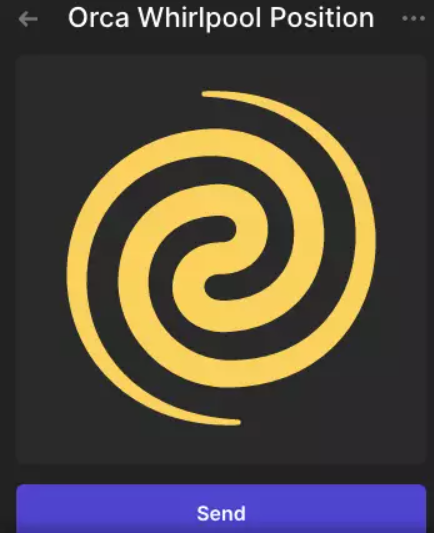
You can even collect or sell inactive Whirlpool LP NFTs, though they lack unique designs—all LP NFTs look identical.
After completing setup, users can view, add, or remove liquidity in the Portfolio section. The interface clearly shows your price range. Hovering over Balance reveals your current asset allocation for withdrawal reference. Hovering over Pending Yield shows the breakdown of earned tokens. Rewards can be claimed when withdrawing liquidity or directly harvested via the Harvest Yield button in Portfolio.
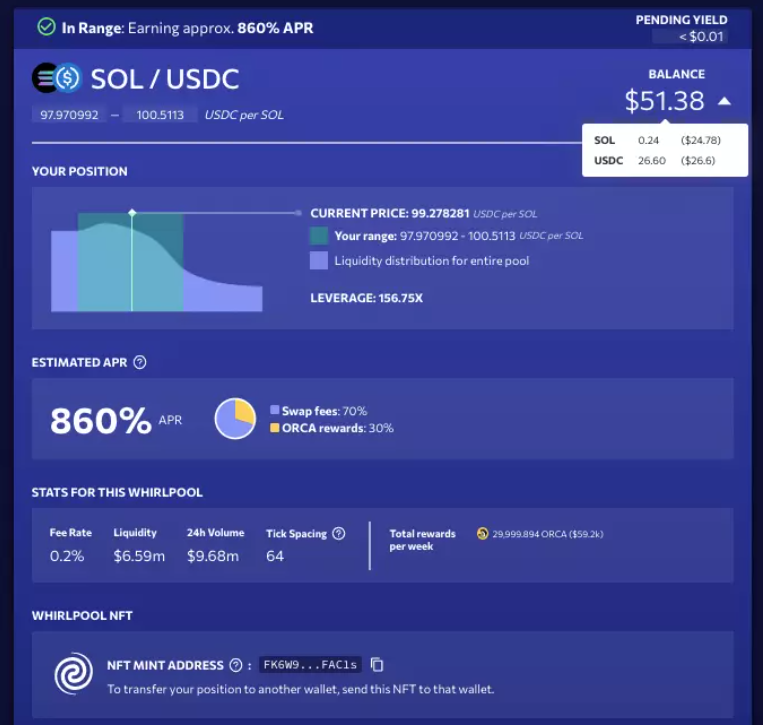
New liquidity additions follow the initial configuration settings.
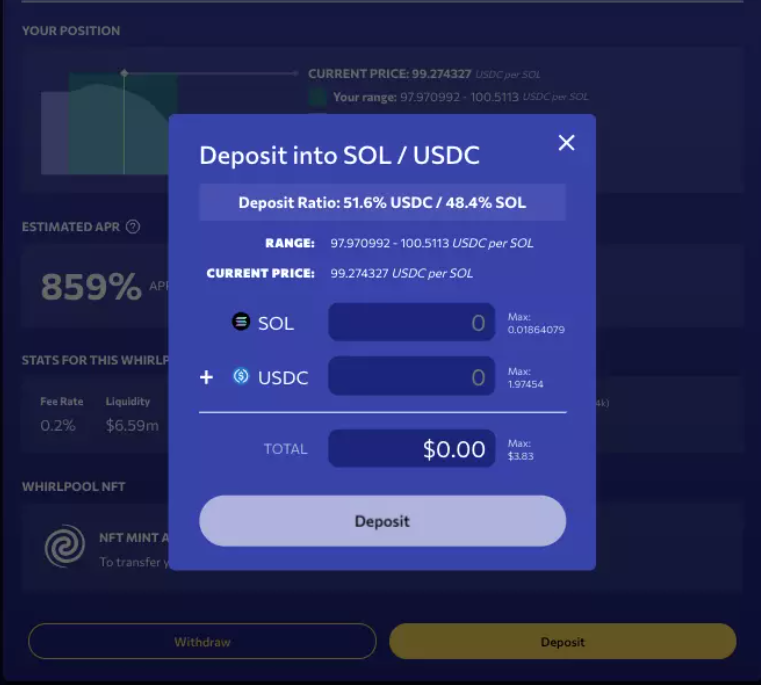
When withdrawing, note your current asset ratio. For example, in the SOL/USDC pool: if the market price is above your range, you’ll receive USDC; if below, you’ll receive SOL.
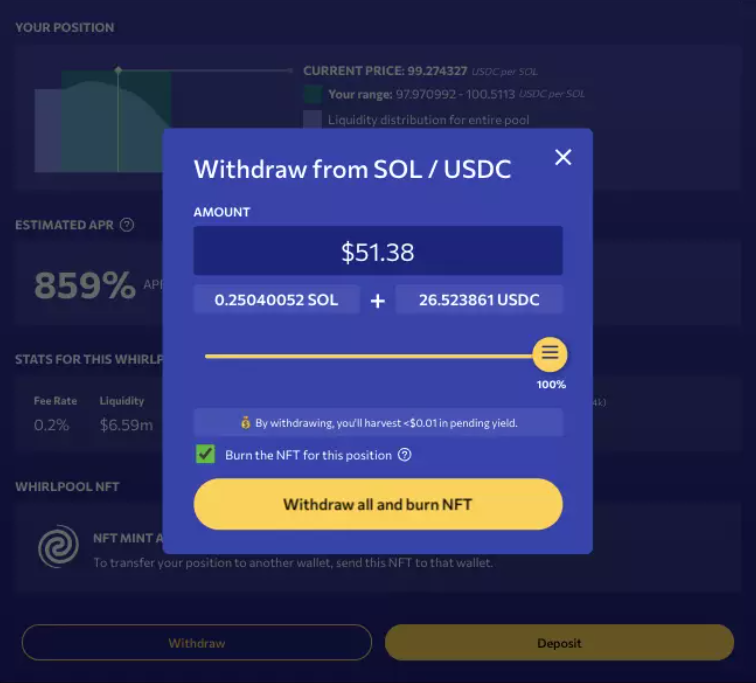
By now, it should be evident how committed Orca is to transparency and visualization—delivering an exceptional, human-centric user experience.
One final note: the power of concentrated liquidity lies in focusing capital within tight price bands. Narrower ranges increase return efficiency, but if the market moves outside the range, LPs earn nothing. To maximize benefits, the optimal strategy may involve setting narrow ranges and actively monitoring price movements, rebalancing when necessary. Thanks to Solana’s low gas fees, frequent adjustments remain cost-effective and negligible.
Join TechFlow official community to stay tuned
Telegram:https://t.me/TechFlowDaily
X (Twitter):https://x.com/TechFlowPost
X (Twitter) EN:https://x.com/BlockFlow_News


