Xuyên thấu chu kỳ cắt giảm lãi suất của Fed: Liệu thị trường tiền mã hóa tăng giá có phải là sự kiện khả thi để giao dịch tiếp theo?
Tuyển chọn TechFlowTuyển chọn TechFlow
Xuyên thấu chu kỳ cắt giảm lãi suất của Fed: Liệu thị trường tiền mã hóa tăng giá có phải là sự kiện khả thi để giao dịch tiếp theo?
Bước vào chu kỳ giảm lãi suất, thị trường dường như sụp đổ và khởi động lại chỉ trong chớp mắt, vậy những yếu tố ẩn chứa nào đang tác động?
 Chuyên sâu báo cáo Web3
The Federal Reserve's official 50-basis-point rate cut this morning marks the final piece of macroeconomic clarity for the crypto market in 2024.
Looking back, among the three most anticipated positive catalysts for the 2024 market—spot Bitcoin ETFs, Bitcoin halving, and Fed rate cuts—the ETF approval drove Bitcoin beyond $70,000, setting a new all-time high; however, the halving did not generate significant market volatility as expected.
While the correlation between macro conditions and Bitcoin is often debated, macro cycles—particularly dollar liquidity (a function of monetary policy, interest rates, and risk appetite)—remain the primary driver of medium- to long-term asset prices. Now that the start of the Fed’s easing cycle appears broadly consensus bullish, many believe it presents a tradable event—but is this truly the case?
Rate Cuts Begin: Is the Bull Market Back Overnight?
Since early 2022, the U.S. federal funds rate entered a tightening cycle, peaking in Q3 2023 when the Fed aggressively raised rates to combat inflation—from January 2022 to August 2023, the effective rate rose from 0.08% to a target range of 5.25%-5.5%.
Now, with the Fed announcing a 50-basis-point cut on September 18, lowering the federal funds rate target to 4.75%-5.00%, this officially ends the tightening cycle. Moreover, the updated dot plot indicates an additional 50 basis points of cuts are expected by year-end.
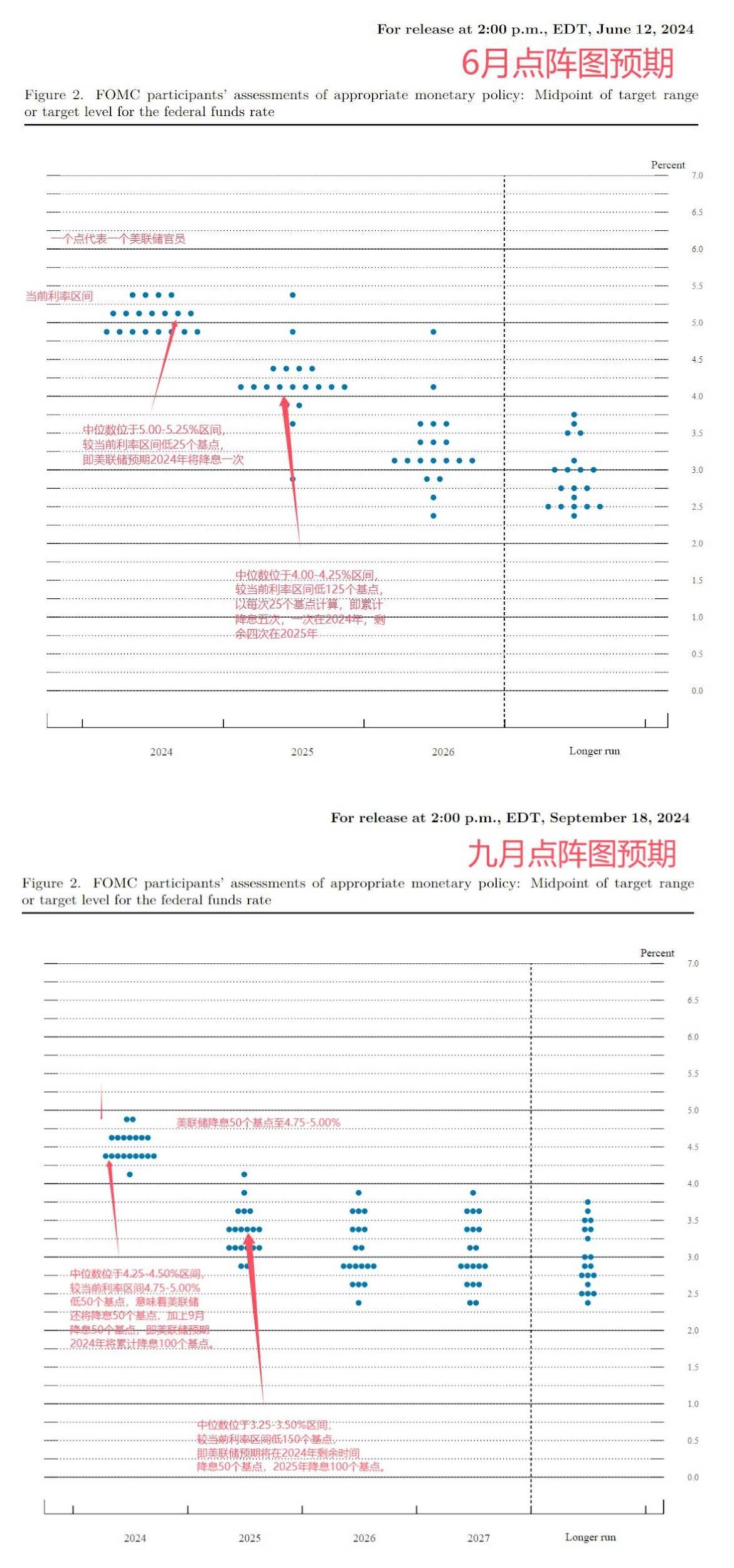
Dot Plot Analysis | Jin10 News
Although the first rate cut came four months later than some market expectations, the move significantly boosted investor sentiment across the crypto industry, prompting renewed capital inflows into Bitcoin and other digital assets.
The reason is straightforward: previously, the U.S. money and bond markets served as the largest reservoirs of liquidity. Now that interest rates have entered a downward cycle, these traditionally safe-haven markets become less attractive, leading investors to shift capital toward higher-risk, higher-return assets.
Following the announcement this morning, market sentiment surged instantly. Bitcoin broke through key levels of $61,000 and $62,000, briefly reaching $62,589. Within the same period, total liquidations across the market exceeded $114 million in 12 hours, with over $97 million in long positions wiped out—marking a brutal squeeze against bears, especially Bitcoin shorts.
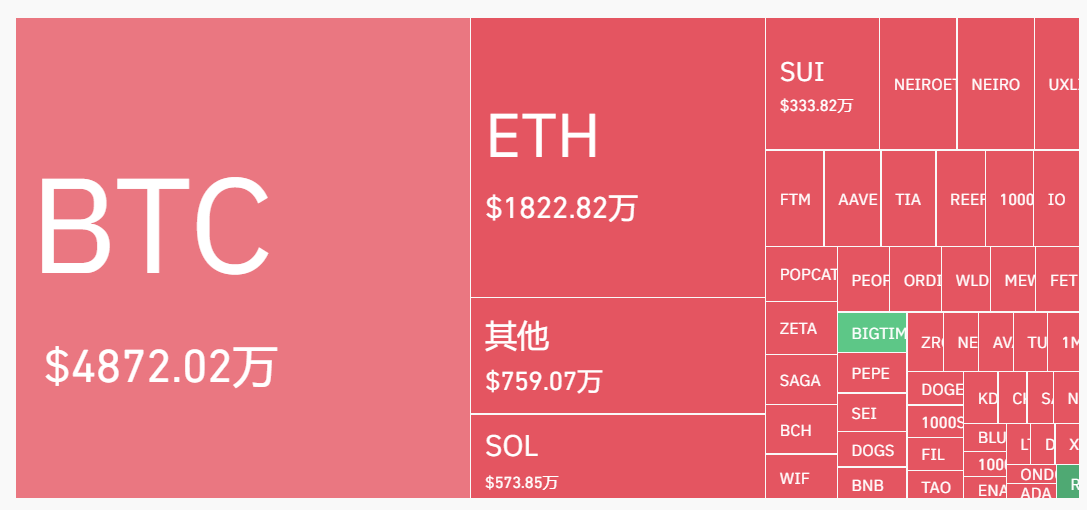
Coinglass Data
However, it's important to note that while rate cuts generally benefit risk assets, price movements often hinge not on priced-in expectations but on deviations from those expectations. As Jean-David Pequignot, Market Director at OSL, pointed out:
“Bitcoin and the broader crypto market rebounded following the Fed’s 50-basis-point cut. However, the committee remains cautious about further easing—Governor Bowman advocates for smaller cuts, while Chair Powell expresses concern over overly aggressive loosening. With the U.S. election underway, market focus will remain on upcoming economic data to determine the future path of the federal funds rate.”
Beyond this, certain under-the-radar developments over recent months may also serve as overlooked bullish or bearish factors. Let’s now explore potential major themes that could shape the second half of the year.
Ongoing Inflows into U.S. Spot ETFs
According to SoSoValue data, spot Bitcoin ETFs have seen a renewed wave of capital inflows since July. Although there was a notable weekly decline earlier this month, the overall trend has clearly reversed compared to April–May.
At the time of writing, the total net asset value of spot Bitcoin ETFs stands at $54.85 billion, representing 4.61% of Bitcoin’s total market cap (ETF NAV ratio). Cumulative net inflows since launch amount to $17.44 billion.

Hong Kong Digital Asset ETFs Gaining Momentum
The market often overestimates the short-term impact of new developments while underestimating their long-term significance. Beyond U.S. ETFs, Hong Kong’s spot virtual asset ETFs—launched nearly six months ago—are showing promising signals:
Per Hong Kong Exchange data, the combined weekly trading volume of Hong Kong’s three Bitcoin spot ETFs reached approximately HK$84 million last week, a surge of over 191% from HK$28.86 million the week before.

Notably, two Bitcoin ETFs managed by OSL—offered by ChinaAMC and Harvest Fund—accounted for over HK$81 million in weekly volume (96.1%), up 244% from HK$23.55 million the prior week. The third ETF recorded around HK$3.27 million in volume (3.9%), down over 38% from HK$5.31 million the previous week.
A Shift in Crypto Regulation
Trends emerge from subtle beginnings. Against the backdrop of the 2024 U.S. election year, both regulatory and financial environments have clearly turned favorable, brewing new catalysts.
On May 22, the Financial Innovation and Technology for the 21st Century Act (FIT21) passed the House of Representatives by a decisive 279–136 vote. Shortly after, the U.S. Securities and Exchange Commission (SEC) swiftly approved spot Ethereum ETFs—signaling a softening in the stance of U.S. regulators after years of strict enforcement.

Even U.S. politicians are increasingly embracing crypto. Four years ago, would you have believed anyone who told you that in this U.S. presidential election, candidates from both major parties would actively compete to show support for cryptocurrencies?
You’d probably have thought they were crazy.
Yet reality has proven remarkably dramatic. For the crypto industry, the 2024 U.S. presidential election has transformed into a political stage unlike anything seen in 2020 or 2016. From campaign agendas to public statements, both candidates are discussing crypto like never before—and even “competing” to appear more open-minded.
Overall, the election year is undoubtedly a pivotal factor. In the U.S., individuals who directly or indirectly hold crypto now represent a significant voting bloc. With opinion polls tightly contested, this “swing minority” has become highly influential—evidenced by the timely passage of the FIT21 Act.
Summary
History doesn’t repeat itself, but it often rhymes.
Overall, despite the market’s fragile recovery, numerous positive factors are quietly building momentum. Careful observation offers grounds for confidence in the outlook. With a new rate-cutting cycle beginning and the 2024 U.S. election approaching its conclusion, Web3 and the crypto industry may indeed be entering a brand-new era.
Chào mừng tham gia cộng đồng chính thức TechFlow
Nhóm Telegram:https://t.me/TechFlowDaily
Tài khoản Twitter chính thức:https://x.com/TechFlowPost
Tài khoản Twitter tiếng Anh:https://x.com/BlockFlow_News
 @osldotcom