From Web1.0 to Web3.0, the era of decentralized internet is arriving
TechFlow Selected TechFlow Selected
From Web1.0 to Web3.0, the era of decentralized internet is arriving
With the rise and spread of concepts like the "metaverse," the idea of Web 3.0 has also been fully ignited, flooding into public view in large quantities.
 Navigating Web3 tides with focused insights
Author: AscendEX
If we turned back the clock, just a few years ago Web 3.0 was still a vague concept—no one could clearly define what Web 3.0 actually was, nor were there concrete technologies to substantiate these ideas.
All speculation about Web 3.0 felt more like surreal daydreaming. But by 2021, with the rise and spread of concepts like the "metaverse," the idea of Web 3.0 was fully ignited and rapidly entered the public eye.
The Evolution from Web1.0 to Web3.0
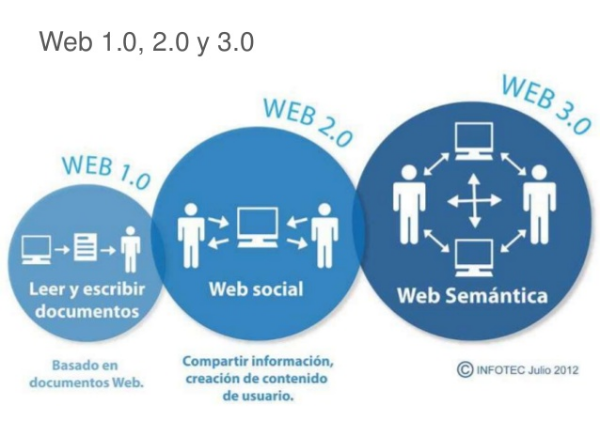
In the early days of the internet—the Web1.0 era—people used traditional database-driven websites, where content creation was entirely controlled by servers and operators. The internet at that time resembled a "read-only" model, with users acting merely as passive consumers of content. During the Web1.0 era, all people could do was log into major portal sites to browse and read the latest news and information—but interaction was impossible.
By 2004, social platforms like Facebook and Weibo ushered in the Web2.0 era. This period emphasized interactivity between content, allowing users not only to consume but also to create content themselves. During this time, individuals could freely produce content and become influential opinion leaders (KOLs), generating significant data and traffic. People's influence over the internet grew steadily, marking the end of the era when websites simply pushed information to users.
Web3.0 was coined by Gavin Wood, founder of Polkadot, back in 2014. In the early years of blockchain development, some already believed the Web 3.0 era would be an internet revolution centered on blockchain technology. Indeed, the crypto industry has carried forward expectations for Web 3.0. The emergence of the metaverse, NFTs, and blockchain gaming has fulfilled many visions of Web 3.0, signaling deeper integration between the internet and everyday life.
How Web3.0 Manifests in Daily Life
Decentralized Autonomous Organizations (DAO)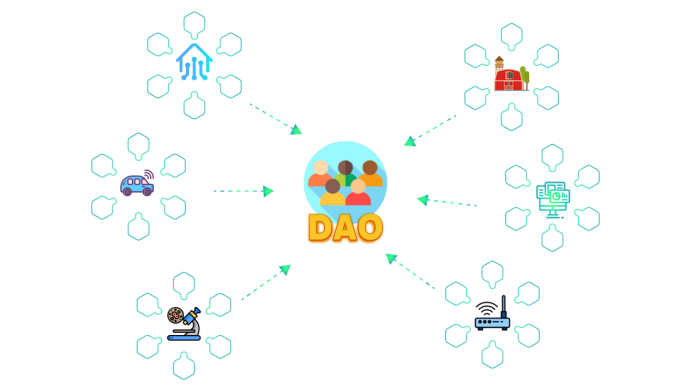
Today, people are exploring more transparent, power-distributed organizational structures without centralized corporate hierarchies. Enabled by blockchain technology, such organizations are gradually taking shape—they are known as Decentralized Autonomous Organizations (DAOs).
DAOs primarily exist and operate through smart contracts. This open and transparent operational model minimizes human interference and centralized management. Members mainly engage in research and voting, while automated systems handle execution—perceived as more transparent, fair, and trustworthy.
Decentralized Finance (DeFi)
In the traditional financial system we know, commercial banks appear to be the dominant—and often only—option, operating under a core model of "centralized custody." What does "centralized custody" mean? Simply put, depositing cash into banks for safekeeping while earning modest interest has long been seen as the best choice.
With the advancement of Web3.0, a faster, more convenient, and more private transaction method has emerged—giving rise to decentralized finance (DeFi). DeFi can be understood as blockchain + finance. Financial products and services built on blockchain exhibit characteristics such as decentralization, transparency, broad participation, anonymity, speed, and immediacy.
Blockchain Gaming (GameFi)
What is GameFi? GameFi integrates financial concepts into games, gamifies DeFi mechanisms, and incorporates elements such as NFTs, yield generation, and competitive gameplay—transforming games from pure entertainment into income-generating activities. Compared to traditional online gaming experiences, the rise of GameFi enhances user engagement, winning users over with stronger interactivity and greater fun.
In the Web3.0 era, the core of GameFi is no longer just gaming—it's game + DeFi + NFT. DeFi forms the absolute core of GameFi, while gaming serves more as its interface. The integration of NFTs makes GameFi more decentralized and adds artistic value. "Play-to-earn" is the biggest highlight of GameFi projects and a primary reason players passionately embrace them.
The Metaverse
Since 2021, the Web 3.0 concept has gained massive momentum, largely fueled by the explosion of the metaverse. The metaverse is a new form of internet that uses VR and AR technologies on the front end to enhance sensory and interactive experiences, while leveraging AI, big data, and blockchain on the back end to improve information security and matching efficiency.
The convergence of the metaverse and Web3.0 represents, for most people, a vision of the internet’s future. Web3.0 embodies technological evolution, while the metaverse reflects future applications and lifestyles—these two concepts are complementary and intrinsically linked.
Conclusion
Topics such as the metaverse, NFTs, and GameFi continue to gain traction, bringing Web 3.0 into a new phase of strategic development. Overall, Web3.0 features unified identity authentication, data ownership and authorization, privacy protection and censorship resistance, and decentralized operations. From a market perspective, Web 3.0 holds profound developmental potential. AscendEX will continue to monitor and invest in the Web 3.0 space, tracking how Web3.0 technologies ultimately evolve and transform our lives, and contributing our part to advancing this transformative field.
Join TechFlow official community to stay tuned
Telegram:https://t.me/TechFlowDaily
X (Twitter):https://x.com/TechFlowPost
X (Twitter) EN:https://x.com/BlockFlow_News