Seraph: A Comprehensive Review – The Leader in Web3 Gaming's Generational Revolution
TechFlow Selected TechFlow Selected
Seraph: A Comprehensive Review – The Leader in Web3 Gaming's Generational Revolution
What stereotypes do you have about "Web3 games" or "GameFi"?
 Navigating Web3 tides with focused insights
Author: TechFlow
What stereotypes do you have about "Web3 games" or "GameFi"?
Gold farming, cash out early, not fun, rug pulls, or Ponzi schemes?
With technological advancements and evolving user demands, blockchain games are undergoing a critical generational shift. At this pivotal moment, Seraph—representing the new generation of blockchain games—is redefining our understanding and expectations of Web3 gaming.
How do we define different “generations”?
First-generation blockchain games, exemplified by Axie Infinity, were undoubtedly groundbreaking in popularizing the "Play-to-Earn" (P2E) model. However, these early projects also faced clear limitations—lackluster gameplay, unsustainable economic models, high entry barriers, and limited performance.
In response to these challenges, a new wave of blockchain games has emerged, led by Seraph.
These next-gen titles aim not only to solve their predecessors’ problems but also to push the entire industry forward. Beyond the usual market hype and spotlight, they’ve maintained a solid operational rhythm and consistent product delivery.
Among them, Seraph offers its own unique solutions:
-
Immersive Gameplay Experience: Seraph delivers rich, mature, and polished loot-based game content with well-designed early, mid, and late-game mechanics, ensuring long-term player engagement.
-
Innovative Economic Model: Gold farming enhances the core gameplay rather than distorting it; NFTs and other on-chain assets derive natural scarcity from in-game labor (farming), aligning incentives sustainably.
-
User-Friendly Design: ActPass, a login and asset management companion app, significantly lowers the barrier to entry for Web3 gaming, enabling even casual players to enjoy blockchain games effortlessly.
-
Everything is Tradable: All in-game assets, both on-chain and off-chain, can be freely traded among players, allowing diverse player types to pursue their own forms of enjoyment and enabling a true “play and trade to earn” economy.
If you’re unfamiliar with Seraph, this article may help: Blockchain Games Need Outliers—Seraph Gave Me Legitimacy to Keep Playing Web3 Games.
But in what follows, we’ll take a more direct approach—offering a comprehensive review of Seraph’s development journey and exploring its achievements in game design, technological innovation, and community building. By analyzing Seraph’s success, we can glimpse the future of second-generation blockchain games and uncover broader trends shaping the Web3 gaming industry.
Seraph’s story is not just the growth history of a single game project—it’s a microcosm of the maturation of the entire blockchain gaming industry.
Seraph Development Timeline
Seraph is a blockchain-based ARPG that delivers an immersive Web3 experience inspired by Diablo-like gameplay through innovative mechanics and economic design.
Yet, transforming a high-quality Web3 game from concept to maturity requires progressing through stages of product validation, economic optimization, community building, and commercialization to ensure sustainability and competitiveness. Let’s trace Seraph’s evolution:
Off-Chain Phase: Refining Game Quality and Finding the Audience
The on-chain aspects of Web3 games often attract attention due to wealth effects. But for a game like Seraph, two fundamental questions must be answered before integrating on-chain economics: - Is the game actually playable? - Who will play it?
To answer these basic questions, Seraph conducted two testing rounds to refine game quality and identify its target audience.
-
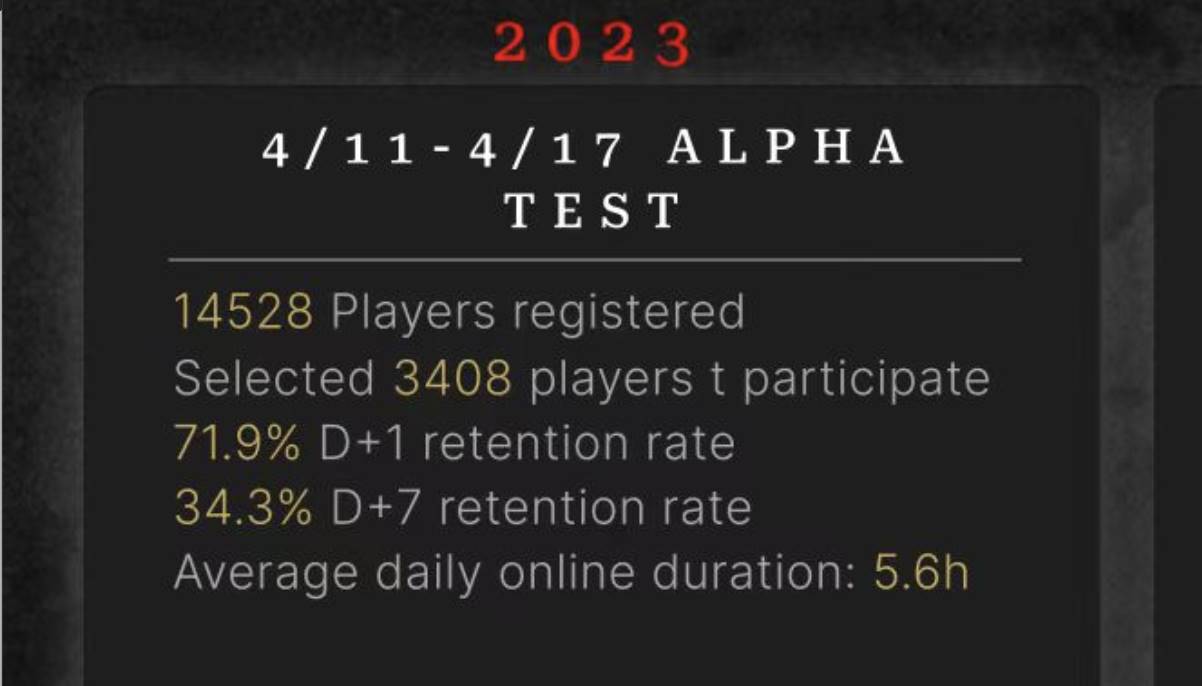
Validating Core Gameplay: Alpha Test (2023.4.11–4.17)
In early 2023, after the downturn of 2022, the blockchain gaming market began showing signs of recovery. Demand for high-quality blockchain games was rising, but so were user expectations. In this context, Seraph adopted a conservative yet steady entry strategy—closed testing.
Strategic Focus
This phase did not involve on-chain assets. Instead, the project focused on three key goals: validating the fun and playability of core gameplay, testing the stability of the underlying technical architecture, and collecting early user feedback on game mechanics. This incremental approach ensured the game was thoroughly prepared before public release.
Data Results
During the Alpha test, the game attracted 14,528 registered players, achieving a remarkable 71.9% day-one retention rate and an average session duration of 5.6 hours—both far exceeding industry averages—demonstrating strong appeal in core gameplay.
-
Refining Sustainability: Beta Test (2023.7.4–7.17)
Based on player feedback from the previous round, Seraph launched another optimization cycle three months later.
Strategic Focus
After validating core gameplay, the team further refined the entire game system and began developing endgame content to improve player retention through sustained engagement.
Notably, NFTs with early access privileges were introduced during this phase, though the game remained primarily off-chain. These NFTs served more as exclusive entry tickets, tools for fanbase management, and moderate marketing instruments—gold farming features were still not enabled.
Data Results
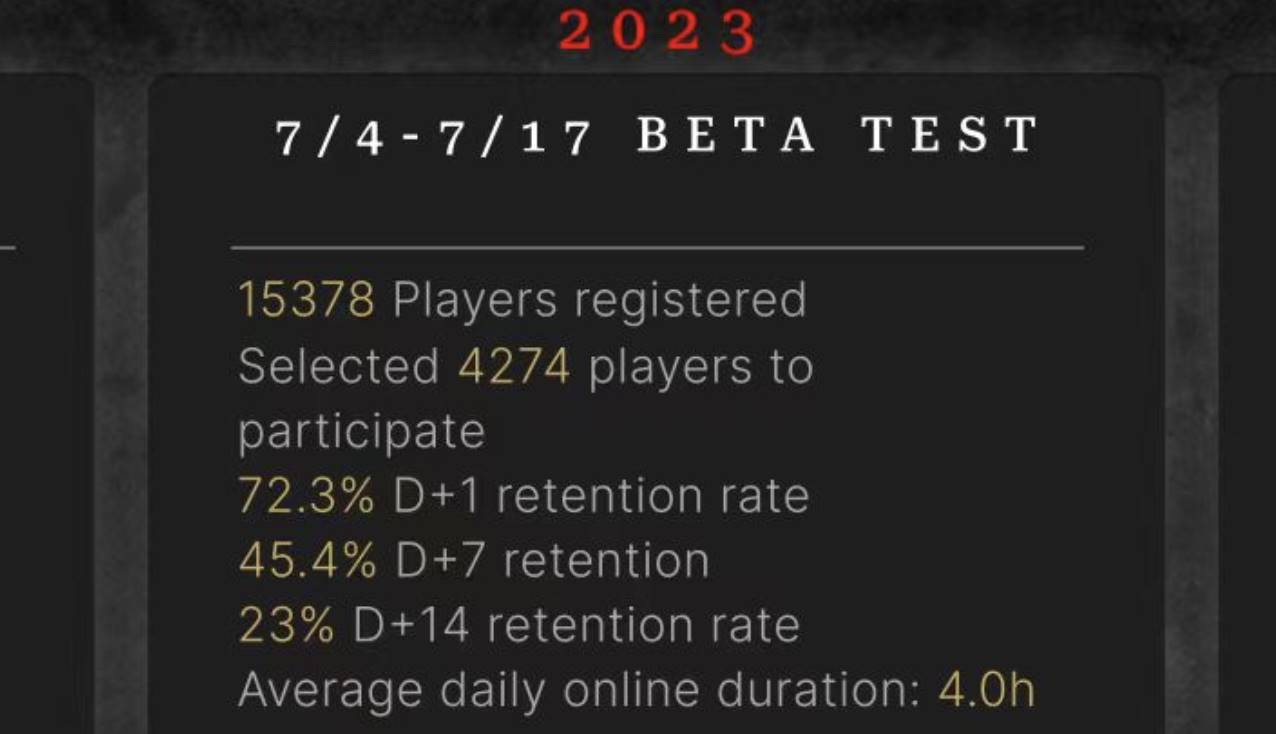
The Beta test showed encouraging growth. Registered players increased to 15,378—a 5.8% rise from the Alpha phase.
On-Chain Phase: Finding the Right Fit for Web3 Gold Farming
Since Seraph’s core gameplay revolves around “loot farming” (Farming/Loot Grinding), converting in-game items into on-chain assets is inevitable.
The question then becomes: how to make gold farming feel natural and balanced?
Seraph proceeded cautiously, conducting three distinct test phases to build this system.
-
The Beginning of Gold Farming: Chaos Legacy Test (2023.11.22–12.22)
This phase marked the initial integration of on-chain assets and the search for optimal alignment.
Strategic Focus
In November, the project sold Genesis Unique NFTs, which corresponded to various in-game gear with gold farming capabilities.
Balancing how such gear functions within defined rules is a longstanding challenge in farming games. Seraph built a full on-chain economic system and marketplace around NFT consumption, output, usage, and trading—all actively tested during this phase.
From this point onward, players could participate in gold farming, and the game’s revenue stream began shifting toward fees from NFT transactions.
Data Results
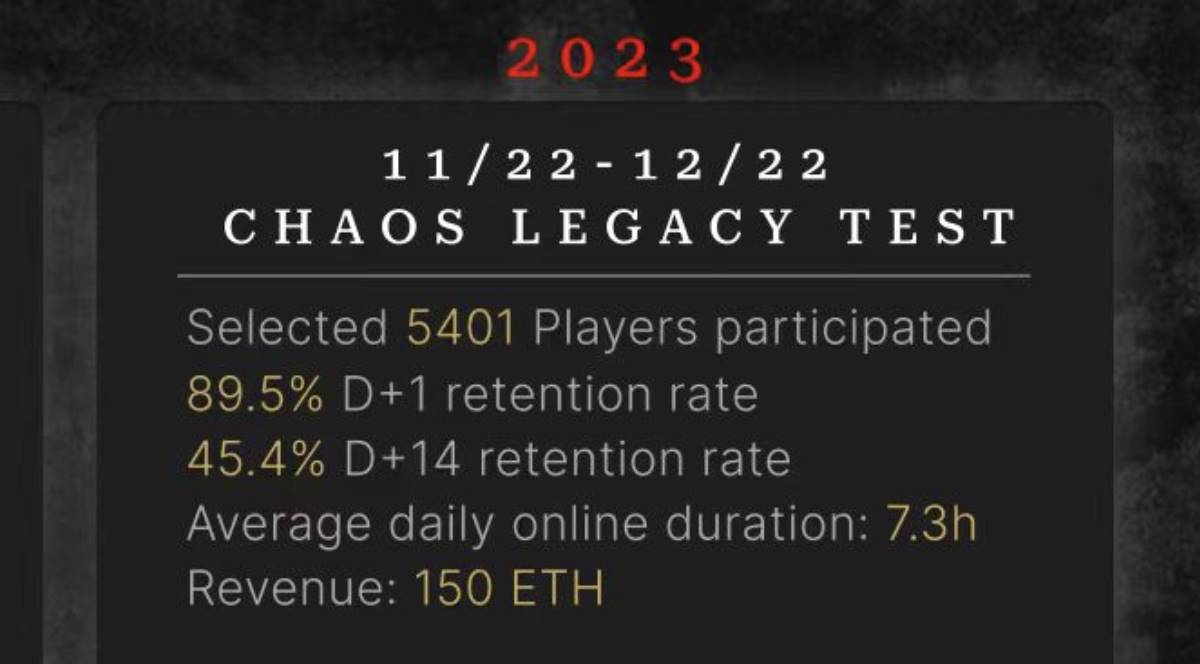
Performance during the Chaos Legacy test was impressive. After opening gold farming, player attraction surged, with day-one retention reaching a record high of 89.5%. Most notably, the game generated 150 ETH in revenue for the first time.
-
Commercialization Exploration: Preseason Phase (2024.4.19–6.7)
In early 2024, the crypto market warmed up significantly, bringing in a wave of new users. Seizing this opportunity, Seraph embarked on full-scale commercialization—a pivotal shift from product-centric to market-driven strategy.
Strategic Focus
The core goal of the Preseason phase was commercial breakthrough. The in-game store began selling items, becoming a major channel for fiat revenue.
At the same time, the game started building a complete revenue ecosystem encompassing NFT sales, tokenomics, and value-added services.
Data Results
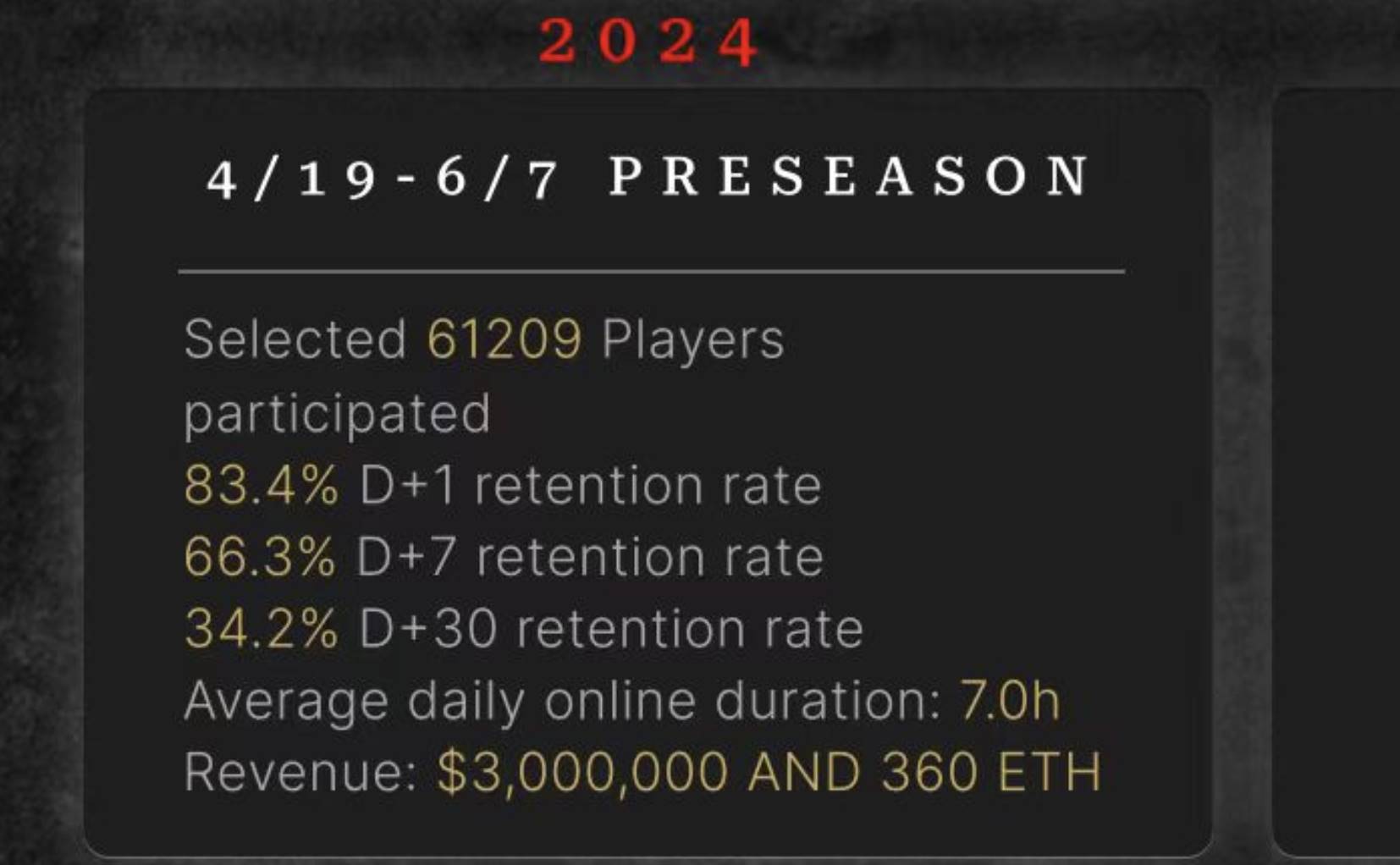
This phase achieved significant commercial success. Player participation exploded to 61,209 people, generating $3 million and 360 ETH in total revenue—validating the viability of its business model.
-
Full Commercialization and Global Expansion: Season0 (2024.8.22–9.25)
After validating gameplay and gold farming mechanics, Seraph officially launched Season0, capitalizing on market momentum with its unique gameplay and robust economy.
Strategic Focus
The core strategy of Season0 was scalable growth and sustainable development. Three areas were prioritized: continuous product iteration and content updates to maintain freshness and competitiveness; optimization of the token economy for long-term sustainability; and enhanced global expansion to tap international markets. Notably, Seraph introduced a balanced “Play-and-Earn” mechanism—distinct from earlier unsustainable P2E models—that harmonizes fun and financial incentives.
Data Results
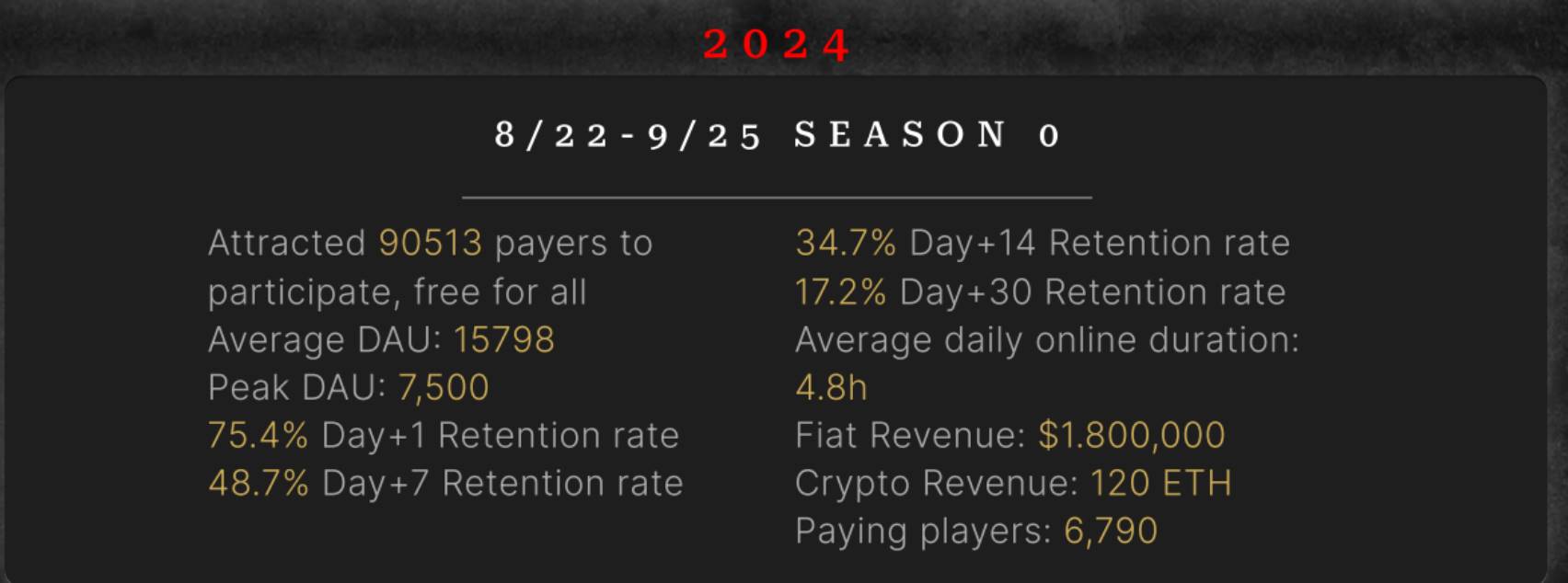
Daily active users (DAU) surpassed 15,000, with peak concurrent players exceeding 7,500. The game generated $1.8 million in fiat revenue and 120 ETH in crypto revenue.
As the crypto market continued to heat up and demand for differentiated games peaked, Seraph successfully seized the opportunity through its distinctive gameplay and mature economic system.
Global Market: Player Data from Season0
The data above shows Seraph excelled in both product refinement and project execution. But who exactly are these players? Does the game continue the trend of earlier Web3 games, appealing mainly to Southeast Asian users and gold farming guilds—or does it attract a broader, more diverse audience?
Latest user data from Season0 may hold the answers.
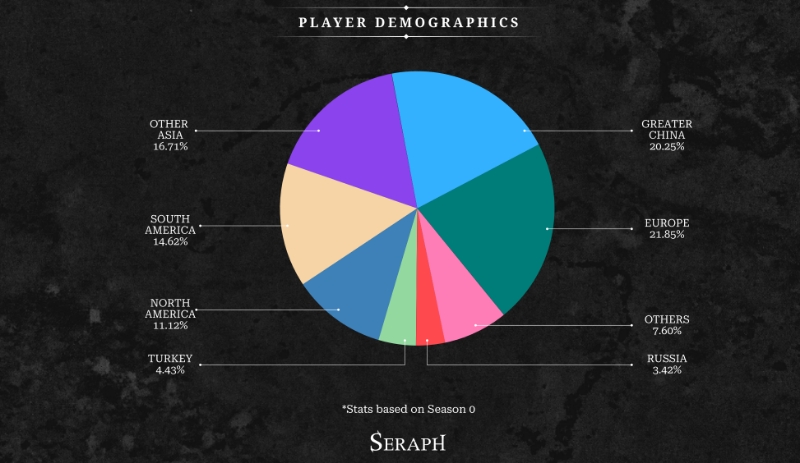
In terms of user distribution, players from Greater China and Europe dominate, each accounting for nearly 20%. Other regions follow in descending order: rest of Asia, South America, North America, Turkey, Russia, and others.
-
Asian players clearly dominate.
Greater China (20.25%) and other Asian regions (16.71%) together make up 36.96%, forming Seraph’s largest user base. This suggests strong appeal in Asian markets, likely due to alignment between game content/marketing and regional player preferences.
-
Strong presence in Europe.
-
Europe leads with 21.85%, marking Seraph’s successful penetration into Western developed markets—an indication of effective international design and localization strategies.
-
-
Emerging potential in the Americas:
-
South America (14.62%) and North America (11.12%) together account for 25.74%, forming another key market segment.
-
South America’s larger share compared to North America is noteworthy, possibly reflecting stronger growth in emerging markets.
-
-
Performance in emerging markets:
-
Turkey (4.43%) and Russia (3.42%) are called out separately, indicating strategic importance for Seraph.
-
Together they make up 7.85%, approaching the size of the North American market, underscoring the significance of emerging markets.
-
What insights can we draw from Seraph’s increasingly global player base?
-
Localization Strategy: Given the diversity of its user base, Seraph should strengthen regional localization efforts—including language support, cultural adaptation, and localized marketing.
-
Regional Content: Consider developing region-specific content or events for major markets (e.g., Greater China, Europe, South America) to further boost engagement.
-
Emerging Market Development: Recognize the growth potential in markets like Turkey and Russia, potentially requiring targeted expansion strategies.
Looking ahead, a truly global Web3 game must monitor regional user trends and dynamically adjust resource allocation and market strategies. Seraph must balance global consistency with regional customization to maximize potential across all markets.
What’s Next?
With the broader crypto market recovering, bullish sentiment growing, and user numbers increasing, the gaming sector will continue absorbing a large portion of both new and returning traffic—creating a prime window of opportunity for new products.
From Seraph’s past initiatives, multiple test rounds have established solid gameplay foundations, core functionalities, NFT systems, and on-chain infrastructure—earning recognition from a dedicated user base.
So what developments should we watch for going forward?
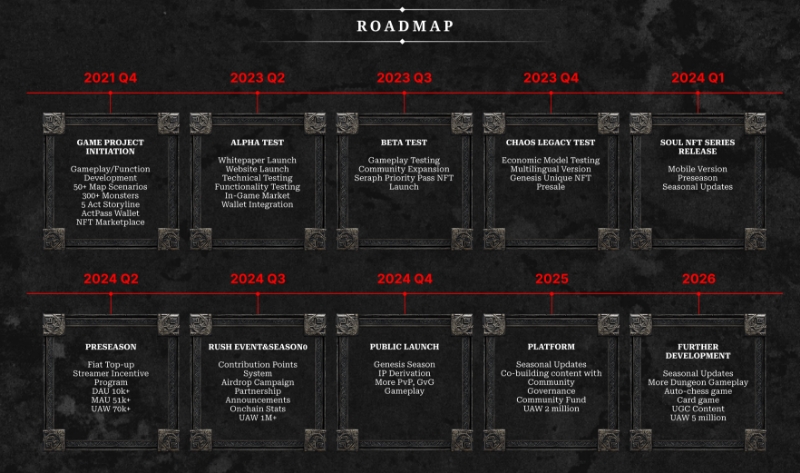
a) Rush Event & Season0: Ongoing User Acquisition Initiatives
In the recently completed Q3, the game launched a contribution points system to reward players for time and performance. Additionally, the Enyu Airdrop Program has begun—players complete tasks to earn "Stellar Enyu," which can be minted into NFTs. These NFTs are tradable or redeemable for future token airdrops.
The team will also release major announcements and establish a more comprehensive on-chain data analytics system.
b) Genesis Season: Public Launch in Q4, Larger Scale, More Gameplay
Q4 marks Seraph’s official debut to a wider audience. After multiple tests, the game will formally launch its “Genesis Season,” introducing more PvP modes to encourage deeper character building, along with GvG (guild vs. guild) combat to boost large-scale player engagement.
Beyond gameplay, Seraph recognizes the importance of IP. During this phase, it will expand its dark fantasy-themed IP into derivative products such as merchandise, animation, and NFTs.
c) Platform Strategy: More Than a Game—Building an Ecosystem Together
Seraph plans to build a powerful platform ecosystem. Key initiatives include co-creation with the community: in 2025, the Co-Building System will open three permissions—map design, quest creation, and equipment appearance customization. Community creators will earn revenue from their creations and benefit from a dedicated community fund. The team aims to reach 2 million unique active wallets this year.
d) Future: Sustained Update Momentum
While the crypto market evolves rapidly—making long-term 3–5 year planning difficult—projects like Seraph, with clear genre direction, can still chart a path forward.
Plans include seasonal updates, new dungeon modes, mini-games, social systems, and robust support for user-generated content. The ultimate goal: reach **5 million unique active wallets**.
e) Market Expansion: Focusing on Southeast Asia, Expanding Reach Through Events
At the recently concluded Binance Blockchain Week, Seraph attracted numerous attendees eager to experience the game and immerse themselves in interactive gameplay. Cosplay performances also resonated well with younger audiences.
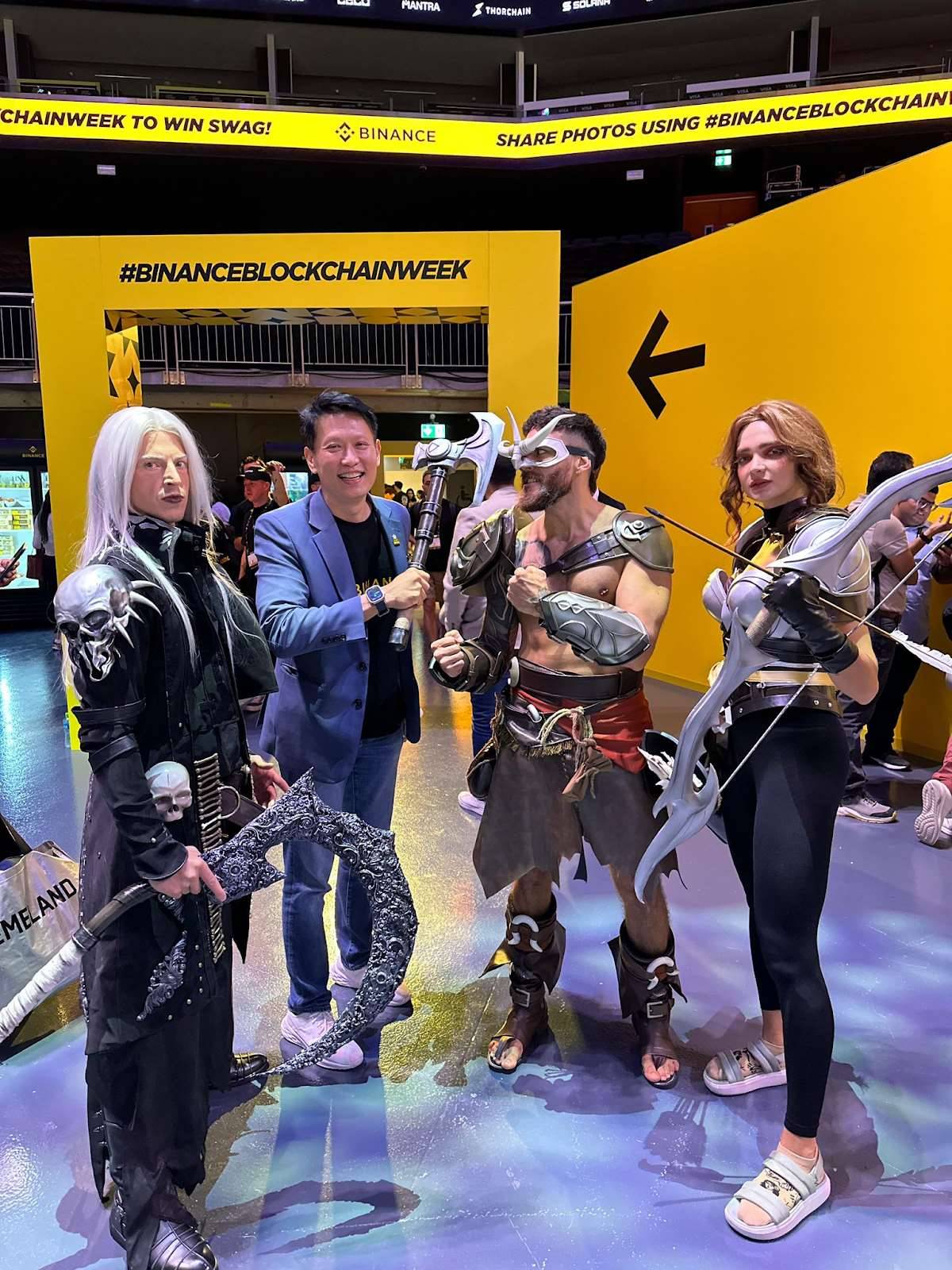
Building on this success, Seraph will expand its presence at a series of upcoming events across Southeast Asia—including Thailand Blockchain Week, the ongoing YGG Play Summit in the Philippines, and next month’s Taiwan Blockchain Week.
These regions are also hubs for active Web3 gaming guilds. The convergence of games, events, guilds, and players could become Seraph’s standard user acquisition and growth engine.
Conclusion
An old Chinese saying goes: “Well begun is half done.”
Over three years, through four testing phases and one full season, Seraph has demonstrated the ideal growth trajectory of a Web3 gaming project.
From validating core gameplay to refining economic models and deepening social systems, every step has been deliberate and solid. Especially in global outreach, its diverse user base confirms the success of its product design and operational strategy.
In the world of Web3 gaming, too many projects fail at the “from 0 to 1” stage. The real challenge lies in making the leap “from 1 to 100.” Seraph chose a gradual path—innovating while never losing sight of product fundamentals and user experience. Perhaps this is why it has managed to stand firm in a fiercely competitive market and earn sustained recognition from players worldwide.
In this still-evolving space, the projects that will endure over time are those that value not just short-term growth, but long-term vision.
All this remains to be seen—but are you ready to embark on the adventure?
Official Website: https://seraph.game/
X: https://x.com/Seraph_global
Telegram: https://t.me/seraph_crypto
Discord: https://discord.com/invite/seraphgam
Join TechFlow official community to stay tuned
Telegram:https://t.me/TechFlowDaily
X (Twitter):https://x.com/TechFlowPost
X (Twitter) EN:https://x.com/BlockFlow_News
 深潮TechFlow