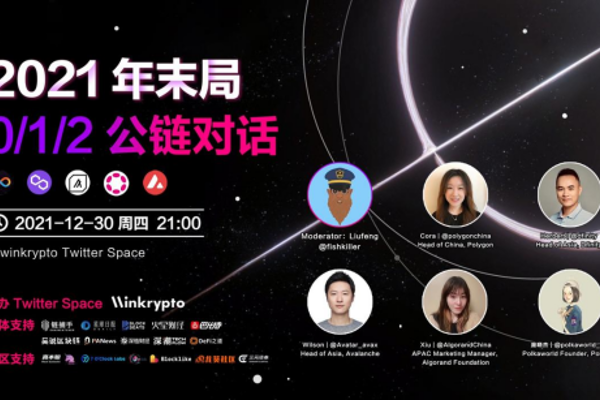
Roundtable Discussion: Discussing the Development Paths and Roadmaps of the Top 5 Public Blockchains/Layer2s
TechFlow Selected TechFlow Selected
Roundtable Discussion: Discussing the Development Paths and Roadmaps of the Top 5 Public Blockchains/Layer2s
When it comes to public blockchains,毫无疑问 this is the hottest topic of 2021. The projects with the fastest market cap growth this year are definitely public blockchain projects. Each public blockchain has carried out numerous initiatives and achieved significant innovations this year.
 Navigating Web3 tides with focused insights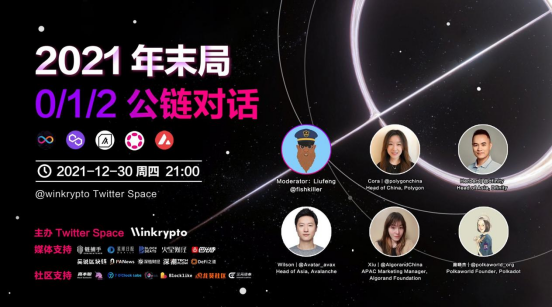
Host:
Liu Feng
Guests:
Herbert, China Regional Head of Dfinity
Wilson, APAC Regional Head of Avalanche
Cora, China Regional Head of Polygon
Xiuqi, APAC Market Lead at Algorand Foundation
Pang Xiaojie, Founder of Polkaworld
Liu Feng: It's great to gather everyone together at year-end to discuss public chains. Undoubtedly, this has been the hottest topic in 2021—the projects with the fastest market cap growth this year have all been public chain initiatives. Each major chain has made significant progress and innovations this year, both in underlying technology and upper-layer applications, achieving many remarkable milestones.
Before we dive into our discussion, I'd like each guest to briefly introduce themselves in one or two sentences, so the audience can get to know you better.
Herbert: I'm Herbert, Asia Regional Lead for the Dfinity Foundation. I entered this industry around 2017 while based in Silicon Valley, where I first became interested in Dfinity, captivated by its ambitious vision at the time. However, since the mainnet launch was still far off then, I joined AWS and led Amazon Web Services' startup ecosystem in Greater China. About half a year ago, I moved to Dfinity and now oversee ecosystem development across Asia.
Xiaojie: Polkaworld is the official Chinese community of Polkadot, funded by Web3 Foundation. I'm glad to be here today to discuss public chains with all of you.
Wilson: At this end-of-year moment, every chain and company is doing retrospectives. The rise of public chains this year was inevitable, driven by broader crypto market expansion bringing in massive new users. From Avalanche’s perspective, it’s been over a year since our mainnet launched, and the impact has been substantial. Personally, I spent over a decade in traditional finance—equities, derivatives, futures, fixed income—I’ve done it all. Since entering this space in 2018, I've been drawn to its flexibility, scale, speed, and influence. Joining Avalanche last year gave me a strong sense of platform-level potential. This entire year, my team and colleagues at headquarters have worked incredibly hard. In the Asia-Pacific region, I’ve witnessed dramatic market shifts firsthand. Markets only become truly exciting after undergoing transformation.
Cora: I’m Cora, currently serving as Polygon’s China Regional Lead. Before entering crypto, I returned from overseas studies and started my own international trading company. I got into the crypto space in 2017, learning about Bitcoin and eventually moving into market and community operations within the industry—now with over five years of experience. Polygon only changed its name this year; previously known as Matic, I started following Matic back in 2019 and bought some toward the end of that year—not as an employee yet—and honestly, I’m surprised by how far Matic has come. I officially joined Polygon in late September this year, leading marketing operations and business development in China.
Xiuqi: I'm Xiuqi, currently serving as Algorand’s APAC Market Lead. I recently joined Algorand, but I entered the blockchain industry in 2018, previously working in government media in Dubai, always focused on media and marketing roles.
Liu Feng: The public chain projects represented here today have all performed exceptionally well in 2021. So my first question: could each of you quickly share what you're most proud of and what makes your respective public chain’s ecosystem uniquely stand out this year?
Herbert: Our Layer 1 blockchain is called the Internet Computer, or IC for short, which launched in May. Half a year has nearly passed, and personally, there are three things I’m most proud of. First, our network has never gone down. At my previous job at AWS, downtime incidents were common, so maintaining stability as a provider of foundational infrastructure is critical. We’ve passed several stress tests. In July and August, when our ecosystem launched its first NFT project—an unprecedented event—the network held firm. Second, our foundation established a developer forum where nearly 80% of community discussions take place. For example, our DAO recently debated 25 future proposals, engaging deeply with developers and incorporating extensive feedback. We also likely have one of the largest R&D teams in the industry—nearly 200 people. This level of transparency and engagement with developers is rare—inviting prominent community developers to join our weekly global calls reflects the foundation’s open mindset toward co-building the ecosystem. Third, decentralization on the Internet Computer is solid: we now have over 400 nodes globally operated by more than 50 node providers. While we haven’t landed in China yet, that remains a key focus area for me. Our top priority in China must be decentralization—even if certain products launch later or move slower, not because we can’t build them ourselves, but because we want the community to drive development. This balance has been tested repeatedly, though finding the right equilibrium isn't easy. Over these past six months, we've learned through trial and error, gathering input without clear answers. Everyone talks about decentralization, but drawing the line is difficult. But whether observing the space earlier or now being inside the foundation, having experienced many stories with developers, I hope we continue down this path. I believe this approach could set a baseline standard for both Layer 1 and Layer 2 projects in the industry.
Xiaojie: From a data standpoint, Polkadot this year likely had the highest total value staked on-chain among all public chains—you could call it TVL. This refers only to the value of DOT staked directly on the Polkadot relay chain (Layer 0), excluding any TVL locked within parachains. In terms of total staked value securing the network, Polkadot ranks at the top among all public chains.
Wilson: Avalanche gave me a powerful feeling of going from zero to one. When I began promoting the project last year, almost no one around me knew about it. Most people had shallow understanding of public chains overall, chasing hype and concepts. But technically, product-wise, and platform-wise, it truly was building from scratch. Having lived through the volatile markets of 2018–2019 and the subsequent downturns, I’ve seen that despite market cycles, core technologies keep advancing and products keep getting built. After launching the mainnet last year, we developed the Avalanche Bridge with Ethereum—fast, low-cost, excellent user experience. At the heart of any ecosystem is opening a door for users to enter. Avalanche’s architecture is complex, consisting of X-Chain, P-Chain, and C-Chain, with most apps running on C-Chain. Early access required seven or eight steps—a major friction point. We’ve streamlined this significantly by integrating direct C-Chain access, allowing users to go straight from exchanges into our ecosystem. We also launched the Avalanche Rush initiative. Opening the door is just step one; once users come in, they need incentives. That’s why we offered a $100 million token reward program (currently valued at $1 billion). So first, we refined the base layer; second, opened the gate; third, provided incentives. Finally, we established ecosystem funds: Blizzard Fund in North America and AVATAR Fund in Asia. Through multi-layered efforts, we’ve grown from zero to one—our ecosystem now hosts vast applications, users, and assets, still growing rapidly. We’re also preparing for hackathons. What comes next is scaling from one to X.
We compare this to urban development. Building a new city starts with招商引资 (investment attraction), followed by talent recruitment, and industrial fund support. Investment attraction brings in projects, talent recruitment draws in users, and industrial funds provide investment or rewards to incentivize participation. At the fundamental level, the logic is identical.
Cora: No public chain is immune to bugs, and Polygon had one this year—but we handled it well. There was no panic in the price, and we took decisive actions including a hard fork. Losses were contained, and the incident was resolved smoothly. Overall, Polygon’s development this year included mainnet upgrades, announcements of major ecosystem plans, and rebranding from Matic to Polygon. Just recently, our agency WTMC compiled some ecosystem metrics: Matic rose from a January low of $0.01781 to a high of $2.92 this year—an increase of about 163x. Within the ecosystem, nearly 30 projects saw gains exceeding 20x, including Chainlink and notable names like Sandbox and Uniswap joining the Polygon ecosystem. To date, we host over 3,000 projects—an astonishing pace of growth. In May, we released our SDK; in June, launched Polygon Studio with a $100 million fund supporting sectors like GameFi, SocialFi, and Metaverse. In August, we acquired Hermez, a European ZK-focused team; in September, partnered with EY, one of the Big Four accounting firms. In November, we launched Polygon Miden; in December, acquired Mir. Our main Twitter account surpassed one million followers. Our Chinese Telegram group, created in April, now has 23,000 members. Looking back, our ecosystem expanded continuously, and our technical team strengthened throughout the year. Indeed, 2021 was Polygon’s breakout year.
Xiuqi: Algorand’s mainnet has run for two years without a single outage. This year, we achieved several key milestones. Most importantly, we officially launched decentralized governance. Total ALGO supply is under 10 billion, with two-thirds already circulating and one-third reserved for the ecosystem fund. Starting this year, decision-making power over this fund’s usage was fully transferred to the community. Any ALGO holder can participate in governance voting. Each governance period lasts approximately three months, totaling four per year, expected to continue for two to three years. Our first cycle began in October and concluded voting in December, with about 1.8 billion ALGO staked. Over 70,000 global participants voted, sharing 6 million ALGO in rewards—making this the most decentralized governance process among public chains to date. Additionally, Algorand initiated strategic deployments for ecosystem expansion, allocating 250 million ALGO to grants supporting new projects. Currently, we have around 800 partners—not a huge number, but ten times more than last year. Next year will see accelerated growth. We also launched a $150 million liquidity incentive program to boost DeFi staking. For each sector, Algorand allocates dedicated funding. Furthermore, in November, we launched the Center of Excellence program, partnering with universities to cultivate a diverse enthusiast community. Phase one received 119 expressions of interest from 45 countries. Officially, we estimate around 10,000 Algorand developers globally. Lastly, although Algorand enters its third year, external capital continues flowing in—last month secured backing from Citigroup executives’ $1.5 billion fund, alongside increasing inflows from traditional finance. Sustained funding remains crucial for any public chain.
Liu Feng: Next, let’s talk about openness. My first question stems from something I noticed: nearly every guest mentioned TVL when discussing their ecosystem growth. It seems this metric has become a widely accepted benchmark for measuring public chain ecosystem health. But is this indicator truly effective? Are there other meaningful metrics to assess ecosystem vitality? I’d love to hear your perspectives.
Xiuqi: For Algorand, TVL isn’t a good measure—we entered the DeFi space relatively late. With sufficient incentives, growth can accelerate quickly, and leading DeFi projects’ success would feed back positively into the native token price.
If focusing purely on a public chain’s foundational role, I believe three factors matter most: stability, security, and decentralization—these are core attributes. Other indicators like execution speed, energy efficiency, and developer-friendliness matter too, but perfection across all dimensions is impossible. Generally speaking, a stable, secure, sustainably evolving, and highly decentralized chain fits the ideal Web3 infrastructure profile. Ethereum once dominated market share, but recent data shows gradual decline as all public chains expand and capture portions of Ethereum’s market. Right now, most chains aim to gain incremental share from Ethereum. Many revolutionary Web3 ideas originated on Ethereum—CryptoKitties, Uniswap, etc.—so newer chains shouldn’t solely rely on TVL or application volume to compete with Ethereum in the short term. Instead, each chain should clarify its positioning and long-term direction. Some serve as Ethereum scaling solutions, others target niche verticals or functional specialties. Algorand positions itself as a financial public chain, now enhanced with “green blockchain” branding. Our tech team comes largely from academic and industrial backgrounds, so resources lean toward mainstream collaborations. Personally, I enjoy bottom-up crypto trends—this year’s DAOs, domain names, metaverse concepts—but also recognize top-down drivers like Web2 policy shifts: carbon footprint awareness, environmental sustainability, financial reform, national infrastructure developments. Algorand aims to bridge old and new systems: stable operation and regulatory compliance enable partnerships with mainstream institutions and governments—for instance, El Salvador, which adopted Bitcoin as legal tender, collaborated with us. We’re sensitive to global trends, hence launching a carbon-neutral green chain this year and allocating special funds for government-linked projects. Therefore, evaluating ecosystem health shouldn’t focus solely on app volume but rather on sustainable development within one’s strategic niche. For Algorand, future evaluation metrics will be multifaceted.
Xiaojie: Polkadot doesn’t really fit the typical definition of TVL. Staking DOT secures the network, so in terms of network security and decentralization, Polkadot ranks among the leaders. The staked DOT value differs from conventional TVL—it’s used specifically to maintain network security. Currently, over 600 million DOT are staked. As for metrics measuring ecosystem health: compared to other chains present here, Polkadot often faces criticism regarding its ecosystem. However, Polkadot isn’t a Layer 1 blockchain—it’s a Layer 0 protocol, more abstract and foundational. If unfamiliar with Polkadot’s relay chain and parachain relationship, think of it as a Layer 0 base protocol. Parachains connect via parachain auctions. Simplifying: each parachain functions like an independent Ethereum. Thus, comparing Polkadot’s ecosystem to existing Layer 1s isn’t apples-to-apples. Comparisons should instead focus on individual Layer 1 projects within the Polkadot ecosystem. Why is 2021 considered Polkadot’s ecosystem year? Because parachains went live, enabling applications to grow on them. Only developers familiar with Ethereum can begin building on Layer 1 parachains, meaning the ecosystem is just beginning to form. Although Polkadot’s whitepaper has existed for five years, only this year did we fully realize its vision. The ecosystem will gradually mature in 2022, eventually capturing value back to Polkadot itself. Metrics around scalability, performance, and decentralization will only become comparable after XCMP optimization in 2022. For now, we can say Polkadot achieves sufficient decentralization and security. In 2022, the focus shifts to performance optimization, enabling parallel chain ecosystems to flourish organically.
Herbert: From the Internet Computer’s perspective, three metrics indicate healthy public chain development: speed, storage cost, and dApp diversity. As an application network, efficiently and reliably running web programs is paramount—even more important than asset valuation. Currently, write speeds are under 2 seconds; read-only operations finish within 200 milliseconds. Over the past six months, ongoing optimizations have steadily improved performance, and we aim to reduce latency below 50ms within two to three years—at which point playing games like Honor of Kings directly on-chain becomes feasible. Only then can we support enterprise-grade services. Second, storage costs: consider the Internet Computer as a decentralized Alibaba Cloud, offering smart contracts plus decentralized storage and compute. Today, storing 1GB annually costs $5—a competitive advantage. With over 400 global nodes, increasing node count further reduces costs. This offers developers predictable cost modeling for web applications. Third, dApp diversity: while quantity and depth matter, variety is equally vital. We aim to disrupt the entire internet, rewriting the pricing model at its foundation. Recently, during our October hackathon, the grand prize went to an email system built entirely on IC—gaining significant attention from crypto funds. Just days ago, I saw another project building YouTube on IC. That’s something I’ve long wanted to do—YouTube being one of Web2.0’s greatest achievements. In China, we hosted a hackathon where Zhejiang University’s Blockchain Lab won first prize by porting Python onto our blockchain, allowing users to pip install packages directly from package managers and run Python natively on IC. Others have brought MATLAB and even Java onto IC—remarkable and inspiring developments.
Wilson: I liken TVL to GDP in an economy—it correlates with output, activity levels, and total asset volume. Higher asset volumes reflect richer, more active ecosystems. Other metrics can be faked, but real money (TVL) is hard to fake, making it a credible measure of scale. Beyond that, assessing an economic environment requires three key indicators: number of developers, number of users, and transaction volume. These represent structural and circulatory layers. Think of cities: why did people buy Shenzhen property ten years ago when population wasn’t large? Because massive influx followed, driving up prices. But would those incoming residents matter without growing enterprises? Not really. Business growth and user adoption fuel each other, raising land and housing values. Same applies on-chain. Structurally, are more developers actively building? Is user influx increasing? These relate to the third factor: transaction volume, which is vital. During the pandemic, despite dense populations and numerous businesses, economies froze due to lack of movement—no shopping, no commerce, blood stopped circulating, leading to collapse. Similarly, transaction volume measures actual activity. Combined, these three elements inevitably drive metric growth.
Cora: I largely agree with Wilson. Earlier this year, we emphasized TVL because it grew rapidly, along with rapid ecosystem expansion—we also highlighted the number of dApps. For a public chain, visible data signals active development, which is positive. Data matters, but it’s not everything. A few days ago, news said Luna had the highest TVL among all chains—indicating strong current momentum. But what about afterward? Crypto moves fast—one day here equals ten years elsewhere. So we should look at the bigger picture. Though over 300 million people globally hold digital assets, relative to the world’s total population, that’s small. Consider China alone—our numbers aren’t big yet. Despite blockchain’s strong 2021 performance and Bitcoin’s surge, our overall footprint remains limited. As public chains, we must solve three core challenges: security, decentralization, and scalability. Security comes first—if networks crash or bugs occur, developers and investors lose confidence. Then comes decentralization and scalability. Polygon chose to build a Layer 2 solution atop Ethereum partly because our founding team consists of early Ethereum developers who deeply understand Ethereum. Ethereum is modular, prioritizing security and decentralization. Yet DeFi and dApp booms this year caused congestion, creating unprecedented demand for block space. Over time, Ethereum’s proven security gives us confidence. Building Layer 2 atop it allows us to reduce gas fees and improve transaction speed. Now, public chains are in an explosive phase, facing performance bottlenecks. Polygon focuses on pushing scalability to the extreme—acquiring two ZK-based solutions and continuously improving them. Thank you, Professor Liu, that concludes my part.
Liu Feng: Our next topic: How important is EVM really for public chains? At least I see several teams using EVM.
Wilson: For users, simplicity is paramount. Imagine using WeChat Pay but needing to switch between different versions in every city—it’d be frustrating. Today, each chain resembles a city: Beijing, Shanghai, Shenzhen, Tokyo, New York—each with unique traits. Users don’t yet perceive differences clearly because we’re still early. But if we use simple interfaces to connect them all, switching becomes seamless. In an open ecosystem, user freedom of choice is essential. In the earliest stages, we need high-traffic entry points—welcoming everyone openly. Problems we can solve better than others should remain strengths, but high-quality projects elsewhere should ideally have smooth pathways into our ecosystem. Future evolution will involve homogenization—certain aspects converging toward universal standards—while others diverge into differentiation. Application types, project categories, user demographics, and behaviors will gradually shape distinct cultures across different chains, reflecting user preferences. Hence, I propose two directions: consensus-driven standardization moving toward simpler, unified protocols; and product/project-level differentiation creating unique identities.
Cora: We are EVM-compatible because Ethereum enjoys the strongest consensus and largest base of developers fluent in its language. As an Ethereum Layer 2, we leverage Ethereum’s Layer 1 security. Ethereum’s developers didn’t prioritize scaling, leaving room for us to fill that gap. For developer convenience and seamless migration of existing Ethereum ecosystem builders to Polygon, we emphasize full EVM compatibility—including similar address formats. This simultaneously addresses Ethereum’s high gas fees and excessive congestion. However, we can’t assume EVM dominance forever—this industry evolves too fast. Early this year it was DeFi, now it’s DAO, with multiple trends in between. We can’t say Ethereum will dominate indefinitely. Still, after many years, Ethereum remains unmatched in security and stability. A robust foundational infrastructure opens immense creative possibilities for developers—proven by genius builders emerging from Ethereum’s ecosystem. Yet today, overcrowding causes high fees and slow speeds. The safest approach now is providing scalable solutions. Layer 2 is still very early—that’s why we see newcomers like Metis and Arbitrum performing strongly lately. Perhaps in the future, platforms like Algorand’s AVM could gain widespread adoption. For now, EVM offers the most comfortable experience.
Xiuqi: This year we launched our own virtual machine, AVM. Compared to EVM, AVM was developed recently, so naturally faster, more energy-efficient, cheaper, and simpler. But given current ecosystem size, those advantages seem irrelevant today. Still, let’s highlight benefits: developers can write in Python—chosen initially due to wide adoption and abundant tools—enabling familiar workflows. We also offer compatibility libraries translating Python code into Algorand-executable format. Version iteration is faster and more efficient—no forks, continuous adaptation to changing needs, ensuring sustainable evolution. Costs are lower, gas fees reduced. Essentially, AVM delivers everything EVM offers. Regarding ecosystem scale, competition for app growth is fierce this year, making EVM compatibility feel especially critical. Many teams prefer EVM familiarity. Whether Algorand will adopt EVM in the future—I don’t know. Some ask whether adopting EVM means ultimately working for Ethereum’s ecosystem. That view may be overly absolute. Crypto users exhibit strong native social stickiness. Long-term, cultivating loyal users and projects within our own ecosystem is crucial—first build a core fanbase, then attract outsiders. Broadly speaking, Ethereum leads in smart contracts, but we should believe in a diversified, phased future for public chains. EVM is undeniably attractive—large, vibrant—but if mainstream trends shift or regulatory issues arise, variables emerge. Everything is still early. I believe non-EVM chains like Algorand will find their opportunities.
Xiaojie: EVM was written by Gavin in 2015. In an interview, he admitted EVM represents the present. Polkadot will support EVM, but he believes Wasm is the future. Let me add another angle: this year felt surreal—EVM may be the industry’s third consensus after BTC and smart contract consensus. Ever since BSC added EVM compatibility, many chains followed suit. On one hand, Ethereum cultivated an unmatched ecosystem. New chains seeking rapid growth find EVM compatibility the fastest route—copying Ethereum’s developers,玩法, and apps onto their own chains. On the other hand, chains adding EVM aren’t merely copying—they optimize and improve upon Ethereum’s EVM, reducing gas fees and enhancing UX. Both developers and users benefit. So we should view EVM adoption holistically. For Polkadot, EVM is the present, Wasm the future. Among Polkadot’s five launched chains, why does Moonbeam see much higher user growth? Because it fully supports Ethereum EVM. They recognized the trend—compatibility enables ecosystem growth, allowing top-tier NFTs, DeFis, and teams from Ethereum to migrate seamlessly. Thus, Polkadot hosts fully EVM-compatible chains, EVM+ variants like Acala—which adds optimizations combining current EVM realities with subchain enhancements—essentially upgrading EVM for better developer experience. But this introduces barriers; unlike Moonbeam’s plug-and-play ease, Acala filters some users. Theoretically optimized, but longer developer onboarding cycles. So Polkadot’s ecosystem includes EVM, EVM+, and future Wasm-focused projects like Patract—phased development. The relay chain protocol itself won’t do these things, but supports ecosystem projects to first achieve compatibility, then upgrades, then explore Wasm.
Herbert: While others discussed rapid changes, Dfinity never lost sight of our初心. Our network is called the Internet Computer, with our own VM—not relying on Ethereum’s EVM. But recently we passed 25 proposals, the most anticipated being cross-chain interoperability with Ethereum within months. This isn’t just a bridge—it’s deep integration. Using Chain Key Technology, we can generate signatures on IC that all Ethereum smart contracts recognize. Conversely, since our smart contracts run in containers, we’ll operate full Ethereum nodes inside those containers—enabling bidirectional communication. Smart contracts become fully interoperable, assets freely transferable between Ethereum and IC. This will be completed in coming months. Once done, we’ll create an environment on IC capable of running EVM natively—extremely developer-friendly. After all, since 2015, most developers emerged from Ethereum’s ecosystem—including many Dfinity engineers and leaders. This trend will continue. Through technical upgrades, we aim to make our stack friendlier for Ethereum developers. Last month in Miami, an artist created an NFT series—smart contract on Ethereum, digital assets stored on our chain—showcasing innovative hybrid models. As full Ethereum integration completes, expect more such cases in NFTs, SocialFi, GameFi.
Liu Feng: One final question—please summarize in one sentence: what will be the most important product in your public chain’s ecosystem next year?
Herbert: Tomorrow’s most anticipated upgrade is cross-chain signing. Once complete, we’ll first integrate with Bitcoin, enabling smart contracts on Bitcoin, then proceed with full Ethereum integration via Chain Key Technology for cross-chain signatures.
Xiaojie: If Polkadot implements the XCMP protocol successfully, that would be a major achievement. Full implementation would enable seamless interaction between parachains—hopefully fully operational next year. On the parachain front, DeFi will likely lead the way.
Wilson: Here’s what I look forward to: our underlying tech is solid, but our wallet lags behind—only a web version exists, leaving room for improvement. Second, ecosystem growth. Two fronts: connectivity—we’re EVM-compatible, but our bridges aren’t smooth enough; expect smoother integration next year. And project-level breakthroughs: once infrastructure and mechanisms are ready, application growth should multiply tenfold. With solid foundations laid, I most anticipate an ecosystem explosion. Next year, sectors will likely experience spiral growth and cross-sector synergy. Watch USDC growth—USDT serves retail entry, USDC is institutional gateway, more compliant. Rising USDC indicates institutional inflow. More institutions will enter next year, thickening ecosystem foundations. Speculative capital will rotate across hot sectors. I expect another year of spiral upward momentum.
Cora: I think Polygon will continue advancing technologically, particularly in ZK. Progressing roughly at this year’s pace—SDK, Miden this year, perhaps new technical breakthroughs next. Noteworthy product: our partnership with Opera—next year they’ll release a wallet. Stay tuned for Opera Wallet. Polygon aims to become more decentralized. We continue tackling the classic trio: security, decentralization, scalability. Also, more SocialFi and Metaverse projects are applying for Polygon Grants, with higher-caliber teams and superior project quality. I expect outstanding SocialFi and gaming projects to shine next year—I’m very excited.
Xiuqi: Next year, Algorand’s ecosystem projects will see a wave of breakout releases—some things arrive late but surely. Projects we support in DeFi, NFTs, gaming will receive strong boosts, triggering explosive ecosystem-wide growth—highly anticipated. Technically, early next year Algorand will launch a new feature called State Proofs, providing post-quantum security and enhancing cross-chain interoperability. Currently, Algorand remains relatively closed, so interoperability will be crucial.
Join TechFlow official community to stay tuned
Telegram:https://t.me/TechFlowDaily
X (Twitter):https://x.com/TechFlowPost
X (Twitter) EN:https://x.com/BlockFlow_News