Podcast Notes | From Data Companies to Institutional ETFs, The Logic Behind Insiders' All-In Bet on Hyperliquid
TechFlow Selected TechFlow Selected
Podcast Notes | From Data Companies to Institutional ETFs, The Logic Behind Insiders' All-In Bet on Hyperliquid
"Stablecoins voluntarily forgo 90% of the yields, just to join the Hyperliquid story. This has never happened in crypto history."
 Navigating Web3 tides with focused insights
Organized & Compiled: TechFlow
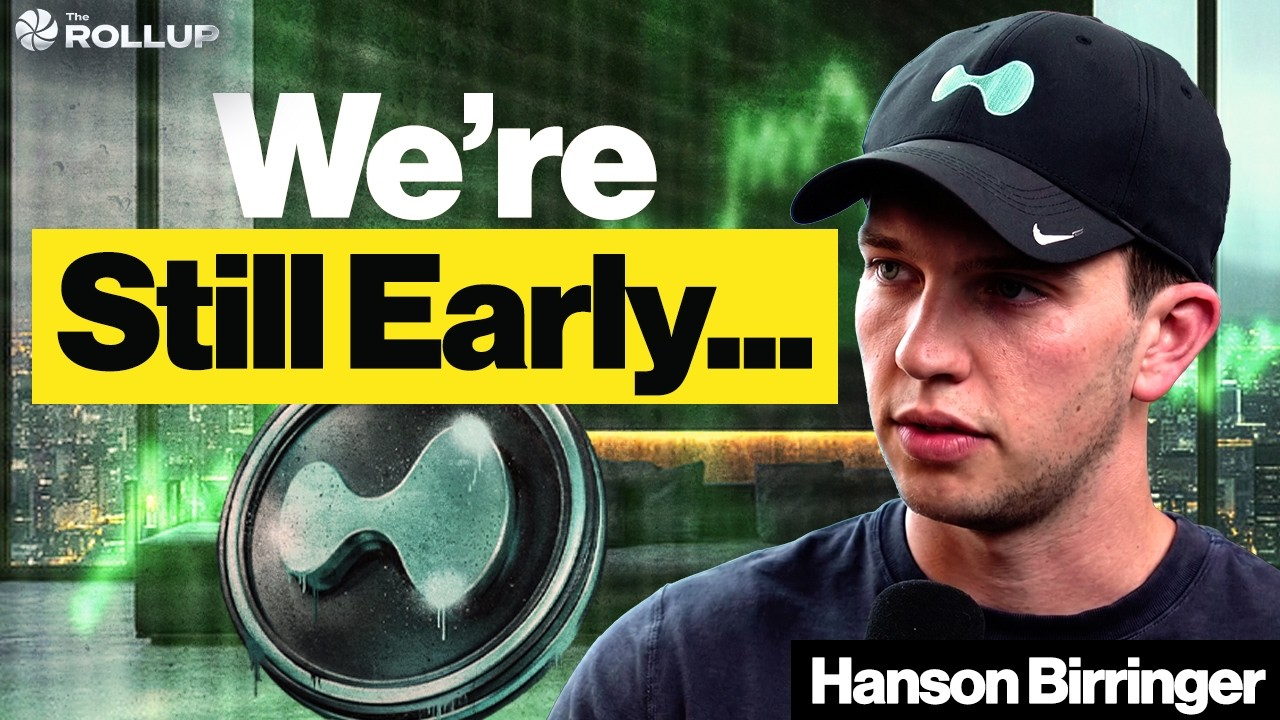
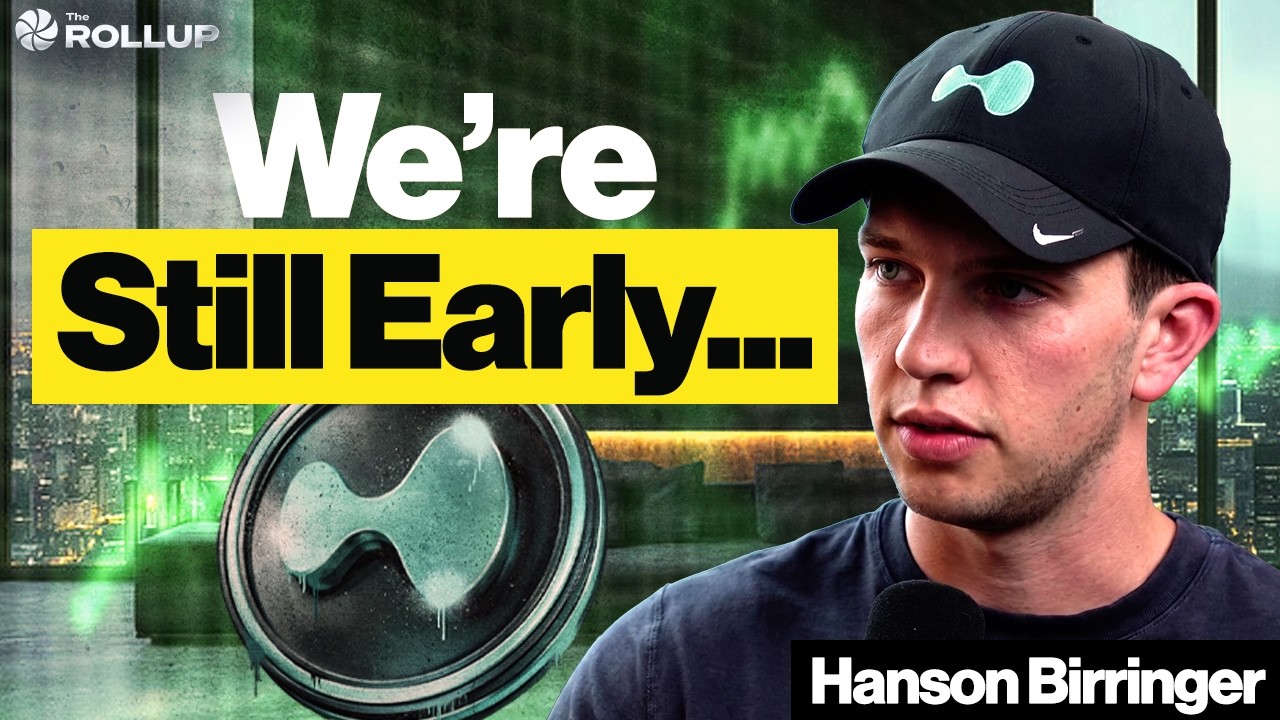
Guest: Hanson Birringer, Co-founder and Chief Revenue Officer of Hyperdash (data analytics and trading platform in the Hyperliquid ecosystem), Core Contributor to Hyper Holdings Global (seed investment institution for Grayscale Hyperliquid ETF)
Hosts: Rob (Robbie Klages) & Andy, The Rollup
Podcast Source: The Rollup
Original Title: Hyperliquid Co-founder: Hyperliquid Bull Thesis for 2026 (Updated View)
Broadcast Date: July 14, 2026
Disclosure: The guest has deep financial ties with Hyperliquid through Hyperdash (business entirely dependent on the Hyperliquid ecosystem) and Hyper Holdings Global (SPV raising funds for Grayscale HYPE ETF). The following content should be understood as statements from an ecosystem insider, not independent third-party analysis.
Key Takeaways
Hanson Birringer previously worked in OTC institutional business at Flowdesk and officially joined Hyperdash full-time this year. Hyperdash is a trading data analytics platform built entirely on Hyperliquid (its commercial revenue is directly tied to the growth of the Hyperliquid ecosystem). He also provides seed funding for the Grayscale Hyperliquid Staking ETF through Hyper Holdings Global; this ETF is currently the lowest-fee HYPE staking product on the market.
Birringer's core thesis can be summarized as: perpetual contracts, tokenization, and stablecoins—these three trillion-dollar tracks are accelerating simultaneously, and Hyperliquid is the only asset in his view that can express all three in one package. He believes revenue from HIP-3 RWA perpetual contracts alone could grow 100x within ten years, as global derivatives notional trading volume is measured in trillions of dollars. After USDC became the aligned quote asset on Hyperliquid, the issuer voluntarily gave up 90% of interest income, automatically repurchasing HYPE through the Assistance Fund, forming hundreds of millions of dollars in buy pressure annually. It needs to be reiterated that Birringer's own company and investment entities are deeply tied to the Hyperliquid ecosystem; his statement that "bearish reasons are hard to find" needs to be read in this context.
Highlights Summary
On the Convergence of Three Major Trends
- "Hyperliquid is the pure expression of three decade-long major trends: perpetual contracts, tokenization, and stablecoins. It is hard to find another asset that covers all three directions simultaneously."
- "In my ten-year crypto career, Hyperliquid is the only thing that has let institutional capital and the decentralized world truly grow together, rather than each going their separate ways."
On Stablecoin Revenue Sharing
- "USDC did something never done before in crypto history: voluntarily giving up 90% of yields just to join Hyperliquid."
- "There is currently about $10 billion in stablecoin supply on Hyperliquid; 90% of interest income goes into the Assistance Fund to programmatically repurchase HYPE on-chain. This adds hundreds of millions of dollars in buy pressure to the protocol annually."
On Revenue Growth Potential
- "If you have worked in traditional finance, you know that market is so big your brain cannot comprehend it. Options notional trading volume is at the trillion-dollar level."
- "This revenue should grow 100x in the next ten years. If trading volume grows 100x, margin and collateral also grow 100x, then the repurchase pressure from USDC V2 will also grow 100x."
On Institutional Adoption
- "Zach Pandl (Head of Research at Grayscale) told me that investors view Hyperliquid as a 5 to 10-year long-term holding. Their mindset is: we can't go back and tell LPs that we missed the three biggest outlets in the digital asset industry."
- "Hyperliquid is one of the fastest-growing companies globally, with only 10 to 11 employees. Everyone in the crypto circle knows it, but the crypto circle is just a small part of the global economy."
On Tokenomics
- "Hyperliquid breaks the old model of the crypto circle. Previously, tokens earning $500 in revenue per month were valued at $2 billion. HYPE is different; it is a real growth company with real cash flow, 99% of which goes to token holders."
- "Zach said Hyperliquid sells better than their other ETFs because there is a revenue story and a repurchase story. You can value this thing like valuing a stock."
Main Text
Chapter 1: The Pure Expression of Three Major Trends
Rob: The investment thesis for Hyperliquid has evolved significantly over the past two years. When you go on roadshows to high-net-worth clients and institutional allocators, what thesis resonates with them the most?
I think I can speak from several levels. There are several core reasons why investors, researchers, and traders are excited about Hyperliquid. First, it is open-source, permissionless, and decentralized, treating all participants equally. Second, it pairs crypto-native spirit with a truly high-performance financial system; institutional capital can actually participate in this decentralized world, which has never happened before. In my ten-year crypto career, Hyperliquid is the only thing that has let institutional capital and the decentralized world truly grow together, rather than each going their separate ways.
Andy: We have been discussing the three major trends of perpetual contracts, tokenization, and stablecoins. For communities and capital wanting to express a bullish view, why is Hyperliquid the best asset?
I believe Hyperliquid is the pure expression of these three trends. In terms of perpetual contracts, Hypercore is the leading perp DEX, competing with centralized exchanges in OI and trading volume. From a liquidity perspective, it is already the best or second-best market for certain trading pairs. HIP-3 introduced RWA perpetual contracts, effectively combining two major trends into one product. Hyperliquid is currently the undisputed category leader in the field of RWA and stock perpetual contracts.
In terms of stablecoins, USDC recently became the Aligned Quote Asset V2; the market may not yet fully understand the weight of this matter. USDC did something never done before in crypto history: voluntarily giving up 90% of yields just to join Hyperliquid. There is currently about $10 billion in stablecoin supply on Hyperliquid; assuming the underlying T-bills earn a 4% net interest margin, 90% goes into the Assistance Fund to programmatically repurchase HYPE on-chain. This adds hundreds of millions of dollars in buy pressure to the protocol annually, not counting trading fee revenue.
So HYPE, as a token and ecosystem, truly covers all three trends of perpetual contracts, RWA, and stablecoins, and there is a compounding effect between them.
Chapter 2: Builder Codes: Hyperliquid's AWS Moment
Andy: Jeff (Hyperliquid Founder) said in a podcast on Valor a few days ago that Hyperliquid is now more like AWS, providing underlying infrastructure for perps, RWA, and trading. Liquidity begets liquidity; how does this flywheel turn?
Every time a new frontend connects to Hyperliquid's Builder Codes, such as Phantom, MetaMask, Valor Exchange, users across the ecosystem benefit. More frontends mean more market makers coming in, OI growth, spreads narrowing, and better user experience. This positive cycle will continue to accelerate as more frontends connect.
But there is a realistic problem: regulated frontends like Kalshi cannot directly use Builder Codes. Kalshi created its own perp product, but OI for all trading pairs is very low because they must go through KYC and CFTC compliance processes. The situation with Robinhood is similar; Light deployed a completely independent instance on Robinhood Chain, and liquidity cannot compare to the Hyperliquid mainnet.
Chapter 3: Regulatory Game: Can Decentralized Venues Enter the US Market?
Andy: What regulatory resistance does Hyperliquid face? How can HIP-3 and Builder Codes reach regulated consumer frontends like Robinhood, Revolut, and eToro?
The world is large, and every country has its own rules. Hyperliquid as an L1 is open-source and permissionless; anyone can participate. The Hyperliquid Policy Center recently did extensive work in Washington, and Phantom also submitted comments to the CFTC, pushing for decentralized venues to obtain regulatory clarity. If the CFTC ultimately allows regulated broker-dealer frontends to execute orders through the Hyperliquid backend, that would be a huge tailwind.
Hyperliquid is taking the initiative on regulation, not reacting passively. Jeff personally went to DC to talk with regulators a few months ago. The US is the market with the largest capital scale; these conversations are only moving in the right direction.
Chapter 4: Revenue Outlook: The Trillion-Dollar Market for RWA Perpetual Contracts
Andy: Total OI in the HIP-3 market reached $3.6 billion yesterday, a historic high. Plus priority fees and revenue from USDC V2 starting from August 26, with the first distribution on October 3, how do you view Hyperliquid's revenue growth over the next year or two?
I believe forward-looking revenue will be completely dominated by HIP-3 RWA perpetual contracts. This market is too big. If you haven't worked in traditional finance, you might really not know what you don't know. Global options notional trading volume is at the trillion-dollar level. Some ETFs have daily notional trading volumes of trillions of dollars. Perpetual contracts also have leverage; if Hyperliquid can capture a small portion of global trading volume, this revenue should grow 100x in the next ten years.
When trading volume grows 100x, margin and collateral also grow 100x. Currently there is $5 to $10 billion in margin; if it grows to $50 billion or $100 billion, the repurchase pressure from USDC V2 will also grow 100x. These numbers look very large when put together.
Chapter 5: Grayscale ETF and Hyper Holdings: Opening the Institutional Gateway
Rob: How did Hyper Holdings collaborate with the Grayscale ETF? What happened behind the scenes?
Hyper Holdings Global is a special purpose fund set up specifically to seed the creation of the Grayscale Hyperliquid Staking ETF. All information is public in SEC filings. We contributed assets in-kind to the Grayscale ETF; this ETF is currently Hyperliquid's lowest-fee staking product.
There are several reasons for choosing to collaborate with Grayscale. They are the largest crypto asset management company globally, with AUM close to $20 billion, and were the first institution to win a lawsuit against the SEC to obtain approval for crypto ETPs. They are working together with the Hyperliquid Policy Center to advance regulatory matters.
For institutional investors, the significance of ETFs is reducing friction. An institutional client wants to buy HYPE; he doesn't have a Coinbase account and cannot directly access Hyperliquid in the US. He might have to go through an OTC broker like Flowdesk, but the compliance approval process is long. Now he can open a brokerage account and buy the ETF with one click. Of course, liquidity is an issue; if the ETF only has $2 million AUM, it is unrealistic for a client to want to build a $10 million position. So diversification of holders during the seed period is important, allowing new institutions to get sufficient scale.
Our investor portfolio includes some of the largest hedge funds and VCs in the crypto field, as well as the largest on-chain HYPE holders globally. Next, we will cooperate with Grayscale to conduct institutional roadshows and investor education.
Chapter 6: Token Holders as First-Class Citizens
Andy: Zach Pandl said Hyperliquid sells better than their other ETFs because there is a revenue and repurchase story. What old model did HYPE break in terms of tokenomics?
Hyperliquid breaks the traditional valuation model of the crypto circle. In the 2017, 2021, and 2024 cycles, a large number of tokens relied on the imagination premium of "what if we did XYZ on the blockchain." A project earning $500 in revenue per month valued at $2 billion is not right.
HYPE is different. It is a real growth company, capturing multiple major trends, with real cash flow, 99% of which goes to token holders. You can value HYPE like valuing a stock: there is trading fee revenue, stablecoin interest income, and priority fee income, all returned to holders through on-chain repurchases. Holders can also stake HYPE to earn staking rewards, and traders holding HYPE can enjoy discounted fees. HYPE is a productive asset.
This also explains why Grayscale feels it sells well. Once you step out of the "faith-based pricing" framework of Bitcoin and Ethereum, investors start demanding real cash flow and value attribution. Hyperliquid happens to fill this gap.
Chapter 7: Hyperdash Business Model and Imperator Acquisition
Rob: Hyperdash has already processed over $35 billion in trading volume. What is your business model? Why acquire Imperator?
Hyperdash is a global brokerage and trading data analytics platform. Simply put, you can trade through our terminal; we provide advanced tools and execution capabilities not available on other platforms, such as private TWAP and advanced algorithms. At the same time, we pair this with a data-rich experience to help users improve trading decisions. Users can discover top traders to formulate strategies, or discover underperforming traders to avoid pitfalls.
Hyperliquid is open-source, and every transaction is visible in real-time, but cleaning this data into clean, formatted information is difficult. This is our value. After acquiring Imperator, we became Hyperliquid's top validator node, processing data faster than anyone else. Now we can also provide data packages to enterprise clients, serving traditional financial institutions that want to understand Hyperliquid but are not yet ready to trade.
Chapter 8: Bear Market Test: The Party Cannot Find Reasons to Be Bearish
Rob: Finally, let's talk about the bull and bear cases for Hyperliquid. What needs to materialize in the next 18 months for the most bullish outcome? What would change your judgment?
On the bullish side, Birringer believes several major trends are accelerating simultaneously and reinforcing each other. AI and the internet are allowing more people globally to access capital markets; exchanging local fiat for USDC and operating on Hyperliquid in a few steps was unimaginable before.
But when asked about bearish scenarios, Birringer's answer was very candid: "If my thesis starts to fail, it should be when these trends stop or even reverse, but I do not see this sign currently." He also mentioned that this is exactly why he jumped full-time from the Flowdesk institutional side to Hyperdash. This part is worth noting: when a person invests their entire career and company capital into the same ecosystem, "cannot find bearish reasons" is both an expression of belief and a natural result of their financial position.
Join TechFlow official community to stay tuned
Telegram:https://t.me/TechFlowDaily
X (Twitter):https://x.com/TechFlowPost
X (Twitter) EN:https://x.com/BlockFlow_News
 深潮TechFlow