Interview with Hyperliquid Strategies CEO: SpaceX IPO Could Drive Hyperliquid to New All-Time High
TechFlow Selected TechFlow Selected
Interview with Hyperliquid Strategies CEO: SpaceX IPO Could Drive Hyperliquid to New All-Time High
“If on-chain markets have already assigned a higher valuation based on real transactions, the ‘first-day pop’ of a traditional IPO is more than just fanfare—it may mean the issuer has left real money on the table for buyers.”
 Navigating Web3 tides with focused insights
Compiled & Translated by TechFlow
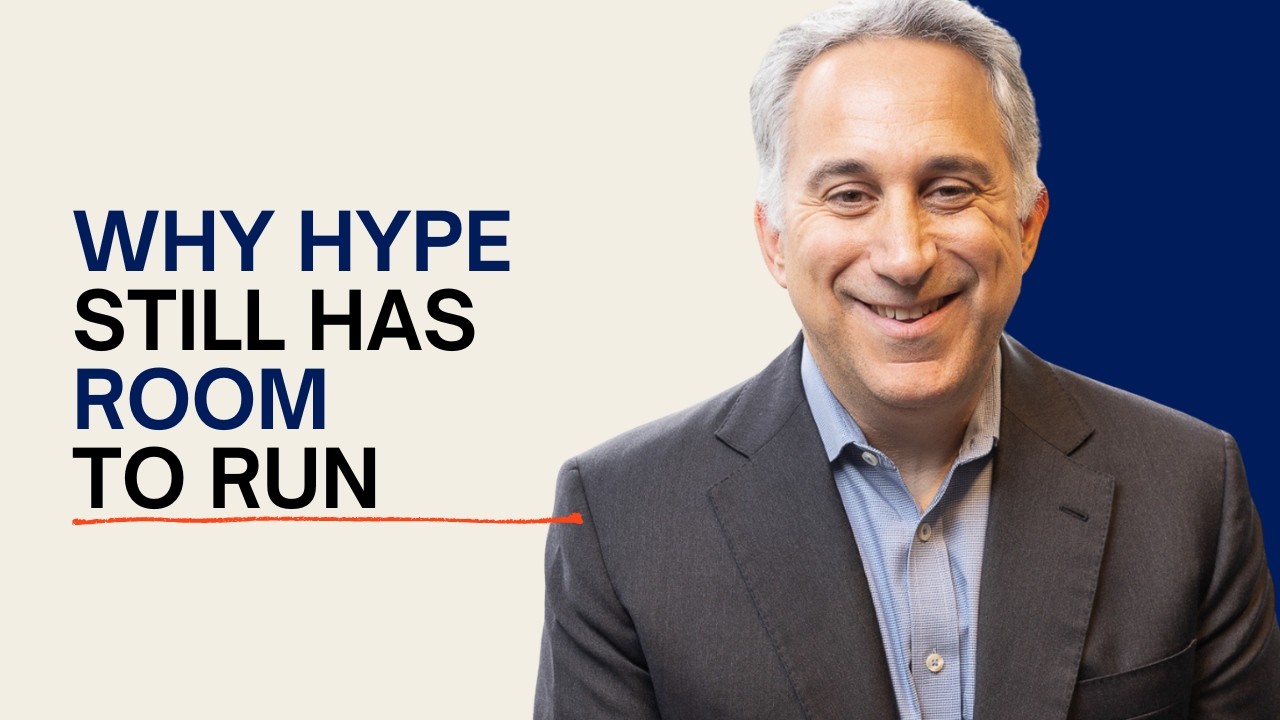
Guest: David Schamis (CEO, Hyperliquid Strategies)
Host: Zack Guzman
Original Title: The SpaceX IPO Could Push Hyperliquid Even Higher
Podcast Source: Coinage
Air Date: May 26, 2026
Editor’s Note
This episode features David Schamis, CEO of Hyperliquid Strategies — operator of the HYPE Digital Asset Treasury (DAT) and a former private equity and traditional finance investor. As such, his view on Hyperliquid goes beyond “token-narrative” speculation; he focuses instead on revenue, open interest, trading volume, valuation multiples, and total addressable market (TAM).
On the topic of the SpaceX IPO, he offers a sharp observation: if onchain markets are already pricing assets more accurately through real trading activity, then the traditional IPO “first-day pop” is not just spectacle — it may represent real money left on the table by issuers for buyers.
Key Quotes
Hyperliquid’s Breakthrough Moment: From Crypto Exchange to Onchain Global Market
- “The true breakthrough moments come from silver, oil — and now these IPOs. They prove that real-world assets (RWAs) are being tokenized at scale — and this isn’t just talk; it’s already happening.”
- “When Trump launched military action against Iran on a Friday afternoon, traditional oil markets shut down entirely for 48 hours — and Hyperliquid was the only place where oil could still be traded.”
- “What’s driving the market now isn’t just ‘it’ll be great someday’ — it’s Hyperliquid’s actual revenue, open interest, and trading volume catching up in real numbers.”
From CEX to DEX: Growing Acceptance, But Institutions Haven’t Yet Entered
- “DEXs become more accepted and widely used every day — but if you ask who’s trading on Trade.xyz (a multi-asset derivatives platform built on Hyperliquid), the answer is still not major U.S. institutions.”
- “Today, most traders on Hyperliquid are still retail users, non-U.S. participants, and those deeply familiar with crypto. That shows how much further we still have to go.”
The Traditional IPO “First-Day Pop” Is Really Seller Concession
- “The so-called IPO first-day pop is essentially sellers giving money away to buyers for free. I don’t believe the world needs this mechanism.”
- “If we already have real capital trading these assets — and real markets exist — then claiming that meaningful price discovery can’t happen pre-IPO is clearly absurd.”
- “Look at Cerebras’ (an AI chip company) IPO — Hyperliquid predicted its post-listing trading range very well. I see no reason why SpaceX won’t follow a similar pattern.”
CME/ICE May Not Be Losing Volume — Yet — But Risk Is Clear
- “I don’t think Hyperliquid is currently siphoning significant volume from CME (Chicago Mercantile Exchange) — because the user profiles remain vastly different. But CME doesn’t comment without cause; they’re clearly seeing potential risk.”
- “The U.S. is a massive market — and how U.S. regulation and policy evolve will shape global standards. So having Hyperliquid’s own representative in Washington is critically important.”
HYPE DAT and Capital Management
- “ETFs offer clean entry and exit at NAV — no need to worry about mNAV (market Net Asset Value) premiums or discounts. But many ETFs can’t stake 100% of their tokens or pursue other revenue-generating activities.”
- “I’m absolutely not in the ‘never sell HYPE’ camp. My primary duty is to shareholders — if mNAV falls far below 1 and our cash runs out, we’d naturally sell HYPE to repurchase shares.”
- “I struggle to understand financing Bitcoin — an asset with no staking yield — using debt that pays cash interest. The cash flow mismatch isn’t intuitive.”
Options and Insurance Hold the Greatest Upside Potential
- “If you want instant optimism, just look at TAM — the numbers are enormous. Tokenized RWAs today represent only the surface of all markets.”
- “HIP-4 (Hyperliquid’s outcome-based / expiry-driven market design) excites us not just for prediction markets — but for options. And looking further ahead, insurance mirrors options and prediction markets — with expiries, conditions, and payouts.”
- “I’m not saying all insurance, options, equities, and bonds will trade exclusively on Hyperliquid within the next 12 months — but the growth opportunity here is unmistakably huge.”
Company Operations: Control Costs Even in Favorable Conditions
- “When token prices are rising, everything feels more exciting — but markets cycle. So from Day One, we decided to keep the company lean.”
- “Hyperliquid Strategies currently has just four employees — including me. We’ll expand, but slowly and deliberately. Prematurely building a high cost base is a trap many companies fall into.”
Key Drivers Behind Hyperliquid’s Recent All-Time High
Zack Guzman: The SpaceX IPO is now imminent — potentially a historic, $2 trillion-scale event. Claiming that meaningful price discovery can’t occur pre-IPO — or that such discovery lacks relevance — is plainly absurd. Yet even this represents just the tip of the iceberg.
Welcome to another episode of Coinage — a media program exploring the intersection of crypto and traditional finance. I’m Zack Guzman, broadcasting live from Brooklyn, New York. We’re watching Hyperliquid continue to dominate market narratives in 2026 — pushing toward new all-time highs.
Take a look at this chart. As everyone knows, Bitcoin remains down year-to-date — yet Hyperliquid’s native token, HYPE, is up roughly 150% YTD. As noted earlier, it’s now trading above $63 per token. More importantly, this narrative has long transcended crypto itself. With more IPOs emerging this year — especially the potential $2 trillion SpaceX IPO — history may well be made. Today, we welcome back David Schamis, CEO of Hyperliquid Strategies. David, great to have you back.
David Schamis: Thanks — glad to be here.
Zack Guzman: Thank you for joining us. Over the past few weeks, it’s become increasingly clear that Hyperliquid’s narrative has diverged sharply from many other crypto narratives. You entered this space early — long before most recognized Hyperliquid’s significance. How do you view this moment?
David Schamis: It’s deeply satisfying. Like Hannibal’s line in *The A-Team*: “I love it when a plan comes together.” Look at 2026 — HYPE and other major tokens tracked closely in the first few weeks of the year, then you see Hyperliquid’s true breakout. That breakout came from silver, from oil — and now from these IPOs.
There are two things happening here. First, large-scale RWA tokenization is real — not just theoretical chatter, but tangible, market-moving reality. When Trump launched military action against Iran on a Friday afternoon, traditional oil markets were fully shut down for 48 hours — and Hyperliquid was the only venue where oil could still be traded. This isn’t some fringe concept — people saw it happen in real time and rushed there to trade.
So point one: many of the things we’ve long discussed are now materializing in the real world. Point two: Hyperliquid’s revenue, open interest, and trading volume are also rising in lockstep. This isn’t just “the future will be great” — though I do believe it will be — it’s that current metrics are aligning. If you track valuation multiples or compare trading volumes against 30-day and 7-day averages, you’ll see numbers moving decisively in Hyperliquid’s favor. These all fuel the market.
Finally, let’s not overlook Hyperliquid’s recent strategic partnership with Coinbase and Circle around USDC (Circle’s USD-pegged stablecoin). That deal effectively lifted the entire revenue curve overnight. They renegotiated terms to integrate USDH (Hyperliquid’s ecosystem stablecoin) with USDC — a move executed almost instantly and with outsized impact. All of this unfolded in a remarkably short timeframe — compressed even by traditional finance standards, let alone crypto’s dog-year pace. So yes — HYPE’s rise from ~$38 a month ago to ~$63 today has concrete drivers.
Zack Guzman: There’s another fascinating layer here. Beyond the size of the stablecoin deal itself — especially given Coinbase and Circle’s relationship and how they view distribution channels — this signals a broader shift between DEXs and CEXs (centralized exchanges). It feels like a torch is being passed. Major players across traditional finance and crypto are recognizing tokenization — yet Hyperliquid is already executing at scale. Do you see it that way? Are you leading, while others chase?
David Schamis: Yes — and your point about DEXs vs. CEXs is critical. Every day, DEXs gain broader acceptance and usage. Yet we also recognize how far we still have to go.
If you ask Trade.xyz who trades on their platform, the answer isn’t major U.S. institutions — nor airlines like Delta hedging oil exposure on Hyperliquid. Though they certainly could — and arguably should. Today’s users remain predominantly retail, non-U.S., and deeply crypto-native. That underscores immense room for growth. We advance daily — but the journey is long.
Zack Guzman: Another interesting angle: we previously discussed Hyperliquid on Coinage’s “Annual Crypto Projects” special. Since your last appearance, HYPE has risen over 100%. Timing-wise, your DAT structure is also intriguing — you launched before the HYPE-related ETF wave. Several products have since gone live with solid traction. How do you view ETFs’ emergence? Any institutional shifts? Is capital flowing in? How much runway remains?
David Schamis: Overall, we welcome ETFs. More discussion and more investment vehicles benefit both the ecosystem and token price. Some investors prefer ETFs; others prefer DATs — both models have merit.
ETFs offer clear advantages: entry and exit at NAV, avoiding mNAV premiums or discounts. But many ETFs face regulatory constraints — they can’t stake 100% of holdings, nor pursue alternative revenue streams. We recently announced — and are already operating as — a validator on the Hyperliquid network, generating direct revenue. We’re also exploring additional monetization paths.
I’m obviously biased as a DAT — but markets thrive on choice. Different investors have different preferences. Last I checked, we’ve outperformed HYPE YTD — though that may change. Markets reward choice; people naturally select what fits them best.
How Traders Use Hyperliquid for Pre-IPO Price Discovery
Zack Guzman: Since we’re talking about choice, this leads perfectly into your recent X (Twitter) discussions on pre-IPO markets — and your public call for Elon Musk to pay attention to what’s unfolding on Hyperliquid around SpaceX’s IPO. There’s precedent: you’ve shared charts — which we’ll display on-air — illustrating Hyperliquid’s unique opportunity: letting investors access and trade certain assets before formal listing.
This is genuinely compelling — because alternatives exist, but often at steep costs. Investors might use SPVs (Special Purpose Vehicles) to access shares, typically paying heavy premiums. Let’s dig in: why are you so publicly urging Elon Musk to watch Hyperliquid?
David Schamis: I’ve said for years: I dislike today’s IPO process. Coming from private equity — and viewing IPOs through the lens of company shareholders — bringing a great company public shouldn’t feel like a seller-unfriendly ritual.
We all say “IPO pop” — that first-day surge. In my tweet, I called it absurd. It’s literally sellers handing money to buyers. I don’t believe the world needs this mechanism.
Of course, I understand why it exists historically. Before Hyperliquid’s recent IPO markets, demand visibility and accurate pricing were nearly impossible. Investment banks — inherently conservative — prioritize deal certainty over optimal pricing. I fully understand their incentives.
Yet that first-day pop represents real money transferred from sellers to buyers — with real consequences. Now, real capital is actively trading. Last I checked, open interest stood around $50 million — possibly imprecise, but directionally sound.
Zack Guzman: That sounds about right. I’d estimate ~$10 million in 24-hour trading volume.
David Schamis: That may seem low relative to open interest — likely higher on weekdays. Crucially, real money is changing hands in a real market. Look at Cerebras’ IPO — Hyperliquid predicted its post-listing trading range exceptionally well. I see no reason SpaceX wouldn’t follow suit.
This chart illustrates Cerebras’ dynamics. The bottom bar on May 4 shows the original filing price range. Later, they raised it to $150–$160. Meanwhile, the green line tracks Hyperliquid’s trading price. Notice how Hyperliquid traders barely reacted to the range adjustment — because the market had already priced it in.
By IPO day, the market almost ignored the official price. Hyperliquid’s price line stayed smooth — a modest jump, nothing dramatic. Sellers accepted ~35% discount versus Hyperliquid’s trading price — real money left on the table.
Zack Guzman: That’s indeed substantial value left behind. Of course, Cerebras’ IPO pales next to SpaceX’s scale and star power — Elon Musk himself. Look at this SpaceX chart: using a non-traditional exchange for authentic price discovery is itself revolutionary.
David Schamis: It’s fantastic. Letting real-money participants trade assets during the IPO process — with a known launch date, buyers and sellers active — is precisely what markets are for. We endlessly debate prediction markets and financialization — yet claiming price discovery can’t meaningfully happen pre-IPO is absurd.
I don’t know Elon — never met him. But he doesn’t strike me as someone who leaves money on the table. I doubt anyone does — but he seems especially unlikely to. He understands crypto and how these markets function. So I’ve posted two or three tweets urging him to observe this. It benefits both sides.
This SpaceX chart shows the current state. SpaceX hasn’t IPO’d yet — we don’t know its post-listing trading behavior. The top half displays its Hyperliquid price; the gray band reflects market-discussed IPO target ranges — handled slightly differently than Cerebras’, but broadly aligned with consensus expectations. You’ll see Hyperliquid’s price already exceeds that range.
Simultaneously, open interest is rising — while volatility on Hyperliquid is falling. That’s exactly the ideal state approaching a pricing event. If I read this correctly, the IPO range implies ~19–29% discount versus Hyperliquid’s trading price. I hope Elon — and others focused on precise pricing — take note.
Traditional Incumbents and Regulatory Impact
Zack Guzman: This is truly fascinating. As more cases emerge, we’ll gather more data points — but your point stands: it’s accelerating rapidly. Just months ago, we discussed oil and gold trading on Hyperliquid; now we’re deep in pre-IPO markets.
I must also note: traditional venues profiting from these markets — like CME (Chicago Mercantile Exchange) or ICE (Intercontinental Exchange) — have begun reacting, seemingly asking, “Wait — how did this happen over there?” Yet this unfolds amid a government environment openly embracing tokenization. What’s next? Will incumbents grow fearful as Hyperliquid’s momentum surges?
David Schamis: I found CME’s commentary intriguing. Right now, I personally don’t believe Hyperliquid is siphoning significant volume from CME. As noted, Hyperliquid’s user profile differs entirely from typical CME participants. So today, it functions more as incremental capacity — offering 24/7 trading for asset-focused users who demand it.
You might say: “David, that sounds fine — but CME doesn’t comment randomly.” I agree. They clearly see the potential — and the risk of clients migrating to 24/7 venues. So their reaction doesn’t surprise me. Again, users remain distinct. Earlier, I cited Delta Airlines — if someone showed me evidence Delta is hedging oil exposure on Hyperliquid, I’d be stunned. I didn’t name Delta specifically — I used it as shorthand for a classic, asset-relevant institution that almost certainly isn’t trading on Hyperliquid yet.
Zack Guzman: That holds. Extending this point: Hyperliquid now has its own policy presence. Whether you call it a lobbying group or not, policy experts are active in Washington. I’ve seen Hyperliquid founder Jeff engaging there too. Many crypto professionals are converging in D.C., awaiting the Clarity Act (U.S. legislative efforts to clarify digital asset regulation). How transformative would regulatory clarity be for projects like Hyperliquid?
David Schamis: It would be massive. Hyperliquid’s decision to establish the Hyperliquid Policy Center in Washington wasn’t accidental. Led by Jake Chervinsky — a prominent crypto attorney deeply versed in U.S. policy — this team understands these issues intimately.
It underscores America’s centrality. U.S. regulation and policymaking matter globally — many jurisdictions watch and follow America’s lead. You can’t simply say, “We already operate in most countries — the U.S. doesn’t matter.” First, the U.S. is the largest single market — accessing it is vital. Second, U.S. regulatory direction sets global precedent.
Thus, Hyperliquid’s Washington presence is essential. Some issues benefit the entire crypto industry — but Hyperliquid has distinct interests, differing from Coinbase, Binance, or others. It needs its own team to advocate for them.
Building the HYPE DAT
Zack Guzman: Returning to your role as CEO of this DAT: I saw a tweet comparing your HYPE holdings’ performance to Michael Saylor’s (Executive Chairman of Strategy/MicroStrategy, longtime Bitcoin proponent). Hyperliquid Strategies’ results versus other crypto DATs are indeed striking.
David Schamis: That chart looks nice. Full disclosure: I didn’t generate those numbers — nor am I certain of their methodology. But even if imperfect, the directional trend is likely correct.
Zack Guzman: Exactly — I wanted to ask that. On the other side is Saylor, whose Bitcoin position has reportedly generated over $1 billion in gains. Since you’re here, I’d love your perspective: how are you structuring this DAT? Strategy is juggling multiple priorities — including debt and convertible note repayments. How do you differ? What are your actual returns? It’s genuinely hard to track.
David Schamis: I don’t have the exact number on hand. From memory, our overall HYPE portfolio’s average acquisition price sits just above $40 — perhaps mid-$40s.
Zack Guzman: Understood.
David Schamis: In our initial transaction, ~62% of HYPE came directly from contributors at ~$46. Later, in December, HYPE’s price dropped significantly — giving us a strong window to buy cheaper. I estimate our post-deal average purchase price landed just above $30 — perhaps mid-$30s. These are rough recollections — no charts or precise figures at hand — just context.
One non-mysterious but crucial investing truth: timing matters. We were pleased closing that $46 deal last summer. I won’t claim foresight into December/January’s dip — nor knowledge of optimal buying timing. But it happened — and benefited us. Sometimes luck beats skill.
Regarding Saylor and MicroStrategy/Strategy: their company is vastly larger — obvious. Their underlying business dwarfs ours, and they employ significant leverage. Perhaps others better versed can explain further — but I’ve always struggled with financing Bitcoin — an asset yielding no staking income — using debt requiring cash interest payments.
Saylor talks about “Bitcoin yield,” a concept I don’t always grasp fully. We do have staking yield — and we’re extracting every possible dollar. As validators, we earn revenue — and we’ll pursue other monetization avenues. Meanwhile, we carry zero debt and no preferred stock. I won’t say “never,” but it’s absent from near-term plans. Sure, taking on debt three months ago would look clever now — but I lack the crystal ball to time such decisions.
Zack Guzman: From Saylor’s side, things feel slightly unstable — shifting from “I’ll never sell Bitcoin” to “I might sell Bitcoin” for dividend flexibility. Where do you stand on the “never sell HYPE” stance?
David Schamis: I’m definitely not in that camp. Some Twitter users may criticize me — but I’m a corporate finance geek. I never say “never.” My primary duty is to PURR (Hyperliquid Strategies’ ticker) shareholders.
If mNAV drops far below 1 and our cash depletes, we’ll sell HYPE to repurchase shares — that’s simply responsible stewardship. I’m extremely bullish on HYPE — highly constructive. Its upside probability far exceeds downside — but I’m no zealot. I won’t sit here declaring “never sell,” because I might.
To date, we haven’t done so. In December and early January, we repurchased shares using ample cash reserves — and we still hold well over $100 million in cash. Some say that’s excessive; others say insufficient. Judging the right level is core to our work. I prefer not to sell tokens — but I’ll never say “never.”
HYPE’s Future Growth Potential
Zack Guzman: Clarifying this upfront is vital — otherwise, narrative drift occurs, as we’re seeing with Saylor and Bitcoin.
Another fascinating point: last week, we spoke with Sean Farrell of Fundstrat — discussing how assets like Bitcoin achieve market-moving scale. Saylor’s accumulation spans years. Yet Hyperliquid’s trading volume remains far below Bitcoin’s — though these numbers are shifting. Arthur Hayes (Co-founder of BitMEX, CIO of Maelstrom) raised similar points on Coinage: with HYPE’s smaller float, plus ETFs, pre-IPO markets, and your involvement, multiple catalysts converge during upward price phases. What’s the sentiment among early HYPE OGs? Are they still excited about growth?
David Schamis: Two points. First, chatting with OGs is fun — I’ve met many. But they’re OGs — long-term HYPE holders. They may add positions, but the goal isn’t making OGs more excited. It’s attracting new participants — getting them to run the math and decide if they want to invest. Our job is expanding the ecosystem and explaining why this isn’t just another quirky meme coin — real things are happening.
Second, I’m no Bitcoin analyst — nor qualified to value it. Valuing Bitcoin resembles valuing gold — extremely difficult, driven by macro forces and supply/demand. I suspect long-term appreciation — but can’t articulate why.
HYPE feels more like a business asset — not identical to equities, but comparable. You can apply revenue multiples, earnings multiples, growth rates. This aligns with my 30+ years in finance — and resonates more easily with broad audiences. Many avoid gold but invest in stocks. Not a perfect analogy — but instructive.
Zack Guzman: Tying this interview together: how much runway remains? With SpaceX’s IPO looming, I doubt trading volume around that name stays at $10 million — especially as discussion intensifies and the IPO draws nearer. When speaking with newly aware investors, what numbers do you cite to convey: “We’ve only covered X% of the total opportunity”?
David Schamis: I admire Arthur Hayes’ $150 target — and others he’s proposed. I hope he’s right — and soon. But I avoid specific price targets. With investors, I emphasize TAM.
For Hyperliquid, TAM becomes enormous. Want instant optimism? Just examine the numbers. We’ve seen stocks, oil, gold, silver — and now several pre-IPO assets — tokenized on Hyperliquid. Yet this is merely the surface.
First, Hyperliquid covers only a tiny fraction of total market assets today. Then consider HIP-4 (Hyperliquid’s outcome-based/expiry-driven market design — enabling prediction markets, options, etc.). Prediction markets are already live — and Hyperliquid’s execution path is far cheaper than Kalshi (a regulated U.S. prediction market) or Polymarket (a crypto prediction market). This space is still nascent.
Kalshi and Polymarket are hot now — but HIP-4’s most exciting TAM extends beyond prediction markets to options. Unlike equities, options expire — and HIP-4 centers precisely on that. For greater excitement: consider insurance. I’ve studied insurers for over 30 years. Insurance policies resemble options and prediction markets — with expiries, conditions, and payouts.
Example: Will Florida experience a hurricane between now and June 30? “Yes” pays X; “No” pays Y — logic is that simple. If this sparks excitement, TAM is colossal.
Naturally, I’m not claiming every insurance market, option, stock, and bond will migrate solely to Hyperliquid within 12 months. But the growth opportunity is undeniable. If you believe many financial assets will tokenize over 5–10–20 years — and many do — then Hyperliquid may not be the only conduit, but it will surely be a major one.
Zack Guzman: My TAM and tokenization-ratio questions stem from my initial view of HYPE — less as a pure token play, more as a “picks and shovels” infrastructure bet. A protocol capturing increasing trading volume.
It’s equally fascinating for us. Coinage operates its own channel — now distributed via Yahoo Finance — highlighting the gap between crypto and traditional finance, and how it’s being bridged. More people realize they can at least sit at the table — and participate in pre-IPO name trading.
Why Staying Lean Matters
Zack Guzman: David, like me, you hail from traditional finance — now increasingly immersed in crypto. I’ve spoken with many launching their own DATs — many find it unexciting, burdensome, and laden with regulatory hurdles. Of course, most hold assets that crashed post-launch — whereas you’re in a completely different league. As CEO of Hyperliquid Strategies, what’s the most exciting part of engaging investors and advancing this initiative?
David Schamis: When token prices rise, everything feels more exciting — no question. There will inevitably be times when I return to speak with you — less cheerful than today — because markets cycle.
Another factor making this more exciting and less cumbersome: keeping the company lean. Hyperliquid Strategies currently has just four employees — including me. Headcount will grow, but slowly and deliberately.
A common pitfall in business — especially early on — is stacking up unsustainable costs when everything feels perfect and permanent. I don’t know who those “less exciting” DAT operators are — but layoffs aren’t fun; cost-cutting isn’t fun; investors questioning spending isn’t fun; board concerns aren’t fun. So early on, we made a decisive choice: stay lean.
We work incredibly hard — especially the other three: Jerry (COO), Brett (CFO), and Rob (PR/Investor Relations). They work tirelessly. Fortunately, in 2026, AI powers much of the work. But staying lean and controlling cost base remains paramount.
Join TechFlow official community to stay tuned
Telegram:https://t.me/TechFlowDaily
X (Twitter):https://x.com/TechFlowPost
X (Twitter) EN:https://x.com/BlockFlow_News
 深潮TechFlow