2026's hottest new public chain, the market maker is a brokerage firm
TechFlow Selected TechFlow Selected
2026's hottest new public chain, the market maker is a brokerage firm
In the business of moving stocks onto the blockchain, what is actually valuable—the assets, or the counter selling the assets?
 Navigating Web3 tides with focused insights
By: Clow
It's not that crypto companies have stormed into Wall Street; it's that Wall Street has turned crypto into its own backend.
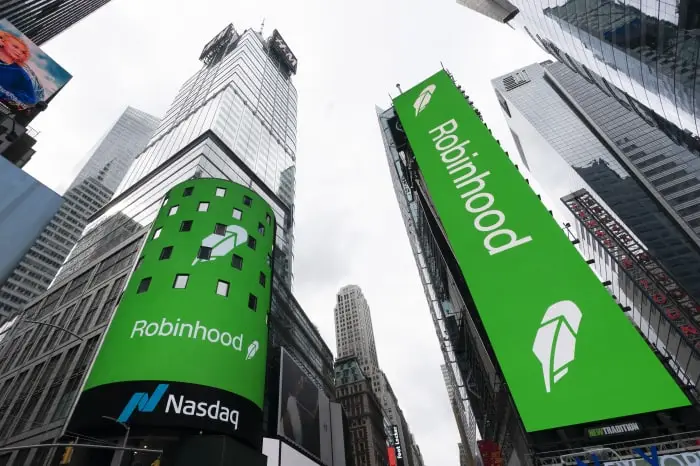
In July 2026, Robinhood launched its own chain. Within 7 days of launch, TVL exceeded $100 million. Previously, this company was best known as the brokerage that allowed American young people to trade stocks with zero commissions.
It is not acting alone. In December 2025, the veteran exchange Kraken directly acquired Backed Finance, the issuer of tokenized stocks xStocks. Immediately after, Telegram stuffed these US stock tokens into the chat boxes of 1 billion people.
Three giants, the same move.
What they are fighting for is not assets, not technology, not even licenses. What they are fighting for is the interface where you click the "Buy" button.
So the question arises: in the business of moving stocks onto the blockchain, what is actually valuable—the assets, or the counter selling the assets?
01 Public Chains Become Utilities, Issuers Become Contract Manufacturers
Moving stocks onto the chain is not a new idea. During the 2020 wave, Mirror's synthetic assets and FTX's equity tokens both tried it, ultimately dying due to regulation and ecosystem collapse, because what users bought were just price shadows, not stocks.
The difference this time is that the assets have become real.
The ERC-8056 standard promoted by Robinhood and Superstate allows stock splits and dividends to be handled seamlessly at the smart contract layer; Ondo partnered with proxy voting giant Broadridge, enabling token holders to vote at listed company shareholder meetings using private keys for the first time.
Even better is composability. Depositing tokenized Nvidia stock into a lending protocol, borrowing stablecoins to earn yield again, static assets lying in brokerage accounts have become active capital that can work for the first time.
The business is indeed growing. Boston Consulting Group predicts that by 2030, the global scale of tokenized assets could reach $10 trillion. As of mid-2026, on-chain RWA has exceeded $31.4 billion, nearly five times higher than the beginning of 2025.
Chainalysis reports also mention an explosive growth in the number of new wallets specifically used to receive RWA tokens on Ethereum. Buying stocks has become the first reason for new money to enter the on-chain world.
The cake is getting bigger, but the knife cutting the cake is not in the hands of the majority.
This industry chain has three layers. At the bottom are public chains and custody; Ethereum, Solana, BitGo, and others are responsible for keeping assets existing and circulating.
In the middle are the issuers; Backed, Dinari, Ondo, and others handle the legal architecture, mapping real stocks 1:1 into tokens. At the very top is the distribution entry point facing users.
The first two layers are in intense competition. Users do not care which chain stock tokens run on, as long as it is cheap and safe; public chains are becoming utilities. On the issuance side, more licensed institutions are entering, fee rates are killing all the way down, and the work is becoming more like contract manufacturing.
There is only one standard to judge who will earn the bulk: who controls the button where users click "Buy".
Those who control the button can charge listing fees to issuers, can guide users to their own wealth management, contracts, and lending, and also hold the lifeline of liquidity in the secondary market.
This is also the reason Kraken simply bought the issuer home. Backed reportedly accounts for about 24% of the share of compliant tokenized stocks; bringing it in means the entry point does not fear being choked by others.
02 Money Voted with Its Feet
Do you think this is just narrative? The capital has already voted.
In the first week of Robinhood Chain's launch, a Meme coin called CASHCAT achieved nearly $98 million in trading volume in a single day, and network-wide DEX trading volume surged to $560 million in a single day. It was as lively as a standard "casino chain".
But looking at the TVL structure, it is a completely different story. Of the $100 million TVL, $90 million is sunk in the lending protocol Morpho, supporting Robinhood Earn's approximate 7% annual yield. Ninety percent of the money is not here to gamble, but to save.
In other words, savings-type capital behind 27.6 million brokerage accounts is being quietly connected into DeFi via a pipeline.
The irony gets even deeper. DeFi has shouted for ten years about disintermediation and eliminating banks and brokerages, yet the largest incremental entry point in 2026 is a licensed brokerage.
Top protocols are lining up to work for it. Lending is handed to Morpho, perpetual contracts to Lighter; the latter signed a 12-year long-term contract, splitting fees 50-50, and also airdropped tokens worth $11 million to Robinhood users.
Protocols provide technology and subsidies, brokerages provide users, and incidentally leave the highest risk part on the protocol side.
This chain itself is built on Arbitrum's tech stack, with block confirmation at 100 milliseconds and Gas paid in ETH. Robinhood also opened AI agent trading to eligible US users, allowing AI to monitor the market around the clock, running arbitrage and yield strategies.
The ideal of disintermediation is not dead; only the person acting as the intermediary has changed.
03 Wall Street's Entry Point, Lagos's Chat Box
The same business has grown into completely opposite forms at opposite ends of the earth.
Robinhood hides DeFi behind the brokerage interface; Telegram stuffs Wall Street into the chat box.
In the US, Robinhood's users do not feel the existence of the blockchain. The experience of buying stock tokens is no different from buying stocks; private keys, cross-chain bridges, Gas fees, are all welded dead by the frontend in invisible places.
In Lagos or Buenos Aires, the story is reversed. A Nigerian retail investor wanting to buy Apple stock previously had to cross three major mountains: offshore account opening, foreign exchange controls, and high wire transfer fees.
Now he opens the TON wallet inside Telegram, buys one share of tokenized Apple, like sending a message to a friend. TON has nearly 100 million wallet users, behind which is 1 billion MAU; the xStocks acquired by Kraken are precisely being spread to emerging markets via this channel.
Reportedly, that US listing by SK Hynix, which created a financing record of $26.5 billion, was also delivered to Telegram users via xStocks at the first opportunity.
Stock tokens can also be embedded into mini-apps within group chats, used for tipping or payments. Financial assets have for the first time have a social software-style propagation method, completely bypassing traditional gatekeepers.
But despite the buzz, the three have a common embarrassment: none can enter the US gate.
In January 2026, the SEC issued a statement setting the tone: tokenization does not change security attributes; on-chain stocks are still governed by securities law.
Robinhood's stock tokens are issued by a Jersey trust, open only to non-US users; Kraken's xStocks are constrained by a Swiss structure, similarly going around the US.
There is another layer in Kraken's calculation. It is preparing for a US IPO in 2026; previously it spent $1.5 billion to acquire traditional broker NinjaTrader, and bringing in the issuer is a story told to Wall Street. No matter how well the story is told, if the product cannot enter the domestic market, it is ultimately a fatal flaw.
Instead, a small company called Dinari honestly obtained a transfer agent license in the US, legally sold tokens backed by real stocks, and also turned this capability into an API to sell to others.
Ondo took another path: the underlying stocks always remain within the US compliant custody chain, with only ownership mapping done on-chain, aligning exactly with the relatively friendly "third-party custody model" in the SEC statement.
The giants are queuing outside the door; the key is temporarily held in the hands of the small guys.
To put it bluntly: the technical story of assets on-chain is overestimated, and the monopoly value of the entry point is underestimated.
Standards for stock splits and dividends, oracles, legal architectures, these are all important, but they will all be replicated. What cannot be replicated are the 27.6 million accounts bound with bank cards, and the chat boxes opened by 1 billion people every day.
The internet did not kill brokerages; brokerages learned zero commissions. DeFi did not kill brokerages either; brokerages turned DeFi into their own backend.
In the next decade, chains will become more numerous, assets will become more homogeneous. There is only one thing truly scarce: where the user's finger lands on whose button.
Users do not need to know what a chain is.
Join TechFlow official community to stay tuned
Telegram:https://t.me/TechFlowDaily
X (Twitter):https://x.com/TechFlowPost
X (Twitter) EN:https://x.com/BlockFlow_News
 白话区块链
白话区块链