Bloomberg Publishes Feature on Changpeng Zhao: Worth Over $96 Billion, His Path to Wealth Began with a Poker Game
TechFlow Selected TechFlow Selected
Bloomberg Publishes Feature on Changpeng Zhao: Worth Over $96 Billion, His Path to Wealth Began with a Poker Game
His journey to wealth in crypto began in 2013 with a friendly poker game in Shanghai with Bobby Lee, then CEO of BTC China, and investor Ron Cao, both of whom encouraged him to invest 10% of his net worth in Bitcoin.
 Navigating Web3 tides with focused insights
By Tom Maloney, Yueqi Yang, Ben Bartenstein
Translated by Gu Yu, ChainCatcher
The Abu Dhabi Grand Prix each year draws princes, movie stars and world-famous athletes to Yas Island, an entertainment hub about 30 minutes from downtown, for parties.
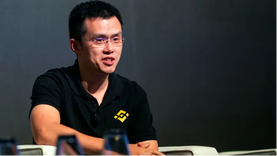
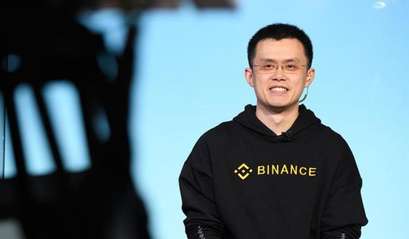
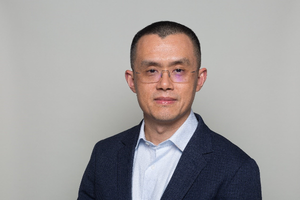
Last month, one figure joined their ranks who embodies an unlikely rise: a former McDonald’s employee and software developer who almost overnight vaulted into the ranks of the world’s wealthiest people — cryptocurrency pioneer Changpeng Zhao.
Zhao is rapidly becoming a regular in the United Arab Emirates, meeting with royal family members in Abu Dhabi eager to bring his Binance exchange to the country, according to people familiar with the matter. He bought an apartment in Dubai and has hosted dinners near the Burj Khalifa, the world’s tallest building, and on the city’s Palm Jumeirah island — making him the most prominent figure in the country’s booming crypto scene.
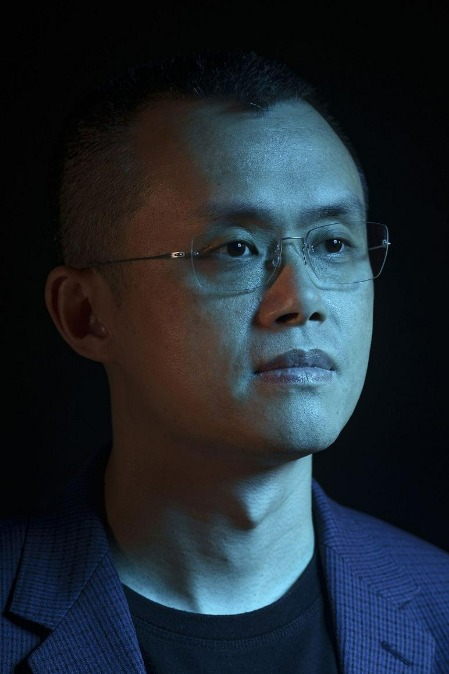
Changpeng Zhao — Photographer: Ore Huiying/The New York Times/Redux
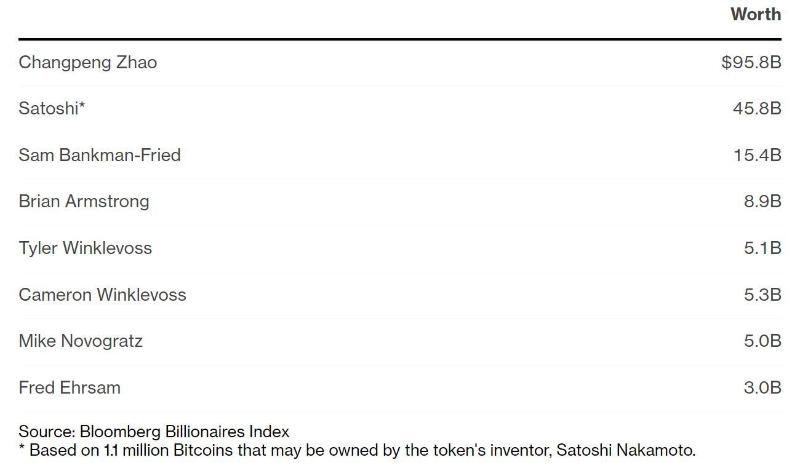
In a region known for dazzling wealth, the 44-year-old Zhao fits right in: According to the Bloomberg Billionaires Index, his net worth stands at $96 billion. This is the first time Bloomberg has estimated his fortune, surpassing Asia’s richest man Mukesh Ambani, as well as tech titans including Zuckerberg and Google founders Larry Page and Sergey Brin.
Zhao’s actual wealth may be far greater, as the estimates do not account for his personal crypto holdings, which include bitcoin and his company’s own tokens. The so-called BNB token surged about 1,300% last year.
Binance’s success highlights the vast fortunes created in the unregulated world of cryptocurrency, even as controversy continues to swirl around the company.
The firm was driven out of its birthplace, China, and faces investigations by global regulators. U.S. Department of Justice and Internal Revenue Service are investigating whether Binance Holdings Ltd., an entity controlled by Zhao, was used as a channel for money laundering and tax evasion, according to people familiar with the matter. Spokespeople for the U.S. Justice Department and IRS declined to comment.
Binance’s future may hinge on whether it can reconcile with global regulators and find a popular location to establish its headquarters.
For now, though, the money keeps flowing in.
Based on Bloomberg’s analysis of its trading volume and fees, Binance generated at least $20 billion in revenue last year. That’s nearly three times the revenue of publicly traded Coinbase in 2021.
“From a U.S. perspective, Coinbase might seem like the 800-pound gorilla,” said Chris Brendler, an analyst at DA Davidson & Co. “But Binance is much bigger.”
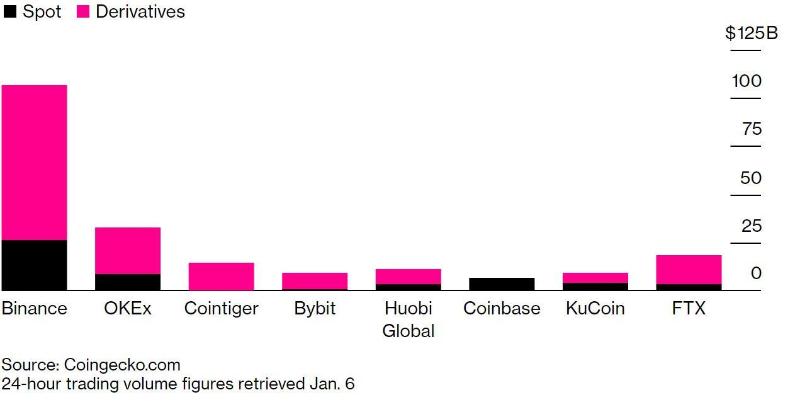
Crypto Giant
Binance is by far the largest cryptocurrency exchange in both spot and derivatives markets.
Source: Coingecko.com
Zhao declined to comment on the matter, and Binance questioned the accuracy of Bloomberg’s estimates of the company’s market value and his net worth.
“Cryptocurrency is still in a growth phase,” Binance said in a statement. “It’s subject to higher levels of volatility. Any number you hear today will be different from what you hear tomorrow.”
A month before watching F1 stars Lewis Hamilton and Max Verstappen battle at the Yas Marina Circuit, Zhao spoke at Bloomberg’s New Economy Forum in Singapore, rattling off the numbers behind the rapid rise of the company he founded in 2017.
In a recent 24-hour period, Binance processed $170 billion in trades. On a very slow day, he said, it’s about $40 billion — up from $10 billion just two years ago.
In the crypto world, these are massive figures. Binance typically facilitates as much trading volume as the next four largest exchanges combined.
When Bloomberg’s Erik Schatzker asked the billionaire about his wealth during an interview in Singapore in November, Zhao pushed back. “I don’t care about wealth, money, rankings,” he said.
The slim cryptocurrency entrepreneur, wearing rimless glasses and a slightly oversized striped tie, added that such things are distractions, and that he plans to give away almost all of his fortune before he dies.
Whether Zhao can stick to his harvest remains to be seen, as he has good reason to worry about his company’s unchecked growth.
Besides the DOJ and IRS probes, the U.S. Commodity Futures Trading Commission is also investigating Binance over possible market manipulation and insider trading, and whether it allowed illegal U.S. customers to trade crypto derivatives, according to people familiar with the matter. The CFTC declined to comment.
Binance has also been the subject of consumer warnings from countries including the UK, Japan, and Germany. On December 30, a Canadian securities regulator reprimanded the company for telling users of its trading platform it could continue operating in the country despite lacking registration.
A Binance spokesperson said the company “is working with regulators around the world, and we take our compliance obligations seriously.”
Zhao says he welcomes — and hopes for — regulation.
“I’m not an anarchist,” he said at the Bloomberg forum. “I don’t believe human civilization has evolved enough to live in a world without rules.”
Fortunes built on cryptocurrency have soared as the value of digital tokens surged, reaching a total market value of $2.09 trillion on January 7, up from $135 billion three years earlier.
Until recently, cryptocurrency entrepreneurs rarely appeared on global wealth rankings. As more industry firms tap venture capital funding or go public, making their valuations more transparent, more are entering the ranks.
Exchanges like Coinbase, Gemini, FTX, and Kraken have achieved massive valuations in public and private markets, and Binance’s popularity among users and range of products may make it even more attractive to investors.
Yet, crypto’s fate remains volatile. Bitcoin has fallen more than 8% this year to about $42,400, far below its peak near $69,000 in early November. Coinbase’s stock has dropped about 35% over the past two months.
Some companies have clashed with regulators. BitMEX serves as a cautionary tale — once the world’s largest crypto derivatives exchange.
In August, BitMEX paid $100 million to settle charges with the CFTC and FinCEN over allowing illegal derivatives trading and violating anti-money laundering laws. The company neither admitted nor denied the allegations. Founders Arthur Hayes, Samuel Reed, and Ben Delo await trial after pleading not guilty in a separate Justice Department case accusing them of violating the Bank Secrecy Act.
Crypto Wealth
Zhao is the wealthiest cryptocurrency entrepreneur tracked by the Bloomberg Billionaires Index.
Source: Bloomberg Billionaires Index
The Bloomberg Billionaires Index estimated Binance’s 2021 revenue based on spot and derivatives trading volumes in U.S. dollars published by industry research firms Coingecko and Nonomy, as well as publicly disclosed trading fees. This calculation excludes other revenue sources such as margin lending, technology, consulting, and NFTs. Its valuation uses enterprise value-to-sales multiples of publicly listed peers. Based on Zhao’s public statements and regulatory filings in jurisdictions requiring disclosure, it assumes Zhao owns 90% of the company.
In an interview with Bloomberg in November, Zhao said Binance’s revenue comes in hundreds of crypto tokens, and the company does not convert them into traditional currencies.
“We just hold onto them,” he said. “If you calculate the number today, it’s one figure; five minutes later it’s a different number because every price is changing.”
Zhao was born in Jiangsu Province, China, and is now a Canadian citizen. His father was a university professor exiled to the countryside during the Cultural Revolution, and the family moved to Vancouver when Zhao was 12.
Zhao got early exposure to technology, later studied computer science, and eventually landed finance jobs in Tokyo and New York, including four years at Bloomberg LP, the parent company of Bloomberg News.
His journey to crypto riches began in 2013 with a friendly poker game in Shanghai with Bobby Lee, then CEO of BTC China, and investor Ron Cao, who encouraged him to invest 10% of his net worth in bitcoin.
After some research, he took the plunge and eventually sold his apartment at bitcoin prices. In 2017, he founded Binance and quickly grew it into a crypto powerhouse. Zhao even tattooed the company’s logo on his arm.
Binance has become the go-to destination for trading “altcoins” — cryptocurrencies less liquid than more established tokens like bitcoin and Ethereum, and some of the most speculative corners of the market. According to Coingecko, the company offers trading in over 350 tokens on its international exchange, more than double what Coinbase offers.
Tim Swanson, head of market intelligence at London-based blockchain firm Clearmatics, said Binance has successfully created “stickiness” partly by letting customers use BNB to reduce trading fees.
“They don’t even have to be the first to list a token,” Swanson said of Binance. “Liquidity just gathers there.”
Zhao’s company is also the largest provider of derivatives trading, allowing users to speculate on cryptocurrencies with greater risk and potential reward.
Initially, Binance allowed customers to open accounts using only email addresses. It focused on crypto trading, minimizing interaction with traditional banks and their regulators. In August, the company announced that all new users must verify their identities, while existing users without verification would face withdrawal limits.
It has never had a formal headquarters. Founded in China, Binance subsequently moved to Japan, then Malta, where the financial regulator later denied supervising the exchange. Although the company has significant operations in Singapore, its local unit recently withdrew its application to operate an exchange there, marking a setback.
In the November interview, Zhao said Binance is now trying to determine a location, adding that an announcement about the headquarters would come “in a short period of time.”
That marks a shift from 2020, when Zhao said the company’s headquarters was wherever he happened to be. In legal documents, the company’s lawyers stated it was incorporated in the Cayman Islands, known as an offshore tax and regulatory haven.
Binance’s ability to operate almost anywhere makes it difficult for regulators to assert jurisdiction over the company.
“Their approach was, ‘We don’t need regulators, we’re decentralized,’” said DA Davidson analyst Brendler. “That worked really well for growth, expansion, and product innovation.”
As Binance seeks to raise funds from outside investors — who typically require some level of government oversight to ensure legal soundness — Zhao’s freewheeling approach may need to change. According to people familiar with his discussions in the UAE, Zhao is being driven to find a supportive regulatory regime.
Binance has appointed former employees of UAE regulators to senior roles and signed an agreement with the Dubai World Trade Center Authority to help develop a crypto regulatory framework.
Not all of Binance’s efforts to appease regulators have gone smoothly.
Last year, Binance.US, a separately managed trading operation linked to the exchange, hired a former acting U.S. comptroller of the currency as CEO. His appointment was seen as a positive step toward addressing regulatory issues, but he lasted only three months, stepping down in August after strategic differences emerged.
Despite legal challenges, investors may still want to take a chance on the world’s most successful crypto exchange. At the end of last year, Binance was seeking funds from sovereign wealth funds, and its U.S. subsidiary was targeting an IPO to attract investors. In November, The Wall Street Journal reported that former executives estimated the company could be worth as much as $300 billion.
That would make Zhao richer than Elon Musk, currently the world’s richest person, and Jeff Bezos, whom Zhao admires and calls second place.
“I don’t personally know him,” Zhao said in November at the Bloomberg event, referring to the Amazon founder. “But I’d love to connect with him in the future.”
TechFlow is a community-driven deep content platform dedicated to delivering valuable information and thoughtful perspectives.
Community:
WeChat Official Account: TechFlow
Telegram: https://t.me/TechFlowPost
Twitter: TechFlowPost
To join WeChat group, add assistant WeChat: TechFlow01
Join TechFlow official community to stay tuned
Telegram:https://t.me/TechFlowDaily
X (Twitter):https://x.com/TechFlowPost
X (Twitter) EN:https://x.com/BlockFlow_News