Zhao Changpeng's release from prison approaches—can Binance turn the tide?
TechFlow Selected TechFlow Selected
Zhao Changpeng's release from prison approaches—can Binance turn the tide?
That man has returned again.
 Navigating Web3 tides with focused insights
Article by: Tuoluo Finance
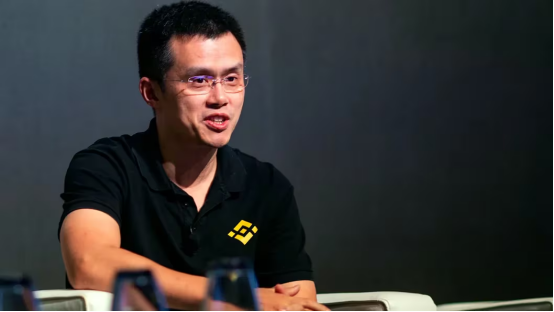
Last week, according to the U.S. Federal Bureau of Prisons website, CZ—after nearly four months in prison—is set to be released on September 29. The latest update indicates that after spending 118 days at Lompoc Medium II prison, CZ has already left the facility and been transferred to the Residential Reentry Management (RRM) office in Long Beach, where he remains under custody.
Following this news, market sentiment turned visibly optimistic. Binance’s newly listed tokens surged again, reclaiming top spots on gainers lists, while social media platform X lit up with positive commentary.
After all, the current relatively sluggish market truly needs a shot in the arm.
To recap: In November last year, Binance reached a settlement with the U.S. Department of Justice (DOJ), Commodity Futures Trading Commission (CFTC), Office of Foreign Assets Control (OFAC), and Financial Crimes Enforcement Network (FinCEN) over investigations into Binance’s historical registration, compliance, and sanctions issues.
CZ ultimately pleaded guilty to violations of the Bank Secrecy Act, the International Emergency Economic Powers Act, and the Commodity Exchange Act—including unlicensed money transmitting business, conspiracy charges, and prohibited transactions—and paid a record-breaking $4.368 billion fine, marking the largest penalty ever imposed by FinCEN.
The initial expected sentence was within 18 months, but prosecutors later sought an increase to three years. However, after consideration of 161 letters of support and his plea of guilty, CZ was ultimately sentenced in April to four months in prison, officially beginning his term in June, with release anticipated for September 29.
While a four-month sentence is relatively short, since November last year Rachael Teng has formally taken over as Binance’s new CEO. Over this near-year-long transition of leadership, Binance’s challenges and opportunities have become clearly evident.
On the opportunity side, CZ’s departure formally ushered in a new era of comprehensive compliance—not just for exchanges but across the entire crypto industry—marking the definitive end of the “Wild West” days. Compliance has now become an inevitable trend. It was also after this shift that Bitcoin ETFs successfully brought institutional capital into the crypto space. Thanks to CZ’s dramatic exit, Binance was able to shed its historical burdens early and gain a competitive edge in operating within regulated markets.
Rachael Teng’s appointment aligns perfectly with this direction. As a professional executive with strong political and business credentials, she is better equipped to lead Binance through global compliance initiatives. Subsequent developments have followed suit: although Binance currently does not plan to re-enter the U.S., it now holds 19 licenses worldwide, securing new regulatory approvals this year in Thailand, India, and Brazil—achievements in compliance that are plain to see.
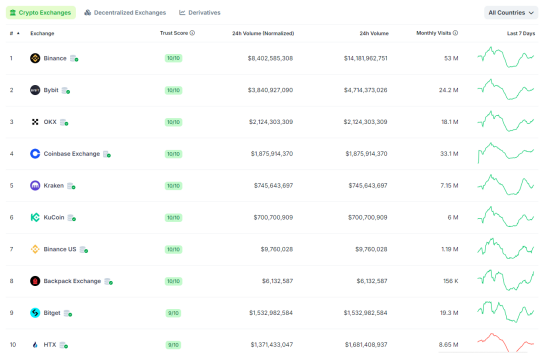
Initially, there were market concerns that CZ’s absence would disrupt Binance’s operations. But judging purely from data, Binance has performed remarkably well over the past year. According to Coingecko, Binance's daily trading volume has remained relatively stable, consistently ranking first among all exchanges in 24-hour volume, with monthly active users reaching 530 million. Data from DefiLlama shows that from late November last year to today, Binance has seen net inflows exceeding $4 billion, firmly maintaining its position as the leading exchange. Recently, Rachael announced that Binance’s cumulative trading volume surpassed $100 trillion in early September.
Overall, despite losing its iconic leader, Binance appears to have delivered a solid performance. Yet on the other hand, new crises are quietly emerging.
In terms of compliance, Nigeria dealt Binance a major blow earlier this year. In February, Nigerian authorities accused Binance of facilitating illegal financial transactions on its platform and even blamed it for exacerbating the collapse of the local fiat currency. Rumors briefly circulated that regulators intended to impose a $10 billion fine on Binance—though these were later debunked. Nevertheless, Nigerian officials detained Binance executives Tigran Gambaryan and Nadeem Anjarwalla on various pretexts. To this day, the conflict between Binance and Nigeria remains unresolved, with Gambaryan still not released.
Meanwhile, public controversy has never fully left Binance.
Toward the end of last year, dissatisfaction mounted over lackluster new project launches on Binance Launchpad, sparking accusations of "girlfriend coins." Critics claimed that Hooked Protocol—a project with unclear product attributes, low name recognition, and inexperienced team members—was only granted an IEO due to Dovey Wan of Primitive Ventures’ close relationship with He Yi. Then, following IEOs for Space ID and Open Campus in April, these rumors intensified further, with some users sarcastically suggesting Binance had a dedicated "girlfriend coin" section on X. At the time, He Yi responded that Binance absolutely did not have such a category. Later, at the beginning of this year, CZ outlined Binance’s 2023 strategic priorities, placing education first, followed by compliance and product services, which gradually helped calm public sentiment.
If "girlfriend coins" were initially confined to niche online disputes, the subsequent debate around high FDV (Fully Diluted Valuation) tokens quickly escalated into a broad industry-wide controversy. First, TradeTheFlow published a chart showing that most tokens listed on Binance over the previous six months performed poorly—many dropping 50% immediately upon listing. A common trait among them was their exceptionally high FDVs. This sparked a heated debate between Dragonfly Capital and a16z over memes versus VC-backed tokens. Against this backdrop, Binance was accused of frequently listing new tokens that drained market liquidity, contributing to altcoin stagnation, primarily serving VC interests rather than the broader community, and acting as accomplices in “rugging” retail investors. Widespread calls for resistance soon followed.
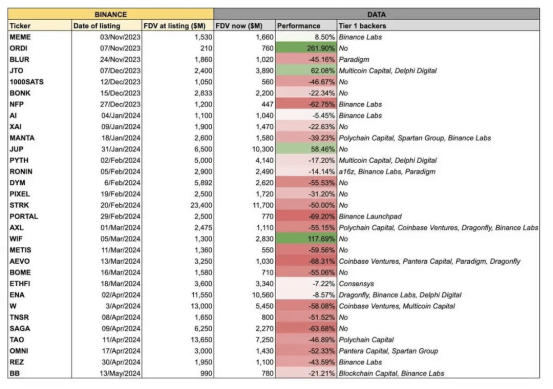
On May 20, Binance responded promptly by announcing an open application program for new listings. According to the official statement, launching tokens with high valuations and low circulating supply models creates massive sell pressure upon future unlocks, harming both ordinary investors and loyal project communities. To foster a healthier ecosystem, Binance pledged to prioritize supporting small- and mid-sized cryptocurrency projects.
On June 16, He Yi addressed both the FDV and "girlfriend coin" controversies during a community AMA session. She noted that the anti-VC wave and rise of memecoins reflect a deeper issue: the scarcity of high-quality assets in the market. She expressed hope for more projects with real business models to emerge on blockchain, rather than existing solely as abstract concepts, and admitted insufficient due diligence when listing Hook.
In practice, Binance subsequently adopted a more cautious approach toward VC-backed tokens, significantly reducing the frequency of high-FDV listings. Instead, it began shifting focus toward community-favored memecoins and the rapidly growing TON (The Open Network) ecosystem. After NOTCoin led the charge, DOGS followed closely, with Hamster and Catizen also eventually listed. As of now, Binance has launched six tokens tied to the TON ecosystem. However, this move reignited community backlash, with critics accusing Binance of inconsistent listing logic—shifting from utility-based to traffic-driven criteria, prioritizing quick profits over long-term vision. The listing of Nerio, a project with a market cap under $20 million, became a focal point of criticism. Allegations of market manipulation resurfaced, accompanied by renewed accusations of insider trading ("rat farming").
In response to mounting criticism, He Yi once again stepped in to stabilize sentiment—publishing a detailed article explaining Binance’s current listing process and outlining four core listing standards, while humbly acknowledging, “I may not always be right.”
Interestingly, if we trace back through these waves of controversy, the root cause turns out to be Binance’s own innovation. In today’s market environment, Binance seeks gradual transformation to expand its footprint and capture greater market share. Yet precisely because these innovations appear overly aggressive and some new listings disappoint, Binance is repeatedly accused of losing its original mission and lacking vision. Each time He Yi responds, she is criticized for being too visible and reactive—unlike the typical demeanor expected of a corporate leader.
Ultimately, in users’ minds, Binance remains the company shaped by CZ. Back then, rapid growth during bullish cycles dulled users’ tolerance thresholds. Users grew accustomed to the founder’s quiet, action-oriented style and hoped Binance—as an industry bellwether—would continue driving innovation and growth in crypto.
But it must be emphasized: today’s market environment is vastly different. Over the past two years, regulatory scrutiny looms large, Wall Street institutions bring added uncertainty, and exchanges no longer hold absolute sway over the crypto landscape. The bearish climate in venture capital, dwindling market liquidity, and scarcity of meaningful innovations have led to a dominance of PvP (player-versus-player) dynamics, leaving meme coins as one of the few thriving sectors. Even project marketing and operations have evolved into entirely new formats showcased at major events. All signs indicate the industry has entered a reshuffling phase, forcing exchanges to shed ideological cloaks and confront their commercial realities.
It is against this backdrop that the market places such high hopes on CZ’s return—hoping he can steer the storm-tossed crypto world toward a new path forward. However, it should be stressed that as part of his plea agreement, CZ is barred from participating in Binance’s day-to-day operations for three years. Of course, his equity stake in Binance remains valid, allowing him to monitor company performance as a shareholder or even participate in appointing or nominating new board members or CEOs.
Nevertheless, given CZ’s symbolic status within Binance and the presence of co-founder and partner He Yi, indirect involvement in company affairs remains highly likely. That said, considering the two external monitors appointed under the plea agreement will closely scrutinize such activities, for safety reasons, any influence CZ exerts is expected to remain indirect.
Even before entering prison, CZ stated he had no intention of serving as CEO in any capacity going forward, expressing instead a desire to focus on investing in blockchain, artificial intelligence, and biotech startups. His nonprofit initiative, Giggle Academy, stalled during his incarceration—yet the market may look forward to its revival post-release.
Can CZ turn things around? Judging solely from the current state of the market, the task is daunting. These are systemic issues—not ones solvable by any single individual. Put differently, CZ is a figure who rose to prominence under the old paradigm, yet that narrative framework now lacks momentum. Fortunately, new flows of users continue to enter the space—younger, more creative participants are joining crypto. At this pivotal moment of transformation, how CZ engages with and values these new groups and evolving logics may become the defining challenge of his next chapter.
On another note, regardless of the circumstances, CZ’s return remains highly beneficial for Binance. It will boost user sentiment and generate positive ripple effects. A rally in Binance-related tokens is highly probable, and some market players have already begun positioning themselves around the so-called “CZ release” narrative.
This much is clear: even if the market is no longer what it once was, CZ remains CZ.
Join TechFlow official community to stay tuned
Telegram:https://t.me/TechFlowDaily
X (Twitter):https://x.com/TechFlowPost
X (Twitter) EN:https://x.com/BlockFlow_News