Fortune uncovers CZ's past: What forces shaped him?
TechFlow Selected TechFlow Selected
Fortune uncovers CZ's past: What forces shaped him?
In the interview, Zhao Changpeng also rarely revealed details about his family life: he has long become a father, and he and Binance co-founder He Yi have two young children.
 Navigating Web3 tides with focused insights
By JEFF JOHN ROBERTS, YVONNE LAU
Translated by Guo Qianwen, Lin Qi, Gu Yu, ChainCatcher
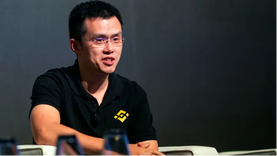
CZ is sitting in front of a bookshelf at his home in Dubai—a place he calls home, just like Paris. In the video call, he appears warm, gentle, and even humble. This image stands in stark contrast to the one most familiar to his rivals: an ambitious figure who built Binance into the world’s largest and most influential cryptocurrency exchange.
He's used to presenting different faces to different people. “If Americans deal with me, they see me as Asian—slightly more Asian than most Americans, but less Asian than other Asians they know. If Asians deal with me, they see me as American, but less American than the Americans they usually meet. I’m somewhere in between.”
Recently, CZ’s tougher side has drawn intense scrutiny. He and Binance succeeded through aggressive strategies and loose regulatory compliance—each time a country offered favorable rules, the founder would set up shop there. Governments including the U.S. have accused Binance of deceptive practices, violating international sanctions, and money laundering rules.
Binance insists it has changed its ways and now prioritizes compliance; when CZ speaks for this reformed company, he always presents his softer, humbler side. But Binance’s transformation raises questions about CZ’s true nature and how he built his business—public records on CZ’s background and Binance’s operations are scarce, making these questions all the more pressing.
A close examination of CZ’s background fills many of these gaps, revealing how the Binance founder shifts between dual identities—using ruthless tactics to defeat rivals while maintaining the persona of a friendly, approachable individual.
This magazine conducted a detailed investigation into his past, drawing from interviews with people who know him and extensive commentary in Chinese media, uncovering two worlds that shaped CZ: his upbringing in Canada; and his return as a “sea turtle” to China, where he rode Shanghai’s rise in the early 21st century to the forefront of global business.
CZ absorbed experiences from both places—mastering the cutthroat business tactics prevalent during China’s early tech boom while retaining the laid-back, non-threatening demeanor of Canadians—a behavioral trait that diverted attention from his strategic maneuvers.
Until recently, CZ frequently spoke to crypto and business media, but over the past few months he has significantly reduced such appearances—due to increasingly worrisome regulatory climates and Binance’s belief that media coverage distorts the company and himself. Now breaking his usual silence, he sat down with Fortune for an interview, sharing many previously unreported details of his life. The conversation offers firsthand insights into how he runs his business, suggests his success aligns with broader trends among Chinese diaspora communities, and explores how his intelligent yet emotionally distant father influenced the rise of Binance as a crypto giant.
A Scholar Father Moves His Family Abroad
Keremeos Court is a cluster of neat townhouses, otherwise unremarkable except for its refreshing surroundings. Nestled within a vast rainforest of aromatic cedar and ferns, these homes are part of the University of British Columbia’s 2,000-acre campus—the westernmost edge of Vancouver, bordering the Pacific Ocean.
In 1989, 12-year-old CZ arrived here with his mother and younger sister to reunite with his father. CZ says his father loved books and continued studying even during the rural re-education period. His academic perseverance eventually earned him a PhD program in geophysics in Canada, and years later, he brought his family to UBC to join him.
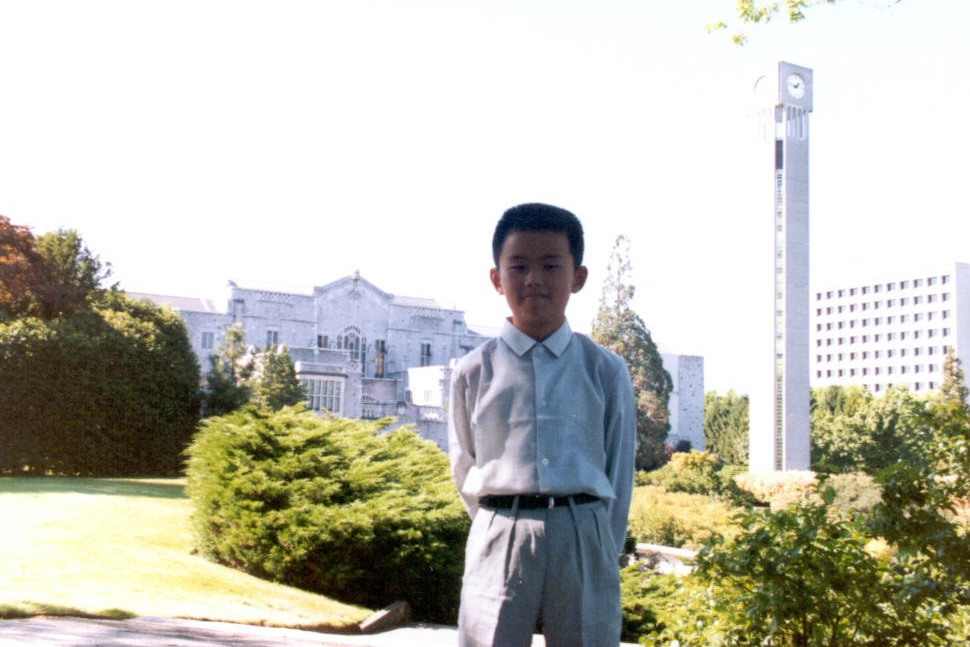
CZ in front of Ladner Clock Tower in Vancouver, photographed by his father around 1989. Photo courtesy of CZ.
The environment was nothing like the rural villages of CZ’s childhood. In Jiangsu Province, schools and classrooms were scarce, often furnished with simple stone desks—common in resource-poor rural areas, where winter made learning even harder. Like his father, CZ understood poverty and scarcity in China and saw academics as a refuge. At age 10, his family left the countryside for Hefei, a small city in China and home to the University of Science and Technology of China.
In this intellectual oasis, CZ would sit in on debates among older students, sometimes playing chess with them. “They taught me how to play chess and Go,” recalls CZ. “They talked about different things on campus, even politics. I think being around people seven to ten years older really shaped my way of thinking differently from kids my age.”
When CZ’s family arrived in British Columbia, they moved from one of the world’s oldest civilizations to one of its youngest nations. Founded in the 1870s, Vancouver had seen little settlement beyond Indigenous communities. It quickly became a gateway for goods and people moving between China and Canada—but for decades, it was also a hub of anti-Chinese racism. This bias manifested in notorious policies like the “head tax” designed to prevent Chinese men from bringing their wives to Canada, despite their role in building much of the nation’s railways and Vancouver itself. Henry Yu, a UBC historian and scholar of Chinese immigration, says: “Even though [Vancouver] always had Chinese people, they lived like Harry Potter under the stairs. They were servants, not homeowners.”
But by the 1980s, the government had completely shifted course. To revitalize and diversify its natural-resource-based economy, Canada began attracting immigrants it once scorned from across the Pacific. The program included visas for those investing C$400,000, appealing to scholars like CZ’s father. Ottawa aimed to send a message to ambitious Chinese: “If you want to succeed in the global economy, Canada is open for business.”
Anti-Asian sentiment still existed in Vancouver, and Asians remained unwelcome in certain parts of the community, but CZ rarely encountered racism. His high school had a diverse student body, many affiliated with the university. Still, CZ differed from his peers in key ways. He recalls that although dozens of other Asian students attended, he was one of only two from mainland China. Most came from wealthier Hong Kong and Taiwan, unlike CZ, who lived in modest housing reserved for graduate students and campus staff.
CZ recalls the stark wealth gap between his family and others, and distinctions within the affluent Chinese-speaking immigrant group. “Kids from Hong Kong liked brands—fashion labels, sports cars, and so on. People from Taiwan, although equally wealthy… had a more humble attitude. I got along better with them. I learned a lot about humility from Taiwanese families.”
Today, Binance and its BNB token’s high valuations mean CZ is worth billions, yet he maintains “values of humility” at least in public. Compared to more obnoxious figures in the crypto world—some buying Lamborghinis they never drive and telling skeptics to “enjoy being poor”—CZ has never displayed flamboyance.
In Vancouver, his mother worked in sewing, his father drove a beat-up Datsun, and CZ often rode to volleyball games in BMWs owned by friends’ parents—he was captain of the volleyball team. In his memory, the only major expense was when his father spent C$7,000—an astonishing sum at the time—on an IBM-compatible 286 computer, which he used for research and to teach his son programming. If there’s an early clue to CZ becoming a billionaire, this might be it. Learning from a father whom others called a genius proved crucial later, as the technology he developed helped power Binance. “My father was my technical mentor,” says CZ.
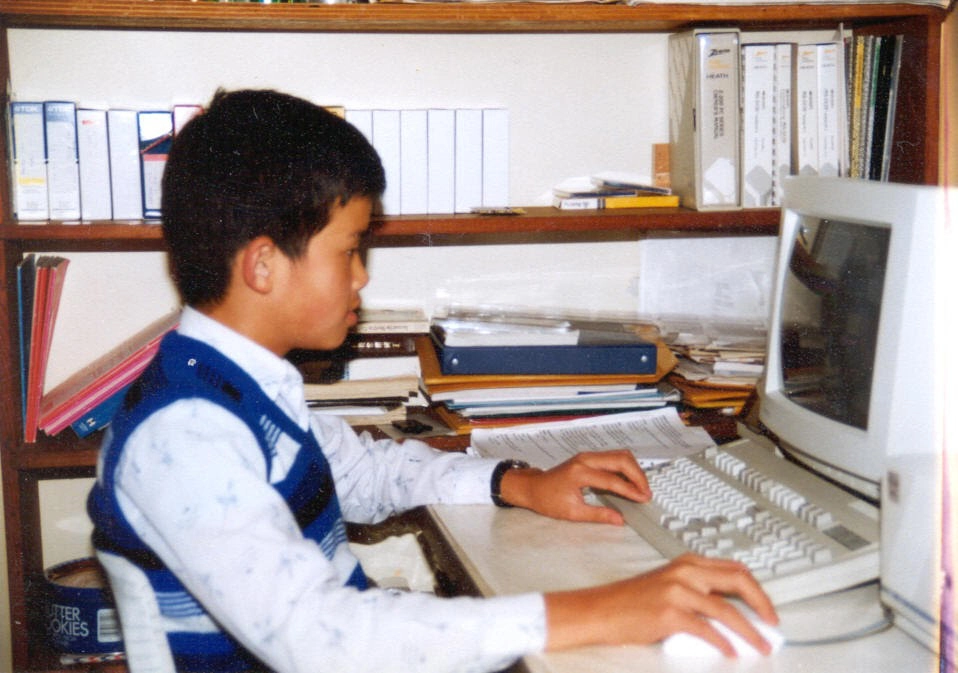
Around 1990 in Vancouver, CZ using his first computer. Photo courtesy of CZ.
In high school, some of his wealthier friends started working—mostly for novelty or because their parents wanted them to learn about hardship. CZ was one of the few students who worked to support himself. This included overnight shifts at Chevron during summers and two years at McDonald’s. Later, as a crypto tycoon, some mocked CZ for his fast-food job. But unlike some wealthy individuals distancing themselves from their working-class roots, CZ never shied away—even retweeting photos of himself in a McDonald’s uniform.
Overall, CZ describes his high school years as pleasant, even idyllic. He enjoyed being volleyball captain and competing in national math contests for four years. A physical education teacher gave him the nickname “Champion.” Ted Lin, a high school friend, says the name likely emerged because many students couldn’t pronounce “Changpeng.” CZ only adopted his current name after entering the crypto world. He says he initially tried “CP,” but dropped it after online friends told him it was shorthand for “child porn” on illegal markets.
Although he speaks warmly of Vancouver (where he says he wants to retire) and Canada, some actions belie his stated affection. He admits he hasn’t visited the city in years and has no active family or charitable ties there. Still, CZ insists he is Canadian—not just by passport, but by character. “I think like a Canadian. We’re kind people, non-aggressive, not overly competitive, generally helpful.”
His warm words for Canada—the place where he grew up and benefited greatly—are overshadowed by the far greater achievements that followed: his rise to billionaire status in the cryptocurrency era.
A Bestselling Finance Book Changed His Life
As of early April, CZ ranked 46th on Bloomberg’s Billionaires Index with a net worth of $29 billion (which CZ calls “inaccurate” and “hard to estimate considering all volatility”). His name appears daily in news headlines.
Last fall, media spotlighted his bold crypto trades that toppled rival Sam Bankman-Fried’s FTX; recent reports focus on escalating clashes between Binance and regulators due to CZ’s rule-bending.
While many unconventional tech entrepreneurs show their bold, provocative sides in college—think Zuckerberg in The Social Network—this doesn’t seem to be CZ’s story.
After graduating high school in 1995, CZ moved 3,000 miles away to McGill University, leaving temperate Vancouver for French-speaking Montreal—a place with brutally cold winters, where much of downtown connects via underground tunnels. According to CZ, he showed no standout academic or social achievements at McGill, switching majors from biology to computer science because “in high school, biology involved dealing with humans. In college, it focused on animals—I wasn’t interested.” In his free time, he rollerbladed, ate pho with friends, and stayed late in campus computer labs, typing code into basic Apple desktops.
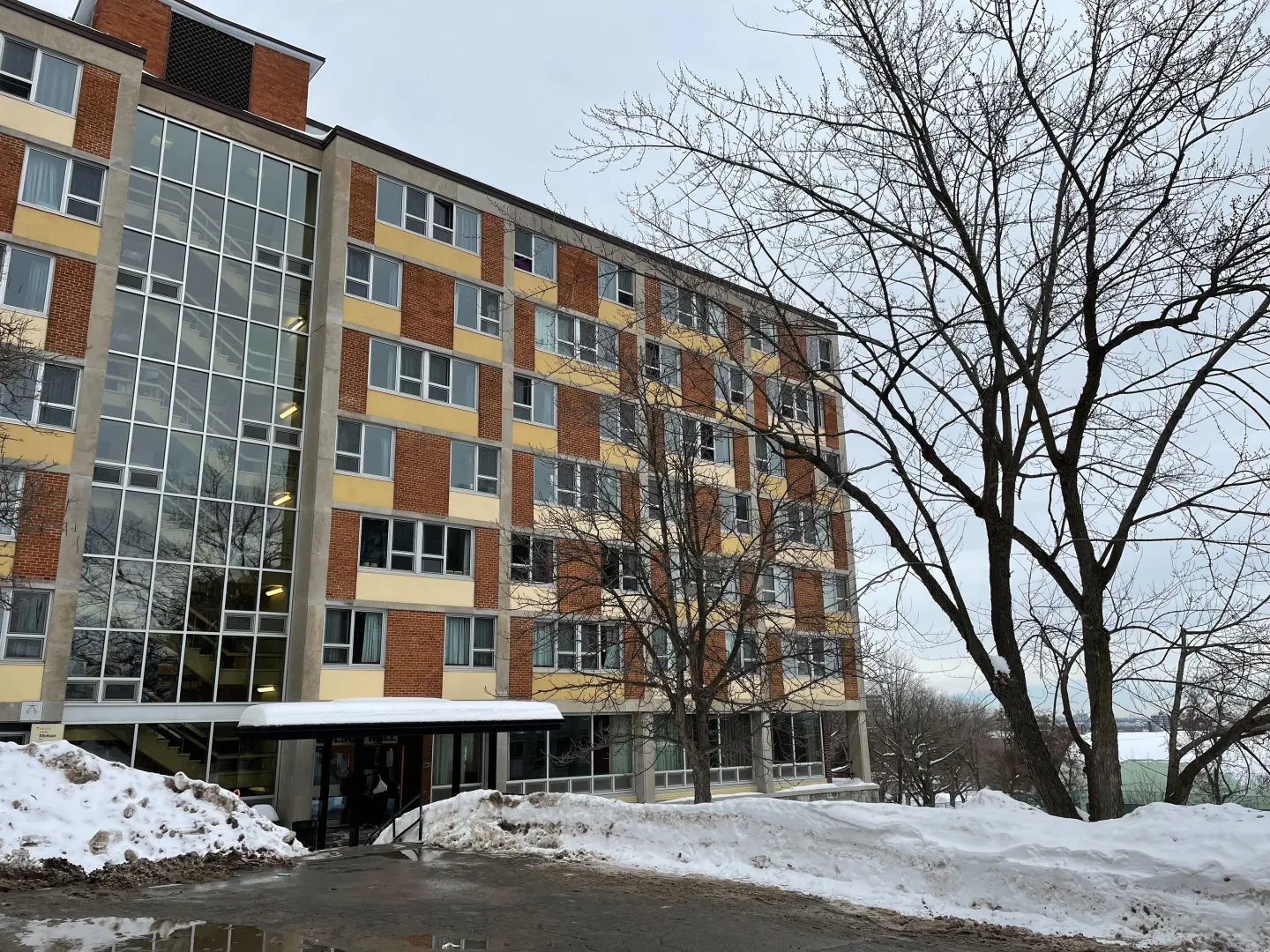
CZ’s first residence at McGill University in Montreal.
Toward the end of his time at McGill, CZ did publicly demonstrate the talent that would later define his career. In 1999, he co-authored an academic paper on artificial intelligence with professor Jeremy Cooperstock—one of the few undergraduates in his graduate seminar. Sitting in a Montreal café, Cooperstock says he remembers CZ vividly. “It wouldn’t pay well, but it would give him great experience,” he told him. In his recollection, CZ was personable, brilliant—and years later, he was stunned to discover his former student had become a billionaire.
CZ says during this period he read something life-changing—not an academic paper or dense treatise like Atlas Shrugged, but a personal finance bestseller aimed at ordinary middle-class readers: Rich Dad Poor Dad. Published in 1997, this book uses parables to contrast two fathers—one who works hard but gains little, and another who becomes rich as an entrepreneur or investor. The book made CZ question his father’s advice. By then, his father had completed a PhD, worked in the private sector, gained professional respect over 20 years—but accumulated little material wealth.
“My father always taught me to work hard and get a decent job. Both my parents shared this mindset. They didn’t like entrepreneurship. After reading Rich Dad Poor Dad, I started thinking—maybe I want to own a business. Not necessarily as CEO, but to create something meaningful.”
When CZ turned his thoughts toward wealth creation, he made a choice similar to Zuckerberg and other prodigy billionaires: dropping out of college.
In 2000, he converted a summer internship at the Tokyo Stock Exchange into a full-time role and decided not to return to McGill. (Many media reports claim CZ graduated from McGill, but this is inaccurate.)
His math and coding skills quickly landed him a job in financial capital New York, developing futures trading software for Bloomberg Tradebook. But four years later, even New York paled next to Shanghai—the world’s hottest business hub at the time—so CZ moved back to China, a place he hadn’t set foot in for over a decade.
A “Sea Turtle” Learns Shanghai’s Business Rules
Miu Chung Yan, a social work professor at the University of British Columbia who studies Chinese immigration, says Shanghai—the thriving southeastern coastal city—was the “locomotive” driving China’s economic engine at the time.
In 2005—the year CZ moved to Shanghai—the city became the world’s third busiest container shipping port, behind only Hong Kong and Singapore; it also achieved 14 consecutive years of 11% GDP growth. China was rising, and Shanghai was at the epicenter.
Crucially, CZ’s early years in Shanghai coincided with China’s tech golden age, as domestic tech companies and industry leaders surged rapidly. Li Yanhong, Jack Ma, and Pony Ma founded their companies at the turn of the millennium and were experiencing explosive investment and growth.
“I was taught to go where things are growing, not where they’re already established,” says CZ.
He wasn’t the only young Canadian returning to Shanghai. Severe economic recession in Canada during the 1990s spurred a surge of reverse migration in the mid-2000s. Returnees like CZ were known as “hai gui”—a Chinese pun meaning overseas migrants who come back to China. One study estimates nearly 500,000 hai gui arrived from Canada and elsewhere by 2017.
For CZ and
Join TechFlow official community to stay tuned
Telegram:https://t.me/TechFlowDaily
X (Twitter):https://x.com/TechFlowPost
X (Twitter) EN:https://x.com/BlockFlow_News
 @FortuneMagazine