Today in Web3 narratives, everyone loves contrast
TechFlow Selected TechFlow Selected
Today in Web3 narratives, everyone loves contrast
People don't like flawless things.
 Navigating Web3 tides with focused insights
Author: Noir
Translation: TechFlow
Most Web3 content creators believe they're bad at storytelling because they think they're "not creative enough."
But friend, that's usually not the real root of the problem.
The actual issue is this:
——Your content lacks contrast.
Hey, either your content:
Sounds all the same,
Feels flat,
Or shows no change at all.
And when nothing changes, there's no story.
What is contrast?
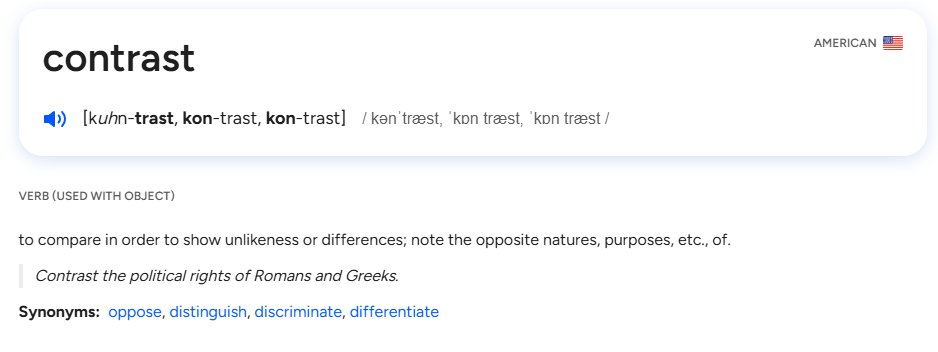
Contrast simply means something is different from what came before.
Yes, it's really that simple.
You don't need:
Fancy language,
Unexpected plot twists,
Or background music.
At its core, contrast is a shift, such as:
From "before" to "after"
From "expectation" to "reality"
From "belief" to "realization"
Without this shift, your content is just information.
Yes, maybe it's useful—but memorable? Hmm… unlikely.
Why does lack of contrast make content weak?
The Web3 world is full of:
Features, data, promises, roadmaps…
Yet most content is presented too directly:
"This is what it does."
"These are its benefits."
"This is why you should care."
But the brain isn't interested in this linear flow of information.
It wakes up only when something unexpected happens.
Why content without contrast fails to engage
The Web3 space is flooded with:
Features, data, promises, roadmaps…
Yet most content is delivered too straightforwardly:
"Here's what it does."
"Why it's good."
"Why you should care."
But the brain doesn't activate for such linear input.
It lights up only when something unexpected occurs.
A simple example of "contrast"
(You've seen this countless times)
Without contrast:
Solana's transactions are fast and cheap.
Your brain replies: Okay… so what?
With contrast:
I clicked send, switched tabs, and only then realized the transaction had already completed.
Same idea—but completely different impact.
The second version creates a "moment." Got it?
Why "contrast" feels uncomfortable?
(And why that matters)
Contrast often requires you to admit:
You were wrong, confused, or underestimated something.
This is exactly why most people avoid it.
But this discomfort is precisely what makes content feel authentic.
People don't connect with perfection.
They bond through resonance and vulnerability.
When someone thinks: "Wait… I've felt that too."
Congratulations—you've succeeded.
How to add "contrast" to your content?
Before publishing, ask yourself one question:
"What changed here?"
If you can't answer, try adding one of these:
-
A wrong assumption you once held
-
A moment of hesitation
-
An unexpected outcome
-
A small decision you almost didn't make
You don't need dramatic plots.
You just need a bit of relatable change.
Geek's summary
Don't get me wrong—creativity does play a role in storytelling.
But not everyone is born creative. This post is for those who genuinely want to learn the craft.
At its heart: be honest enough to show a "shift."
In the complex, noisy world of Web3,
Contrast is how you stand out—without shouting :)
Remember to follow me, or else you'll…
Join TechFlow official community to stay tuned
Telegram:https://t.me/TechFlowDaily
X (Twitter):https://x.com/TechFlowPost
X (Twitter) EN:https://x.com/BlockFlow_News
 @noironsol