








The era of narrative collision, where volatility itself is an asset
TechFlow Selected TechFlow Selected
The era of narrative collision, where volatility itself is an asset
Premiums belong to those who can anticipate breakthroughs, hedge against dilution, and view volatility as the only true constant.
 Navigating Web3 tides with focused insights
Author: arndxt
Translation: Luffy, Foresight News
Each cycle has its own unique narrative, and right now, the market is struggling through conflicting chapters: Bitcoin's seasonal patterns versus post-halving dynamics, the Fed's dovish rhetoric amid inflation, and a steepening bond market that may signal either relief or recession.
We are in a highly volatile market:
-
In the short term: September could bring Bitcoin volatility not seen so far this year. For those willing to downplay seasonality in a post-halving year, a pullback may present a buying opportunity.
-
In the medium term: The Federal Reserve risks losing credibility. Rate cuts driven by rising inflation would reshape the investment landscape.
-
In the long term: The key to crypto cycles may lie not only in retail or institutional capital flows but also in the structural health of corporate crypto treasuries. This is a fragile pillar—if it breaks, demand turns into supply.
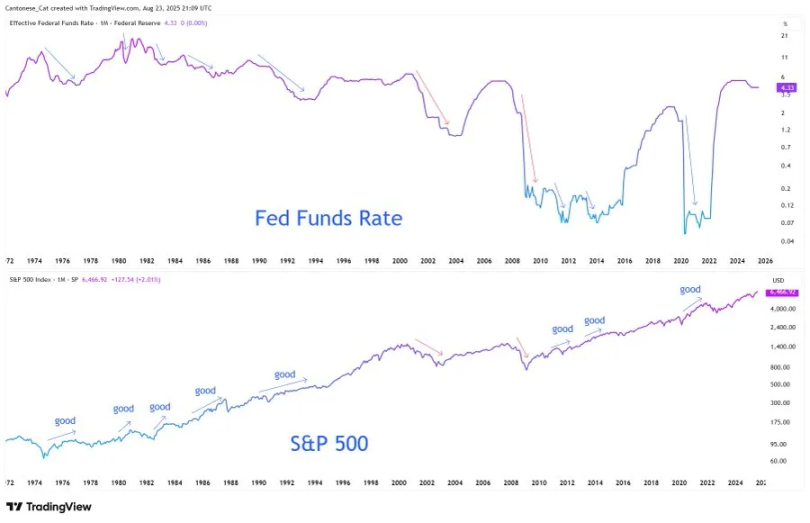
The investor's core logic is simple: We are entering an environment of intense narrative volatility, where seasonality, policy, and structural mechanisms point in different directions.
To investors, signals aren't found in isolated data points, but in the collision of these narratives.
Bitcoin’s "September Ghost" and Post-Halving Reality
Historically, September is Bitcoin’s worst-performing month. Charts repeatedly show declines triggered by liquidation of long positions. But this cycle is different: we are in a post-halving year, and historically, Q3 in such years tends to be bullish.
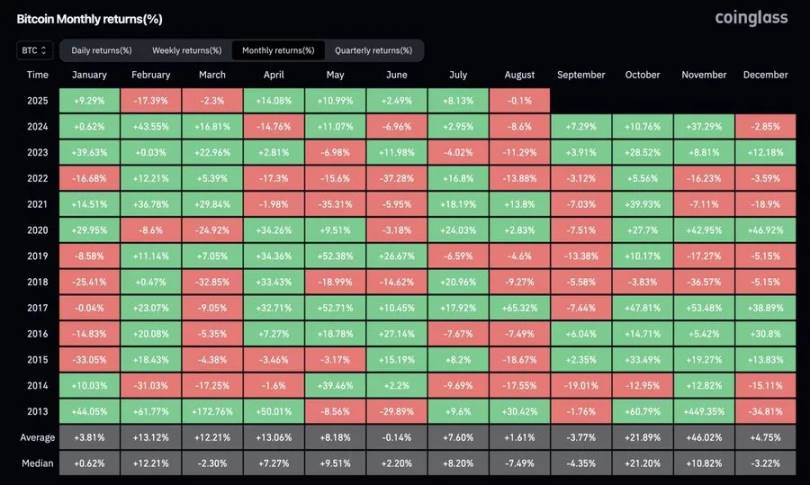
So far in 2025, there hasn’t been a single month with a gain exceeding 30% (or even 15%), meaning volatility has been compressed. In every bull market, explosive moves tend to cluster. With four months left in the year, the question isn’t whether volatility will return—it’s when. Investors conclude that if September brings a correction, it may become the last major entry window before the inevitable Q4 rally.
The Fed’s Narrative Split
Powell’s Jackson Hole speech was widely misinterpreted as a green light for aggressive easing. In reality, his message was more nuanced: he left the door open for a September rate cut, but stressed it wouldn’t mark the start of a loose cycle.
On the labor market, Powell acknowledged a “strange balance”: both supply and demand are slowing, leaving the market in a fragile state. The risk is asymmetric—if this balance breaks, it could rapidly erupt in layoffs.
On inflation, he was blunt: tariffs have clearly pushed up prices, and their impact will continue accumulating. While Powell called this a “one-time shift in price level,” he emphasized the Fed cannot allow inflation expectations to become unanchored.
The shift in framework is even more telling. The Fed has formally abandoned its 2020 “average inflation targeting” approach and reverted to the 2012 “balanced path” model: no longer tolerating inflation above 2%, and no longer focusing solely on unemployment. In other words, even as markets price in an almost certain rate cut, the Fed is signaling a stricter interpretation of its 2% inflation target.
The contradiction lies here: the Fed is preparing to cut rates in a stagflationary environment—easing despite accelerating core inflation and a weakening labor market. Why? Structurally, the U.S. debt burden makes “higher for longer” rates politically and fiscally unsustainable. Powell can talk about credibility, but the system is caught in a vicious cycle: spend, borrow, print—repeat.
For investors, the key takeaway is: credibility risk has now become an asset pricing risk. If the 2% target shifts from an “anchor” to a “vision,” it will reset valuations across bonds, stocks, and hard assets. In this environment, scarce assets (Bitcoin, Ethereum, gold) become rational hedges against dilution risk.
The Bond Market’s Steepening Signal
The yield curve has quietly un-inverted: the spread between 10-year and 2-year Treasuries has rebounded from one of the deepest inversions in history to +54 basis points. On the surface, this looks like normalization—a healthier curve.
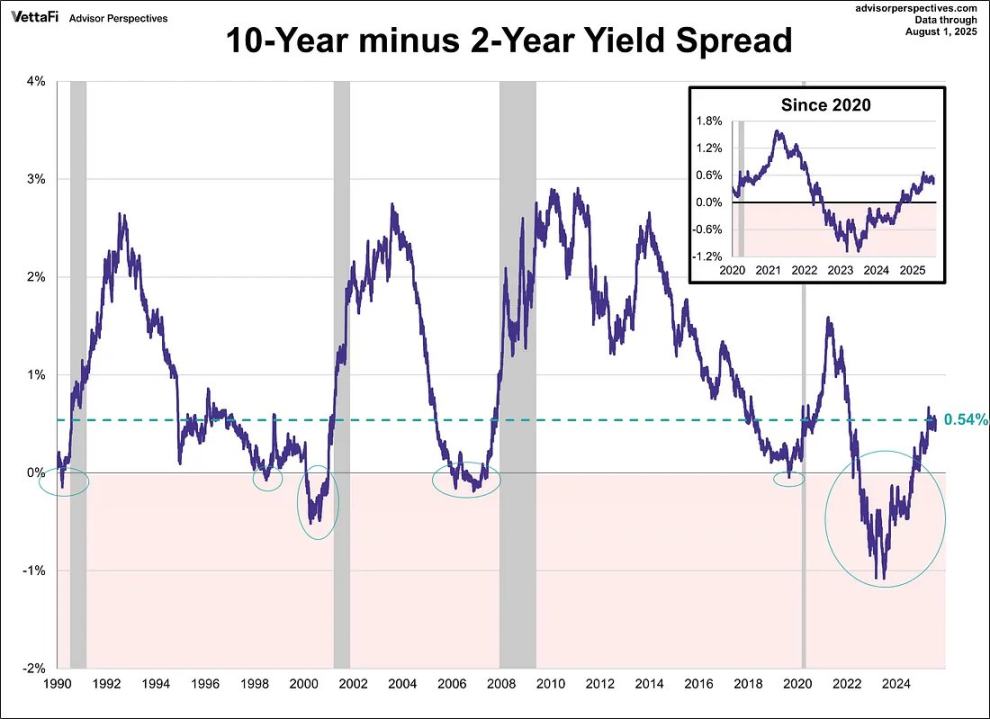
But history offers a different warning. In 2007, steepening after inversion wasn’t a “safe signal”—it was a precursor to collapse. The key is why the curve steepens: if due to improved growth expectations, it’s bullish; if due to short-term rates falling faster than long-term inflation expectations, it signals looming recession.
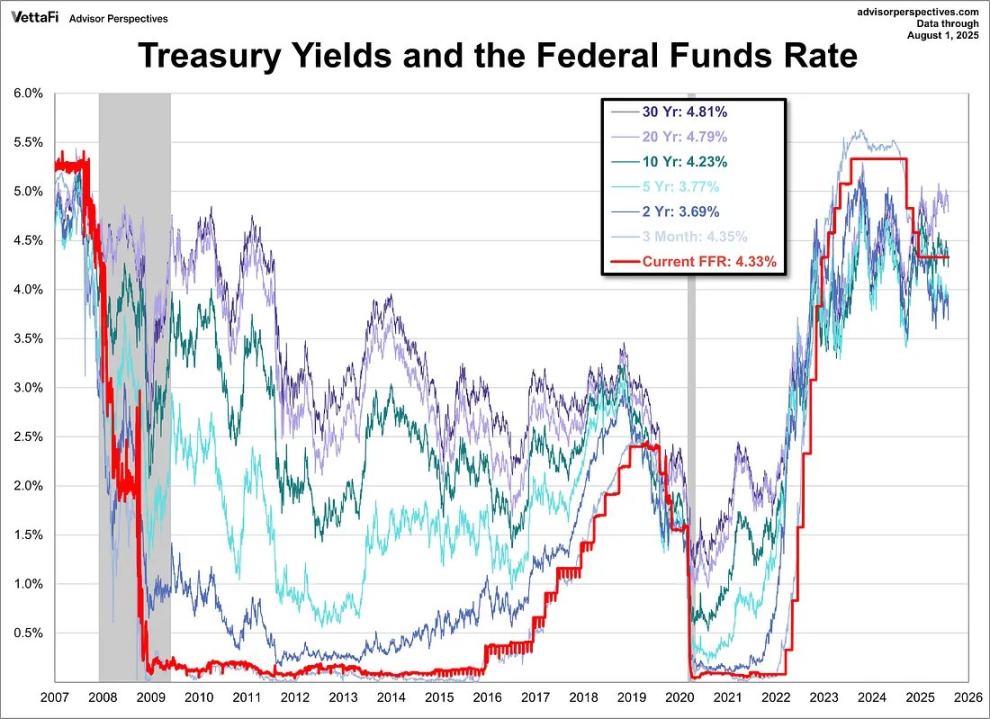
Today, the curve is steepening for the wrong reason: the market is pricing rate cuts into persistent inflation. This is a fragile setup.
Crypto’s Structural Challenge
Against this macro backdrop, crypto faces its own existential test. “Corporate treasury accumulation” (MSTR, Metaplanet, ETH-holding firms, etc.) has been a core demand pillar. But as net premium compresses, the danger is these entities flip to discount—and turn from buyers into forced sellers.
Cycles don’t end because narratives fade—they end when the mechanisms driving demand reverse. In 2017 it was ICOs, in 2021 it was DeFi/NFT leverage, and in 2025 it may be crypto treasuries hitting the limits of balance sheet arbitrage.

Overall, the core narrative of this cycle is dissonance: the market is being pulled in opposite directions by seasonality, policy, and structural forces.
-
Bitcoin’s September dip collides with the inevitability of post-halving gains;
-
The Fed speaks cautiously but is forced to cut amid stagflation;
-
Bond market steepening appears like relief, yet feels fragile;
-
Crypto’s own fuel—treasury accumulation—faces the risk of turning into liquidation.
For investors, the logic is simple: we are in an era of narrative collision, and the premium goes to those who can anticipate breakouts, hedge dilution, and treat volatility as the only true constant.
Opportunity isn’t in choosing one narrative—it’s in recognizing that volatility itself is the asset.
Join TechFlow official community to stay tuned
Telegram:https://t.me/TechFlowDaily
X (Twitter):https://x.com/TechFlowPost
X (Twitter) EN:https://x.com/BlockFlow_News
 @arndxt_xo


