Opinion: High barriers for listings on exchanges are stifling on-chain innovation
TechFlow Selected TechFlow Selected
Opinion: High barriers for listings on exchanges are stifling on-chain innovation
This leads to a misaligned incentive structure, causing project teams to no longer focus on the product itself.
 Navigating Web3 tides with focused insights
Author: Haotian
I didn't expect the discussion around exchange listing fees to kick off again.
Someone leaked an offer from Binance for listing, including 1% Alpha airdrop + 3% additional airdrop + 1% marketing + 1M TVL + $250k deposit + 3% BNB holder rewards + ……
I still hold one view: the amount of listing fees is fundamentally a pure commercial decision, Binance's own choice, unshakable. What's strange is that such a private business term has been exposed.
Clearly, behind this lies frustration and anger from some Builders after breaking down.
Some Builders have exhausted themselves building technology, products, and ecosystems, only to find the barrier to "getting listed" so high, and ultimately a massive financial black hole.
This means teams without elite VC backing or strong capital support are shut out. In their place come well-funded projects with compelling narratives and skilled at capital maneuvers—high-FDV VC coins become the honored guests.
The result is predictable: a vicious cycle. Exchanges complain these heavily-backed VC coins peak immediately upon launch, then blame the exchanges after users get rekt; project teams feel wronged too—given how high the pricing and uncertain future costs imposed by exchanges, why not just execute a quick in-and-out play? Users remain innocent bystanders, cursing exchanges, cursing projects, cursing themselves for buying in and ending up as lampposts.
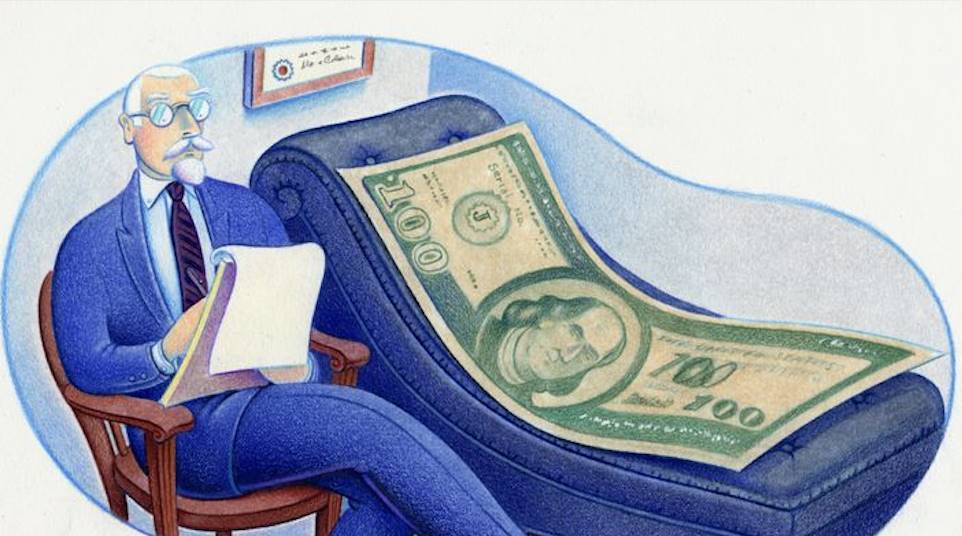
So where does the root problem lie? I believe it lies precisely in this value selection mechanism of "whoever has money gets listed."
Of course, exchanges may argue that all the collected funds are redistributed to users, and various deposits serve to protect users. But the issue is, if screening is purely based on "financial thresholds," inevitably you exclude those quietly building infrastructure, diligently refining products—truly innovative projects lacking funds—while inviting in manipulative operators skilled at capital games and short-term cashouts.
This twisted mutual pursuit—equating "funding level" with "innovation value," replacing "execution capability" with "cash power"—is exactly what leads to the final mess where everyone ends up blaming each other.
That’s why I say exchanges’ high listing barriers and bundling of proprietary product suites are systematically suffocating on-chain innovation.
Because it creates a distorted incentive structure: projects no longer focus on the product itself but pour enormous energy into "how to secure exchange listings," "how to package narratives," and "how to appease capital." Technical innovation becomes secondary; fundraising and listing become top priorities.
Tell me, when Builders spend more time on packaging and maneuvering than writing code, where is the future of this industry?
I understand exchanges’ profit motives as commercial entities—they’ve fought hard through fierce competition to get where they are today. But the biggest "backstage supporter" for exchanges isn’t just their platform users, but the vast crypto technological innovation ecosystem behind them.
When the entire crypto ecosystem is reduced to capital games and mutual extraction—the foundation of the exchange’s "pickaxe business" will vanish along with it.
Join TechFlow official community to stay tuned
Telegram:https://t.me/TechFlowDaily
X (Twitter):https://x.com/TechFlowPost
X (Twitter) EN:https://x.com/BlockFlow_News
 Haotian | CryptoInsight