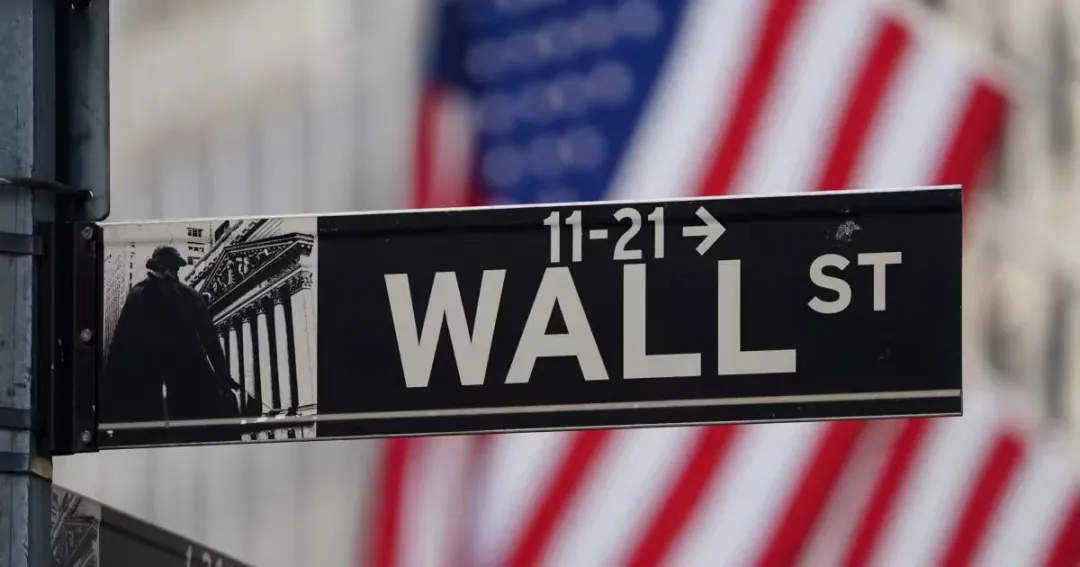
When the NYSE Begins 24/7 Trading
TechFlow Selected TechFlow Selected
When the NYSE Begins 24/7 Trading
When the正规军 enter the market, do platforms in the crypto space that distribute U.S. stock assets through "tokenized packaging" still have a chance to survive?
 Navigating Web3 tides with focused insights
Text by: Cathy
On January 19, 2026, Wall Street dropped a deep-sea bomb.
The New York Stock Exchange—this 234-year-old financial fortress—officially announced the development of a blockchain-based tokenized securities trading platform. 7×24 trading, T+0 instant settlement, stablecoin payments—features once considered exclusive to crypto circles—are now being adopted by the world’s largest exchange.
When news broke, the crypto community erupted. Some cheered “We won,” while others felt a chill down their spines.
With traditional finance entering the arena, do crypto platforms that tokenize U.S. stocks still have a future?
What "New Species" Is NYSE Building?
To grasp the magnitude of this disruption, we must first understand exactly what the NYSE is building.
This isn’t just another private-chain experiment—it’s a hybrid architecture designed to combine the best of both worlds.
At the execution layer, NYSE retains its flagship Pillar matching engine. Renowned for microsecond-level latency, this system is the deepest liquidity pool and most powerful price discovery machine globally. In other words, when it comes to order matching, NYSE refuses to compromise on blockchain’s inherent slowness.
The real innovation lies in the settlement layer. Traditional U.S. stock trades follow a T+1 settlement cycle, locking up capital at clearinghouses for an entire day. The new NYSE platform uses blockchain as a “single source of truth,” enabling immediate on-chain ownership transfer the moment a trade is matched.
For institutions, this reduces counterparty risk from “T+1” to “milliseconds.”
Even more disruptive is the trading schedule. For years, U.S. equities have been confined to trading hours of 9:30 AM to 4:00 PM Eastern Time. Closed on weekends, Asian investors could only watch helplessly.
Now, NYSE has declared: 7×24全天候 operation.
When geopolitical black swans strike over the weekend, investors no longer need to wait until Monday’s open—they can hedge directly within NYSE’s compliant environment. This is a direct response to crypto markets’ “never sleep” model.
One subtle but critical detail: NYSE has partnered with BNY Mellon and Citibank. This suggests the stablecoins used on the platform will likely not be Tether or Circle-issued USDT or USDC, but rather “tokenized deposits” issued by regulated banks.
Banks closed? No problem—tokenized deposits can circulate on-chain 24/7.
The Awkward Position of Crypto's "Pioneers"
Before NYSE entered the scene, the crypto community had already spent years experimenting with tokenized stocks.
The earliest attempts were "synthetic assets." DeFi protocols like Synthetix and Mirror Protocol allowed users to collateralize crypto assets and mint synthetic tokens tracking U.S. stock prices. Advantages included full decentralization, no KYC, and censorship resistance.
But the drawbacks were fatal: low capital efficiency requiring over-collateralization, and persistent risks of decoupling from underlying assets. When Terra/UST collapsed in 2022, Mirror Protocol followed suit, marginalizing synthetic asset models in stock tokenization.
Next came centralized exchanges. Around 2021, FTX and Binance launched tokenized stock services. Users bought tokens on the exchange, while third-party brokers held the actual shares.
We all know how that ended. Binance was forced to halt under regulatory pressure; FTX imploded entirely. These failures taught the market a harsh lesson: centralized trust without regulatory backing is dangerously fragile.
By 2026, the dominant model evolved into the “legal wrapper” approach. Platforms like Ondo Finance, Backed Finance, and Dinari began using SPVs (special purpose vehicles) to buy stocks through traditional brokers, then issue corresponding tokens on-chain.
This model saw temporary success, but had one fatal flaw: they were mere “middlemen.”
They earned fees by bridging traditional finance and blockchain. Now, NYSE is merging the two shores—making the bridge itself increasingly obsolete.
A Dimensional Strike: Three Axes of Dominance
“Dimensional strike” originates from *The Three-Body Problem*, describing how higher-dimensional civilizations destroy lower ones by collapsing spatial dimensions.
In financial markets, the metaphor fits perfectly.
NYSE holds absolute advantages in regulation, credibility, and liquidity—and now, it has overcome its technological shortcomings. What does this mean for crypto-native platforms that relied solely on technical edge?
First dimension: Liquidity suction.
Once NYSE enables 7×24 trading, liquidity will shift dramatically. Currently, tokenized stocks on Backed or Swarm suffer extremely poor price discovery after market close. Market makers bear huge overnight risk, leading to wide spreads.
With NYSE stepping in, it becomes the primary pricing source during off-hours. Institutional market makers will prioritize quoting in the deepest, most legally certain venue.
Result? Tokenized stocks on crypto platforms become mere shadows of NYSE prices. If users can trade with 0.01% slippage on NYSE, why endure 1% slippage in DeFi pools?
Second dimension: Legal certainty.
Tokens on crypto-native platforms are essentially derivatives or depositary receipts. Users don’t own the stock—they hold contractual claims against an SPV. You must trust that Ondo or Backed’s SPV won’t misappropriate assets, or that custodian banks won’t freeze accounts.
On NYSE’s new platform, the token *is* the stock. This “native tokenization” means tokens directly represent ownership on the issuer’s books, protected under the strictest U.S. securities laws, complete with voting rights and dividends.
For large capital, this difference in legal certainty is an insurmountable gap.
Third dimension: Infrastructure dominance.
Crypto platforms rely on public chains like Ethereum or Solana. Decentralization is a strength, but volatile gas fees and network congestion remain real pain points. NYSE will likely use a private or consortium chain, ensuring high throughput and zero gas fees.
From a user experience standpoint, this is yet another form of dimensional strike.
Crypto’s Divided Reaction
After the announcement, the crypto community reacted with stark division.
The “Validation Camp” celebrated victory.
They see NYSE’s move as the highest validation of blockchain technology. For years, crypto advocates have claimed blockchain would reinvent financial backends, replacing T+1 with T+0. Now, the world’s largest exchange is proving it—what stronger “technical validation” could there be?
This narrative benefits infrastructure providers serving institutions—oracle networks, cross-chain protocols, compliance tech firms. Calls for an “RWA sector breakout” are echoing throughout the community.
The “Existential Threat Camp,” however, feels threatened.
Critics argue that NYSE is building a “permissioned chain,” which contradicts the spirit of crypto. Figures like Synthetix founder Kain Warwick have long warned that traditional finance might create a “closed DeFi,” pushing truly decentralized protocols to the margins.
A more immediate concern is tighter regulation. Once regulators realize NYSE can offer “safe, compliant” 24/7 trading, their tolerance for “wild” DeFi platforms may vanish completely.
Top players are already adapting.
Ondo Finance seems to have seen this coming. In 2025, Ondo launched “Ondo Global Markets,” shifting focus from merely issuing assets to providing infrastructure—helping brokers and apps access tokenized liquidity. Facing NYSE, Ondo may evolve from competitor to distributor.
Backed Finance, sticking to its no-KYC transfer model, may retreat into niches NYSE cannot reach—serving users who can’t open accounts at compliant brokerages.
The market is undergoing “bifurcation”: mainstream capital flows to NYSE; long-tail capital remains on Backed.
Summary
NYSE’s entry signals the financial landscape of the next five years: a two-tier structure.
The upper tier: a “permissioned chain network” led by NYSE, banks, and big tech. This layer handles the vast majority of global capital, enjoying blockchain-driven efficiency and round-the-clock trading—but under strict regulation.
The lower tier: a “chain network” driven by communities, DAOs, and anonymous developers. It remains a testing ground for innovation and the last bastion of financial freedom—though its capital base will be far smaller than the upper tier.
For compliance-focused crypto platforms, NYSE’s arrival poses an existential business model challenge. Their historical role as “bridges for traditional assets onto chain” may soon end—unless they successfully pivot into tech providers serving the NYSE ecosystem.
For censorship-resistant protocols, NYSE cannot fully eliminate them. As long as users exist who cannot pass KYC, decentralized protocols will find fertile ground. But that ground will shrink significantly.
NYSE’s 7×24 tokenized trading era is more than a technical upgrade—it’s a declaration of financial sovereignty.
It sends a clear message to the world: Blockchain technology is too important to be left solely to cryptocurrencies.
After years of observation, Wall Street has finally decided to reclaim this technology for itself.
For the crypto world, this is both the moment a dream comes true—and the beginning of waking up.
Join TechFlow official community to stay tuned
Telegram:https://t.me/TechFlowDaily
X (Twitter):https://x.com/TechFlowPost
X (Twitter) EN:https://x.com/BlockFlow_News
 白话区块链
白话区块链