NYSE plans 7x24 stock trading; the world is one giant exchange
TechFlow Selected TechFlow Selected
NYSE plans 7x24 stock trading; the world is one giant exchange
The Earth never sleeps, so why should the markets?
 Navigating Web3 tides with focused insights
Author: Curry, TechFlow
The world is turning into an exchange that never closes.
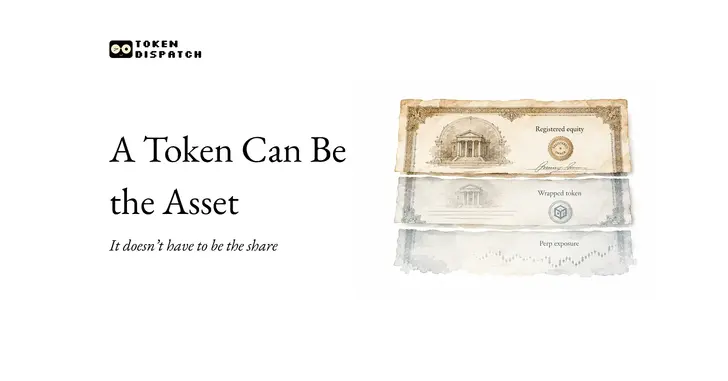
Today, the New York Stock Exchange (NYSE) announced it is developing a tokenized securities platform. Trade U.S. stocks and ETFs 24/7, deposit with stablecoins, settle instantly, and place orders in dollar amounts. The partners are BNY Mellon and Citigroup—both old-money institutions.
The proposal is still awaiting regulatory approval. But the direction has been set.
Lynn Martin, President of NYSE, said:
"For over two centuries, we've been changing how markets operate. Now we're leading the industry toward fully on-chain solutions."
She calls it leadership, but it's really catching up.
Last week, the CEO of ICE—the parent company of NYSE—said bluntly: "We’re playing catch-up with Robinhood."
ICE has a market cap exceeding $100 billion. Robinhood is an internet brokerage founded in 2013.
But who is Robinhood chasing?
In June last year, Robinhood launched tokenized stocks in the EU, built on Arbitrum, enabling 24/7 trading and settlement in stablecoins. Their CEO said: "Once you’ve experienced 24/7 markets, there’s no going back."
The old hierarchy used to go like this: Wall Street looked down on internet brokers, and internet brokers looked down on crypto exchanges. Now NYSE is copying Robinhood’s playbook, while Robinhood itself runs on crypto-native infrastructure.
Convergence has flipped the script. Everything becomes tradable. No one can afford to look down on anyone else anymore.
What NYSE is now trying to dismantle are three walls.
The first is time.
U.S. stock markets traditionally close at 4 p.m. The NYSE is legally required to shut down. But the Earth is round—when New York sleeps, Tokyo wakes. Global investors want access to U.S. stocks around the clock. Why should markets follow New York’s business hours?
Last year, someone raised a concern: What if Tesla’s factory explodes over the weekend? Nasdaq would be closed, but tokenized Tesla shares on-chain could still trade freely. Price oracles stop updating Friday afternoon and resume only Monday morning. For 48 hours, people are trading based on a “ghost price”—a figure detached from reality.
That was once seen as a flaw of tokenization. NYSE’s answer now? Just stay open 24/7, and the problem vanishes.
Next is space.
Previously, an investor in Indonesia who wanted to buy U.S. stocks had to open a brokerage account, convert currency into USD, wait for T+1 settlement, and navigate layers of compliance. Now, with stablecoin deposits, someone could theoretically buy directly using USDT.
Last week, the CEO of ICE made a candid remark in an interview: Stablecoins are driving global “dollarization.”
Traditional dollar dominance relied on oil settlements and the SWIFT system. Now there’s a new path: blockchain. ICE is already collaborating with BNY Mellon and Citi to develop “tokenized deposits,” allowing institutions to transfer funds, rebalance cross-time-zone positions, and post margin collateral even after banks have closed. Time zones are becoming less and less of a constraint on finance.
Finally, accessibility. By “placing orders in dollar amounts,” NYSE means you can now buy fractional shares—0.001 of a share, for example. Previously, one share of Berkshire Hathaway cost over $700,000. Now, in theory, you could own a sliver with just one dollar.
Tokenized stocks remain small in scale—for now. According to RWA.xyz, global market cap stood at around $340 million by the end of last year, though it has grown several-fold in just one year. Kraken, Bybit, and Robinhood all rushed to launch such products last year.
NYSE is the latest entrant—but also the most significant.
Yet interpreting this as crypto finally breaking into the mainstream would be a bit self-congratulatory.
24/7 trading, stablecoin settlement, on-chain clearing, fractional ownership—these were all innovations pioneered in crypto over the past decade. But we failed to build large-scale applications on top of them. To this day, the community remains preoccupied with meme coin pumps and airdrop farming dramas.
Now Wall Street is taking this entire infrastructure and applying it to trade Apple, NVIDIA, and Tesla shares. It’s reminiscent of the dot-com bubble: After the crash, amid the wreckage, Amazon and Google emerged.
The bubble bursts, but the infrastructure remains—only this time, different players are monetizing it.
In truth, what’s truly expanding isn’t cryptocurrency—it’s the very idea of “tradability.”
During last year’s U.S. election, daily trading volume on Polymarket, a prediction market, exceeded $100 million. An entire market formed around betting on “who will become president,” turning political outcomes into tradable contracts.
In New York, someone tokenized an apartment in Manhattan—you can invest hundreds of dollars to own one ten-thousandth of a building and profit or lose based on real estate price movements. Others monitor Domino’s Pizza order volumes near the Pentagon. A sudden spike might signal the Department of Defense is working late—possibly due to an unfolding crisis—and that data itself becomes a trading signal.
The wall of time is gone. The wall of space is gone. The wall of access is gone. Anything can become tradable.
NYSE’s move today is simply another step along this trajectory.
Nasdaq filed a similar application in September last year. The Depository Trust Company received SEC approval in December and plans to launch in the second half of this year. With today’s announcement, NYSE has leapfrogged ahead in timing.
Truly, everyone is racing toward the same goal: making trading never stop.
The Earth never sleeps. Why should the market?
Join TechFlow official community to stay tuned
Telegram:https://t.me/TechFlowDaily
X (Twitter):https://x.com/TechFlowPost
X (Twitter) EN:https://x.com/BlockFlow_News
 深潮TechFlow