The U.S. government is also taking the "National Day holiday"
TechFlow Selected TechFlow Selected
The U.S. government is also taking the "National Day holiday"
"As CNN commented: 'The glory of the superpower ends here, because it's shutting down.'"
 Navigating Web3 tides with focused insights
Author: Ba Jiuling
While China is observing its "National Day holiday," the U.S. government is also entering its own "October holiday."
On October 1, 2025, Eastern Time, the U.S. government officially shut down, forcing hundreds of thousands of federal employees into furlough. The White House website even launched a countdown timer tracking the duration of the shutdown.
Leisurely Chinese netizens have begun online "melon-watching": Why has the U.S. government shut down?
A U.S. government shutdown, also known as a "lapse in appropriations," is a unique phenomenon in American politics. Simply put, Congress fails to approve the government budget on time, causing some federal agencies to run out of operating funds and temporarily cease operations.
Yet, facing such a major event, President Trump appears unusually unconcerned.
House Minority Leader Jeffries even questioned Trump: "The government is four days from shutting down—why are you watching a golf tournament right now? This is outrageous."

Trump at the 2025 Ryder Cup golf tournament on September 26
Democrats fail to understand that unlike previous shutdowns, this one conceals Trump's strategic calculation.
Why Has the U.S. Government Shut Down?
Government shutdowns are nothing new in the United States. Historically, the federal government has experienced 14 shutdowns, lasting anywhere from one day to a record 35 days.
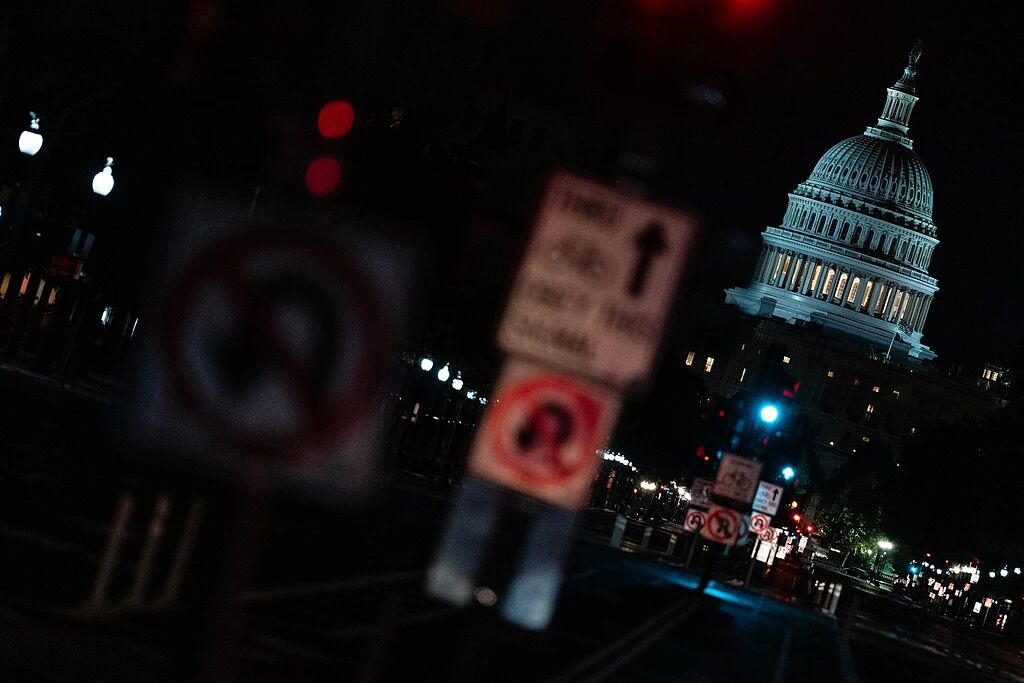
On October 1, the U.S. Capitol building was darkened
Intra-party conflict is the direct cause of the shutdown. Republicans pass a budget, Democrats block it, and the resulting deadlock forces the government to shut down.
By tradition, the new fiscal year for the U.S. federal government begins on October 1. The government must submit 12 annual appropriation bills to Congress in advance to secure necessary funding.
If both chambers of Congress fail to pass these bills by midnight on September 30, government agencies will be forced to suspend non-essential operations due to lack of funding.
Trump followed protocol, submitting his new fiscal year budget to Congress early. However, the budget's path through Congress proved "nerve-wracking."
In the Republican-controlled House of Representatives, a "continuing resolution" (CR) designed to avoid an immediate shutdown narrowly passed on September 19 by a vote of 217 to 212.
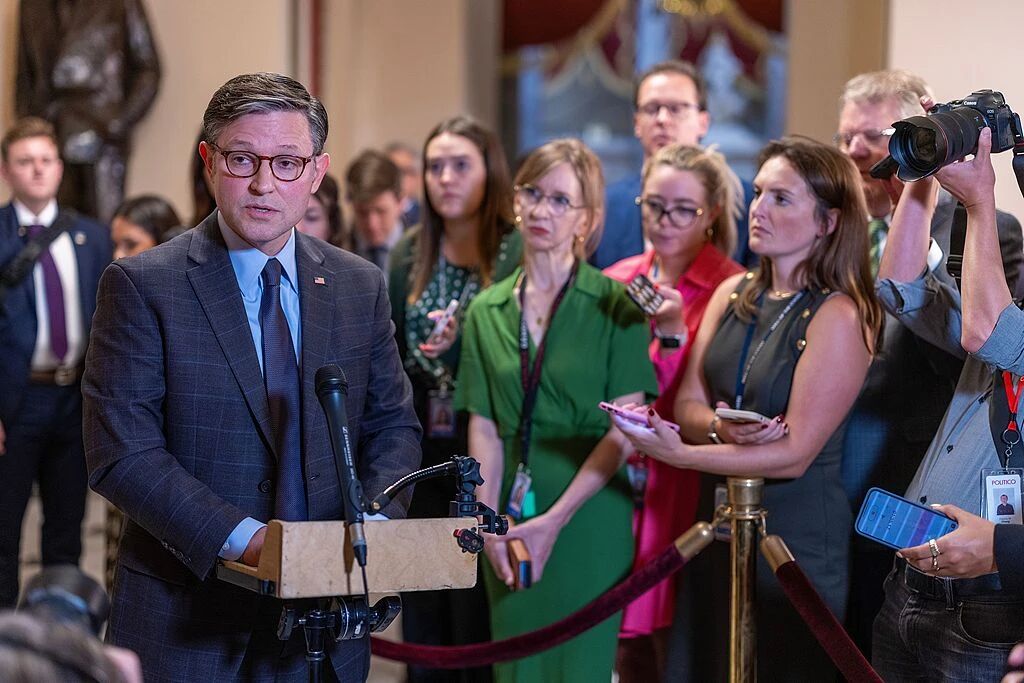
On September 19, the U.S. House voted on the temporary funding bill
Compared to a formal annual budget, this continuing resolution is merely a stopgap measure. But if it passes the Senate as well, it would extend government funding until November 21, giving both parties more time to negotiate.
However, Trump wasn't so lucky in the Senate.
Senate rules require a "supermajority" of 60 votes to pass any spending bill. Trump’s Republican Party holds only 53 seats in the Senate, meaning they need at least seven Democratic senators to support the 2026 fiscal budget.
But Democrats strongly resist the Republican budget proposal, due to clear "core disagreements" over fiscal priorities.
Breaking it down, the Trump administration (Republicans) has two main demands:
▶▷ First, eliminate subsidies under the Affordable Care Act (ACA). The Trump administration views ACA tax subsidies—the centerpiece of former President Obama’s legacy—as "inefficient programs needing reform," and proposes fully cutting them in the new budget.
▶▷ Second, strengthen border and immigration controls. The budget significantly increases funding for immigration and border enforcement to enhance border security while reducing funds related to asylum applications.
In response to these Republican demands expressed through the budget, Democrats firmly oppose, with three main demands of their own:
◎ First, invest $350 billion to preserve and extend ACA subsidies. They insist on defending Obamacare and demand the extension of expiring tax credits.
◎ Second, restore Medicaid funding and repeal cuts introduced by recent Republican tax legislation.
◎ Third, oppose the "extremization" of border policies. Democrats argue that increased border security funding proposed by Republicans is too extreme, politicizing humanitarian issues.
House Minority Leader Hakeem Jeffries told reporters that Democrats would not support an appropriations bill that "continues to harm healthcare access for ordinary Americans."
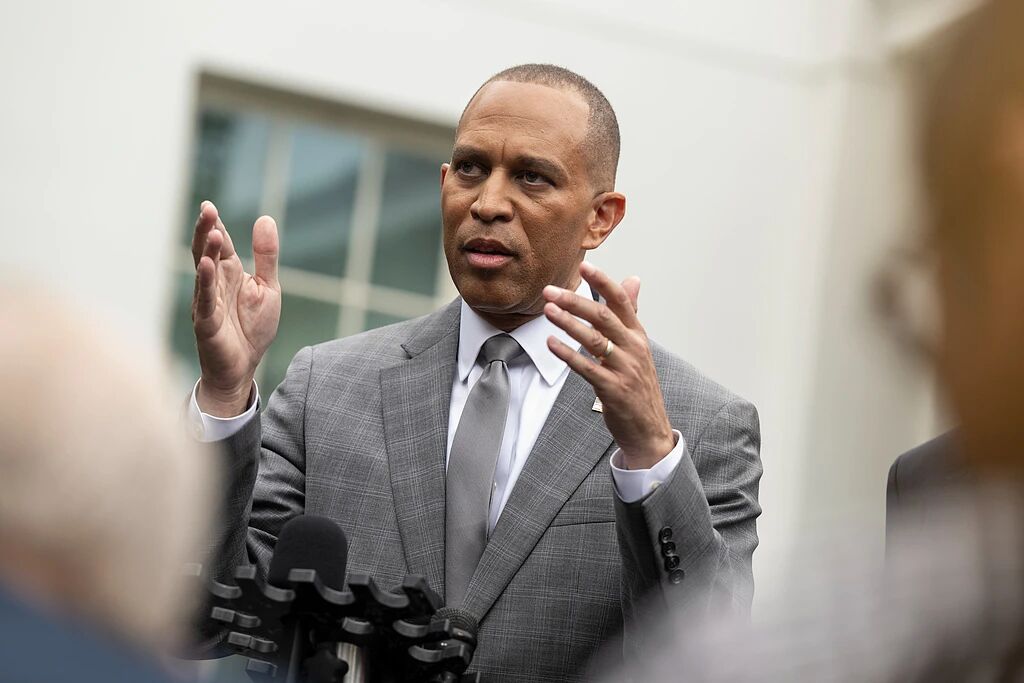
On September 29, Hakeem Jeffries addressed the media
In summary, the direct reason for the U.S. government shutdown is the failure to pass a budget. The core reason behind the budget failure is partisan division between Republicans and Democrats. The fundamental source of this divide lies in disagreement over healthcare spending, and Democrats have the power to block the budget.
This is why the U.S. government is taking an "October holiday" this year.
Is Trump Happy About the Shutdown?
Although government shutdowns are not uncommon, this particular shutdown differs significantly from past ones—mainly in President Trump’s attitude and strategy.
First, Trump’s stance has shifted from "desperately avoiding" a shutdown to seemingly "welcoming" it.
The last shutdown occurred during Trump’s first term in 2018. At that time, he actively worked to prevent a shutdown. After it began, he canceled his New Year’s vacation to Mar-a-Lago and convened top Republican leaders on the first working day of the year to discuss solutions.
This time, however, Trump appears to allow the shutdown to happen. BBC commented: "The Trump administration seems quite willing to keep a large part of the U.S. government closed for an extended period."
In terms of actions, four days ago, Trump abandoned official duties to fly on Air Force One to watch a golf tournament, even canceling a meeting with Democratic representatives aimed at preventing the shutdown. Even during bipartisan talks on Monday, September 29, Trump held firm on his budget demands without offering any concessions.
Trump blamed Democrats for refusing to compromise, calling them the root cause of the shutdown: "Nothing is inevitable. I think it was very possible to avoid this." "But I haven’t seen any willingness to budge from them."
After bipartisan talks on Monday, Vice President Vance pessimistically stated: "I think we’re headed for a government shutdown because Democrats won’t do the right thing."

Live broadcast of Senate voting on the government funding bill
Some analysts believe Trump’s calm demeanor hides a deeper calculation: Trump may be using the government shutdown as a tool to achieve political goals.
William Resch, a Georgia State University professor specializing in government shutdowns, said: "If past shutdown crises were like high-stakes games of chicken, this one takes on a different form."
Previously, shutdowns usually meant unpaid leave for non-essential workers, with employees returning once funding resumed after a compromise.
But this year, Trump plans to use the shutdown as an opportunity for mass layoffs.
On September 25, the Trump administration directed agencies via the Office of Management and Budget (OMB) to prepare "workforce reduction notices," aiming to "eliminate programs and departments misaligned with the president’s priorities."
Russell Vought, White House budget director, released a memo explaining how the Trump administration intends to use the shutdown to permanently reduce federal spending and employment.
This indicates Trump aims to transform the crisis into an opportunity to reshape the federal government—permanently closing or downsizing departments and programs inconsistent with his political agenda.
This approach aligns with Trump’s established style. After all, when he first took office, he used Elon Musk to dismantle several departments and drastically cut government spending.
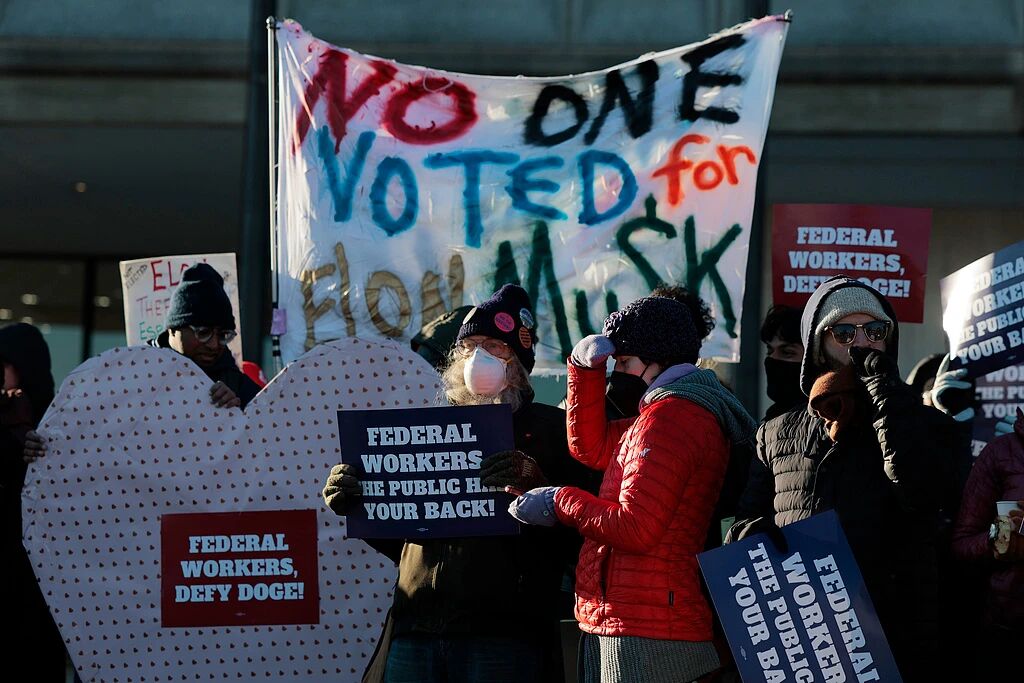
Americans once protested Department of Government Efficiency budget cuts
Peter Lochead, Dean of the School of Media and Public Affairs at George Washington University, believes that unlike previous shutdowns, Trump is acting "much tougher" during his second term in the White House.
He argues that many Republican leaders and the president himself actually desire the shutdown because "the power to determine which agencies and jobs can be eliminated rests largely in the hands of the White House."
At the same time, they are confident in their ability to successfully shift blame for the shutdown onto Democrats.
What Is the Cost of a U.S. Government Shutdown?
What are the consequences when the U.S. government shuts down? According to estimates by the Congressional Budget Office, the previous 35-day shutdown caused direct economic losses of up to $11 billion. This current crisis costs about $400 million per day.
Using the 2018 shutdown as a reference, the impacts include the following:
▶▷ First, hardship for federal employees.
During the 2018 shutdown, approximately 800,000 federal workers faced unpaid work or mandatory furloughs, directly affecting household incomes. Staff shortages led to partial paralysis of government functions.
▶▷ Second, risks to national and public safety.
In aviation security, staffing shortages at the Transportation Security Administration (TSA) and air traffic control centers led to significantly longer screening times and posed "unprecedented risks" to the U.S. aviation system. FBI investigative resources reached capacity, impacting counterterrorism, criminal investigations, and intelligence operations.
▶▷ Third, public health and welfare crises.
The Food and Drug Administration (FDA) suspended most routine inspections, creating regulatory gaps in food and drug safety across the country, increasing the risk of safety incidents.
Government benefits were interrupted: the WIC nutrition program for millions of pregnant women and children was affected, agricultural loans stalled, and farmers suffered financial losses.
▶▷ Fourth, disruptions to judicial and military systems.
The 2018 shutdown delayed over 42,000 immigration cases. Federal court funding quickly ran out, making normal operations difficult. This time, the situation will be worse. DHS Secretary Kristi Noem stated: "This will force over 150,000 officers and nearly 50,000 service members to continue defending our nation without pay."
▶▷ Fifth, delays in economic data releases.
On September 27, the Department of Labor issued an emergency plan stating that its Bureau of Labor Statistics (BLS) would halt all operations, delaying the release of September’s non-farm payroll report originally scheduled for October 3.
If the shutdown persists, upcoming reports on CPI and initial jobless claims will also be postponed, affecting financial markets in the U.S. and globally.
However, a "shutdown" does not mean a complete "shutdown" of government functions.
Under the Anti-Deficiency Act, essential services protecting life and property (such as the presidency, Congress, active-duty military, and certain law enforcement personnel) continue operating. For example, 258,000 Department of Homeland Security staff will not be furloughed.
Additionally, mandatory spending programs not requiring annual congressional renewal will continue normally, meaning Americans will still receive Social Security payments and can access Medicare and Medicaid.
Border protection, hospital care, air traffic control, law enforcement, and power grid maintenance are considered essential services and will remain operational during the shutdown.
Of course, this is only theoretical. During the last shutdown, some departments struggled to perform duties due to insufficient staffing.
These are just some of the consequences of a government shutdown. More seriously, it deepens public distrust in the U.S. government and damages America’s international image.
CNN once commented on U.S. government shutdowns: "Government shutdowns are weakening America, leaving both allies and adversaries confused. They are damaging America’s status and reputation while undermining its power and influence. A democratic system that once inspired the world now confuses observers."
Thus, CNN concluded, "America’s enemies must be laughing" when the government shuts down.

In 2018, the Statue of Liberty site was forced to close during a U.S. government shutdown
The Shutdown Happened—What Comes Next?
Despite the significance of the government shutdown, financial markets appear to have already "priced in" its negative effects.
On the eve of the shutdown, U.S. stock indices opened low but closed higher. The Dow Jones rose 0.18%, Nasdaq climbed 0.3%, and the S&P 500 gained 0.41%. All three indices ended in positive territory, showing little reaction to the shutdown.
Overseas analysts suggest that since a shutdown was widely expected in Washington, investors are holding back—for now. But if the shutdown lasts beyond two weeks, concerns will begin to rise.
Hence, spot gold surged 0.65% to $3,857.83 per ounce, reaching a new high. Clearly, global market sentiment remains risk-averse.
The previous shutdown during Trump’s presidency lasted 35 days. How long will this one last?
Office of Management and Budget Director Vought wrote in a memo: "It's unclear how long Democratic positions will hold, so the duration of this shutdown is difficult to predict."
For Trump and Democratic leaders, the shutdown starting Wednesday may seem like a domestic political battle. But for the rest of the world, the closure of U.S. government institutions signals that America is becoming smaller, short-sighted, and unreliable.
As CNN put it: "The era of superpower grandeur ends here—because it has shut down."
Join TechFlow official community to stay tuned
Telegram:https://t.me/TechFlowDaily
X (Twitter):https://x.com/TechFlowPost
X (Twitter) EN:https://x.com/BlockFlow_News