How did Pump.fun create millionaires?
TechFlow Selected TechFlow Selected
How did Pump.fun create millionaires?
Attention has always been money; Pump just made it liquid.
 Navigating Web3 tides with focused insights
Author: hitesh.eth
Translation: AididiaoJP, Foresight News
I briefly checked out Pumpfun's livestream yesterday and saw some creators earning astonishing incomes, which was very interesting. Compared to earnings on other platforms like Kick, Twitch, or even YouTube, the returns on Pumpfun are higher.
The payment architecture is particularly intriguing. Traditional platforms are optimized for advertising revenue and take a significant cut before creators receive any income, while content discovery is algorithm-driven and uneven.
On Pump, the reward loop is much closer to action itself: attention translates into trading volume, which immediately turns into creator fees, and viewers have a financial stake as热度 continues to rise. This creates a tighter flywheel with fewer layers between creators and compensation.
Turning Attention Into Fees
So in terms of compensation, on Pump, if you stream, you have the potential to earn more than on other platforms. The dashboard shows some very interesting streamers and live streams. One particularly popular one is "Streamer Coin." This person continuously donates his earned creator fees to all small creators, and he also has this token. Every creator, whenever they go live, has an associated token as well. "Streamer Coin" reached a market cap of around $22 million.
Tokens turn viewers into co-owners of热度. When viewers hold your token, they’re not just bystanders—they become promoters, hype-men, and part of a retention loop. If you set up fee splits, raffles, or live tasks, you're essentially running a real-time, on-chain loyalty program without intermediaries. Price becomes a public scoreboard for attention.
Then I saw another token called "bagwork." They had a highly viral clip. A well-known internet personality, radley, slapped the streamer who was live under the title "bagwork," and that clip went viral across social media, so he gained massive attention.
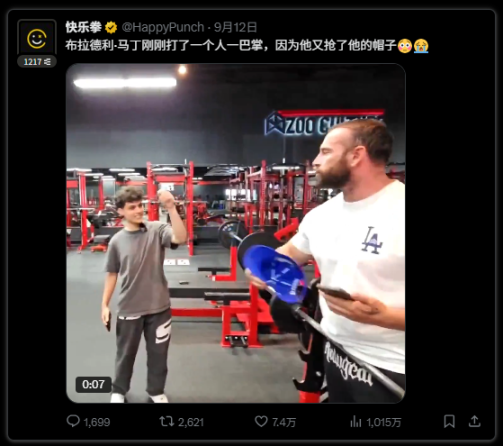
This is the new model: capture a moment the internet can't ignore, then channel that attention into an on-chain asset tied to your stream. Viral clip → surge in new wallets → trading volume → creator fees → more content. This cycle rewards those who can repeatedly generate such moments.
Streamers try to gain attention and do different things. I also saw a creator distributing food to people in Los Angeles. There’s a token called "feed the people" (FTP). They continuously donate everything they earn through these streams. They donate food, shelters, etc., trying to advance a noble cause.
Mission-driven streaming transforms empathy into measurable action. When audiences see transparent, on-chain fund flows going toward meals or shelters, trust builds rapidly. That trust turns into community, community into sustainability, and sustainability brings compound fees to creators and lasting impact to the cause.
From Twitch to Pumpdotfun
About 7.3 million people stream on Twitch monthly, but on Twitch, I believe 90% aren’t earning anything. Even some top streamers aren’t making substantial fees compared to what new streamers on Pump can earn. For example, the person behind "bagwork" earned $150,000 in just two days, which is astonishing.
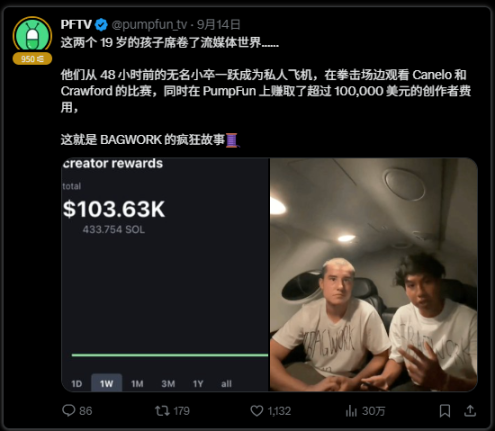
Why most Twitch streamers struggle: monetization relies on subscriptions, Bits (tips), ads, and brand deals. Content discovery favors already established names, payouts are delayed, and the platform takes a large cut. For smaller creators, average monthly income is often minimal or unstable, killing motivation. Pump disrupts both discovery and monetization: small creators can explode overnight when a moment goes viral, and payouts are immediate because they’re on-chain.

Pump offers a platform where you can stream and expect to earn more money. It's a crypto-native platform, somewhat decentralized—relatively more decentralized—you could say, compared to purely centralized platforms like Kick or Twitch.
"Relatively decentralized" matters because it reduces platform risk. If your earnings depend on smart contracts and liquidity pools, you’re less vulnerable to arbitrary policy changes, shadow bans, or withdrawal delays. The trade-off is volatility and personal responsibility, but many creators prefer this over opaque rules.
Why People Stream: Emotion, Identity, and Ownership
Here you already have a crypto community, a niche audience, who can buy your token, sell your token, generate trading volume for you, and you can set fees on every transaction made on your token to earn. It’s very simple and direct. But you also need to get your token to “graduate,” which has requirements. At current Solana prices, it’s about $20,000 (roughly 85 SOL).
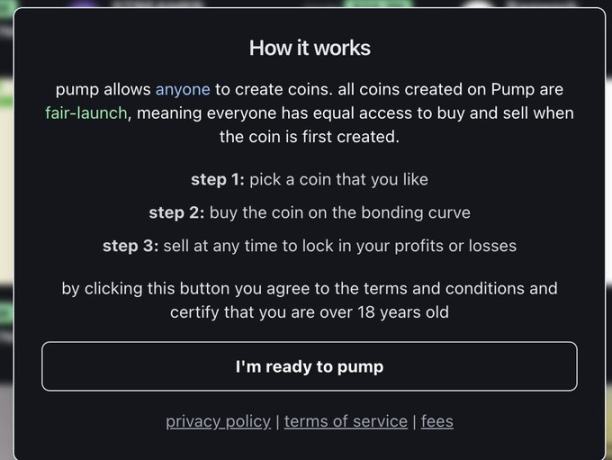
"Graduation" is essentially a credibility threshold. You demonstrate sustained attention, holder growth, and transparent token distribution, earning deeper liquidity and better price discovery. In practice, this means: consistent schedule, clear narrative, regular catalysts, fair launch mechanics, and active community management. When your stream becomes a story people want to trade, the token successfully launches.
When I think about streaming, the question I ask is why people stream at all. Why do they go on these platforms, turn on their cameras, show whatever they’re doing—many do very unique and strange things. The first reason would be hope. They might hope to make some money because they see success stories everywhere. When chasing money with the goal of quick profits, many—I don’t believe they can play the long game. They’ll try for a few days or weeks, and when money doesn’t pour in, they may quit streaming.
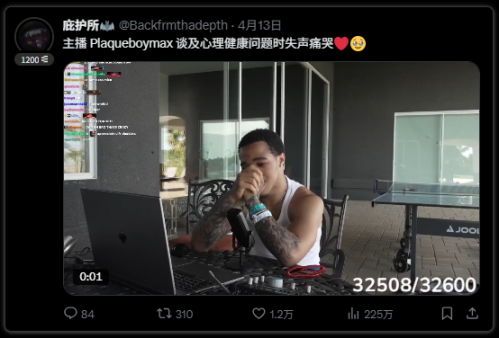
Emotionally, streaming gives you recognition, identity, and a room of listeners. For some it’s therapeutic, for others it’s performance—a way to transform loneliness into ritual. Financially, it offers agency: even small earnings feel meaningful because they’re tied to your own IP (intellectual property) and your own schedule. People stream to be seen, to matter, to publicly practice a craft and see if the market agrees.
But many continue streaming regardless of how much they earn. Sometimes for a few, money isn’t that important—they genuinely enjoy the process of streaming. They really enjoy talking to whatever community they have. It might be 10 people, maybe 100, they love interacting, sharing their emotions. For those without emotional support in life, when there’s no one in their family or friend circle to share feelings and life events with, this is a great outlet.
This is the engine of para-social relationships. You build micro-communities where inside jokes, rituals, and shared progress make people feel safe. Creators gain accountability and purpose; viewers gain companionship and meaning. On Pump, this bond is priced in real time, which can amplify both joy and pressure—so boundaries and clear rules are needed.
Even if they’re seeking someone to share something they’re truly good at. If they work at a company but really love singing, and singing gives them relief. If singing puts them in a flow state, they can choose to sing. They can go live and connect with viewers. If they’re good at singing, they can build an audience, possibly earn money and recognition this way—there’s huge potential here. For those seeking relief from a painful, busy life, looking for a space to be authentically themselves, this is great.
Flow state plus ownership is why this will scale. When your side-skill becomes a ritual backed by a token, shared with fans who hold part of your upside potential, the feedback loop becomes tangible: practice → audience growth → price action → more practice.
Pump is interesting—it might give long-term streamers who’ve been on Twitch, Kick, or even YouTube for years but never earned significant income from their efforts a chance to finally monetize. It can help them capitalize on their long-standing dedication.
You can see it as retroactive funding. Your accumulated body of work becomes instant credibility. On day one of Pump, you’re not a new creator—you’re a verified IP with archives, backstory, and fans ready to become holders.
This resembles what we saw with NFTs and the kind of potential they unlocked. What NFTs did for some great artists, streamers might now experience through Pump livestreams. It can do the same thing. From 2021 to 2022, in that 12-month period, many artists who couldn’t even sell their art in real life and earned less than $100 were suddenly selling digital artworks via NFTs for $10,000 to $100,000. I believe a similar wave will happen here. The artist category is limited. Not that many artists joined NFTs.

OpenSea unlocked primary markets and secondary royalties for visual artists. Pump can unlock real-time royalties for streamers: trading fees, token-gated benefits, on-chain sponsorships, and community-owned milestones. Same energy, but with real-time markets and continuous content instead of static art.
What’s Next: Migration, Playbooks, and the Future
On Pump, I think millions may be considering joining. They can register as streamers, and some might become millionaires within the next 12 months. If you’re someone looking to earn in this space, it’s a great opportunity. Even if you’ve been streaming across platforms, enjoy talking about what you know, are good at something, and want to share it—just start streaming. No need to be shy. You just need to open up, express yourself, and have that ice-breaking moment. If something’s holding you back, give it a try.
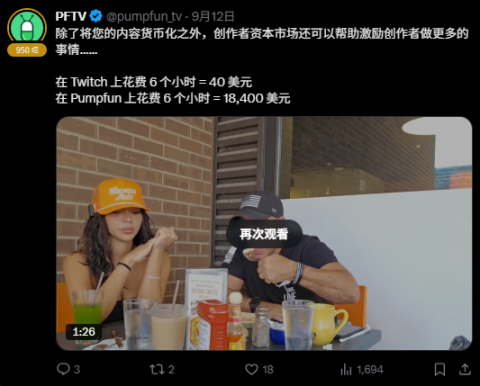
The migration trigger will be simple: once some mid-tier creators post transparent, on-chain earnings that far exceed their previous income, the masses will notice. Creators follow incentives, viewers follow creators, and liquidity follows both.
If you’re serious about earning, if money matters to you—even if it’s not all about money, but about sharing what’s been locked in your mind, what you’ve always wanted to do, what you wish to pursue, but obligations and responsibilities have kept you from pursuing that passion—now is the time. Pursue your passion the right way, maximize your capital, better leverage your passion for monetization, earn more, enjoy the process, and achieve better returns.
Treat streaming like a startup: a clear roadmap, token utility, weekly catalysts, and clean wallet management. Set guardrails for your community so speculation doesn’t overshadow your craft.
I believe a major wave is coming soon on Pump. Many streamers will join, and once word spreads in the circle that they could earn significantly more by moving to Pump, the flywheel will spin. Meanwhile on Pump, not only will streamers earn, but traders will too. You can speculate on streamer growth, buy the token, sell it, and flip it for profit.
Traders will develop strategy playbooks around "attention signals": sudden spikes in concurrent viewers, Discord join rates, Twitter mentions, watch-time retention, clip virality, and on-chain holder growth. The best strategies will combine narrative and data, not just numbers.
It’s all about meme coins. All memes, but these memes are doing great things. On the streamer side, streamers are rewarded for their effort. They try to gain attention for whatever they do. They gamify attention. They put in effort—the more effort, the greater the chance of gaining attention.
On the trading side, you need to stay focused. You must dive in, scan on-chain wallets, and hunt for the right alpha. It’s not easy—you’re putting in effort too. This is a high-effort game on both sides. On the streamer side, you need to work harder to earn more; on the trading side, you need to work harder to earn.
Tools to watch: KOLscan and Stalkchain for KOL wallet tracking and narrative mapping, DEX dashboards for inflow/outflow analysis, Holderscan for checking holder concentration, new wallet velocity, LP (liquidity provider) depth and lock-up, and whale entry/exit timing. X (formerly Twitter) for clip spread speed and sentiment. A simple rule: rising attention plus improving holder distribution plus deepening liquidity is a stronger bet than attention alone.
Attention has always been money—Pump just makes it liquid. Those who can reliably build and track attention will capture the most value here: creators through consistent programming and authentic storytelling, traders through disciplined interpretation of social and on-chain signals.
Join TechFlow official community to stay tuned
Telegram:https://t.me/TechFlowDaily
X (Twitter):https://x.com/TechFlowPost
X (Twitter) EN:https://x.com/BlockFlow_News
 hitesh.eth