Interview with Mantle Strategic Advisor Jordi Alexander: Don't Try to Retire—Wealth Advice from a Top Trader
TechFlow Selected TechFlow Selected
Interview with Mantle Strategic Advisor Jordi Alexander: Don't Try to Retire—Wealth Advice from a Top Trader
There is no such thing as retirement; those under 50 should not think about retiring.
 Navigating Web3 tides with focused insights
Compiled & Translated: TechFlow
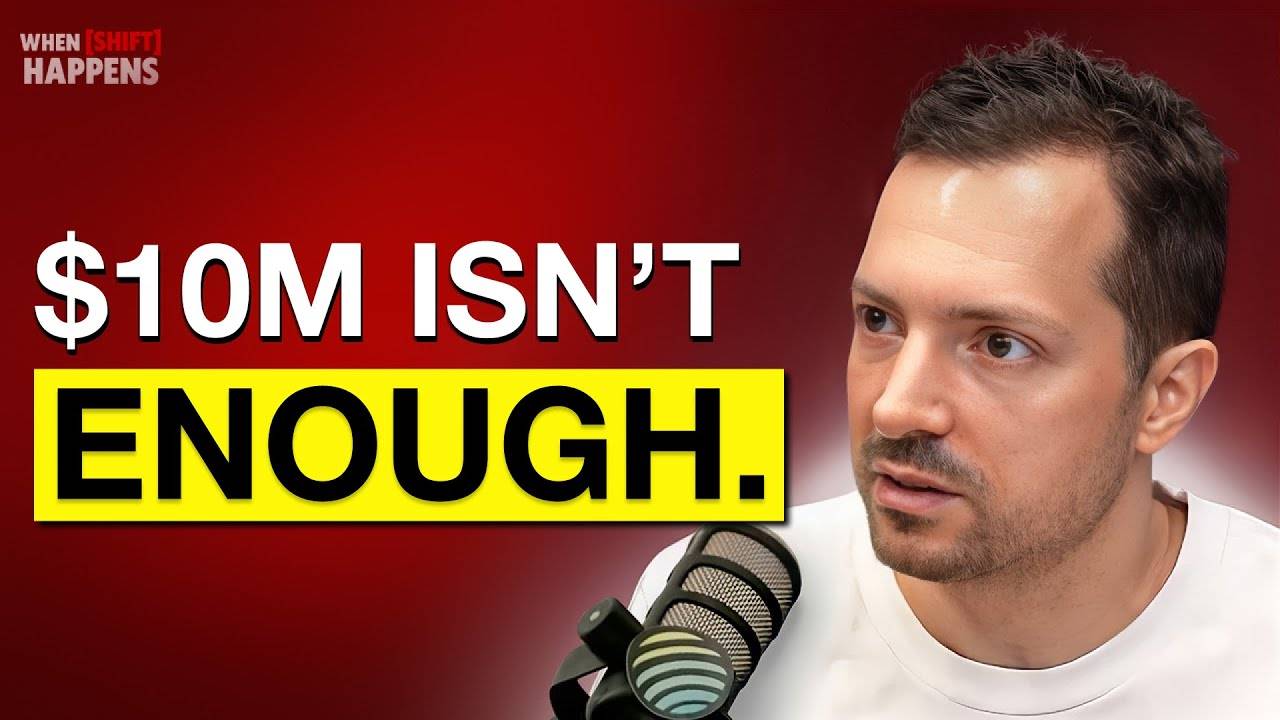
Guest: Jordi Alexander, Founder of Selini Capital
Host: Kevin
Podcast Source: When Shift Happens
Original Title: How to Actually Build Wealth in a New Economy (Crypto vs Stocks) - Jordi Alexander | E136
Air Date: August 28, 2025
Key Takeaways
Jordi Alexander is the founder of Selini Capital, a seasoned investor in the cryptocurrency space, and also serves as a strategic advisor to Mantle.
Selini Capital, which he founded, has achieved a 100% compound annual growth rate (CAGR) over the past 13 years.
Prior to this, Jordi declined a lucrative offer from Citadel, a prominent Wall Street market maker, to move to Singapore and focus on crypto asset trading.
He once shared a $5 million profit-and-loss screenshot on social media (X: @gametheorizing), and regularly participates in international chess and bridge tournaments. He is also a professional poker player and quantitative trader.
In this podcast episode, he accumulated significant wealth by deeply understanding one key insight: traditional money and investment strategies are no longer suited to the current economic environment.
Additionally, he elaborates on why inflation-driven loss of purchasing power makes even $10 million insufficient for a comfortable retirement. He also shares his experience in building real wealth under an entirely transformed economic framework.
Main discussion topics:
-
Why traditional retirement planning is obsolete
-
How inflation-driven fiat currency depreciation destroys savings
-
Comparison of crypto versus stocks in the new economic landscape
-
How to escape "survival mode" and build judgment through knowledge and experience
-
Preparing for AI’s impact on employment and wealth distribution
Highlights and Key Insights
-
There are two pivotal industries this century: one builds the foundational blocks of intelligence (e.g., AI), and the other constructs the social coordination layer (e.g., blockchain).
-
Traditional investment methods rarely yield real wealth growth. To achieve true wealth, one must identify future growth vectors such as technological innovation or emerging markets.
-
Investing in cryptocurrencies, especially Bitcoin, is a relatively safe choice. The growth phase of crypto will last until real capital fully enters the market.
-
From a macro cycle perspective, Bitcoin is still in its very early stages—far from reaching “overheating.”
-
The four-year cycle is behind us; we’ve now entered a completely new market regime. Market shifts today are driven more by liquidity-driven mini-cycles—like waves of capital inflow shocks.
-
The crypto industry remains highly inefficient, which also implies massive opportunities.
-
Working smarter and more efficiently matters far more than merely working hard. Without risk, society cannot progress through innovation and bold ventures.
-
There is no such thing as retirement—for anyone under 50, retirement should not be a goal.
-
Judgment is a critical capability, akin to money. It involves synthesizing complex information and making optimal decisions—a domain where machines still fall short.
-
We must strive across multiple domains. Creating tangible economic value is essential. You need to develop both: key technical skills, and psychological insight and sound judgment—the so-called soft skills.
-
If you're young and resource-constrained, the most important thing is to upgrade your skills and understand the world that's coming—make yourself irreplaceable.
-
In the next 10 years, the difference between having $100,000 and $10 million may not be as significant as it seems.
-
Keep the majority of your capital secure while allocating a small portion to high-risk bets—this satisfies the desire for adventure while preserving overall financial safety.
-
Escaping survival mode is the top priority—it consumes immense mental energy and prevents focus on higher-level goals.
-
Use existing resources to acquire assets or opportunities with greater returns. Throughout this process, the only constant is continuous self-upgrading.
The Inner Drive and Motivation
Kevin:
Many of my guests share a common trait: something happened in their lives that gave them a deep-seated drive. What shaped your inner motivation?
Jordi Alexander:
I think it was a prolonged sense of frustration in my twenties—feeling like I wasn't living up to my potential. It felt like a beach ball being held underwater; when I finally unlocked and released it, it shot upward. That feeling of rising is incredible—once you break free from suppression, that momentum becomes addictive. So I always want to keep pushing forward to see how high the ball can fly. That’s my drive: keep ascending, and see where it leads.
At the same time, I'm actually quite lazy by nature. There's a lot of laziness in my temperament—my default state is relaxation and enjoyment. I tend to get absorbed in things, which isn’t ideal for an entrepreneur because entrepreneurs should prioritize action. But it helps as an investor, since investors often make one decision and then wait patiently for the next opportunity.
Now I’m balancing these two roles—I need both action and depth of thought. So I need energy to overcome my laziness. For me, that energy comes from internal obsession: I’ve seen the version of myself who was deeply frustrated and underperforming, and now I want to explore the alternative version. This pursuit has lasted many years, and I’m addicted to it.
How Should We Respond to Money’s Decline and the Reshaping of Future Wealth?
Kevin:
About two years ago, you recommended a podcast episode. Back then, I assumed you were a crypto investor, right? But you told me that actually, you primarily trade volatility rather than directional bets. You don’t bet on long-term trends or make big long-term investments.
But later, your views seemed to shift. This reminds me of a CNBC comment: “Many high-income Americans, despite six-figure salaries, still don’t feel wealthy.” That sparked widespread discussion. Today, the real value of money is vastly different from 5–10 years ago. Now, $100,000 doesn’t make someone feel rich—even millions or tens of millions may not suffice. The annual wealth erosion due to fiat dilution is extremely high. If you slow down earning, maintaining your current lifestyle might become difficult.
You mentioned a figure: 15% annual erosion in real purchasing power. You gave an example: even $100 million in cash would lose about $40 million in three years due to inflation. When did you first realize our monetary system had a problem?
Jordi Alexander:
I’m very clear on this. I’ve worked in financial markets for years and closely follow inflation data. When you dive into the numbers and observe real-world conditions, the goods and services we compare annually—like flights, hotels, fine dining—are not rising at 2%, but at much higher rates. Over longer periods—say five years—you see exponential price growth. It’s not just 2% vs. 10%; it’s supposed to be 10%, but ends up being 100%. This indicates deeper structural issues in the monetary system.
But I don’t just want to talk about fiat dilution—I believe the underlying architecture is more profound. Once this trend starts, it won’t stop, because our political and social systems lack the incentive to halt it. So things will only get worse.
Rather than endlessly repeating the issue of declining purchasing power, I think it’s more important to consider what comes next—and what is money fundamentally?
What is money? This is a fundamental question I’ve pondered for 20 years. I believe it’s crucial. Over the past 50–100 years, money’s form and function have changed dramatically. For instance, we shifted from the gold standard to government-issued fiat. People treat money as an abstract representation—believing that holding money allows them to exchange for more goods. So they go about life, work, earn money, and stop thinking about money’s essence. But I believe we’re approaching a turning point where this abstraction may vanish, as society’s perception of money and its use undergoes a profound transformation.
The currencies we use today, likefiat, may not persist as future forms of money. I once quoted a Malaysian saying: “No retirement.” I love this phrase. Many people ask, how much do I need to retire? Is it $10 million? They’re anxious about it. They think that once they save enough, they can retire comfortably—but that mindset is completely wrong. There is no such thing as retirement. For anyone under 50, retirement shouldn’t be a consideration.
Many worry that AGI (Artificial General Intelligence) will cause massive inequality—which will happen in some ways—but it will also redefine wealth, resources, and what resources mean. The future monetary system will evolve in phases. Right now, we can still buy goods with dollars, but eventually, new forms of money will emerge. Energy will also become more significant, as it’s closely tied to computing power and intelligence. These changes will profoundly affect our lives and definitions of wealth.
Judgment is a vital capability, like money itself. As our intelligent tools grow stronger, the importance of judgment will rise further. Imagine if everyone had a PhD-level AI in their phone—an AI with an IQ of 150, mastering all disciplines. Machines will excel in many areas, but there are domains they’ll struggle with for a long time—the most critical being judgment, which involves integrating complex information and making optimal decisions—precisely where machines fall short.
Distinguishing ability is crucial. Like academically gifted people who memorize everything—they know all the facts, but the key question is: after knowing all the facts, how do you make the right decision? After all, life revolves around decisions—every critical moment hinges on them. You must grasp all facts and information, see nonlinear combinations and interdependencies, integrate them, but ultimately you must keep making decisions, and judgment enables you to act. Therefore, I believe we can enhance ourselves by interacting with personal analysts (whether AI or otherwise), using their data and insights to support decisions. Then we make informed choices based on that. In the future, judgment will become even more important—not just a personal skill, but a key to success in complex environments.
"Retirement" Is an Outdated Concept
Kevin:
You mentioned the idea of “no retirement,” so let’s take $10 million as an example—many people see this as the threshold for financial freedom. Whether it’s $5 million, $10 million, or even $1 million, people work hard to accumulate wealth and store it in cash.
But do you think the dollar might lose value or become irrelevant in the future? Or even if I invest most of my $10 million wisely, stay engaged with those investments, and continue earning some income, could stopping income generation at some point still leave me unprepared for future changes?
Jordi Alexander:
I’d say both factors matter, plus a third. You shouldn’t aim for a state where you do nothing and just enjoy life as a permanent retirement. As society evolves, more people may become like NPCs (non-player characters)—lacking initiative, creativity, and intrinsic productivity. I believe you should strive to be intrinsically productive. While this won’t represent the majority of the population, it will be more common than people imagine. Personally, I certainly don’t want to be an NPC, and I think many young people don’t want to be mere cogs in someone else’s machine, surviving on universal basic income (UBI). Of course, no one should be forced to do work they hate. I believe we’ll enter an idealized lifestyle within the next decade or so. But what is the 'retirement mindset'? It’s 'I want to relax.' If you truly want to relax, you don’t need $10 million—you just need enough to cover the next 5–10 years.
Even if you’re 50 or 60, I believe traditional retirement thinking is flawed. There will be many new drugs and medical technologies discovered in the future. AI excels here—one of my main uses for AI is consulting on medical questions. It’s an unparalleled encyclopedia, helping analyze possibilities with great power. For example, AlphaFold (an AI tool for protein structure prediction) is driving massive new drug development and disease cure potential. If you stay healthy over the next decade, you might live much longer than expected. So that “retirement” mindset—even at age 50—is completely misguided. The future won’t resemble the past—where at 65, you retire with savings. I believe we must discard these old assumptions and envision a future where fundamental premises and rules have changed.
Becoming Economically Productive
Jordi Alexander:
In the next 10 years, the gap between having $100,000 and $10 million may not be that large. So I believe the key is how you spend the next few years. Society is already dividing into those who are intrinsically productive and those who aren’t. You should strive to be intrinsically productive, because in the next 10–20 years, wealth creation will surpass any previous era—not just in fiat terms, but in real value too.
If you view this as a compressed industrial revolution, it’s what Demis Hassabis described: transformations that took 100 years in the past are now compressed into 10 years, with scale multiplied tenfold—meaning impact is 100 times greater. The speed of new wealth and innovation will be 100 times faster than what past generations experienced. So if your plan is to retire and relax, as long as you survive the next few years, this “100x moment” will occur in society, making whether you have $100,000 or $10 million largely irrelevant.
If you’re from an old-money family—say, descendants who built wealth in shipping or mining—the current generation still lives off that wealth. Europe has many such families, but future wealth creation will redefine the meaning of traditional wealth. In a way, it acts as a societal equalizer, because such wealth may drastically depreciate due to inflation or tech disruption. Look at the Middle East—they’ve smartly reinvested “old money,” like oil wealth from the 70s and 80s, into new technologies. They recognize their wealth form—oil—can be converted into stakes in OpenAI, chips, or video tech. They’ve done this exceptionally well, unlike many European legacy families.
The coming “100x moment” signifies an explosion of societal creativity, which determines how society evaluates your real value. This concept—“are you valuable to society?”—matters far more than retiring with $10 million. If you’re working long hours at McDonald’s every day, that job likely won’t prepare you to become socially valuable in the future.
The real question is: how do you become socially valuable? Second, I’m not saying self-improvement alone suffices. If you want to accumulate substantial wealth now, it’s possible—we’re in a transitional phase. If you’re smart and wealthy, you’ll find people willing to accept your wealth—perhaps to buy a car or future-needed resources. You can make such exchanges because people still value that wealth.
If you're young and resource-constrained, the most important thing is to upgrade your skills and understand the world that’s coming—make yourself irreplaceable. If you’re indispensable in this world, you’ll earn a lot, because your labor will be among the few truly valuable ones—possessing irreplaceable productivity in a fast-growing industry. This shows that even on a fixed salary, if you’re competitive enough, you can amass enormous wealth. So clearly, if you're young and can gain sufficient skills to be competitive, you don’t need to stress about early wealth accumulation. Otherwise, you’re just wasting time.
In my career, I’ve constantly balanced two aspects. One is building a business, the other is earning income. For me, I reinvest money into ventures—join projects, earn money, then hire brilliant people to build an organization stronger than any individual. I’ve consistently done this. For example, I focused on personal trading for a few years, but that’s not sustainable. Personal trading yields short-term gains—today’s profits may not matter tomorrow. When trading, your performance is judged solely by your latest trade, unlike building a business with recurring revenue. So even if I earned a lot in a year, I’d use that money to hire top talent, buy advanced tech components, or other resources to make the business more sustainable.
Why Cash Gradually Loses Value
Kevin:
If I understand correctly, current wealth management is essentially a game of 'hurdle rate' involving your skills and wealth. Am I being diluted due to income, skill growth, or investments? How should I store my wealth—whether in cash or other assets—to ensure I at least don’t fall below this hurdle rate?
Jordi Alexander:
I’m discussing basic principles now—like the importance of property rights and why we should care about currency depreciation, whether $100, $20, or other amounts. If you hold large amounts of cash passively, its purchasing power may shrink by 40% in three years.
So what assets generate returns? Stocks, for example. I believe stocks are among the most widely held assets today—they can be seen as a 'benign Ponzi scheme.' In the U.S., the government continuously pushes stock market growth. Though volatile, if downturns occur—like during the pandemic, when markets rapidly fell from highs—they quickly rebound. This happens because societal structures demand rising stock markets. Governments take various measures to boost stocks, as it helps maintain political and social stability.
For ordinary people, index investing is a simple and effective option. Most people don’t have time to research alternatives, so investing in S&P 500 or similar international stock index ETFs is solid. For regular friends afraid of crypto, I usually suggest allocating at least 50% of funds to stocks—like international stock index funds and some ETFs. This at least avoids severe erosion compared to leaving cash in a bank account—a reasonable choice.
Growth stocks performed well recently, but I don’t believe Nasdaq’s 17% annualized return will sustain long-term. Though we’re in a tech-driven era, it doesn’t mean Nasdaq will keep growing at that pace. When Nasdaq drops, it often crashes violently. Despite recent 17% growth, it’s also undergone major corrections. So I believe such high growth is unsustainable and will likely decline.
These assets don’t offer real returns. Their gains barely offset fiat depreciation. Profits come from productive companies, but indices also include poor performers—so-called “zombie firms”—that waste resources and misallocate capital. In reality, your investment maintains status quo rather than creating real wealth. Even inflation-protected bonds (TIPS) adjust returns for inflation, but real returns remain negative due to imperfect calculation methods.
All these traditional investment methods struggle to deliver real wealth growth. To achieve true wealth, you must identify future growth directions—such as technological innovation oremerging markets.
Where Does Real Wealth Security Lie?
Jordi Alexander:
You might need to buy vast tracts of sun-drenched land while ensuring ownership rights are protected. If society enters unstable times, we can’t assume a title deed will always safeguard your property. This isn’t alarmist. History offers many examples—decades ago, the U.S. government seized gold, demanding citizens hand it over; in the UK, owning a luxury mansion might trigger heavy taxes simply because it’s expensive.
These scenarios threaten our familiar notion of property rights. Western societies assume property rights are protected. Yet you can own something, but authorities can arbitrarily decide whether you truly possess it. As inequality grows and unrest follows, protecting ownership becomes more critical. Inequality breeds political discontent—people feel the rich get richer while the poor multiply. This “rich-get-richer, poor-get-poorer” dynamic may intensify social conflict—some may advocate wealth redistribution. This recurs throughout history—French Revolution or similar events. We must consider future forms of wealth redistribution. This is why the distinction between physical gold and digital gold matters—digital gold, like cryptocurrencies, is stored somewhere less easily seized by governments or authorities.
If you buy real estate in a politically unstable country, even after payment, your ownership might not be respected. You must consider whether property rights will be honored. Places like Singapore, highly stable, clearly offer better protection. Such locations, due to strong property rights enforcement, become highly attractive and command investment premiums.
Western nations like the U.S. and UK, though culturally rich, are inherently unstable due to internal political forces. Go to San Francisco—though creative activity thrives, when planning the future, you can’t be sure the next government will respect copyrights. If the next administration adopts more radical socialist policies—shifting from “crime season” to “wealth plundering season”—people start hiding wealth. Then these issues become far more pressing.
Cryptocurrency and Future Opportunities
Kevin:
What lies ahead?
Jordi Alexander:
Cryptocurrency is the clearest reflection of future trends. Beyond that, there’s a more powerful but higher-barrier field: investing in emerging technologies. For example, I constantly engage with people tracking tech developments. Imagine a “post-AGI Berkshire Hathaway” concept (TechFlow note: a metaphorical or speculative idea—Berkshire Hathaway, led by Warren Buffett, is famed for long-term value investing and diversified holdings. After AGI reshapes socioeconomic structures, such a firm might redefine or lead new business ecosystems).
Such conglomerates may seem unimportant now, but in five to ten years, they’ll become critical. Many smart investors already monitor human enhancement tech—like Neuralink and firms focused on human applications. We must adapt to rapidly advancing intelligent machines, ensuring human competitiveness and relevance instead of devolving into NPCs. This may require upgrading our “human version.” Hopefully not via brain implants, but research explores boosting intelligence through neuroscience or other tech.
These sectors will clearly matter in the future, though not yet mature due to insufficient knowledge. Some favor robotics—I believe robotics will play a major role, but specifics remain to be seen. Energy is another key area—solar may dominate in the future.
Why Bitcoin Is a Worthy Bet
Jordi Alexander:
The contradiction of “rich-get-richer” and “poor-get-poorer” is intensifying, potentially triggering massive backlash. Under these circumstances, investing in cryptocurrency, especially Bitcoin, is a relatively safe choice. If you deeply understand crypto, you might find fast-growth opportunities in other coins. If unfamiliar, investing in Bitcoin alone suffices—it’s a strong representative asset. This strategy works well—concentrating on crypto leverages its multi-faceted growth advantages. Personally, I don’t invest in stocks—I hold almost exclusively crypto, riding the wave this way. Traditional advice suggests allocating 2% or 5% of assets to crypto, but upon reflection, you should hold as much crypto as possible—as long as you won’t be forced to sell. This approach made sense in recent years, and I believe it still holds for the coming years.
Crypto grows fast for several reasons. First, it offers stock-likefiatprotection, as its pricing unit (e.g., BTC/USD) faces fixed supply limits while fiat supply keeps expanding. Second, the asset class itself becomes increasingly attractive, drawing more attention. When I speak with sovereign wealth funds, a few years ago they said: “We won’t buy crypto—we only buy gold. Why not buy Bitcoin, digital gold?” Their reason was market size—too small to deploy billions, say $100 billion. But as the market grows, attitudes shift—crypto is now large enough to absorb their capital. When market cap hits $2 trillion, they can allocate 5%; at $10 trillion, the trend continues.
I’m not saying this growth lasts forever, but the next few years may see rapid expansion. Crypto’s growth phase will continue until real capital fully enters the market. We’ve seen Wall Street funds and ETFs entering—sovereign wealth funds are allocating too. For example, UAE in the Middle East has begun investing in crypto. But the final surge will come when fiatsystem capital finally floods into crypto. This is a nation-vs-nation competition—early entrants gain more Bitcoin, a PvP race. Thus, from a fiat perspective, Bitcoin could grow 5–10x in the next five years.
Primarily Bitcoin—though other cryptos exist, Bitcoin is a macro asset: clearer, simpler, a superior form of money. Other cryptos currently lack rationality as money. Bitcoin isn’t flawless—in the long run, its flaws may surface, and society might adopt alternative monies. I’ve spent much time pondering this new form—those who design better money from first principles will win biggest in wealth creation. Society needs good money—even better money. Better money improves social coordination and resource allocation efficiency.
Why Most Traders Ultimately Fail
Kevin:
Everything now seems financialized—crypto markets turn everyone into traders. This appears empowering—granting participation, fulfilling our dreamed-of access. But let’s face reality: where is the market headed? If you miss the next big wave, what then? Even if you ride the trend, operational errors may still leave you unprofitable—I suspect this describes most people in the industry.
Jordi Alexander:
It’s extremely hard to avoid major mistakes—even early Bitcoin miners who dug out large quantities. When BCH emerged, some saw opportunity and swapped all their BTC for BCH. We all know the outcome—the value gap later reached 1,000x. Unless you’re elite, winning these speculative games is tough.
These markets are actually PvP zero-sum—or even negative-sum games. Beyond trader competition, huge sums flow to third parties—exchanges, lawyers, operators, tax advisors—who profit via fees. Traders bear these operational costs. When you place bets, you pay hefty fees.
I’m not a purist who says “none of this is reliable, so I’ll stay away.” With my knowledge and judgment, I participate and profit from deep market understanding. I might publicly warn, “This is a bubble—we shouldn’t fuel it,” but since I clearly see when bubbles burst, I might as well join. I’m a bit like Naval (renowned entrepreneur and investor), but if Naval is the “Zen version,” I’m more like the “nicotine version” of Naval. I don’t just discuss concepts—I actively participate, leveraging knowledge to profit within existing game rules. I don’t pursue purity—market games exist, and I focus on finding my edge within them.
The 'Financial Death Wish' in Investing
Kevin:
You mentioned that most crypto participants claim to seek profits, but their behavior reveals a dopamine chase. From Launchpads to Memes—do these reflect societal reality, or are they dead-end paths?
Jordi Alexander:
Many involved fall into addictive, emotionally volatile cycles. Regardless of outcomes, these games won’t change my life—but the “slim chance of life-changing payoff” hooks many. People think, maybe today’s my dice roll—perhaps 100 rolls show no seven, but then my life upgrades. This hope is addictive—a “hook” firmly grabs them. Like lottery buyers—the ticket’s value isn’t just monetary, but the period between purchase and draw. During that time, you harbor hope, imagining “what if I win?”—this imagination itself delivers psychological satisfaction.
This dream and hope flood dopamine, becoming addictive, trapping them in the sensation. Especially in societies where people feel no other “upgrade” paths exist, this becomes their sole outlet. The phenomenon sometimes escalates to resemble a “financial death wish”—they don’t even try playing the game correctly, opting for aggressive bets. It’s not ignorance—they crave the feeling of hope and fantasy more than systematic goal achievement. This reflects a societal psychology: people aren’t just chasing money—they’re chasing hope and illusion of fate transformation.
Role Analysis: Winners, Losers, and Bystanders
Kevin:
In crypto, we keep desperately seeking real use cases and genuinely profitable companies. But in reality, the profitable companies often succeed by catering to the “financial death wish” of 99.9% of people. If you reflect on the game mechanics we discussed earlier, this phenomenon is deeply paradoxical.
Jordi Alexander:
I think we need to deeply examine roles within society. On fragility and antifragility—individuals experience life, death, and reproduction, with the next generation replacing us. Individuals are fragile, but through self-selection and genetic selection, humanity as a whole is antifragile. Thus, our lives operate on two levels: as individual participants, and as part of collective humanity.
From an individual view, we’re replaceable—especially men. Men are somewhat replaceable, as society doesn’t need many to function. We’ve discussed male replaceability before.
This is a fundamental social principle. From society’s view, most people are replaceable. Of course, as individuals, I don’t want to be replaceable. But overall, hyper-gamification resembles a filtering mechanism. Say 100 people gamble—the last person consolidates everyone’s wealth, others become irrelevant. This mechanism turns most into “NPCs”; from society’s view, this may be natural—few hold more resources and thus wield greater influence. So society evolves toward such phenomena—PvP games with a million participants, only 100 winners.
Ideally, winners aren’t chosen purely by luck, but filtered by skill and ability, so victors effectively utilize wealth. From society’s view, this mechanism may be beneficial; from an individual’s view, you see many blindly chasing chances without wise decisions. Some may succeed short-term, but long-term, this model isn’t reliable. Upon dissection, you realize society may be encouraging this phenomenon.
Traffic vs. Credibility in Crypto
Kevin:
If there’s a 'get rich slowly' path and a 'go bankrupt fast' path, how do we help people distinguish them? Especially for younger generations who love watching extreme冒险 livestreams and speculating on Memes or altcoins—some even proudly flaunt their losses.
Jordi Alexander:
I’ve dabbled slightly in content creation, so I understand you need to capture attention first—say, with a flashy headline or eye-catching content. Because if you fail here, you never enter viewers’ awareness—then no matter how profound your content, it’s meaningless.
However, I still feel awkward when people make Bitcoin price predictions like “Bitcoin will hit $1 million.” Maybe it could happen, but in the world you describe, what does the dollar even mean? Say someone predicts Bitcoin hits $15 million by 2040—but you can’t possibly know the dollar’s real purchasing power then, or how its unit of account will change. These are random numbers that attract clicks, but at least avoid excessive sensationalism.
I believe taking small-scale high-risk shots, like 'moonshots,' is acceptable. You can allocate a few percent of funds for bold experiments—completely fine. It brings psychological satisfaction—the hope between buying a lottery ticket and waiting for results—and satisfies your craving for adventure. But don’t let yourself go completely bankrupt, because if you constantly restart from zero, rebuilding capital and relearning, you waste immense time.
Keep most of your capital safe while risking a small portion—this satisfies adventure cravings while securing overall financial safety. But some are fascinated by “bankruptcy” itself—they find watching it entertaining, like our fascination with daring acts. This financial behavior resembles such adventures, only carried via money. People enjoy seeing account balances wildly fluctuate in ultra-liquid markets—especially when public, it becomes a public spectacle. Some even obsess over starring in such “bankruptcy stories”—a fascinating phenomenon.
Escaping Survival Mode
Jordi Alexander:
Sometimes we need to strive across multiple domains. I understand, for young and middle-aged people alike, creating tangible economic value is critically important. You must work on two fronts: mastering key technical skills, and cultivating psychological insight and sound judgment—excellent soft skills (e.g., communication and emotional intelligence). As society evolves, social dynamics shift too, so strong social skills will become increasingly vital.
I believe the most vulnerable group consists of those neither socially skilled nor technically outstanding—just “average.” They’ll be squeezed from both sides. Social expectations for emotional intelligence keep rising, while technical barriers also climb. So you must upgrade in both areas, making yourself indispensable economically and socially.
If you’re playing the wealth accumulation “game,” first clarify your position. If your goal is merely sufficient wealth for comfort, you must first escape 'survival mode.' Survival mode means feeling unable to meet basic needs. This state drains immense mental energy, preventing focus on higher goals.
I’ve personally endured years of survival mode. For example, when I was a partner at my previous trading firm, I collaborated with a brilliant technical expert—he was CTO, I was the trader. We knew we were both talented in our fields. Yet our performance was only “okay,” not exceptional. Only during a Christmas break did I finally slow down and reflect—why couldn’t two capable people achieve breakthrough success? I realized we were trapped in survival mode. That year, time meant for brainstorming ideas, planning new initiatives, and building the future was entirely consumed by crisis management and firefighting. For example, “there’s a crisis to handle,” “we can’t invest because we must avoid problems.” This survival mode mirrors the plight of anyone financially uncomfortable—they can’t focus on growth and construction, stuck in defense, constantly asking ‘how do I protect myself, how do I survive today?’
Therefore, escaping survival mode is the absolute priority—100% necessary. Leverage your talents, create value through productive work, transform yourself through effort— this is the correct path out of survival mode.
Escaping survival mode indeed takes time. For me, step one is mental shift. You must recognize you’re in survival mode and see how it drains your energy. Then, define concrete actions needed to escape. Focus on achieving this goal. Next, you may need intense work—like 'running desperately.' The goal is to break free from the 'gravity well'—fully exit survival state. Once successful, you’ll unlock potential, as if gaining 'superpowers.' Freed from survival pressure, you unlock new possibilities.
This concept of “front-loaded effort” is crucial. Any startup will tell you—going from 0 to 1 is toughest. During this phase, you might “sleep on the floor” or make short-to-medium term sacrifices. But only through such effort can you truly escape survival mode and lay a solid foundation for future breakthroughs.
Finding trustworthy people to learn from is a huge advantage. Of course, noise exists—some may consume wrong content. But if you select genuine experts as mentors, that demonstrates judgment. You must judge who’s worth learning from. Even at my stage, I still need rapid learning and growth—the world changes too fast.
Judging someone’s trustworthiness is one of my most important decisions for mental growth. If I find a trustworthy person and gain their experience, I avoid many detours. For example, if I trust someone’s deep insight in a field, I don’t need to verify every detail. Of course, self-research is great if time permits. But realistically, if I know you’re an expert in LLM growth and you say “LLMs won’t create superintelligence due to certain limitations,” I don’t need to fully grasp every nuance. I just adjust plans based on this—assuming superintelligence won’t arrive soon, giving me more time.
I gain such info by judging you as a credible expert. Similarly, if someone sees me as a credible helper, that becomes a “shortcut”—a method I increasingly use. Of course, independent thinking remains vital, but before achieving that, listening to the right people is immensely helpful. This is partly why I enjoy content creation—I believe it helps many accelerate growth. It’s a massive advantage for our generation, especially those truly eager to improve.
Inefficiency Equals Opportunity
Jordi Alexander:
Inefficiency remains widespread in crypto—misallocated capital persists, and the industry operates inefficiently overall. From a game theory view, digital asset flows and operations should be far more optimized, but we’re far from that. If you aim to win and understand this industry, it’s challenging but not overwhelmingly so. Certainly, specific areas like chart-based trading strategies have become tougher, but the industry is still forming. Much capital flows to unworthy projects.
From first principles, the industry still harbors massive inefficiencies—and thus, tremendous opportunities. Because vast capital pours in—this is critical. Especially in the AI era, this trend will amplify. Though some see crypto as a fad, I believe crypto and AI are highly complementary technologies.
I believe two industries will define this century: one builds foundational blocks of intelligence (e.g., AI), the other constructs the social coordination layer (e.g., crypto). Both are vital for societal prosperity, and the coordination layer will be built on tech components developed in crypto. Contributing to these technologies excites me—they continuously unlock new possibilities. As I noted, Bitcoin and Ethereum may be today’s “vanguards,” but in 10–20 years, new digital currencies and monetary systems will emerge—fields worth watching early.
Offensive Investment Strategy: Actively Controlling Wealth
Jordi Alexander:
After escaping survival mode, your work transforms. Working smarter and more efficiently matters far more than sheer effort. You must start considering scalability. For example, if you find a repeatable method earning $1,000 daily—that’s great. But in spare time, you must ask: “How can I scale this business? What’s my next breakthrough?” Ultimately, you must keep pursuing higher tiers—this is what I’ve done for years. Though many goals remain unachieved, for me, upgrading has become second nature. Using existing resources to acquire higher-return assets or opportunities—the core throughout is continuous self-upgrading, the only constant.
When entering “offense mode,” the goal is proactively chasing greater achievements. If you’re dissatisfied with routine life and want to level up, offense mode means taking risks. Without risk, society cannot progress through innovation and boldness. Indeed, all major companies took risks at critical junctures. The key is choosing wise risks—this concentrated investment strategy can rapidly elevate you. Then, you can consolidate and reflect.
You no longer worry about living expenses for years. Say you have $10 million as a safety net—you might need $15–20 million for full peace of mind. Suppose $10 million is secured for safety, while surplus funds take risks. With $20 million total, set aside $10 million safely, use $10 million for high-risk bets. Even if you lose the extra $10 million, daily life won’t suffer much. You can rebuild and keep growing.
Offense mode means no longer treating capital as completely risk-free—like bonds—but going all-in to reach the next tier. Like Elon Musk—we see him leverage wealth to quickly launch an AI competitor. He invested heavily, achieving many goals in record time. By concentrating resources on high-potential areas, he amplified his impact. So if you’re at a stage where you can break through and use existing resources to create more value, I believe it’s worth attempting.
Bitcoin: Offensive Asset or Defensive Foundation?
Kevin:
In these two portfolio modes—say 10 (offensive) or 5 (defensive)—which category do you think Bitcoin fits today?
Jordi Alexander:
I believe Bitcoin is more like a foundational asset. Interestingly, when you talk to many crypto founders, though they may have their own token projects, many ultimately choose to accumulate Bitcoin. They may not be Bitcoin extremists—i.e., rejecting other cryptos entirely—but their end goal is often holding Bitcoin as a core asset.
I believe at this stage, Bitcoin is generally a solid base asset. In nature, I see it more as an offensive asset. Defensive assets are more for short-term volatility—because defense centers on stability and liquidity. Facing short-term swings, you need fiat-denominated assets (cash or stablecoins) to keep your portfolio stable through turbulence.
Market timing and cycles are constantly debated—like the famous “four-year cycle.” However, I’ve always believed the four-year cycle is over—we’ve entered a completely new market regime. Today’s shifts stem more from liquidity-driven mini-cycles—like waves of capital influx shocks. For example, when Trump proposed a “beautiful bill,” markets abruptly shifted from tariff concerns to massive capital inflows. Once in such liquidity-driven phases, asset prices typically surge rapidly. If you want active market participation—not passive holding—you can try catching these mini-cycles. But this demands deep market understanding and sharp judgment.
I do believe Bitcoin will eventually enter an overheating phase, but we’re far from that point now. Currently, treasury companies are racing to gain early access—their buying creates massive market momentum. Like any historical asset, when momentum accumulates sufficiently, prices may overheat, followed by correction.
Of course, exiting too early may cause you to miss key gains. So timing exits is an art, not a science. When you sense irrational exuberance, consider selling part of your holdings, then rebuy after pullbacks. Sometimes, holding tight is also reasonable.
Kevin:
It’s late August 2025—how far do you think Bitcoin or the entire crypto market is from the 'overheating' phase?
Jordi Alexander:
I think it depends. Currently, some crypto phenomena are in late stages—especially many tokens operated via treasury vehicles. Investor sentiment is extremely high—markets are in “greed mode,” which usually signals the current mini-liquidity cycle may be nearing its end, with corrections likely soon.
But from Bitcoin’s overall cycle, I believe it’s still in a very early stage—far from 'overheating.' Bitcoin’s current market cap is only a tiny fraction of gold’s—its potential remains largely untapped.
Eliminating the Self, Releasing Attachment
Kevin:
Can you share your journey toward a healthy self? And how can people achieve a healthy self-state?
Jordi Alexander:
I believe this journey has two phases: first 'deconstruct,' then 'rebuild.' Most importantly, establish a solid psychological foundation. If your foundation is strong, you can build higher goals and achievements atop it. But if weak, self-sabotage may follow—addictions or irrational financial decisions.
Most of us experienced early-life trauma or character-shaping events. I’ve met many young talents, but I can tell their habits aren’t conducive to further growth. They need to first reflect and deconstruct their mental structures, tearing down unhealthy parts. This is the hardest stage of self-purification—because it feels like “descending,” while we usually want constant progress, always moving up.
When dealing with self-issues, step one is acknowledging shortcomings, accepting the 'descent' process. Because you must return to the psychological “roots,” rebuilding a solid foundation. You must recognize unhealthy habits or flawed thinking patterns. Many issues relate to “inner voices.” I recall a voice always asking: “What do others think of me?” “Shouldn’t I do that?” “Do I look bad?” These voices cause confusion, clouding judgment with insecurity and fuzzy thinking.
Most problems stem from insecurity and fear. If you dig deeper, nearly all instability traces back to some fear. Why do people feel insecure? Why can’t they stabilize? Because they fear failure, rejection, or loss.
This process requires deep understanding of your fears, identifying what triggers maladaptive reactions. These reactions are often pathological, not constructive. Understanding fear is key to solving it. Sometimes we need self-reflection, therapy, or even auxiliary treatments. You must dialogue with your fears, confront them, and accept starting anew, rebuilding your psychological foundation.
Those most fragile are often those who think they’re “strongest,” believing others don’t recognize their strength. This is a loser’s mindset—a wrong path. The right path begins with a blank canvas—redesigning your mental structure and life direction.
It’s okay to accept shortcomings. It’s okay to accept lacking achievements. Being able to embrace this state is the first step toward a healthy mindset—a solid psychological foundation. Because then, your actions aren’t driven by fear or psychological needs, but by authentic, stable goals.
When learning new things as foundations for future development, these knowledge blocks are often assumptions or heuristics in our minds. If these assumptions are accurate and solid, you can stack them progressively. Math illustrates this: suppose you build ten layers, each 99.999% accurate—even at layer 100, overall judgment stays highly accurate. But if each layer is only 90% accurate—seeming decent—errors accumulate massively. Calculate 0.9^100—it
Join TechFlow official community to stay tuned
Telegram:https://t.me/TechFlowDaily
X (Twitter):https://x.com/TechFlowPost
X (Twitter) EN:https://x.com/BlockFlow_News
 深潮TechFlow