DeFiance Capital: Everything You Need to Know About Mantle
TechFlow Selected TechFlow Selected
DeFiance Capital: Everything You Need to Know About Mantle
When speculation finally aligns with execution, repricing can be extremely violent.
 Navigating Web3 tides with focused insights
Author: Kyle
Translation: TechFlow

The Inflection Point from 0 to 1
Mantle ($MNT) is at a compelling asymmetric opportunity—transforming from a loosely affiliated Bybit token into an exchange-native utility token. This marks a true "from 0 to 1" moment. The investment thesis centers on MNT’s pivotal inflection, akin to BNB’s early integration with Binance, and MNT possesses multiple structural advantages suggesting significant revaluation potential.
Key Investment Drivers:
-
FDV around $11 billion offers substantial room for meaningful position sizing
-
Multiple catalysts converging to form structural demand drivers
-
Bybit, as the world’s second-largest derivatives exchange, has strong business fundamentals
-
Strong leadership led by Ben Zhou (CEO of Bybit)
-
Tokenomics model aligned with token holder interests
-
Permanent capital inflows driven by utility functions
-
A compelling narrative supported by multiple storylines
-
Favorable risk-reward profile at current valuation multiples
History shows that when tokens transition from “exchange-linked” to “exchange-utility,” explosive revaluation often follows: BNB surged from $15 to $690 after integration with Binance; OKB rose from $1 to $45. Mantle is now at a similar structural inflection point with comparable utility integration, but at significantly lower valuation multiples.
Catalyst Analysis and Growth Dynamics
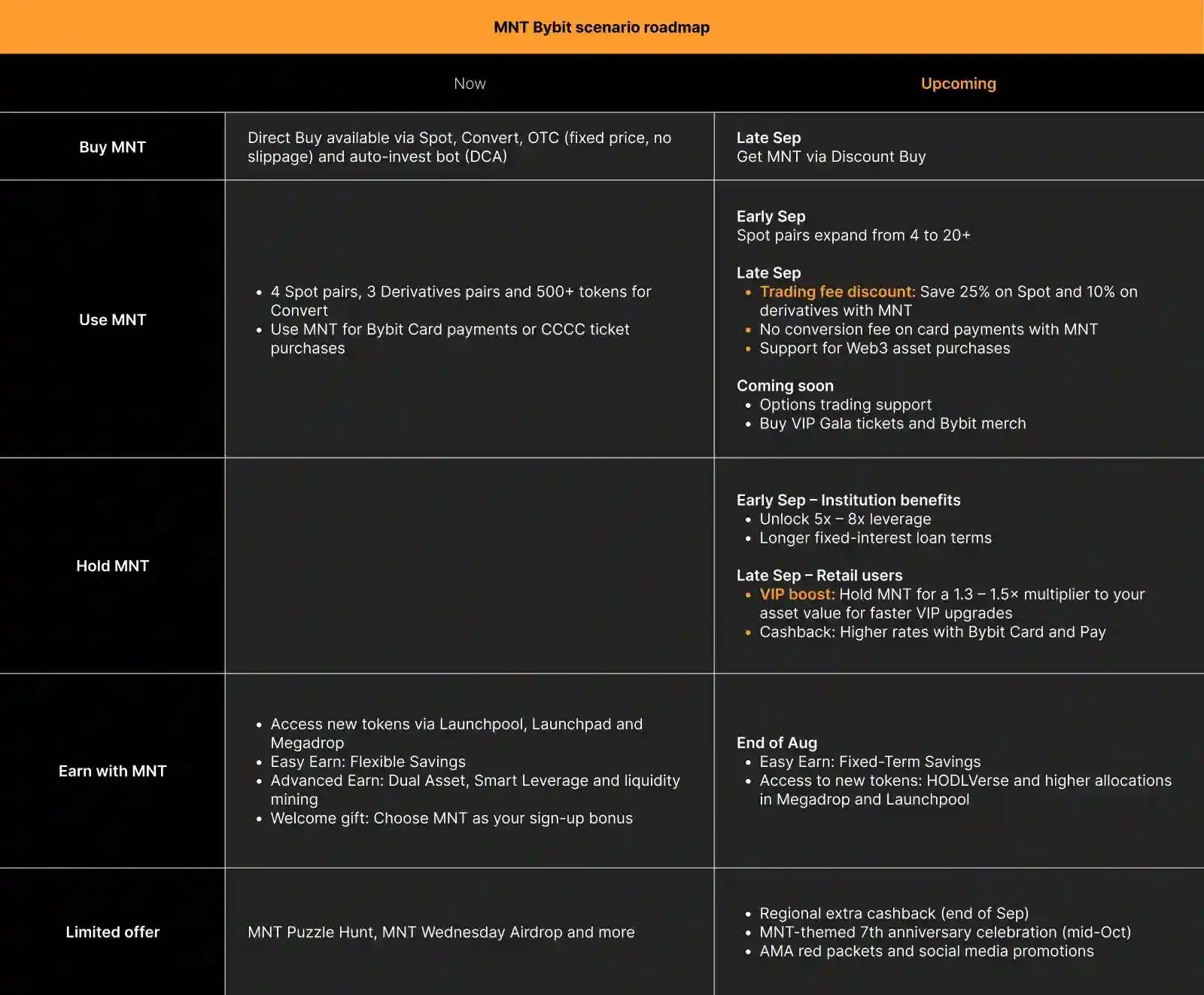
Source: Bybit
A). Immediate Catalysts
-
Enhanced Institutional Leverage
-
Holding 1–2.5 million MNT → USDT perpetual contract leverage increases from 3x to 5x.
-
Holding 3–5 million MNT → USDT/USDC perpetual contract leverage increases to 10x.
-
Directly targets institutional traders requiring higher leverage strategies.
-
-
VIP Fee Discounts
-
Spot trading fees discounted by 25%.
-
Derivatives trading fees discounted by 10%.
-
-
Collateral Optimization
-
Loan-to-value ratio for MNT increased from 10% to 60%—a 6x improvement, reducing capital requirements for large traders.
-
-
OTC Portal (Expected Q4 Launch)
-
Dedicated purchase channel for institutions, addressing current liquidity constraints.
-
Automated bulk trading system meeting accumulation needs of whales and funds.
-
Demand Quantification
These catalysts collectively generate massive token demand. According to Emily, Head of Bybit Spot and key advisor to Mantle, if 20–30% of VIP traders (representing 75–80% of volume) utilize fee discounts, 15–20% of Bybit’s total volume will be paid in MNT.
With Bybit’s annual revenue estimated at $4–5 billion, this could create over $500 million in annual MNT demand. Unlike speculative narratives, fee discounts drive permanent structural buying pressure—as proven by BNB’s sustained performance.
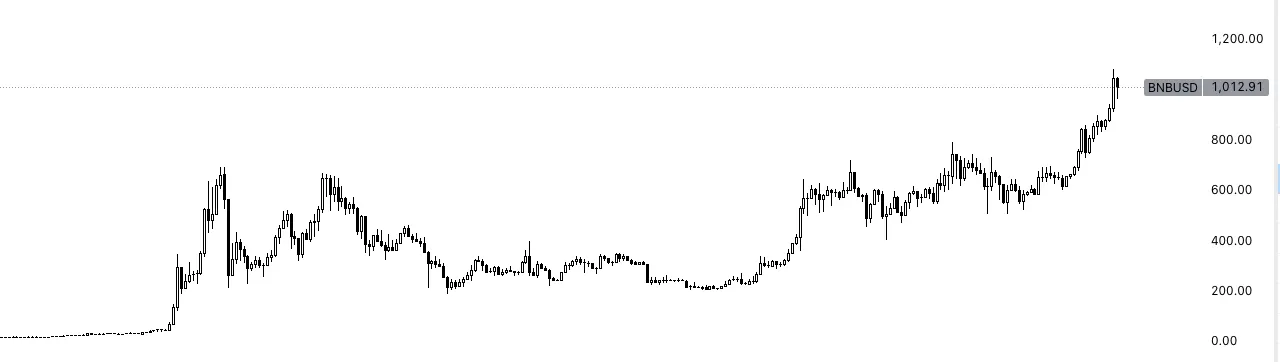
Source: TradingView
High-frequency and institutional traders require these discounts daily across all trades. Cost savings are essential tools that continuously generate purchase demand over time.
B). Bybit's Exceptional Growth Performance
Compared to BNB’s initial activation scale, Bybit operates at a much larger scale when launching utility integration. Already among the top three global exchanges, MNT can skip the “early adoption” phase and directly access a vast VIP user base with urgent cost-saving needs.
Growth Metrics
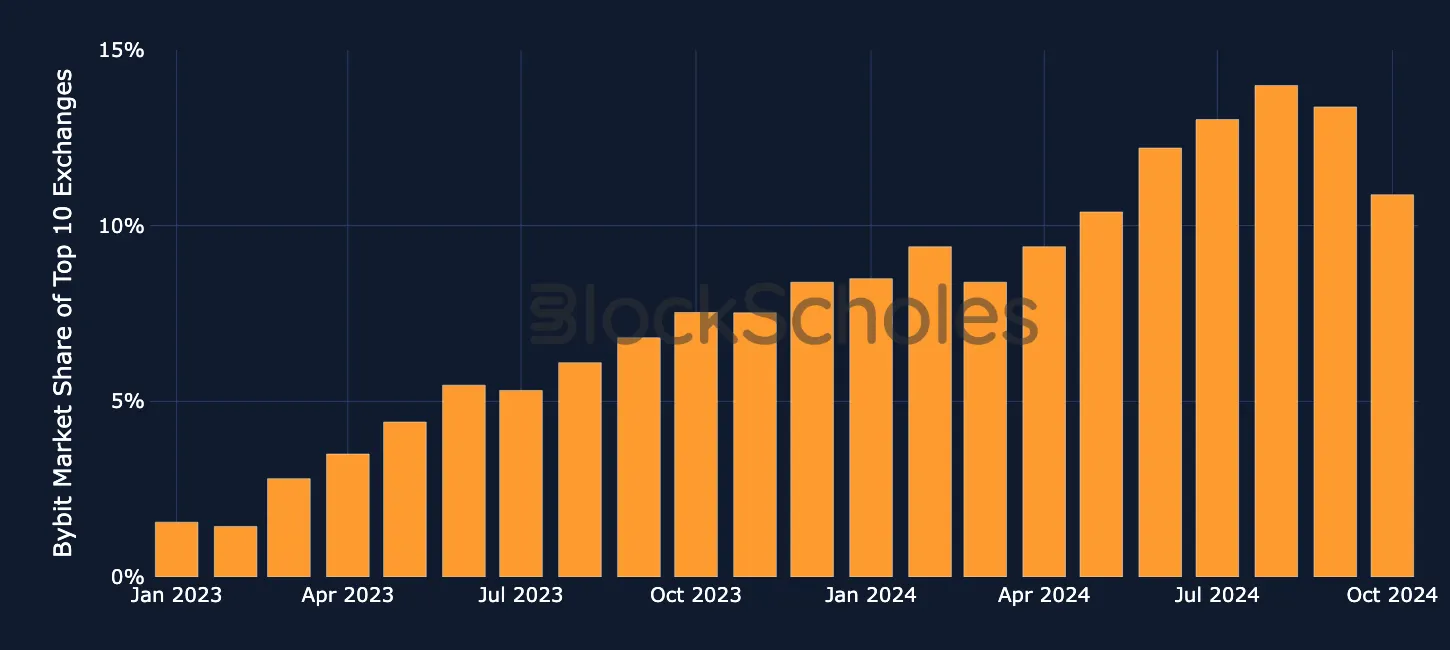
Bybit's market share as a percentage of the top ten centralized exchanges by trading volume
Source: Block Scholes
Explosive market share growth: surged from 1.56% to 12.21% within two years (7x increase while competitors stagnated). By 2024, Bybit became the second-largest centralized crypto exchange by volume. Its market share has surpassed 10%, demonstrating growing success in attracting crypto traders.
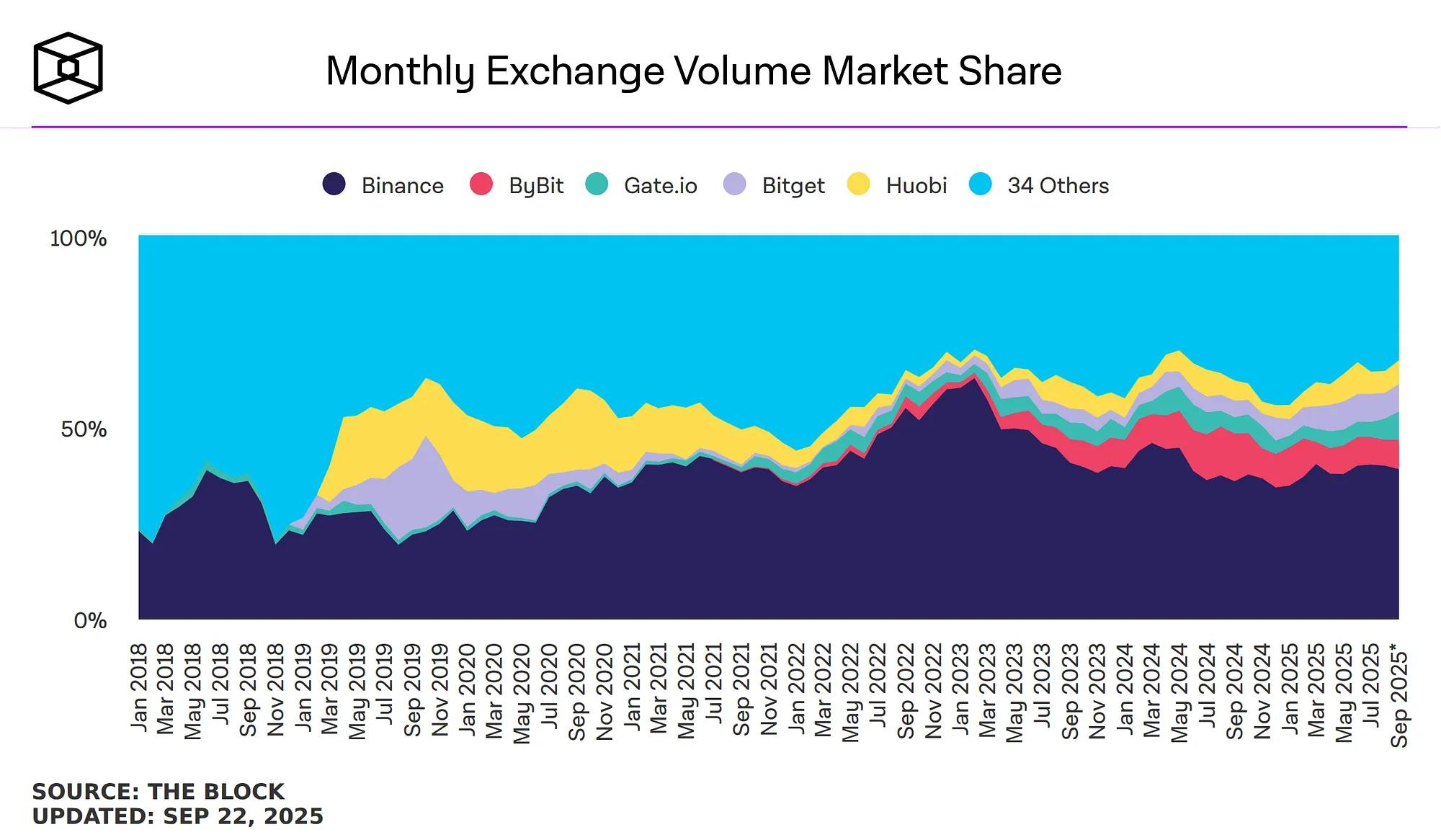
Bybit's market share as a percentage of the top ten centralized exchanges by trading volume. Bybit ranks second at 7.75%
Data source: The Block
The same comparison applies to the top ten perpetual contract exchanges. Bybit holds 7.75% of monthly perpetual contract volume, second only to Binance’s 38.76%.
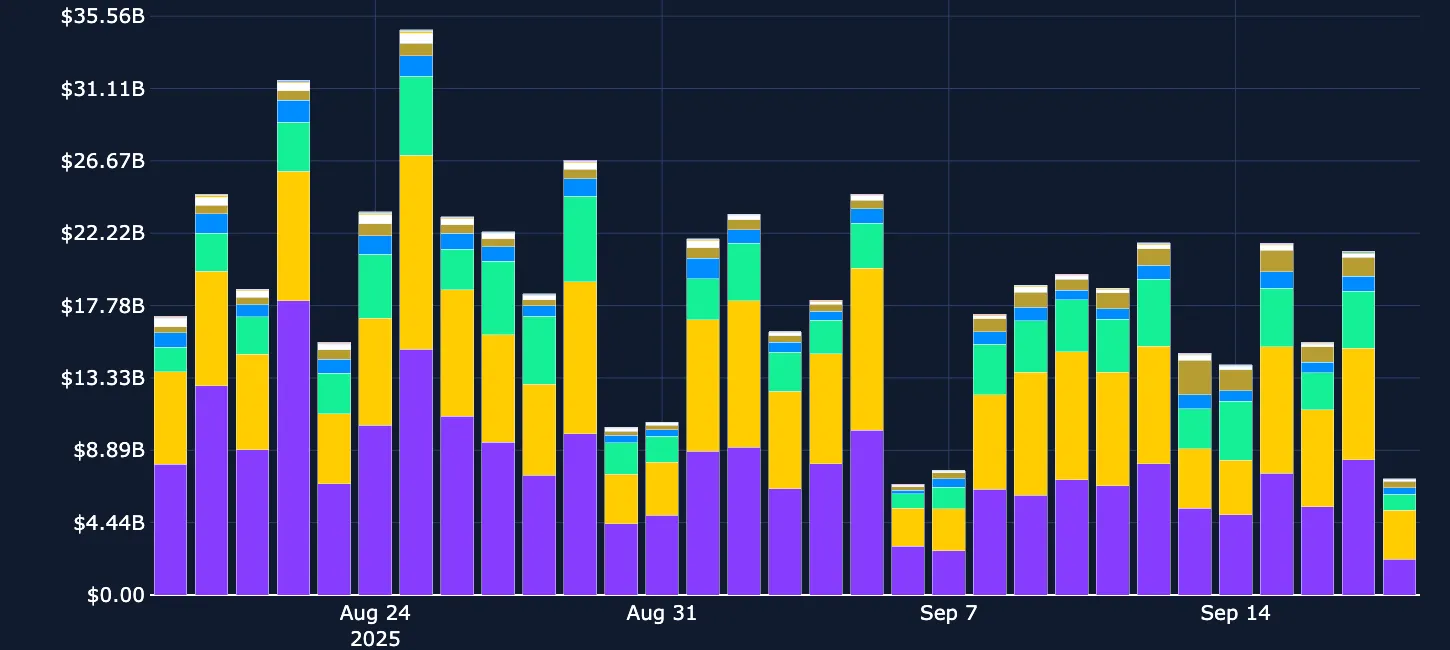
Bybit Perpetual Contract Volume
Source: Block Scholes
Finally, Bybit consistently processes $4–20 billion in perpetual contract volume daily, peaking around $35 billion during major market events.
Overall, Bybit is in a strong position. Their user growth is also remarkable—growing from 20 million users at the end of 2023 to 60 million by Q3 2024, reaching 70 million registered users by May 9, 2025. This provides the necessary user base for mass MNT adoption.
C). Leadership and Crisis Management
During the February 2025 Lazarus Group hack, which resulted in a $1.5 billion loss, Bybit’s leadership demonstrated exceptional capability. CEO Ben Zhou led one of the strongest crisis responses in crypto history—fully replenishing customer funds within 72 hours while maintaining over 100% reserve ratios and operational continuity. The exchange’s market share briefly dropped from 12% to 8%, then recovered, underscoring user confidence in Bybit’s leadership.
Given their outstanding leadership, during the recent Bybit x Mantle Live Recap event, Bybit Co-CEO Helen Liu and Head of Spot Emily Bao were appointed core advisors to Mantle in August 2025—a move of strategic significance. When such high-caliber executives commit resources at the highest level, it signals a fundamental shift in strategic commitment to Mantle.
Strategic priorities outlined:
-
Maximize Bybit platform resources for Mantle—fee discounts, trading pairs, lending, VIP benefits
-
Build efficient infrastructure for RWA tokenization—positioning Mantle as an institutional-grade asset
-
Cross-chain expansion—attract users and assets through ecosystem interconnectivity.
D). Exchange Chain Dynamics
This strategic direction aligns with the rise of “exchange chains”—Base and Binance Smart Chain (BSC) have performed exceptionally well over the past year. Exchange-native chains have proven to be one of the most successful models in crypto, combining exchange user bases, liquidity, and brand trust with native blockchain utility. Base leveraged Coinbase’s institutional credibility and user base to become a dominant Layer-2, while BSC used Binance’s volume and ecosystem to sustain on-chain activity.
Today, competition among exchanges intensifies: BNB represents BSC and Binance, and Base hints at an upcoming token launch. Mantle enters this landscape with institutional-grade infrastructure. The recent launch of UR Bank on the Mantle chain highlights its ambition to connect traditional banking with DeFi and establish itself as the “core hub for on-chain RWAs.” As Helen Liu stated, this creates a “closed loop” from asset onboarding, liquidity, product development, to user coverage.
Thus, Bybit-Mantle’s key differentiator is entering the space with broader prospects. Bybit already complies with MiCA regulations, has established institutional relationships, and demonstrated growth momentum. If this execution advantage is realized, it should drive a significant valuation uplift.
Narrative Consistency and Tokenomics
Mantle ($MNT) aligns with the strongest current narratives in crypto. The market rewards tokens that generate real cash flows and possess genuine business models, such as:
-
Launchpads
-
Perpetual DEXs
-
Exchange Tokens
-
Stablecoins
-
DeFi Protocols
These areas represent the financial infrastructure developed in crypto over the past five years. The market increasingly accepts financial services as crypto’s primary use case, moving beyond pure speculation.
Supply Structure
From a tokenomics perspective, MNT exhibits highly concentrated control, with approximately 90% of effective supply held by Bybit and associated entities. While public disclosures show 48% held in treasury and 52% in circulation, historical BitDAO allocation data reveals the actual breakdown:
-
45% allocated to Bybit
-
30% in BitDAO treasury
-
15% flexible allocation by Bybit
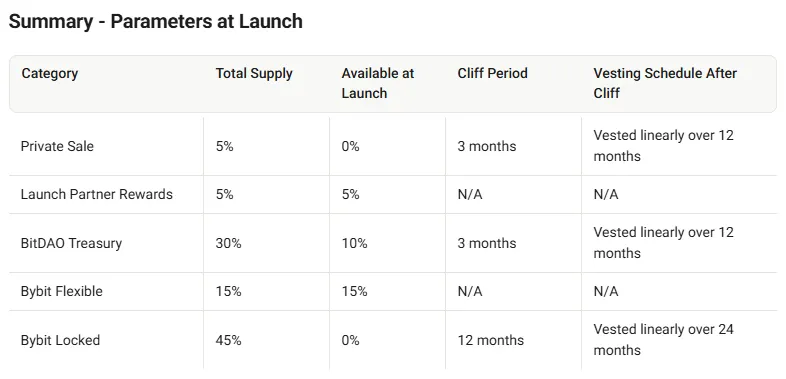
Source: BitDao Docs
This concentration may appear to pose significant governance risks, but it is actually a structural advantage. Market evidence supports two sustainable tokenomic models:
-
Fully diluted assets that have completed their distribution cycle with selling pressure absorbed.
-
Strategically controlled tokens held by entities with non-trading business models.
Examples of the first category include Raydium and Aave, which have passed major unlock cycles. Mantle belongs to the second category, creating superior incentives rather than facing structural selling pressure from fund lifecycles and LP return requirements typical of traditional VC-backed projects.
Bybit’s operating model differs. As an exchange generating $4 billion annually in trading fees, token sales constitute only a minor revenue stream and would undermine its core business. Bybit’s success depends on MNT serving as effective utility infrastructure—providing fee discounts, acting as collateral, and driving institutional adoption. Each function requires price stability and appreciation, not token liquidation.
This tokenomic model has been historically proven successful. BNB demonstrates how exchange-controlled tokens perform well when parent companies have complementary commercial incentives. Binance holds substantial BNB and focuses on token burns instead of sales, destroying over $1 billion worth of BNB in just the last quarter. Moreover, Binance’s revenue model naturally creates demand for BNB utility, supporting price appreciation that benefits both the exchange and token holders.
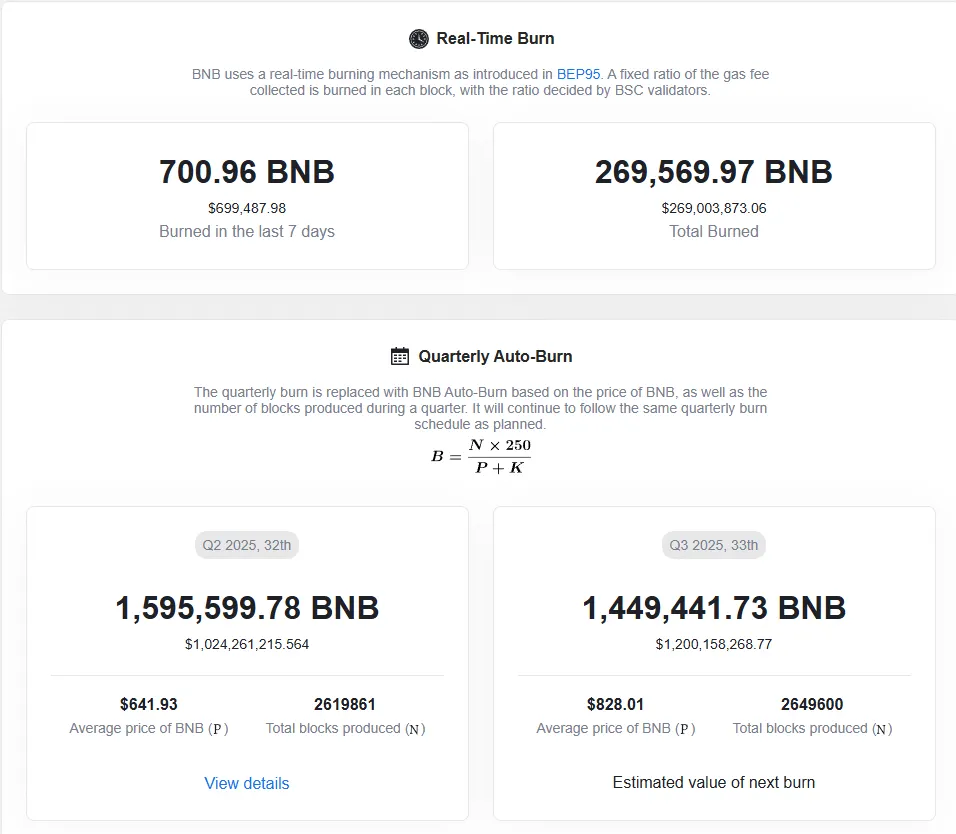
Source: BNBurn
The OKX case further validates the power of exchange-led tokenomic optimization. In August 2025, OKX burned 279 million tokens worth $26 billion, reducing total supply by 93% to 21 million. This deflationary event triggered a 200% price surge within hours, showcasing the potential of exchange-driven tokenomic optimization.
By controlling over 90% of supply, exchanges can execute strategic plans without conflicting interests. This concentration enables rapid decision-making and strategic flexibility unmatched by decentralized governance models. Far from being a risk, centralization creates strong alignment between token performance and core business success—a dynamic consistently favored by markets in the exchange token space.
Relative Valuation Analysis: Exchange Token Divergence
This leads to a perfect entry point—discussing Bybit and Mantle’s positioning among other centralized exchanges (CEX). Despite industry-wide appreciation of exchange tokens, significant valuation disparities have emerged. Comparative analysis of major exchange tokens reveals that despite similar underlying business metrics, MNT trades at a steep discount to peers.
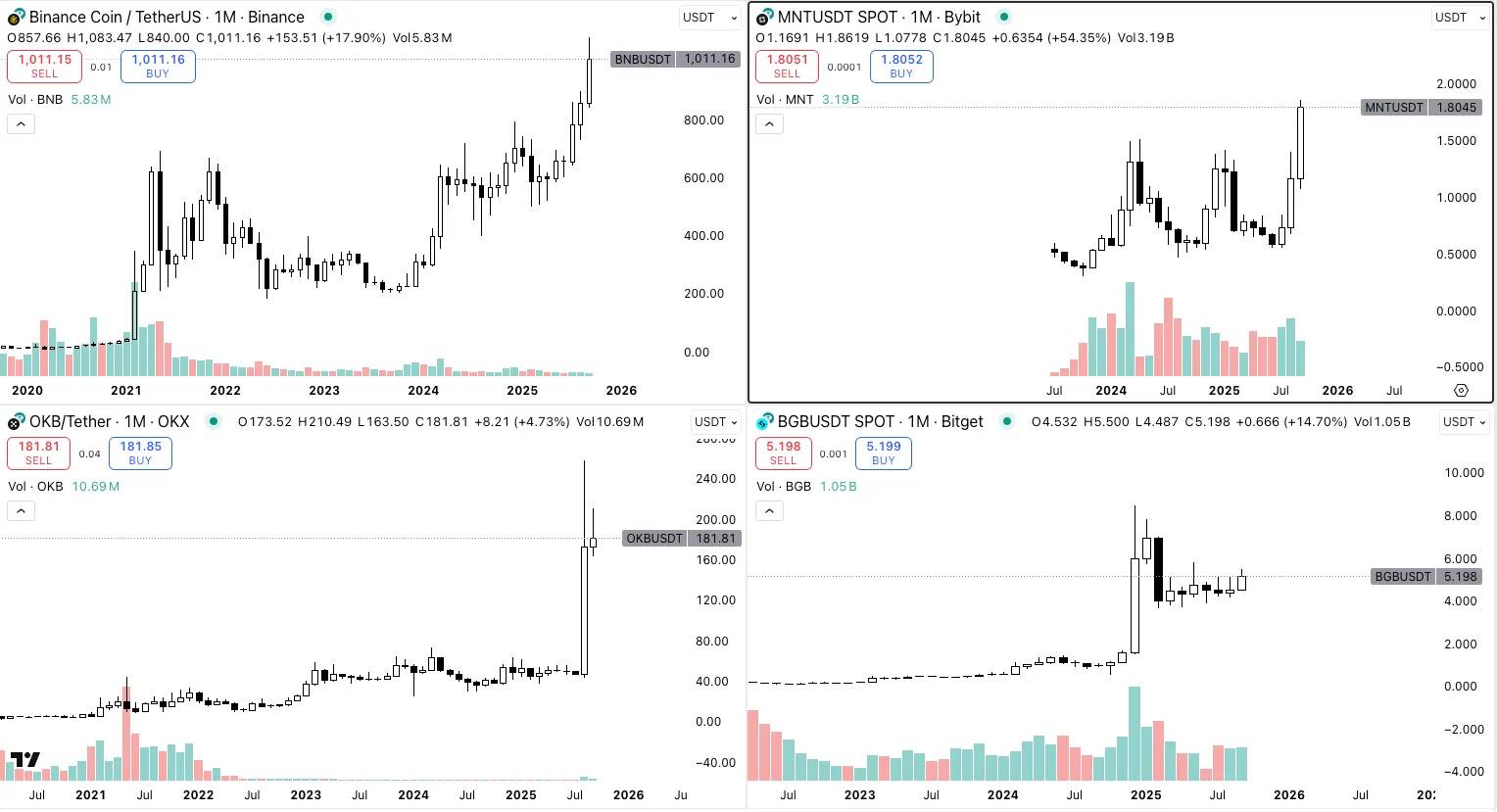
Source: TradingView
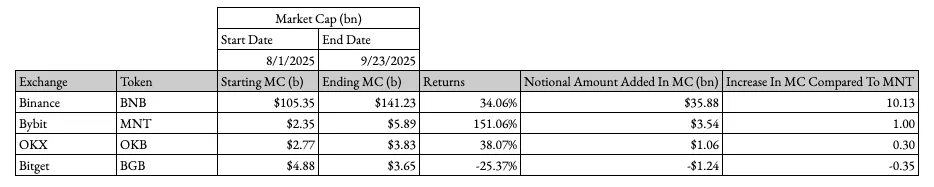
Performance Comparison
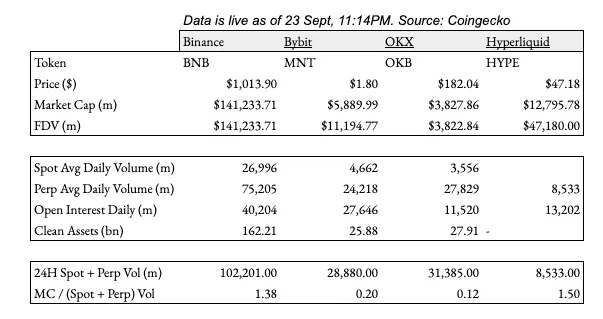
Metrics Comparison
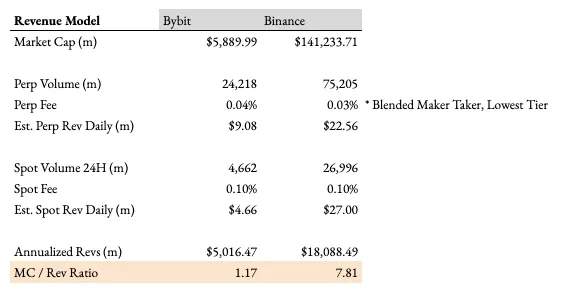
Profit Model
Since August 1, 2025, exchange tokens have performed strongly:
-
BNB: Market cap increased by $35 billion
-
OKB: Significant revaluation following supply reduction
-
BGB: Strong performance under burn program
-
MNT: Market cap increased by $3.5 billion (just 1/9th of BNB’s gain)
A disconnect exists between volume and valuation. Since August 1, BNB’s gain is ten times MNT’s $3.5 billion increase. Yet crucially, Bybit’s spot and derivatives volumes consistently account for roughly one-third of Binance’s volume.
Volume analysis reveals a fundamental mispricing. This becomes clearer when examining market cap to volume ratios:
-
MNT: 0.12x
-
BNB: 1.15x
-
HYPE: 1.05x
Despite MNT having comparable transaction infrastructure and revenue generation capacity to BNB, it trades at roughly 1/10th the multiple. Finally, under hypothetical revenue models, MNT trades below 1x MC/Rev, while BNB trades around 7.26x. By any measure, MNT has substantial upside potential.
Structural Differences vs. OKX
Although OKX shares similar volume metrics with Bybit, key structural differences limit OKB’s utility integration. OKX does not factor OKB holdings into trading fee calculations, removing a critical demand driver, whereas Bybit has committed to implementing this in MNT’s tokenomics.
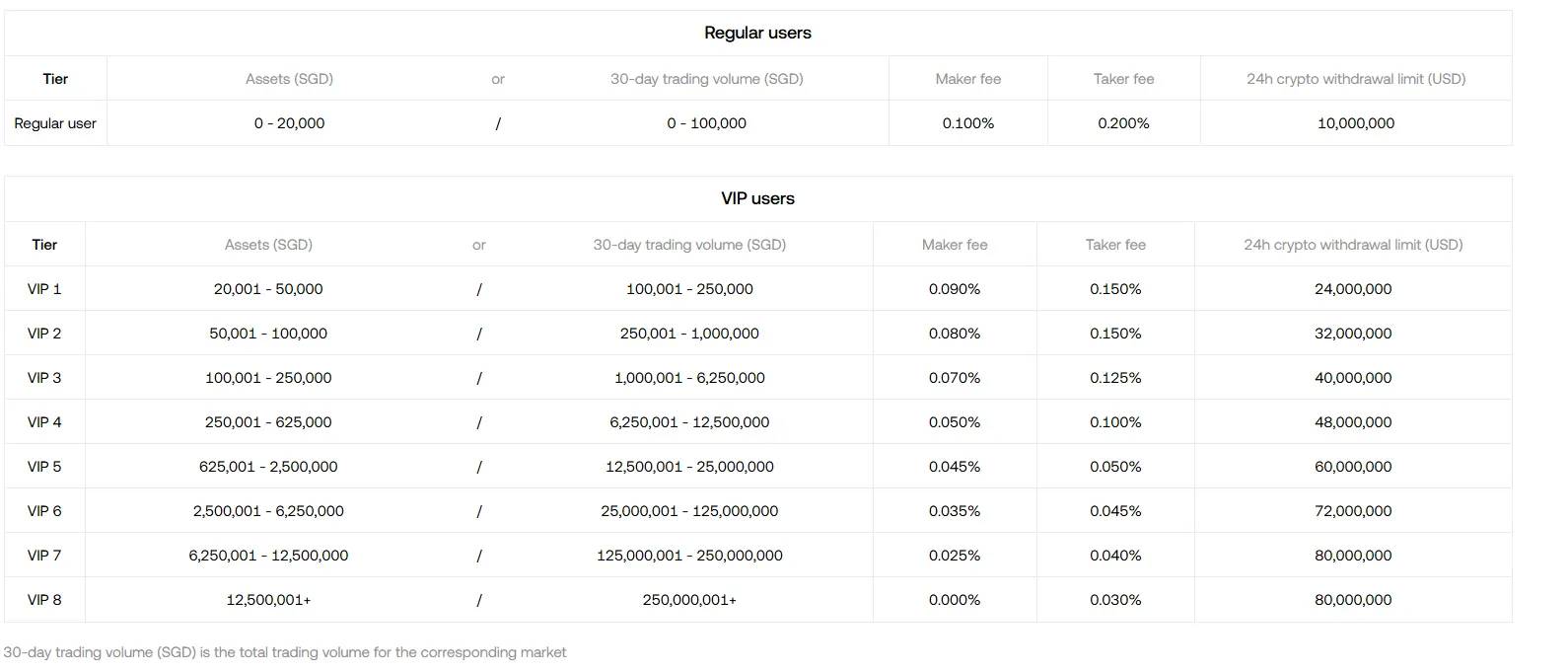
Source: OKX Fees
Beyond this, OKB’svalue proposition on its website focuses primarily on launchpad access and staking rewards, not deep integration with core exchange functions. This limits structural demand drivers and suggests OKX’s recent burn initiatives may be reactive rather than strategic.
Information Gap
Another underestimated factor in this opportunity is geography. Due to information flow disparities, Asia-focused exchanges face systemic undervaluation in Western markets. Binance enjoys global recognition, yet Bybit, despite comparable scale, remains more regionally focused.
This creates informational asymmetry—the very condition that generates alpha. When one market is better informed than another, comparable assets trade at different valuations. Opportunity lies precisely in the gap between Eastern operational reality and Western market perception.
Execution and Strategic Positioning
Overall, compared to other CEXs outside Binance, Bybit appears to demonstrate superior management execution and strategic vision. With CEO-level backing, MNT has become a core priority, not just a side project. It stands at the beginning of its utility integration journey, with each milestone representing a catalyst not yet fully priced in by the market.
Timing and Risk Assessment
Let’s address the elephant in the room: for four years, MNT has been a controversial trade in Asian crypto circles. The chart tells the story—MNT has repeatedly attempted breakouts based on speculation about Bybit integration, only to fail.
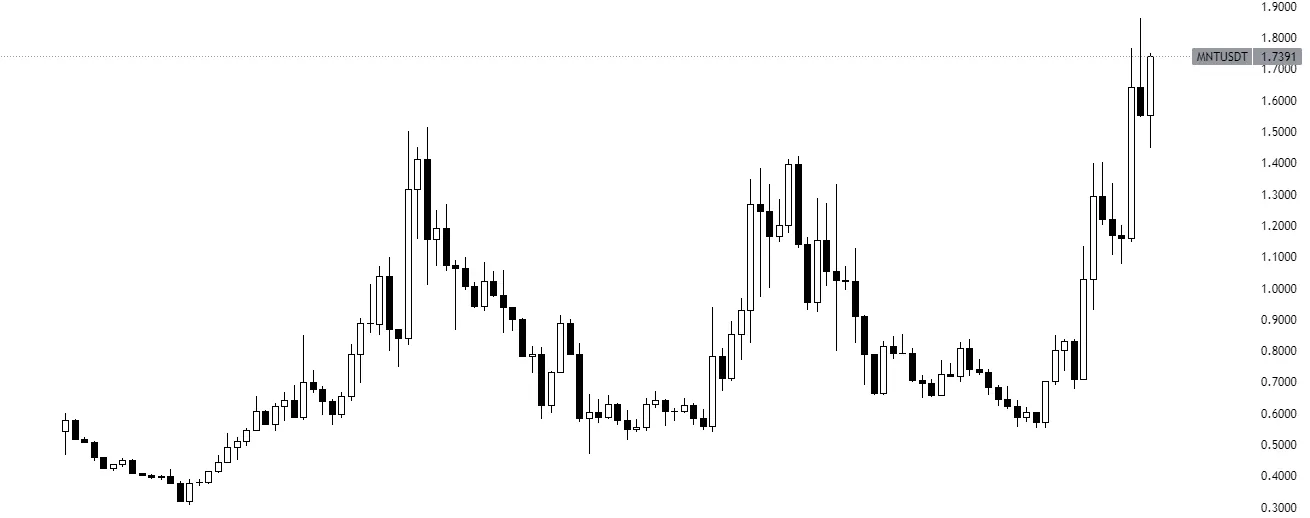
Source: TradingView
Why This Time Is Different
Previously, MNT’s rallies were built on hope, not substance. For four years, MNT existed as an independent L2 token owned by Bybit, but with zero operational synergy. The timeline reveals its evolution:
-
August 2021: Launched as BITDAO (investment DAO token)
-
May 2023: Transitioned to MNT, focusing on L2
-
July 2025: First real Bybit integration announced
-
August 2025: Bybit executives joined Mantle advisory board
The current market belief is that this breakout reflects actual integration progress, not speculative positioning. With operational fusion between Bybit’s exchange infrastructure and Mantle’s utility functions, this indeed marks a trend shift in Mantle’s lifecycle.
Risk #1: Execution Failure
The primary risk remains Bybit failing to deliver on integration promises. If fee discounts, leverage features, or OTC portal rollouts are delayed or poorly implemented, the utility narrative collapses entirely.
Risk Mitigation: Recent signals indicate serious commitment from Bybit. In an interview with BidClub, Emily, Head of Bybit Spot and key Mantle advisor, described the timeline as “as soon as possible, given CEO Ben’s urgency.” More importantly, communication with institutional clients on September 10 confirmed Bybit delivered on promised milestones as scheduled.
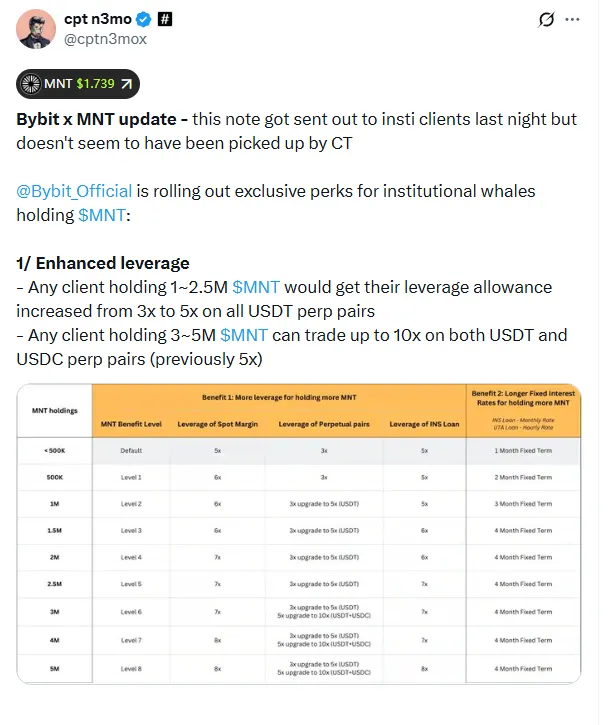
Source: @Cptn3mox on X
Risk #2: Competitive Alternatives
BNB maintains a massive advantage through proven utility and institutional adoption. Accelerated innovation by Binance or others could suppress MNT even under strong fundamentals.
Risk Mitigation: Multiple exchange tokens can coexist successfully, similar to L1 ecosystems or derivatives platforms. The market is large enough to support multiple players sharing business.
Risk #3: Industry Timing
Entering the exchange token cycle this late may mean joining near its peak. BNB, OKB, and peers have already seen significant gains during 2024–2025, potentially limiting upside for late entrants.
Risk Mitigation: Exchange tokens remain early in penetration compared to traditional finance. More importantly, MNT represents a "from 0 to 1" utility integration story, while peers are mature. Even in bear markets, exchanges with strong utility tokens tend to gain market share during margin compression due to cost savings.
Risk #4: Geographic Limitations
Bybit is excluded from major markets (U.S., U.K.), limiting its addressable market size, especially compared to regional competitors like Coinbase.
Risk Mitigation: This limitation may be rapidly weakening. CFTC Acting Chair Caroline Pham recently announced plans to allow U.S. citizens to trade offshore exchanges under CFTC oversight, specifically mentioning Binance, Bybit, and OKX. This regulatory shift could unlock significant growth potential without requiring separate U.S. entities.
Final Thoughts
MNT appears to be at the beginning, not the end, of its utility integration cycle. Concrete operational progress, structural demand drivers, and potential regulatory tailwinds combine to create an asymmetric opportunity as the market shifts from speculation to substance.
Past failures over the last four years ironically strengthen today’s argument—the previous attempts were based on hope, while current momentum reflects operational reality. When speculation finally aligns with execution, repricing can be extremely violent.
Disclaimer: This document is for informational purposes only. The views expressed herein are not investment advice or recommendations and should not be construed as such. Recipients should conduct their own due diligence and consider their specific financial situation, investment objectives, and risk tolerance (which are not considered herein) before investing. This document is not an offer or solicitation to buy or sell any assets mentioned.
Join TechFlow official community to stay tuned
Telegram:https://t.me/TechFlowDaily
X (Twitter):https://x.com/TechFlowPost
X (Twitter) EN:https://x.com/BlockFlow_News
 @0xkyle__