Conversation with Ray Dalio: 10 Financial Principles for Chinese Friends, from Asset Allocation to Wealth Transfer
TechFlow Selected TechFlow Selected
Conversation with Ray Dalio: 10 Financial Principles for Chinese Friends, from Asset Allocation to Wealth Transfer
In the long run, cash is a very poor investment.
 Navigating Web3 tides with focused insights
Compiled & Translated: TechFlow
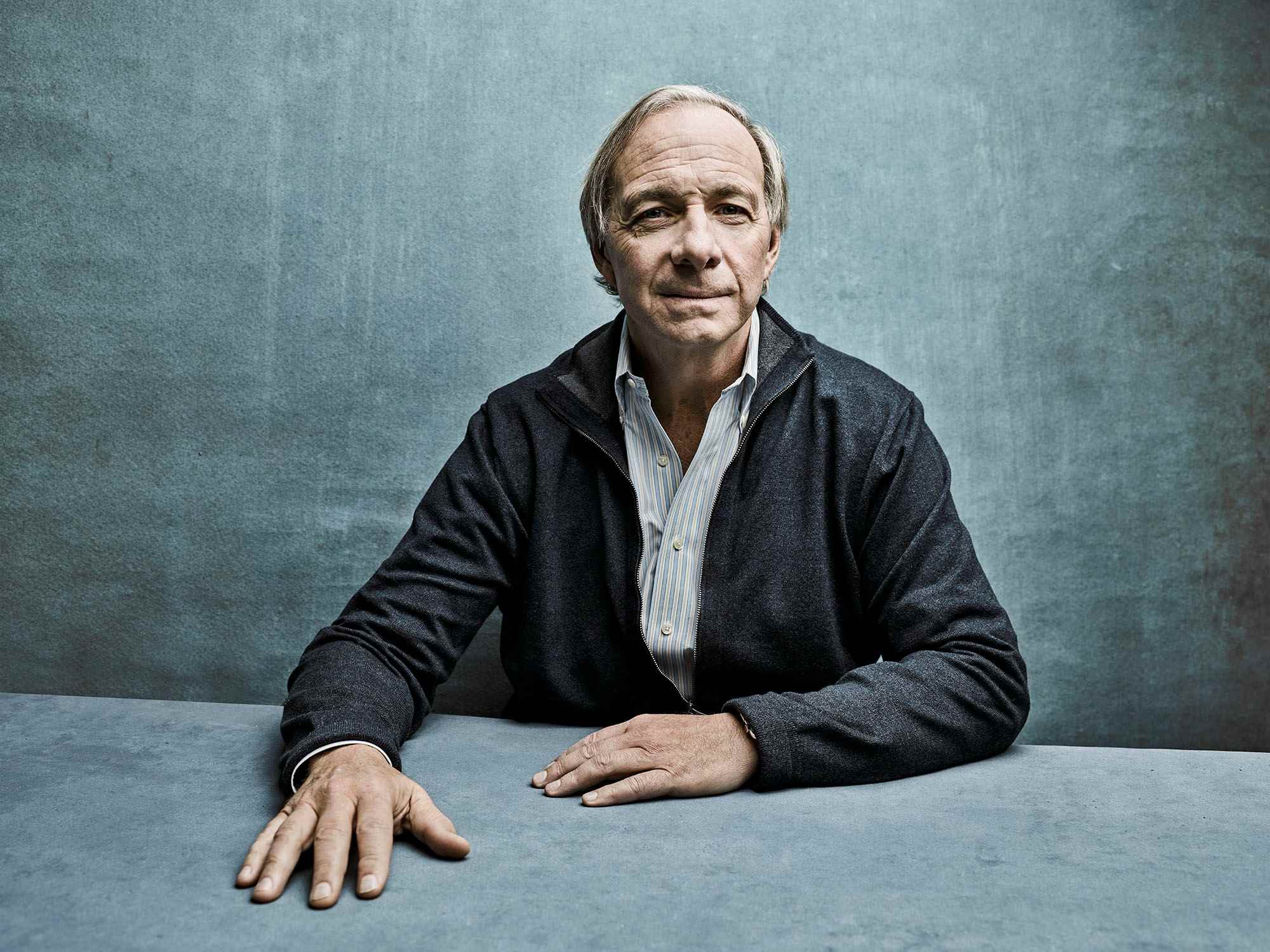
Guest: Ray Dalio, Founder of Bridgewater Associates
Host: Wang Liwei
Podcast Source: Xian Sheng
Original Title: Ray Dalio's First Chinese Podcast: Stock-Bond Divergence and 10 Financial Rules for Chinese Investors
Air Date: August 20, 2025
Key Takeaways
An exclusive dialogue with the founder of Bridgewater. As A-shares heat up and bond funds weep, how should we allocate our wealth? Why give grandchildren gold coins instead of toys to build financial literacy?
Recently, A-shares have surged while bond markets plunged sharply. This has prompted a soul-searching question from financial advisors: Should you switch your bond funds to equity funds?
Dalio has also been in the spotlight lately, first due to his new book release: "Why Nations Go Bankrupt." Then, over the weekend, news that Bridgewater exited all Chinese概念股 (U.S.-listed Chinese stocks) drew widespread attention. Yesterday, someone asked me: Did Bridgewater really sell all its China stock positions?
In fact, U.S. 13F filings do not reflect holdings in Hong Kong or A-share markets (Global Funds Like Bridgewater Cut Chinese Stocks Amid Mixed Sentiment on China Equities). Looking solely at onshore markets, Bridgewater’s fund offerings in China surpassed RMB 40 billion in scale last year. Given more than a year of gains since then, assets under management are likely now around RMB 60 billion—nearly one-tenth of Bridgewater’s global AUM.
I’ve followed Dalio closely for nearly a decade. Taking the opportunity of his new book, I recently conducted an in-depth conversation with him. We began by discussing macroeconomic themes around his book and related controversies (see the Caixin Weekly text version); later, we shifted focus to personal finance, where he shared investment advice specifically for Chinese investors. This marks Dalio’s first appearance on a domestic podcast to openly discuss investing.
From my memory, Dalio rarely gives public, specific investment advice—especially tailored to China. But today, Chinese investors face a unique environment. On one hand, equities are booming; on the other, earning stable and solid returns amid low interest rates is difficult. Even during this recent bull market, some say they’ve barely made profits after three years; meanwhile, bond funds—which brought many solid gains over the past two years—are now prompting poetic lamentations: “Bond funds make millions weep.”
How should we navigate sharp market volatility in this low-rate era? When markets rise, should we diversify across asset classes and regions? If Dalio is bearish on U.S. Treasuries and the dollar, does that mean he’s also bearish on U.S. stocks?
If you care about investing, wealth preservation, and financial security, this dialogue will offer valuable insights.
Highlights of Key Insights
-
When certain markets rise, others fall, reflecting different economic conditions. By balancing these investments, portfolio cyclicality can be reduced, achieving strong returns with lower risk.
-
Cash is a very poor long-term investment. The challenge in China is that investors often hold large amounts in real estate or cash deposits—an undiversified portfolio.
-
The return on any asset typically consists of two parts: price change and yield. When returns rely primarily on price appreciation rather than coupon income, caution is warranted.
-
Investors should periodically rebalance their portfolios. Without strong market views, adopt a simple rebalancing strategy: when an asset class rises, trim positions and redeploy capital elsewhere to maintain long-term balance.
-
Diversification is always timely. Individuals must be extremely cautious about market timing.
-
Diversification and risk balancing are key to enhancing returns and reducing risks.
-
Do not try to predict market movements—market timing is essentially a zero-sum game.
-
Don’t view portfolio components in isolation; consider how they work together as part of a well-diversified whole.
-
Debt is money, and money is debt.
-
Gold is the second-largest reserve currency, after the U.S. dollar. Then come the euro and yen.
-
Gold is more attractive to me. Still, I hold some bitcoin as an alternative.
-
Stablecoins offer clear transactional advantages, especially appealing to those less concerned with interest rates who trade yield for convenience. However, stablecoins are not good stores of wealth.
-
Inflation-linked bonds are excellent tools for preserving capital. They compensate for inflation while offering a real interest rate. These low-risk assets are ideal investments.
-
Everyone must recognize the importance of saving. Savings provide a foundation and sense of security, which in turn grant freedom.
-
Ensuring basic financial safety for individuals and families is crucial. To achieve this, learning investment principles and practicing proper asset diversification is essential.
-
Only after securing basic living expenses should one consider taking additional risks to pursue higher returns.
-
On every birthday and Christmas, I give each of my grandchildren a gold coin. I tell them: You cannot sell this coin. You may only pass it down to the next generation on the day the monetary system collapses.
Investing in a Low-Interest-Rate Environment
1. Can You Achieve Stable Returns in a Low-Rate Era? The Logic Behind the "All Weather" Strategy
Host:
China is currently in a low-interest-rate environment, which usually makes it hard to achieve satisfactory investment returns. Yet, I’ve noticed that Bridgewater’s All Weather Fund in China has performed exceptionally well in recent years, delivering annualized returns exceeding 10% with relatively small drawdowns even during market turbulence.
Could you explain how Bridgewater achieves such consistent performance in this low-rate environment?
Ray Dalio:
I'm glad you asked. Bridgewater’s performance over the past six years has indeed been very stable—the worst year was still between 10% and 14%, I don’t recall the exact figure, but average returns were around 16%. How do we achieve this?
First, the key lies in achieving portfolio balance through appropriate asset diversification. When some markets rise, others fall, reflecting different economic conditions. For example, when equities decline, bonds tend to rise; gold or inflation-hedging assets often perform well when currencies depreciate. Balancing these investments reduces the cyclical volatility of the portfolio, enabling solid returns with lower risk.
My investment mantra is to have 15 or fewer uncorrelated sources of return. (TechFlow note: Uncorrelated return streams refer to assets whose returns are not directly linked, effectively spreading risk.) For instance, in a slow deflationary environment, stocks may underperform, but bond yields could rise. If there’s significant money printing in the economy, inflation hedges like gold typically perform well. With such balanced positioning, you can achieve highly attractive returns at lower risk—that’s the essence of investing.
In the long run, cash is a terrible investment. The challenge in China is that investors often keep large sums in real estate or bank deposits—an undiversified portfolio. Therefore, a strategy of holding diversified assets rather than cash is highly attractive. This is our core approach: achieving diversification without being constrained by traditional asset classes, tactically adjusting based on current market conditions to maintain balance.
As I said, my current goal is to share these principles. At 76, I’m planning to launch an investment course teaching these principles. I hope to deliver this knowledge to everyone in China as freely or affordably as possible, helping them understand how to achieve balance. That’s why I’m eager to convey exactly how this process works. Overall, as I’ve described, this method proves effective.
2. The Dilemma of Bond Investing: Be Afraid When Gains Come From Price Appreciation, Not Yield
Host:
Currently, the Singapore Institute of Wealth Management is conducting research we hope can be applied in China.
In a low-interest-rate environment,long-term bondstypically perform well, so many Chinese investors entered this space over the past year. But when signs of economic recovery emerged, long-term bonds sharply pulled back—just as we saw in recent days. Do you think there are reliable ways to spot these signals and adjust strategies accordingly?
Ray Dalio:
I want to clarify: the return on any asset usually consists of two parts—price change and yield. During investment cycles, sometimes low-yielding assets get bid up and become very expensive. At that point, investor returns come mostly from price appreciation rather than coupons. While this appears profitable in the short term, future yields become very low. That low yield is actually a critical warning sign indicating greater risks ahead. Thus, when you see returns relying mainly on price gains rather than yield, you should be cautious.
To address this, investors need regular portfoliorebalancing. Without strong market views, use a simple rebalancing strategy: when an asset class rises, opportunisticallysellpart of the position and redeploy capital into other asset classes to maintain long-term portfolio balance. Bridgewater, for example, uses such dynamic balancing to achieve stable returns. Regular adjustments help reduce risk while maintaining portfolio stability.
3. Geographic Diversification and the Timing Trap: Stop Predicting Markets
Host:
I believe geographic diversification is a sound strategy in a low-rate environment. Bridgewater has done this for years. Japan has also achieved it through its NISA program. Recently, China has increased QDII quotas for Chinese investors.
Some Chinese investors feel U.S. stocks are at historical highs and too expensive; European markets are similarly elevated. How important is geographic diversification? Is now a good time to diversify geographically?
Ray Dalio:
I believe it's always a good time fordiversification. Individuals must be extremely cautious about market timing. Assume you cannot accurately predict market moves, then ask: If I had no market view, what portfolio should I hold? That portfolio should be a balanced, diversified mix—because diversification means that if you don’t know how a single asset will perform, a balanced portfolio is the best choice. Individuals rarely succeed at market timing.
Don’t base your portfolio decisions on whether U.S. stocks are high. Focus on balance. I’d advise any investor to keep half their capital domestically, but within a diversified portfolio, use an “All Weather” structure. An “All Weather” portfolio includes gold,bonds, and exposure to about 10 different markets. But know how to balance properly—you’re balancing risk, not just dollars or any single currency.
Diversificationand risk balancing are vital to boosting returns and cutting risk. Simply put, if I add uncorrelated assets—say, starting with one, then adding a second and third with similar expected returns but no correlation—I can cut risk by about one-third. With 10 to 15 uncorrelated assets, I can reduce risk by 60% to 80% while keeping returns steady. That means the return-to-risk ratio improves fivefold. You can earn the same expected return with just one-fifth the risk. That’s the game of investing.
4. The Art of Buying: Beyond Dollar-Cost Averaging (DCA)?
Host:
You’ve mentioned not trying to time the market. So what is the right way to invest? Isdollar-cost averaging (DCA) a good approach? Or are there better methods?
Ray Dalio:
When investing, first define your risk exposure—not just the amount invested. For example, stocks are roughly twice as volatile as bonds. To balance a portfolio, adjust weights based on asset volatility to equalize overall risk. If properly designed, this risk-balanced approach helps meet investment goals. It may sound complex, but DCA is indeed a solid method—it avoids lump-sum risk and allows gradual accumulation. But the key is understanding how to build a balanced “neutral portfolio”—one that performs reliably across market environments.
Again, do not attempt to predict market movements—market timing is fundamentally a zero-sum game. Every trade has a buyer and a seller, and there are always smart players in the market. It’s like playing poker—ask yourself: Who is my opponent? Only a tiny fraction truly win. Bridgewater spends hundreds of millions, even billions, annually studying markets, yet over the past six years, overall market performance has been poor. So if you seek consistent, solid returns, I recommend a risk-balanced approach over market timing.
Once again, avoid timing because you must understand it’s a zero-sum game. Each buyer has a seller, and there are smart players. It’s like sitting at a poker table—do you know who you’re playing against? Only a small minority succeed. We spend hundreds of millions, possibly a billion, annually trying to play this game. Even looking at the track record of investment managers over the past six years, overall market performance has been weak. So if you want consistent, strong returns, I encourage using this balanced method.
Host:
Would you suggest a default All Weather portfolio for Chinese investors? I recall in 2014 you provided Tony Robbins with a U.S.-market version. What allocation would you recommend for Chinese investors?
Ray Dalio:
The same principles apply everywhere—it’s not country-specific, only tool-specific. In China, we can use local instruments to achieve risk balance. The fund I mentioned is a local vehicle capable of doing just that. My point is: onshore tools exist to achieve this goal.
Pros and Cons Across Major Asset Classes
5. Gold: How to Think About Allocating to This "Non-Yielding" Asset
Host:
Gold is an asset you value highly. Over the past year, it’s performed strongly. From 20- or 30-year perspectives, its performance is also impressive. Yet many prefer productive assets. How should we think about—or convince ourselves—to invest in non-productive assets like gold?
Ray Dalio:
Gold is a non-productive asset, like cash. If you hold cash, it’s also non-productive—they’re quite similar. So view gold as a form of currency. Its key feature is that it’s an effective diversifier: when currencies weaken, gold tends to perform well.
Most people evaluate portfolios and costs from their own currency perspective—a view that can lead to misjudgment, as they fail to realize their currency is depreciating. They see other assets rising—like gold or other commodities. But if you assess things in inflation-adjusted dollars or real terms, that’s the correct lens. Over long periods, gold has served as money, and perhaps some digital currencies are seen as alternatives. Overall, debt is also money—and there’s too much of it.
My point is, currency values have genuinely declined over time. When I mention gold, I don’t mean you should overweight it beyond appropriate diversification. What I mean is in an optimized portfolio, gold typically makes up around 15%. But even at 10% or 5%, gold provides diversification benefits to the rest of the portfolio. So treat it as a risk-reduction tool against broad currency devaluation driven by excessive debt and money printing. Thus, gold should be part of a portfolio. But again, don’t view components in isolation—consider how they integrate into a well-diversified whole.
6. The Dollar and U.S. Treasuries: Why the Bearish View?
Host:
If we look at currency value—say, the dollar—you recently noted that the U.S. economy appears relatively strong while the global economy is weak. That seems favorable for a strong dollar. But do you see the dollar facing structural downside pressures?
Ray Dalio:
I emphasize the supply-demand dynamics of debt, because debt is money, and money is debt. Debt is a promise to deliver a certain amount of money. So debt is unredeemed money. When you store wealth, you’re storing it in debt. That’s what I mean by “debt is money, money is debt.”
When debt is excessive and growing too fast, debt problems emerge. Dealing with them forces a choice: either choose hard money, altering supply-demand dynamics, requiring higher interest rates, reducing demand, and causing markets to fall; or print money to ease debt burdens. This dilemma is central in today’s economic environment.
7. Bitcoin vs. Gold: Dalio’s Investment Perspective
Host:
You just mentionedcryptocurrencies. I recall you’ve held some bitcoin in recent years. How do you view bitcoin’s investment value? What are its pros and cons compared to gold?
Ray Dalio:
I’ve held a small amount of bitcoin for several years, keeping the allocation steady. I view bitcoin as a diversification tool—a complementary option to gold. What makes a reliable store of value? Bitcoin is undoubtedly popular, but it has drawbacks—for example, I don’t think central banks will hold bitcoin.
Gold is the second-largest reserve currency—the dollar first, then gold, then theeuro, then theyen, and so on. Central banks hold gold. There’s a saying: gold is the only asset you can own that isn’t someone else’s liability. This means gold is money in itself—it doesn’t depend on someone promising to pay you. Gold has intrinsic value and can be held without counterparty risk. This matters greatly during political or geopolitical stress—like sanctions on Russia, or Japanese assets frozen during WWII. For these reasons, gold is more attractive to me. Still, I hold some bitcoin as an alternative.
8. The Truth About Stablecoins: Are They Worth Holding?
Host:
I notice you hold bitcoin for its store-of-value function. Today, many are turning to stablecoins, which seem to offer similar utility. What’s your take?
Ray Dalio:
Stablecoins peg currency to a stable unit. In effect, they represent a claim on the pegged currency, but usually pay no interest. Financially, they’re inferior to interest-bearing currency assets. However, stablecoins offer clear transactional advantages, especially in cross-border payments. They act almost like clearing instruments, simplifying international fund flows. Thus, they appeal to those indifferent to interest rates, who trade yield for transactional ease.
In high-inflation countries, interest may be negligible, making stablecoins more attractive for transactions. For example, in places like Argentina, if access to interest-bearing reserve currencies is limited, stablecoins may serve as substitutes. That’s how stablecoins work—but they fail to fulfill the core monetary function of scarcity and stable relative value. In contrast, inflation-linked bonds are a far better asset choice.
China hasn’t launched inflation-linked bonds yet, but they are an excellent tool for wealth preservation. They compensate based oninflation ratesand carry a positive real interest rate. This low-risk asset is an ideal investment.
Host:
After your analysis, I wonder how big the demand for stablecoins really is. Can they truly solve America’s debt problem?
Ray Dalio:
This remains to be seen. The logic is that buyers—especially in emerging markets with greater economic instability and less concern for interest rates—will buy stablecoins for transactional purposes.
Regulations require stablecoin issuers to back them with government bonds and debt. So buying stablecoins leads to purchasing U.S. government debt. But here’s the issue: where does the funding come from? If they already hold U.S. debt, shifting to stablecoins doesn’t create new demand. So what drives incremental demand? I believe stablecoins are not good stores of wealth.
The Foundation of Family Wealth
9. Dalio’s Family Finance Lesson: Giving Grandkids Gold Coins, Not Toys?
Host:
In a 2019 interview, you mentioned individual investors face major challenges. Could you offer practical advice for ordinary people? I also heard you’ve been teaching your grandchildren about investing and personal finance.
Ray Dalio:
I believe everyone needs to recognize the importance of saving. I calculate how many months I could live off savings if I earned no new income. Then I double that number to prepare for unexpected downturns, like a deep recession.
Savings provide a foundation and sense of security, which grants freedom. This is crucial. For my children—now adults—and grandchildren, I give each a gold coin every birthday and Christmas. I tell them: You cannot sell this coin. You may only pass it to the next generation on the day the monetary system collapses. This way, they witness intergenerational value transfer. I find this far more meaningful than giving toys. Of course, I occasionally give toys too—but not many, because toys quickly lose appeal, while gold coins teach the value of saving and wealth accumulation.
My core message: ensuring basic financial safety for individuals and families is paramount. To achieve this, learning investment principles and practicing rational asset diversification is essential. Only after securing basic living standards should one consider taking more risk to chase higher returns. For me, high-risk investing is like a game—I enjoy it immensely because it’s challenging and fun.
When saving, always account for inflation’s impact. Put simply, you’re not just storing money—you’re preserving purchasing power. For example, if interest is 4% and inflation is 3%, your real gain is just 1%. These are my suggestions for ordinary people—principles I follow myself and with my family. Only after mastering these basics should one explore higher-risk opportunities.
Host:
That’s why many people now build multiple portfolios—like a safe bucket and a riskier market bucket.
Ray Dalio:
But I’d remind everyone: investing is like a poker game, and you’re up against many smart opponents—some deploying hundreds of millions or even billions in this game. Beginners should start small and learn through practice. Observe how professionals perform, review their strategies and results over the past few years, rather than being overconfident. Understanding this and staying humble is key to investment success.
10. The Importance of Rebalancing: Overcoming Emotional Investing
Host:
Last time, you gave me a fascinating piece of advice: act against your instincts. But I imagine that’s hard for most people. So how should one adjust their portfolio?
I noticed Pure Alpha Fund performed well in the first half of this year and stood out among global hedge funds last year. Yet, it returned some cash to clients. Similarly, Bridgewater’s OS Fund in China took comparable action earlier this year after achieving over 15% return in six months.
Aboutrebalancing, could you share lessons or insights? How do you view this practice?
Ray Dalio:
The core ofrebalancingis setting a strategic asset allocation target to maintain portfolio balance. When some markets perform well and asset prices rise, while others lag, rebalancing helps realign the portfolio with your target. This lets you lock in gains at highs and buy low, maintaining discipline. Thus, rebalancing is critically important.
Host:
It certainly sounds like it requires strong discipline and emotional control.
Ray Dalio:
That’s the nature of the game—like many things in life, it demands self-control. For decades, I’ve documented my decision rules and codified them into a set of “Principles.” Later, I turned these principles into computer programs to systematically execute my investment plan. This avoids emotional interference, as I know the expected outcomes of the plan.
You must have a game plan. If you’re going to do this, backtest your plan so you understand its historical performance. Then, you’ll avoid emotional decisions that lead to mistakes.
Join TechFlow official community to stay tuned
Telegram:https://t.me/TechFlowDaily
X (Twitter):https://x.com/TechFlowPost
X (Twitter) EN:https://x.com/BlockFlow_News
 深潮TechFlow