Silicon Valley's Inner Circle, Crypto Wealth, and the U.S. Vice President: Peter Thiel's Network of Power
TechFlow Selected TechFlow Selected
Silicon Valley's Inner Circle, Crypto Wealth, and the U.S. Vice President: Peter Thiel's Network of Power
Power never belongs to those under the spotlight.
 Navigating Web3 tides with focused insights
By David, TechFlow
"What important truth do very few people agree with you on?"
This is Peter Thiel’s favorite interview question—and the opening line of his bestselling book *Zero to One*.
If you asked him that same question, his answer might look like this:
In 2003, when everyone was building social networks, he chose to do data analysis for the CIA;
In 2014, when Bitcoin dropped to $400, he bought $20 million worth;
In 2022, when everyone was shouting “Bitcoin to $100,000,” he sold his entire position.
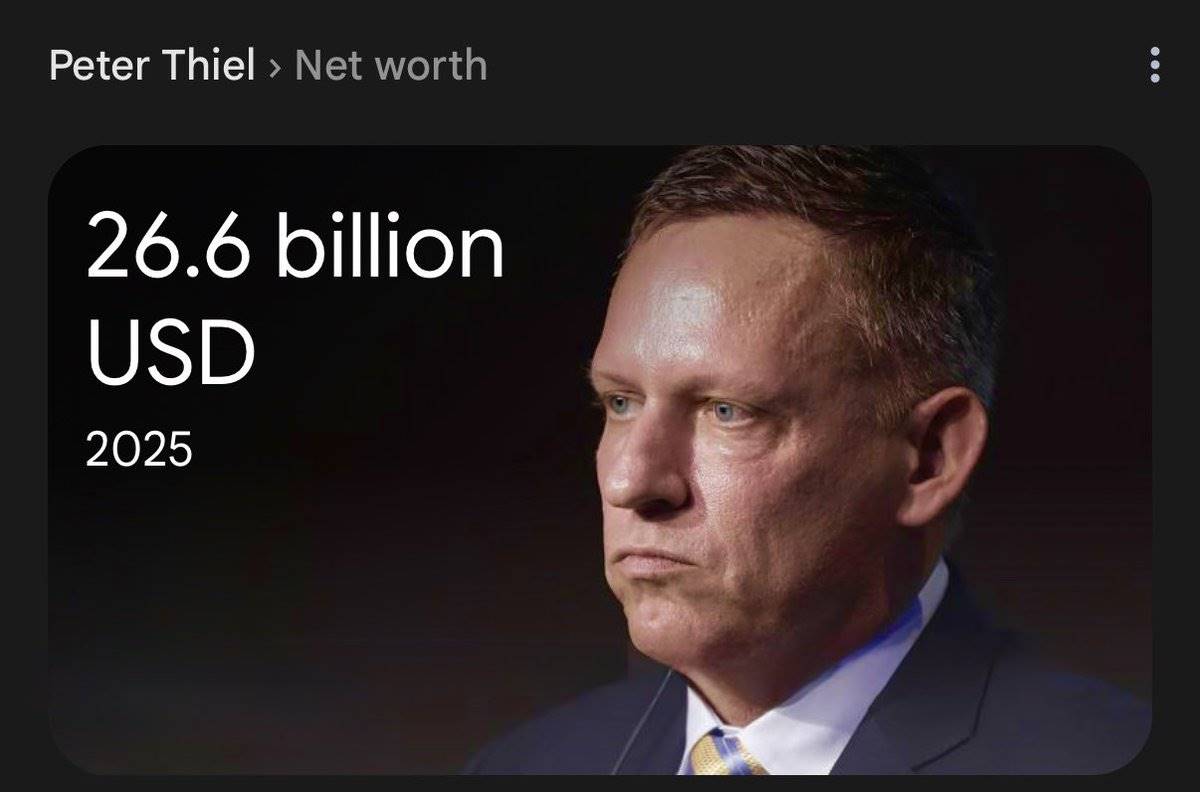
Today, 57-year-old Peter Thiel holds a fortune of $26.6 billion.
His company Palantir has a market cap of $400 billion; his cryptocurrency investments have earned him $2.5 billion. The recently trending stock BMNR and the publicly listed crypto exchange Bullish both carry his backing;
And J.D. Vance, whom he mentored, has become Vice President of the United States.
Yet in Silicon Valley, he remains an outlier:
A billionaire who openly supported Trump, a tech entrepreneur who served intelligence agencies, an investor who sells when everyone else buys.
This is a story about how contrarian thinking creates wealth, and how patience transforms into power.
PayPal's Power Struggle
In December 1998, 31-year-old Peter Thiel and 23-year-old Max Levchin founded Confinity in Palo Alto. Around the same time, Elon Musk launched X.com.
The two companies were locked in a cash-burning race to dominate internet payments. Three months later, they merged to form PayPal, with Musk as CEO.
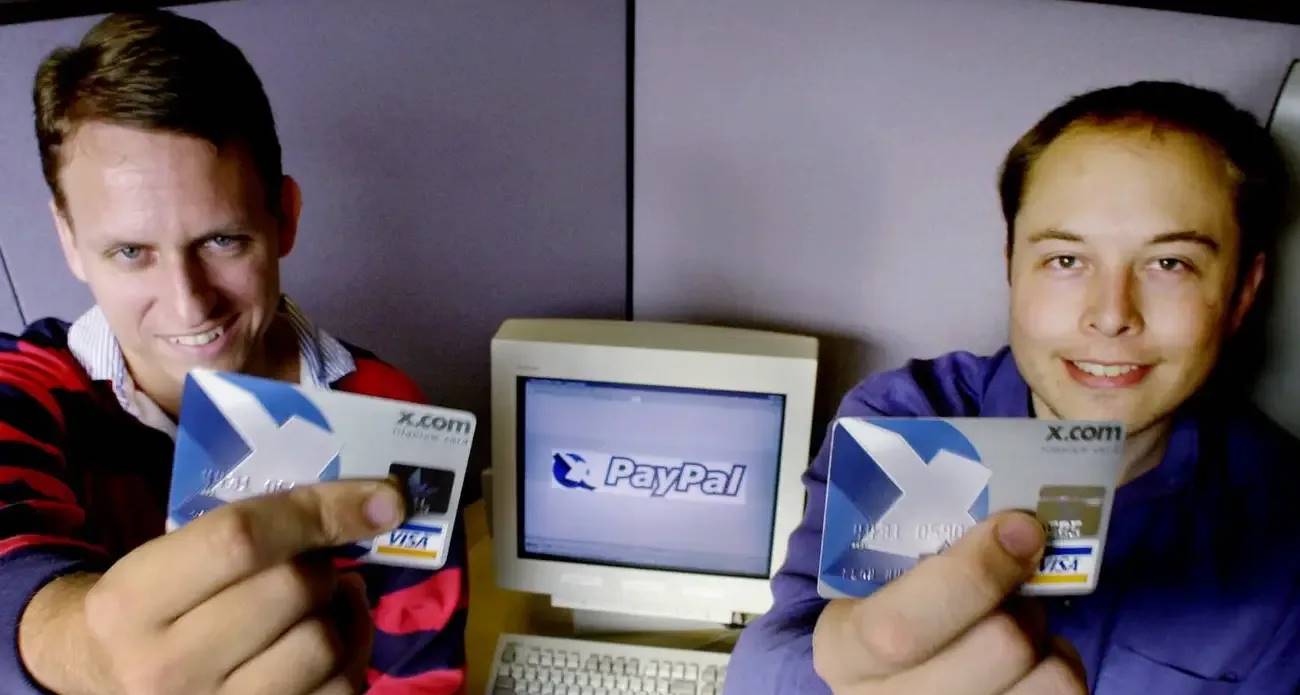
But the honeymoon lasted only six months. In September 2000, while Musk was on vacation in Australia, the board voted to remove him as CEO, installing Thiel in his place.
The official reason was technical disagreement—Musk wanted to migrate the system from Unix to Windows. But the deeper cause was a fundamental divergence in vision: Musk aimed to build an all-in-one financial services platform, while Thiel wanted to focus solely on payments.
This became one of Silicon Valley’s most famous corporate coups. Thiel executed it masterfully—striking while Musk was absent, securing early support from PayPal’s tech lead Max Levchin, and masking a power struggle under technical justification.
After the leadership change, PayPal focused on its core payment business, quickly turned profitable, and was sold to eBay in 2002 for $1.5 billion.
As the largest individual shareholder, Thiel cashed out $55 million—a sum that became his first major capital for entering the investment world.
Investing in Former Colleagues
Over twenty years later, when people discuss Silicon Valley’s power structure, one fact stands out: many of the most influential figures once worked together in the same office.
And that office belonged to Peter Thiel.
In October 2002, after the eBay acquisition, Thiel used his $55 million from PayPal to launch the venture fund Founders Fund.
His first investments were almost exclusively former PayPal colleagues—a group later dubbed the “PayPal Mafia”:
When Reid Hoffman started LinkedIn, Thiel was the first outside investor, putting in $500,000; when Chad Hurley and Steve Chen began working on YouTube, Thiel participated in early funding; when Jeremy Stoppelman wanted to launch Yelp, Thiel provided the first seed money…
The most interesting case is his relationship with Musk. After the 2000 “coup,” they appeared to go separate ways.
But in 2008, when SpaceX faced bankruptcy after its fourth failed launch, Founders Fund led a $20 million investment round. That lifeline carried SpaceX until it secured a NASA contract.
Investing in his ex-colleagues paid off handsomely. YouTube was acquired by Google for $1.65 billion, LinkedIn peaked at over $26 billion in market value, and SpaceX is now valued at over $200 billion.
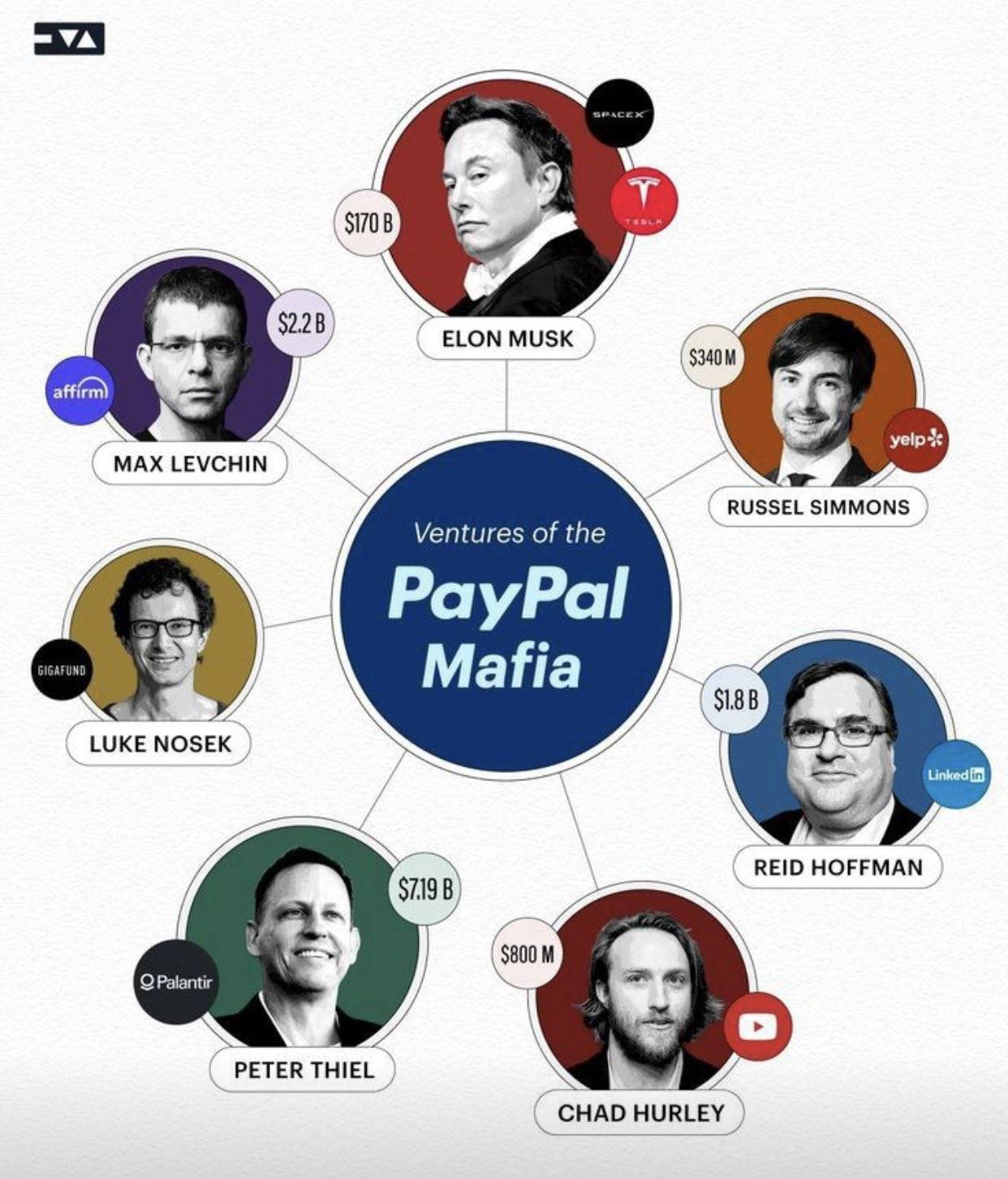
But Thiel seemed less interested in profits—over time, the “PayPal Mafia” came to dominate half of Silicon Valley.
Reid Hoffman became the valley’s “super connector,” through whom nearly every founder sought introductions; David Sacks transitioned from entrepreneur to podcast host, shaping tech discourse via his All-In podcast and becoming the White House’s crypto czar. Musk needs no introduction—his ventures from Tesla to SpaceX to X have defined technological ambition in this era.
Even more remarkable is the network’s loyalty beyond business.
In 2016, when Thiel was isolated across Silicon Valley for supporting Trump, members of the PayPal Mafia stayed silent. They may not have agreed with his choice, but none turned against him.
By 2024, when Thiel pushed J.D. Vance to run for vice president, David Sacks not only donated but also publicly endorsed him on his podcast.
Each of Peter Thiel’s investments added a node to his power network. Every successful exit strengthened that network further.
Betting on Facebook, Selling at IPO
In summer 2004, a 20-year-old Harvard dropout named Zuckerberg approached Thiel.
Facebook had just crossed 1 million users. The social networking space was crowded—Friendster had 7 million users, MySpace had 5 million.
Mainstream Silicon Valley investors dismissed Facebook. But Thiel asked Zuckerberg one question:
“How is Facebook different from MySpace?”
“On Facebook, you must use your real name,” Zuckerberg replied.
That seemingly simple distinction shaped Thiel’s decision. He later wrote in *Zero to One*: Real identity means trust, and trust enables genuine social relationships—not just virtual follower counts.
In September 2004, Thiel personally invested $500,000 in Facebook for a 10.2% stake. The terms were shockingly simple—no board seat, no liquidation preference, not even anti-dilution protection.
History proved him right. In 2005, when Accel Partners invested at a $127 million valuation, other VCs realized they’d missed the boat. By 2007, Microsoft invested at $15 billion, and Facebook had become a phenomenon.
In May 2012, Facebook went public at $38 per share. Most early investors held on, but Thiel sold 16.8 million shares on IPO day, cashing out around $640 million. Over the following months, he continued selling, turning his initial $500,000 into over $1 billion—more than 2,000x return.
Facebook’s stock later climbed above $300, suggesting Thiel didn’t maximize gains. But shortly after his exit, in 2014, Bitcoin crashed to $400.
One side: a star stock everyone loved. The other: an emerging market in panic. Once again, Thiel chose the latter.
Bottom Fishing and Top Timing: Building a Crypto Empire
In 2014, Bitcoin traded at $400, barely recovering from the Mt. Gox collapse.
The entire crypto market cap was under $5 billion. At that moment, Peter Thiel’s Founders Fund quietly bought $15–20 million worth of Bitcoin at an average price below $500. The amount was so small it didn’t even appear in quarterly fund reports.
From 2014 to 2022, Founders Fund never sold a single Bitcoin—instead, they doubled down in both 2017 and 2020.
In March 2022, while Bitcoin still hovered around $42,000, Founders Fund suddenly dumped its entire holdings.
According to a later *Financial Times* report, this exit netted $1.8 billion. Two months later, Terra/Luna collapsed, triggering crypto’s worst bear market. By year-end, Bitcoin had fallen to $15,500.
Ironically, just one month after this massive sell-off, in April, Thiel delivered a passionate speech at the Miami Bitcoin Conference, calling Bitcoin “the future of financial freedom.” He even compiled an “enemies list,” labeling Warren Buffett “Socratic grandpa from Omaha” for opposing Bitcoin.
The audience cheered wildly, unaware their “evangelist” had just executed the largest crypto asset divestment in history.
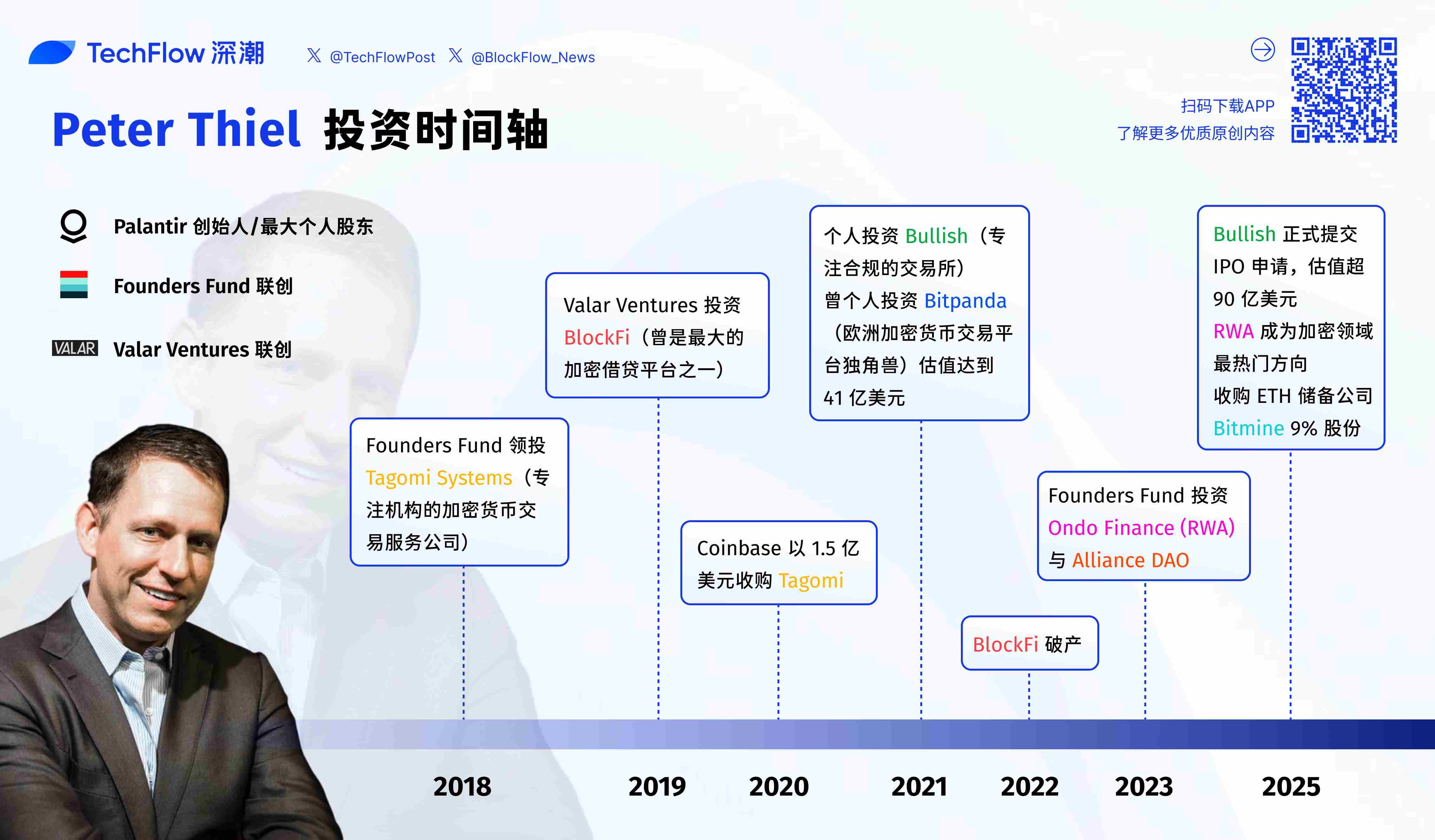
But Peter Thiel is more than a shrewd crypto trader. While buying and selling Bitcoin, he systematically invested across the entire crypto ecosystem:
- Trading Infrastructure: In 2018, Founders Fund led a round in Tagomi Systems, a firm providing crypto trading services for institutional investors. Tagomi solved slippage by aggregating liquidity across exchanges. In 2020, Coinbase acquired Tagomi for $150 million.
In 2021, Thiel personally invested in Bullish, an institutional-grade crypto exchange operated by Block.one. Bullish stood out by pursuing compliance early, securing licenses across multiple jurisdictions. In July 2025, Bullish filed for IPO with a valuation exceeding $9 billion.
- Lending & DeFi: Valar Ventures (another Thiel fund) invested in BlockFi in 2019, once among the largest crypto lending platforms—though BlockFi ultimately collapsed in 2022.
In 2023, during market despair, Founders Fund backed Ondo Finance in the then-ignored RWA sector, which by 2025 became one of crypto’s hottest areas.
- Project Incubator: In October 2023, Founders Fund invested in Alliance DAO, acquiring a minority stake and offering support to its portfolio companies. Alliance DAO is now one of crypto’s largest incubators, having backed breakout projects like Pump.fun.
- European Expansion: Leveraging German connections, Thiel invested in Bitpanda, Austria’s largest crypto trading platform. It reached a $4.1 billion valuation in 2021, becoming Europe’s most valuable crypto unicorn.
In summer 2023, Bitcoin lingered below $30,000. FTX’s bankruptcy trial was ongoing, the SEC intensified crackdowns, and mainstream media declared “crypto is dead.”
At the moment everyone was fleeing, Founders Fund returned.
According to Reuters’ February 2024 report, the fund gradually purchased $200 million worth of Bitcoin and Ethereum in late summer to early fall 2023, split evenly.
Once again, Thiel’s timing was impeccable.
In January 2024, the SEC approved spot Bitcoin ETFs. Within months, over $50 billion in institutional capital flooded in. By August 2025, Bitcoin surpassed $117,000, Ethereum exceeded $4,000. Founders Fund’s $200 million investment had gained over 100% on paper.
Then on July 16 this year, Bitmine announced that Peter Thiel’s Founders Fund had acquired a 9.1% stake.
Looking back at every move Thiel made in crypto—exiting at tops, investing at bottoms, strategic sector bets—most landed at perfect timing. Publicly, he’s Bitcoin’s evangelist; in practice, he’s a disciplined contrarian.
As of August 2025, estimates suggest Thiel has earned over $2.5 billion from crypto: $1.8 billion from the 2022 top exit, $500 million from early project exits, and $200 million from the 2023 bottom buy.
This doesn’t include his stakes in Bullish, Bitpanda, or the latest BMNR investment.
Tying to America’s Destiny
Besides investing in the PayPal Mafia, Thiel actually built his own company after leaving PayPal in 2003—Palantir, a firm developing intelligence systems for governments and the military.
What was Silicon Valley focused on back then? Social networks, e-commerce, search engines. Thiel chose to do data analysis for the CIA.
Palantir’s first $2 million came from the CIA’s venture arm, In-Q-Tel. Thiel himself invested $30 million. The company’s name comes from the “palantír” in *The Lord of the Rings*—a magical orb that sees all.
For the next seven years, there was almost no public coverage. It wasn’t until the war in Afghanistan in 2010 and the killing of Bin Laden in 2011 that the media learned Palantir’s intelligence system played a critical role.
The client list reads like a spy movie cast: CIA, FBI, NSA, Pentagon. But in freedom-loving Silicon Valley, Palantir became a pariah. Protesters demonstrated outside its offices, calling it an “evil company.” Recruitment suffered, commercialization repeatedly failed.
When it went public in 2020, Wall Street wasn’t impressed. Years of losses, heavy reliance on government contracts. Its stock fell from $10 to as low as $5.92.
After ChatGPT exploded in 2023, Palantir launched its AIP platform, combining 20 years of intelligence analytics with popular large language models for enterprise workflow management. When Google pulled out of the Pentagon’s AI project due to employee protests, Palantir stepped in.
Then defense orders surged: in 2024, the U.S. Army signed a 10-year, $10 billion contract; in April 2025, NATO officially adopted its Maven Smart System.
Meanwhile, the stock rocketed from $6 in early 2023 to $187 in August 2025, pushing its market cap to $440 billion—surpassing the combined value of America’s three largest traditional defense contractors.
( Further reading: The Birth of America’s Most Expensive National Destiny Stock in 5 Years, 20x Return)
Palantir’s true value isn’t in its stock price. Its systems connect every node of American power: Homeland Security uses it to track immigration, the SEC uses it to investigate insider trading, the IRS uses it for tax audits.
After Thiel-backed J.D. Vance became Vice President, Palantir’s government contracts noticeably increased. Thiel influences policy through Vance, participates in power through Palantir, and controls Silicon Valley through the PayPal Mafia. The synergy of this power network has only just begun.
From a $30 million initial investment in 2003 to a $440 billion market cap today, Palantir has given Thiel not just wealth—but a golden ticket to Washington’s inner circle.
Choosing to work for the CIA in 2003 seemed like the most unthinkable move in Silicon Valley. Today, it looks like Thiel’s smartest bet.
Silicon Valley’s Kingmaker, Ten Years Late But Not Too Late
In August 2025, sitting in the second-highest office in America is a man who four years ago called Trump “Hitler.”
J.D. Vance, 39, one of the youngest Vice Presidents in U.S. history.
From Yale Law School to Silicon Valley, from bestselling author to Senator to Vice President—this improbable journey was propelled at every step by Peter Thiel.
In 2011, Thiel was invited to speak at Yale Law School, criticizing elite institutions for obsessing over peer competition and students blindly chasing prestige. Sitting in the audience, J.D. Vance was deeply moved and met Thiel afterward.
Years later, Vance described the talk as “the most important moment at Yale”—a moment that changed his life’s trajectory.
After graduating from Yale in 2013, Vance joined top law firm Sidley Austin. But just two years later, he quit. His next stop: Circuit Therapeutics, a biotech startup in Silicon Valley, as Director of Operations.
For a lawyer with no tech background, this leap was enormous. Circuit’s CEO Frederic Moll later admitted to the press that hiring Vance was partly due to Peter Thiel’s recommendation.
Thiel’s venture fund had previously invested in Moll’s earlier company—Silicon Valley’s version of a favor. In 2016, Vance’s career took another turn: he joined Peter Thiel’s venture fund Mithril Capital as a partner.
That same July, his memoir *Hillbilly Elegy* was published, quickly topping the *New York Times* bestseller list. Suddenly, an obscure venture partner became a nationally recognized author and cultural commentator.
According to a 2024 *Wall Street Journal* report, former Mithril colleagues recalled seeing Vance rarely in the office during his tenure—he spent most of his time traveling the country for book signings, speeches, and interviews.
But this seemed exactly what Thiel wanted: not to train an investment manager, but to create a public intellectual.
In March 2017, Vance left Mithril, but he never left Thiel’s orbit. He first joined AOL co-founder Steve Case’s Revolution fund, then in 2019 launched his own fund, Narya Capital.
Narya’s investor list tells the story: Peter Thiel led the round, with participation from a16z co-founder Marc Andreessen and former Google CEO Eric Schmidt.
In 2021, Vance announced his Senate run for Ohio. According to public FEC records, Thiel donated $15 million to Protect Ohio Values, a super PAC supporting Vance—the largest single donation ever in a Senate race.
It wasn’t just Thiel. His friend David Sacks donated $1 million, followed by others across Silicon Valley. Ultimately, tech industry donations made up the bulk of Vance’s campaign funds. An Ohio Senate seat became a Silicon Valley capital investment.
From winning the Senate seat in November 2022 to being nominated as Vice Presidential candidate in July 2024, Vance did it in under two years—an extremely rare speed in American political history.
Multiple media outlets reported that during Trump’s VP selection process, voices from Silicon Valley were unusually unified. Not just Thiel, but Elon Musk, David Sacks, and others all recommended Vance.
These tech billionaires weren’t just backing a vice president—they were installing their representative in Washington.
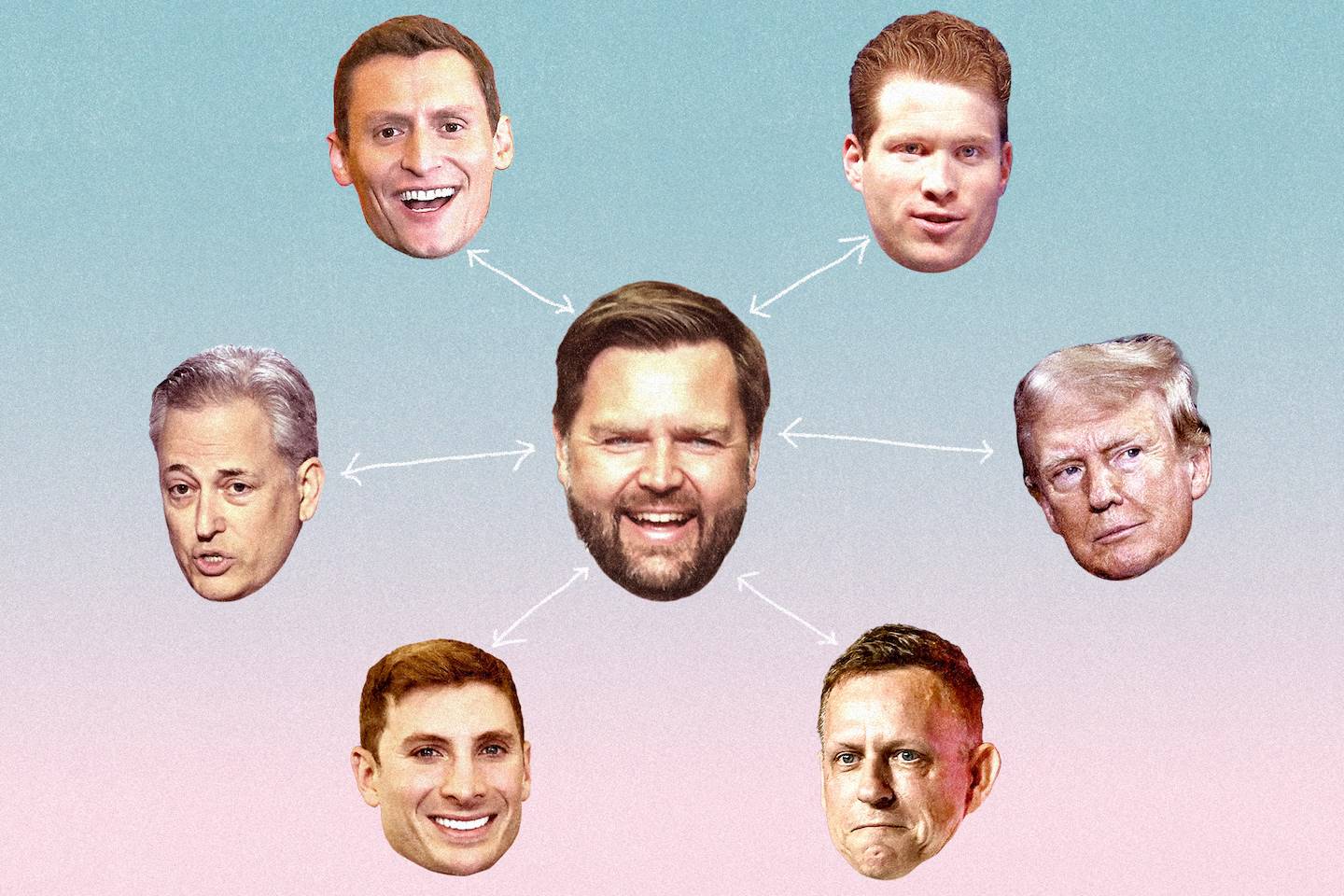
JD Vance’s Silicon Valley Network|Image source: Washington Post
Clockwise from top-left: Blake Masters, Joe Lonsdale, Peter Thiel, Jacob Helberg, David Sacks
After Vance took office, policies began to shift.
The federal government ramped up procurement of AI and data analytics tools, with Peter Thiel’s Palantir as a primary beneficiary. Simultaneously, the U.S. government’s stance on crypto regulation softened significantly.
These changes may not be directly attributed to Thiel’s influence, but the timing is striking.
The Thiel-Vance relationship may represent a new model of political influence. Unlike traditional lobbying or campaign donations, this resembles “venture-style cultivation”: identifying promising talent early, providing capital and resources, helping them gain power, and achieving long-term impact through ideological alignment.
Vance, at 39, may have decades of political career ahead. This means Thiel’s influence extends far beyond any single election cycle.
"What important truth do very few people agree with you on?"
Perhaps for Peter Thiel, the answer has always been simple: Power never belongs to those in the spotlight.
Join TechFlow official community to stay tuned
Telegram:https://t.me/TechFlowDaily
X (Twitter):https://x.com/TechFlowPost
X (Twitter) EN:https://x.com/BlockFlow_News
 深潮TechFlow