








Project popularity ≠ exchange listing ticket? Discussing the metrics exchanges truly care about from Twitter Score
TechFlow Selected TechFlow Selected
Project popularity ≠ exchange listing ticket? Discussing the metrics exchanges truly care about from Twitter Score
The value of TwitterScore lies in its attempt to quantify the "quality of social capital," which is precisely one of the key dimensions exchanges use to assess a project's community health, influence, and potential market performance.
 Navigating Web3 tides with focused insights
Author: Cube Labs
During the final push for exchange listings, many projects focus on inflating Twitter metrics, gaining followers and boosting engagement. But does this actually increase their chances of getting listed? Aggressive follower growth and superficial interactions are merely the minimum entry threshold, far from being decisive factors in an exchange's evaluation process.
The value of TwitterScore lies in its attempt to quantify the "quality of social capital," which is precisely one of the key dimensions exchanges use to assess a project’s community health, influence, and potential market performance. Drawing from our recent case studies, let's examine how projects perform within the Web3 social discourse landscape and identify the real criteria that matter to exchanges.
TwitterScore vs. Other Evaluation Platforms:
TwitterScore is an influence scoring tool designed specifically for crypto projects’ Twitter (now X) accounts. Founded by a Russian team, it analyzes account content and follower weight through proprietary algorithms to provide an objective, quantifiable social media score ranging from 0–1000 (with 1000 as the maximum), helping users measure reputation and reach within the Web3 community.
The official team has recently launched API services and paid plans (from Basic to Enterprise), supporting bulk queries, historical tracking, and segmented follower analysis. Within the industry, platforms like Gitcoin have adopted TwitterScore to evaluate Web3 projects, reflecting growing recognition of digital credibility. More and more mainstream exchange listing teams now treat this metric as a critical benchmark when assessing new projects.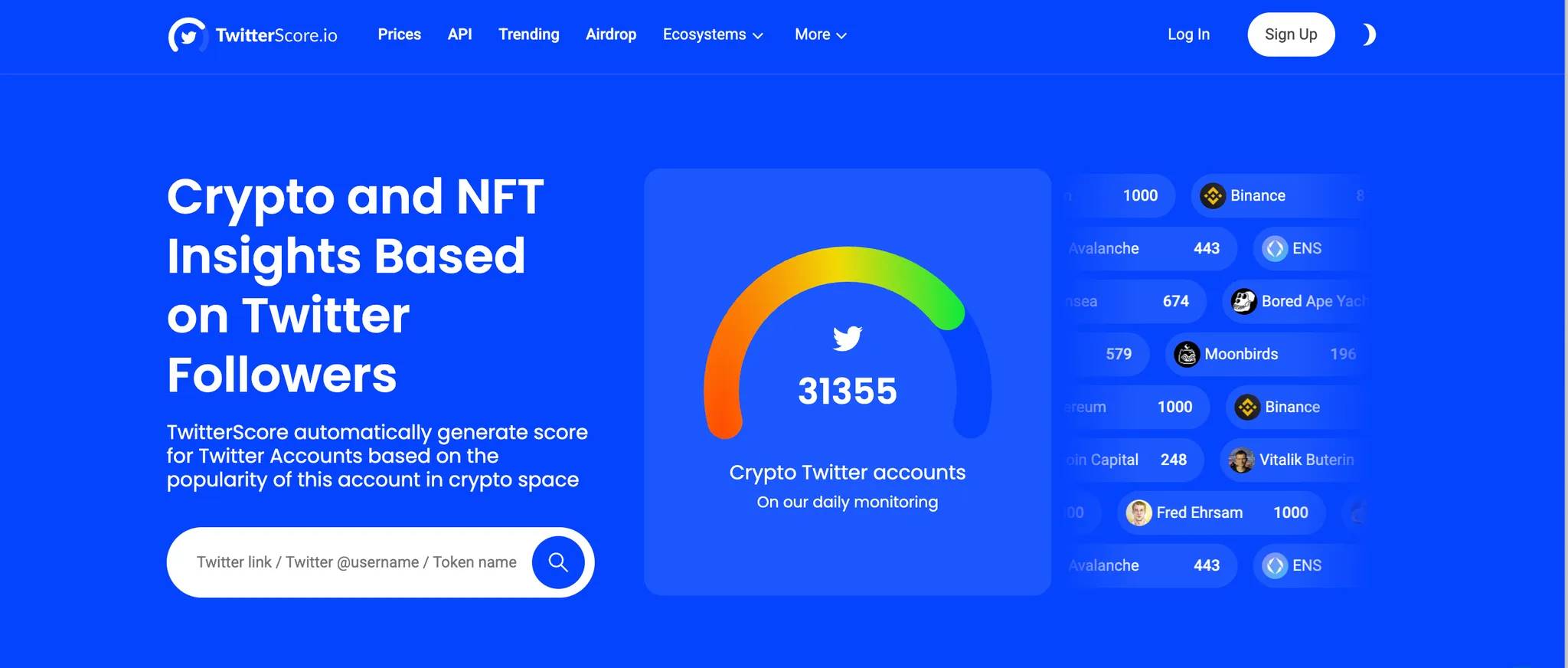
Beyond TwitterScore as a general热度 indicator, several other platforms specialize in different dimensions of Web3 social influence. These tools, powered by differentiated data models, offer project teams, investors, and community managers more granular analytical capabilities.
TweetsCount
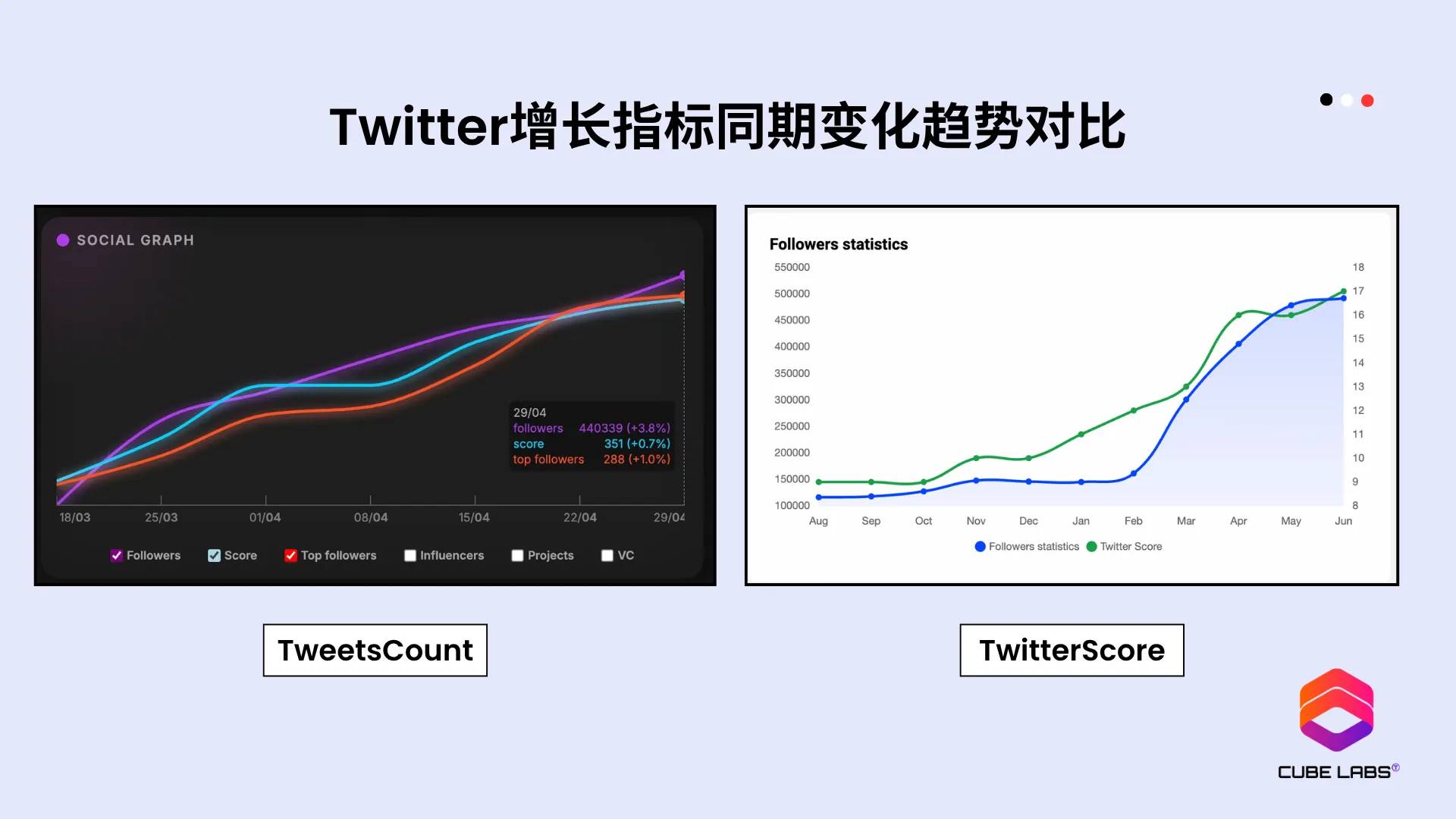
TweetsCount uses a scoring system very similar to TwitterScore but adjusts algorithmic weights slightly, making its scores more sensitive to changes. It often serves as a complementary data reference. Additionally, it features bot and VC feed detection, enabling quick identification of scams during early-stage project due diligence.
Comparing the score growth of a single project on both TwitterScore and TweetsCount over the same period clearly shows that TweetsCount correlates more strongly with natural follower growth—especially high-quality followers—while TwitterScore shows weaker correlation with organic growth but higher sensitivity to high-quality follower weighting. Both, however, reflect qualitative shifts in Twitter social activity over time.
Kaito
Kaito introduces the concept of “Smart Engagement,” measuring not just what you post, but who engages with you. If your content is retweeted, commented on, or liked by high-caliber individuals in the industry—such as founders or investors—your score increases significantly. For Web3 projects, this means the “network value” of an account is now being quantified.
RootData
If you want to know whether a project founder is an “active evangelist,” RootData provides answers. By integrating a Web3 funding database, it offers influence scores alongside fundraising data for founders, VCs, and investment firms—ideal for sector research and comparing founder influence.
Below is a systematic breakdown of each platform’s evaluation focus and applicable scenarios:

Deep Dive into the Three Key Factors: The Exchange Perspective
What factors drive changes in TwitterScore?

We also consulted directly with the TwitterScore team and learned the ultimate logic behind score increases:

In short: the higher the quality of your followers, the higher your score!
Yet upon closer inspection of the three core influencing factors of TwitterScore, there's considerable nuance. From another angle, these very dimensions reflect exactly what listing teams scrutinize when evaluating projects—but they look much deeper than most imagine:

- Follower Quality (Top Followers):
- Follows from Tier 1/Tier 2 KOLs, VCs, founders, major media outlets, other ecosystem projects—and especially official exchange accounts—serve as strong trust signals.
- How do exchanges view this? They scan your follower list. A large number of inactive accounts, bots, or low-influence profiles unrelated to your project’s domain will significantly hurt your score. Exchanges seek authentic, relevant audiences with decision-making power or strong propagation ability. These individuals represent potential core users, advocates, and liquidity providers after launch. Their attention indicates initial validation from “smart money” and key opinion leaders within the space.
- Trending Topics:
- Effectively participating in—or even leading—trends demonstrates that a project stays aligned with industry momentum, possesses narrative relevance, and exhibits market awareness. This directly impacts a project’s ability to capture market sentiment, trading volume, and visibility post-listing.
- How do exchanges view this? Exchanges prioritize whether a project naturally and insightfully integrates into dominant narratives (e.g., Layer2, RWA, DePIN, Meme culture), rather than bluntly chasing trends. This reflects the project’s strategic positioning, community management, and content creation capabilities. Even more valuable is a project’s ability to generate its own trends—through successful event campaigns or major partnership announcements—which reveals initiative and real market influence.
- Tweet Engagement:
-
Engagement (views, likes, comments, quote tweets) is a direct reflection of community vitality, stickiness, and genuine interest. A high engagement rate relative to follower count is far more persuasive than raw follower numbers.
-
How do exchanges view this? They deeply analyze the “quality” of engagement:
High-quality engagement = a healthy, loyal, and promising user base—the most valuable community asset exchanges seek, directly impacting post-listing trading activity.
- Authenticity: Are comments generic spam like “Nice Project” or “LFG,” or are they thoughtful discussions, questions, or constructive feedback? Are retweets coming from real users or obvious bot armies?
- Depth & Breadth: Is engagement concentrated among a few big accounts, or distributed across a broad base of community members? Does it spark deeper conversations (e.g., threads stemming from quote tweets)?
- Sentiment: Is the community mood positive and excited, or filled with skepticism and FUD?
- Retention: Do newly acquired followers—especially high-quality ones—continue engaging over time?
-
How to Grow: Practical Strategies from Real Campaigns
Strategies to improve TwitterScore are essentially the same as building a “high-quality project community” in the eyes of exchanges. Based on a recent DePIN case we handled, here’s how our marketing agency executed targeted breakthroughs across the three dimensions. This isn’t just a TwitterScore growth playbook—it’s a methodology any project can adopt to boost market attention and attract better users:

1. Systematically Attract and Retain High-Quality Followers
-
Cast a wide net across comparable projects
-
In practice, we collected follower data from top-tier DePIN projects using TwitterScore’s category filters, compiling lists of Tier 1 & Tier 2 entities: VC firms and partners, KOLs/influencers, renowned founders, influential journalists/media handles, key players in target ecosystems, and official exchange accounts or core team members.

We prioritized filtering Tier 1 high-score followers and tagged their respective ecosystems and scores (this feature became paid starting May). Below is a sample of the compiled reference data:

-
-
Attract through professional content
- Consistently producing high-quality, original, insightful content—technical deep dives, industry trends, thought leadership—alongside regular updates on milestones, tech progress, and clear roadmaps forms the foundation for attracting institutional followers and discerning audiences. We helped break down existing research reports and technical developments into digestible formats, delivering them via video clips or Twitter threads.
-
Proactively build genuine connections
-
Before reaching out, clearly define your value proposition: What do you offer? Exclusive insights? Deep collaboration opportunities? Valuable market intelligence? Co-creation content (e.g., AMA invites, Twitter Spaces)? Initial outreach should clearly communicate these benefits.

-
Common outreach methods include:
- Twitter replies: Leave insightful, non-promotional comments on target accounts’ posts to gain visibility.
- Direct DMs: Clearly state the value you bring; best sent from an official account or a founder’s profile with solid follower count.
- Community participation: Join target KOLs’ or projects’ Discord/Telegram servers and actively contribute to discussions to establish presence.
-
2. Monitor and Proactively Create Trends
-
In the information-saturated Web3 world, riding trends is crucial for breaking out and increasing visibility. Trending topics bring instant attention and are essential for breakout moments. Projects should:
- Respond quickly to trends while aligning them with core project value.
- Design clear conversion funnels to channel traffic into private communities, turning “heat” into “stickiness.”
- Maintain consistent visibility with standout moments over time to reinforce brand recall.
In the memecoin space, this “traffic harvesting” tactic is especially common: projects latch onto short-term trends with fast, fun, high-volatility content, maximizing attention economics. But long-term success requires balancing viral moments with sustained development—true business resilience.
-
Case Study: Leveraging the “Blue Check Mutual Follow” Trend for Efficient User Acquisition
In April, following rumors that Twitter would begin prioritizing blue-check follower quality, users started sharing their “% of blue-check followers,” causing #蓝标互关 to go viral and sparking a wave of mutual follows among verified users.

This mutual-follow trend broke through certain information silos, allowing many KOLs and blue-check users to gain significant genuine engagement in a short period, while also boosting their scores on platforms like Kaito. Such posts continue to generate substantial views and interaction today, becoming a preferred growth path for many verified users.
Back to our real-world example: how did we leverage Twitter’s native traffic and social dynamics to ride this blue-check wave? We designed a custom “Blue-Check VIP Program” for the project, with the following conversion flow:


The campaign attracted over 500 verified users within days, achieving dual goals of “riding traffic” and “acquiring quality users into private channels.” The core logic behind this strategy:
- Leverage Twitter trends: Tap into the organic traffic of #蓝标互关;
- Efficient private channel funneling: Discord members quickly showed active engagement intent;
- User retention and activation: Build a core community group, enhancing loyalty and alignment with project values.
3. Enhance the Quality and Depth of Tweet Engagement
-
High-quality engagement is a vital indicator of a project’s vitality and community loyalty—not just likes and retweets, but meaningful dialogue, authentic resonance, and co-created value. To boost engagement, the key lies in great content, genuine communication, and strong data support—aiming to cultivate an active, insightful, and self-propagating community.
-
Our engagement enhancement strategy included:
- Deploy Twitter raiders: Organize small groups of real users to actively shill project tweets and discussions with passionate, reasoned arguments, sparking organic hype.
- Activate community chatters: Pre-coordinate active members in Discord/Telegram to lead deep comments, drive traffic, and guide new users during Twitter events or tweet drops, seamlessly bridging public and private engagement.
- Leverage video assets: Replace lengthy text with 15–30 second videos showcasing product strengths and updates. In practice, we distilled key insights from the project’s Messari report into a 1-minute engaging video, greatly improving readability and comprehension for followers.
Below are the engagement growth results we achieved for a project within two months:

Conclusion
In practice, we’ve observed that while the current TwitterScore system offers some reference value, it suffers from notable lag and inaccuracies. For instance, some accounts show clear shifts in follower composition and engagement levels, yet their scores remain unchanged. In certain cases, manual syncs or waiting for platform refreshes are required to reflect updated social performance.
This implies risks in treating TwitterScore as the sole metric. Its scoring mechanism lacks full transparency, with ambiguous weighting in areas like follower quality and engagement frequency, potentially leading to deviations from actual social performance. Especially during intense marketing phases with high user mobility, score delays or distortions can mislead external observers, triggering “score anxiety” or operational misjudgments.
In reality, the score is just a tool—not the goal itself. What truly matters is the underlying reality it represents: authentic community activity, continuous influx of quality users, organic topic diffusion, and accumulated emotional alignment. When users voluntarily engage and share without incentives, and content spreads organically within niche circles, that’s when a project has genuinely established its presence on social layers. What exchanges and project teams should truly care about are the deeper indicators hidden behind TwitterScore’s components:
- Community Quality: Are core users precise, loyal, and influential? ➡️ Examine Top Followers composition & depth of interaction
- Market Sensitivity & Influence: Can the project seize and shape market narratives? ➡️ Evaluate effectiveness in trend participation/creation
- Community Health & Activity: Is the community authentic, enthusiastic, and constructive? ➡️ Assess engagement quality and sentiment
- Project Professionalism & Trustworthiness: Does it demonstrate execution capability, transparency, and long-term value? ➡️ Consider all factors, especially content quality and connections with high-caliber entities
Therefore, projects should treat TwitterScore as a valuable diagnostic tool and directional guide—not the end goal. In the crypto world, quality always cuts through the noise and earns trust. Investing resources in building authentic industry relationships, creating valuable content, and nurturing an active, high-quality community is the true path to improving TwitterScore—and ultimately securing that precious “listing ticket” from top exchanges.
Join TechFlow official community to stay tuned
Telegram:https://t.me/TechFlowDaily
X (Twitter):https://x.com/TechFlowPost
X (Twitter) EN:https://x.com/BlockFlow_News
 @cubelabs_web3






