
From DeFi to Meme: A Comprehensive Overview of the Hyperliquid Chain Ecosystem
TechFlow Selected TechFlow Selected
From DeFi to Meme: A Comprehensive Overview of the Hyperliquid Chain Ecosystem
Hyperliquid is a Layer 1 blockchain optimized for high-frequency trading and DeFi applications.
 Navigating Web3 tides with focused insights
Author: Nick Sawinyh
Compiled by: TechFlow
Hyperliquid Chain is a high-performance Layer 1 (L1) blockchain that has rapidly emerged in recent years as a powerful engine within the decentralized finance (DeFi) landscape.
Designed to deliver the speed and efficiency of centralized exchanges while preserving transparency and decentralization inherent to blockchain technology, it is redefining on-chain trading and financial applications.
Its flagship decentralized exchange (DEX), focused on perpetual contracts, combined with the recently launched HyperEVM, has attracted a vibrant ecosystem encompassing DeFi protocols, meme token launch platforms, and AI-driven applications.
In this comprehensive blog post, we will dive deep into the Hyperliquid ecosystem, highlight key projects, and analyze the chain's unique characteristics, potential, and challenges.
What is Hyperliquid?
Hyperliquid is an L1 blockchain optimized for high-frequency trading and DeFi applications. Since its launch in 2023, it operates on a custom consensus algorithm called HyperBFT—derived from the HotStuff protocol—enabling sub-second block finality and supporting throughput of up to 200,000 orders per second. Unlike many decentralized exchanges relying on automated market makers (AMMs), Hyperliquid uses a fully on-chain central limit order book (CLOB) model, offering deep liquidity, low slippage, and a trading experience comparable to centralized exchanges like Binance.
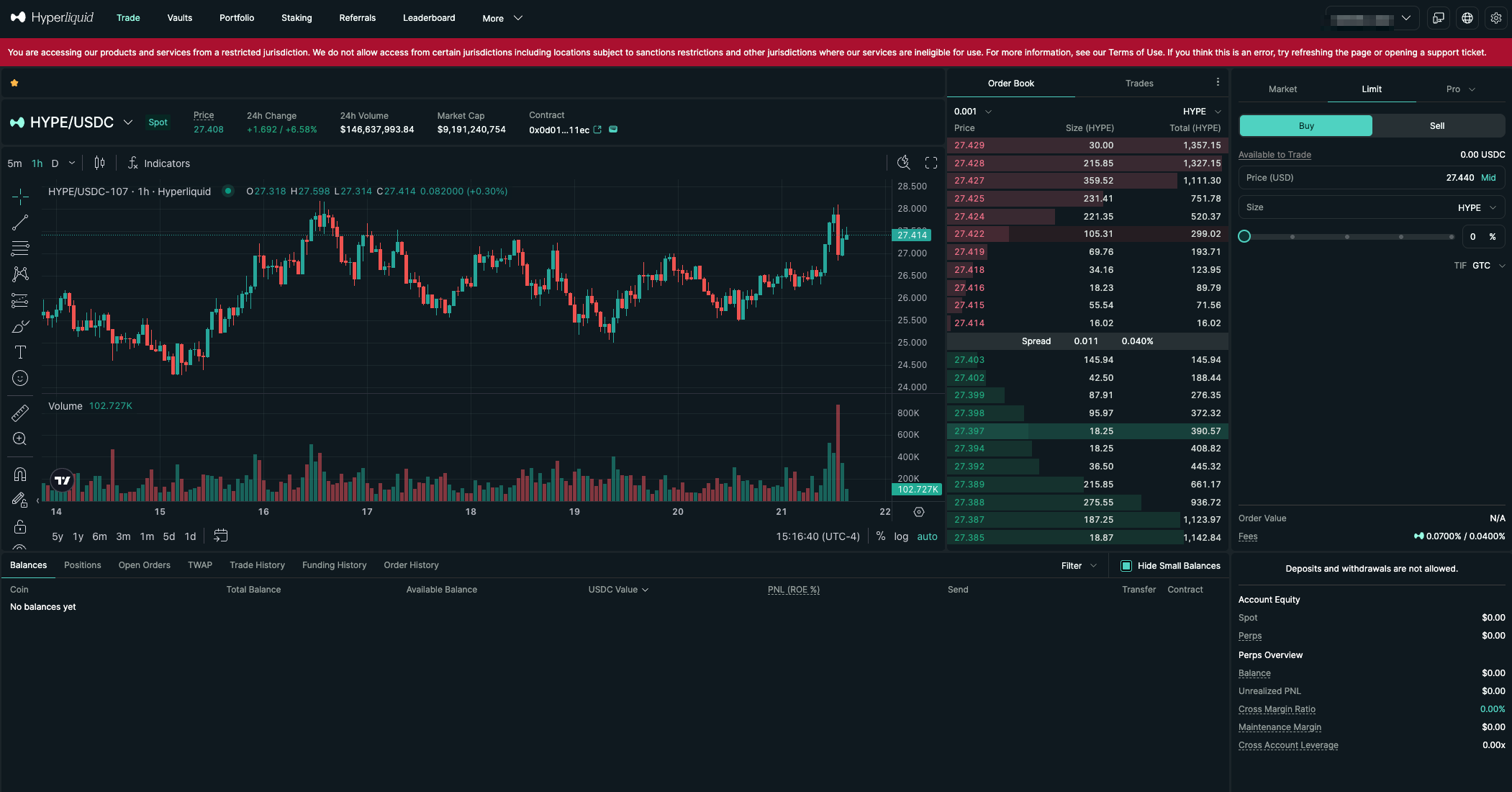
The native token of the Hyperliquid chain, $HYPE, serves as the core utility token powering the ecosystem, used for transaction fees, staking, and governance. In November 2024, Hyperliquid conducted a record-breaking airdrop, distributing 310 million $HYPE tokens—valued at over $1.2 billion—to early users, representing 31% of the total supply. This community-centric strategy, coupled with its self-funded model (rejecting venture capital), has fueled Hyperliquid’s rapid growth. By early 2025, its cumulative trading volume had approached $1 trillion.
The Hyperliquid ecosystem is further enhanced by HyperEVM, an Ethereum Virtual Machine (EVM) execution layer integrated directly into the L1 blockchain. Launched on February 18, 2025, HyperEVM allows developers to deploy Ethereum-compatible smart contracts while leveraging Hyperliquid’s high-speed consensus and native financial infrastructure. This makes Hyperliquid a powerful platform for building advanced DeFi applications, asset tokenization tools, and innovative trading instruments.
Core Features of the Hyperliquid Chain
Before diving into its ecosystem projects, let’s examine the core features that make Hyperliquid attractive to developers and users:
High Performance: The HyperBFT consensus achieves block confirmation times under one second (median latency just 0.2 seconds), supports over 200,000 transactions per second, and is scalable to more than 1 million orders per second.
On-Chain Order Book: Unlike AMM-based DEXs, Hyperliquid’s centralized limit order book (CLOB) ensures efficient price discovery, transparency, and support for advanced order types, including perpetual futures with up to 50x leverage.
HyperEVM: As an EVM execution layer secured by HyperBFT, HyperEVM enables Ethereum-compatible smart contracts to directly interact with Hyperliquid’s native order book and liquidity.
HIP-1 and HIP-2 Standards
HIP-1: Allows projects to link their native tokens to Hyperliquid’s on-chain spot order book, lowering barriers to token issuance.
HIP-2: Provides automated liquidity for new tokens, addressing illiquidity issues and ensuring smooth trading.
Zero Gas Fees: Hyperliquid eliminates gas fees entirely; standard maker fees are capped at 0.01%, and taker fees around 0.035%, making it highly cost-effective for high-frequency traders.
Community-First Model: Hyperliquid allocated 76.2% of $HYPE to the community and accepted no venture capital, emphasizing user participation and fairness.
Vaults Functionality: Users can deposit funds into vaults for copy trading, market-making, or liquidation strategies, sharing profits and losses (P&L) with vault operators.
These robust features provide fertile ground for innovation, enabling diverse projects—from lending protocols to meme token launchpads—to seamlessly integrate into Hyperliquid’s high-performance infrastructure.
Hyperliquid Ecosystem: Key Projects Overview
The Hyperliquid ecosystem is rapidly expanding across DeFi, gaming, NFTs, artificial intelligence, and meme tokens. Below is a classification and analysis of some of the most representative projects based on recent developments and community activity.
DeFi Protocols
Hyperdrive
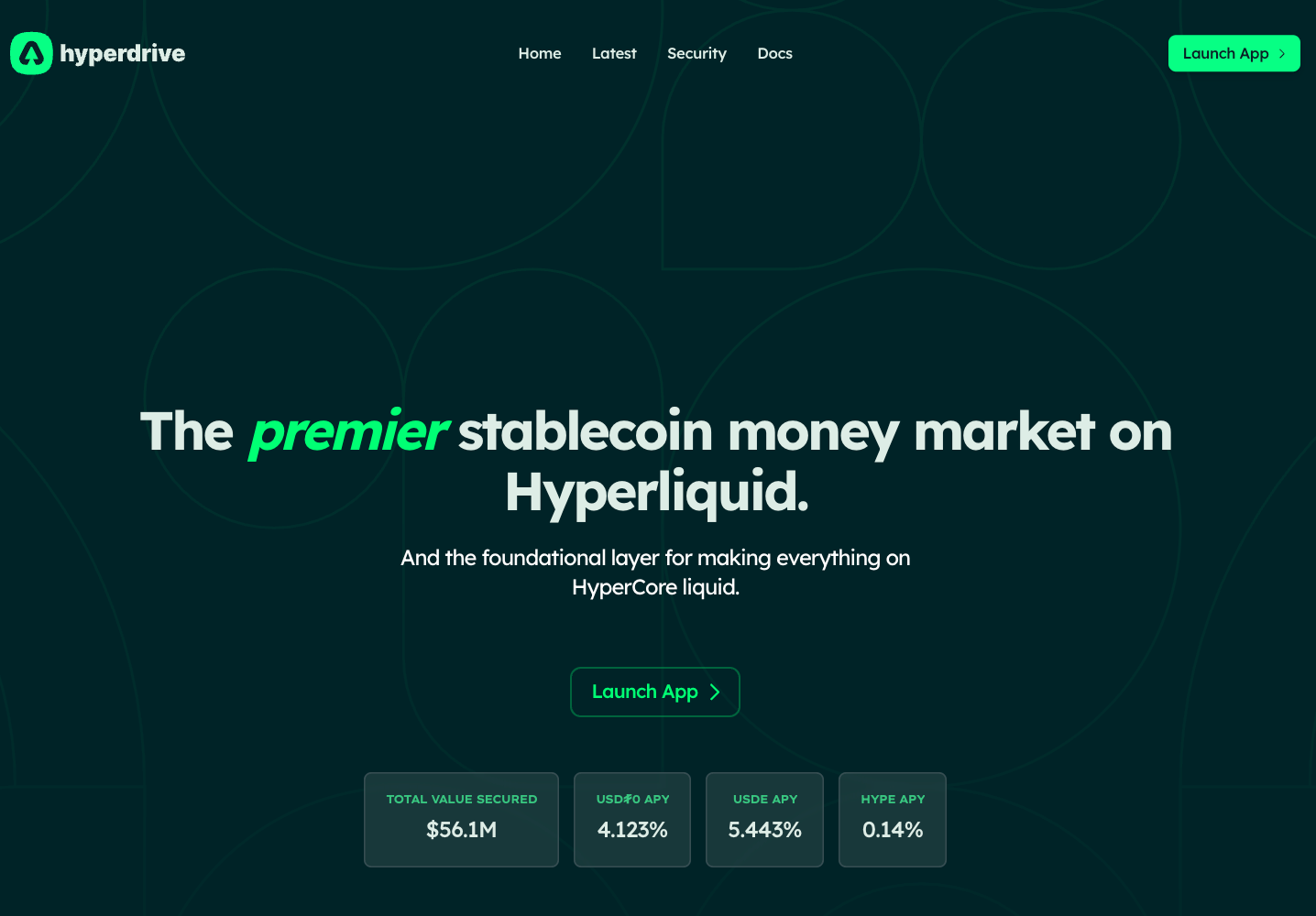
Overview: Hyperdrive is a one-stop DeFi hub on Hyperliquid, offering spot lending markets, liquid staking for $HYPE, and advanced yield strategies. By integrating multiple financial services into a single platform, Hyperdrive aims to simplify users’ DeFi experience.
Key Features:
- Spot lending markets for various assets.
- Liquid staking for $HYPE, allowing users to earn rewards while maintaining liquidity.
- Yield optimization strategies to maximize returns.
Impact: Hyperdrive enhances capital efficiency within the Hyperliquid ecosystem, attracting users seeking passive income and leveraged trading opportunities.
Hyperlend
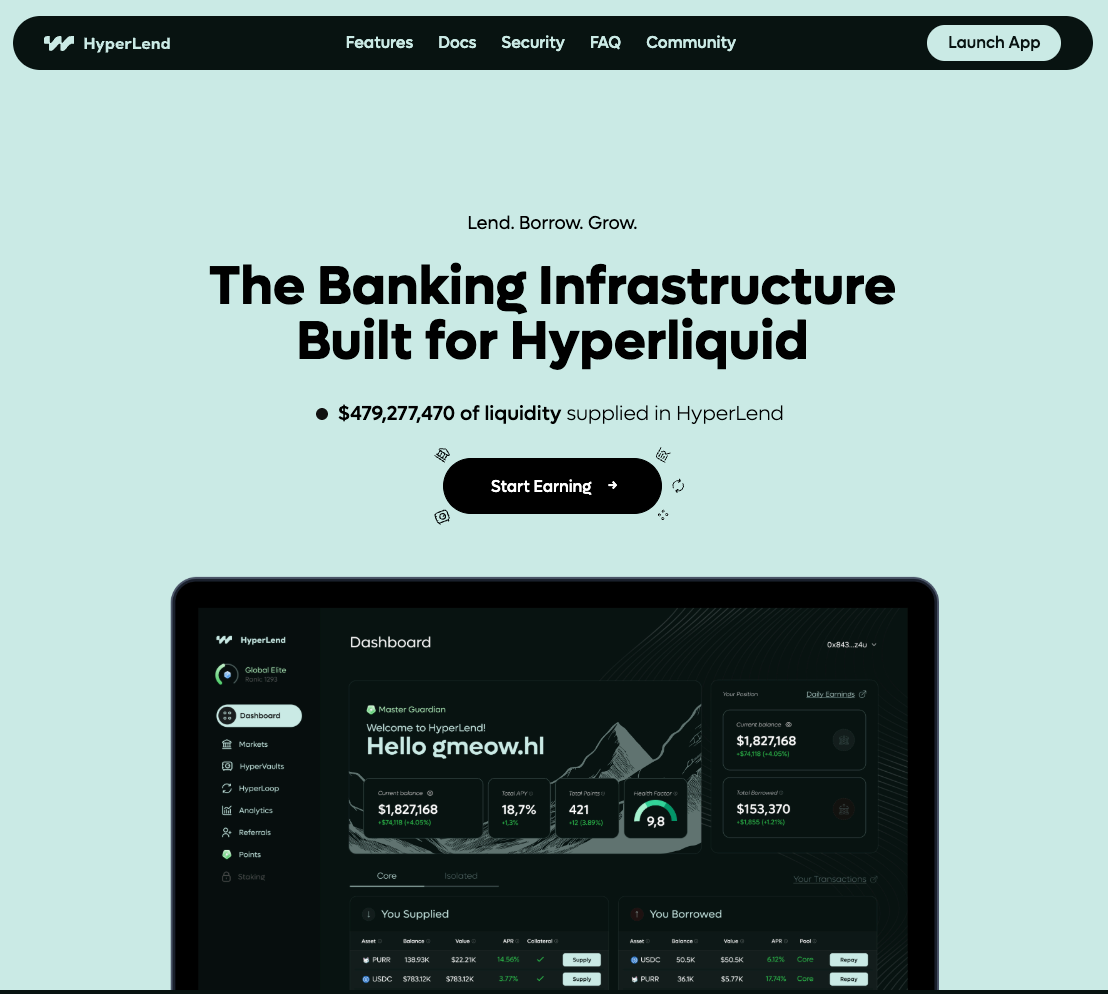
Overview: Hyperlend is a decentralized lending protocol built on Hyperliquid’s HyperEVM, similar to Aave. It supports using $HLP (Hyperliquid Points) vaults as collateral, unlocking leveraged yield opportunities for users.
Key Features:
- Lending and borrowing for native and EVM-compatible assets.
- Integration with $HLP vaults for collateralized loans.
- Plans to expand support for cross-chain assets.
Impact: As the first native lending protocol, Hyperlend strengthens Hyperliquid’s DeFi ecosystem by providing essential financial infrastructure.
HarmonixFi

Overview: HarmonixFi is a vault-based protocol where users deposit assets to earn $HYPE and future airdrop points. The protocol focuses on yield farming and community-driven incentive mechanisms.
Key Features:
- Earn $HYPE and points through vault deposits.
- Integrated with Hyperliquid’s testnet to attract early adopters.
- Community governance for protocol upgrades.
Impact: HarmonixFi incentivizes user participation through reward mechanisms, boosting overall ecosystem engagement.
feUSD
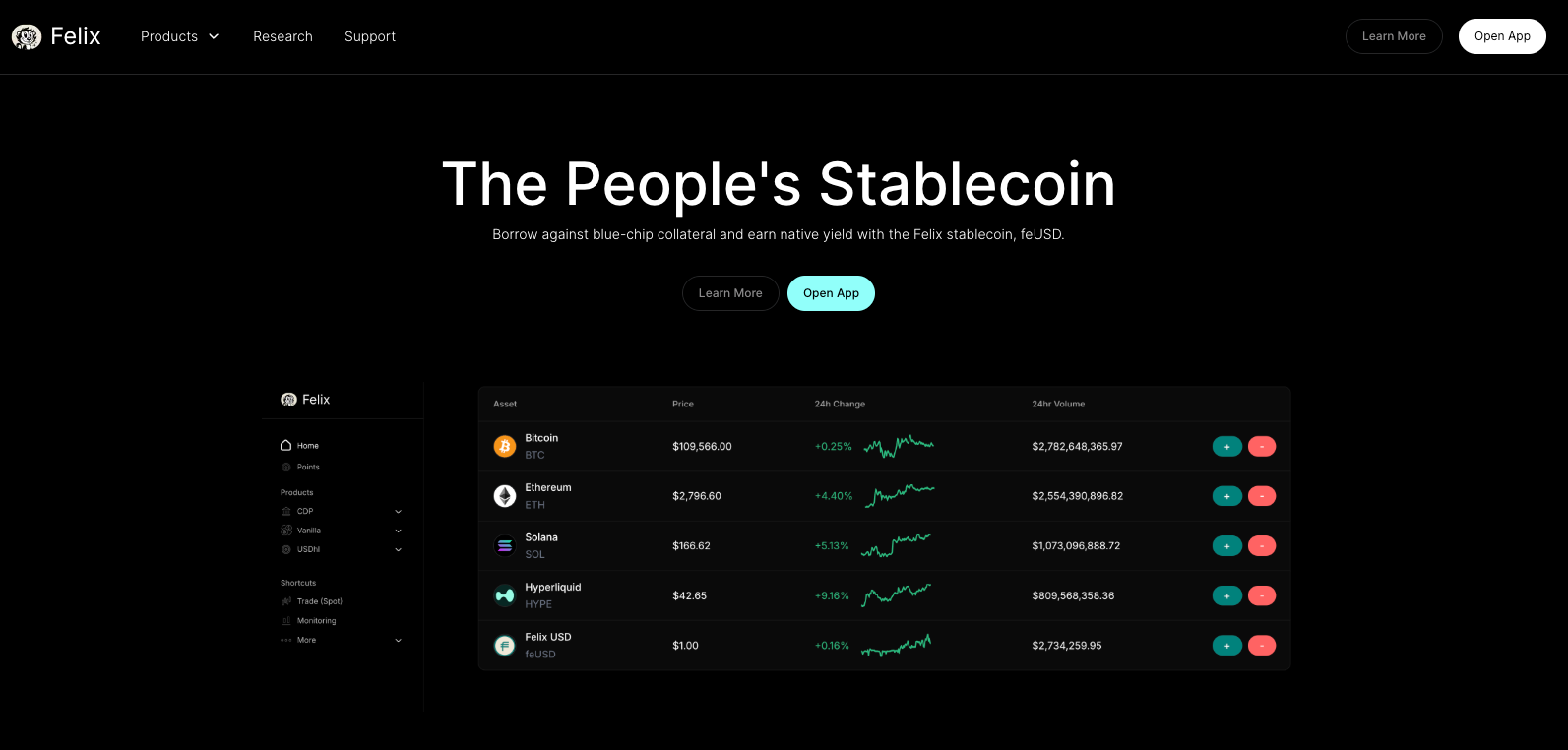
Overview: feUSD is a native CDP stablecoin launched by the Felix protocol. Users can mint this USD-pegged stablecoin by depositing $HYPE, $PURR, and other supported assets. Its goal is to provide price stability for trading and DeFi applications.
Key Features:
- Minting backed by ecosystem tokens.
- Integrated with Hyperliquid’s trading infrastructure.
- Planned use in lending and staking protocols.
Impact: Stablecoins like feUSD significantly enhance Hyperliquid’s DeFi ecosystem by offering stable trading pairs and reducing volatility risk.
Hyperstable
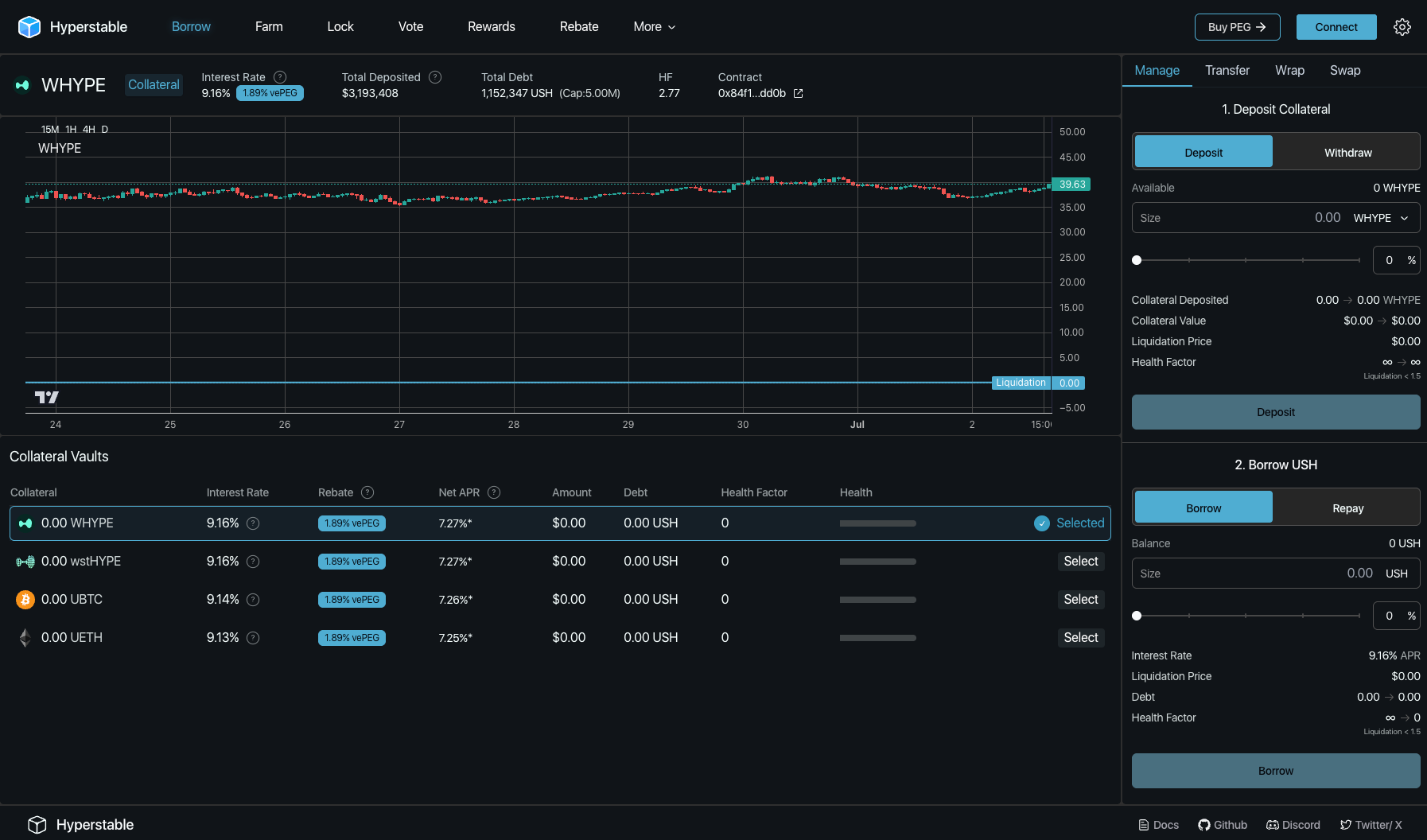
Overview: Hyperstable is a crypto-backed, over-collateralized, decentralized stablecoin protocol on HyperEVM, designed to keep its USH stablecoin pegged to $1.
Launched in 2024, it employs a dual-token system comprising USH and the PEG governance token. Users can mint USH by depositing supported collateral (e.g., $HYPE) into non-custodial vaults.
Hyperstable drives growth via a Borrowing Rebate Program and referral bonuses, regularly distributing PEG tokens to offset interest costs. Liquidity providers can stake on AMMs like Curve to earn PEG, while vePEG holders can lock tokens to receive 100% of protocol revenue (paid in USH) and vote on token emissions.
Currently, Hyperstable has a total value locked (TVL) of $2.53 million and a 24-hour trading volume of $822,900. It has undergone audits by firms such as 0x52 and Pashov Audit Group. Its innovative vote-lock tokenomics and high-yield opportunities (stable pool APY of 20–50%) make it a compelling DeFi platform.
Impact: Hyperstable’s stablecoin and governance model strengthen Hyperliquid’s DeFi ecosystem by offering price stability and attractive yields for borrowers, LPs, and token holders.
KittenSwap
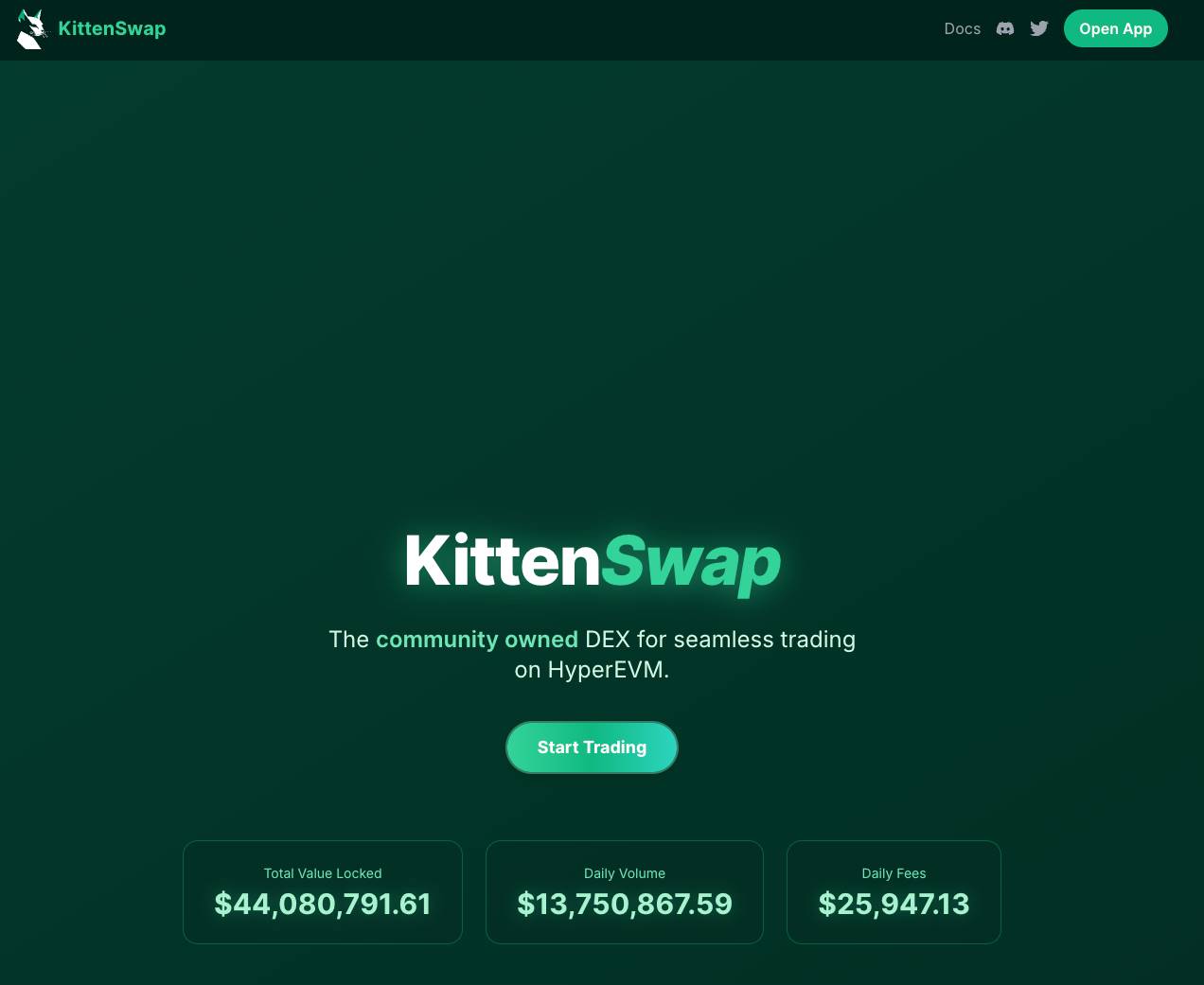
Overview: KittenSwap is a decentralized exchange (DEX) on HyperEVM, launched in December 2024 as a fork of Velodrome. It implements an innovative ve(3,3) tokenomics model, combining AMM efficiency with governance and rewards systems to align incentives among liquidity providers, token holders, and protocol developers.
Impact: KittenSwap’s ve(3,3) model and community-driven incentives—including point programs and NFT integration—make it a cornerstone of Hyperliquid’s DeFi ecosystem, driving user engagement and liquidity provision.
Valantis
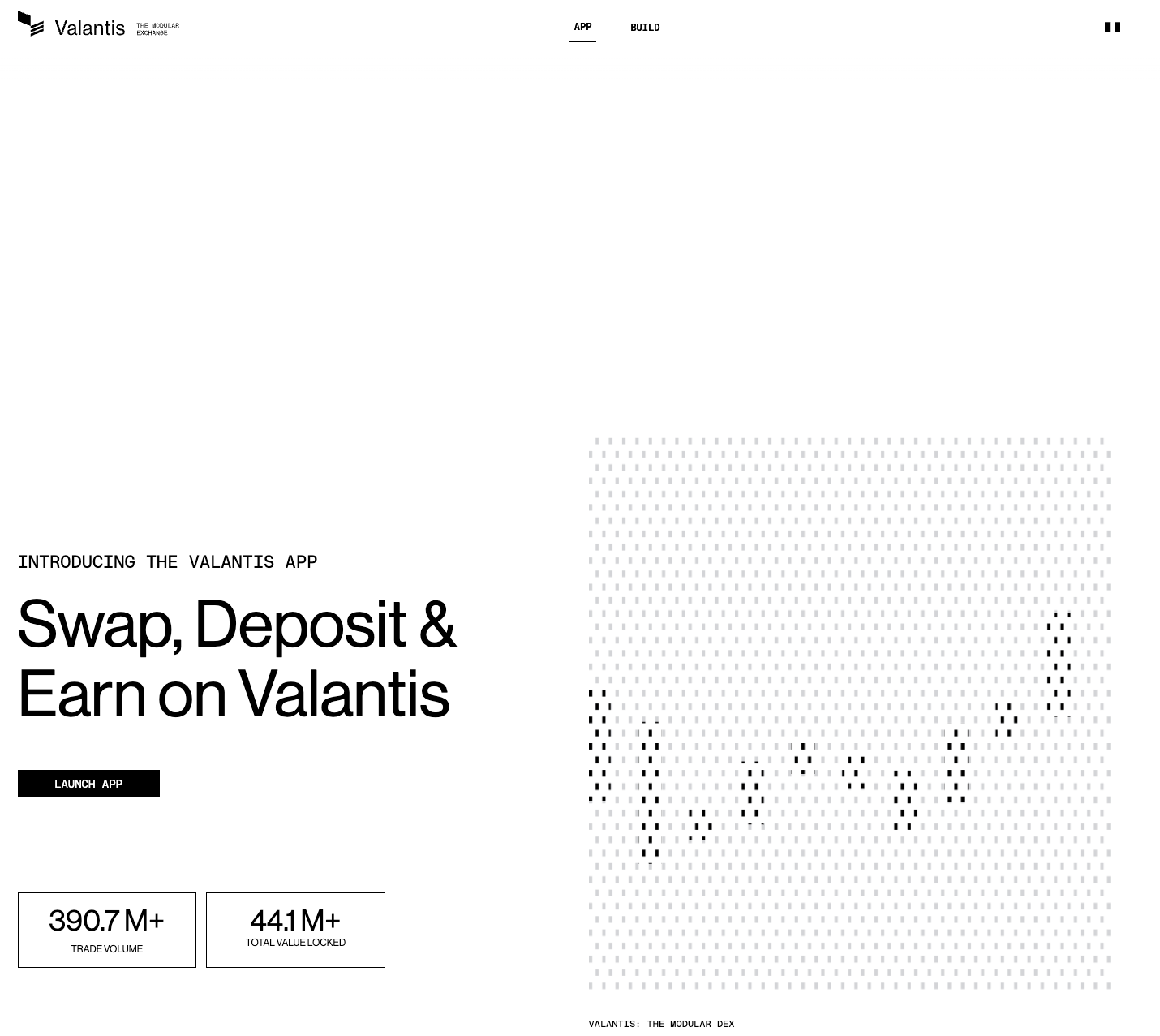
Overview: Valantis is a modular DEX protocol launched on HyperEVM in 2023 by Valantis Labs, designed to empower developers to build customizable, composable DEXs.
Its Sovereign Pools and Core Pools use reusable modules for pricing logic, fee calculation, oracle services, and liquidity management, mitigating liquidity fragmentation through shared external vaults.
Valantis supports rebase tokens (e.g., liquid staked tokens, LSTs), with its HOT-AMM pools achieving over $50 million in trading volume and $5 million in liquidity.
Currently, Valantis has a TVL of $44.21 million on Hyperliquid and offers multiple yield opportunities, including swap fees, lending, staking, and double HypurrFi points rewards for $HYPE deposits.
Backed by $7.5 million in funding from investors including Triton Capital and Anthony Sassano, Valantis is a critical component of Hyperliquid’s DeFi infrastructure, supporting developers in building secure and capital-efficient DEXs.
Impact: Valantis’ modular framework and support for advanced DeFi functions position it as a major liquidity hub, encouraging developer adoption and trader participation.
Hyperbeat
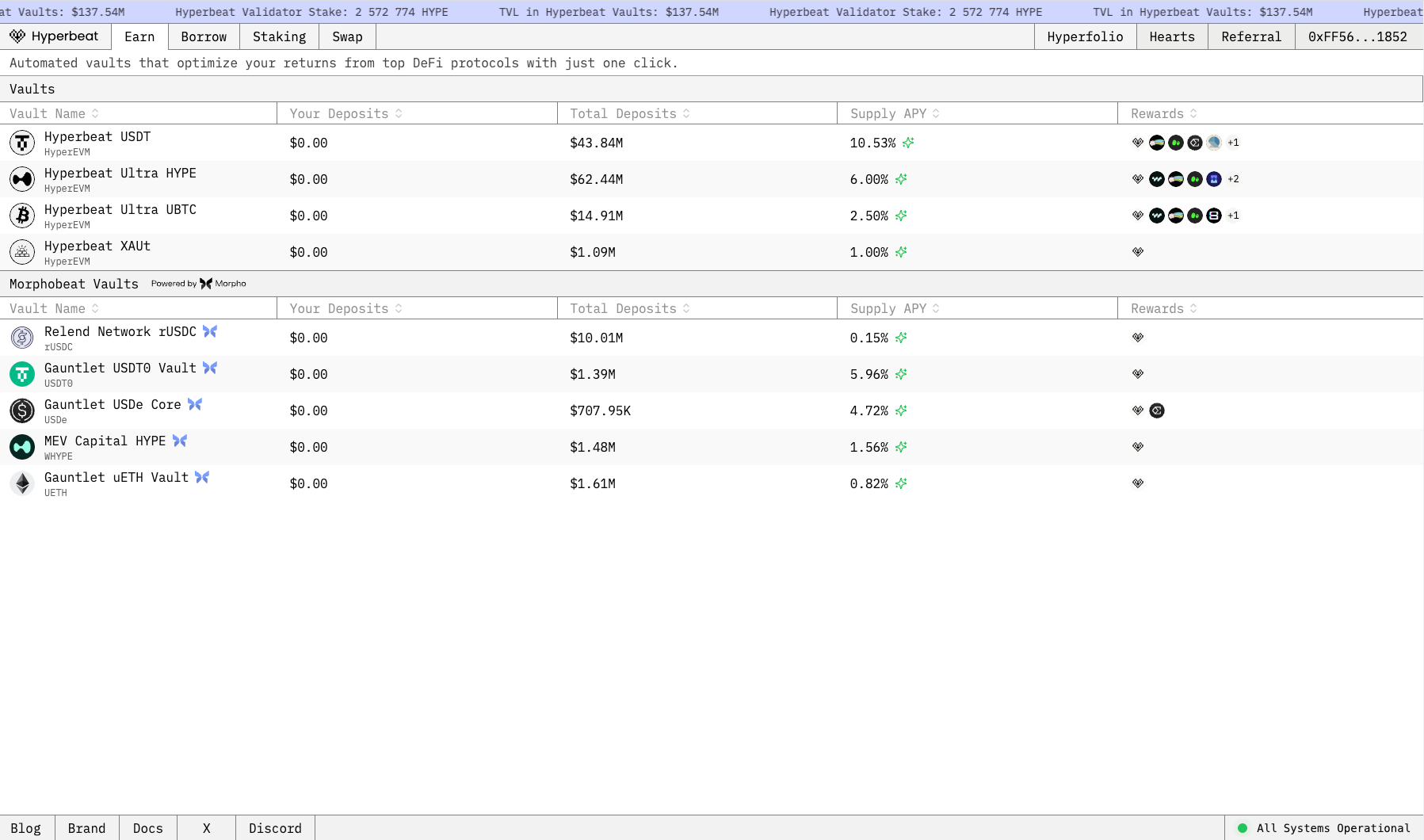
Overview: Hyperbeat is a decentralized lending protocol on Hyperliquid’s HyperEVM, launched in early 2025 to improve capital efficiency for traders and liquidity providers.
Users can lend assets like $HYPE, $KITTEN, and stablecoins to earn interest, or borrow against collateral to access Hyperliquid’s spot and perpetual markets.
Hyperbeat is deeply integrated with Hyperliquid’s native order book, enabling seamless interaction between lending pools and trading activity. It uses market-driven dynamic interest rates and supports over-collateralized loans to ensure stability.
With a user-friendly interface and low-latency trading, Hyperbeat gained significant traction in its first month, reaching a TVL of $20 million. Its points-based reward system incentivized early users, and a native token is planned to further align community interests.
Impact: Hyperbeat reinforces Hyperliquid’s DeFi ecosystem by delivering essential lending infrastructure and providing broad access to leveraged trading and yield opportunities.
Trading & Analytics Tools
Pvp.trade

Overview: Pvp.trade is a Telegram-based trading bot enabling spot and perpetual trading on Hyperliquid. It integrates social and competitive trading features, allowing users to accumulate points based on trading volume, which count toward future $PVP token airdrops.
Key Features:
- Leveraged and spot trading via Telegram.
- Social trading: view group members’ positions.
- Volume-based point accumulation for $PVP airdrops.
Impact: Pvp.trade has attracted widespread attention through its gamified trading experience and airdrop potential, raising $200,000 in $PVP auctions.
Insilico Terminal
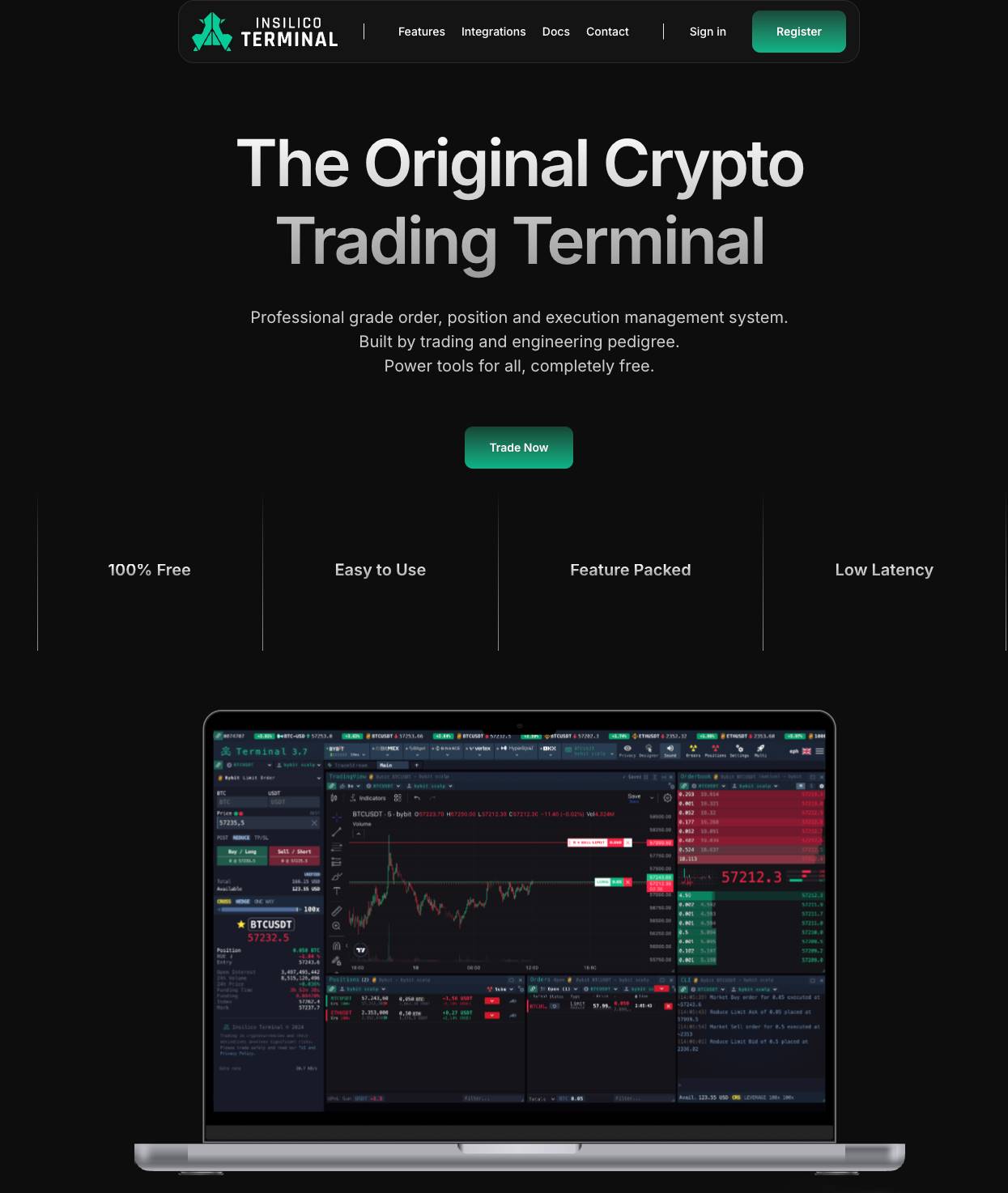
Overview: Insilico Terminal is an AI-powered trading tool offering advanced market analysis and signals for Hyperliquid users (also supporting centralized exchanges like Binance, Coinbase Pro, Bybit, OKX, and Bitmex).
Key Features:
- AI-driven market predictions and trading strategies.
- Real-time analysis for spot and derivatives markets.
- Deep integration with Hyperliquid’s order book.
Impact: Insilico improves trading efficiency, attracting professional traders seeking data-driven insights.
Katoshi AI
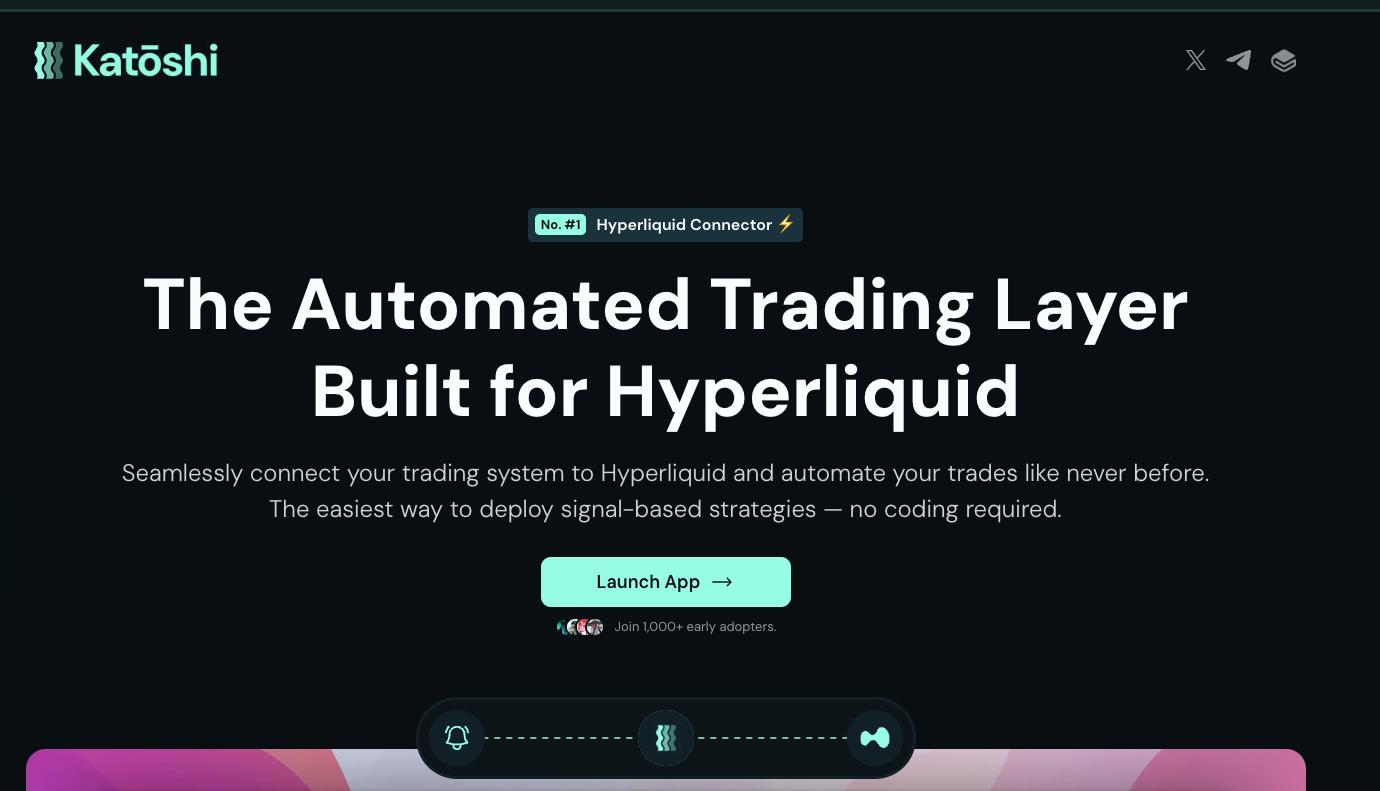
Overview: Katoshi AI is an AI-powered trading platform that automatically executes strategies and provides predictive analytics for Hyperliquid markets.
Key Features:
- Automated trading bots for perpetual and spot markets.
- Predictive models for price movements.
- User-friendly interface tailored for retail traders.
Impact: Katoshi AI democratizes access to advanced trading tools, enabling broader participation in Hyperliquid’s markets.
Meme Token & NFT Platforms
HypurrFun

Hypio

Overview: Hypio is a popular NFT collection within the Hyperliquid ecosystem, launched in January 2025, aiming to integrate NFTs with DeFi and gaming use cases.
Key Features:
- Unique NFT assets with real utility in the Hyperliquid ecosystem.
- Planned integration with games and staking protocols.
- Community-driven design and governance.
Impact: Hypio adds a creative dimension to Hyperliquid, attracting NFT enthusiasts and collectors.
TheFarm.fun
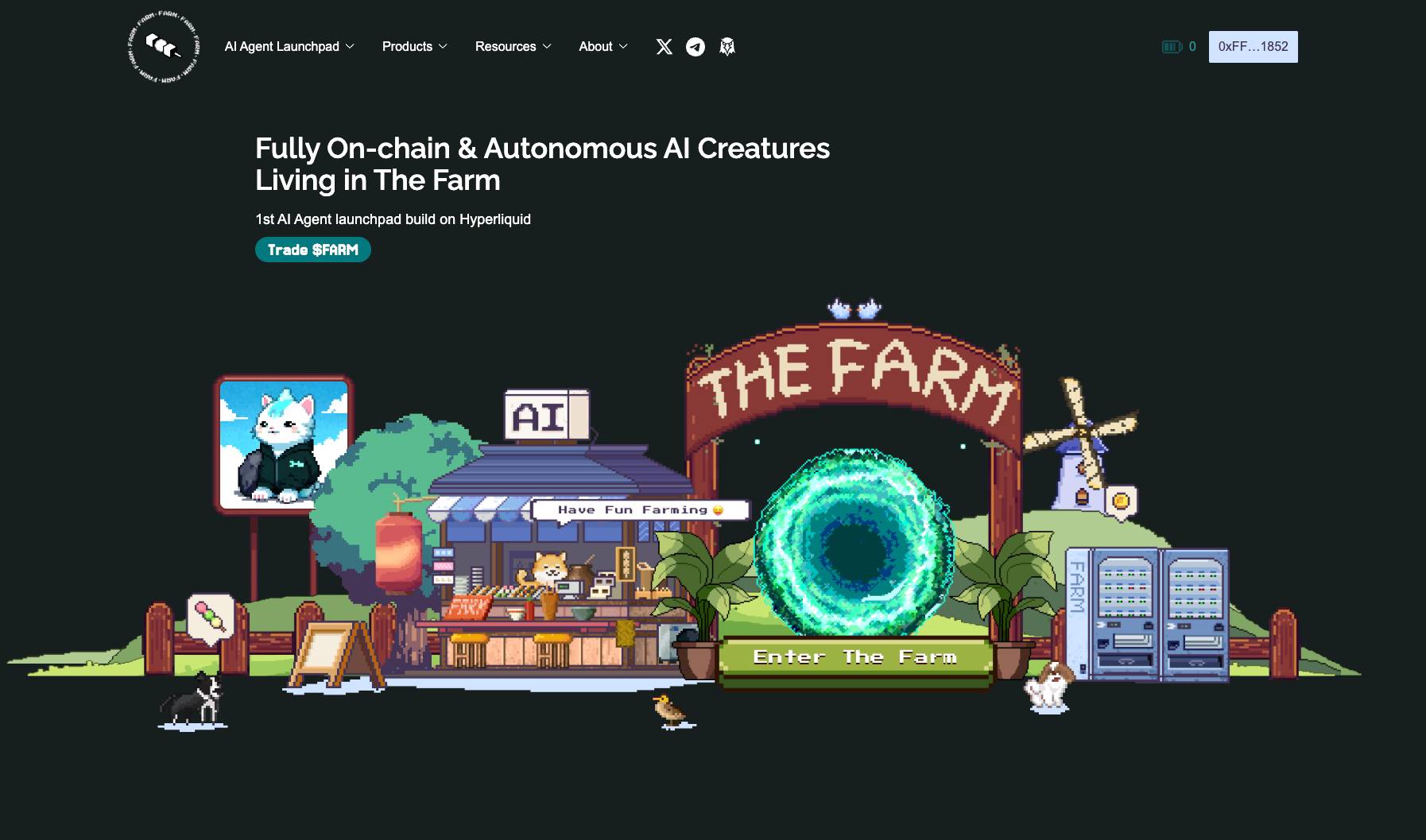
Overview: TheFarm.fun is a pioneering AI-driven gaming platform on Hyperliquid, launched in 2024.
It combines generative AI and blockchain to create a unique on-chain creature generation system. Users can mint pixelated NFT creatures from real animal photos using a proprietary GenAI model. The ecosystem is anchored by the top 50 “Ancestors” NFTs.
The platform has confirmed a $FARM token airdrop, allocating 5% of total supply to reward creators and voters—50% to “Ancestors,” 30% to other minted creatures, and 20% to voters who selected “Ancestors.”
The roadmap includes simulation gameplay and battle/esports features, aiming to build a full-fledged gaming ecosystem. With strong community engagement and innovative AI integration, TheFarm.fun has quickly gained attention, offering a novel blend of creativity and gamification.
Impact: TheFarm.fun’s AI-generated NFTs and planned gaming mechanics position it as a leader in Hyperliquid’s gaming ecosystem, attracting creators and players seeking innovative blockchain experiences.
HyBridge
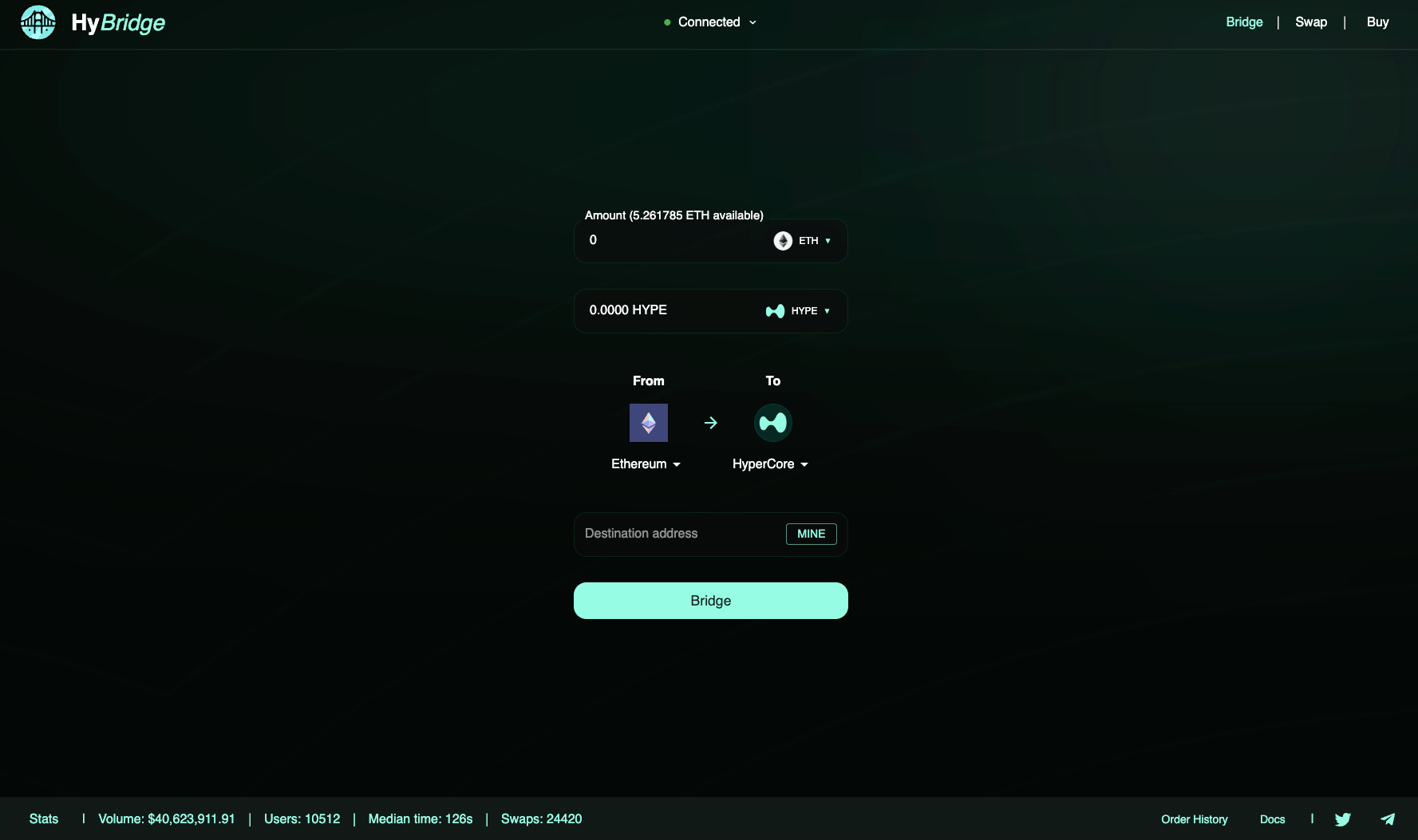
Overview: HyBridge is a community-developed cross-chain bridge enabling asset transfers from seven blockchains (e.g., Ethereum, Solana, Arbitrum) to Hyperliquid, processing millions of transactions daily.
Key Features:
- Supports cross-chain transfer of USDC, USDT, $HYPE, and ecosystem tokens.
- Low fees and high throughput.
- Direct conversion to Hyperliquid-native assets.
Impact: HyBridge simplifies user onboarding, enabling users from multiple chains to easily enter the Hyperliquid ecosystem.
Hyperunit
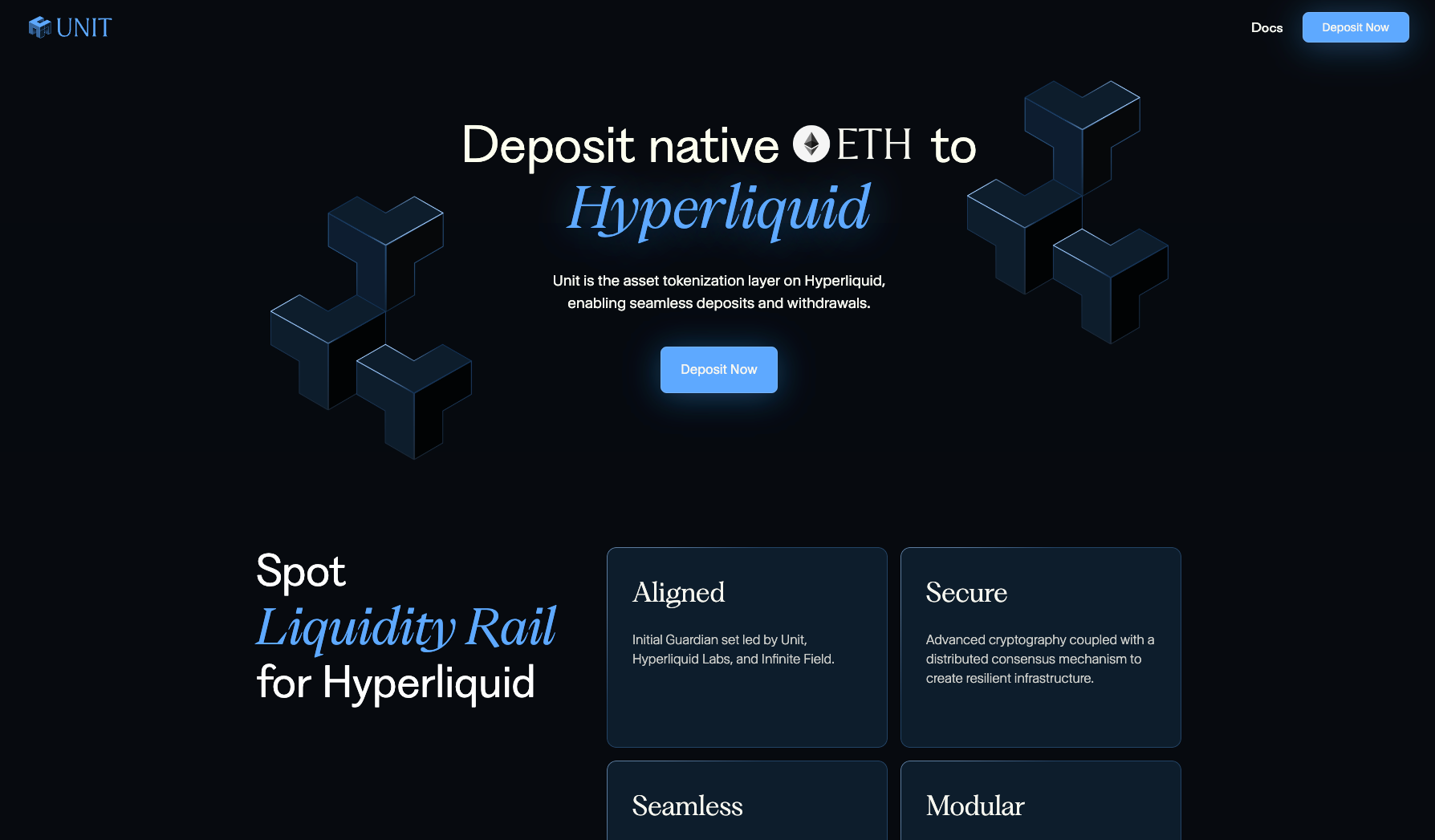
Overview: Hyperunit is a tokenization layer supporting native BTC and ETH spot markets on Hyperliquid. It captures 50% of trading fees and plans a significant token launch.
Key Features:
- Tokenization services for major assets in spot trading.
- Revenue-sharing model for fee distribution.
- Deep integration with Hyperliquid’s order book.
Impact: Hyperunit enhances the appeal of Hyperliquid’s spot markets, drawing interest from both institutional and retail traders.
Goldsky

Overview: Goldsky is a data indexing platform providing real-time analytics for Hyperliquid’s blockchain and DeFi applications.
Key Features:
- High-speed data indexing for trades and smart contracts.
- Developer-friendly APIs for building analytical tools.
- Support for HyperEVM-based dApps.
Impact: Goldsky delivers robust data infrastructure for developers, accelerating ecosystem growth.
Gaming & Entertainment
Playmoon
Overview: Playmoon is an emerging gaming platform on Hyperliquid, launched in 2025, focusing on competitive and social gaming powered by blockchain. Users can access the platform via its login portal (playmoon.xyz/login). Playmoon emphasizes user-driven challenges and tokenized rewards, allowing players to earn assets through gameplay.
Still in early stages, the platform plans to leverage Hyperliquid’s high-throughput infrastructure to support fast-paced on-chain game mechanics. Its social media presence (including a Facebook page with 56 likes) uses the slogan “Défiez l’intouchable” (“Challenge the untouchable”), suggesting a focus on competitive leaderboards or tournaments. Future plans include integration with Hyperliquid’s spot markets for in-game asset trading and content expansion.
Impact: Playmoon’s competitive gaming model and blockchain integration add a dynamic entertainment layer to Hyperliquid, attracting gamers and crypto enthusiasts.
MON Protocol

Overview: MON Protocol is a blockchain-based gaming and intellectual property (IP) distribution platform integrated with Hyperliquid, aiming to tokenize and distribute IP ecosystems.
Launched in 2024, it enables developers to create and monetize game assets, already partnering with over 100 projects and distributing $20 million in token rewards to $MON holders.
Its Launchpools feature allows $MON stakers to earn partner tokens, while a community presale sold 62,092,000 $MON tokens (6.21% of total supply) at $0.099 each, generating significant buzz.
Additionally, MON Protocol supports earning $MON through NFT staking, using on-chain incentives to drive user acquisition and community management.
By integrating with Hyperliquid’s HyperEVM, the protocol enables seamless asset trading and DeFi interactions, establishing itself as a key player in the gaming ecosystem.
Impact: MON Protocol’s focus on IP management and tokenized gaming rewards strengthens synergies between gaming and DeFi on Hyperliquid, attracting developers and players into its expansive ecosystem.
Sovrun
Overview: Sovrun (formerly BreederDAO) is a gaming asset platform and Hyperliquid’s first Layer 2 solution. Focused on tokenized gaming assets, it is backed by a16z and Delphi.
Key Features:
- Tokenized gaming assets for trading and staking.
- Layer 2 scalability for high-throughput gaming dApps.
- Listed on Hyperliquid’s spot exchange.
Impact: Sovrun bridges gaming and DeFi, expanding Hyperliquid’s use cases.
Ecosystem Dynamics & Trends
Token Auctions & Community Engagement
Hyperliquid’s HIP-1 token auctions have become signature events, with projects paying $300,000 to $1 million (in USDC) to bid for listings on the spot exchange. These auctions reflect strong demand for Hyperliquid’s liquidity and trading infrastructure. Notable examples include $GOD ($1 million) and $PVP ($200,000), highlighting intense competition for ticker symbols.
The community-driven HypurrCollective unites ecosystem projects and supports developers, while HypurCo operates one of the largest validator nodes by staking 30 million $HYPE (worth $600 million). This community-centric approach, combined with airdrop incentives (e.g., $HYPE, $PVP), greatly boosts user engagement.
Role of HyperEVM
Launched in February 2025, HyperEVM marked a turning point in ecosystem development, enabling developers to build smart contract-based dApps. Projects like Hyperlend, Hyperdrive, and SOVRN leverage HyperEVM’s composability to deeply integrate with Hyperliquid’s native order book and liquidity. This shift has drawn attention from mainstream DeFi protocols—for example, Ethena Labs is exploring integration to reduce reliance on centralized exchanges.
Meme Token Boom
Meme tokens (e.g., $PIP, $JEFF, and $PURR—the latter being Hyperliquid’s mascot) have surged in popularity, driven by easy launches on platforms like HypurrFun. While early auctions were dominated by meme tokens, recent trends show a shift toward utility-driven projects (e.g., $SOLV, $SWELL), indicating ecosystem maturation.
Challenges & Risks
Despite rapid growth, Hyperliquid faces several challenges:
Ecosystem Depth: The ecosystem currently lacks a complete DeFi stack, with use cases largely limited to trading, lending, and staking. Expanding into areas like options and structured products is crucial.
Security Risks: Hyperliquid has faced scrutiny over potential vulnerabilities, including nation-state attacks (e.g., Lazarus Group) and risks like reentrancy or oracle manipulation. Regular audits (e.g., Zellic’s review of bridge and staking logic) are essential for security.
Liquidity Risks: New tokens often suffer from low liquidity. Although HIP-2 helps mitigate this, maintaining deep liquidity across trading pairs remains a challenge.
Regulatory Risks: As global regulations tighten, Hyperliquid must balance innovation with compliance to avoid legal hurdles.
Stablecoin Integration: The lack of a robust native stablecoin (beyond feUSD) may hinder broader DeFi adoption. A well-designed stablecoin could enhance trading stability and attract institutional users.
Addressing these challenges requires ongoing innovation, community governance, and strategic partnerships.
Future Potential & Outlook
Hyperliquid’s roadmap focuses on ecosystem expansion, including:
- Launching more DeFi derivatives (e.g., options, leveraged products).
- Attracting third-party developers through open protocols and incentives.
- Integrating native assets (e.g., BTC, ETH, SOL) into spot trading.
- Enhancing HyperEVM with advanced smart contract capabilities.
Industry experts (e.g., Ryan Watkins of Syncracy Capital) predict Hyperliquid could become the highest fee-generating blockchain in 2025, driven by its comprehensive business model and growing trading volume (currently averaging $500 million daily in spot volume). Its ability to combine spot, derivatives, and blockspace within a single platform positions it as a DeFi superchain.
Upcoming native stablecoins, potential cross-chain integrations, and rising developer activity (e.g., Insilico Terminal, Katoshi AI) signal a bright future. As Hyperliquid matures, it may rival established L1s like Ethereum and Solana in DeFi and trading.
How to Get Involved
Trade on the Hyperliquid DEX: Visit app.hyperliquid.xyz, connect your wallet, and bridge USDC or USDT from Arbitrum to trade perpetuals or spot markets.
Participate in Airdrops: Earn points by engaging with projects like Pvp.trade, HarmonixFi, or HypurrFun to qualify for future token distributions.
Build on HyperEVM: Developers can deploy Ethereum-compatible smart contracts using familiar tools and leverage HyperEVM documentation and APIs.
Stake $HYPE: Stake $HYPE through liquid staking protocols like Hyperdrive to earn rewards and support network security.
Explore the Hyperliquid Ecosystem: HypurrCollective offers a comprehensive public database of the Hyperliquid ecosystem.
Join the Community: Follow @HyperliquidX, @hypurr_co, and HypurrCollective on X for updates, or participate in governance via $HYPE voting.
Conclusion
The Hyperliquid Chain ecosystem is a dynamic and rapidly evolving space that combines high-performance trading with innovative DeFi and entertainment applications. Projects like Hyperlend, Pvp.trade, and HypurrFun showcase the chain’s versatility, while the launch of HyperEVM has ushered in a new wave of smart contract-based dApp development. With its community-first model, zero gas fees, and unmatched throughput, Hyperliquid is poised to lead the next generation of on-chain finance.
However, challenges around ecosystem depth, security, and compliance must be addressed to sustain growth. As Hyperliquid continues to innovate and attract developers, it has the potential to redefine decentralized trading and become a cornerstone of the DeFi landscape. Whether you’re a trader, developer, or crypto enthusiast, now is the perfect time to explore Hyperliquid’s vibrant ecosystem and join the revolution.
Join TechFlow official community to stay tuned
Telegram:https://t.me/TechFlowDaily
X (Twitter):https://x.com/TechFlowPost
X (Twitter) EN:https://x.com/BlockFlow_News
 @defiprime