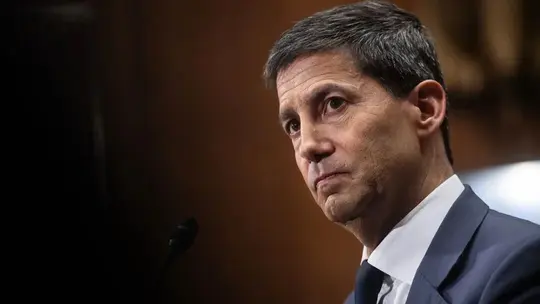
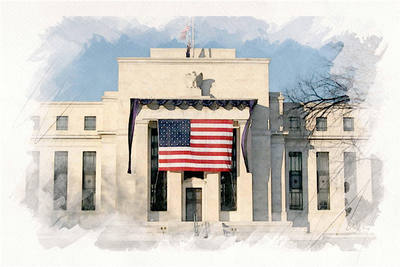
After Waller, the Trump-nominated Vice Chair of the Federal Reserve speaks out: supports rate cuts as early as July
TechFlow Selected TechFlow Selected
After Waller, the Trump-nominated Vice Chair of the Federal Reserve speaks out: supports rate cuts as early as July
"Bowman had previously placed significant emphasis on inflation concerns, and her latest remarks represent a meaningful shift."
 Navigating Web3 tides with focused insights
By Hao He, Wall Street Horizon
Following Waller, another Federal Reserve official has expressed support for a rate cut next month. Notably, both governors were appointed by Trump during his first term.
On Monday, Federal Reserve Governor Bowman said regarding the economy and monetary policy that she would support cutting interest rates as early as July if inflation pressures remain contained, as risks to the labor market may rise and inflation appears to be steadily moving toward the Fed's 2% target:
"If inflationary pressures continue to be well-contained, I would support lowering the policy rate at the next meeting to bring it closer to neutral levels and sustain a healthy labor market. As U.S. government policies, the economy, and financial markets continue to evolve, I will remain closely attuned to economic developments."
Last Friday, Federal Reserve Governor Christopher Waller said in a CNBC interview that he might support a rate cut next month, citing concerns about excessive weakness in the labor market.
Nick Timiraos, a journalist at The Wall Street Journal known as the "Fed Whisperer," noted in a recent article that this is the first time Bowman has offered substantive commentary on the economic outlook since President Trump nominated her earlier this year and the Senate confirmed her appointment as Vice Chair for Supervision. Bowman had previously focused heavily on inflation concerns; her latest remarks mark a meaningful shift.
The article notes that among Fed officials who have spoken since last week’s meeting, the first two signaling openness to a rate cut at the Fed’s next meeting in late July are both officials appointed during Trump’s first term.
Second Senior Fed Official Paves Way for Rate Cuts
At its June meeting last week, the Federal Reserve kept the benchmark interest rate in the range of 4.25% to 4.5%, a level widely viewed as above the neutral rate—the rate that neither stimulates nor restrains economic activity. After the meeting, Fed Chair Powell reiterated that policymakers could afford to be patient on rate adjustments, awaiting further details on President Trump’s economic policies, particularly changes in trade policy.
Bowman said she supported the Fed’s June decision. She noted that the post-meeting statement reflected a shift in policy stance—current policy uncertainty has diminished, and attention is now turning to potential softness in the labor market.
Economists had initially feared Trump’s tariffs would boost inflation, but so far, the expanded use of tariffs under the Trump administration has not yet shown up clearly in economic data, and both labor market and inflation readings remain strong. Meanwhile, Trump has softened his rhetoric and opened the door to negotiations with key trading partners.
Bowman recently stated:
"The data suggest that tariffs and other policies have not yet had a noticeable impact on the economy. I believe the effects of tariffs on inflation may be more delayed and smaller in magnitude than initially expected, especially as many firms have built up inventory in advance. Ongoing progress in trade and tariff negotiations has significantly reduced economic risks. Changes in trade policy may have only minimal effects on the Fed’s preferred measure of inflation."
The Fed’s mandate is to maintain price stability and achieve maximum employment. Bowman pointed out that due to recent weakness in consumer spending and emerging fragilities in the labor market, downside risks to the employment goal may soon become more pronounced. "In my view, it is appropriate now to acknowledge that the balance of risks has shifted. When considering the future policy path, it is time to consider adjusting the policy rate."
The Fed’s next FOMC meeting is scheduled for July 29–30. According to CME Group’s FedWatch tool, traders currently assign only a 23% probability to a rate cut at that meeting, while pricing in about a 78% chance of a cut in September.
After Governor Bowman commented on the prospect of rate cuts:
-
The S&P 500 rose 0.57%, reaching a new intraday high, while the Dow gained 0.42% and the Nasdaq climbed 0.55%.
-
The yield on the 10-year U.S. Treasury note fell more than 5.5 basis points, hitting a new intraday low below 4.32%. The two-year Treasury yield briefly dropped nearly 4 basis points to a fresh intraday low near 3.85%, declining steadily from around 3.92% since 19:35 Beijing time, with two distinct downward moves.
Bowman mentioned that the potential impact of Trump’s tariff policies on prices may be temporary and limited, making her the second senior Fed official recently to express such a view—clearing the way for a possible rate cut as early as July.
Another Fed governor, Waller, said in a CNBC interview last Friday that he believes the Fed could consider a rate cut in July.
Trump has been pressuring the Fed to lower rates to reduce financing costs for the ballooning U.S. national debt. After the Fed decided last week to hold rates steady, Trump intensified his criticism of Powell and the Federal Reserve Board.
Trump has said he believes the Fed should cut rates by at least two percentage points. Bowman’s remarks did not specify how much she thinks rates should be lowered, while Waller said such an aggressive cut would not be necessary.
Bowman on Regulation
Bowman serves as the Fed’s Vice Chair for Supervision. On the same day, she warned that the current leverage ratio regulation has created unintended consequences in markets. It is now time to reconsider this key capital buffer framework, amid concerns that the rule restricts banks’ trading activities in the $29 trillion U.S. Treasury market. Bowman said:
"The impact of the leverage ratio on bank-affiliated broker-dealers could have broader market implications, including market volatility observed in Treasury market intermediation. Once we identify unintended consequences not anticipated when the regulations were designed, we must consider revisiting earlier regulatory and policy decisions."
Earlier this month, Bowman outlined an ambitious agenda—from reviewing the capital buffer mechanism known as the "supplementary leverage ratio" (SLR), to shielding community banks from regulatory requirements aimed at large institutions.
Media reports previously indicated that the Fed and other regulators will unveil potential proposed changes to leverage ratio rules this week, aiming to adjust the overall ratio rather than excluding specific assets like U.S. Treasuries, as some observers had predicted.
She also said the Fed will hold a meeting on July 22 to discuss bank capital issues, noting that "simple reforms" could improve the resilience of the Treasury market during stress events. Bowman has previously criticized regulators' plans requiring America’s largest banks to significantly increase capital holdings to withstand potential crises.
Bowman is widely expected to support a substantial relaxation of the so-called "Basel III Endgame" proposal. First introduced in 2023, the plan would raise capital requirements for large banks by 19%. The Fed later pulled back somewhat amid industry opposition.
Join TechFlow official community to stay tuned
Telegram:https://t.me/TechFlowDaily
X (Twitter):https://x.com/TechFlowPost
X (Twitter) EN:https://x.com/BlockFlow_News