Huobi Growth Academy | Cryptocurrency Market Macro Research Report: Liquidity Re-pricing Amid Fed Rate Cuts, BOJ Rate Hikes, and the Christmas Holiday
TechFlow Selected TechFlow Selected
Huobi Growth Academy | Cryptocurrency Market Macro Research Report: Liquidity Re-pricing Amid Fed Rate Cuts, BOJ Rate Hikes, and the Christmas Holiday
The current correction in the crypto market is more akin to a phased repricing triggered by changes in global liquidity flows, rather than a simple reversal of a trending move.
 Navigating Web3 tides with focused insights
Executive Summary
Recent volatility in the crypto market is not an isolated movement, but a structural adjustment triggered by the temporal convergence of three macro-level factors. First, the Federal Reserve's rate cut during the super central bank week did not initiate a clear easing cycle; instead, through its dot plot and voting structure, it signaled continued restraint on future liquidity, correcting market expectations of "continuous monetary easing." Second, the upcoming interest rate hike by the Bank of Japan is undermining the long-standing yen-based carry trade—historically a cornerstone of low-cost global financing—potentially triggering phase-wise deleveraging and simultaneous pressure on risk assets. Finally, holiday-driven liquidity contraction during the Christmas season has significantly reduced the market’s capacity to absorb these macro shocks, amplifying price volatility. Under this triple convergence, the crypto market has entered a high-volatility, low-error-tolerance phase, where price behavior exhibits more nonlinear characteristics and requires a structural lens for proper understanding.
1. Fed Rate Cut: The Path to Easing After Rate Reduction
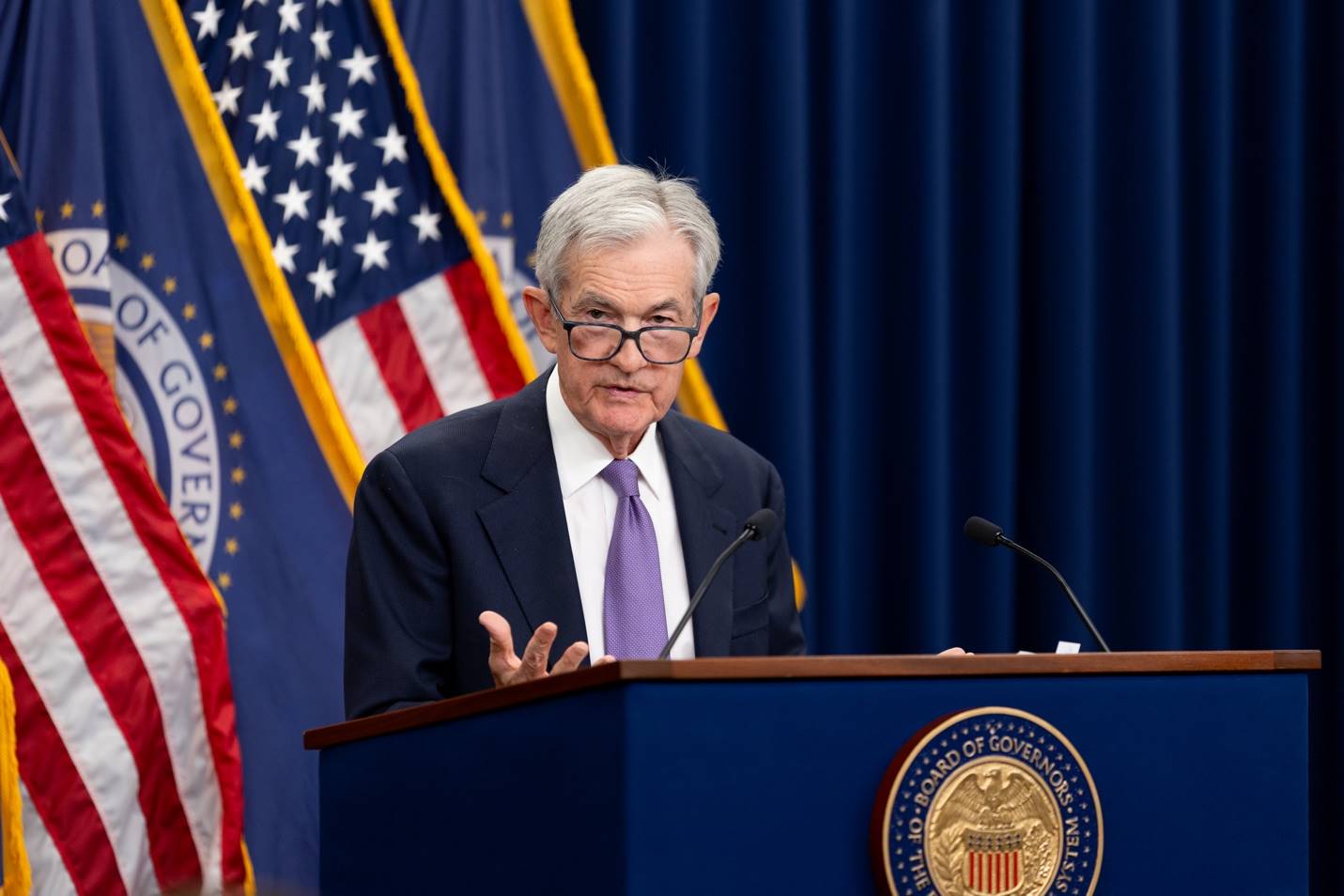
On December 11, the Federal Reserve announced a 25 basis point rate cut as expected. On the surface, this decision aligned closely with market expectations and was initially interpreted as a signal that monetary policy was turning dovish. However, market sentiment quickly turned negative, with both equities and crypto assets declining in tandem and risk appetite clearly contracting. This seemingly counterintuitive move actually reveals a key reality in the current macro environment: a rate cut does not automatically mean liquidity easing. During this super central bank week, the message delivered by the Fed was not about "restarting monetary stimulus," but rather a clear constraint on future policy flexibility. In terms of policy details, changes in the dot plot meaningfully impacted market expectations. The latest projections indicate only one potential rate cut in 2026, significantly below the previously priced-in path of two to three cuts. More importantly, among the 12 voting members at this meeting, three explicitly opposed the rate cut, with two favoring holding rates steady. This level of dissent is not marginal noise—it clearly shows that the Fed’s internal vigilance toward inflation risks is far greater than previously understood by the market. In other words, this rate cut is not the beginning of an easing cycle, but more akin to a technical adjustment within a high-rate environment to prevent financial conditions from tightening excessively.
Therefore, what the market truly seeks is not just a “one-time rate cut,” but a clear, sustainable, and forward-looking easing trajectory. The pricing logic of risk assets depends not on the absolute level of current interest rates, but on the discounted expectation of future liquidity conditions. When investors realize this rate cut does not open new room for easing but may instead prematurely lock in limited future policy flexibility, prior optimistic expectations are rapidly revised. The signal from the Fed resembles a “painkiller”—temporarily relieving tension but failing to address the underlying condition. Meanwhile, the cautious stance revealed in forward guidance forces the market to reassess future risk premiums. In this context, the rate cut becomes a classic case of “buy the rumor, sell the news.” Long positions built around easing expectations begin to unwind, with high-valuation assets hit first. Growth and high-beta sectors in U.S. equities come under immediate pressure, and the crypto market is no exception. The pullback in Bitcoin and other major cryptocurrencies is not due to a single negative catalyst, but a passive reaction to the realization that “liquidity will not return quickly.” As futures basis narrows, ETF marginal buying weakens, and overall risk appetite declines, prices naturally gravitate toward a more conservative equilibrium. A deeper shift lies in the transformation of U.S. economic risk structure. Increasing research suggests that the core risk facing the U.S. economy in 2026 may no longer be traditional cyclical recession, but demand-side contraction directly triggered by sharp declines in asset prices. Since the pandemic, approximately 2.5 million Americans have entered “excess retirement,” a group whose wealth is heavily tied to stock and risk asset performance. Their consumption behavior is highly correlated with asset prices. Once equities or other risk assets experience sustained declines, their spending power contracts in parallel, creating negative feedback on the broader economy. Under such structural conditions, the Fed’s policy space becomes further constrained. On one hand, persistent inflation pressures remain, making premature or excessive easing risky for reigniting price increases. On the other, if financial conditions continue to tighten and asset prices undergo systemic corrections, the resulting wealth effect could rapidly transmit to the real economy, triggering demand contraction. Thus, the Fed finds itself in an extremely complex dilemma: continuing aggressive inflation control risks asset price collapse, while tolerating higher inflation levels could help preserve financial stability and asset valuations.
An increasing number of market participants are accepting a new view: in future policy trade-offs, the Fed is more likely to choose “protecting the market” over “protecting inflation.” This implies a potential upward shift in the long-term inflation trend, but short-term liquidity release will be more cautious and intermittent—not forming a sustained wave of easing. For risk assets, this creates an unfriendly environment—downward rate momentum is insufficient to support valuations, while liquidity uncertainty persists. It is precisely under this macro backdrop that the impact of the super central bank week extends far beyond a simple 25-basis-point cut. It marks a further correction in market expectations of the “infinite liquidity era,” and sets the stage for the Bank of Japan’s rate hike and year-end liquidity contraction. For the crypto market, this is not the end of a trend, but a critical phase requiring recalibration of risk and renewed understanding of macro constraints.
2. BOJ Rate Hike: The Real “Liquidity Defuser”
If the Fed’s role during the super central bank week was to disappoint and correct market expectations about “future liquidity,” then the Bank of Japan’s upcoming action on December 19 resembles a direct “defusing operation” targeting the foundational layer of global financial structure. Current market probability of a 25 basis point rate hike by the BOJ—lifting the policy rate from 0.50% to 0.75%—has reached nearly 90%. Though this appears moderate, it would push Japan’s policy rate to its highest level in thirty years. The significance does not lie in the absolute rate level, but in the chain reaction this change triggers across global capital dynamics. For decades, Japan has been the most important and stable source of low-cost funding in the global financial system. Once this premise is disrupted, the impact will extend far beyond Japan’s domestic market.
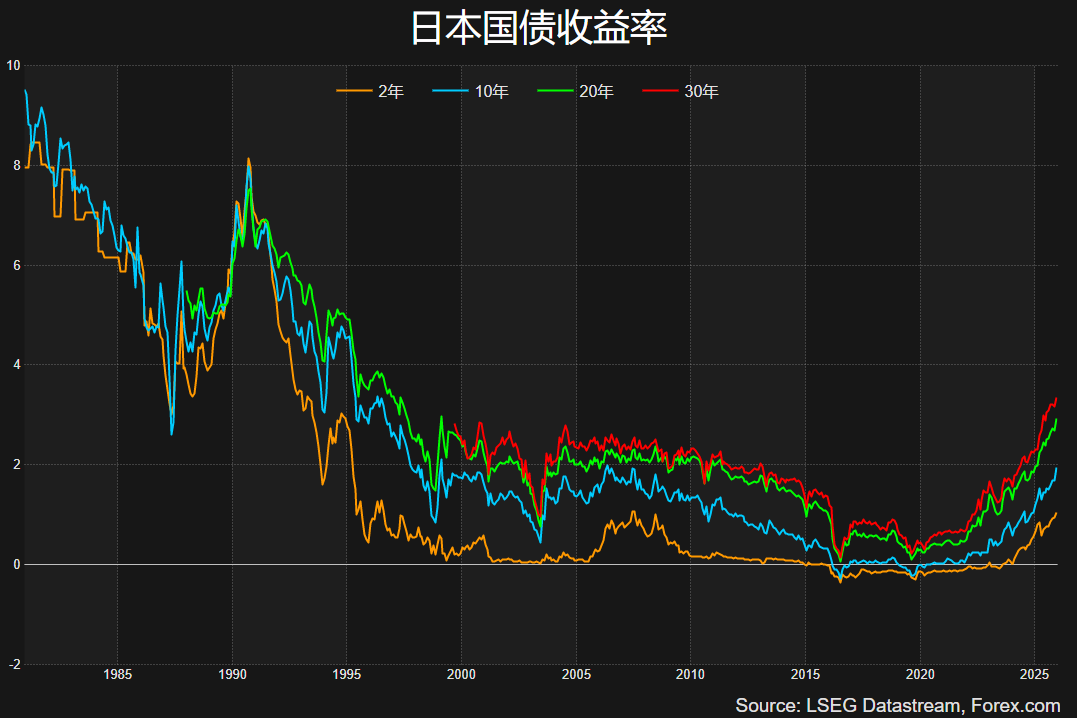
Over the past decade, global capital markets have gradually formed a near-universal structural consensus: the yen is a “permanently low-cost currency.” Supported by prolonged ultra-loose policy, institutional investors could borrow yen at near-zero or even negative cost, convert them into dollars or other high-yield currencies, and invest in U.S. equities, crypto assets, emerging market bonds, and various risk assets. This model evolved from a short-term arbitrage strategy into a multi-trillion-dollar long-term funding structure deeply embedded in global asset pricing. Due to its long duration and high stability, yen carry trades transitioned from being a “strategy” to a “background assumption,” rarely priced as a core risk variable. Yet once the BOJ clearly enters a hiking cycle, this assumption must be reevaluated. The impact of rate hikes goes beyond marginal increases in funding costs. More importantly, it shifts market expectations about the long-term direction of yen exchange rates. As policy rates rise and inflation and wage structures evolve, the yen ceases to be merely a depreciating funding currency and may transform into an appreciating asset. Under such expectations, the logic of carry trades is fundamentally undermined. Capital flows previously driven by “interest rate differentials” now face added “exchange rate risk,” rapidly deteriorating their risk-return profile.
In this scenario, carry funds face choices that are simple yet destructive: either close positions early and reduce yen-denominated liabilities, or passively endure dual pressure from rising rates and adverse exchange moves. For large-scale, highly leveraged funds, the former is often the only viable option. Position unwinding is equally direct—sell risk assets, convert proceeds back into yen, and repay financing. This process ignores asset quality, fundamentals, or long-term outlooks, focusing solely on reducing overall exposure, thus exhibiting clear “indiscriminate selling.” U.S. equities, crypto assets, and emerging market assets often come under simultaneous pressure, leading to highly correlated declines. History has repeatedly validated this mechanism. In August 2025, the BOJ unexpectedly raised its policy rate to 0.25%. Though modest by traditional standards, it triggered severe global market reactions. Bitcoin dropped 18% in a single day, multiple risk assets faced pressure, and markets took nearly three weeks to stabilize. That shock was so intense because the hike came suddenly, forcing carry funds to rapidly deleverage without preparation. The upcoming December 19 meeting, however, differs from that “black swan” event—it is more like a “gray rhino” whose approach was clearly signaled in advance. Markets have priced in the hike, but anticipation does not imply full risk digestion, especially when the hike is larger and compounded by other macro uncertainties.
More critically, the macro environment surrounding this BOJ rate hike is more complex than in the past. Major central banks are diverging in policy: the Fed nominally cuts rates but tightens future easing expectations; the ECB and BoE remain cautious; while the BOJ emerges as one of the few major economies actively tightening. This policy divergence intensifies cross-currency capital flow volatility, turning carry trade unwinding from a one-off event into a phased, recurring process. For the crypto market—highly dependent on global liquidity—this persistent uncertainty means volatility may remain elevated for an extended period. Therefore, the BOJ’s December 19 rate hike is not merely a regional policy adjustment, but a pivotal moment potentially triggering global rebalancing of capital structure. What it “defuses” is not a single-market risk, but the long-accumulated assumption of low-cost leverage across the global financial system. In this process, crypto assets—due to their high liquidity and high beta—often bear the initial brunt. Such pressure does not necessarily imply a reversal of long-term trends, but almost certainly amplifies short-term volatility, suppresses risk appetite, and forces markets to re-examine funding logics long taken for granted.
3. Holiday Market: The Underestimated “Liquidity Amplifier”
Starting December 23, major North American institutional investors gradually enter holiday mode, pushing global financial markets into one of the most typical yet underappreciated phases of liquidity contraction. Unlike macro data or central bank decisions, holidays do not alter any fundamental variables, but they sharply reduce the market’s ability to absorb shocks in the short term. For a market like crypto—highly reliant on continuous trading and market-making depth—this structural liquidity decline can be more damaging than a single negative event. Under normal conditions, sufficient counterparties and risk absorption capacity exist. Market makers, arbitrageurs, and institutional investors continuously provide two-way liquidity, allowing sell pressure to be dispersed, delayed, or hedged.
More alarmingly, the holiday period does not occur in isolation, but coincides precisely with the concentrated release of multiple macro uncertainties. The Fed’s “dovish cut but hawkish guidance” during the super central bank week has already tightened market expectations for future liquidity. At the same time, the BOJ’s impending rate hike on December 19 threatens to disrupt the long-standing yen carry trade structure. Under normal circumstances, these macro shocks could be gradually absorbed over time, with prices adjusting through iterative market interactions. But when they coincide with the holiday period—the weakest liquidity window—their impact becomes nonlinear, exhibiting clear amplification effects. This amplification is not primarily driven by panic, but by a shift in market mechanics. Low liquidity compresses price discovery, preventing gradual information absorption and forcing adjustments through sharper price jumps. In such an environment, crypto market declines often require no new major negative catalyst—just the concentrated release of existing uncertainties can trigger a chain reaction: falling prices force leveraged positions to liquidate, which increases selling pressure, which in turn gets magnified in thin order books, ultimately causing extreme short-term volatility. Historical data shows this pattern is not rare. Whether in Bitcoin’s early cycles or recent mature phases, late December to early January consistently exhibits significantly higher volatility than annual averages. Even in relatively stable macro years, holiday liquidity drops often accompany rapid price swings. In years with high macro uncertainty, this window frequently acts as an “accelerator” for trend movements. In short, holidays don’t determine direction—but they dramatically amplify price moves once direction is established.
4. Conclusion
In summary, the current pullback in the crypto market resembles a phase-wise repricing triggered by shifts in global liquidity paths, rather than a simple reversal of a trend. The Fed’s rate cut did not provide new valuation support for risk assets; instead, its forward guidance constraining future easing has led markets to gradually accept a new environment of “lower rates but insufficient liquidity.” Under this framework, high-valuation and high-leverage assets naturally face pressure, and the crypto market’s adjustment follows clear macro logic.
Meanwhile, the BOJ’s rate hike represents the most structurally significant variable in this correction. As the yen has long served as the core funding currency for global carry trades, the disruption of its low-cost status triggers not just localized capital shifts, but systemic contraction in global risk asset exposure. Historical precedent shows such adjustments tend to be phased and recurring, with impacts not fully realized in a single session but unfolding through sustained volatility as deleveraging progresses. Crypto assets, due to their high liquidity and high beta, typically reflect stress earliest in this process—but this does not necessarily invalidate their long-term thesis.
For investors, the core challenge in this phase is not directional judgment, but recognition of environmental change. When policy uncertainty and liquidity contraction coexist, risk management becomes far more important than trend forecasting. The most meaningful market signals often emerge only after macro variables are fully priced in and carry funds complete their phase-wise adjustments. For the crypto market, the current phase resembles a transitional period of risk recalibration and expectation rebuilding—not the end of the story. The medium-term price direction will depend on the actual recovery of global liquidity after the holidays and whether policy divergence among major central banks deepens further.
Join TechFlow official community to stay tuned
Telegram:https://t.me/TechFlowDaily
X (Twitter):https://x.com/TechFlowPost
X (Twitter) EN:https://x.com/BlockFlow_News
 @HTXAcademy