The Psychological Black Hole Behind Token Price Surges: Why 90% Are Trapped in the Deadly Cycle of Price Worship?
TechFlow Selected TechFlow Selected
The Psychological Black Hole Behind Token Price Surges: Why 90% Are Trapped in the Deadly Cycle of Price Worship?
The clearer your understanding of your own psychological foundation, the better outcomes you can create for your positions.
 Navigating Web3 tides with focused insights
Author: hitesh.eth
Translation: Luffy, Foresight News
Perceptions of token launches stem from evolutionary trends. In crypto, these trends often carry memories of past profitability. What matters isn't just what happened before, but rather the patterns that previously worked. As a result, most participants aren't truly betting on fundamentals—they're unconsciously chasing historical highs by repeating behaviors that once generated profits.
The market consists of participants from different time periods:
-
Those who were active before 2018—the "old guard";
-
The majority who entered after 2020;
-
And the new on-chain users who joined within the past three years.
These groups hold differing views on token launches based on their respective evolutionary inclinations. This means they interpret the same events emotionally and expect vastly different outcomes.
-
Pre-2018 participants seek certainty. They value roadmaps, tokenomics, utility, and vision. They want teams to demonstrate working products, tangible progress, and ideally, real revenue. As natives of the ICO era who have witnessed multiple cycles, they favor projects with continuous development.
-
Post-2020 participants look for shortcuts. Most still hold tokens promoted by KOLs ("influencer-fed" tokens). Their mindset is rooted in wishful thinking—substance matters less than whether someone else will buy at a higher price. They have limited patience but infinite expectations.
-
Recent on-chain newcomers chase free yields or quick thrills. They act aggressively and rapidly—participating in every farm, following every trend, grinding for points, speculating on every hype cycle. But their expectations are too high; even earning thousands feels insufficient. Ultimately, overtrading leads to losses, and most become trapped in this cycle.
These three groups occupy three distinct "mental spaces," which I call intersubjective spaces.
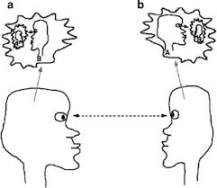
Intersubjectivity in crypto is not an abstract philosophical idea—it's real. It refers to shared beliefs among multiple individuals, a "collective fiction" that temporarily becomes reality through collective action.
In crypto, such shared beliefs drive market movements.
The thoughts of participants in these spaces are inter-subjective. They validate each other, hype together, and reinforce one another’s views. This intersubjectivity creates a powerful group—a tribal force—that acts as either a positive or negative catalyst for tokens.
People within these intersubjective spaces get involved early. They take on more risk, invest more effort, and believe in the story before it materializes.
When the token launches, they invest emotionally. They don’t just hold the token—they become the token itself. They are the community. They become social media ambassadors for the project, drawing attention, creating memes, attracting others, and expanding the intersubjective space.
Hyperliquid is a prime example: early believers formed a strong intersubjective group, were rewarded through large-scale airdrops, and the airdrop itself became proof that "belief paid off"—spurring further belief in a self-reinforcing loop. The same logic applies to memecoins like BONK, WIF, and POPCAT, all initially driven by intersubjective energy.
In crypto, price is narrative—and a leading indicator.
Rising prices attract more people. But before prices rise, someone must first believe they will. This is where intersubjective groups come into play.
They act before the outcome. They become the cause. These believers don't act alone—they coordinate. They promote together, post together, fight together, collectively building a shared reality.
When others join later, they see price as confirmation. Price ceases to be just a number—it becomes a signal. This signal loops back, fueling more confidence, more buying, and further price movement. This is reflexivity.

Crypto reflexivity means price influences belief, and belief in turn influences price. It's a feedback loop where perception and valuation shape each other.
This manifests concretely as:
-
People buy because the price goes up;
-
Rising price becomes proof of success;
-
Success turns into marketing content;
-
Marketing shapes the narrative;
-
Narrative attracts more buyers;
-
More buyers push the price even higher.
But the "cause" behind a price surge is far more complex than the "effect":
-
Meme coins may be driven by culture;
-
DeFi projects by revenue;
-
AI agents by technology.
What unites them is this: they all begin with a shared belief among a few and end with purchases by the many.
Those entering during the reflexive phase typically buy dreams, not logic. They become exit liquidity for those who entered earlier during the intersubjective phase.
At this point, the game becomes asymmetric.
Participants from both phases—intersubjective and reflexive—manipulate information, craft narratives, distort facts, and amplify beliefs to align others with their version of reality.
Over time, multiple realities form around the same symbol. Each group's beliefs differ slightly—these are perceived realities, micro echo chambers of faith. Each holds different reasons for their views, expects different outcomes, and exits at different times. These micro-intersubjective spaces generate volatility, fear, greed, and often chaos.
Most people caught in these micro-realities fall into extreme greed, forgetting why they entered and only fearing potential loss. When the bubble bursts, they lose not only money but faith, collapsing within spaces they once celebrated.
The true beneficiaries of token price discovery are those who coordinated early—through shared belief, behavioral resonance, and group collaboration to shape token prices. But even they profit only if the token price remains above their expectations long enough for them to exit confidently.
In the end, price discovery isn't a chart event—it's a coordination event. It's shaped by how humans perceive value, believe in stories, and synchronize actions with others.
So always remember:
-
Which phase you're in;
-
Which "reality" you're participating in;
-
What kind of cognition underlies your belief that a token will rise.
The clearer you are about your own psychological foundation, the better the outcome you can create for your positions.
Join TechFlow official community to stay tuned
Telegram:https://t.me/TechFlowDaily
X (Twitter):https://x.com/TechFlowPost
X (Twitter) EN:https://x.com/BlockFlow_News
 hitesh.eth