From Rugby Player to "Crypto Advisor": How Did 29-Year-Old Bo Hines Make a Comeback to the White House?
TechFlow Selected TechFlow Selected
From Rugby Player to "Crypto Advisor": How Did 29-Year-Old Bo Hines Make a Comeback to the White House?
Bo Hines, who previously assisted a top super PAC within Trump's campaign team with advertising matters, has been appointed by Trump to lead an aggressive initiative aimed at establishing crypto-friendly regulatory policies and overturning the Biden administration's crackdown on the industry.
 Navigating Web3 tides with focused insights
By Fortune
Translation and compilation: Bitpush News
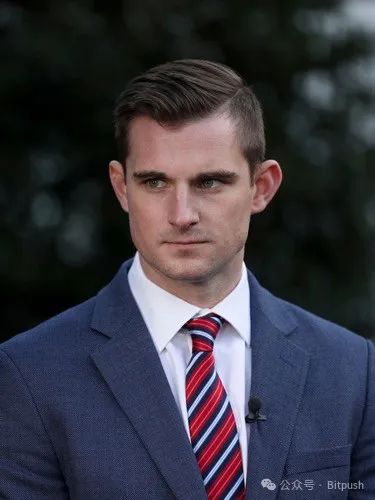
In March this year, when Donald Trump hosted the first-ever cryptocurrency summit at the White House, he was flanked by several of his top advisers. To his right sat Treasury Secretary Scott Bessent; to his left was David Sacks, venture capital heavyweight and head of cryptocurrency and artificial intelligence affairs. Next to Sacks sat a figure who just months earlier had been completely unknown to everyone in the room: Bo Hines, a 29-year-old former congressional candidate and college football wide receiver.
Hines previously helped manage advertising for a top super PAC supporting Trump’s campaign. Now, Trump has appointed Hines to lead an ambitious initiative aimed at crafting crypto-friendly regulations and overturning the Biden administration's crackdown on the industry.
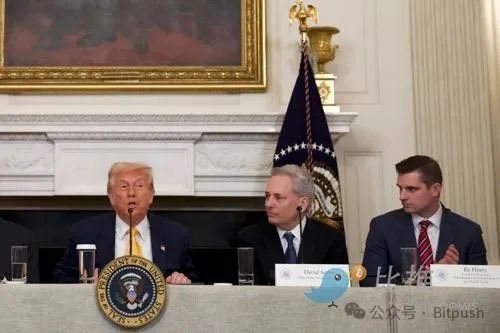
March 7, 2025 — U.S. President Trump with David Sacks (center) and Bo Hines at the White House Digital Assets Summit
From Obscurity to Influence
In his first 30 days as executive director of the "President's Advisory Committee on Digital Assets," Bo Hines has become one of the most sought-after figures in the cryptocurrency world—CEOs and billionaire investors scramble to book time with him, while lobbyists compete fiercely for face-to-face meetings.
Schedule records obtained by Fortune under the Freedom of Information Act show that in his first month on the job, Hines met with more than 50 crypto lobbyists, investors, company founders, government officials, and bankers.
His meeting list includes Chris Dixon and Marc Andreessen from Silicon Valley powerhouse Andreessen Horowitz, Ripple CEO Brad Garlinghouse, and Caroline Butler, digital assets lead at Bank of New York Mellon.
Meetings took place both inside the White House and outside—at cafés, via Zoom calls, or at Old Ebbitt Grill, Washington’s oldest dining salon.
"I want to meet everyone in this space—the big players, the small ones," Hines told Fortune over coffee at Tatte, an Israeli-American café near the White House. "I want to hear what every single person has to say."
Although David Sacks brings decades of business experience from early roles at PayPal and Craft Ventures—and holds a higher-ranking position—he is a part-time government employee limited to 130 working days per year. As a result, the relatively unknown Hines handles much of the day-to-day work. A spokesperson for the Office of Science and Technology Policy (OSTP) insists the two are “working side by side.”
Seated at a desk on the fourth floor of the Eisenhower Executive Office Building, Hines has emerged as one of the most influential figures in the crypto world. He serves as the primary liaison between the White House and the cryptocurrency industry, translating sector grievances into concrete policy proposals.
Hines now faces growing challenges as Trump’s tariff offensive roils global markets and triggers sharp volatility in digital asset prices. The president’s erratic economic policies have already sent blockchain-related stocks tumbling, and a potential economic crisis could further suppress a crypto market increasingly tied to traditional equities. In short, Trump’s on-again, off-again tariff wars may reverse years of financial progress within the blockchain sector.
To understand the early months of Trump’s crypto agenda and the man tasked with executing it, Fortune interviewed Hines and spoke with more than a dozen people who’ve met or spoken with him since January. Most requested anonymity due to the sensitive nature of their conversations.
They describe Hines as inexperienced in crypto but quick to learn, eager to understand an industry striving for legitimacy—even as it remains fractured by internal divisions. "He’s like drinking from a firehose," said one crypto executive and Washington insider. "For anyone in crypto, he’s the first point of contact with the White House."
Crypto—From the Fringes to the Center
When Hines’ spokesperson suggested meeting at Tatte near the White House, he arrived late after mistakenly going to two other branches of the chain. Finally reaching the third Tatte location of the day—wearing a dark gray suit and smiling—he immediately dove into crypto talk.
Clean-cut and sharply dressed, Hines carries the polished demeanor honed through two unsuccessful runs for Congress in North Carolina (in 2022 and 2024). He speaks quickly, answers decisively, repeatedly praises Trump, and insists that crypto regulation should be a bipartisan issue. Clearly, the 29-year-old wants to be seen not as a political novice, but as a capable ally of Trump who gets things done.
"We respect the president, admire his work, and support his 'America First' stance—even when it comes to crypto," he said.
The crypto industry, once dominated by outsiders and government skeptics, has increasingly gravitated toward Washington politicians. FTX founder Sam Bankman-Fried spent tens of millions backing pro-blockchain candidates in an effort to push comprehensive regulatory legislation. But after his exchange collapsed, the Biden administration launched enforcement actions, suing major firms like Coinbase—accusing them of operating unregistered securities exchanges.
Under the leadership of giants like Coinbase, blockchain groups and individuals donated nearly $250 million to pro-crypto politicians across both parties during the last election cycle. Their efforts paid off: Trump, who once called Bitcoin a "scam," transformed into a vocal crypto advocate. During his campaign, he promised to establish a federal Bitcoin reserve, advance friendly legislation, and won over top-tier VCs like Andreessen Horowitz, which had previously complained about being sidelined by the prior administration.
After winning the November 2024 election, Trump began fulfilling those promises—appointing Solana supporter David Sacks and Hines to the OSTP within the Executive Office of the President. Upon taking office, Trump signed multiple executive orders: creating a crypto policy task force led by Sacks, establishing a strategic government crypto reserve, among others.
Unlike the Biden administration, Hines has become a welcoming point of contact for industry executives and policy advisors. One executive who has met with Hines five times said that because Sacks has limited availability and must also focus on AI policy, Hines functions more like a “sounding board” for the broader industry. "David Sacks only meets with the top 20 to 40 CEOs," the executive said. "Hines can meet with the next hundred." One lobbyist noted that Hines even offers his personal phone number upon request.
Trump’s crypto agenda includes pushing Congress to pass stablecoin regulation, helping the SEC develop token issuance guidelines, and more. But for many executives, simply gaining access is the priority. Although Trump initially planned to form an elite "crypto council," fierce competition over seats—"too crazy," according to one executive—led the White House to instead host summits. Hines dismissed claims of exclusivity, emphasizing the goal was to "hear more voices."
Even the guest list for the inaugural White House crypto summit sparked a bidding war among industry leaders. The final list wasn’t revealed until the day of the event, with around 25 executives invited—many of whom were major donors to Trump’s campaign. "A lot of egos got bruised," said one lobbyist, describing the White House as feeling like "the Wild West"—disorganized and lacking clear communication.
Nonetheless, the March summit marked a major victory for the crypto industry. Hines sat just one seat away from Trump, surrounded by the very executives whose names now fill his calendar.
"This is the White House—who wouldn’t want to be here?" Hines said. "The fact that the president held this event for the industry signals a massive shift, showing that crypto is coming of age."
To some observers, Trump’s crypto policy stands out as a rare bright spot amid Washington chaos. "Crypto hasn't yet gotten tangled up in all the other mess happening in D.C.—and that’s remarkable," said Scott Shewcraft, a lobbyist who works with multiple financial services firms.
But Amanda Fischer, former chief of staff to ex-SEC chair Gary Gensler and current policy director at progressive think tank Better Markets, expressed deep concern. She believes the government’s plan to build a crypto reserve could artificially prop up specific asset prices, and that certain executive orders might undermine the independence of federal agencies. "Their policy actions will benefit a tiny group of individuals and corporations at the expense of American investors and financial stability," she warned.
An even bigger challenge stems from Trump’s tariff war. Bitcoin surged from $70,000 to over $100,000 between Trump’s election win (November 2024) and his inauguration—but plunged 10% following Trump’s tariff announcement on April 2 (partially recovering after policy reversals). Related stocks suffered too: Coinbase endured its worst quarter in two years, then dropped another 15% after the tariff news, partially rebounding after adjustments.
When Fortune asked Hines about market volatility, an OSTP spokesperson declined direct comment, stating only that "the American people will benefit from the president’s leadership in digital assets."
Still Growing, Still Challenged
On paper, Hines doesn’t appear to be the ideal candidate to lead Trump’s crypto agenda. Despite his close ties to Trump, he has limited experience in crypto and little prior engagement with major crypto firms.
Hines first became interested in crypto after the 2014 Bitcoin St. Petersburg Bowl—a college football game sponsored by crypto firm BitPay.
Later, he co-founded Charlotte-based investment firm Nxum Group and led its political arm. According to Federal Election Commission filings, just one week before the 2024 election, Nxum donated $1 million worth of advertising to MAGA Inc., one of the largest pro-Trump super PACs. He also serves as CEO of Today Is America, an Nxum-affiliated investment company that managed a social media platform promising to donate proceeds from token sales to conservative youth organizations.
Hines launched a brief political career four years after graduating from Yale, running twice for North Carolina’s congressional seat—both attempts failed. Trump endorsed him in 2022, but it wasn’t enough to secure victory.
Since Trump took office, the crypto industry has achieved several key wins: the SEC dropped lawsuits against Coinbase and Ripple; the president granted clemency to Ross Ulbricht, founder of the darknet marketplace Silk Road—a prisoner serving double life sentences for drug trafficking and money laundering, long supported by libertarian factions within the crypto community.
Yet Hines still faces steep hurdles. His top legislative priority is advancing a stablecoin regulatory bill—one that, if passed, would mark the first major blockchain legislation in U.S. history. Hines stresses bipartisan consensus is essential, though he admits he hasn’t yet reached out to any Democratic lawmakers directly. He says Republicans are engaging in cross-party collaboration, while he focuses on connecting with policy groups that maintain relationships with Democrats.
Since winning re-election in November 2024, Trump has overhauled his approach to crypto regulation:
-
Appointed David Sacks and Bo Hines as White House crypto advisors
-
Issued executive orders establishing a U.S. Bitcoin reserve and digital asset reserve (assets seized through civil and criminal forfeiture)
-
Granted clemency to Silk Road founder Ross Ulbricht
-
Hosted the first White House crypto summit, inviting 25 industry leaders to discuss policy
-
Repealed Biden-era crypto policies and created a task force—comprising Treasury, Commerce, and other department heads—to advance blockchain regulation
-
Demanded Congress deliver two key crypto bills before its August recess
A more difficult task lies ahead: pushing comprehensive crypto legislation to establish a clear regulatory framework for token offerings, exchange operations, and other activities—ending years of compliance uncertainty. Trump hopes to sign both bills into law before Congress adjourns in August. "We’ll do everything we can to make it happen," Hines said. "The president is deeply committed to delivering on his promises to the industry."
Beyond legislation, Hines is coordinating with agencies like the SEC—which is shifting toward a more lenient regulatory posture—and considering hosting specialized summits focused on mining, exchanges, and venture capital.

The new father also hopes to balance career and family. He and his wife welcomed a son last fall. While she spends about a quarter of her time in North Carolina, Hines is almost always based in Washington. "I hope that when my son grows up, he’ll look back and see that his father played an indispensable role in driving a financial revolution and advancing America forward," he said.
Join TechFlow official community to stay tuned
Telegram:https://t.me/TechFlowDaily
X (Twitter):https://x.com/TechFlowPost
X (Twitter) EN:https://x.com/BlockFlow_News
 @FortuneMagazine