Deep Dive into Gomble Games: How Web3 Casual Games Drive Mass Adoption?
TechFlow Selected TechFlow Selected
Deep Dive into Gomble Games: How Web3 Casual Games Drive Mass Adoption?
In the early days of smartphones, casual games helped the public become familiar with mobile technology, and their simple, intuitive gameplay reduced the learning curve and accelerated the development of the app ecosystem.
 Navigating Web3 tides with focused insights
Key Takeaways
-
Web3 still struggles with mass adoption. Meme coins demonstrate that fun can attract public attention, but speculation-driven hype fades quickly.
-
Casual games are effective vehicles for spreading new technologies. Gomble Games seamlessly integrates Web3 features into gameplay, rapidly acquiring users through simple games like Eggdrop.
-
It has built a complete ecosystem including GOMBLE SQUAD, GOMBLE BUILDERS, and a token reward system, offering economic incentives for Web3 users and a zero-technical-barrier entry point for Web2 users.
1. The Long Road to Web3 Mass Adoption
Mass adoption remains the core goal of the Web3 industry, yet substantial user growth has not materialized. While technical advances such as account abstraction and faster transactions have lowered some barriers, they have not significantly increased active user numbers.
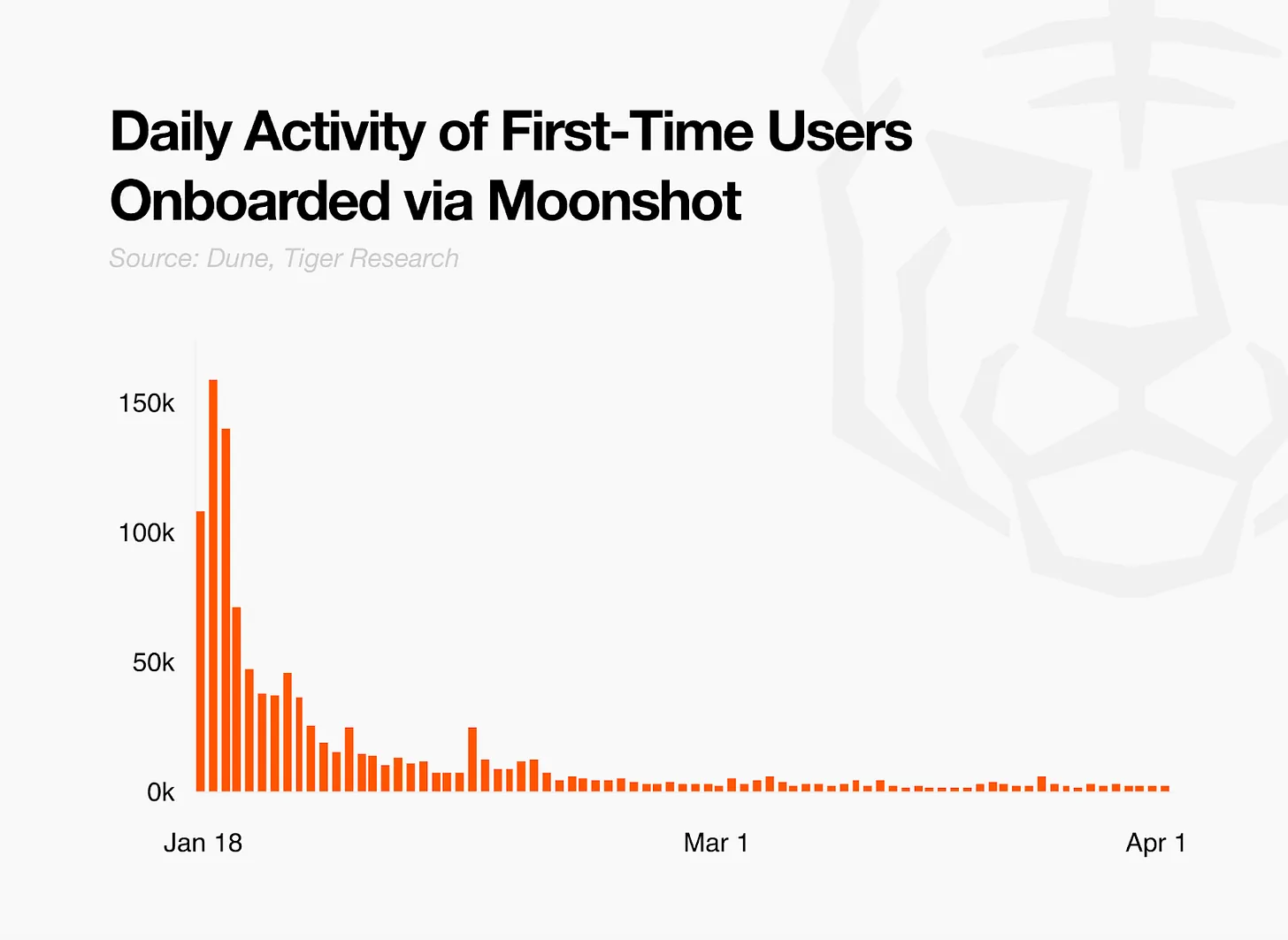
Recent meme coin surges represented by Chillguy and Trump briefly reignited public interest, but on-chain data platform Moonshot shows most $Trump investors suffered losses shortly after their initial purchase and exited—either passively holding or completely leaving the ecosystem. This pattern of speculative entry followed by rapid exit contributes little to long-term growth and may even harm public perception.
To achieve true Web3 adoption, the industry must shift focus toward sustained user value perception—going beyond short-term financial gains to build a stable, engaged user base.
2. Casual Games: A Bridge to Technology Adoption
Games have always been pioneers in popularizing new technologies. In the PC era, MUD games helped users adapt to unfamiliar interfaces and network environments through engaging gameplay.
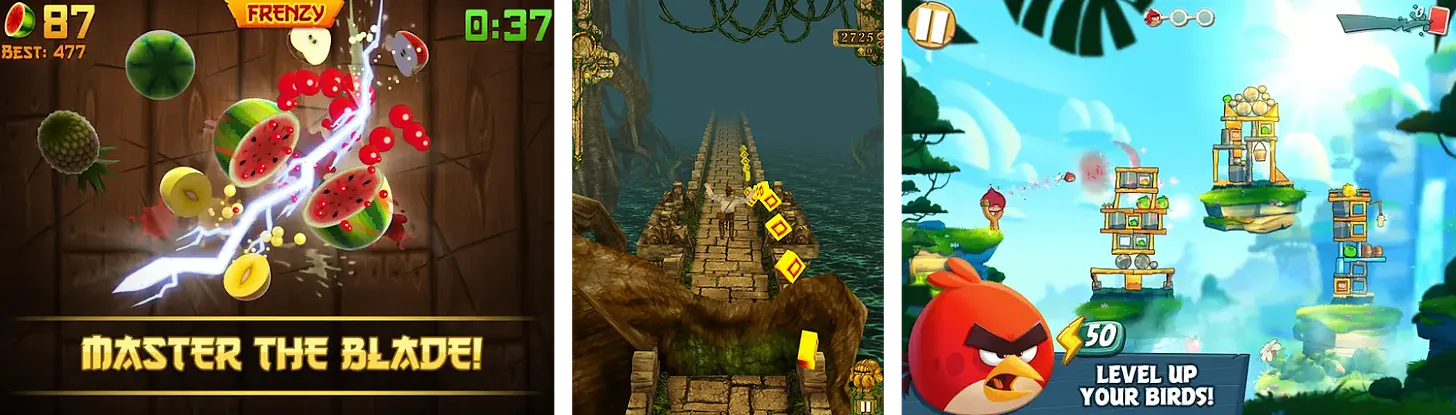
Source: Fruit Ninja, Temple Run, Angry Birds
In the smartphone era, intuitive casual games like Fruit Ninja, Temple Run, and Angry Birds attracted far broader and more diverse audiences than MUDs did during the PC era. These titles served as key catalysts for technological diffusion, guiding users to experience touchscreens, gyroscopes, and other mobile features without complex instructions, fostering technology acceptance through enjoyable experiences.

Source: Pokémon Go
Augmented reality followed a similar path. Pokémon Go allowed players to interact with digital characters in real-world settings, bringing AR into daily life without requiring users to understand the underlying technology. Casual games act as “onboarding tutorials” for new technologies, consistently serving as effective tools for mass adoption by simplifying complex systems and delivering immediate, tangible value.
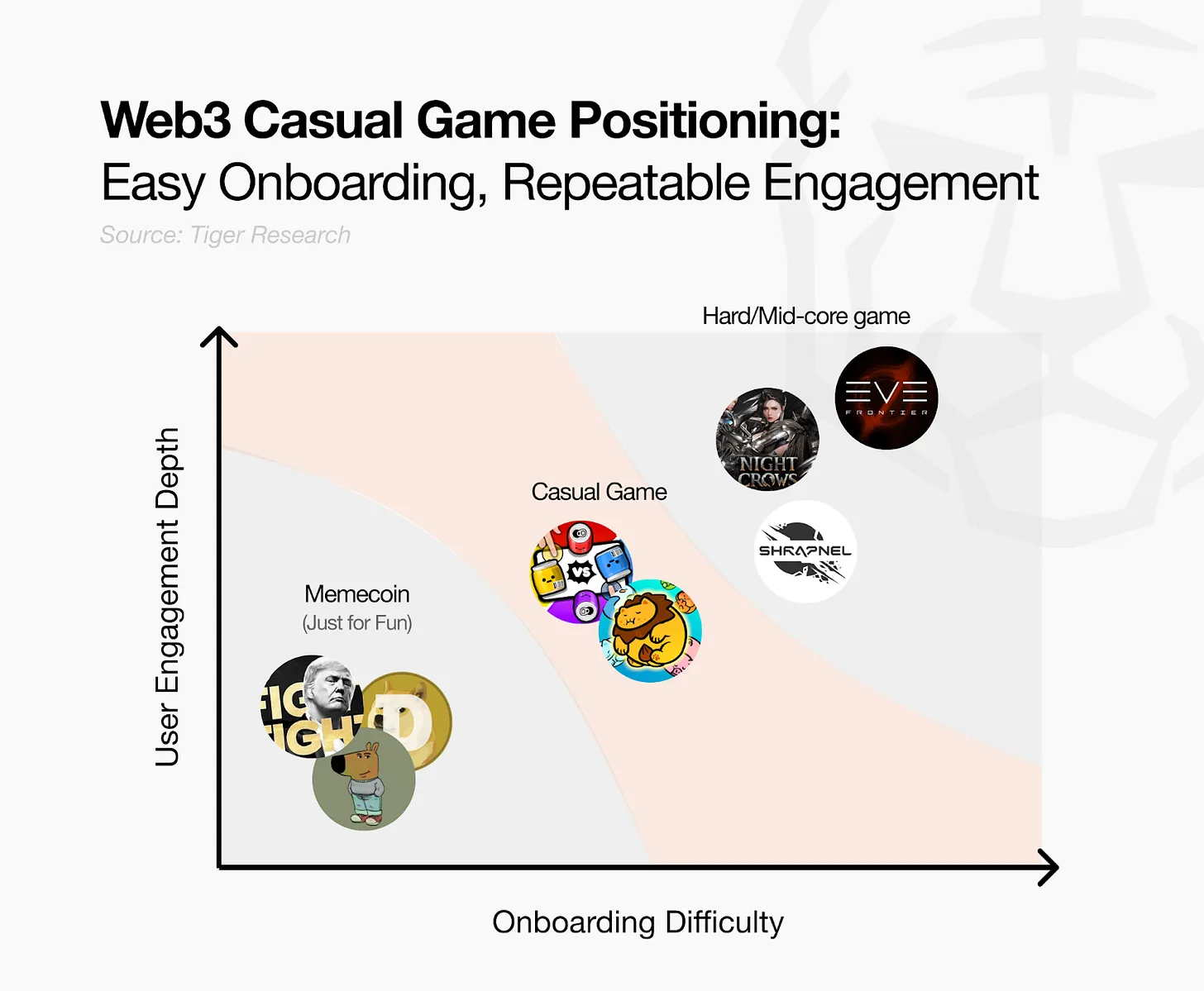
This principle applies equally to Web3. Casual games offer low-friction gateways into the ecosystem; their short play sessions and simple mechanics allow users to explore Web3 with minimal risk. While meme coin trading offers similar ease of use, it is driven by speculation, with participants typically seeking quick profits before exiting. On the other end, hardcore Web3 games offer depth and rich content but are hindered by complex onboarding processes and time-intensive gameplay, limiting mainstream appeal.
Casual games fill this gap—balancing accessibility with sustained engagement—and represent a pragmatic path toward mass Web3 adoption.
3. Gomble Games: Delivering Web3 Fun Through Casual Gaming
Gomble Games (GOMBLE) is leading the integration of Web3 and casual gaming. Originating from the blockchain division of Korean game studio 111 Percent—the team behind global hits like Random Dice and Lucky Defense—GOMBLE leverages its foundation to drive Web3 adoption through accessible, highly engaging gameplay.
Source: Gomble Games
GOMBLE adheres to a core principle: deliver fun. Web3 features are integrated in ways that do not disrupt gameplay—a strategy strongly validated by the market. In 2024, GOMBLE secured over $10 million in funding from leading institutions including YZi Labs (formerly Binance Labs), Spartan Group, and Hashed.
GOMBLE has already proven its execution capability: launching casual games such as Merge Lion and Rumby Party in 2024. Their Telegram-based game Eggdrop attracted 300,000 users within two days of launch, reached over 3 million monthly active users, and achieved 600,000 daily active users with high retention rates. Players have praised Eggdrop for its quality and overall experience, demonstrating standout gameplay and engagement among Telegram games. Through Eggdrop, GOMBLE has proven its ability to design high-performance, sticky games within the Web3 ecosystem.
4. Gomble’s Advanced Strategy: From Game Development to Ecosystem Building
GOMBLE is evolving beyond game development to build a full-fledged Web3 ecosystem. Its strategy connects users, developers, and content holders to foster long-term engagement, grounded in a clear understanding of both the strengths and limitations of casual games—while lowering entry barriers, casual games often face challenges such as short lifecycles and high churn rates. GOMBLE leverages Web3 technology to create value beyond the game itself, transforming short-term gameplay into lasting relationships.
This model is akin to designing a theater’s backstage operations and managing a troupe to ensure continuous production of successful performances. To realize this vision, the company operates three core components: 1) the social gaming hub GOMBLE SQUAD; 2) the developer platform GOMBLE BUILDERS; and 3) the native token $GM. Together, they form a sustainable Web3 ecosystem where users co-create content and share rewards.
4.1 Social Gaming Hub: GOMBLE SQUAD

Source: GOMBLE SQUAD
This module introduces team-based play for up to 10 players, enhancing social dynamics through collaborative missions, team rankings, and shared rewards. Similar to team sports, it transforms individual gameplay into collective achievement, increasing session duration by incentivizing group participation.
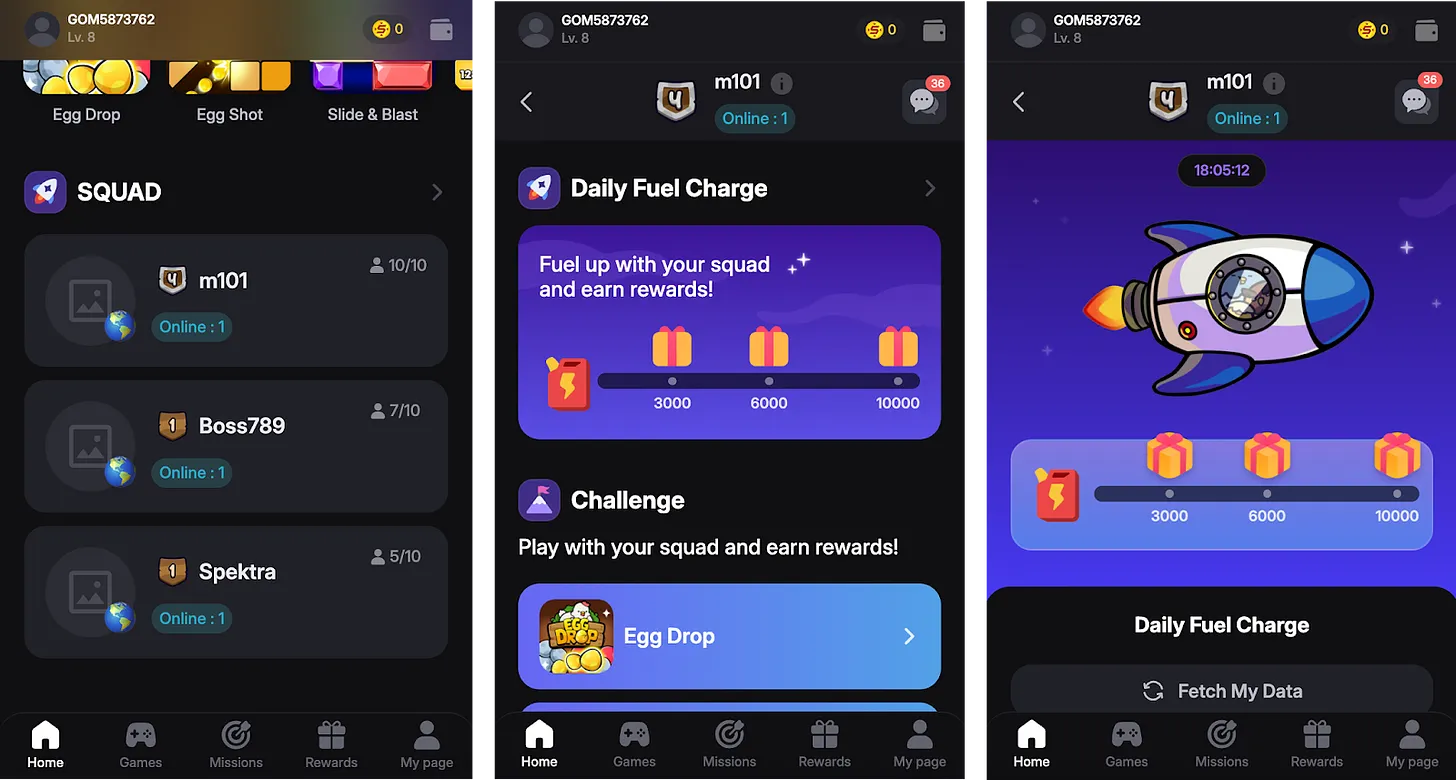
GOMBLE SQUAD interface on Telegram, Source: Gomble Games
During testing, the Telegram version of GOMBLE SQUAD demonstrated strong appeal: nearly 50,000 teams were formed, generating over 560,000 interactions. After implementing squad-based missions in Eggdrop, weekly data showed an average 7% increase in daily retention, while competitive elements like leaderboards led to a ~6.7x increase in average spending among paying users.
GOMBLE extends this system on-chain via its "Proof-of-Squad (PoSQ)" mechanism. Unlike traditional Web3 metrics focused on individual transactions or asset holdings, PoSQ is a novel social data verification protocol that records team interactions. This enables developers to access socially driven user data, allows players to verify squad-level contributions, and supports transparent, performance-based reward distribution.
GOMBLE plans to expand this system via a native mobile app, evolving from a gameplay mechanic into a rewards hub connecting digital and real-world activities. While specific features remain undisclosed, the collaborative framework opens new possibilities—such as a "Squad Marathon" aggregating members’ step counts or location-based team check-in challenges.
Through this model, GOMBLE aims to create intuitive entry points for both Web3 natives and mainstream users, driving scalable adoption through low-friction mechanisms.
4.2 Community-Driven Development Platform: GOMBLE BUILDERS
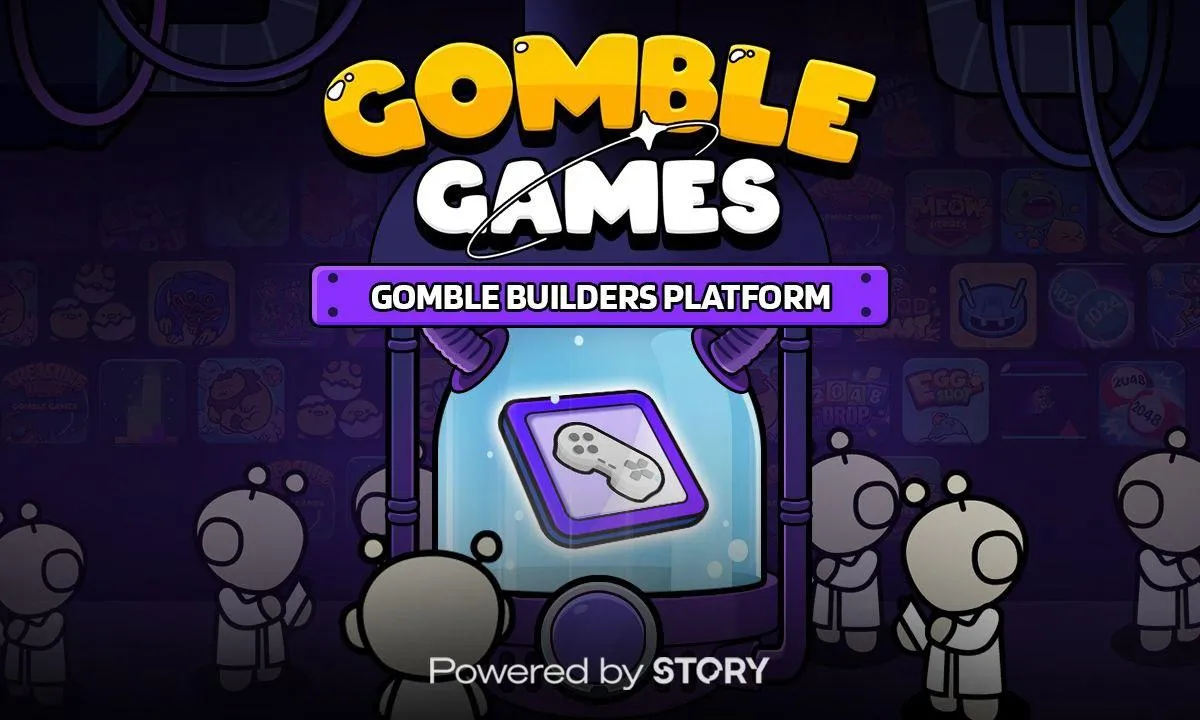
This platform enables users to directly participate in game development and earn rewards, specifically designed for short-cycle, mechanically simple casual games, aligning perfectly with community-driven iterative experimentation.
Source: Gomble Games
Leveraging its experience in casual game development, GOMBLE has built a system where user feedback directly shapes game design. The first phase will introduce IP content selected through community voting, already partnered with blockchain IP protocol Story.
For example: Pudgy Penguins NFT holders can propose character skin IPs; once approved by community vote, GOMBLE adapts the designs and adds them as in-game assets. Revenue from paid content is shared with NFT holders, while proposers and voters also receive rewards.
GOMBLE plans to expand Builders functionality, with future updates introducing tools enabling users to participate in game creation and monetization. By opening development to the community, GOMBLE aims to extend the lifecycle of casual games while increasing creative diversity within the genre.
4.3 Incentive-Driven Flywheel: GOMBLE Token Economy
Rewards are not the end of the user journey—they are the beginning. Rewards spark initial engagement and convert it into sustained activity and contribution. Blockchain technology makes this model more reliable and measurable by transparently recording every action.
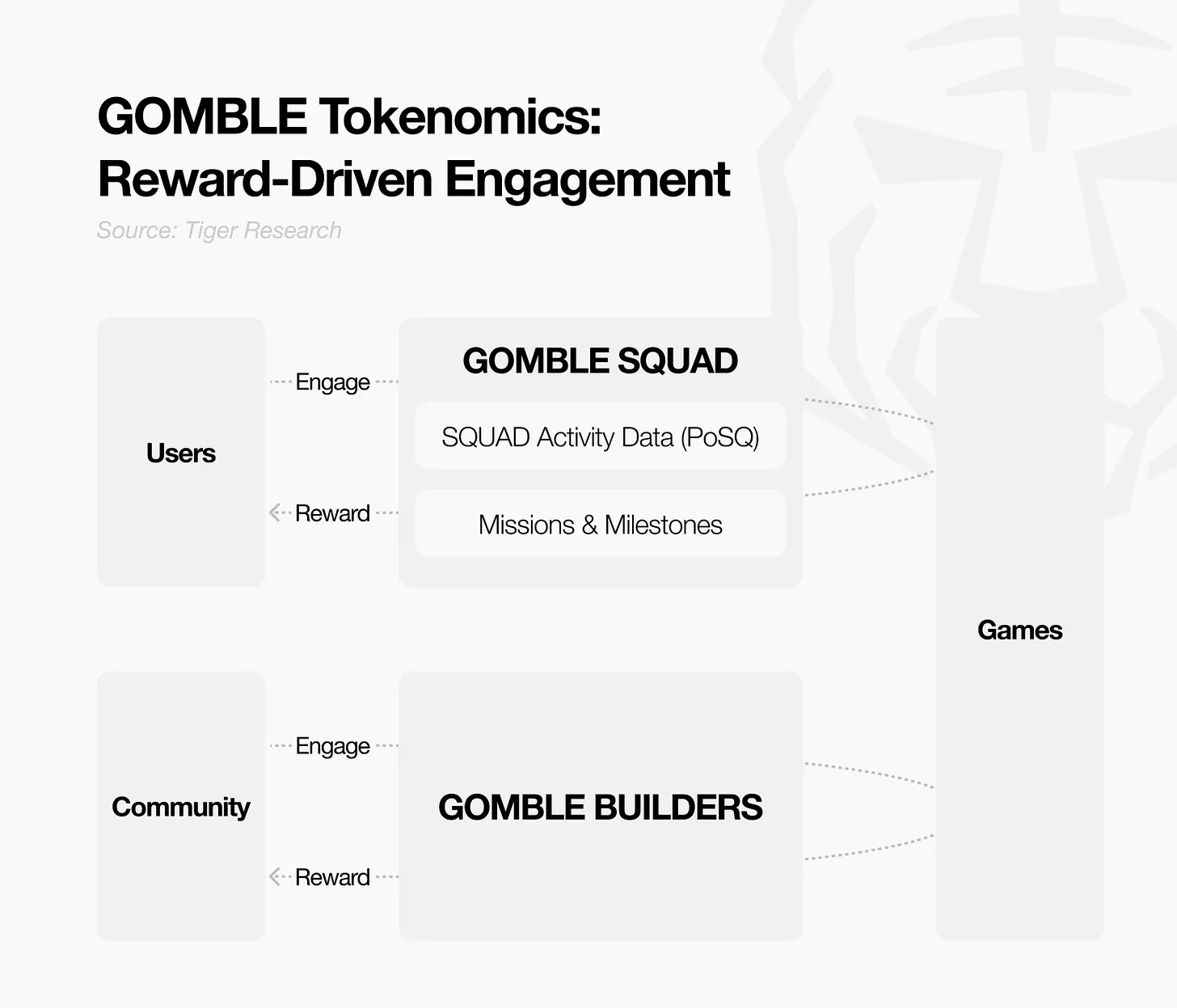
GOMBLE has designed a token economy connecting players, developers, and the community: Players earn tokens through gameplay, generating high-quality on-chain user data; developers use this data to precisely target users, optimize operations, and deliver personalized rewards. This feedback loop is impossible in traditional gaming—where data is fragmented across platforms like Google and Facebook, limiting developer insights and inflating marketing costs. GOMBLE flips this model by returning data ownership to developers and users, turning it into a shared asset that drives engagement.
GOMBLE also rewards community contributions. In traditional ecosystems, players who provide feedback rarely receive anything in return, while platforms capture all value. GOMBLE changes this dynamic by directly rewarding contributors with tokens, establishing a clearly aligned incentive structure for sustainable participation. This model builds on precedents like StarCraft’s map editor and Steam Workshop, but enhances them with Web3’s transparency, ownership, and structured incentives. GOMBLE doesn’t just invite users to play—it invites them to co-build the ecosystem and share in its value.
5. Gomble’s Challenges and Mass Adoption Potential
In the early days of smartphones, casual games helped the public become familiar with mobile technology. Their simple, intuitive gameplay reduced learning curves and accelerated the growth of the app ecosystem. GOMBLE now seeks to replicate this path in the Web3 space.
The team has already demonstrated execution strength in casual gaming: LaunchPool attracted over 2 million new users in two weeks via Telegram squads. However, initial success is not enough—consistent delivery of “fun games” is critical. The parent studio 111 Percent achieved breakthrough success with hits like Random Dice, and GOMBLE similarly needs a breakout title to sustain its token economy.
Unlike traditional models reliant on single products, GOMBLE acts as an ecosystem builder, collaborating with external developers, studios, and Web3 projects to expand its reach and increase the odds of success. This collaborative strategy strengthens its long-term outlook.
Casual games remain the most pragmatic tool for achieving mass Web3 adoption. History shows that games bring new technologies to mainstream audiences through intuitive experiences. GOMBLE now stands at the intersection of gaming and Web3—if it succeeds, it may usher in a new wave of adoption driven by gameplay enjoyment rather than speculation.
Join TechFlow official community to stay tuned
Telegram:https://t.me/TechFlowDaily
X (Twitter):https://x.com/TechFlowPost
X (Twitter) EN:https://x.com/BlockFlow_News
 @tiger_research