Former Riot Games General Manager: How Can Blockchain Make Games More Fun?
TechFlow Selected TechFlow Selected
Former Riot Games General Manager: How Can Blockchain Make Games More Fun?
With the rise of Web3, game developers have gained access to new tools and capabilities that enable them to create more engaging and immersive gaming experiences.
 Navigating Web3 tides with focused insights
Written by: Overpriced JPEGs
Compiled by: TechFlow
With the rise of Web3, game developers now have access to new tools and capabilities that enable them to create more engaging and compelling gaming experiences. This article explores how to leverage these innovations to design more fun games, featuring insights from Justin Hulog, Chief Studios Officer at Immutable, overseeing the publishing and development of Immutable's games including Gods Unchained, Guild of Guardians, and other upcoming titles. Prior to joining the Web3 gaming space, Justin served as General Manager for Southeast Asia at Riot Games.
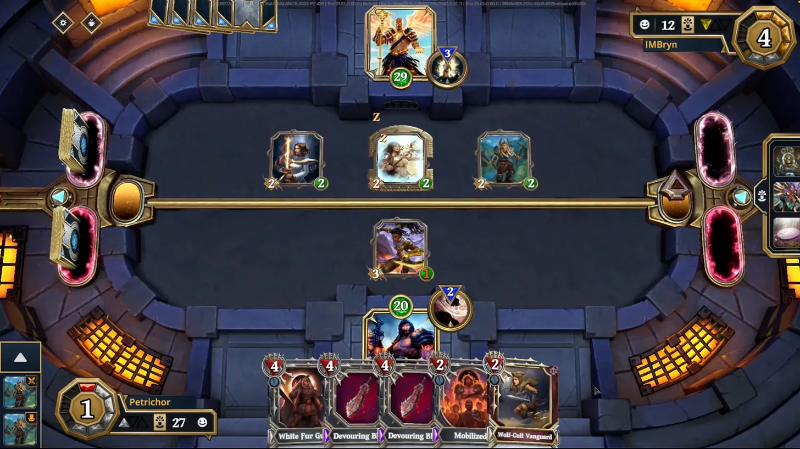
Web3 gaming has been waiting for its moment. From DookeyDash’s massive success—where top scorer Kyle Jackson, better known as Mongraal (a professional Fortnite player), sold his Golden Key loot for $1.6 million—to Unity integrating MetaMask and other Web3 tools, it seems Web3 gaming is finally stepping into the mainstream.
At Immutable, we’ve also seen a surge in player activity and interest over the past year. Consider these bear market statistics:
-
The number of games played and total gameplay time in Gods Unchained nearly tripled.
-
Guild of Guardians has accumulated over 1 million pre-registrations.
-
Illuvium’s land sale became one of the most successful NFT sales in history, selling $72 million worth of land within 72 hours.
As Web3 game developers, we’re targeting a massive market. The gaming industry is already larger than the combined markets of film, television, and music. Yet we haven’t yet unlocked Web3’s killer feature: giving players true ownership of in-game assets. Ask anyone who owns numerous untradeable in-game skins or items—you’ll quickly realize that enabling players to freely manage their digital assets could propel gaming into its next phase of exponential growth.
But let’s set aside these wins for a moment and be honest: we’re still not mainstream. Why? Because Web3 games simply aren’t fun enough yet.
We all know the problems: Play-to-Earn can devolve into Ponzi schemes; monetary incentives attract certain users but fail to sustain broad appeal; and Web3 UX/UI remains clunky and difficult to use.
As game developers, our goal should be that players engage with games, collect, and trade items primarily because they enjoy the experience. Because it’s fun.
So what should we do?
First, we must draw from proven Web2 game reward systems that offer intrinsic rewards: achievement, progression, and skill development. These form the foundation of satisfying and engaging gameplay.
But we need to go further: not just making fun games and adding an ownership layer, but reimagining game design using features uniquely enabled by blockchain.
What does this mean? The power of Web3 gaming lies not only in asset ownership but in weaving together narrative, mechanics, and economy to create entirely new layers of engagement. This is where Web3 games truly diverge from Web2: creating frictionless markets for buying and selling in-game assets, and integrating this functionality directly into storylines and gameplay mechanics—enabling on-chain player actions to drive narrative evolution.
In Gods Unchained, we’ve experimented extensively with novel gameplay made possible by Web3. A recent example is our “Cosmic Shift” event.
We wanted to replace our popular character Thaeriel with a new version, “Thaeriel the Fallen.” In a Web2 game, options would be limited—perhaps a simple exchange system for old cards. But leveraging blockchain, we incentivized players to transition while embedding it into a broader narrative.
We created a wallet named Cosmicshift.eth to represent the will of the “Cosmos,” which was used to “hunt down” old Thaeriel-related cards. We were able to purchase legacy cards while crafting a compelling, integrated storyline.
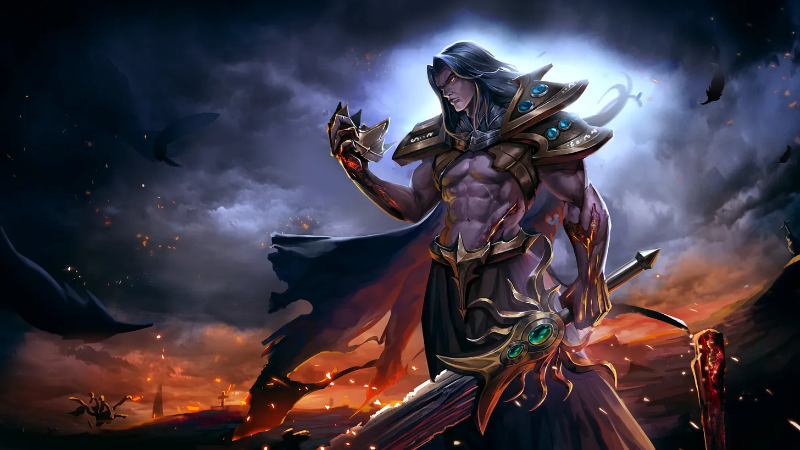
This Web3-powered approach to game design allows the story to permeate both the card game itself and card trading, creating a far more immersive experience. The game’s narrative influences mechanics, which shape the economy, affect player behavior, and in turn feed back into the evolving story—a feedback loop impossible in traditional games.
Our forging mechanism is another example. It allows players to merge duplicate cards they own into more powerful versions. This adds a unique Web3 strategic layer, where players must decide which cards to keep and which to fuse, balancing their desire for stronger cards against the need for deck diversity.
All of this points to a near future where more in-game assets are tightly woven into the narrative. Owning an item won’t just be cosmetic—it will become an integral part of the story and overall gameplay experience. This makes games deeper, richer, and ultimately more fun for players.
We’re only beginning to explore how Web3’s new tools can transform game design—tools that will continue evolving over time and may look very different in 3 to 5 years.
In the meantime, as Web3 game developers, we have a responsibility to push the boundaries of our imagination—and remember why we started playing games in the first place: for fun. With the powerful tools Web3 provides, we now have everything we need to make games more enjoyable than ever before.
Join TechFlow official community to stay tuned
Telegram:https://t.me/TechFlowDaily
X (Twitter):https://x.com/TechFlowPost
X (Twitter) EN:https://x.com/BlockFlow_News