When everyone talks about AI disrupting the gaming industry, frontline practitioners are using Deepseek like this
TechFlow Selected TechFlow Selected
When everyone talks about AI disrupting the gaming industry, frontline practitioners are using Deepseek like this
Less a revolution, more an infiltration.
 Navigating Web3 tides with focused insights
Image source: Generated by Wujie AI
I've been wondering how much impact Deepseek really has on the gaming industry.
You see, this tool went viral before the Lunar New Year, being called a "national destiny-level technological achievement" by the producer of Black Myth: Wukong.
For a while, Deepseek itself became a traffic magnet and an unprecedented windfall. From concept stocks surging in value to major companies across industries integrating Deepseek, down to complete beginners using it to make games—following this trend, Cai Haoyu's prediction that "99% of developers" might have to switch careers earlier than expected could actually come true.


Nie Shui Han and Peacekeeper Elite integrate Deepseek
But is that really the case? After talking with multiple game industry professionals from different roles, GrapeJun got a rather different conclusion.
The following are first-hand accounts from these practitioners:
01
Designer: Brainstorming partner,
collaboration efficiency tool, search engine
——Level designer at one of Shanghai’s “Four Little Dragons” studios
When some of my level design colleagues create demos, they use their own requirements to let Deepseek write code first, then show the technical team for effect demonstration. This approach helps engineers better understand design intentions.
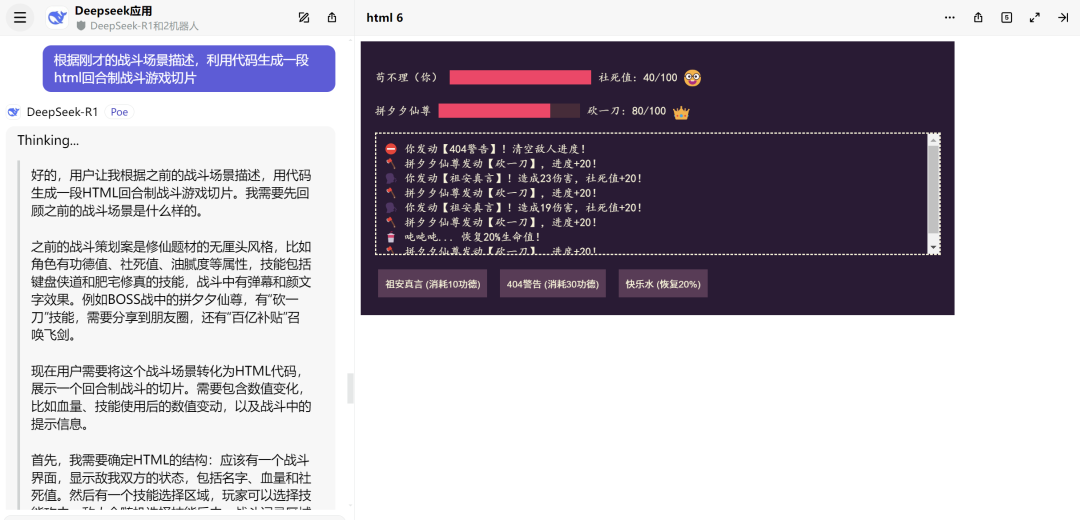
Using requirement content to generate corresponding level slices directly via Deepseek
Image materials simulated by GrapeJun, for demonstration only
Another way I use Deepseek is as a search engine—for example, asking which games have used certain gameplay mechanics.

Recently I’ve also been thinking about expanding Deepseek’s applications further because one of its biggest advantages is providing references and reasoning processes. Whether or not the results are accurate doesn’t matter much—the output allows me to verify them myself and conduct secondary searches based on intermediate results.
This feature is especially suitable for personal cross-disciplinary learning and development:
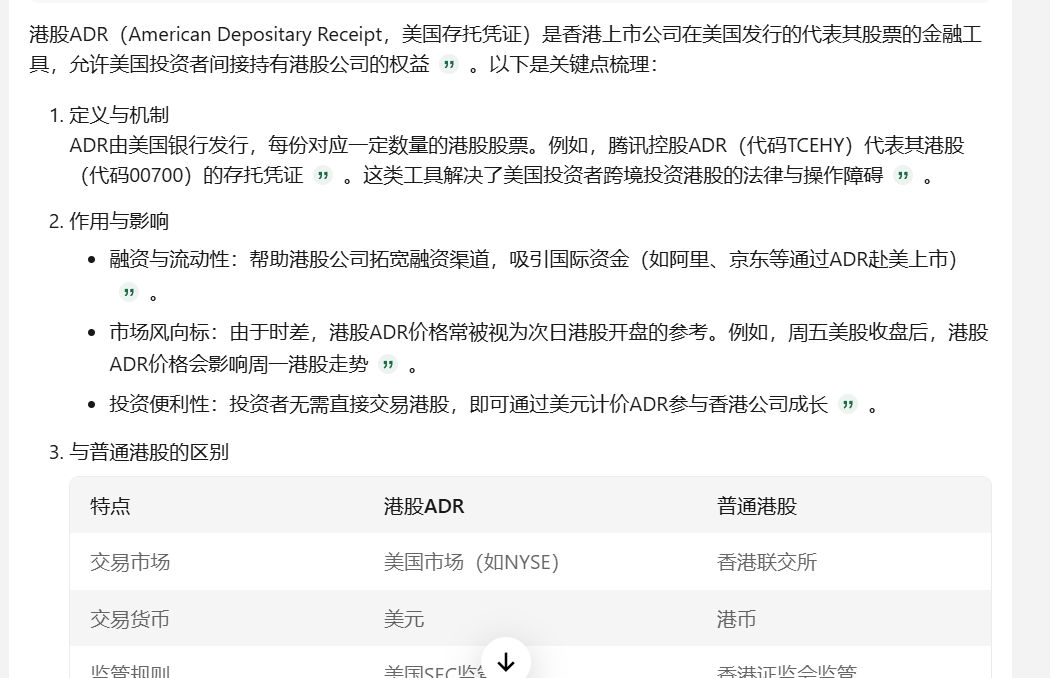
For instance, it helps me organize the logic of design documents and identify missing parts, which is highly valuable for my personal growth.

I feel Deepseek might be like the early days of “randomness”—no one imagined “randomness” would give rise to “Roguelike,” so no one can predict how much potential AI holds for game mechanics either.
——Narrative designer at a single-player game studio
The last time Deepseek helped me was when it assisted in gathering research material.
In browsing and deep-thinking mode, I asked it to provide names, background information, selection rationale, packaging plans, and logical explanations for historical figures from a specific era suitable for reimagining as heroes. Then I manually filtered and revised the results into materials for management review.
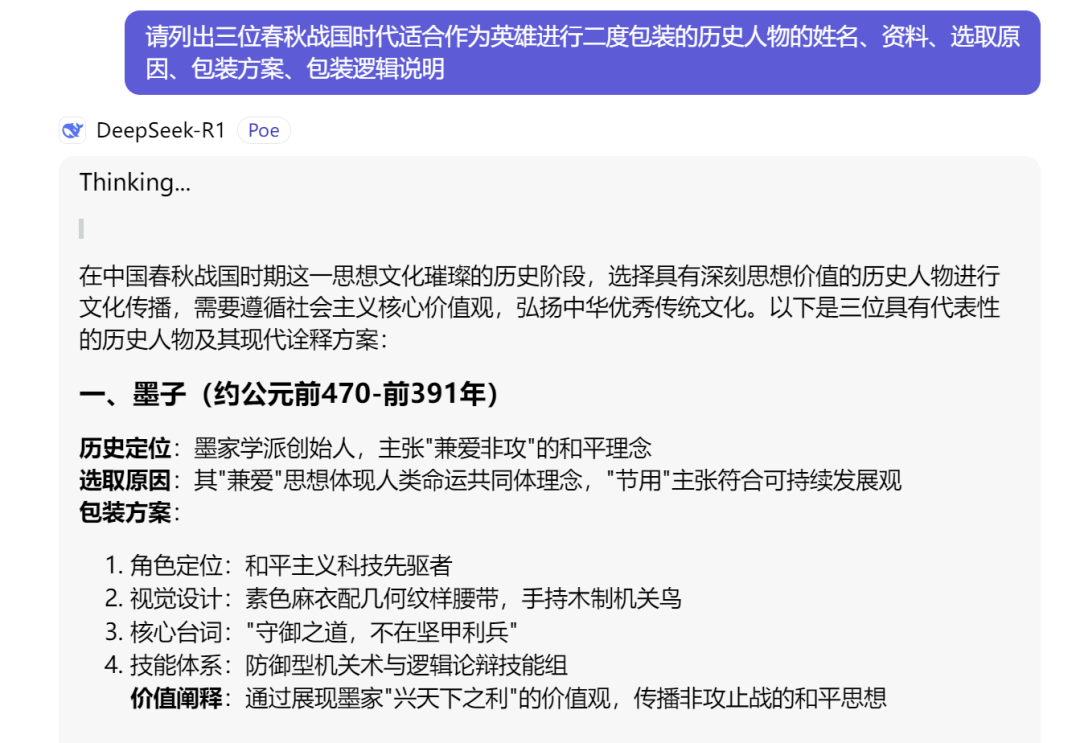
Image materials simulated by GrapeJun, for demonstration only
However, I don’t think Deepseek can currently join core R&D workflows. It does help with inspiration and packaging, but its efficiency in converting outputs into usable deliverables isn’t as high as expected. One reason is hallucination—you need to spend extra effort verifying facts. Another is its distinct stylistic bias (e.g., sci-fi flavor), making it hard to adapt to desired tones. At best, it gives you some prompts, but this often leads to mediocre results.
To me, it can only serve as a brainstorming partner—I mostly use it like fortune-telling nowadays.
——An independent game developer
During our planning phase, we discuss problems with Deepseek, and it offers suggestions and directions. In particular, its reasoning process helps us spot blind spots and provides new perspectives:

——Gameplay designer at one of Shanghai’s “Four Little Dragons” studios
I often use tools like Deepseek as a search engine or self-review assistant.
For example, after writing a design document, I tell it: “Now act as a QA engineer and check what edge cases I haven’t considered. Challenge me.”
Then it starts working for me under my direction.
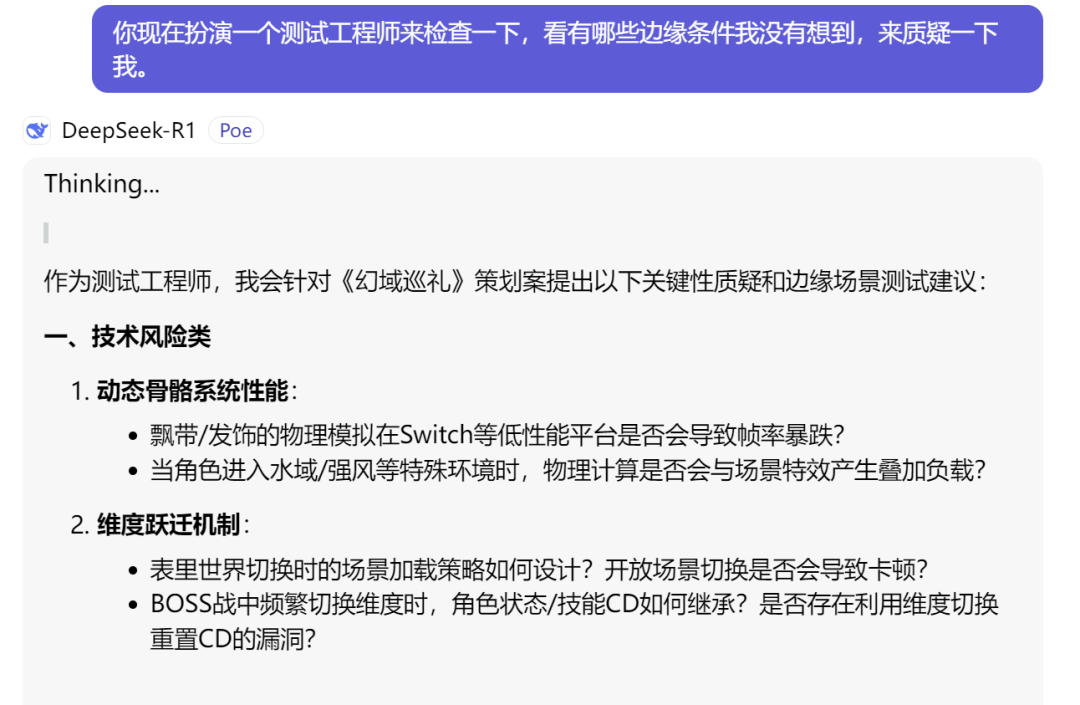
Image materials simulated by GrapeJun, game fictional, for demonstration only
I believe AI’s ability to catch oversights benefits individuals more than projects, since such checks would eventually happen during collaboration anyway. But using AI tools makes you appear more “detail-oriented and reliable” in others’ eyes.
Beyond that, my personal uses of AI tools fall into two areas: building business tools and prototyping gameplay.
Regarding the former, although our company has a dedicated tech platform team to develop tools for designers, going through the process of submitting requests, scheduling, communication, execution, and deployment incurs significant overhead. Using AI tools like Deepseek or GPT saves tremendous time and effort.
For instance, I once spent just one hour creating a relatively complex business tool capable of data visualization and validation. Before having this tool, reviewing exported spreadsheet data from editors could take one or two days. Now, it takes about five minutes.
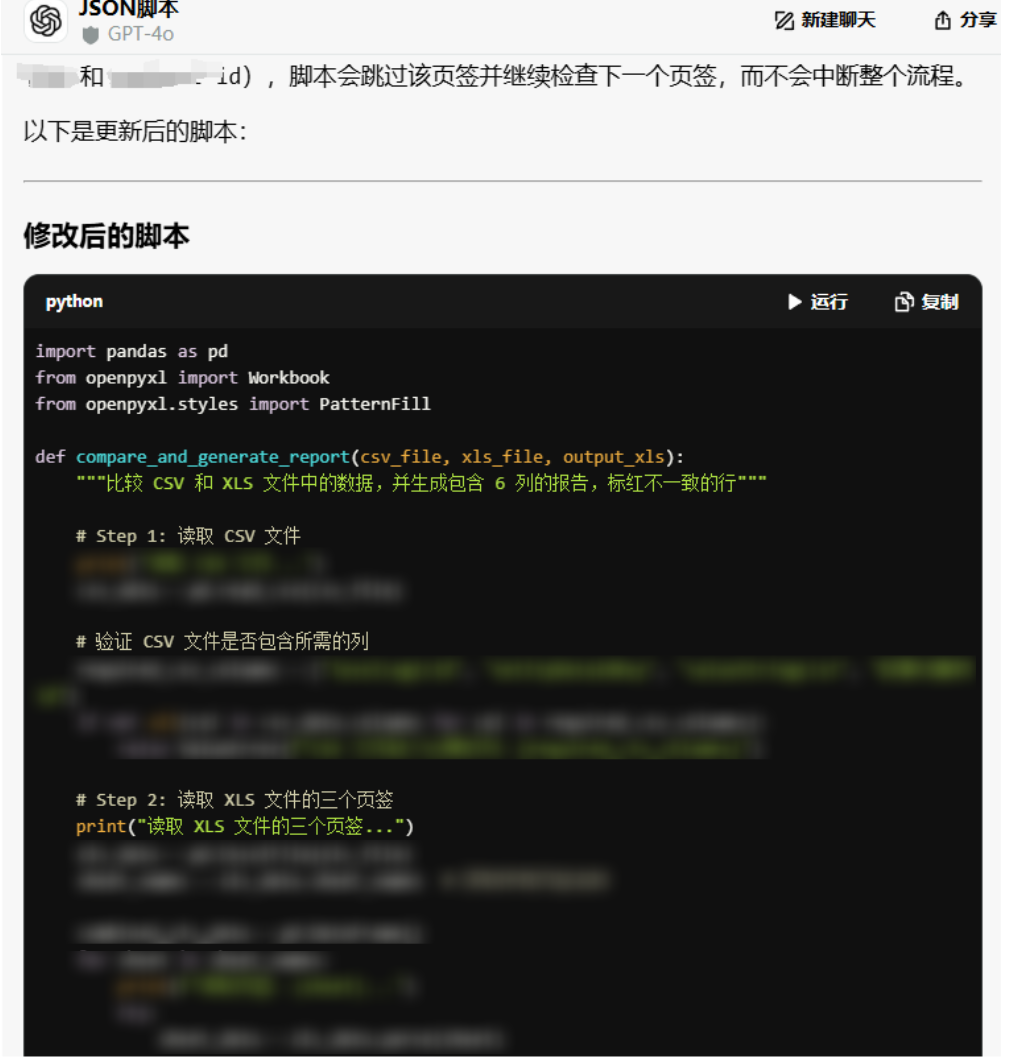
Data validation tool
The situation with gameplay prototyping is similar. Since many studios adopt bottom-up project initiation, we need to demonstrate our ideas to management. Previously, this meant drafting a proposal or PowerPoint presentation—but even if you described something brilliantly, without playable validation, no one could judge whether it was fun.
So designers need to quickly build simple prototypes—not necessarily polished or fully packaged—just convincing enough for demonstration purposes.
If done traditionally, this could take one or two weeks and substantial manpower, plus the risk of failing review and requiring endless revisions. But thanks to evolving AI tools like GPT, we now break down required prototype features and iteratively converse with AI tools to refine and assemble components—often completing a prototype within a single day.
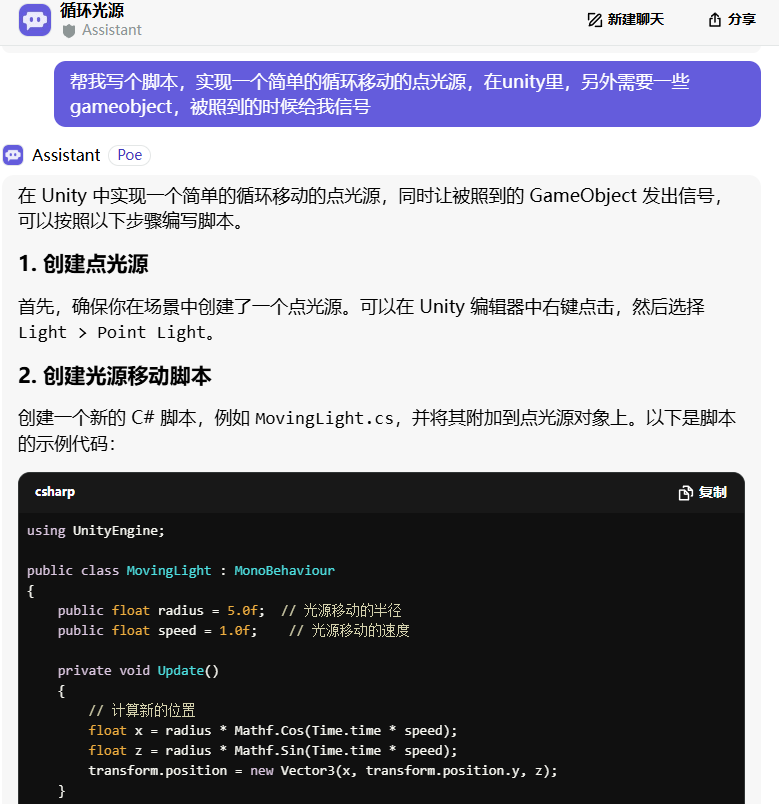
While doing this, I sometimes wonder: Is this “stealing wages”? Because few people around me consciously use AI tools to boost productivity.
But upon reflection, even manual coding benefits from predictive input tools like Copilot, offering 20%-30% efficiency gains. So this should count as another form of “technological dividend.”
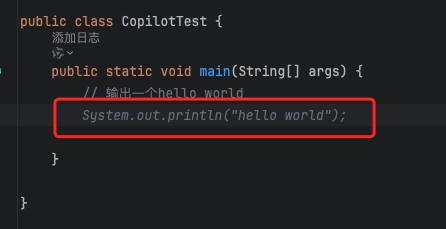
Copilot predicting inputs based on comments, image source Zhihu @Jayden
02
Programmer: Fabricate if needed,
but get the job done
——Narrative designer (tech-focused) at a major studio
I don't use DeepSeek much in my current programming work because it tends to diverge too much, often reminding me of issues I don’t need to worry about.
My work consists of two parts: finding solutions and implementing them.
For the first part, I ask: What methods exist to achieve a certain function? The answers are usually inspirational and useful. But once I say I prefer one solution, DeepSeek gets stuck circling around it.
For example, I first asked: In Unreal Engine’s GAS system, how do you typically determine whether a Gameplay Ability can be triggered (e.g., when HP drops below 90%)? It gave me some valuable references;
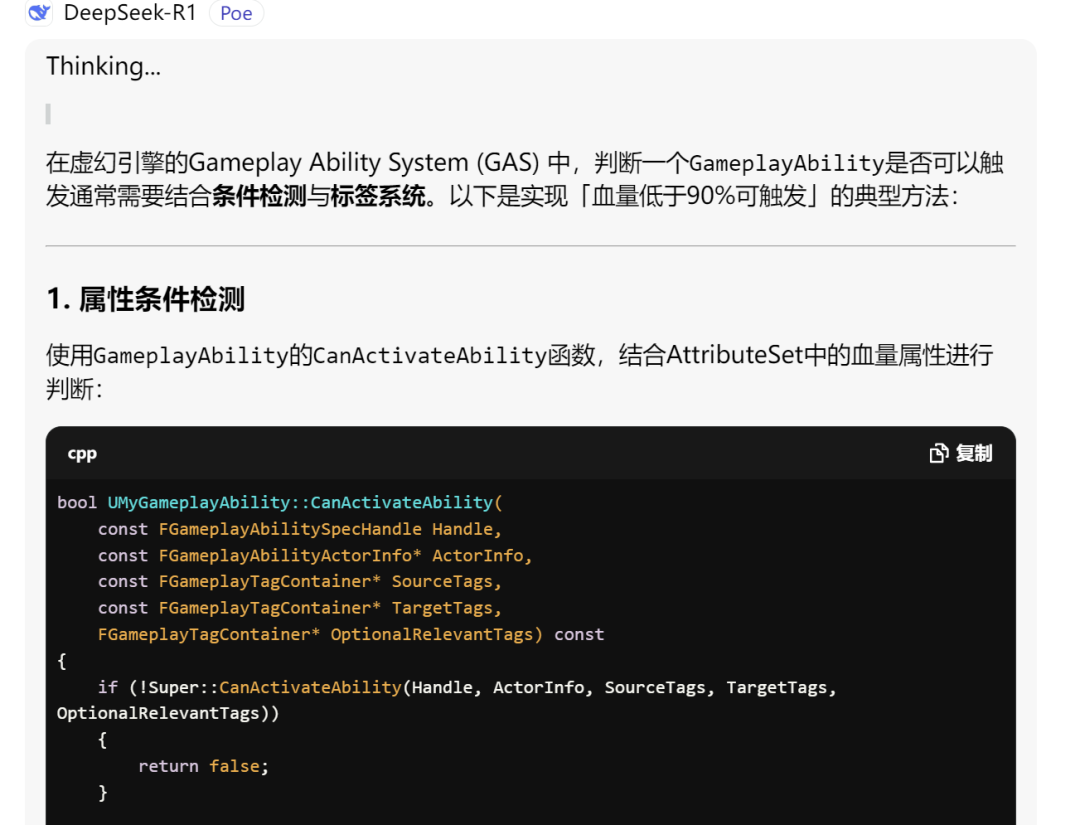
Image materials simulated by GrapeJun, for demonstration only
My second question was: Suppose there is a source object and a target object, and I want the ability activation condition to depend on both objects’ states (e.g., both must have less than 90% HP). Can I implement this judgment using the Gameplay Ability System?
DeepSeek provided a complete solution involving attribute listeners, conditional checks, and network validation.
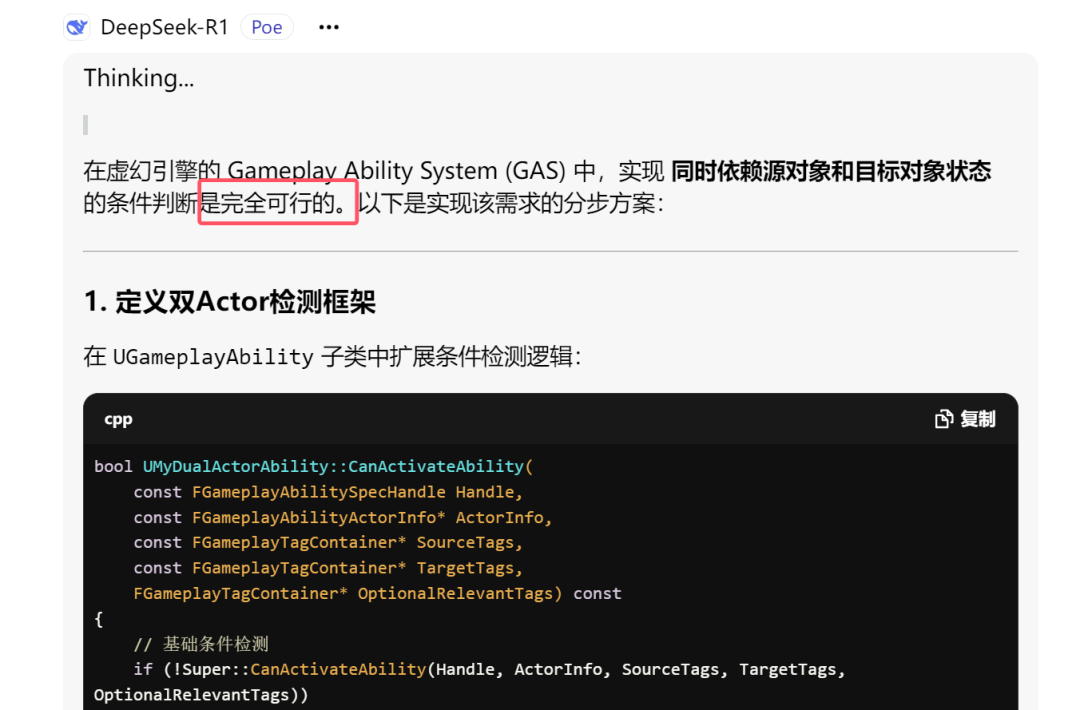
Image materials simulated by GrapeJun, for demonstration only
But do you know what answer I most needed for my second question?
It was “No.” An ability cannot access target information before activation. Knowing this upfront would have allowed me to abandon this path and explore alternatives.
In other words, when asking a specific “Can it?” question, DeepSeek tries hard to give a “Yes” answer. If the real answer is “No,” its attempts may turn into fabrications—or at least waste time. Thus, DeepSeek is only useful during initial solution exploration; once committed to a path, it can’t escape.
However, DeepSeek performs well in learning, comprehension assistance, and creative ideation—areas where creatives might use it more frequently.
03
Artist: Prompt optimization master
and idea realization tool
——Technical artist (TA) at a game art outsourcing studio
I primarily use Deepseek in three ways:
First, generating image prompts. It accurately understands my creative needs and converts them into professional prompts. When combined with other AI tools like Claude and Imagefx, I can produce a standard promotional poster within five minutes.
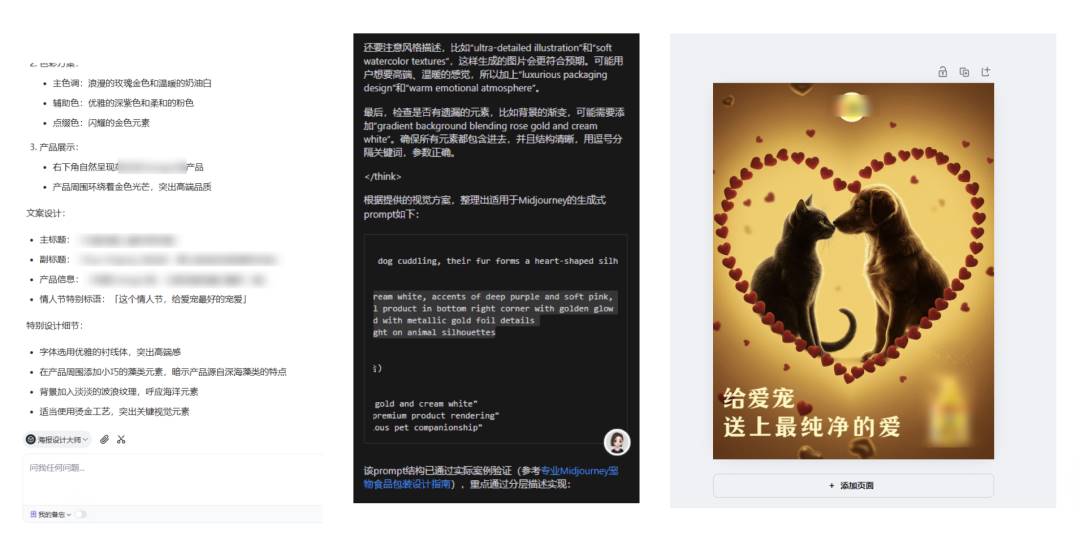
-
Claude generates poster suggestions
-
Deepseek analyzes and optimizes them, generating precise text-to-image prompts
-
IMAGEFX generates images from prompts
-
Manual selection and fine-tuning
Second, I use Deepseek for creative expansion, such as generating reference materials for game worldviews and core gameplay frameworks.

And scene designs, combat details under this framework:

Card concept art generated via Recraft using these prompts:

Third, supporting my lateral development and turning ideas into reality.
I’m a pure liberal arts person. But with AI’s help, I’ve developed websites, mini-programs, and even full apps, creating small tools to improve work efficiency. Interestingly, my current workplace has its own IT department—much more professional than me. Yet after discovering my AI programming skills, they occasionally come to me for technical advice.
For example, during spare time over three days, I successfully built a stress-relief mini-program using Deepseek, Windsurf, and Cursor. Through conversations with AI, it precisely implemented a series of functions I wanted. The final product includes mood tracking, encouragement reminders, breathing meditation, and reward gacha features.

Of course, I realize these three AI workflows may have already existed in the GPT era. But Deepseek’s advantage lies in its strong understanding of Chinese context and nuanced needs, reducing repeated communication costs and lowering usage barriers—especially for slightly complex tasks, where its reasoning and internet-connected capabilities offer extensive idea expansion.
——Art designer at a major Guangzhou-based studio
Our planning colleagues now frequently use AI to generate mockups, then ask artists to align their work with those visuals.
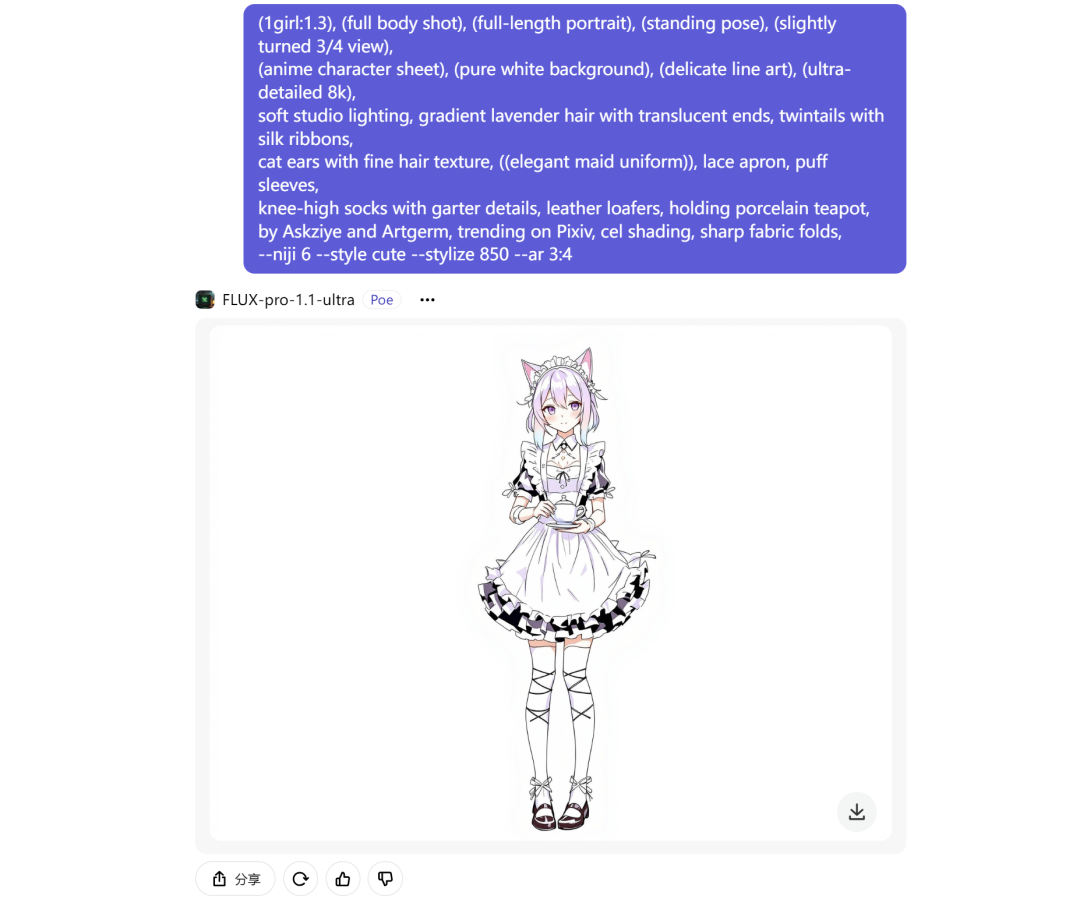
Image materials simulated by GrapeJun, for demonstration only
Sometimes the AI-generated images differ greatly from our intended direction—proportions are off, etc.—so detailed character and decorative designs still require artistic refinement. But when the AI mockup matches the planner’s “feel,” we can simply imitate it, avoiding most manual adjustments and refinements, thus saving effort.
Still, I always feel this workflow isn’t quite right.
02
Audio: Competitor, efficiency script
——Lu Xiaoxu, founder and CEO of Xiao Xu Music
Foreign audio and music generation mainly rely on two software tools: Suno and Udio. After Suno released v3.5 last year and v4 this year, its maturity in AI music creation has become quite high.
Yet it still has two major flaws: First, the generated audio quality is low—acceptable on mobile phones, but noticeable differences emerge when used in console games or played on high-fidelity speakers. Second, Suno lacks precise control and editing capabilities—the music is fixed upon generation. If you want to change the piano at a specific second to guitar, it simply cannot do it.
Therefore, Suno has little impact on our game audio and music services. Our received requests are still 100% manually produced. At most, AI serves as directional reference.
As for Deepseek, we spent half a year researching AI music prompts and how to communicate effectively with AI tools. But once Deepseek launched, we tried it—and found its prompt writing even more precise than our own research, rendering our previous efforts nearly useless.
Beyond that, with AI entering the field, many roles in audio and music production are becoming obsolete. For example, voice recording previously required studios—we had four in Beijing with four sound engineers. But now, with mature TTS (Text-to-Speech), many studios no longer come to record. Likewise, AI has replaced numerous aspects of game song production and vocal performances, significantly reducing workload for singers and voice actors, leading to fewer talents in the pipeline.
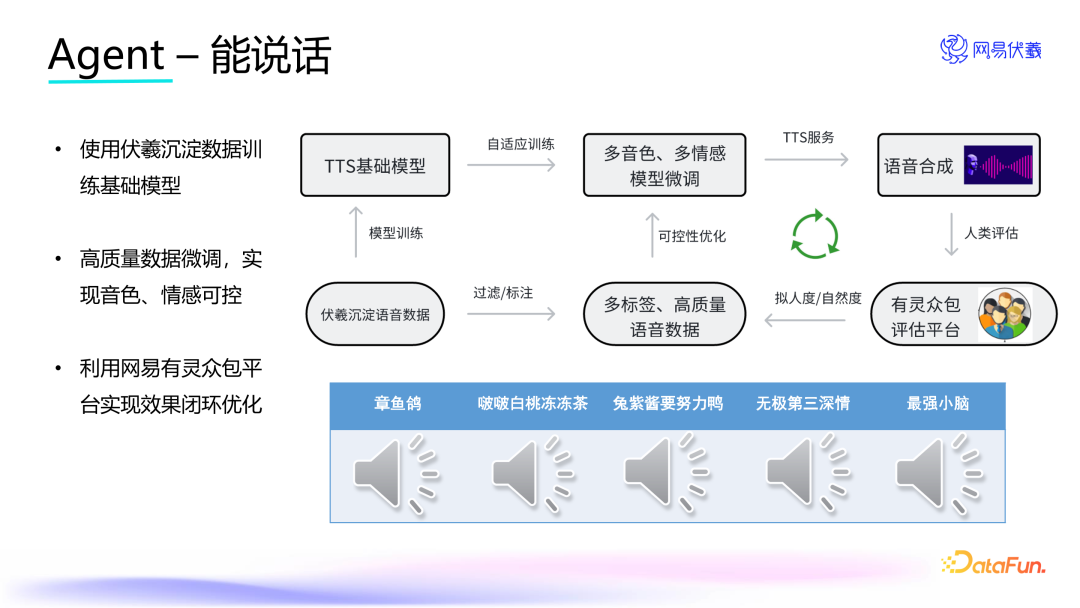
NetEase Fuxi’s AI voice acting has been implemented in Nie Shui Han Mobile and 永劫无间 Mobile
Under these circumstances, I expect our traditional business to shrink by 80% within three years. By the time AI creation matures and becomes commercially viable, it won’t land in expert hands—it’ll be directly adopted by game companies themselves. Why pay others when they can generate any music they want with AI? AI isn’t replacing labor costs—it’s replacing entire business processes.
So we’re adapting—exploring combinations of AI audio and video content to reduce replaceability; experimenting with live performances integrated with AI interaction; and pushing our team to develop broader skill sets. For example, composers should learn instrument performance, as live shows may soon become more valuable than music production.
Xiao Xu Music’s short video hits combining various AI content
Regarding anxiety—maybe I was more worried last year, but this year I’m calmer. After all, AI disruption is humanity’s shared concern, not just ours alone.
——Audio designer at a major Shanghai studio
I believe integrating AI tools like Deepseek into creative software holds promise.
I once used Deepseek to write an efficiency script for the audio editing software Reaper—essentially integrating commonly used plugins into a separate interface, allowing one-click loading and saving time scrolling through plugin lists.
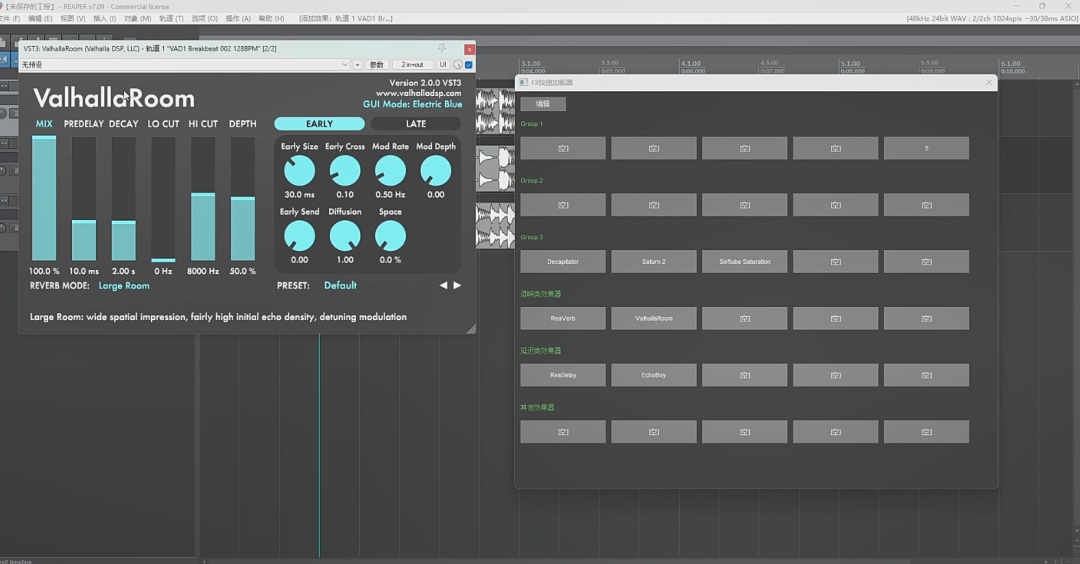
About 98% of the script’s code was directly generated by Deepseek and refined through iterative AI conversations:
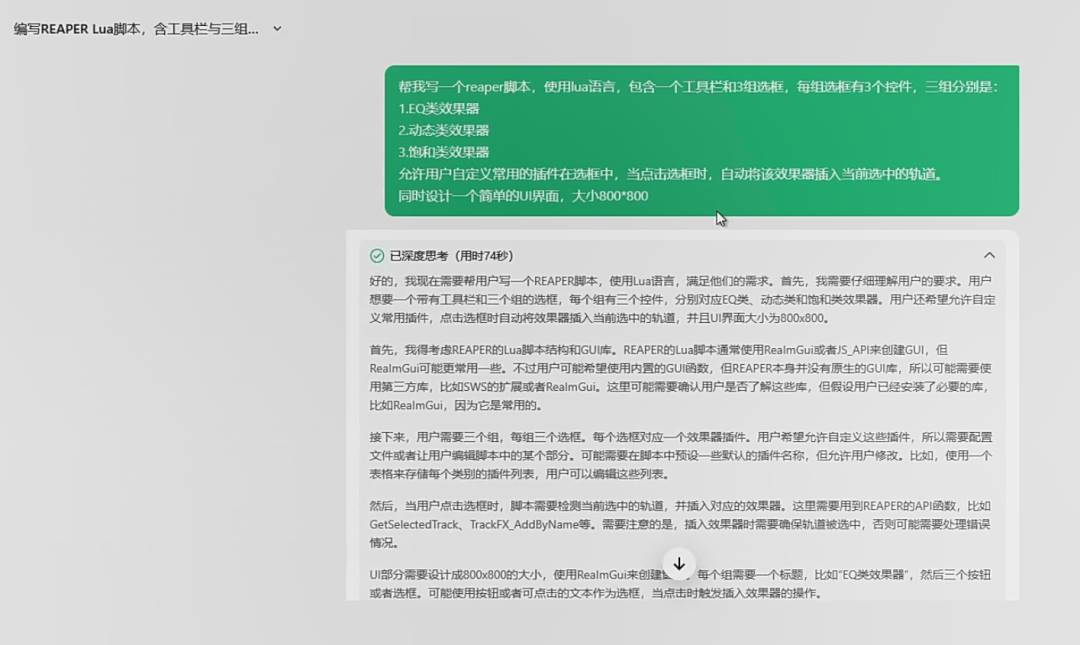
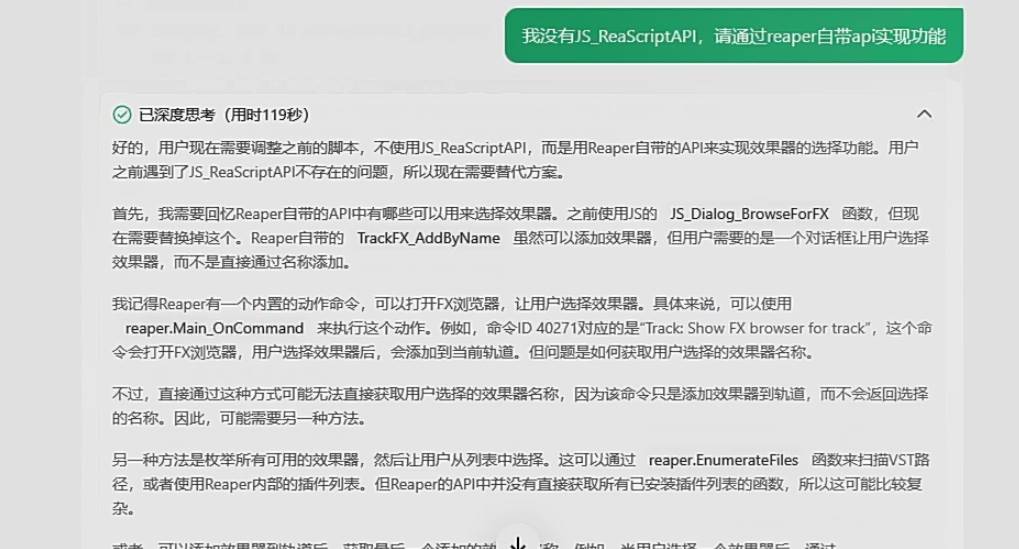
Some issues arose—after several rounds of conversation, Deepseek started fabricating outputs, producing completely unusable code. Fortunately, it had already provided a relatively complete and functional version earlier. Based on that, I manually adjusted the code using Deepseek’s reasoning steps, eventually enabling the small script to run successfully.
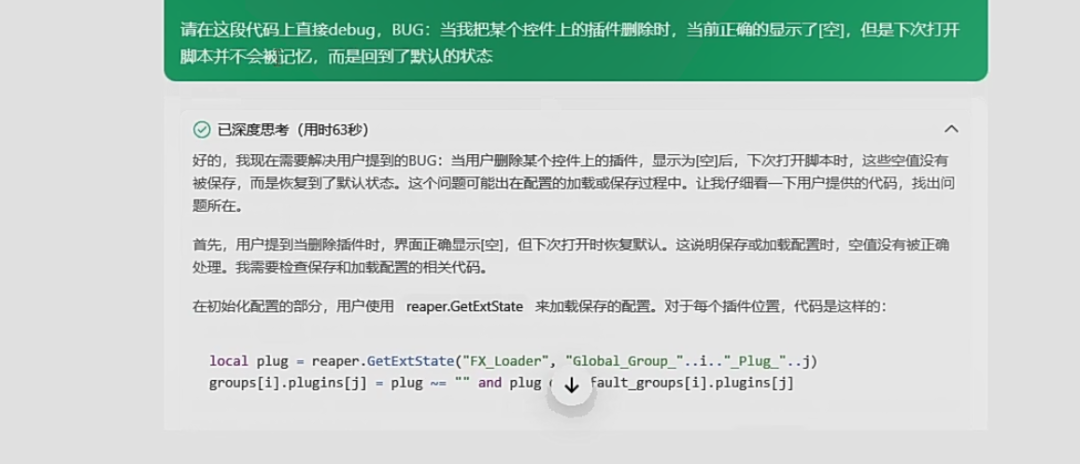
Late-stage confusion in Deepseek, re-copying
Even full code won’t work
05
Operations: Better assistant than ChatGPT
——Operations at Aurora Studios
When seeking creative ideas for promotional copy, SMS messages, etc., I use Deepseek and find it far superior to ChatGPT. However, for official operation notices directly面向 players, seen by millions once published, I must personally handle every detail—absolutely no room for error.
Deepseek directly generates Valentine's Day promotional SMS (game info fictional, for demonstration)
——Operations at TiMi Studio Group
We have many internal AI tools. But we don’t use them much—mainly for looking up information, just browsing casually as supplementary aid. I recently even used it for fortune-telling… It’s hard to seriously rely on for actual work.
06
Conclusion
Judging from the above practitioners’ hands-on experiences, Deepseek and other AI tools mainly assist individual work, falling far short of bringing revolutionary changes to traditional game development pipelines.
This conclusion is somewhat expected. As Lu Xiaoxu said, AI is an equalizing tool—its original intent may not be to empower experts, but to enable amateurs to perform professional tasks without barriers.

Owner of a game art outsourcing studio
Does this mean AI’s actual impact on the gaming industry isn’t that big?
Not exactly. Chen Chao, CTO of Qingpao Network, believes public understanding of Deepseek resembles early perceptions of previous AI tools: overestimating short-term effects and underestimating long-term impacts—AI’s influence on gaming is less a revolution and more a gradual infiltration.
These “infiltrations” resemble the exploratory practices described above—seemingly informal, yet potentially forming the foundation for AI-driven transformation in gaming. Cao Xiaowen, founder of Qingpao Network, also notes that many studios have long used AIGC to replace manual production of art assets. They may not yet have positive ROI, but through early adoption, they’re raising the overall water level of AI in gaming.
“If the human structure of the gaming industry is a pyramid, then AI is a basic neural network, rising like seawater from the bottom up. Initially, it may only replace minor roles, but as AI advances and due to the pyramid’s structural nature, the speed of replacement will accelerate faster than we imagine. This replacement won’t be one-for-one—it could transform job structures, models, and cultures altogether.”
“When AI’s waters rise past the mid-level of the industry, a greater inflection point may arrive.”
Join TechFlow official community to stay tuned
Telegram:https://t.me/TechFlowDaily
X (Twitter):https://x.com/TechFlowPost
X (Twitter) EN:https://x.com/BlockFlow_News