








Interview with the U.S. Treasury Secretary: The ultimate goal of tariffs is to bring factories back to America—Trump and I are the only ones qualified to talk about dollar policy
TechFlow Selected TechFlow Selected
Interview with the U.S. Treasury Secretary: The ultimate goal of tariffs is to bring factories back to America—Trump and I are the only ones qualified to talk about dollar policy
"The tariff policy aims to increase the real wages of American workers and improve their quality of life."
 Navigating Web3 tides with focused insights
Compiled & Translated: TechFlow
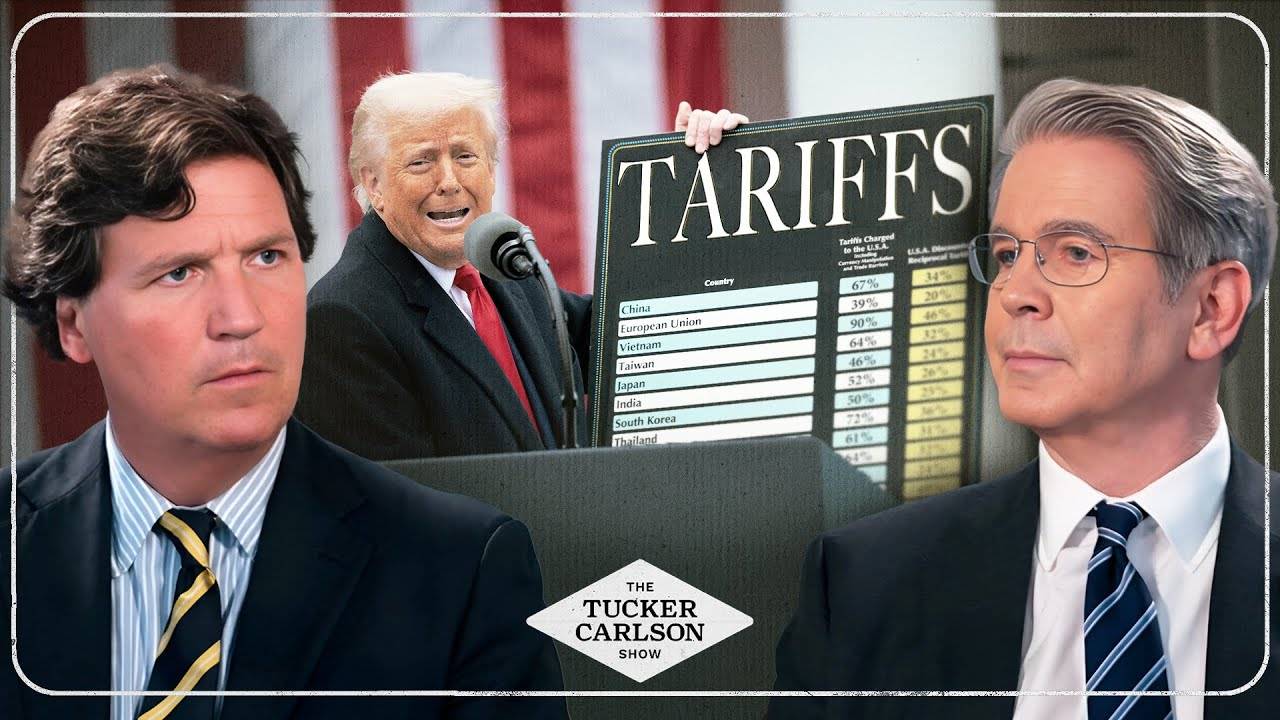
Guest: Scott Bessent, U.S. Secretary of the Treasury
Host: Tucker Carlson
Podcast Source: Tucker Carlson
Original Title: Treasury Secretary Scott Bessent Breaks Down Trump's Tariff Plan and Its Impact on the Middle Class
Release Date: April 5, 2025
Key Takeaways
Treasury Secretary Scott Bessent explains the government’s new tariff policy and why action must be taken to stop economic decline.
Highlights Summary
-
The Federal Reserve should maintain independence in monetary policy.
-
The ultimate goal of tariffs is to bring factories back to America—the best way to eliminate tariff barriers.
-
In the long run, stock market performance closely correlates with the quality of policy. To those who believe the market downturn is entirely due to the President’s economic policies, I can tell you this downturn began with China’s AI DeepSeek announcement.
-
Government efficiency can be improved—not simply cut or eliminated.
-
The tariff policy aims to raise real wages for American workers and improve their quality of life. During my campaign, I said: Wall Street is doing well—it can keep doing well—but now it’s time for ordinary Americans’ turn.
-
The Democrats have a strategy called “compensating losers,” but I don’t believe the bottom 50% of Americans are losers—rather, the system is broken. We need to fix the system.
-
American tariff policy dates back to Alexander Hamilton, who used tariffs to fund the new nation and protect American industry. President Trump added a third leg—he uses tariffs as a negotiation tool.
-
The way we currently run our government is like using traditional taxis while our economy has already entered the Uber era. Why can’t our government be as flexible and efficient as the gig economy?
-
What gives me confidence is President Trump’s relationship with President Xi. When you have direct communication at the highest level, I think it’s very difficult for things to spiral out of control.
-
The coastal regions are thriving, but the quality of life in the heartland has declined, expectations for the future have dropped, and people believe their children won’t do better than they did—and many don’t care, but President Trump cares, and this administration cares.
-
These people simply want a better life—they want their communities to improve and their children to have brighter futures.
-
I believe the most important thing we can do is lay a solid foundation for the base economy. If the base economy is strong, tax revenues stable, businesses predictable, if we have cheap and abundant energy, deregulation, and treat our workforce well, then we will have a great stock market.
-
I believe a 5% interest rate is a dangerous zone for the U.S. economy, especially as the Treasury needs to issue large amounts of bonds. Although rates have since declined, I remain concerned about whether we can reasonably cut spending while curbing waste, fraud, and abuse—I worry these issues will be ignored.
-
On dollar policy, the only voices the market should listen to are President Trump’s and mine. We are the only ones qualified to speak on behalf of the U.S. government about dollar policy.
Trump’s Tariff Plan
Tucker:
The Treasury Department yesterday announced a brand-new global tariff system. This plan didn’t come out of nowhere—actually, the President has been promising this policy for 40 years. Yet the announcement still surprised many people, even some of his supporters. Overall, what impact do you think this policy will have?
Scott Bessent:
As you said, the President has talked about this for four decades. It’s transformative for the American economy, American workers, and the new Republican coalition—a blend of old and new ideas, with some outdated notions set aside. American tariff policy traces back to Alexander Hamilton, who used tariffs to fund the new nation and protect American industry. President Trump has added a third leg—he uses tariffs as a negotiation tool.
But I don’t think this is strange. When Ronald Reagan took office in 1980, I was a college freshman. That was a turning point for America, but also full of challenges. Looking back, people nostalgically remember Reagan’s presidency, but actually, things were extremely volatile at the time.
President Reagan held firm. In the early 1980s, a farmer angry about rising interest rates tried to attack Federal Reserve Chair Paul Volcker with a shotgun. Then in 1984, Reagan won re-election by a landslide. I think they even let Mondale win Minnesota just to make it look fairer.
This is exactly what President Trump is doing now. For years, American workers and the middle class have been crushed, under tremendous pressure. The "China shock" since 2004 devastated American manufacturing—American workers have never recovered from that shock. President Trump sensed this 40 years ago. From the 2015 campaign through last year, he’s promised American workers that the old standard of living can return.
For the past 20 years, or longer, since the China shock, there’s been massive distributional problems—the coastal regions have thrived, but the heartland’squality of lifehas declined, expectations for the future have dropped, people believe their children won’t do better than they did—and many don’t care, but President Trump cares, and this administration cares.
Many of our trade partners, including some allies, aren’t good partners. If tariffs are so bad, why do they impose them? Or if American consumers bear all the tariff costs, why do they care? Because they also bear the consequences.
This marks the beginning of America’s reindustrialization. We’ve shifted toward a highly financialized economy—we’ve stopped producing, especially many things related to national security. The Covid pandemic exposed the fragility of global supply chains—we found these highly efficient supply chains lacked strategic security. For example, we no longer produce our own medicines, semiconductors, or ships.
So if I had to say what good came from Covid, it was making the world aware of these supply chain issues—economic security is national security. President Trump and I discussed this extensively. This is a national security issue we see here, but also an economic security issue. It aims to raise real wages for American workers and improve theirquality of life. I said during the campaign: Wall Street is doing well—it can keep doing well—but now it’s time for ordinary Americans (especially the middle and working classes) to have their moment.
Current Stock Market Conditions
Tucker:
Wall Street has long been seen as a barometer of economic health—how is the Dow Jones doing? We even have entire TV channels dedicated to tracking it, and for decades, it’s mostly gone up.
Therefore, if average stock prices fall, many assume the economy itself is in recession. Is that a fair measure?
Scott Bessent:
Markets always fluctuate. Warren Buffett once said: in the short term, the market is avotingmachine; in the long term, it’s a weighing machine. Over time, stock market performance closely reflects the quality of policy.
To those who think the market drop is entirely due to the President’s economic policies, I’ll tell you—the current downturn started with China’s AI DeepSeek announcement. And over the past 18 months, the so-called Mag 7 tech stocks have dominated the market.
Tucker:
It seems AI developments have given the market a new sense of reality.
Scott Bessent:
America still leads in AI, but AI-related stocks have begun to correct. Analytically speaking, this adjustment is more about the Mag 7 than the broader market.
Tucker:
So it’s a deeper issue. Are you saying that in this case,tech stocksare actually measuring companies’ value relative to foreign firms?
Scott Bessent:
If you look at the equal-weighted S&P index, even with today’s 4% market drop, this volatility is nearly negligible in the long-term trend.
I believe the most important thing I can do—as Treasury Secretary—and what President Trump wants too—is lay a solid foundation for the base economy. If the base economy is strong, tax revenues stable, businesses predictable, if we have cheap and abundant energy, deregulation, and treat our workforce well, then we will have a great stock market.
Will Americans Get Major Tax Cuts Due to Tariffs?
Tucker:
When introducing the tariff plan, the President mentioned that tariff revenue could fund the government and thus ease the taxpayer burden. Do you think this will push Congress to approve tax cuts for the middle class?
Scott Bessent:
One major role of tariffs is helping America resist other countries’ unfair economic systems. For example, China’s economic model is fundamentally different from America’s.
China’s low-cost economy relies heavily on cheap labor. They also support industries with subsidized loans and impose many non-tariff barriers, such as banning foreign media. So the U.S. uses tariff revenue to counter these practices.
According to traditional tariff revenue models, a 10% tariff might lead to a 4% currency appreciation. Foreign producers absorb about 4%, and U.S. consumers face roughly 2% price increases. A MIT study found that during President Trump’s first round of China tariffs, a 20% tariff raised price levels by only 0.7%.
So to answer your question: if we can impose 20% tariffs, make foreigners pay for it, and use that money to reduce deficits while keeping taxes low—that’s a unique formula rarely tried in this country.
Tucker:
Do you think this requires Congressional involvement? After all, Congress sets tax rates, right?
Scott Bessent:
We’re in a very unusual situation—almost a transitional phase between tariff revenue and government spending cuts. For 35 years, I’ve been on the other side of the wall from the Congressional Budget Office (CBO), but I only recently realized CBO scoring is like Enron accounting—it’s not real.
They assume the economy grows 1.7% or 1.8% over ten years, regardless of tax hikes or cuts. That’s why during the campaign, when Vice President Harris announced massive tax increases, CBO scored her plans favorably. Meanwhile, President Trump wanted to make the 2017 tax cuts permanent—because clearly, cutting taxes increases revenue.
In short, we won’t get credit in any bill for tariffs because Congress won’t legislate—we’re using executive power. But the money will come in. Just in his first term, we collected hundreds of millions from Chinese tariffs. Annually, old tariffs bring in about $35 billion. Within CBO’s time window, that’s roughly $350 billion—funding many of the President’s promises.
No tip tax, no Social Security tax, no overtime tax, and allowing interest deductions on cars made in America. Think about what the President is doing—he’s providing an affordable solution for the bottom 50% of white workers, who benefit from these four programs.
How Much Revenue Will Tariffs Bring to America?
Tucker:
Looking ahead one year—until next April—how much revenue do you think the U.S. government will collect from yesterday’s announced tariff policy?
Scott Bessent:
The number will vary, but estimates range from $300 billion to $600 billion. But what happens eventually? The ultimate goal of tariffs is to bring factories to America—that’s the best way to eliminate tariff barriers. So relocating factories from China, Mexico, and Vietnam back to the U.S.
Initial tariff revenue will be substantial, but as manufacturers build factories in America, tariff revenue will gradually decline. At the same time, income from new jobs and payroll taxes will rise. Trade deficits will shrink as more goods are produced locally—falling tariffs and growing domestic economies create a virtuous cycle.
Bringing Manufacturing Back to America
Tucker:
You’ve thought deeply about this. Do you believe America has enough labor force to complete this manufacturing comeback?
Scott Bessent:
I believe we fully have the capacity. With AI and automation spreading, many factories will upgrade to smart factories, drastically reducing reliance on traditional labor. I believe our existing workforce can adapt. Beyond supporting President Trump’s policies, I’m concerned that high government spending and debt could trigger a financial crisis.
While adjusting trade structures via tariffs, we’re also reducing federal bureaucracy and lowering federal borrowing. These measures will free up labor to support new manufacturing. We need to revive the private sector—under Biden, it was stifled by excessive regulation and stagnated. Now is the perfect time to downsize government and lighten regulatory burdens.
Tucker:
Have you considered that illegal immigration, AI’s impact on labor markets, and uncertainty around tariff policy might create unpredictable economic effects? Especially tariffs—we can speculate, but we’ve never experienced anything like this. Other countries’ reactions are also uncertain. Does this make predicting the economy harder?
Scott Bessent:
Indeed. With so many unknowns, absolute certainty is impossible. But we can define a reasonable range and advance within it. Weeks ago, on a show, someone asked if I could guarantee no recession. I said no one can guarantee anything. But currently, there’s no sign of recession. Like Reagan believed in supply-side economics, I believe these policies will work.
The old system no longer meets economic needs. If a system fails, we must boldly change. Continuing the old path may make the economy seem “healthy”—like a bodybuilder using steroids—muscles look great, but vital organs are being destroyed. That’s what happened. Pushing growth, borrowing heavily, creating endless government jobs—it’s easy.
If we keep relying on excessive borrowing and expanding government, disaster awaits. Recall 2007–2008—before the crisis, the economy looked prosperous, but hidden risks existed. Same before the dot-com crash—companies like Enron and WorldCom looked “fine” before collapsing.
I believe current policies take steps to avoid similar disasters. After 9/11, airlines delayed reinforcing cockpit doors due to cost, and the FAA didn’t pressure them. Now, cockpits are reinforced, preventing recurrence. I believe current policies are necessary “reinforcements” before economic collapse, ensuring stability.
Foreign Reactions to Tariffs
Tucker:
In the next three months, how might foreign governments lobby? Yesterday, the President mentioned a uniform, universal tariff policy—applying the same standard to all nations. Of course, each country differs—trade deficits, currency manipulation, regulations, and existing tariffs affect adjustments. As you said, this is dynamic. If I were Vietnam or China, I’d try every way to pressure the U.S. for favorable terms. How do you expect this to unfold?
Scott Bessent:
Ultimately, it depends on the President. I believe his view is that this unfair trade situation has lasted too long—whether with allies or rivals, we must reassess and adjust. Personally, I think negotiations with companies matter more than with governments.
What do companies want? As President Trump said yesterday, the best way to avoid tariffs is to build factories here. What can Treasury do to help? We’re pushing tax legislation to guarantee low rates and full first-year depreciation. We’re working with Secretaries Bergman and Wright on energy security and deregulation.
TSMC, the world’s largest semiconductor maker, is getting all required permits from EPA Chair Lee Zeldin—we’re stuck in regulatory quicksand, taking too long to get things done here. So I believe company announcements will be more interesting than national ones.
Will China Retaliate?
Tucker:
If you want to sell goods to Americans, you must either manufacture in America or pay tariffs. How will China respond as a nation? This is a direct challenge. While this policy affects many countries, China is undoubtedly hit hardest. How might they react? Could there be retaliation?
Scott Bessent:
I’m not sure they can retaliate, for several reasons. Historically, though the U.S. runs trade deficits and is a debtor nation, surplus nations are actually in a weaker position. China’s business model may be one of the most unbalanced in modern economic history. Their export-to-GDP ratio and population dynamics are highly unusual—making adjustments extremely difficult.
Currently, China facesdeflation-driven recession or depression. They try to ease pressure by boosting exports, but U.S. tariffs clearly block this. In a way, China’s manufacturing model resembles the broom in Disney’s “The Sorcerer’s Apprentice”—it keeps fetching water uncontrollably. This export-dependentbusiness modelis deeply entrenched.
What’s the ideal scenario? I believe the U.S. and China could reach some agreement. The U.S. wants higher manufacturing share and lower consumption, while China needs to reduce excess manufacturing and boost domestic consumption. China’s economy is severely imbalanced—overcapacity in manufacturing, yet ordinary consumers are treated unfairly. This is the “middle-income trap”—Chinese household incomes stall at a mid-level, unable to rise further.
Can we cooperate to fix this? Rebalance both economies—China reduces manufacturing, increases consumption; the U.S. reduces consumption, increases manufacturing. Even as military rivals, we can be balanced economic competitors. It won’t happen overnight, but in the coming years, China may have to pivot, as their currentbusiness modelis failing, and President Trump’s tariffs are key to breaking it.
Tucker:
Your description reminds me of a classic case: if you borrow a small loan from a bank, the bank controls you. But if you borrow enough, you gain leverage over the bank.
Scott Bessent:
Exactly. China’s dependence on the U.S. market is enormous—they cannot survive without us.
Tucker:
Do you believe there are clear enough communication channels between the two governments to resolve issues and avoid losing control?
Scott Bessent:
What gives me confidence is President Trump’s relationship with President Xi. When you have direct communication at the highest level, I think it’s very hard for things to spiral out of control.
Impact on Europe
Tucker:
What about the rest of the world? Europe?
Scott Bessent:
Recall a famous meeting where President Trump told Europeans: “You’re crazy building Nord Stream 2. What are you doing? You already get most energy from Russia—now you’re doubling down.”
They did it, and someone blew it up. But Europeans, though reluctant, must rebalance too. Germany, a highly unbalanced export economy, faces deindustrialization advantages. They’re the opposite of us—high energy costs. They rely on Italy and southern nations to suppress the euro and sell to China. Now, China is becoming their competitor.
Tucker:
Your description reminds me of Reagan’s first term. 1980 was a turning point—recession was tamed by 1980–1982, leading to historic victory in 1984. Can similar results emerge within four years?
Scott Bessent:
Yes. The only difference is, competition then was fierce but more civilized. The real danger now is if midterm elections go badly, triggering political battles—like impeaching the President—which would again disillusion the public. Einstein defined insanity as doing the same thing repeatedly and expecting different results.
Tucker:
You believe America’s condition is dire. Driving across the U.S., you see declining living standards. People hope new policies bring visible improvement within four years. Is that possible?
Scott Bessent:
I believe it is. Our past approaches clearly failed—we must try new strategies. I’m confident in this method. Trump’s tariff policy was once thought to hurt working-class Americans, but in fact, wage-earners outperformed managers. Net worth growth among the bottom 50% even exceeded the top 10%. Still, wealth distribution remains unbalanced—the top 10% hold 88% of stock wealth, while the bottom 50% are in debt. We must help these families relieve financial pressure.
I see two striking data points: in summer 2024, Americans traveling to Europe hit record highs, while food bank usage also reached record levels. I visited two local food banks—they told me more working families can’t afford weekly grocery bills. These aren’t homeless or street dwellers—they’re ordinary working families who simply can’t cover basic expenses.
They noticed a new phenomenon—not their usual clients, not those who lost homes or live on streets. These are working families who can no longer afford $100 weekly for groceries. They’re missing five, six, seven items weekly, so they come to food banks to supplement. So it’s not a great record—record European trips, record food bank use.
We can keep setting records for Europeans trips, but must also care for those in need. They don’t want handouts. The Democrats have a “compensating losers” strategy, but I don’t believe the bottom 50% of Americans are losers—the system is broken. We must fix the system—provide good jobs, let their kids do better, reduce debt burdens. It’s not hard. I believe we can achieve this within four years.
Is the Upper Class Disconnected from Lower Classes?
Tucker:
You grew up in a middle- and working-class family, but now you’re highly successful, living long in wealthy circles. In that environment, do you sense the upper class cares about the nation’s true state? For example, does anyone say: “I just drove 100 miles and things aren’t good—people’s lives aren’t as rosy as imagined”? Do such discussions exist? Or does no one care?
Scott Bessent:
Frankly, sometimes there is disconnection. My private jet was delayed an hour—my whole day got disrupted. You can’t imagine thinking, “Oh my God, I need a new charger.” Such trivial issues dominate rich circles’ complaints.
Yet I’m sensitive to America’s social conditions because my family was once very wealthy—early settlers, wealth lasting about 250 years. But my father made poor financial decisions, and we lost everything. When I was born, we were still somewhat wealthy initially, but then it vanished.
I’ve lived that transition. I know what economic insecurity feels like. No one should endure that. Anyone willing to work hard should have a chance at a better life.
People are willing to work. Returning to President Trump’s campaign, which I joined—I recall being most moved at the final two stops: Pittsburgh and Grand Rapids, Michigan.
Walking into rallies, I saw union workers, steelworkers—wearing caps, work clothes, bringing kids. They just want a better life—they want their communities to improve, their children to have brighter futures. They don’t care about Madison Avenue luxury or Paris’s newest fine dining.
President Trump successfully united these ordinary workers with the world’s richest, like Elon Musk, forming an incredible alliance. I believe this is unique and extraordinary.
Your Biggest Concern
Tucker:
As Treasury Secretary, what worries you most?
Scott Bessent:
In my career, my greatest strength is risk management. So I focus on two things: selling U.S. bonds effectively, and potential major crises. As the U.S. economy and fiscal health improve, I’ll have more positive stories to share. But I also think about serious problems that might arise.
Tucker: Like what?
Scott Bessent:
For example, if another pandemic like Covid hits somewhere, how do we respond? We can’t always worry. But I do fear war breaking out somewhere. I try to worry less daily. I officially took office January 28—U.S. 10-year Treasury yields nearly spiked to 5%. This rate is a key economic indicator, affecting mortgages and capital formation.
I believe 5% is a dangerous zone for the U.S. economy, especially as the Treasury must issue massivebonds. Though rates have since fallen, I still worry whether we can reasonably cut spending while curbing waste, fraud, and abuse—I fear these will be ignored.
I also worry tax legislation could stall, triggering the largest tax increase in history. And I watch geopolitical issues—Iran, Taiwan, Russia-Ukraine conflict—that could impact the global economy.
Tucker:
You mentioned being abondsalesman, selling U.S. debt worldwide. I know this is critical in transition. How do you defend U.S. bonds? Has your sales pitch changed after yesterday?
Scott Bessent:
We’re in a special state—tariff revenue is surging, and we’re cutting spending sharply. Though markets haven’t fully recognized this, they seem to anticipate it. Ten-year yields dropped from nearly 5% to 4%. Each basis point saves ~$1 billion—so we’ve saved $100 billion.
This may not happen often, but we’re laying better fiscal foundations. Markets no longer fear U.S. loss of control or default. Daily, I build stronger cases for U.S. bond credibility. Simplify the fiscal formula: G = S - T (spending minus taxes).
Republicans tend to cut spending, Democrats to increase it. But both love spending. What if we truly lower spending? An exciting idea—no one seriously proposed it before, not even Reagan.
Reagan had his agenda—boost defense spending. His “Star Wars” program was seen as crazy, but succeeded. By massively increasing military spending, he forced the Soviet Union to follow—and they collapsed under economic strain. A “escalate to de-escalate” strategy, controversial then, but effective in hindsight. Today, I believe we’re doing well lowering credible spending levels. I also send this message: government efficiency can be improved—not simply cut or eliminated.
If we achieve more with fewer resources, it sounds unbelievable, but it’s possible. I’ve lived in Manhattan and Florida. Comparing populations, they’re similar—Florida even slightly larger. Yet New York’s budget is $235 billion, Florida’s only $125 billion. Florida has no income tax, better infrastructure, gets driver’s licenses in 15 minutes, not 5 hours like New York. Shouldn’t the rest of America be more like Florida, not New York? Or can New York someday become more like Florida? Worth exploring.
Long-Term Gains from DOGE
Tucker:
Do you believe that within four years, thanks to the DOGE project (assuming it continues), we’ll see actual reductions in government spending? How long will Elon Musk remain involved?
Scott Bessent:
Adjusted for inflation, yes, I believe so. I’m unsure how long Elon’s day-to-day involvement will last, but his influence will endure. I’ve noticed mainstream media constantly tries to demonize the DOGE project and everyone involved.
I personally interviewed and hired outstanding Treasury and IRS staff—their abilities impressed me. One man, Tom Kloss, recently appeared on Brett Baier’s show. He completed $100 billion in tech M&A during my investment career. I wanted to hire him, but couldn’t afford his salary.
Yet he chose to serve the nation—purely out of patriotism. Without direct access to payment systems, he deeply analyzed the entire system and found all vulnerabilities within six weeks. Another young man, Sam Kilkus, recently joined me on Laura Ingraham’s show. I suggest letting him speak publicly—to end outside demonization.
This young man is special. He jokes he owns only one pair of pants besides factory clothes. His humility and dedication are admirable. If our daughters brought someone like him home, we’d be happy. A true patriot, working for national interests. His work at IRS focuses on technical systems—his specialty.
Elon has a special shirt he occasionally shows under his jacket—“Support Taxation.” Our current government system is like an outdated Blockbuster video store, while we should be Netflix—efficient and modern.
(TechFlow Note: The Blockbuster vs. Netflix analogy highlights the gap between government’s outdated and modern efficiency—emphasizing the necessity of reform.)
The way we currently run government is like using traditional taxis while our economy has already entered the Uber era. Why can’t our government be as flexible and efficient as the gig economy?
Federal Reserve Corruption
Tucker:
Who really controls the Federal Reserve? I never understood how such a key institution, clearly impacting markets directly, seems completely beyond political control. What’s going on?
Scott Bessent:
At my confirmation hearing, I attended a dinner with Fed Chair Jerome Powell. There, I said I’d only discuss past and potential future mistakes by the Fed. Overall, I believe the Federal Reserve should remain independent in monetary policy.
However, in recent years, the Fed has poured effort into other areas—regulation, climate issues. I believe this diluted their focus on monetary policy, making the system more fragile. So my view is: the Fed should return to its core mission—focus on monetary policy, serve the American economy and people, strive for low inflation. Other matters—like climate—should go to relevant agencies.
Tucker:
Are you saying the Fed now manages the weather? What exactly have they done on climate?
Scott Bessent:
Let me explain. There’s a council chaired by the Treasury Secretary—the Financial Stability Oversight Council (FSOC)—gathering all major financial regulators. Two weeks before Silicon Valley Bank collapsed, FSOC issued a report claiming climate change is the biggest risk to the financial system. Can you believe it? They thought climate mattered more than a California bank undergoing slow asset withdrawals—which ultimately caused another bank’s collapse.
To me, climate isn’t as severe as described. The real problem is regulatory failure. People are tired of this. It reminds me of a word President Trump mentioned—common sense. Common sense says: if a bank has deposits that could be withdrawn anytime, it shouldn’t hold long-term assets. But regulators focused on weather, ignoring real risks. Also, this involves “regulatory capture.” Ordinary people may find this unbelievable, but it exists.
Why Gold Matters Now
Tucker: Why is gold moving so frequently globally?
Scott Bessent:
Several reasons. First, gold flows relate to tariff policy. Initially, we weren’t sure if gold would be excluded from tariffs, but later confirmed it was exempted. This led to massive gold transfers from Swiss and London vaults to New York. Also, gold remains a favored store of value. Though Bitcoin and digital assets have emerged as new stores of value recently, gold has historically fulfilled this role.
One major source of gold demand is China. As I mentioned, China now faces recession or even depression. China’s monetary system is constrained by capital controls, eroding trust in the RMB. 1.4 billion Chinese want to move money abroad, but policy blocks them. Yet they can buy gold—becoming an alternative.
Tucker:
So you believe this is a reaction to the status quo? Ironically, even in 2025, as economies grow digital and abstract, gold remains widely trusted as a reliable store of value.
Scott Bessent:
I believe gold’s appeal stems from deep historical roots. A friend’s grandmother survived hyperinflation during Russia’s 1998 crisis. To handle uncertainty, she bought 18 bicycles and stored them in her apartment. To her, bicycles were her “store of value.”
Tucker: How did her bicycle investment perform?
Scott Bessent:
Extremely well. I wish I had her foresight. Beyond such cases, gold has many other uses—e.g., in India, gold is often made into jewelry. Historically, consensus on gold’s value has endured.
Gold has a key trait: it’s immune to fiscal issues. Gold doesn’t run budget deficits or wage wars. As an independent asset, it stands apart. Before President Nixon ended the gold standard, global trade was tightly linked to gold.
Zelenskyy’s Self-Sabotaging Negotiation Strategy
Tucker: How did you interact with President Zelenskyy?
Scott Bessent:
President Trump assigned me to Kyiv to lead negotiations on an economic agreement—an essential part of his peace plan. First, understand the overall framework of President Trump’s peace plan. It’s carefully designed to achieve multiple goals through a U.S.-Ukraine agreement.
First, strengthen U.S.-Ukraine cooperation. Second, send a clear signal to Russia: the U.S. won’t abandon Ukraine. More importantly, show the American people we have clear economic interests in Ukraine—not just massive aid, the old model of U.S. foreign assistance.
If Ukraine succeeds, we benefit—creating a long-term partnership. I believed it crucial to go to Kyiv personally to discuss the agreement with President Zelenskyy. Though advised to meet in Vienna or wait until the Munich Security Conference days later, I insisted on going to Kyiv. That’s why I flew to Poland, then took an overnight train, arriving in Kyiv after ten hours.
Four hours before my arrival, Russia bombed Kyiv—the first attack on Kyiv since November last year. Clearly a response to the agreement, as Russia sees it potentially establishing a lasting U.S.-Ukraine partnership.
Tucker: What happened?
Scott Bessent:
That day, President Zelenskyy initially intended to sign. We had deep discussions. I told him 50 journalists waited outside. I came to deliver a message: no divide between American and Ukrainian people.
He told me he’d sign at the Munich Security Conference. But he didn’t sign—triggering complex follow-up issues. Next week, Ukraine requested a White House visit, but we wanted the agreement signed first.
He arrived at the White House but destroyed what should’ve been a simple agreement. He was supposed to attend a press conference, then a private lunch. If he had concerns, we could’ve discussed them over lunch. But the agreement wasn’t signed. Even in the East Wing ballroom, the signing table was ready—but nothing happened.
This reflects internal problems in Ukraine’s government. Their pension system and bureaucracy depend on U.S. taxpayer funding. Ukraine’s retirement age in Europe is the lowest—only 60. France is 62, Italy 67.
Tucker:
Why did President Zelenskyy act so arrogantly?
Scott Bessent:
Possibly due to his background. A former actor—somewhat a performer. He showed courage under pressure, but his advisors haven’t always given him the best counsel, possibly causing inappropriate behavior.
A key aspect of the agreement is ensuring funds flow to American and Ukrainian people—not stolen by corrupt officials. We want this agreement to create a win-win, showing Russia that U.S. support is based on economic cooperation, not just aid—motivating Russia to join negotiations.
Trump Administration’s Economic Messaging
Tucker:
About the recent tariff announcement—what’s your view? Its content is completely unlike the economic policies we grew up with. Regardless of supporters, it’s a new approach—many feel uneasy. About the recent tariff announcement—what’s your view? Its content is completely unlike the economic policies we grew up with. Regardless of supporters, it’s a new approach—many feel uneasy.
Scott Bessent:
We strictly follow President Trump’s instructions. On the morning of the tariff announcement, we held a meeting, then another after the Rose Garden press briefing—only then did we begin media outreach. As everyone knows, the President himself is the best communicator—no one conveys the message better. Then we all align with his vision. We believe this is our purpose. Anyone who disagrees doesn’t belong on this team.
Tucker:
Has there been consideration—for example, assigning certain people to calm market investors andbondbuyers, avoiding those who might trigger panic? Is there such a strategy?
Scott Bessent:
I must clarify: on dollar policy, the only voices the market should heed are President Trump’s and mine. We are the only ones qualified to represent the U.S. government on dollar policy. We pursue a strong dollar policy and commit all necessary resources to ensure the dollar remains stable and strong long-term. Of course, short-term, the dollar may fluctuate on Bloomberg terminals.
Bilateral trades between the dollar and currencies like the Mexican peso or yen will fluctuate—this is normal. It’s my career focus—I welcome these fluctuations. But long-term, if we build a solid economic foundation and implement this transformative economic plan, the dollar will perform well, and the American people will benefit.
Join TechFlow official community to stay tuned
Telegram:https://t.me/TechFlowDaily
X (Twitter):https://x.com/TechFlowPost
X (Twitter) EN:https://x.com/BlockFlow_News
 深潮TechFlow


