CZ Fireside Chat Full Transcript: HODL Strategy Challenged, Survival Rules Amid Market Volatility
TechFlow Selected TechFlow Selected
CZ Fireside Chat Full Transcript: HODL Strategy Challenged, Survival Rules Amid Market Volatility
Always focus on fundamentals and long-term development. Short-term speculation is acceptable, but you must assess the risks yourself.
 Navigating Web3 tides with focused insights
Compiled by: Frank, Zen, PANews
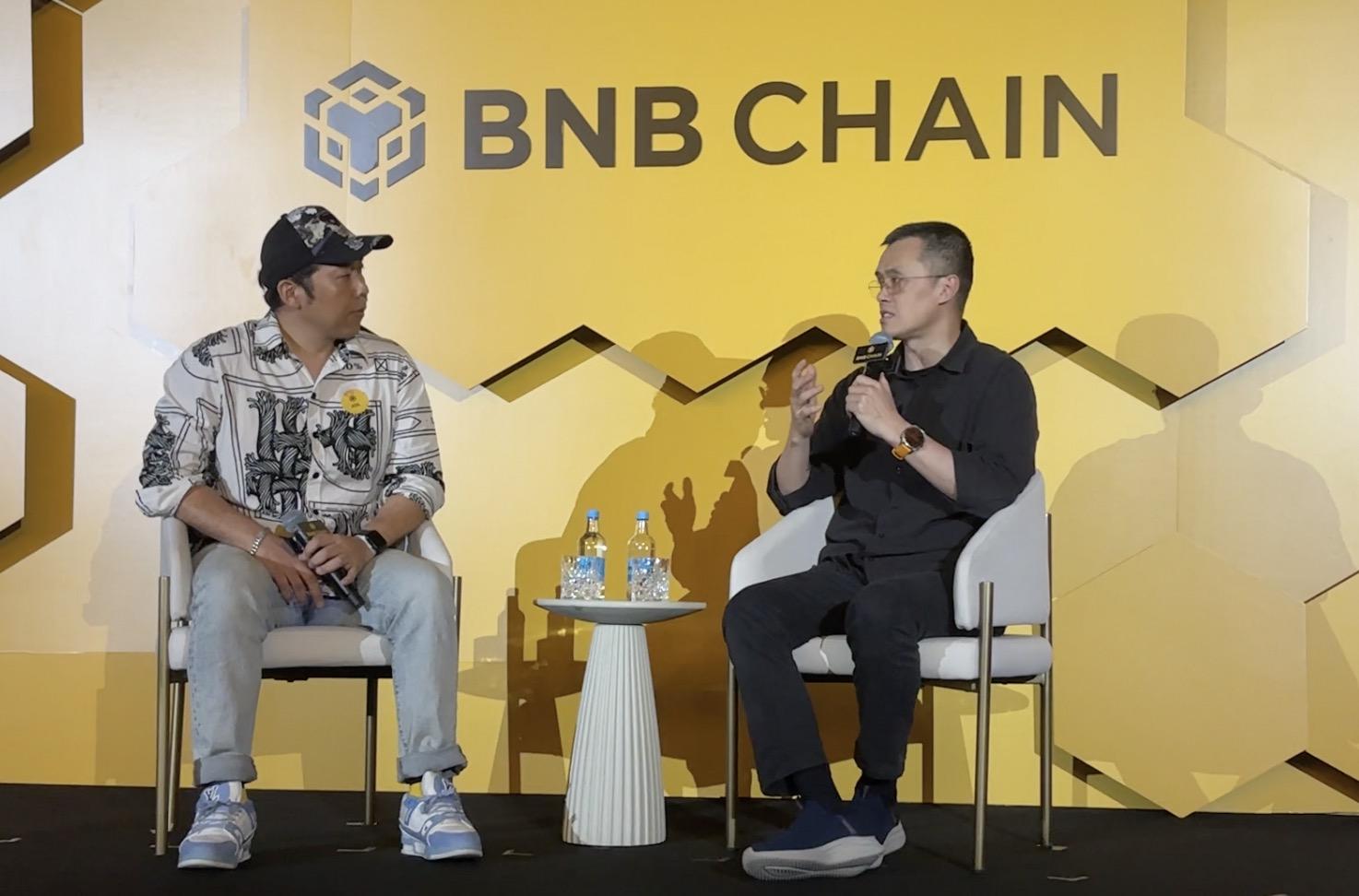
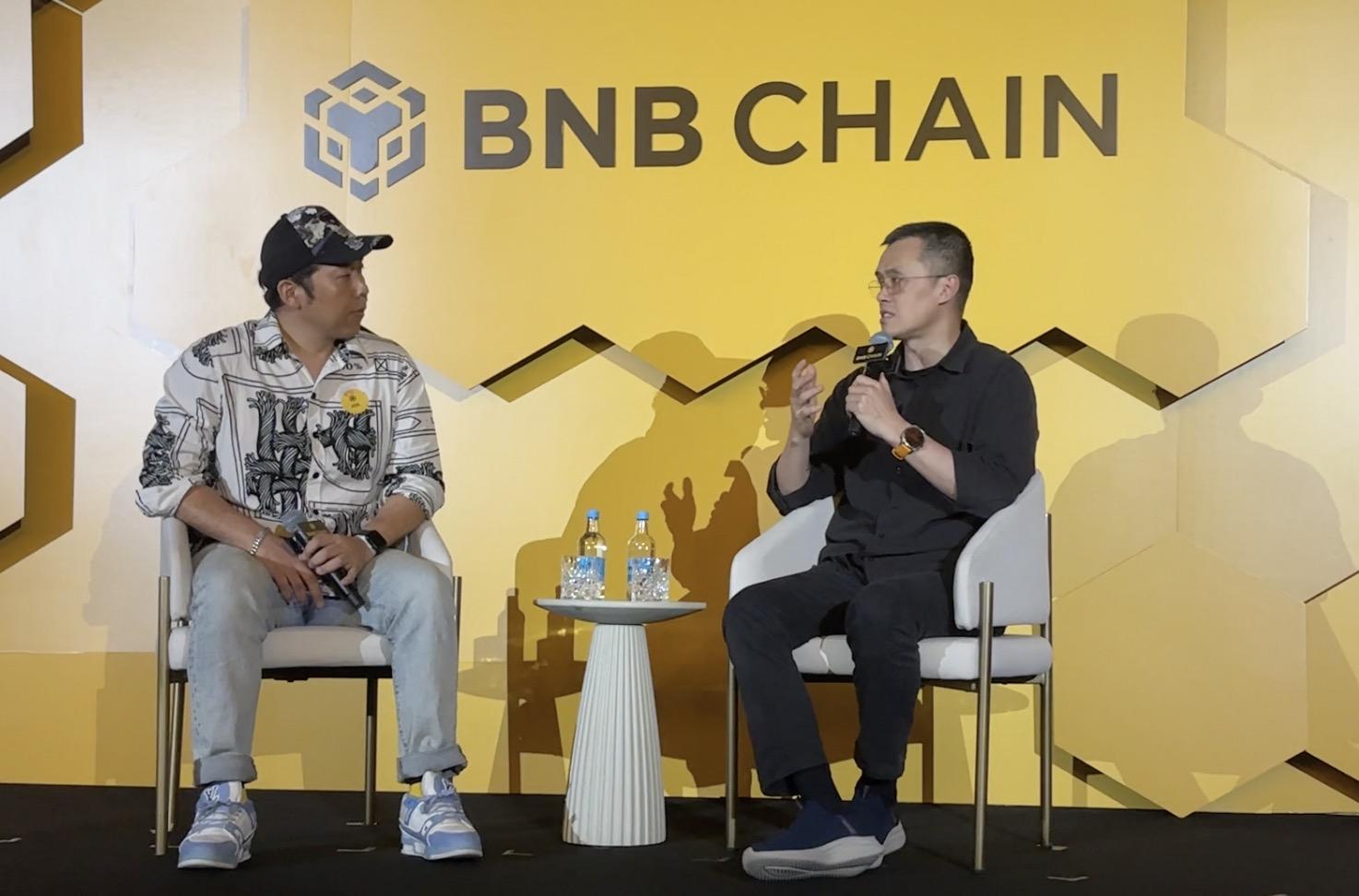
On the evening of April 6, CZ unexpectedly appeared at the BNB Chain Super Meetup in Hong Kong, engaging in an open fireside chat with community representative "Master Brother from Australia." Facing the current industry landscape marked by meme coin frenzy, fragmented beliefs, and market volatility, CZ frankly stated, “Chasing shitcoins shouldn’t be the only thing to do in crypto.”
“If you can’t hold, you won’t be rich”—this classic quote from Binance founder CZ once influenced countless investors. Yet in this new cycle, the HODL strategy appears to be facing challenges. In this in-depth Hong Kong community dialogue, CZ publicly analyzed for the first time BNB Chain’s development bottlenecks, controversies surrounding meme coins, and his expectations for a “healthy ecosystem” within the industry. He emphasized the need to “balance fast money and slow money,” outlining a survival rule filled with both risks and opportunities for investors.
Master Brother from Australia: I’ve known CZ online for many years, but this is actually my first time meeting him in person—meeting an internet friend. I’m Master Brother from Australia; I entered the industry back in 2016. But I think the smartest move I ever made in crypto was joining Binance Exchange early on and buying tokens during its ICO phase—one token I bought for one dollar—I still hold today. So I feel honored to have this opportunity to represent the community and interview CZ today.
I’ve gathered a lot of questions from the community—some haven’t even been fully organized yet—and since our time is limited, I’ll try to pick a few slightly provocative ones.
Master Brother from Australia: First off, I think many people feel that this market cycle is very different. Whether it’s VC-backed projects gradually fading or meme coins rising, or even Trump in the U.S. now supporting cryptocurrencies, there seems to be a certain degree of faith erosion across the entire cycle. So CZ, how do you view the current market situation?
CZ: Let me ask first—how many here are chasing shitcoins and playing meme coins? (Many raise hands.) Sorry, what I'm about to say might upset you, but I believe chasing meme coins is okay as an activity—it just shouldn't be the *only* thing in crypto. This cycle has seen too much momentum behind meme coins, which isn’t very healthy for the overall industry.
The industry needs people searching for wealth-generating opportunities, interested in high-growth tokens, but also long-term builders. Right now, all attention is focused on meme coins. But even these meme players are disappointed because not every day brings 10x or 100x returns. Long-term builders go unnoticed and find things boring. Even exchanges struggle to decide what to list. The whole community isn’t particularly healthy. We really need some breakthrough methods.
Master Brother from Australia: Have we found any breakthroughs yet?
CZ: I think it's a process—not something achieved overnight. For us, in the long run, we must continue supporting real builders. Long-term construction proves more effective. There must be real users, real revenue, profits, and user benefits—only then can token prices sustain over the long term. Both those seeking quick gains and those pursuing slow, steady growth should coexist. But right now, supporters of the slow-money approach aren’t getting enough backing. That’s why we held the MVB event this afternoon—we’re investing, and I personally communicate with builders.
Master Brother from Australia: I consider myself part of the “HODL” camp. Many people... truly holding or accumulating tokens were deeply inspired by your earlier insights. Back then, you said, “If you can’t hold, you won’t be rich,” which my friends and I took as a personal motto. Over past cycles, we did achieve significant returns. But in this cycle, we’ve felt punished. Do you still think we should stick with ‘HODL’ now?
CZ: Regarding that viewpoint, we should look at technical or fundamental analysis. You can’t just hoard every one of the millions of tokens out there. Most tokens may eventually go to zero. But some truly have fundamentals and real-world applications—you can hold those long-term.
Master Brother from Australia: So do you believe besides Bitcoin, there are other projects worth trying that could outperform Bitcoin?
CZ: I think so far, quite a few projects have outperformed Bitcoin. Although people holding Ethereum aren’t very happy now, Ethereum has outperformed Bitcoin since inception. BNB, from start to finish, has also outperformed both Bitcoin and Ethereum (here CZ refers to performance since each token’s launch, not comparing against Bitcoin’s initial price). However, Bitcoin currently holds the status of a reserve asset. In the long term, holding Bitcoin will still appreciate. Still, there could be dozens, even hundreds of tokens that might outperform Bitcoin.
Master Brother from Australia: That’s more than I expected—I thought maybe only a few?
CZ: Bitcoin’s market cap is already very high, so achieving another 100x gain is extremely difficult. Thus, there will be some fundamentally strong tokens that have the chance to outperform Bitcoin over certain periods. But seizing such opportunities requires insight—to identify them and stick with them.
Master Brother from Australia: What are your expectations for BNB? Recently, some articles predicted BNB should be valued above $3,000.
CZ: That article was probably written by Hash Global—they’ve been long-term supporters. When BNB was at $6, they said it would reach $40; when it hit $40, they projected $140, then $1,000. Their research into BNB might even be deeper than ours. As for specific valuations, that’s determined by the market. Our focus remains expanding BNB’s use cases—whether on centralized exchanges or DEXs. The broader the usage, the higher BNB’s value. We’re pushing this forward on Binance Chain and other chains alike. Our main goal is to get more users to adopt BNB.
We're also investing in DeFi, NFTs, and GameFi, aiming to bring more projects onto BNB Chain. Some countries have even approached us, expressing interest in adopting BNB as a nationally recognized digital currency.
I believe this model is viable, and progress is being made step by step. We don’t have secrets—just consistently doing solid work and increasing utility.
Master Brother from Australia: How high do you think BNB will go?
CZ: As for exact numbers, I can’t say—and it’s not something I control. All I can say is that we’ll keep building the ecosystem so more people want to hold BNB.
Master Brother from Australia: Speaking of BNB holders, there’s been talk recently—BNB whales are like a retirement home, enjoying excessive perks. Especially after new token listings, large holders receive massive allocations, dump them, leaving retail investors holding the bag… Isn’t that problematic?
CZ: The more BNB holders, the better—even those using BNB for retirement. Because BNB is supply-capped, the wider its distribution, the healthier the ecosystem. Some say Hodlers aren’t contributing, but holding BNB *is* a form of contribution. In fact, thanks to these Hodlers, BNB has shown strong resistance during downturns. We should thank those who hold BNB for the long haul.
Master Brother from Australia: Let’s move to a question about BNB Chain. Over the past few years, BNB Chain has done many things, striving to create an artificial bull market. Has BNB Chain reached your expectations in terms of achievement?
CZ: Honestly speaking, it’s still falling short. I feel BNB Chain hasn’t contributed enough within the broader ecosystem. When I was CEO of Binance, I spent more time directly involved. With BNB Chain, however, we chose not to micromanage its development but instead let the community drive it. Over the past year or two, I’ve devoted more time to U.S.-related matters, so my attention toward BNB Chain has been insufficient. This led to BNB Chain largely missing out on the recent meme coin wave despite its popularity.
BNB Chain has seen slight recovery recently, but the rebound is far from adequate. Going forward, no matter what the next trend is, such oversight won’t happen again—the entire BNB Chain community will definitely seize the moment. There’s still much to do. I believe AI, DeSci, and similar fields will develop strongly in the future.
To be honest, BNB Chain started with limited resources and initially received less attention than Ethereum. Over the past year, I’ve also been occupied with regulatory and compliance issues in the U.S. While BNB Chain’s current development is acceptable, its full potential hasn’t been realized. We plan to further invest in infrastructure, dApps, and DeFi. This ecosystem can’t mature overnight—it requires continuous effort. We hope more developers choose BNB Chain, and I believe more opportunities lie ahead. Today, while meeting with the 16 MVB projects, I saw countless innovative ideas ready to be built.
Master Brother from Australia: You’ve recently been active in the meme space, learning and participating. Back to meme coins—take PVP lately. Some see it as short-lived hype, others as a major community movement. What’s your take?
CZ: I’ll admit my learning curve in the meme space hasn’t gone smoothly—I caused several issues for the community. My understanding wasn’t deep enough. People told me, “Post dog photos,” so I thought posting dog pics could generate traffic, spark discussion, and be fun. But later I realized several mistakes—including feedback from the community—that whenever I posted specific photos, everyone knew hundreds of meme coins would launch immediately afterward, causing severe PVP congestion.
After that PVP surge, the community wanted me to pick a winner—but that’s hard. It shouldn’t be me choosing; it should be the community’s choice. Meme coins have their community-driven热度 (heat), but they rise fast and fade fast. Sustainability depends on how the community evolves afterward. We (Binance)原则上 support highly popular community projects, but we also assess legality, compliance, and underlying value.
Whether meme coins will stay as hot as before—I’m not sure. Many point out Solana has multiple meme coins with billion-dollar market caps, whereas BNB Chain hasn’t produced one yet. But at this stage, can Solana produce *another* “billion-dollar” meme coin? I doubt it—that’s probably difficult too. So our stance is to support wherever community热度 lies. If热度 shifts elsewhere, we’ll shift too.
My core belief is to keep pushing forward as a builder—a true long-term contributor. I’ll engage with the community, interact with fun projects. As for how far the current meme coin wave will go—I honestly can’t predict. Personally, I don’t trade much. I don’t buy meme coins, nor have I ever bought NFTs. I strongly support this industry—I want to build its infrastructure. I believe deeply in its foundation—but I’m not someone who trades or speculates.
Master Brother from Australia: I notice you’re often on Twitter, reading suggestions or comments from users. Do you take their advice?
CZ: Now that I have more free time, I spend more time browsing Twitter. Of course, it varies—like today when I had this event, my interaction time was limited. Positive and negative feedback are normal. I personally don’t mind much, but I pay attention to whether criticism is constructive. For insults or false claims, we may issue moderate clarifications. I genuinely want to hear real community perspectives—both praise and critique help us improve. We do adopt suggestions—many we see are quite valuable. I read Twitter a lot; less so WeChat groups.
Master Brother from Australia: When you see negative comments on Twitter, does it bother you?
CZ: Not really—I’ve got thick skin. When criticized, I remind myself not to feel bad, but rather calmly understand *why* someone criticizes me, and extract the most insightful parts. We shouldn’t take ourselves too seriously—whether people insult or praise you, don’t dwell on it.
Master Brother from Australia: Last few questions: Is now a good time for newcomers to enter crypto? How should they manage risk?
CZ: I think it’s never too late to join, but it depends *how* you enter. Most importantly, do basic research on projects—don’t dream of getting rich overnight. Newcomers should focus on fundamentals. Tokens that surge 10x or 100x in one night can crash just as fast. Beginners shouldn’t invest large amounts upfront. Start small—the outcome will be easier to accept. Consider dollar-cost averaging (DCA), invest in mainstream assets, avoid going all-in. Also, keep your mindset balanced. Once you’re in, accept the volatility—don’t let short-term price swings affect you. The industry is still early-stage; it takes time to build. If you believe in long-term value, just hold. Long-term, the industry’s future is promising. But short-term volatility will remain intense—so everyone must be mindful of risk.
Master Brother from Australia: What book are you reading now?
CZ: I’m reading a book about NVIDIA called *The Nvidia Way*. I think it’s well-written—it shows how others built their company from scratch.
Master Brother from Australia: OK, we’re almost out of time. Is there anything else you’d like to say to the community?
CZ: I just want to say—please focus on fundamentals and long-term building. Short-term speculation is fine, but assess your own risks. Crypto is a high-volatility industry—especially DeFi and meme coins, which are unstable. I hope everyone participates in a healthier, more rational way. We’ll continue investing in the industry and providing more support and services to the community.
Master Brother from Australia: Alright, thank you, CZ. That wraps it up—thank you so much for doing this interview.
Join TechFlow official community to stay tuned
Telegram:https://t.me/TechFlowDaily
X (Twitter):https://x.com/TechFlowPost
X (Twitter) EN:https://x.com/BlockFlow_News
 PANews