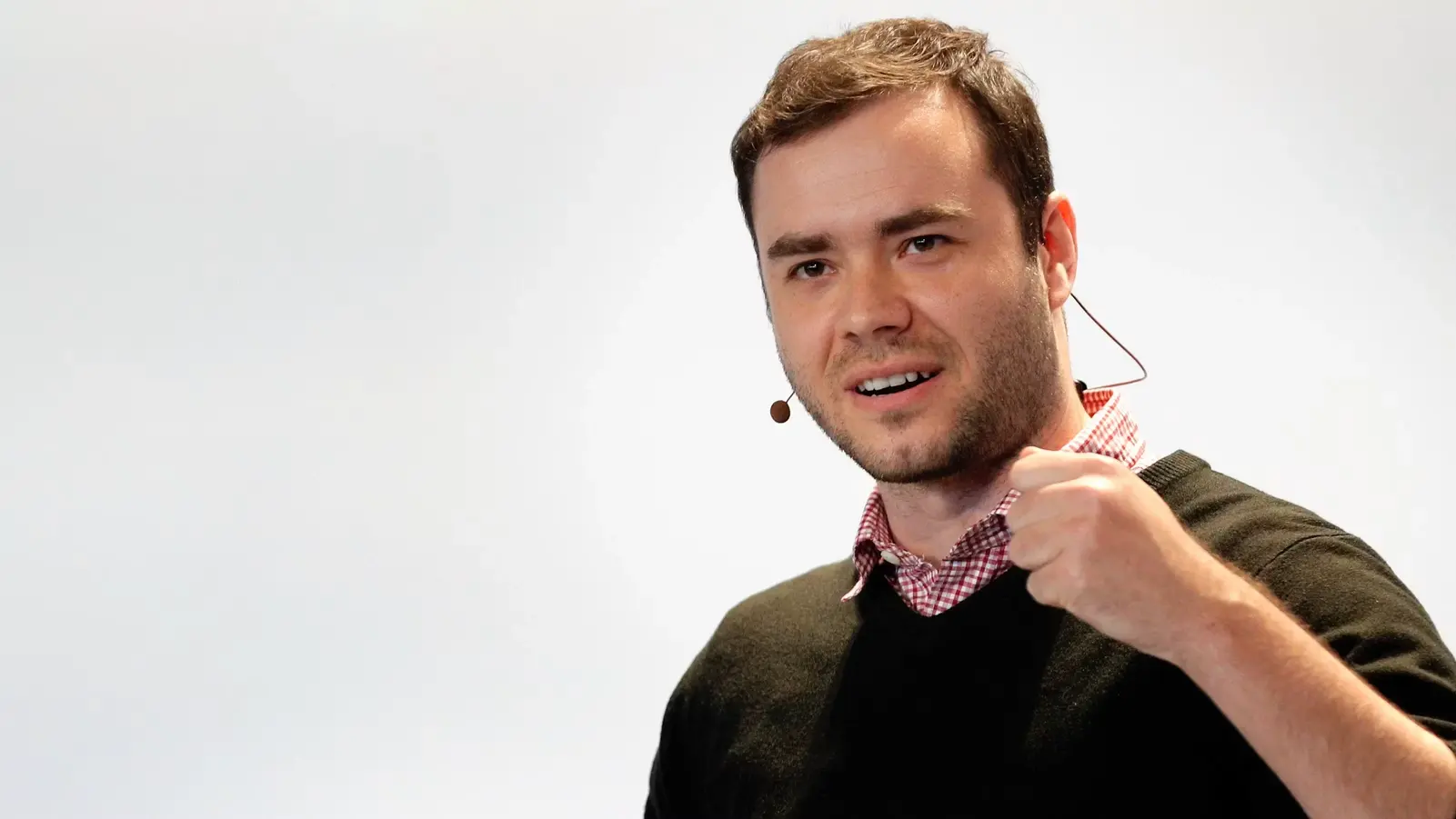
Behind ClawdBot’s Viral Success: Founder PeterPeter and His Second Life
TechFlow Selected TechFlow Selected
Behind ClawdBot’s Viral Success: Founder PeterPeter and His Second Life
Clawdbot went from concept to prototype in just one hour, built by founder Peter.
 Navigating Web3 tides with focused insights
By: CoolFish
Recently, a personal AI assistant called ClawdBot has gone viral on social media. Open-source, locally runnable, and highly customizable, it has not only ignited enthusiasm among developers but has even unexpectedly boosted sales of Apple’s Mac mini. Yet what has drawn even more attention than the product itself is its creator—Peter Steinberger, a serial entrepreneur.
A seasoned developer from Vienna, Austria, Peter founded a successful B2B software company and achieved financial independence—only to fall into profound existential emptiness after retiring. Today, reinvigorated by fresh passion for AI technology and deep insights into the essence of entrepreneurship, he has returned to the center of the tech wave—with ClawdBot as his new starting point.
Thirteen Years of Refinement with PSPDFKit
Peter Steinberger’s first entrepreneurial journey revolved around PSPDFKit—a company focused on document-processing SDKs, providing global developers with PDF collaboration, signing, and annotation tools.
It all began in 2011, when Peter received a job offer from San Francisco at a WWDC party. For him, then working as a freelancer, the opportunity was highly appealing—live in San Francisco, immerse himself in startup culture, and work alongside industry elites. He accepted the offer and began waiting for his work visa.
That wait lasted over six months.
During this period, Peter paused all freelance work—and suddenly found himself with abundant free time. “My mind was liberated from all freelance commitments, and naturally, I filled that time with other projects.”
Inspired by a friend, he decided to try building a paid component business. And so, PSPDFKit was born.
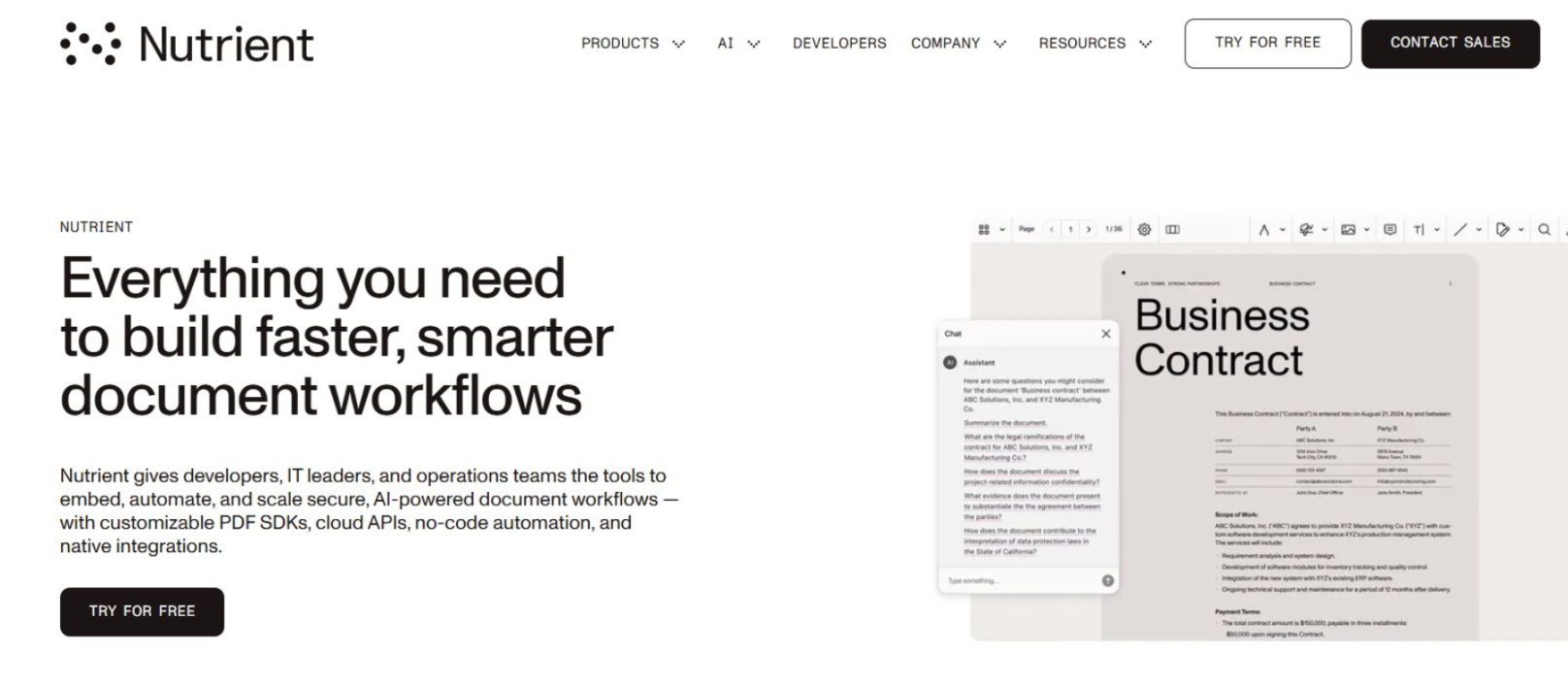
Initially just an experimental side project built in his spare time, PSPDFKit unexpectedly attracted numerous developers willing to pay. Even more dramatically, before his visa was approved, the project had already evolved into a viable business—“earning more than I likely would have in full-time employment.”
Nonetheless, Peter still decided to head to San Francisco to take up the job offer. “All the gears were set for San Francisco, so I accepted. Everything now was about experience—I truly believed I could make it work.”
But reality quickly proved otherwise. Managing a 40+ hour-per-week job while simultaneously running a full-time business left him utterly exhausted. After “killing myself for a while,” he had no choice but to choose.
In April 2012, following NSConference, Peter finally made up his mind. “So many amazing people, all deeply passionate about what they do—after experiencing that, you simply cannot go back to a standard 9-to-5 job. And seeing users genuinely love your product? That’s truly the most beautiful thing in the world.”
His time in San Francisco helped Peter clarify his true calling. “It helped me recognize what I really wanted to do.” So he returned to Vienna, Austria, and committed fully to PSPDFKit. This venture—born out of visa delays and seemingly a ‘passive’ experiment—ended up becoming his 13-year entrepreneurial legend.
PSPDFKit gradually grew from a solo project into a globally distributed remote team of 60–70 people, serving top-tier companies including Dropbox, DocuSign, SAP, IBM, and Volkswagen. Even more remarkably, the company remained entirely bootstrapped—without any external funding—for 13 years.
Peter candidly admitted in his blog that crafting the best possible product demanded enormous time and effort. His relentless pursuit of product excellence and deep understanding of the B2B market turned PSPDFKit into an industry benchmark.
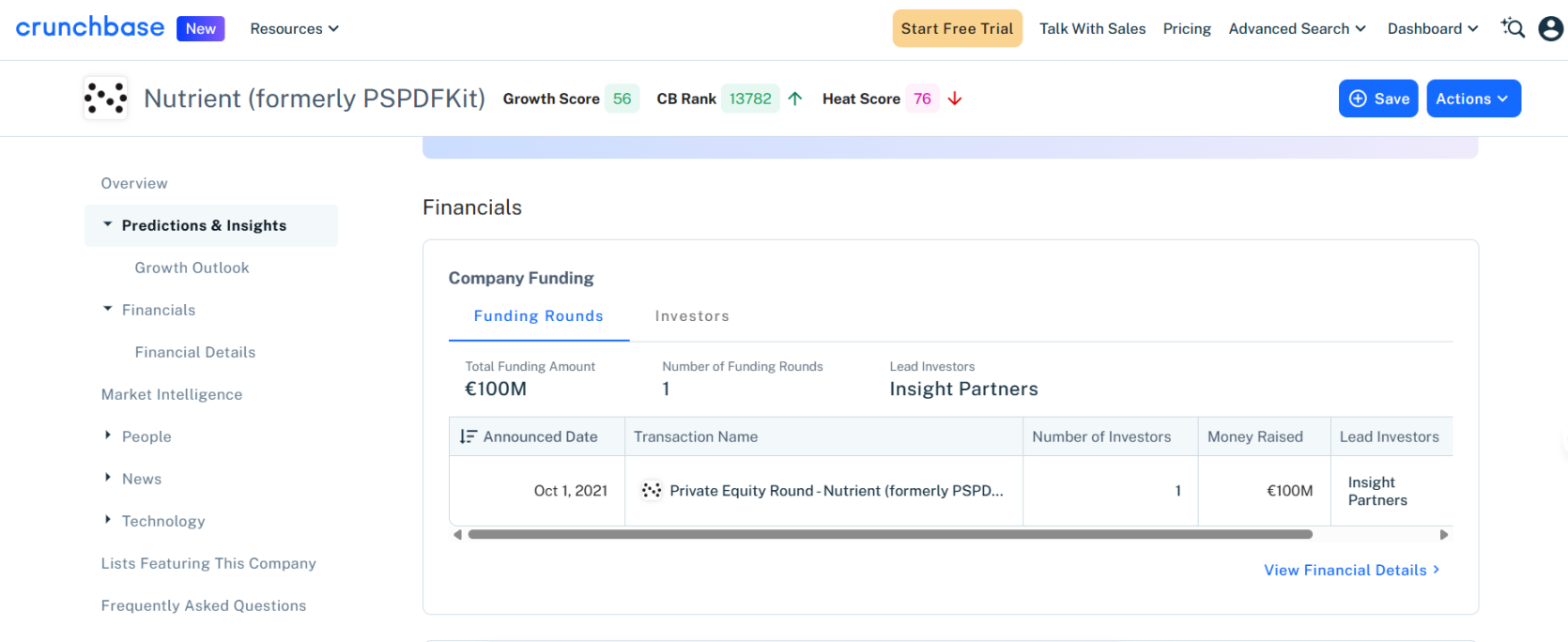
In October 2021, Insight Partners invested $116 million (approximately €100 million) strategically in PSPDFKit—the company’s first-ever external funding round—and marked the perfect conclusion of Peter’s first entrepreneurial chapter. He and co-founder Martin Schürrer officially stepped away from full-time management roles.
Yet behind this glossy ending lay the cost of nearly every weekend worked over 13 years. Peter has openly acknowledged in multiple public talks that this entrepreneurial journey ultimately led to severe burnout.
Emptiness and Awakening After Retirement
After selling PSPDFKit, Peter entered what he calls “retirement.”
For a technologist who achieved financial freedom early in his career, this should have been the ideal life stage—he’d finally have ample time to recover physically and mentally, and make up for 13 years of personal sacrifices.
Instead, this newfound freedom brought an unexpected sense of “emptiness.”
In his blog post “Reigniting Passion,” he wrote: “When I sold my shares in PSPDFKit, I felt profoundly shattered. I had poured 200% of my time, energy, and heart into that company—it had become my identity. When it was gone, very little remained. I’d heard it’s common for founders to crash and need a year to recuperate after leaving their company. The typical lifespan of a startup is only four or five years. Looking back at our 13-year journey, I realized I simply needed more time to find a new purpose.”
He tried parties, therapy, moving to new countries, chasing various “hedonistic pleasures”—anything to fill the void. Eventually, he realized: “You can’t find happiness by moving. You can’t find purpose—you must create it.”
This awakening propelled him back toward what he loved most: creating and building.
The AI wave began rising in 2024—but early AI tools delivered poor user experiences: wrong arithmetic answers, flawed logical reasoning, buggy generated code. Over time, however, AI advanced rapidly, and Peter gradually noticed AI had shifted from “not quite usable” to “genuinely fascinating.”
A new technological paradigm was emerging—and he resolved not to stand on the sidelines.
On his personal website, Peter wrote: “Came back from retirement to mess with AI.” This offhand phrase signaled the beginning of his second life.
ClawdBot: A Viral Product Built in One Hour
Like PSPDFKit 13 years earlier, ClawdBot originated from Peter’s personal needs.
In April 2024, he began conceptualizing a “life assistant” project—but existing AI models weren’t yet capable enough to realize that vision. He shelved the idea for a while, assuming large corporations would inevitably build such products themselves, making his own effort seem redundant.
By November, however, he recognized a critical gap: big companies hadn’t delivered AI assistants that truly met individual needs.
Meanwhile, available AI tools either offered narrow functionality, raised serious data-privacy concerns, or imposed steep usability barriers.
So he decided to build one himself—hands-on.
Miraculously, Peter went from idea to prototype in just one hour.
Recalling the moment in an interview with “Open Source Friday,” he said: “That month, I cobbled together some extremely rough code in an hour. It sent messages via WhatsApp, forwarded them to Claude Code, and relayed responses back. Essentially, it just glued several components together. Honestly, it wasn’t hard—and yet, it worked surprisingly well.”
Originally named “V Relay,” the project was essentially a WhatsApp relay tool. But soon, it demonstrated an “emergent adaptability” that even surprised Peter.
Once, while working at a hotel in Marrakech, Morocco, Peter jokingly told his AI assistant: “The door lock here isn’t very reliable. Hope you don’t get stolen—you’re running on my MacBook Pro.”
The AI’s reply stunned him: “No problem—I’m your agent.” Then, it autonomously scanned the network, discovered it could connect to Peter’s London-based computer via Tailscale—and migrated itself there instantly.
Peter later recalled: “Maybe it’s not AGI yet—but in that moment, I genuinely realized its ‘emergent adaptability’ far exceeded my prior imagination. I thought: this is exactly how Skynet begins.”
The project’s evolution was equally serendipitous. Later, while developing Claude-related features, a developer submitted a PR adding Discord support. Peter hesitated: “I wondered whether to add Discord support—because now it’s no longer just about WhatsApp.” Ultimately, he accepted the PR—but insisted on renaming the project.
What to rename it? Peter asked Claude for suggestions. Claude proposed “ClawdBot”—a name echoing “Claude” while incorporating “Claw” (claw), evoking imagery of grasping and agency. And thus, ClawdBot was born.
The name itself reveals the project’s core philosophy: equipping AI with hands—making it a truly personal assistant running on your own device.
Today, ClawdBot has exploded in popularity across domestic and international communities. Its GitHub stars have surpassed 40,000. More dramatically, the project has even driven demand for Apple’s Mac mini—many users choosing it as ClawdBot’s host device. Affordable, compatible, low-power, quiet, and compact, it’s even caught the attention of Logan Kilpatrick, a product manager at Google DeepMind, who ordered one himself.
Yet this virality didn’t come easily. Peter admits he initially had no idea how to communicate the product’s value to the general public.
“Interestingly, when I showed it to friends last November, they exclaimed, ‘That’s so cool!’ But when I posted about it on Twitter, the response was shockingly cold,” Peter recalls. “Not until December did friends consistently say, ‘I need this,’ every time I demoed it in person. Yet I realized I had absolutely no idea how to articulate its magic to broader audiences.”
This “great in-person demos, weak online traction” dilemma precisely reflects ClawdBot’s uniqueness—the value is only fully appreciated through firsthand experience. Not until January, as organic community sharing took off, did ClawdBot surge uncontrollably—triggering collective resonance across the entire developer community.
Peter describes himself as having “stopped reading code and started watching code flow.” Though it sounds like a joke, this phrase perfectly captures the fundamental shift in the developer’s role in the AI era. ClawdBot’s success proves Peter Steinberger, after years of silence, hasn’t just reignited his spark—he’s reemerged at the forefront of the tech wave with greater foresight and philosophical depth. From a traditional B2B software entrepreneur, he has transformed into a futurist embracing AI and pursuing极致 personalization.
From PSPDFKit in his early days to ClawdBot today, both ventures represent massive successes—but beyond success, their greatest shared trait is this: each solved a real problem Peter personally faced, then shared the solution with the world.
In recent interviews, Peter repeatedly emphasizes ClawdBot’s mission: empowering everyone to control their own data—not hand it over to big corporations.
This technological idealism wasn’t evident in his first venture. PSPDFKit resembled a conventional B2B software company—excellent, yet fundamentally built for commercial success.
The Peter of his second life, unburdened by commercial pressures, has returned to technology’s original ethos. ClawdBot is fully open-source, permanently free, and supports local models—choices that may be commercially “unwise,” yet have earned widespread acclaim from the developer community.
Build tools to solve your own problems, then share them with the world—that’s perhaps exactly what open source is meant to do.
A Second Life Still Unfolding
As of this article’s publication, ClawdBot’s GitHub stars have surpassed 40,000.
Unlike the grueling 13-year grind of his first venture, this time feels effortless. No KPI pressure. No external deadlines. Just pure creative joy.
In one interview, Peter shared a moment that deeply moved him: a user who once felt anxious about contacting customer service now confidently delegates such tasks to his intelligent assistant.
Peter recalled: “I never imagined solving problems this way. In that moment, I felt deeply humbled—and even awestruck: Wow, we—simply because that initial idea came from me—have actually changed something, tangibly improving someone’s life. Making someone’s life better—that feeling is truly wonderful.”
Peter Steinberger’s second entrepreneurial journey continues. One thing, however, is already clear: In this AI-driven era reshaping the world, those courageous enough to create—and embrace the future—will never be left behind by history.
Join TechFlow official community to stay tuned
Telegram:https://t.me/TechFlowDaily
X (Twitter):https://x.com/TechFlowPost
X (Twitter) EN:https://x.com/BlockFlow_News
 @kricspan