








Exclusive Interview with Cat Zong: Selling Houses in Japan with Cryptocurrency
TechFlow Selected TechFlow Selected
Exclusive Interview with Cat Zong: Selling Houses in Japan with Cryptocurrency
These unglamorous "builders" ultimately define the real value of the crypto economy.
 Navigating Web3 tides with focused insights
Text: Mary Liu, Bitpush News
He was once a practitioner in traditional banking and wealth management offices,
and also a pioneer in turning cryptocurrency into a tool for buying property.
He has consistently shared insights on Twitter for over 10 years,
and has served some of the world’s most mysterious on-chain clients.
You can purchase a Japanese guesthouse with USDT through him, or casually discuss asset offshore strategies while petting cats.
"I buy houses for my cat!"
—————————————— I’m the glamorous divider line ——————————————
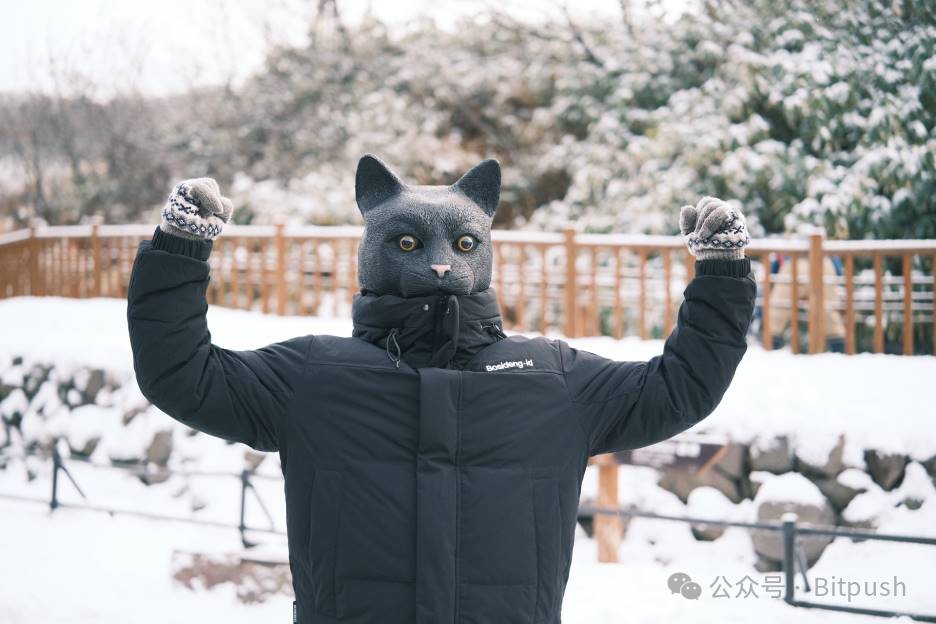
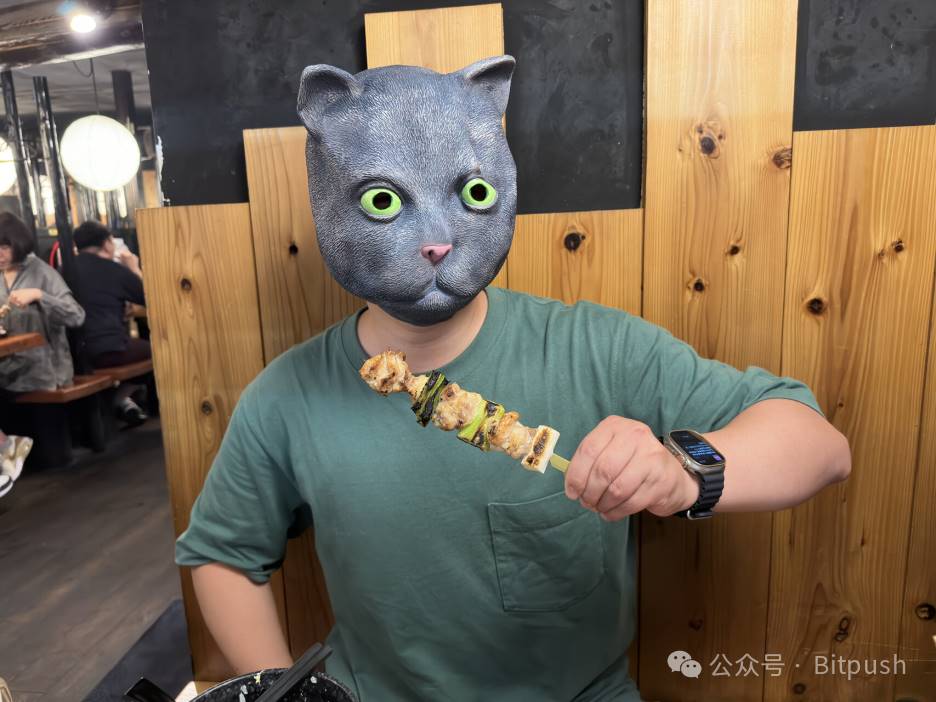
This "Boss Cat," known by his feline avatar active on Chinese Twitter, may already be familiar to you. Identified by his cat-head mask, he speaks in a humorous and sarcastic tone, claiming “dissing Osaka is my profession” and calling himself a “kelp-level financial professional.” In reality, he is the CEO of Keihan Jutaku Co., Ltd., a creative startup real estate firm based in Japan.
In this article, we’ll dive deep into Boss Cat’s world and explore how this meticulous entrepreneur—wearing a cat mask, verbally roasting Osakans while actually delivering coin-for-house transactions to clients—has successfully brought Japanese real estate into the crypto community.
The native "Boss Cat" from Lujiazui's financial circle
Boss Cat started investing in Bitcoin as early as 2016.
With a finance background and a formal academic path including both undergraduate and graduate studies, he worked successively at banks, securities firms, and wealth management institutions—gaining comprehensive experience in traditional finance.
He told Bitpush News: "In 2017, when the crypto market began heating up, I wanted to switch over, but no one paid attention to me."
He applied to major exchanges such as Binance, ZB, and Gate with a resume featuring a French business school education and traditional finance experience—but didn’t receive a single offer from the crypto industry.
That same year, regulators ordered the shutdown of all domestic exchanges, causing the crypto industry to rapidly cool down. He had thus "missed" the first wave of the crypto boom.
But this was just a minor detour. Around the same time, he began building his personal brand.
Boss Cat isn't an original solo entrepreneur; the identity was passed down. The first-generation Boss Cat was a senior executive from Noah Wealth who eventually handed over the account to him.
Today, Boss Cat enjoys a stable following on Twitter. His avatar features a custom cat-head mask originally worn during a Halloween party while studying in France in 2015. It wasn't until 2017, after joining the banking system, that he decided to formally adopt it as a personal brand.
In 2018, by chance, he discovered opportunities in Japan’s real estate market—at a time when Japanese property wasn’t popular, yet he sensed the direction.
On January 3, 2020, Boss Cat flew from Pudong Airport to Osaka for business research. At the time, news about Wuhan was circulating—he thought it was a joke. But he never returned home. Covid stranded him in Japan, yet opened another door.
Crypto + Real Estate: Forging a Pragmatic Path
In recent years, an interesting trend has emerged: many people aren't moving to Japan out of necessity, but rather for comprehensive considerations like asset allocation, identity planning, and lifestyle optimization.
Some want to send their children to study in Japan and buy property first; others already live in Southeast Asia or the Middle East and find Japan’s cost of living reasonable and safety levels high.
According to Tencent News, data shows that in 2022, the number of Chinese buyers purchasing property in Japan increased by 50% compared to 2021. From October to November alone, purchases surged by 120%. Among foreign buyers in Tokyo, Chinese nationals accounted for 80%.
Among them are many who made money in the crypto space and urgently want to convert their assets into tangible physical assets. Yet they don’t understand Japan’s real estate procedures and struggle to find suitable agents.
Boss Cat, fluent in crypto culture, equipped with a financial background, and physically present in Japan, seized this demand: Japanese real estate is relatively stable, offers solid returns, and operates under a clear legal framework—making it an ideal landing zone for crypto capital. Buying property with digital currency thus became a viable option.
This is precisely where he excels.
Boss Cat notes he wasn’t the first to do this business, but he was the first to systematically document the process: "People were already using cryptocurrency to buy homes in 2018, but the first comprehensive Chinese-language guide was written by us."
His blog post, “A Practical Guide to Buying Japanese Real Estate with Cryptocurrency,” is nearly textbook-level, clearly outlining everything from exchange routes and payment methods to potential pitfalls.
He has also shared real cases:
"Back then, Koreans bought properties using UST, but when LUNA collapsed, all defaulted."
Having witnessed the craziness of the crypto world, he remains especially cautious, only conducting one-on-one, actual property transactions. In the trust-scarce crypto industry, he has earned his reputation through reliable delivery.
According to Boss Cat, buying Japanese real estate with cryptocurrency offers several distinct advantages:
-
Convenient cross-border payments: No need for traditional banks, faster transactions, simpler procedures;
-
Lower tax sensitivity: Different countries have varying definitions of crypto assets, offering greater flexibility in certain cases;
-
Natural market alignment: Crypto investors tend to be younger generations with unique preferences regarding asset allocation and lifestyle.
While others in the industry chased DeFi and NFT get-rich-quick myths, Boss Cat quietly turned “converting USDT into Tokyo real estate” into a business.
How Does He Acquire Clients? A Man Who’s Tweeted Consistently for Over 10 Years Became His Own Best Advertisement
"90% of my clients come from Twitter." — Boss Cat, 2022
In the early days, Boss Cat also tried conventional marketing tactics—writing WeChat articles, sharing干货 (practical knowledge), promoting Tokyo, discussing policies…
"But it was too competitive. Everyone wrote the same things."
Then one day, he posted a photo on Twitter of an ATM machine in Osaka’s Namba district overflowing with trash, captioning it “This is Osaka”—and it went viral.
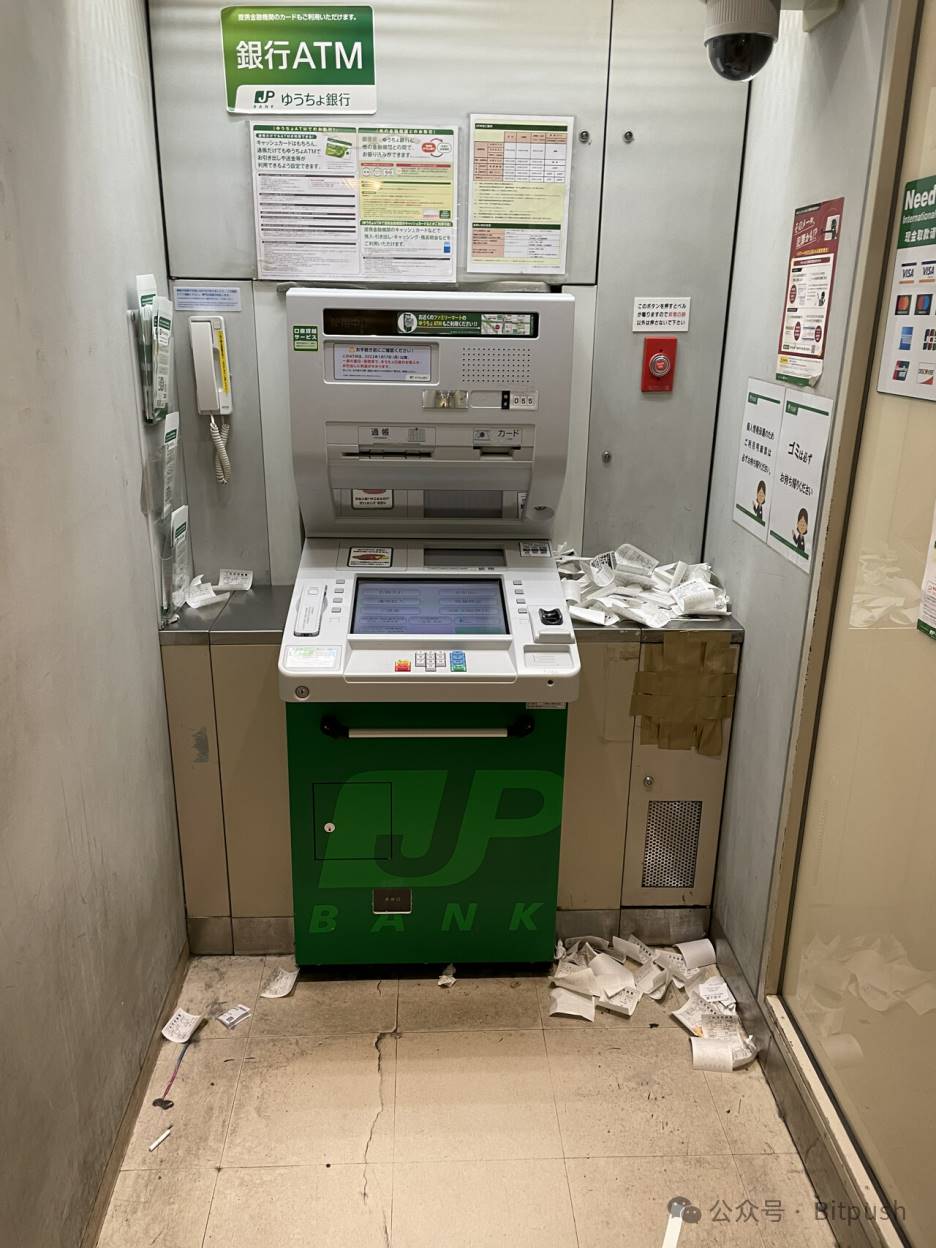
"Gained over 10,000 new followers. That moment I knew I’d found the traffic formula."
This accidental move made him realize the market didn’t lack praise for Japan—it lacked someone brave enough to show the “reverse side,” the “truth.” From then on, Boss Cat adopted his “professional Osaka hater” marketing strategy, becoming the most unconventional real estate agent in the crypto community.
In an age of information overload, you can’t talk about finance as an ordinary person, nor discuss Japanese real estate with the typical agent’s tone. In this homogenized era, you must either be interesting—or be forgotten.
And slogans like “I buy houses for my cat” and “broke down to just 320,000 RMB left on my mortgage” come straight from his real life—
In 2018, Boss Cat’s family assets exceeded 30 million RMB, but carried heavy mortgages. To relieve pressure on his parents, he took on 95% of the loan burden—now reduced to just 320,000 RMB remaining.
Boss Cat admits this entrepreneurial journey hasn’t been easy. Early transaction fees reached as high as 12%, and settlement channels were almost entirely dominated by Koreans. During the 2022 LUNA crash, UST—the stablecoin many clients used—plummeted to zero, halting settlement channels for half a year.
"The hardest part isn’t the process—it’s trust." Crypto users are naturally suspicious of agents, while traditional Japanese landlords remain skeptical of cryptocurrency investors, resulting in poor property matching.
Eventually, he and his team gradually built their own operational system. They don’t aim to be the fastest, but to be the one that lasts the longest.
Boss Cat’s clients are almost exclusively 80s and 90s-born cryptocurrency investors—relatively young, financially strong, yet unable to find real estate companies willing to serve them, since Japanese property professionals are generally older and unfamiliar with cryptocurrency operations. Boss Cat is one of the few who truly understands both crypto and real estate.
His company is now negotiating with local Japanese developers, hoping to see more properties available for purchase via cryptocurrency in the future.
No Rush to Chase Trends—Just Want to Stay Grounded
When asked about the booming RWA (Real World Assets) sector, Boss Cat remains clear-headed: "This industry is still too early—like mutual funds 100 years ago. There’s no underlying asset protection, no legal support. Most are still just hyping concepts."
He doesn’t rush to launch tokens or put properties “on-chain.” He simply wants to perfect the “hand over coins, hand over house” process first.
"Japanese real estate still uses fax machines for paperwork. Talking about smart contract-based automatic settlements? That’s a distant future."
Yet he still believes the direction is correct. Real estate transactions will inevitably become increasingly platformed and digitized—even if not blockchain-based, they’ll be pushed forward by digital asset holders.
Boss Cat’s ultimate goal is to turn “buying property in the crypto community” into a standardized service. He doesn’t rush to scale up, preferring instead to serve each client thoroughly, validate the model carefully, and then consider replication. "As for whether we can eventually do RWA, that depends on global RWA legislation. We won’t rule out small-scale testing, but passing RWA under current Japanese law remains very far off."
Conclusion
This isn’t a get-rich-quick story, but rather a tale of carving out a pragmatic path between traditional and emerging finance. With market intuition and deep understanding of human nature, Boss Cat found his niche—and firmly established himself within it. When the tide recedes, it may well be these unglamorous “infrastructure builders,” without flashy narratives, who ultimately define the real value of the crypto economy.
Join TechFlow official community to stay tuned
Telegram:https://t.me/TechFlowDaily
X (Twitter):https://x.com/TechFlowPost
X (Twitter) EN:https://x.com/BlockFlow_News
 比推 BitpushNews


