Exclusive Interview with Trader Eugene: Newcomers Should Focus on On-Chain Assets—Most of the Market Doesn't Care About Fundamentals
TechFlow Selected TechFlow Selected
Exclusive Interview with Trader Eugene: Newcomers Should Focus on On-Chain Assets—Most of the Market Doesn't Care About Fundamentals
Share lessons learned about risk management, position sizing, and stop-loss strategies.
 Navigating Web3 tides with focused insights
Host: Taiki Maeda, Founder of HFA Research
Translation: Felix, PANews
Many know Darryl by his Crypto Twitter/X handle @0xENAS, where he shares trading insights and market views monthly. He’s among the best crypto traders, though his journey has been far from smooth. After nearly going bankrupt in May 2021, he rebuilt himself into an investor and co-founded one of the field’s most respected funds. Recently, Taiki Maeda, founder of HFA Research, sat down with trader Eugene Ng Ah Sio for an in-depth interview. Below is the full transcript.
For those unfamiliar with you, can you share what you're doing now?
I co-founded a multi-strategy investment firm called Tangent, where I focus on liquid markets while my partner Jason handles venture capital. Previously, I led Defiance Capital. I entered the crypto space as a retail trader in 2020, and have grown significantly since then.
You're now a highly successful trader, but it seems you faced some challenges in 2021. Can you share your mistakes and lessons learned?
In early 2021, I wasn't managing risk properly and was aggressively using leverage. I took profits in February but re-entered the market in March, failing to avoid the May market crash. Due to excessive exposure and leveraged buying the dip, I suffered an 80% drawdown at the worst possible moment, forcing me to liquidate core leveraged positions at the bottom. It was brutal, but taught me the most important lesson: survival comes first.
I chose to cut losses and restart. A major mistake was over-concentrating my portfolio in a single DeFi protocol that never recovered after the market downturn. No matter how strong my conviction, that loss taught me the necessity of diversification.
The key is staying in the "game." No single trade should ever bankrupt you. Adaptability, risk management, and learning from errors are essential for long-term success. Even today, minimizing the risk of ruin remains the most critical factor when determining position sizing.
How has your trading style evolved?
First, it's about understanding how to position—finding asymmetric opportunities with massive upside potential. The harder part is identifying them in real time. That comes from experience, trial and error, and cultivating intuition.
For me, crypto trading remains intuitive. When I see a new opportunity, I often get a gut feeling within minutes. Over time, I’ve learned that my initial instinct is usually correct. Looking back, I try to analyze what triggered that intuition—what specific factors gave me confidence in an investment. These patterns tend to repeat. While markets evolve, the biggest winners often share similar characteristics.
How do you manage the psychological aspects of trading?
It’s a huge challenge. In a 24/7 market like crypto, you constantly battle greed, fear, and the fear of missing out. Staying mentally clear is crucial—I sometimes stop trading completely for two or three days to reset.
One key lesson I’ve learned: you can’t catch everything. You must accept that you’ll miss some opportunities. I stick to my circle of competence. Recognizing your strengths and ignoring distractions is vital for long-term success. As GCR once said: “The man who chases two rabbits catches neither.”
How do you approach position sizing?
I believe in concentrated bets. Sometimes up to 80% of our portfolio is allocated to our top three ideas. The key is aligning your portfolio with your highest-conviction bets, ensuring size matches belief. Of course, this also requires strict risk management to prevent catastrophic losses.
How do you deal with the internal conflict between wanting to avoid risk and aiming for outsized returns?
It’s a tough balance. In the first cycle, I took enormous risks—like putting 80% of my net worth into a single asset. While it may seem absurd in hindsight, that boldness delivered massive returns. Now, as a second-cycle investor, I’m more cautious, but I still ask myself: what allowed me to make those big moves before, and how can I replicate that without being reckless? The challenge is taking risks without losing the conviction I had before, while remaining realistic about market volatility.
In 2021, you invested 80% of your net worth in AVAX. Looking back, if given the chance, would you make the same decision again?
That’s a hard question. In hindsight, it seems crazy, but that risk enabled significant compounded returns. Today, I ask whether I could do it again. As I’ve matured, my awareness of risk has increased, and I now have entirely different systems and frameworks to prevent major mistakes. Back then, I was naive—and I think that mindset played a big role in my prior cycle’s success. Understanding risk is important, but so is daring to dream when the market presents an opportunity.
So you’re saying you invest more cautiously now, but to achieve outsized returns, would you still take the same level of risk?
Exactly. Although it’s terrifying, making large, concentrated bets is essential. It’s difficult, but that’s where the best cyclical returns come from. You must be willing to take these risks, even when they make you uncomfortable.
It sounds like you've developed a lot of discipline over the years. Can you share a bad trade you’ve made and what you learned from it?
I'm just human—I always make mistakes. One recent example that stands out is when I went long SOL heavily at $210 without respecting my $200 stop-loss. The most important lesson in trading is setting stops—and actually following through. Once you become careless, mistakes can compound quickly, and you end up risking far more than originally intended.
What would you say to your past self in that moment?
I’d ask, “If you sold your entire portfolio today, would you repurchase the exact same assets in the same proportions?” Most people realize they wouldn’t, yet they hold onto losing positions due to emotional attachment. Also, opportunity cost matters—every dollar in one asset is a dollar not invested elsewhere.
Another thing is avoiding the “one trade to get all my money back” mentality. That’s a common trap. Don’t revenge trade—focus on accumulating small wins instead.
How do you know when to reduce a position?
That’s the hardest part. Many hold losing positions due to emotional attachment or simply hoping things will turn around. But the key is honesty with yourself. If you reassess your thesis and the outlook hasn’t improved, it’s time to move on (“cut your losses”). This is a common struggle for retail investors.
How do you ensure your biases don’t affect your judgment?
Having a team definitely helps. At my firm, we operate transparently, so when I do something questionable, others can point it out. Accountability keeps me in check. We conduct rigorous, often brutal post-mortems on every major decision, and we encourage everyone—even new hires—to actively and brutally call out senior members. Ego has no place in markets. Building a team committed to total honesty and emotional detachment is critical. If you’re solo, find someone to share your positions with and get feedback. It helps mitigate emotional decision-making.
So accountability plays a big role in staying focused?
Absolutely. Having a team or trusted person to discuss trades ensures you don’t get trapped when things go wrong. If you make a mistake, it’s important to acknowledge it and move forward—not dig yourself deeper. Accountability prevents further errors.
For participants looking to build a trusted group or network, what advice would you give?
Much of the alpha has shifted from Crypto Twitter/X to Telegram and Discord communities. If you’re just starting, Twitter/X is a great platform to build a presence and share ideas, but today I prefer Telegram as my primary communication channel.
What traits do successful traders share?
Successful traders handle pressure well and stay calm when things get volatile. This isn’t something easily learned—it’s an innate skill. If you have it, sharpen it. If not, recognize that and avoid forcing yourself into high-pressure environments. Knowing your strengths and weaknesses is crucial in choosing your path.
What’s the most common mistake traders make?
I often see people fantasizing about outcomes before they happen. This occurs when people get caught up in the idea of “success” because their portfolio has grown, and they start making major lifestyle changes. They treat paper gains as real money, going out to buy unnecessary things like luxury cars or expensive watches. But the reality is, unless the money is in your bank account and taxes are paid, it’s just points on a scoreboard. I always view crypto this way—it’s a game, and until it becomes cash, it’s not real money. When players don’t understand this, they often mismanage their wealth and lifestyle.
What are common misconceptions people have about crypto?
One of the biggest misconceptions is that you should allocate capital based on fundamentals. People think if a project has strong fundamentals, the price will follow. But in reality, the market doesn’t care about fundamentals 90% of the time. Making money is actually about predicting which narratives will gain traction first. Fundamentals matter when there’s a catalyst, but most of the time, the key is catching the next trend and acting on it when you see it. At least, that’s been my experience. It’s a bit like knowing something is about to happen—you prepare as best as you can, because markets can move faster and farther than expected.
For someone entering crypto today, what advice would you give for achieving success?
Honestly, if I were entering crypto today, I’d question whether it’s worth it. But if you still want in, I’d say focus first on on-chain assets. They offer the best upside potential and fastest compounding for smaller portfolios. But on-chain opportunities aren’t permanent—they’re somewhat seasonal. When on-chain markets dry up, you also need the ability to trade on centralized exchanges. Mastery of both layers is key, but you should focus on mastering one and becoming proficient in the other—don’t try to do both simultaneously.
What are your personal goals for the next 10 years? Do you see crypto merely as a means?
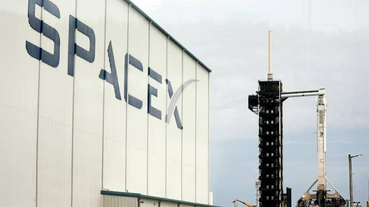
First, I genuinely love this “game.” Competing against the world’s best traders and investors is a big reason I’m in this industry. Over the next decade, my goal is to build the best proprietary trading fund in crypto. Long-term, my ambitions turn toward the stars. I’ve always dreamed of contributing to humanity becoming an interstellar species. A big part of that is doing everything I can to support space exploration. One item on my bucket list is going to space before I die.
So you see crypto not just as wealth accumulation, but part of a broader vision?
Exactly. There’s already plenty said about crypto’s mission—no need to repeat it here. Beyond that, for me, crypto as a platform for extraordinary wealth also gives us a chance to compete globally. I want to use this success to support larger causes—biomedical research, space exploration, environmental protection. In my company, through personal investments by me and my co-founder, we’re actually investing in robotics, bio-computing, at-home cancer detection, and other cutting-edge technologies outside of crypto. Sometimes the founders are even crypto pioneers or have interest in crypto. It’s all interconnected.
For someone wanting to succeed in crypto today, what advice would you give?
My motto is simple: “Stay alive, laugh, play long.” “Stay alive” means take care of yourself and enjoy life while you’re young. “Laugh” means appreciate where you are and make the most of each moment. “Play long” means be patient, know when to deploy resources, and understand where you want to contribute. With this mindset, you’re not just contributing to society—you’re doing so sustainably over the long term. That’s how you succeed, not just in crypto, but in life.
Join TechFlow official community to stay tuned
Telegram:https://t.me/TechFlowDaily
X (Twitter):https://x.com/TechFlowPost
X (Twitter) EN:https://x.com/BlockFlow_News
 @HFAresearch