Interview with WOO CEO Jack Tan: Building a Decentralized CME, Bullish on the Future Integration of AI and DeFi
TechFlow Selected TechFlow Selected
Interview with WOO CEO Jack Tan: Building a Decentralized CME, Bullish on the Future Integration of AI and DeFi
Follow Jack Tan as he unveils the ambition behind the WOO Super App and his vision for the future of finance.
 Navigating Web3 tides with focused insights
Written by: TechFlow
While institutions and retail investors retreat during bear markets, two traders from Carnegie Mellon University used their own capital to build a top-10 Binance quantitative fund—and then opened their core strategies to all retail participants.
From Kronos Research to WOO, he is shaping an ambitious blueprint in the crypto world.
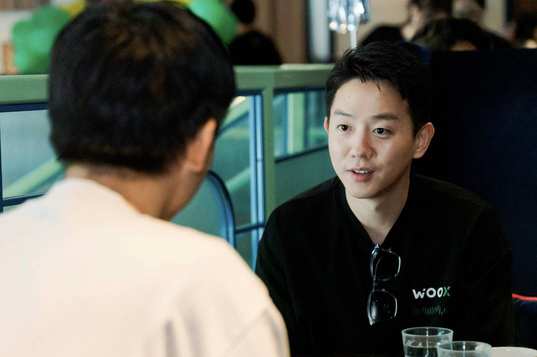
He is the protagonist of our exclusive interview today: Jack Tan, Co-Founder and CEO of WOO.
On WOO’s positioning, he believes WOO is a decentralized CME, aiming to provide everyone with a fair and engaging trading environment.
"99% of AI trading narratives are false," he said. "The real game-changer lies in building highly personalized AI—AI that can anticipate risks before you do, and capture profits better than VCs."
In response to industry debates around "on-chain PVP" and the "VC token shorting trend," he stated plainly: Markets constantly evolve, but value will ultimately return.
In this feature, let's dive into the ambition behind WOO’s Super App and Jack Tan’s vision for the future of finance through his insights.

Entering WOO, A New Financial World
TechFlow: It's great to have the opportunity for an in-depth conversation. Could you first introduce yourself?
Jack Tan:
Hello everyone, I'm Jack Tan, Co-Founder and CEO of WOO. I'm glad to have this opportunity to engage deeply with you all.
I have 10 years of experience in traditional finance and am familiar with various aspects of the field. My co-founder at WOO, Mark Pimentel, was my classmate at Carnegie Mellon University. He wanted to use blockchain technology to create a decentralized CME where everyone could conduct trustworthy and creative trading. I felt this was hard to achieve in traditional finance, so I turned to cryptocurrency.
Due to fundraising difficulties during the previous bear market, we started Kronos Research with our own funds. About a year later, Kronos Research ranked among the top 10 in trading volume on Binance—a position it still holds today.
Once profitability stabilized, I wanted to turn our strategy into a platform accessible to everyone. Initially, we provided liquidity to smaller exchanges, but they often abandoned us once they built their own liquidity, prompting us to realize we needed to offer a full suite of services—the idea for WOO was born.
We aim to use WOO to showcase the security, user experience, and transparent trading methods we believe in. Today, WOO has launched CEX, DEX, supports spot and derivatives trading, and offers a wide range of products.
TechFlow: You mentioned WOO’s vision is to become a decentralized CME. How far do you think WOO is from achieving that goal?
Jack Tan:
To be honest, building a decentralized CME requires collective effort. For example, Orderly now provides derivative liquidity, allowing users to directly deposit funds into their Vault and create their own contracts. This is essentially the prototype of a decentralized CME, though its extent depends on regulation. However, if platforms like pump.fun don’t restrict tokens, liquidity becomes too fragmented, hurting user experience.
Overall, the framework exists today, but details remain to be finalized. I expect to see various new products emerge this year, and WOO’s role will be to support these as part of an ecosystem.
TechFlow: Given your background in traditional finance and WOO’s vision of becoming a decentralized CME, do you reference traditional finance more when building WOO?
Jack Tan:
No, our primary consideration is always user needs.
From our perspective, when a user wants to trade a token, there are different models: for small tokens, we route users to the corresponding DeFi contract; for Bitcoin or Ethereum, market makers provide support; and there are also cases using Vault. These are all different.
But users don’t care about any of this—they only care whether they can buy the token they want. If they can, they’ll view it as a good product. What WOO must do is wrap this complex backend system into the simplest possible interface for users.
TechFlow: As a major brand, WOO has many sub-products such as WOO X, WOOFi, WOO STAKE, etc. How do you plan WOO’s product matrix? And how do you define the overarching WOO brand?
Jack Tan:
Our goal is to integrate these diverse products into a “Super App.”
These products emerged because we had many ideas and different teams working independently. Now we need to identify which applications are useful and which features users love, then consolidate them into one Super App. If users can still tell these features were built by separate teams, we’ve failed.
From a product standpoint, WOO X is the CEX, WOOFi is the DEX, Kronos Research provides market-making services, and partner Orderly drives liquidity. Previously, Kronos Research provided nearly 100% of the liquidity; now it’s less than 50%. We’ve opened up the market and brought in other market makers like Wintermute.
But the core principle remains: prioritize user needs.
Diving Into WOO’s Vision: Keys to Our Success
TechFlow: You just mentioned that Kronos Research still maintains a top-10 trading volume ranking on Binance. However, the market focuses more on your flagship products WOO X and WOOFi. Can you share any rankings or user data for these two?
Jack Tan:
I don’t focus on rankings because the crypto market is too volatile.
But in terms of data, WOO X averaged $500 million to $600 million in daily trading volume last quarter, while WOOFi reached $100 million. Still, these figures fluctuate significantly with bull and bear cycles. To stabilize data, we may need to introduce lower-volatility assets, similar to stocks.
TechFlow: Let me ask a deeper question. Since WOO has many different products, you likely face competitors across multiple sectors. In the respective domains of WOO X and WOOFi, where does your competitive edge lie?
Jack Tan:
We are research-driven. We publish neutral, high-quality research reports that allow new crypto users to quickly grasp current market trends. We treat all chains and sectors equally—whenever an opportunity arises, we inform our users.
We’re also investing in AI. Beyond storing memories and generating ideas, AI can deliver “extreme personalization.” Some users just want a chatbot and dislike dealing with long order books; others prefer detailed information and collaborate with AI to make decisions.
This direction represents the future of personal finance, a trend WOO is actively pursuing.
TechFlow: WOO currently operates on EVM. Are there plans to deploy on other blockchains in the future?
Jack Tan:
If our development capacity allows, we’re open to experimenting across various chains. But right now, we’re focused not on competing with existing exchanges, but on building what others haven’t done—we’ve chosen the latter path.
TechFlow: At this year’s Consensus, we noticed SynFutures launched an AI named Synthia that executes long/short trades based on conversation. This might resemble the chatbot concept you mentioned.
In the AI + DeFi space, beyond going long or short on an asset, what other viable use cases do you foresee?
Jack Tan:
A key direction is “customized interfaces.”
AI can analyze a user’s trading history and point out risks. For example, someone trading at large scale using only market orders might be told by AI: “You’re experiencing excessive slippage.” Or users unfamiliar with funding rates could let AI calculate them for optimal decisions. I believe AI’s greater role is advisory. For instance, before an FOMC meeting, AI could alert users to potentially high volatility and suggest actions for better returns.
TechFlow: Current AI agents drastically lower trading barriers. Do you think AI agents can go further—integrating research, advice, and execution into one seamless flow?
Jack Tan:
They eventually will, but it’s too early now. Maybe another year? Despite rapid AI progress, it still falls short in handling the complexity required for trading. Under current conditions, the best use of AI is to explain its logic clearly so users can approve before execution.
TechFlow: There’s a growing sector called DeFAI—DeFi + AI. What are your thoughts on this space?
Jack Tan:
I’ve always believed DeFi/blockchain isn’t designed for regular people—it’s too complex.
DeFi and blockchain should interact with AI, and then people should access them through AI. Everyone’s talking about DeFAI now—I see this as a positive trend. When AI becomes easy enough to use, mainstream Web3 adoption won’t be far off.
But we must address how to keep assets secure when AI holds private keys.
TechFlow: Let me add—For those unfamiliar with DeFi, say I want to interact with a chain or provide liquidity to a protocol, DeFAI could guide me step-by-step or list viable options. I think this greatly accelerates Web3 mass adoption.
Given your deep understanding of traditional finance, have you seen any promising DeFi + AI projects?
Jack Tan:
I don’t think there’s yet an AI in the crypto space that I need to use every day.
I use DeepSeek, GPT, Grok3 daily, but no crypto-native AI delivers comparable value—yet. I believe one will emerge within the next six months.
And I believe such AI will originate from quant firms—like Kronos, Citadel, or Jump Trading—just as DeepSeek emerged from a hedge fund rather than Alibaba. Only companies actively profiting from AI can build true DeFAI capabilities.
TechFlow: Let me follow up. Why would quant teams release an AI sharing their strategies? Won’t the strategy lose effectiveness as more people adopt it?
Jack Tan:
Because it’s a win-win.
For a hedge fund, higher trading volume means greater profit share. Suppose a strategy earns $1 when used alone—but with 100 participants, profits grow to $100. Additionally, they can sell delayed signals to users, creating another revenue stream. Also, running strategies with proprietary capital carries high risk-reward. Deploying them with market capital dramatically improves Sharpe ratio (a measure of risk-adjusted return).
TechFlow: Let’s circle back to WOO. Within the entire WOO ecosystem, do you have plans for new initiatives or products?
Jack Tan:
We’re constantly launching fun new products. But I feel WOO today is too specialized, too institutional. Moving forward, we’ll get closer to retail users and listen to their real needs.
Macro Policies and Their Impact on WOO and the Industry
TechFlow: For our final section, let’s discuss macro trends. Trump’s recent return is undoubtedly the biggest macro event. What positive or negative impacts do you see for crypto? Anything we should watch out for?
Jack Tan:
In the long run, I’m optimistic.
The Trump team consists of free-market advocates—the kind of supporters crypto needs. Just like in 2017–2018, loose policies led to massive innovation. Later, tightening regulations imposed constraints. Now, the tide is turning back toward openness.
But the market has developed PTSD from Gary Gensler, and recovery will take time.
What happens next remains uncertain. When Trump took office, he immediately initiated trade wars and tariffs, causing over 20% declines in traditional markets. Crypto sometimes correlates strongly with traditional markets, but at other times moves independently.
One consensus: When almost everyone expects the market to move in one direction, that’s when caution is needed.
TechFlow: The SEC dropped its lawsuit against Coinbase. What’s your take on this?
Jack Tan:
It’s definitely a positive signal. But right now, the most critical issues are tariffs, labor, and immigration policies—these depend on the Fed’s response.
Plus, Elon Musk’s Department of Government Efficiency aims to cut $2 trillion annually, which actually reduces economic growth, right? This could force the Fed to react—even with high inflation, they might loosen monetary policy.
TechFlow: Recently, people are enthusiastic about on-chain PVP and shorting VC tokens on Binance. Some believe this trend will continue, while others think it’s temporary—markets will eventually filter out truly valuable tokens. What’s your view?
Jack Tan:
First, a free market has no fixed patterns. If Binance listings keep getting shorted, eventually they’ll stop listing. Likewise, if VC tokens keep getting shorted, VCs will stop investing. Everything changes. The current situation stems from VCs previously investing too much—the market simply needs time to digest it.
As for Memes, I believe their cycle is largely over. I still think value-based tokens will prevail longer-term. Memes can generate profits, but most end in heavy losses. If WOO users want to trade them, we can offer Meme coins—but we want users to understand exactly what they’re doing and the associated risks.
TechFlow: This year marks the first time Consensus comes to Hong Kong, and you attended. How important is the Asia-Pacific market? Will WOO make strategic shifts targeting APAC?
Jack Tan:
Currently, WOO primarily serves English-speaking users, but we can’t overlook the importance of the Asia-Pacific region. Hong Kong is becoming more open, but as cities worldwide compete to become crypto hubs, Hong Kong needs even more progressive policies to stay ahead. This benefits not only exchanges, but ultimately users as more tradable products come online.
The regulator’s mindset is key. If regulators hold traditional views and refuse to analyze competitors, their jurisdiction will likely lose relevance.
TechFlow: Final question: As crypto continues evolving, more newcomers will enter. What advice do you have for them?
Jack Tan:
We have excellent tutorials on YouTube covering WOO products, market analysis, and our broader perspectives. But learning is only one side—what matters most is hands-on practice: setting up your own account, securely managing private keys, etc.
Still, I believe crypto’s entry barrier will keep lowering with new products—this is a healthy evolutionary process.
Join TechFlow official community to stay tuned
Telegram:https://t.me/TechFlowDaily
X (Twitter):https://x.com/TechFlowPost
X (Twitter) EN:https://x.com/BlockFlow_News
 深潮TechFlow