Exclusive Interview with WOO COO Willy: Using AI to Build Better Trading Products and Making Crypto Flatten Money
TechFlow Selected TechFlow Selected
Exclusive Interview with WOO COO Willy: Using AI to Build Better Trading Products and Making Crypto Flatten Money
WOO aims to enhance product user experience through AI technology.
 Navigating Web3 tides with focused insights
Interview: Joe, Foresight News
Content editing: Hazel Gong
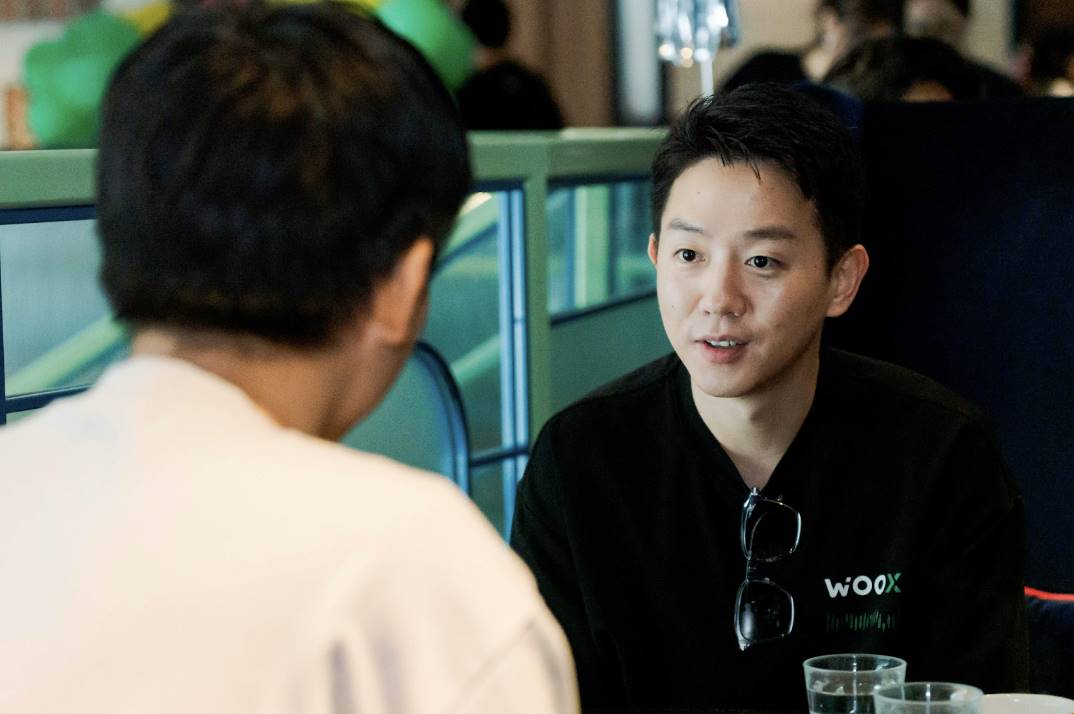
During TOKEN 2049 in Singapore, WOO COO Willy sat down for an interview with Foresight News.
In this conversation, Willy shared deep insights into WOO’s product and market strategies—such as the integration of crypto trading with AI in user experience design, and his observations on the European market.
He mentioned that WOO aims to enhance user experience through AI technology. This year, major product developments include social trading and reverse copy-trading features within CeFi. Additionally, WooFi will be deployed on Solana next month. Willy hopes future crypto applications will become simpler and more intuitive, solving key pain points around information asymmetry, usability barriers, and security concerns.
The Spark Behind Going Crypto: Web3 Flattens Money
Foresight News: How did you first get involved in crypto? What led you to connect with WOO?
Willy: I've lived and studied in many places—Taiwan, Canada, Beijing—and perhaps these experiences made me more open to trying new things, including cryptocurrency. At the time, some people around me were already active in the crypto space, and through it I met many good friends. I believe in this industry because if Web2 flattened information, then Web3 flattens money—enabling wealth storage and transfer without needing permission from any institution. Web2 made information accessible to all. I think crypto is now fulfilling the next mission, and its development cycle could last another ten years or more.
My connection with WOO was quite serendipitous. My college roommate was friends with a WOO co-founder. After we met, we hit it off and realized we shared common visions: First, we believe DeFi and CeFi will eventually converge, so traders won't have to choose between them—they can enjoy the simplicity and efficiency of CeFi alongside the decentralization of DeFi, without having to pay for issues like DeFi gas fees, cross-chain complexity, or centralized risks. Second, we agree that current efforts should remain focused on building strong application-layer products. Third, we see AI becoming deeply integrated into our apps, abstracting complex financial instruments so users can access them easily and efficiently. That's how our collaboration began, and gradually I took over management of WOO’s overall product and business operations.
Foresight News: In your entrepreneurial journey, what has been particularly challenging yet rewarding?
Willy: Starting a company is always hard—I wouldn’t say one particular thing stands out as especially difficult. Perhaps because I’m a serial entrepreneur, I’ve experienced every stage from 0 to 1, 1 to 10, and 10 to 50, so most pitfalls are already familiar. Over time, entrepreneurship teaches you to simplify problems, focus on essentials, and think more strategically about direction.
Foresight News: Can you introduce the background, structure, and distribution of the WOO team?
Willy: Our product leads and partners come from trading backgrounds. The entire team now consists of over 200 members, and due to growing business needs, we’re continuously expanding. WOO comprises two main parts: WOO X (CeFi) and WOOFi (DeFi), with the latter team numbering around several dozen. One-third of our team is based in Europe, handling marketing, branding, and operations. This year, we’ve added significant resources and onboarded many specialists, including experts in vertical AI domains.
Using AI to Solve Crypto User Experience Pain Points
Foresight News: What do you see as the current pain points for crypto traders? And how does WOO address them?
Willy: In the path toward mass adoption of crypto, I’ve identified three major pain points: information asymmetry, high entry barriers, and susceptibility to scams. Therefore, crypto must evolve to become simpler and easier for everyone to use. Much of what we're working on today relates to DeFi, particularly the intersection of DeFi and AI—in other words, integrating AI into trading.
AI applications in crypto may span data processing, privacy-preserving computation, and autonomous agents. Our goal is to make crypto significantly more user-friendly through AI—improving UI/UX, enabling natural language interaction, assisting users with trade execution, market intelligence, risk management, order management, portfolio optimization, and trade log analysis. By abstracting complexity, AI can simplify everyday crypto services and make them far more accessible—that’s my ultimate objective.
Foresight News: What specific AI integrations has WOO implemented so far?
Willy: We formed a dedicated team drawn from our Web2 AI expertise, currently developing AI-powered trading assistants among other products. For domain-specific knowledge, we aim to bring in professionals with deeper vertical experience. However, I believe progress in AI integration won’t be rapid—achieving seamless user experience takes time. I don’t want to jump on the AI bandwagon just for hype; instead, every product we release must be genuinely useful and well-executed.
Foresight News: Everyone seems bullish on AI, but also agrees meaningful impact will take time. Right now, there isn't a clearly defined point where AI can concretely integrate with products.
Willy: Actually, combining AI with trading is very natural. If we remove the term “AI,” this is essentially automated trading—from basic grid strategies and various trading bots (like DCA, grid trading, or high-frequency trading)—which have matured over the past decade and are largely institutionalized.
Our immediate priority is enhancing Market Intelligence. Today, traders rely on Twitter, TradingView, and multiple analytical sources, but users don’t need overly complex information—they need concise, personalized insights tied directly to their own trading history. Also, natural language input isn’t practical yet because crafting effective prompts remains difficult. More viable approaches involve push notifications analyzing users’ existing assets and trading behaviors, especially sentiment analysis from social channels. We once tested a strategy aggregating all Twitter signals—if executed blindly, it would likely result in losses, since most content reflects retail emotions. So the real challenge lies in synthesizing these noisy signals into actionable strategies for the right users—that’s exactly where AI meets crypto.
The second area involves future DeFi applications. Many aspects of DeFi are cumbersome: fragmented assets, cross-chain transfers, signing procedures, varying gas costs across chains. From a user perspective: I hold asset A and want to reach outcome B—the fewer steps in between, the better. AI can simplify and abstract these processes. Current AI agents can resolve about 70–80% of such issues; achieving full automation will take more time. Inter-agent coordination workflows are now relatively stable, with low error rates.
From WOO’s standpoint, we stay focused on applications—not infrastructure—so our priority remains delivering the best possible end-user experience.
Product Design for CEX and DEX Based on First Principles

Foresight News: What notable updates or changes has WOO introduced this year?
Willy: The biggest change is launching Social Trading (copy trading) on our CeFi platform, including a unique reverse copy-trading feature. Often, traders make correct directional calls but fail in execution. Our copy-trading product addresses several pain points: (1) Verified expert traders on our platform can guide less experienced users; (2) Transparency—we noticed many exchanges offer copy trading but lack transparency. For example, a trader might go long here while shorting elsewhere, yet followers can only mirror one side. To solve this, we launched reverse copy trading, allowing users to follow the opposite position of a given trader’s entire portfolio.
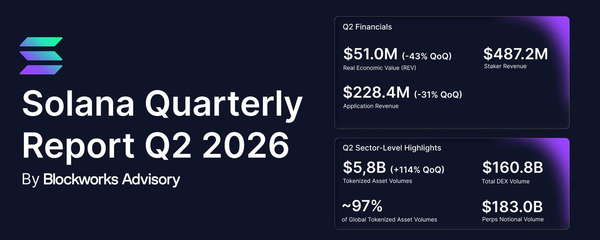
Next, we’ll deploy WooFi on Solana next month. WOOFi currently supports 11 different EVM chains, with plans to expand further. But Solana represents a critical milestone due to its vibrant ecosystem. Our sPMM (synthetic proactive market making) and cross-chain contract products are highly competitive within Solana’s landscape. I expect strong growth post-deployment. Currently, WooFi doesn’t support Solana deposits or swaps, though that may change. Future offerings like Strategy Vaults and Earn Products might include Solana-based assets. Additionally, the WOO token will gain broader utility on Solana—including lending—and we plan collaborations with Solana around liquidity provision and borrowing.
Foresight News: Most exchanges now operate both CEX and DEX platforms, each with different strategies. OKX gives DEX prominent placement in its app, Binance tucks it away, Bitget separates them entirely. What’s your strategy regarding WOO X and WOOFi? How is WOOFi performing operationally?
Willy: We haven’t aimed to directly merge the two products—they were designed based on first principles. CeFi targets relatively sophisticated traders; DeFi serves native DeFi users and aggregator platforms. We don’t interfere with each product’s core mission. Merging them could yield benefits or drawbacks—we prefer independent development. We did consider integration, primarily to replicate CeFi-level user experience and liquidity capabilities onto the DeFi side.
WOOFi has been live for about a year and a half, consistently ranking among the top 10 DEXs by volume, with steady user growth. Spot trading accounts for roughly 10–20% of volume, futures under 10%, but overall trends are upward. The spot volume ratio between DEX and CEX is approximately 1:8.5. Most of our volume comes from derivatives, which have higher turnover and lower operational costs than spot. With this foundation, we’re now focusing on profitability over the next three to four years.
Foresight News: You mentioned Solana—what’s WOO’s presence in BTCFi, Base, TON, and similar ecosystems?
Willy: We entered BTCFi early, supporting Merlin Chain’s development and collaborating closely. On token listings, we’re not aggressive, so we may benefit from selective opportunities.
As for Telegram, since our product is trading-driven, many Telegram users—who may be holding tokens for the first time—don’t strongly distinguish between DeFi and CeFi and are receptive to semi-decentralized models. These users may not fully align with our current offering, so we’re more actively engaging via listings within the Telegram ecosystem.
For us, the priority is returning to product excellence rather than chasing dominance in any single ecosystem.
Foresight News: Compared to other exchanges, what are your listing preferences or tendencies?
Willy: As a smaller CEX, WOO adopts a different approach—deep partnerships with projects. They collaborate with us on campaign operations, promotions, and trading competitions. Whether integrating with centralized or decentralized products, we pursue differentiation. We form deep bonds with projects, spanning investment to eventual listing. Many exchanges can find quality listings—there’s no necessity to come to us—but through deep alignment, we create differentiated value that attracts participation.
We continue focusing on major ecosystems like BTCFi, TON, and Solana. While we don’t start from a single ecosystem, we seek projects we can deeply integrate with—specifically those emphasizing application-layer innovation, which we consistently prioritize.
Finding Strong Product-Market Fit in Europe
Foresight News: Where is WOO’s CEX business currently active, and where are the growth opportunities?
Willy: About 70–80% of our users come from Europe. We’re actively expanding into the Asia-Pacific region. However, based on current product analysis, our PMF (product-market fit) performs strongest in Europe—our product resonates well there. At the same time, we’re exploring more localized solutions tailored to APAC markets.
Foresight News: What licenses has your business obtained so far? Are you moving toward regulatory compliance?
Willy: Licenses are foundational; operating legally is non-negotiable. We’ve completed registration in Poland and are pursuing global compliance, with MiCA in Europe being the primary focus (effective December 31). This defines our future compliance roadmap.
European users care not only about outcomes but also about process transparency. We must communicate openly—explaining what we’re doing, why decisions happen, and what lies ahead. For instance, we clearly articulate the rationale behind our token design and tokenomics. We’ve done extensive work in community engagement, and users are eager to participate deeply and co-build the community with us.
Foresight News: Does the European market break down meaningfully by country? Which countries show the largest potential?
Willy: Western and Northern Europe perform exceptionally well overall—users exhibit strong retention, higher trading frequency, and deeper market understanding. The Netherlands stands out; French and German users are naturally skilled traders, and British users are highly professional. Southern and Eastern Europe have large user bases but face intense competition and differing product expectations. The Russian-speaking region is even more distinct, with a massive Telegram user population.
Join TechFlow official community to stay tuned
Telegram:https://t.me/TechFlowDaily
X (Twitter):https://x.com/TechFlowPost
X (Twitter) EN:https://x.com/BlockFlow_News
 Foresight News