Grayscale: Deconstructing the Bitcoin Mining Business Model and Sustainability
TechFlow Selected TechFlow Selected
Grayscale: Deconstructing the Bitcoin Mining Business Model and Sustainability
Grayscale believes that Bitcoin has a unique advantage in accelerating the world's transition to renewable energy.
 Navigating Web3 tides with focused insights
By: Zach Pandl
Translation: Luffy, Foresight News
-
Bitcoin’s ability to function as a global cryptocurrency system relies on mining—a competitive process that ensures the blockchain is updated correctly and aligns economic incentives across the network. Today, the Bitcoin mining network is massive, generating over 700 exahashes per second (1 exahash = 1 quintillion hashes).
-
Bitcoin miners earn income from newly issued bitcoins and network transaction fees. Their expenses include equipment, electricity, and other operational costs. Many miners also hold bitcoin on their balance sheets, and an increasing number are expanding into artificial intelligence (AI) and high-performance computing (HPC) services.
-
Grayscale Research estimates that Bitcoin mining accounts for 0.2% of global electricity consumption; compared to other industries, a higher proportion of clean energy powers Bitcoin mining. Bitcoin mining may help accelerate environmental goals, particularly in areas such as methane emissions.
Bitcoin is a decentralized computer network securing $2 trillion in value. This modern marvel is made possible by mining: network participants compete to add the next block to the blockchain and receive rewards. Today, Bitcoin mining operates at an astonishing scale, converting real-world energy into digital security. The computational power protecting the Bitcoin blockchain acts like a digital “vault door,” enabling an autonomous computer network to become a global digital currency system. The specialized expertise, capital expenditures, ongoing operating costs, and highly competitive nature of the industry help maintain Bitcoin’s decentralization while making attacks prohibitively expensive.
Investing in publicly listed Bitcoin mining companies offers exposure to block production revenue and, over time, potential growth from rising network transaction fees. In practice, most public Bitcoin miners operate diversified business models, with many holding mined bitcoins on their balance sheets or even purchasing bitcoin in public markets. Currently, Bitcoin mining firms have also begun entering data center operations for AI and high-performance computing (HPC), diversifying their businesses.
A Modern Marvel
Although Bitcoin mining is technically complex, its concept is simple. Specialized computers compete against each other to guess a random number; the first machine to find the correct number wins the right to update the blockchain—known as “mining a block.” The winning miner receives newly issued bitcoins and transaction fees from that block—the “block reward.”
There are no shortcuts in this race—no algorithm can speed up finding the correct number. Bitcoin miners must rely purely on brute-force competition. This process resembles a game of chance: miners make repeated guesses until they find the correct answer, much like rolling a multi-sided die until landing on the desired number. Therefore, the probability of winning depends on how many guesses a miner can make per second (“rolls of the die”). Operators with more machines and greater efficiency achieve more guesses and thus have the highest chance of winning the block reward.
Technically, the winning result isn’t just a random number but the hash of that number combined with other data. In computer science, a hash function is a mathematical operation that converts any input into a fixed-length string called a hash. For example, using Bitcoin’s hash function, the word “Bitcoin” produces the following hash: b4056df6691f8dc72e56302ddad345d65fead3ead9299609a826e2344eb63aa4.
Thus, a Bitcoin miner’s task is to rapidly generate hashes: guessing a random number, computing its hash (combining it with other data), and checking whether it meets the required criteria.
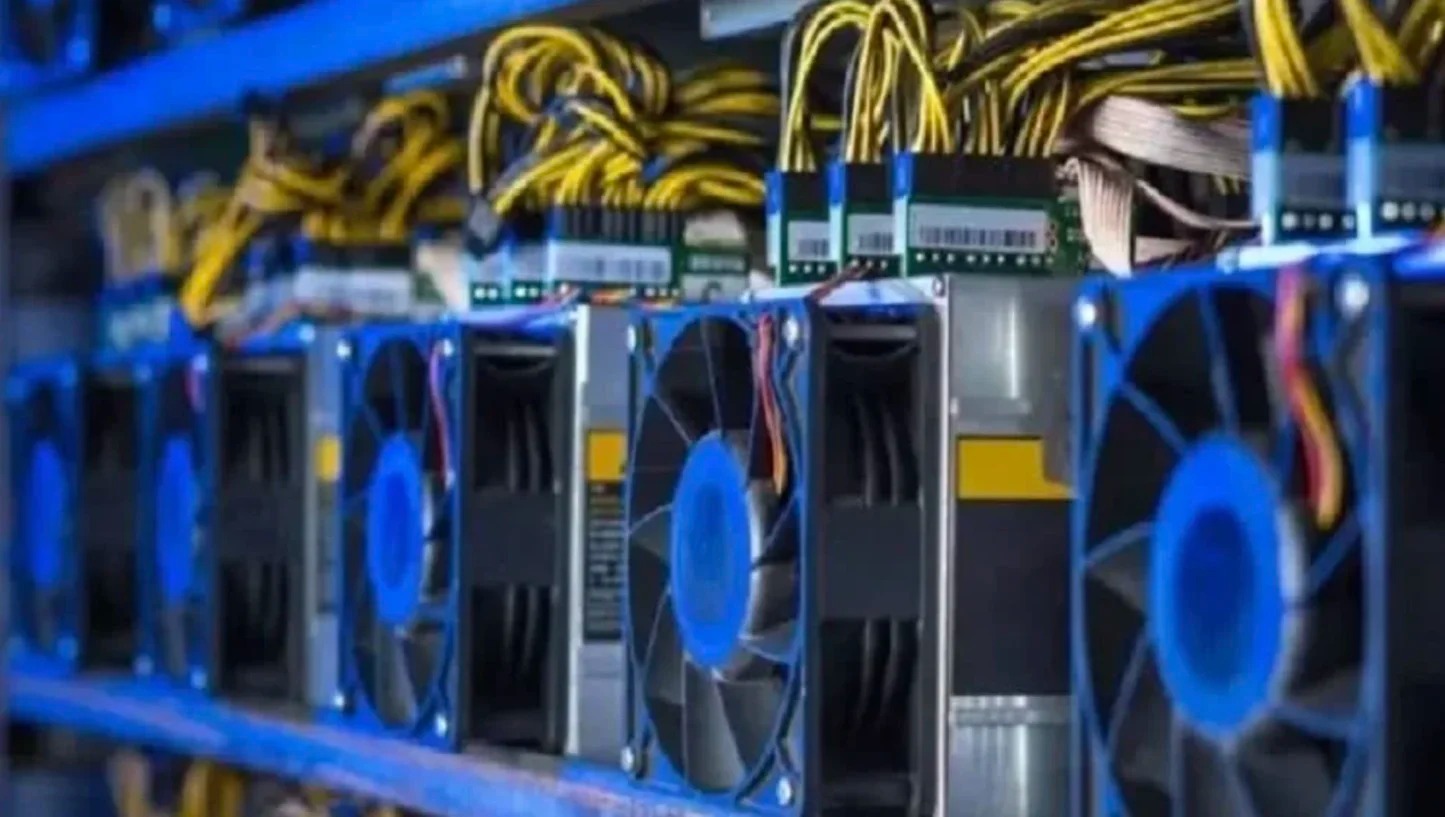
It’s estimated that around 5–6 million Bitcoin mining machines currently generate hashes at an immense scale (see Figure 1). Over the past 90 days, Bitcoin miners collectively generated hashes at an average rate of 765 EH/s (765 exahashes per second). That means Bitcoin miners guess random numbers and compute their hashes over 700 quintillion times per second. To put this in perspective, it’s estimated there are about 7.5 quintillion grains of sand and 10 quintillion insects on Earth.
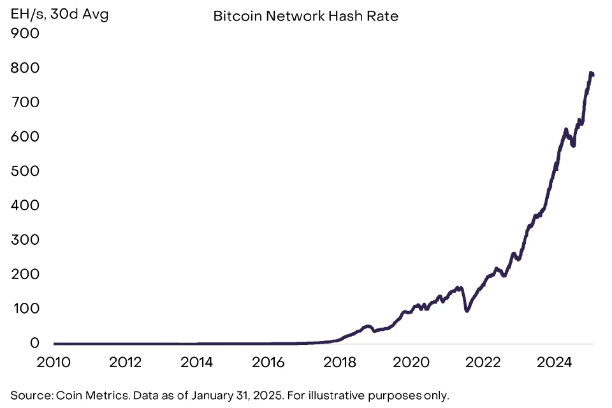
Figure 1: Bitcoin miners generate hashes at massive scale
Generating such vast numbers of hashes is costly—and that’s precisely the point. To compete for rewards, mining operators must purchase specialized machines and hardware and pay ongoing electricity and maintenance costs. By producing the correct hash, miners provide “proof of work,” demonstrating they’ve invested real economic resources and can therefore be trusted to update the blockchain.
Attacking Bitcoin would mean defeating the existing Bitcoin mining industry. In theory, if a malicious actor controlled 51% of the network’s hash rate—allowing them to mine most blocks—they could disrupt the network (e.g., double-spend bitcoins or censor certain transactions). Researchers estimated in a paper that, as of February 2024, launching a one-hour 51% attack on the Bitcoin network would cost between $5 billion and $20 billion. In reality, no actor has an economic incentive to spend these resources, and Bitcoin has additional defense mechanisms beyond mining.
The Business Model of Bitcoin Mining
A Bitcoin miner’s income equals the block reward earned from mining, while their operating expenses come primarily from the electricity used to run machines and generate hashes (and possibly other costs like maintenance and pool fees). Therefore, Bitcoin miners aim to generate as many hashes per second as possible at the lowest possible cost.
In 2024, miners collectively earned about 230,000 bitcoins—worth nearly $15 billion at prevailing prices. This represents an approximately 19-fold increase since 2014, with a compound annual growth rate of 34% (see Figure 2). Every four years, the issuance rate of new bitcoins declines in an event known as the “Bitcoin halving.” Although the number of newly issued bitcoins decreases, rising bitcoin prices in dollar terms have led to overall increases in mining revenue over time. Future growth in mining revenue may come from further appreciation in bitcoin’s price and rising network transaction fees.
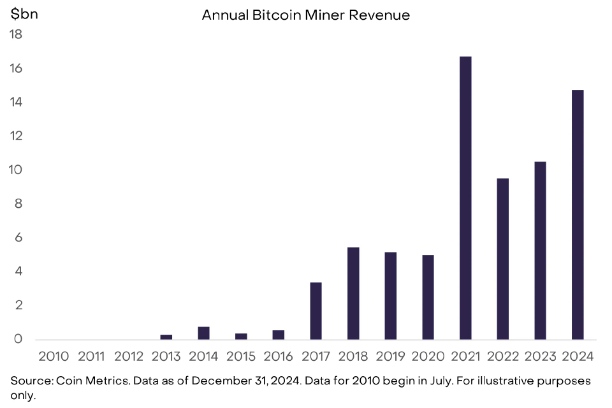
Figure 2: Bitcoin mining revenue has grown over time
Miners’ primary operating expense is electricity consumed by running machines. Each operator negotiates its own power purchase agreements, which vary widely around the world. For illustration, we can build a simplified model of a Bitcoin miner’s economics by assuming a fixed electricity cost and ignoring other expenses. For example, Figure 3 compares Bitcoin miners’ revenue with estimated total electricity costs assuming a rate of $0.05 per kilowatt-hour. The difference between revenue and electricity costs serves as a simplified proxy for mining profitability. Miners benefit when the dollar value of block rewards rises and suffer when the dollar cost of generating hashes increases.
Figure 3: Miner operating margin reflects the gap between block rewards and electricity costs
Given the wide variation in electricity costs faced by miners globally, a more intuitive metric might be the dollar value earned per unit of energy consumed—for example, miner revenue per megawatt-hour (MWh). Industry participants often refer to the closely related concept of “hash price,” calculated as the ratio of daily miner revenue to network hash rate. While conceptually similar, hash price tends to decline over time as miner efficiency improves. Therefore, revenue per unit of energy consumed may more accurately reflect changes in miner economics over time. Figure 4 shows daily Bitcoin miner revenue per MWh. Over the past two years, despite volatility around the 2024 halving, this estimate has remained roughly stable.
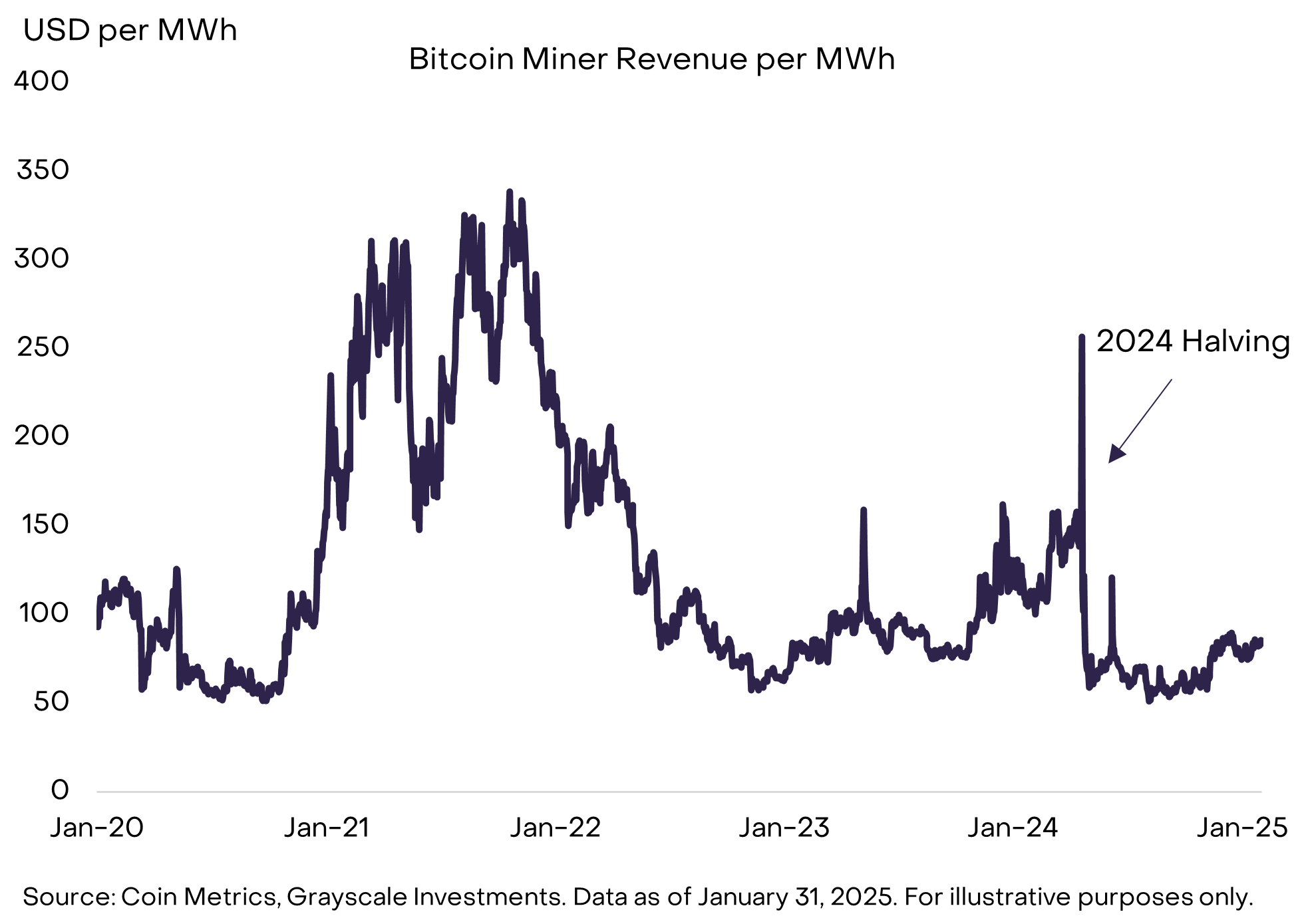
Figure 4: Miner revenue per MWh has been roughly stable over the past two years
Investing in Bitcoin Mining Companies
Investing in publicly traded mining companies provides exposure to the Bitcoin economy through securities markets. While Bitcoin mining companies may adopt increasingly diverse business models, all involve the core activities of generating hashes, mining blocks, and earning block rewards. Due to differences in electricity costs, non-electricity operating expenses, and other factors, the actual cost of acquiring block rewards varies among mining firms. In Q3 2024, the average production cost of the largest publicly listed miners ranged between $34,000 and $59,000 per bitcoin (see Figure 5). During that quarter, the average bitcoin price was $61,000.
Figure 5: Production costs differ across mining companies
Bitcoin mining companies also differ in how they hold bitcoin on their balance sheets. Some immediately sell their block rewards, others retain them, and some even buy additional bitcoin in public markets. Naturally, differences in balance sheet policies can significantly impact financial performance when bitcoin prices change (see Figure 6). That said, many factors influence individual company risk profiles, and firms holding relatively large amounts of bitcoin on their balance sheets aren’t necessarily riskier than those selling their rewards.
Figure 6: Some mining companies hold bitcoin on their balance sheets
Recently, Bitcoin mining companies have begun expanding into areas such as artificial intelligence and high-performance computing (HPC) services, where demand for data center infrastructure is growing rapidly. For instance, Goldman Sachs research estimates that global data center electricity demand (excluding crypto-related usage) could grow 160% between 2023 and 2030. Bitcoin miners may have a competitive advantage in supplying the AI/HPC market due to access to low-cost power and existing infrastructure. In early 2024, Core Scientific—the third-largest publicly listed miner by market cap—announced a long-term contract with CoreWeave, a dedicated AI infrastructure provider. Since Core Scientific’s deal with CoreWeave was announced in June 2024, several other public mining firms have taken steps to expand into AI/HPC.
Bitcoin Mining and Sustainability
Bitcoin mining consumes real economic resources—electricity—to create decentralized digital security. Bitcoin’s success as a digital currency system means mining now consumes significant amounts of electricity. Bitcoin is a unique energy consumer that already utilizes a substantial share of clean energy. Grayscale Research believes that over time, mining may positively contribute to the green energy transition.
Based on data from Coin Metrics, we estimate that over the past 12 months, the Bitcoin network consumed electricity at a rate of approximately 175 terawatt-hours (TWh; 1 TWh = 1 million kWh). This aligns with estimates from the Cambridge Centre for Alternative Finance (see Figure 7). Using 2023 data (the latest available), Bitcoin’s energy consumption accounted for 0.2% of total global electricity use (accounting for transmission losses). According to the Cambridge Centre for Alternative Finance, data centers consume about 200 TWh annually, and energy use is expected to rise due to increased adoption of AI models.
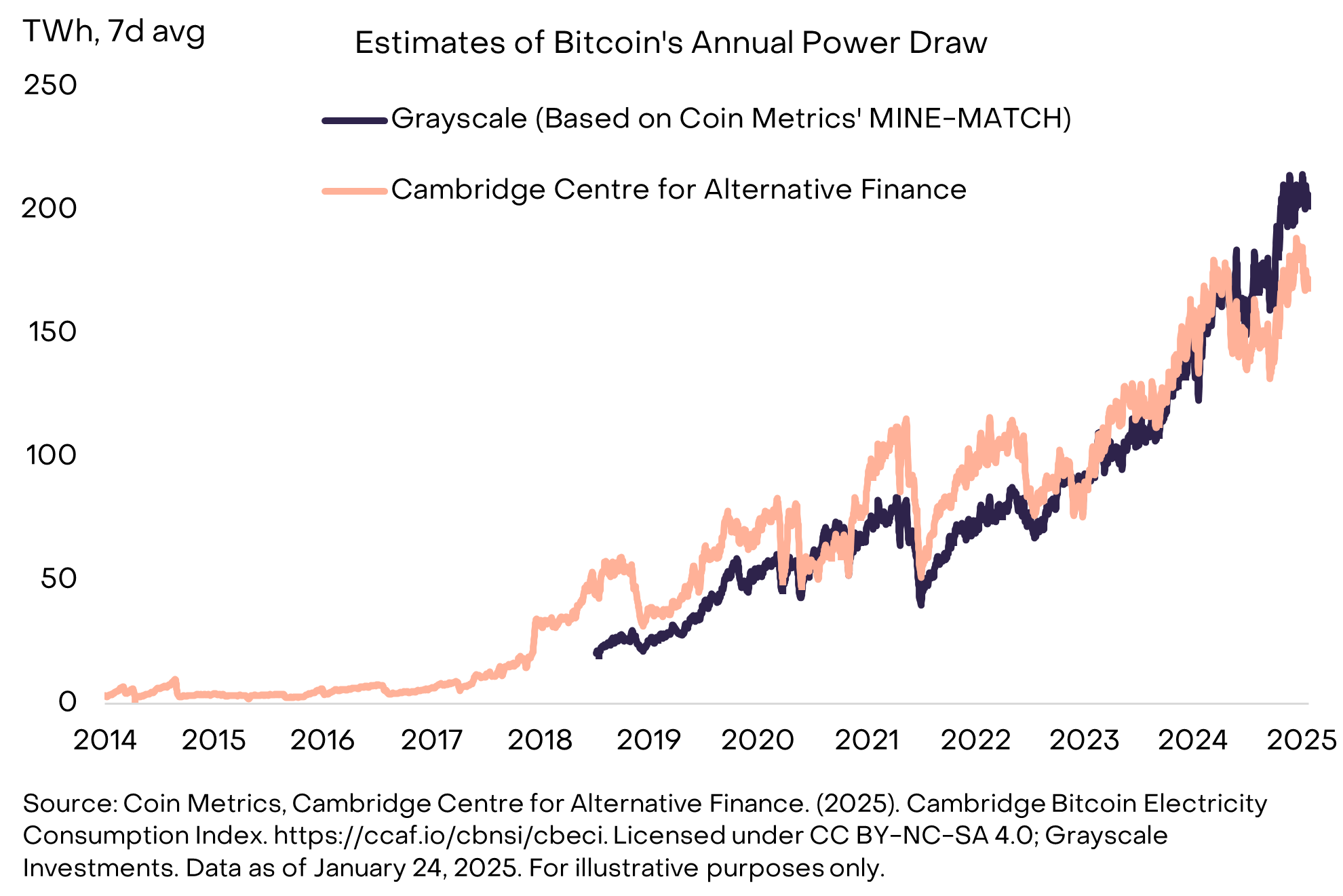
Figure 7: Bitcoin mining consumes electricity to create digital security
Compared to typical residential or commercial users, Bitcoin is a unique energy consumer. Bitcoin mining is modular, mobile, location-agnostic, interruptible, and highly sensitive to electricity price fluctuations. As a result, miners often operate in locations with abundant, low-cost clean energy. It’s estimated that approximately 50%–60% of the electricity used by the Bitcoin mining industry comes from sustainable sources (including nuclear). Globally and in the U.S., sustainable energy accounts for about 40% of electricity generation. Using 2023 data and assuming 50%–60% sustainable energy in Bitcoin’s power mix, we estimate that Bitcoin mining contributes 0.2%–0.3% of global CO₂ emissions associated with electricity generation.
Grayscale Research believes that in the coming years, Bitcoin mining could help accelerate the deployment of renewable energy. Due to its unique characteristics, Bitcoin mining incentivizes investment in renewable energy infrastructure, especially in areas without transmission lines connected to major population centers. Bitcoin mining can also help stabilize grid demand, which otherwise fluctuates due to consumer behavior and weather, as seen in the Electric Reliability Council of Texas (ERCOT) system. Additionally, startups like Sustainable Bitcoin Protocol have created market mechanisms to incentivize clean energy use and reward reductions in methane emissions. Addressing methane emissions may become a particularly important way Bitcoin miners contribute to environmental goals. Companies like Crusoe Energy have developed solutions to utilize excess natural gas instead of flaring it, converting the gas into electricity for Bitcoin miners.
In the coming years, growth in technology applications will drive enormous electricity demand—from digital assets, artificial intelligence, and other industries alike. Grayscale believes Bitcoin contributes to the healthy development of global power infrastructure and holds a unique advantage over many other sectors in accelerating the transition to renewable energy.
Join TechFlow official community to stay tuned
Telegram:https://t.me/TechFlowDaily
X (Twitter):https://x.com/TechFlowPost
X (Twitter) EN:https://x.com/BlockFlow_News
 @Grayscale