China leads the world in electricity production, so why can't it be used for Bitcoin mining?
TechFlow Selected TechFlow Selected
China leads the world in electricity production, so why can't it be used for Bitcoin mining?
The core of the controversy surrounding Bitcoin mining has never been about whether it consumes electricity, but rather whether we are willing to acknowledge it as a "legitimate existence."
 Navigating Web3 tides with focused insights
Author: Liu Honglin
I Never Truly Understood Electricity
During the "May Day" holiday, I drove through the Hexi Corridor, from Wuwei to Zhangye, Jiuquan, and on to Dunhuang. Driving along the Gobi highway, wind turbines frequently appeared beside the road—silently standing across the desert, creating a spectacular sight, like a sci-fi version of the Great Wall.
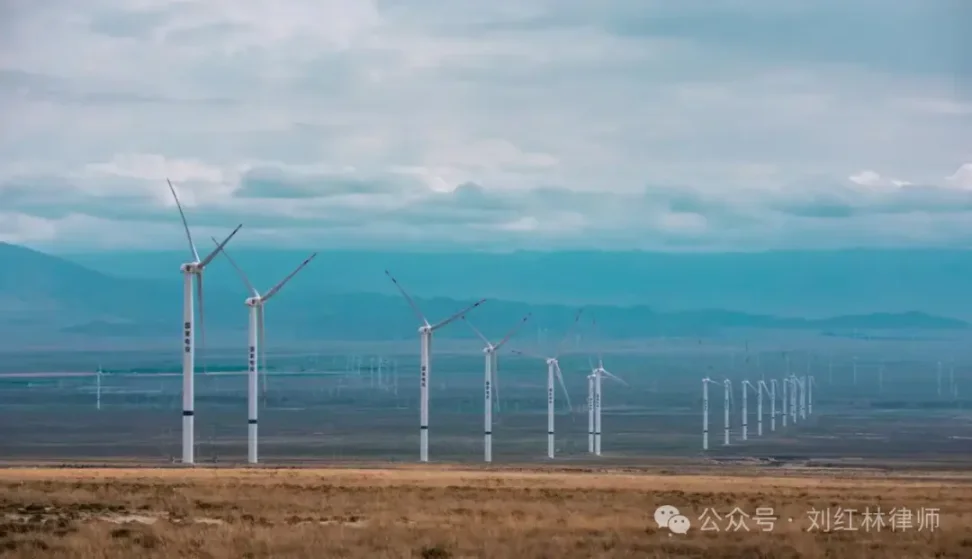
* Image source: internet
The Great Wall of a thousand years ago guarded borders and territory. Today, these wind turbines and solar arrays defend national energy security and the lifeline of the next industrial system. Sunlight and wind have never before been so systematically organized, embedded into national strategy, and become part of sovereign capability.
In the Web3 industry, everyone knows mining is a fundamental existence—one of the most primitive and solid infrastructures in this ecosystem. Behind every bull-bear cycle and every on-chain boom, there's the constant hum of mining rigs operating. Whenever we talk about mining, the conversation usually centers on miner performance and electricity prices—whether mining can be profitable, how high electricity prices are, and where low-cost power can be found.
Yet, seeing this thousand-mile-long path of electricity, I suddenly realized I don’t understand electricity at all: Where does it come from? Who can generate it? How is it transmitted from deserts to thousands of miles away? Who uses it? And how should it be priced?
This is a gap in my understanding, and perhaps some of you are equally curious about these questions. So, I’d like to use this article to do some systematic catching-up—from China’s power generation mechanisms, grid structure, electricity trading, to end-user access systems—to re-understand one kilowatt-hour of electricity.
Of course, as Redlin Lawyer’s first time engaging with this completely unfamiliar topic and industry, there will inevitably be shortcomings and omissions. I welcome your valuable feedback.
How Much Electricity Does China Actually Have?
Let’s start with a macro fact: According to data released by the National Energy Administration in Q1 2025, China’s total power generation in 2024 reached 9.4181 trillion kWh, up 4.6% year-on-year, accounting for about one-third of global generation. What does this mean? The entire EU combined generates less than 70% of China’s annual output. This means not only that we have ample electricity, but also that we are in a dual state of “power surplus” and “structural restructuring.”
China doesn’t just generate more electricity—it has also changed how it generates it.
By the end of 2024, the country’s total installed capacity reached 3.53 billion kW, up 14.6% year-on-year, with clean energy’s share further increasing. Solar added around 140 million kW, and wind added 77 million kW. In terms of proportion, China accounted for 52% of global new solar installations and 41% of new wind installations in 2024—making it a near “dominant player” in the global clean energy landscape.
This growth is no longer confined to traditional energy-heavy provinces, but increasingly shifting toward the northwest. Provinces such as Gansu, Xinjiang, Ningxia, and Qinghai have become “new energy powerhouses,” transitioning gradually from “resource exporters” to “main energy producers.” To support this shift, China has launched a national-level new energy base plan in “sand, desert, and wasteland” areas—concentrating over 400 million kW of wind and solar capacity in deserts,戈壁, and荒漠 regions, with the first phase of about 120 million kW included in the 14th Five-Year Plan.
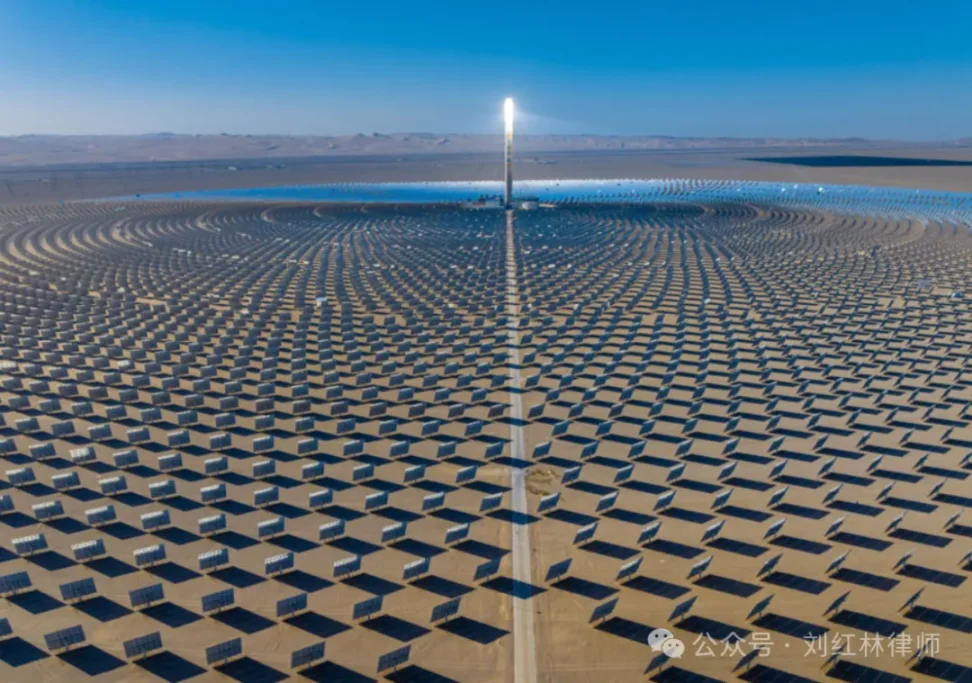
* Asia’s first, Dunhuang Shouhang Energy Saving 100 MW molten salt tower concentrated solar power station (image source: internet)
At the same time, traditional coal power has not completely exited, but is gradually transforming into peak-shaving and flexible power sources. Data from the National Energy Administration shows that in 2024, national coal power capacity grew by less than 2%, while solar and wind grew by 37% and 21% respectively. This indicates that a pattern of “coal-based foundation, green-led development” is taking shape.
From a spatial perspective, national energy and power supply-demand was generally balanced in 2024, but structural regional surpluses persist—especially in parts of the northwest, where “too much power with nowhere to go” occurs during certain periods. This sets the real-world context for later discussion on whether Bitcoin mining could serve as an outlet for power redundancy.
In short: China now doesn’t lack electricity; what it lacks is “adjustable power,” “absorbable power,” and “profitable power.”
Who Can Generate Power?
In China, generating electricity isn’t something anyone can do freely. It’s not a purely market-driven industry, but more like a “franchise” with policy entry points and regulatory ceilings.
According to the Regulations on Power Business License Management, all entities wishing to engage in power generation must obtain a Power Business License (Generation Category). Approval is typically handled by the National Energy Administration or its local branches, depending on project scale, region, and technology type. The application process often involves multiple cross-evaluations:
-
Does it align with national and local energy development plans?
-
Has land use, environmental impact assessment, and water conservation approval been obtained?
-
Are grid connection conditions and absorption capacity available?
-
Is the technology compliant, funding secured, and operations safe and reliable?
This means that when it comes to “who can generate power,” administrative authority, energy structure, and market efficiency are all simultaneously at play.
Currently, China’s power generation players fall roughly into three categories:
First, the Big Five power groups: State Energy Group, Huaneng Group, Datang Group, Huadian Group, and State Power Investment Corporation. These companies control over 60% of the nation’s centralized thermal power resources and are actively expanding into new energy. For example, State Energy Group added over 11 million kW of new wind capacity in 2024, maintaining industry leadership.
Second, local state-owned enterprises: such as Three Gorges New Energy, Jingcheng Power, and Shaanxi Investment Group. These firms are closely tied to local governments and play key roles in regional power planning, often carrying out “policy-mandated tasks.”
Third, private and mixed-ownership enterprises: typical examples include LONGi Green Energy, Sungrow, Tongwei Co., and Trina Solar. These companies show strong competitiveness in photovoltaic manufacturing, energy storage integration, and distributed generation, and have secured “priority quotas” in certain provinces.
But even if you’re a top-tier new energy company, it doesn’t mean you can build power plants at will. Bottlenecks typically arise in three areas:
1. Project Quotas
Power projects must be included in local annual energy development plans and require obtaining wind/solar project quotas. The allocation of these quotas is essentially a form of local resource control—if you don’t have approval from local NDRCs or energy bureaus, you cannot legally launch a project. Some regions use “competitive allocation,” scoring and selecting based on land efficiency, equipment performance, energy storage configuration, and funding sources.
2. Grid Connection
Even after project approval, you must apply to State Grid or China Southern Grid for system integration assessment. If local substations are full or transmission channels unavailable, your project becomes useless. In concentrated new energy zones like the northwest, connection and dispatch difficulties are common.
3. Absorption Capacity
Even with approvals and lines available, if local load is insufficient or inter-regional channels aren’t open, your electricity may have no takers—leading to curtailment issues. The National Energy Administration reported in 2024 that some cities had suspended new renewable project connections due to excessive concentration exceeding local load capacity.
Therefore, “can you generate power” is not merely a matter of corporate capability, but the joint outcome of policy quotas, physical grid structure, and market expectations. Against this backdrop, some companies are turning to new models like “distributed solar,” “on-site self-supply for parks,” and “industrial/commercial energy storage coupling” to bypass centralized approval and absorption bottlenecks.
From an industry practice standpoint, this three-layer structure of “policy access + engineering barriers + dispatch coordination” defines China’s power generation sector as a “structurally accessible market”—it doesn’t inherently exclude private capital, but neither does it allow pure market-driven entry.
How Is Electricity Transported?
In the energy field, there’s a widely recognized “electricity paradox”: Resources are in the west, but consumption is in the east; electricity is generated, but cannot be delivered.
This is a classic problem in China’s energy structure: the northwest has abundant sun and wind, but low population density and limited industrial load; the east is economically developed and power-hungry, but has very limited local renewable resources.
So what’s the solution? Build ultra-high-voltage (UHV) transmission lines—the “highways of electricity”—to deliver western wind and solar power to the east.
By the end of 2024, China had 38 operational UHV lines—18 AC and 20 DC. Among these, DC transmission projects are particularly critical, enabling low-loss, high-capacity directional delivery over extreme distances. For example:
-
“Qinghai–Henan” ±800kV DC line: 1,587 km long, delivering photovoltaic power from Qinghai’s Qaidam Basin to central urban clusters;
-
“Changji–Guquan” ±1100kV DC line: 3,293 km long, setting world records for both transmission distance and voltage level;
-
“Shaanbei–Wuhan” ±800kV DC line: serving Shaanbei energy bases and central China’s industrial heartland, with annual transmission capacity exceeding 66 billion kWh.
Each UHV line is a “national-level project,” approved by the National Development and Reform Commission and the National Energy Administration, and constructed and funded by State Grid or China Southern Grid. These projects cost hundreds of billions, take 2–4 years to build, and require cross-provincial coordination, environmental assessments, and relocation support.
Why go to such lengths for UHV? At its core, it’s about resource redistribution:
1. Spatial Resource Reallocation
China’s wind and solar resources are severely mismatched with population and industry. Without efficient transmission to bridge this spatial gap, slogans like “delivering western electricity to the east” would remain empty. UHV uses “transmission capacity” to substitute for “resource endowment.”
2. Electricity Price Balancing Mechanism
Due to large price differences between resource and consumption ends, UHV transmission also serves as a tool for regional price adjustment. Central and eastern regions gain access to relatively cheaper green power, while the west monetizes its energy resources.
3. Promoting Renewable Energy Absorption
Without transmission channels, northwest regions easily face curtailment. Around 2020, curtailment rates in Gansu, Qinghai, and Xinjiang exceeded 20%. After UHV construction, these figures have dropped below 3%—a structural relief driven by improved transmission capacity.
Nationally, UHV is no longer just a technical issue, but a key pillar of national energy security strategy. Over the next five years, China will continue building dozens of UHV lines under the 14th Five-Year Power Development Plan—including major projects from Inner Mongolia to Beijing-Tianjin-Hebei and Ningxia to the Yangtze River Delta—moving closer to the goal of unified national grid dispatch.
However, two long-standing controversies about UHV remain:
-
High investment, slow payback: A single ±800kV DC line often costs over 20 billion yuan, with payback periods exceeding 10 years;
-
Difficult cross-provincial coordination: UHV lines traverse multiple administrative regions, demanding high levels of intergovernmental cooperation.
These factors ensure that UHV remains a “national project,” not market infrastructure driven by corporate decisions. Yet, amid rapid renewable expansion and worsening regional imbalances, UHV is no longer optional—it’s a necessary component of China’s version of an energy internet.
How Is Electricity Sold?
After generation and transmission comes the core question: How is electricity sold? Who buys it? How much per kilowatt-hour?
This is the decisive factor in a power project’s profitability. In the traditional planned economy, this was simple: power plant generates → sells to State Grid → State Grid dispatches uniformly → users pay bills, all at state-set prices.
But this model breaks down with large-scale renewable grid integration. Solar and wind have near-zero marginal costs, but their output is volatile and intermittent, making them unsuitable for fixed-price, rigid supply-demand systems. Thus, “whether power can be sold” has become a life-or-death issue for renewables.
Under new regulations effective from 2025, all newly added renewable power projects nationwide will fully phase out fixed-price subsidies and must participate in market-based trading, including:
-
Medium- and long-term contract trading: similar to “pre-selling electricity,” where generators and consumers sign contracts locking in time, price, and volume;
-
Spot market trading: prices fluctuate in real-time with supply and demand, changing as often as every 15 minutes;
-
Ancillary services market: providing frequency regulation, voltage control, and backup to maintain grid stability;
-
Green power trading: users voluntarily purchase green electricity with attached Green Electricity Certificates (GEC);
-
Carbon market trading: generators earn additional revenue by reducing carbon emissions.
National power exchanges have been established in cities like Beijing, Guangzhou, Hangzhou, and Xi’an, responsible for market matching, volume confirmation, and price settlement.
Consider a typical spot market example:
During the summer heatwave of 2024, Guangdong’s electricity spot market saw extreme volatility—off-peak prices dropped to 0.12 yuan/kWh, while peak prices spiked to 1.21 yuan/kWh. Under such mechanisms, renewable projects with flexible dispatch (e.g., paired with storage) can “buy low, sell high” and capture massive price spreads.
In contrast, projects relying solely on long-term contracts without peak-shaving capabilities can only sell at around 0.3–0.4 yuan/kWh, or even be forced to feed in at zero price during curtailment periods.
As a result, more and more renewable companies are investing in complementary energy storage—for both grid response and price arbitrage.
Beyond electricity sales, renewable firms have several other potential revenue streams:
1. Green Electricity Certificate (GEC) trading. In 2024, GEC trading platforms launched in Jiangsu, Guangdong, and Beijing. Users—especially large industrial firms—purchase GECs for carbon disclosure and green procurement. According to the Energy Research Association, 2024 GEC prices ranged from 80–130 yuan per MWh, equivalent to ~0.08–0.13 yuan/kWh—supplementing traditional tariffs.
2. Carbon market trading. If renewable projects displace coal power and are included in the national carbon trading system, they earn “carbon asset” revenue. By end-2024, national carbon prices were around 70 yuan/ton CO₂. Each kWh of green power reduces ~0.8–1.2 kg CO₂, yielding theoretical revenue of ~0.05 yuan/kWh.
3. Peak-valley price arbitrage and demand response incentives. Generators sign load-adjustment agreements with high-consumption users, reducing load or feeding back to the grid during peaks to receive extra subsidies. This mechanism is advancing quickly in pilot programs in Shandong, Zhejiang, and Guangdong.
Under this system, a renewable project’s profitability no longer depends solely on “how much power I can generate,” but on:
-
Can I sell at a good price?
-
Do I have long-term buyers?
-
Can I flatten peaks and fill valleys?
-
Do I have storage or other flexibility?
-
Do I have tradable green assets?
The old model of “grabbing quotas and relying on subsidies” has run its course. Future renewable firms must possess financial acumen, market operation skills, and even manage power assets as precisely as derivatives.
In short: selling renewable electricity is no longer a simple transaction, but a systemic engineering effort involving policy, markets, carbon rights, and finance—all mediated through electricity.
Why Does Curtailment Happen?
For power projects, the biggest risk isn’t whether the plant gets built, but whether “the power can be sold after completion.” Curtailment is the quietest yet deadliest enemy in this process.
Curtailment doesn’t mean you stop generating—it means your electricity has no users, no transmission channels, and no dispatch room, so it’s wasted despite being produced. For a wind or solar firm, curtailment means direct revenue loss, and may also affect subsidy claims, output verification, green certificate issuance, and even future bank ratings and asset valuations.
According to statistics from the Northwest Regional Office of the National Energy Administration, Xinjiang’s wind curtailment rate peaked at 16.2% in 2020, and solar curtailment in Gansu and Qinghai exceeded 20%. Though by end-2024 these had dropped to 2.9% and 2.6% respectively, curtailment remains an unavoidable reality in certain regions and times—especially during midday high-sunlight, low-load scenarios, where solar output is heavily throttled by dispatch systems, rendering generation effectively pointless.
Many assume curtailment happens due to “insufficient demand,” but fundamentally, it’s a result of systemic dispatch imbalance.
First, physical bottlenecks: In many resource-rich zones, substation capacity is saturated, making grid connection the main constraint—projects get approved but can’t connect. Second, rigid dispatch mechanisms. China still relies on coal-fired units’ stability as the dispatch core, and the unpredictability of renewables leads dispatchers to habitually “limit access” to avoid system fluctuations. Combined with sluggish inter-provincial coordination, much electricity that is theoretically “wanted” cannot be delivered due to administrative delays and channel limitations, and thus must be abandoned. On the market side, rules remain lagging: spot markets are still in early stages, ancillary service mechanisms and price signaling are far from mature, and energy storage and demand response haven’t scaled in most provinces.
Policymakers haven’t ignored this.
Since 2021, the National Energy Administration has made “renewable absorption capacity assessment” a prerequisite for project approval, requiring local governments to clarify “absorbable quotas.” Multiple 14th Five-Year policies promote integrated source-grid-load-storage systems, local load center construction, spot market improvements, and mandatory energy storage to flatten peaks and fill valleys. Many local governments have introduced “minimum absorption ratio” accountability systems, stipulating that renewable projects must meet minimum annual utilization hours, forcing developers to consider flexibility upfront. While these measures are directionally correct, implementation lags significantly—grid upgrades, storage deployment, and unclear regional dispatch authority remain widespread in fast-growing new energy cities. Institutional momentum and market readiness remain misaligned.
More importantly, behind curtailment lies not mere “economic inefficiency,” but a conflict between spatial resources and institutional structures. The northwest is rich in power resources, but their value depends on inter-regional transmission and dispatch systems. Yet China’s administrative divisions and market boundaries are highly fragmented. This leaves vast amounts of “technically usable” electricity institutionally homeless—passively redundant.
Why Can't China Use Its Electricity for Cryptocurrency Mining?
While vast amounts of “technically usable but institutionally stranded” electricity sit idle, a once-marginalized power consumption scenario—cryptocurrency mining—has re-emerged over recent years in underground, guerrilla forms, and in some regions regained a position of “structural necessity.”
This is no accident, but a natural product of structural gaps. Cryptocurrency mining—an instant computing task with high power consumption and low continuous interference—is inherently compatible with curtailed wind and solar projects. Mining farms don’t require stable dispatch guarantees, nor formal grid connection, and can even actively assist in peak shaving and valley filling. More importantly, they can convert unwanted electricity into on-chain assets outside traditional markets, forming a “redundancy monetization” pathway.
From a pure technical view, this improves energy efficiency; from a policy perspective, however, it remains awkwardly positioned.
The mainland Chinese government halted mining in 2021—not primarily due to electricity concerns, but because of underlying financial risks and industrial direction. The former relates to the opacity of crypto asset pathways, raising risks of illegal fundraising and cross-border arbitrage; the latter stems from the “high energy, low output” industrial label, conflicting with current energy-saving and carbon-reduction priorities.
In other words, whether mining is a “reasonable load” doesn’t depend on whether it absorbs power redundancy, but on whether it fits within the policy framework’s “acceptable structure.” If it persists in opaque, non-compliant, uncontrollable ways, it remains “gray load”; but if it can be confined by region, power source, price, and on-chain use—designed within compliance as a special energy export mechanism—it might yet become part of policy.
Such redesign isn’t unprecedented. Internationally, countries like Kazakhstan, Iran, and Georgia have already incorporated “computing-intensive loads” into their power balancing systems, even using “electricity for stablecoins” to guide miners into generating digital assets like USDT or USDC as alternative foreign exchange reserves. In these nations, mining is redefined as a “strategic adjustable load,” serving both grid regulation and monetary system transformation.
China may not adopt such radical approaches, but could it locally, conditionally, and selectively restore mining operations? Especially during periods of persistent curtailment and when green power can’t be fully commercialized in the short term, using mining as a transitional absorption mechanism and treating Bitcoin as a closed-loop, on-chain asset reserve might be more realistic—and better aligned with long-term national digital asset strategies—than blanket bans.
This isn’t just reevaluating mining, but redefining the “value boundary of electricity.”
In traditional systems, electricity’s value depends on who buys it and how. In the on-chain world, electricity’s value may directly correspond to computing power, an asset, or a pathway into global markets. As the nation builds AI computing infrastructure, advances the “East Data West Computing” project, and develops the digital RMB system, shouldn’t policy also leave a technologically neutral, compliant, and controllable channel for an “on-chain energy monetization mechanism”?
Bitcoin mining might be China’s first real-world case of converting energy into digital assets “without intermediaries”—a sensitive, complex, yet unavoidable question.
Conclusion: The Ownership of Electricity Is a Real-World Choice
China’s power system is not backward. Wind sweeps across the Gobi, sunlight blankets dunes, and ultra-high-voltage lines cross thousands of miles of wilderness, delivering each kilowatt-hour from frontier zones into skyscrapers and data centers in eastern cities.
In the digital age, electricity is no longer just fuel for lighting and industry—it is becoming the infrastructure of value computation, the root system of data sovereignty, and the most overlooked variable in the reorganization of a new financial order. Understanding the flow of “electricity” is, to some extent, understanding how institutions set eligibility boundaries. Where a kilowatt-hour lands is never purely market-determined—it reflects countless decisions. Electricity is not evenly distributed; it always flows to those permitted, to scenes recognized, to narratives accepted.
The core of the Bitcoin mining debate has never been about whether it consumes power, but whether we’re willing to acknowledge it as a “legitimate existence”—a use case eligible for inclusion in national energy dispatch. As long as it remains unacknowledged, it can only operate in the gray zone, surviving in the cracks; but once recognized, it must be institutionally placed—with boundaries, conditions, explanatory authority, and regulatory oversight.
This isn’t about loosening or blocking an industry, but about a system’s attitude toward “non-conventional loads.”
And we stand at this fork, watching this choice quietly unfold.
Join TechFlow official community to stay tuned
Telegram:https://t.me/TechFlowDaily
X (Twitter):https://x.com/TechFlowPost
X (Twitter) EN:https://x.com/BlockFlow_News