A Brief History of Mining in Iran: We Sit in the Dark, Just to Keep Bitcoin Miners Running
TechFlow Selected TechFlow Selected
A Brief History of Mining in Iran: We Sit in the Dark, Just to Keep Bitcoin Miners Running
On the day the U.S. bombed Iran's nuclear facilities, the global Bitcoin hashrate appeared to drop sharply...
 Navigating Web3 tides with focused insights
By Shahriar Kia
Translated by Azuma, Odaily Planet Daily
Editor's Note: With the ceasefire agreement reached, the geopolitical conflict between Iran and Israel appears to have temporarily subsided. Yet, the ripple effects of this war continue to reverberate.
On June 21 local time, the United States launched so-called "Operation Midnight Hammer," bombing Iran’s nuclear facilities in Fordo, Natanz, and Isfahan. On the same day, Bitcoin's hash rate moving average also plummeted dramatically. This unexpected coincidence has sparked widespread speculation within the cryptocurrency community — could Iran have been secretly using its nuclear facilities for Bitcoin mining?
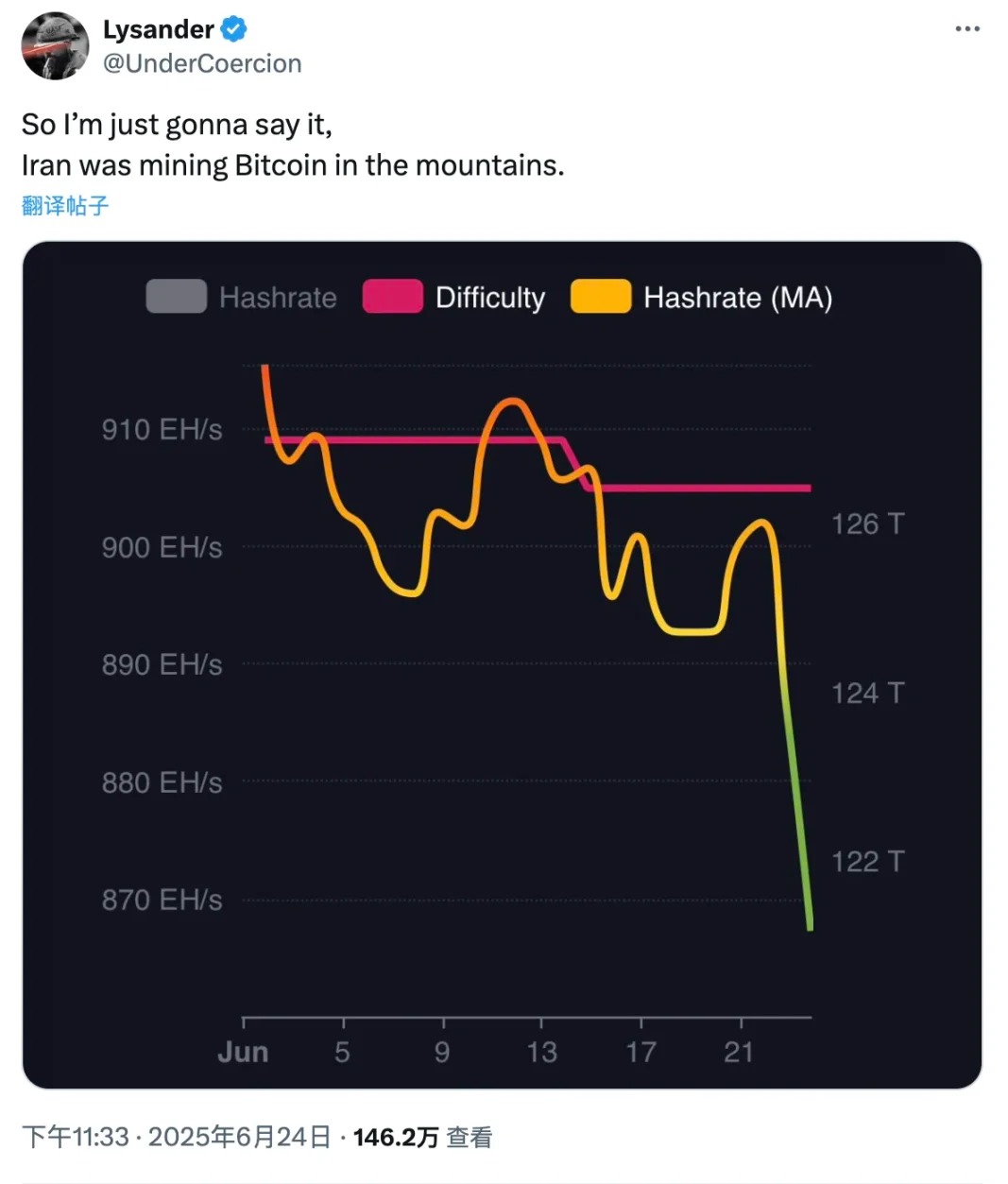
Although Alex Thorn, Head of Research at Galaxy, clarified from a technical standpoint that “hash rate is inferred from block time and difficulty, and current evidence is insufficient to confirm whether computing power actually declined — more time and moving averages are needed for observation,” he also acknowledged that Iran might indeed be involved in mining, and that mining sites may have been attacked.
The story of Iranian mining is nothing new. In May this year, the opposition group NCRI published an extensive article outlining the long history of Bitcoin mining in Iran. Below is the full text.
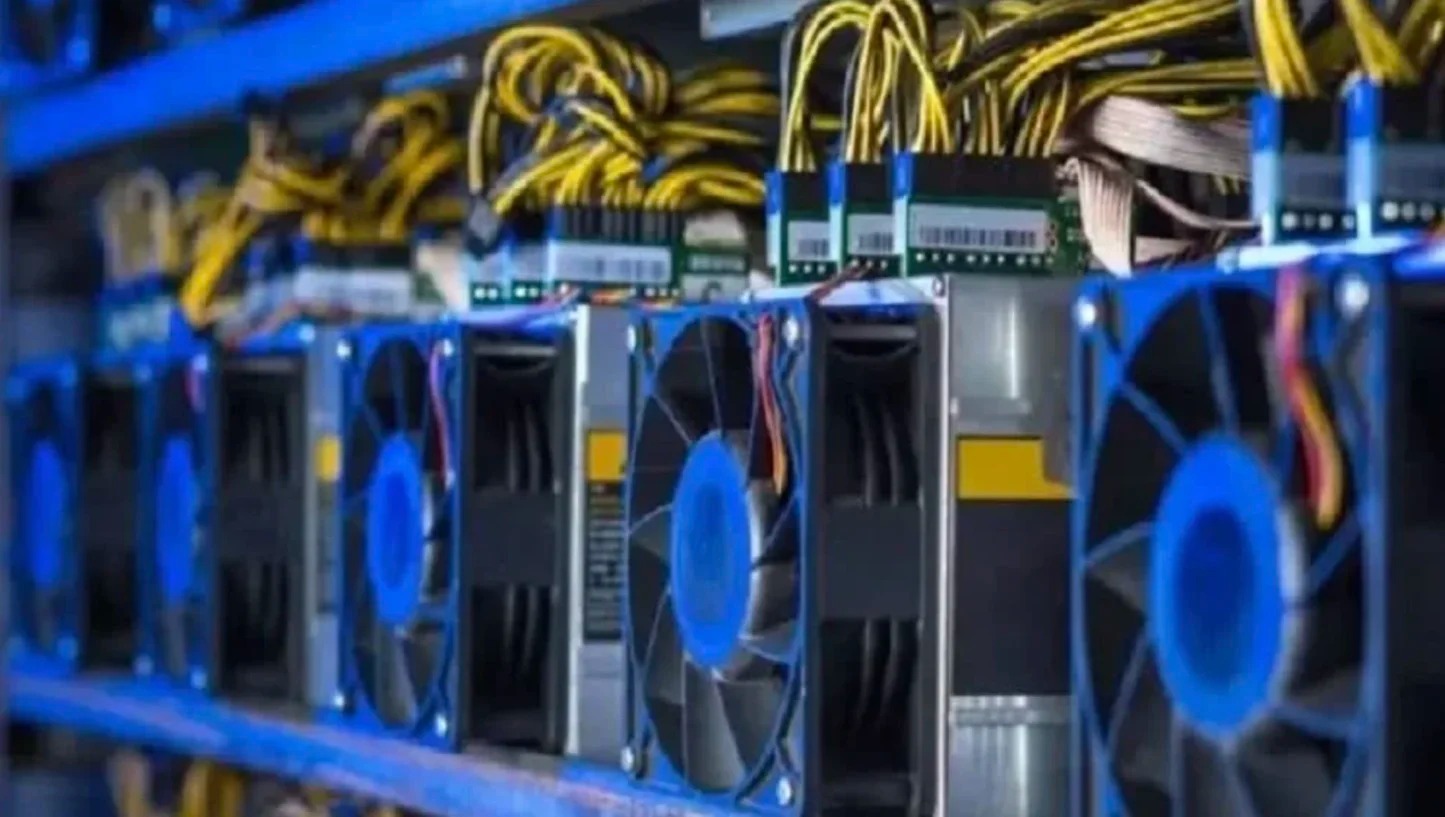
Government-linked Bitcoin mining farms in Iran consist of rows of specialized computer servers (ASIC miners) that consume electricity on an industrial scale. In recent years, frequent and paralyzing blackouts have swept across Iran, plunging households into darkness and halting factory operations for hours or even days. Investigations increasingly point to a hidden culprit exacerbating this crisis: large-scale cryptocurrency mining operations run or protected by Iranian state actors — particularly the Islamic Revolutionary Guard Corps (IRGC).
These clandestine or semi-official Bitcoin mines devour vast amounts of electricity, often operating with heavily subsidized or even free power, effectively diverting national grid energy for private gain.
The Rise of Bitcoin Mining in Iran
Iran’s involvement in cryptocurrency mining began in the late 2010s, as the country sought innovative ways to overcome economic isolation. After the U.S. re-imposed sanctions in 2018, the government viewed cryptocurrencies as a tool to bypass banking restrictions and generate revenue. By 2019, the religious regime officially recognized crypto mining as a legal industry, introducing a licensing system for miners under the condition that all mined Bitcoin must be sold to Iran’s central bank, incentivized by access to cheap electricity.
The prospect of subsidized power attracted domestic players and foreign partners, especially Chinese investors, who established large Bitcoin mining farms in Iran’s free trade zones and remote warehouses.
The impact soon became evident to Iran’s energy sector. In mid-2019, authorities attributed an “abnormal” 7% surge in national electricity consumption to the rapid growth of unregistered mining farms. Scattered reports revealed mining rigs appearing in unexpected places — from abandoned factories and government offices to mosques benefiting from free or ultra-low-cost electricity. As officials realized many miners were operating covertly to exploit below-market electricity rates, thousands of illegal mining devices were seized.
By 2020, the government had issued around 1,000 licenses for crypto mining farms, but most mining activity remained underground. Former President Rouhani admitted in 2021 that about 85% of mining in Iran was unlicensed — a massive gray economy consuming power without regulation or payment.
Behind this boom lies Tehran’s need to monetize its abundant energy resources under sanctions. Bitcoin mining essentially converts energy into digital value. With oil exports restricted, the regime generates Bitcoin by using surplus oil and gas to produce electricity for mining, then sells the Bitcoin overseas to obtain hard currency or import goods — effectively “exporting” energy. Estimates suggest that by 2021, 4.5% of global Bitcoin mining occurred in Iran, generating “hundreds of millions of dollars” in crypto assets for its sanction-stricken economy.
The Islamic Revolutionary Guard Corps Enters the Scene
By 2019–2020, reports indicated that Iran’s most powerful elite — the Islamic Revolutionary Guard Corps (IRGC) and entities controlled by Supreme Leader Khamenei — had entered the crypto mining arena in force. Following Khamenei’s directives, the IRGC partnered with overseas firms to build large-scale mining farms aimed at earning Bitcoin and compensating for lost dollar channels. A notable example is a 175-megawatt Bitcoin mine in Rafsanjan, Kerman Province, nominally a joint venture between an IRGC-affiliated company and foreign investors — drawn primarily by Iran’s extremely low electricity prices.
These mining farms are typically located in special economic zones or military bases controlled by the IRGC, enjoying dedicated power supplies and near-total regulatory immunity. Investigative reports show that IRGC-linked organizations — including major religious foundations such as Astan Quds Razavi — have formed a de facto “crypto monopoly,” profiting by siphoning off national electricity. These state-backed miners effectively use electricity for free (or simply refuse to pay bills), operating with impunity thanks to political connections and armed protection.
Multiple sources confirm that the Iranian regime grants its military and security institutions special privileges in mining. In 2022, parliament quietly passed a bill allowing the military to establish private power plants and transmission lines. This enables the IRGC to directly access subsidized electricity — even power originally intended for public use — diverting infrastructure meant for cities and industries toward secret crypto farms.
Regulatory bodies are virtually powerless to stop these actions. In 2021, when the Energy Ministry attempted to shut down an illegal mine, armed IRGC personnel blocked the raid, ensuring uninterrupted mining. The Intelligence Ministry refused to intervene against the IRGC, further demonstrating the exemption status of the Revolutionary Guard’s mining operations. While authorities publicly crack down on small-scale “illegal” miners, large mines operated by insiders or serving the regime remain untouched.
Estimates indicate that over half of Iran’s mining equipment is controlled by state-affiliated entities. Data shows that by 2023, approximately 180,000 crypto miners were operating in Iran, with about 100,000 belonging to the state or its affiliates (such as the IRGC). This means the Revolutionary Guard and its partners, under the guise of a “legal industry,” actually control the majority of Iran’s crypto mining capacity. These actors prioritize mining and its profits over basic public needs.
Tellingly, even amid worsening energy crises, media outlets affiliated with the Revolutionary Guard have launched high-profile campaigns “cracking down on illegal mines” to deflect blame — a deeply ironic public relations tactic, given that power regulation is not part of the IRGC’s official mandate, and their own mining operations are at the heart of the problem.
Electricity Consumption of Iranian Bitcoin Mines
The energy consumption of Iran’s crypto mines — especially those backed by the state — is staggering. Due to the secretive nature of these operations, precise figures are hard to obtain, but both official and independent assessments confirm that mining has become a major burden on Iran’s power system.
Loads Measured in Thousands of Megawatts
Data from the Energy Ministry indicates that during peak hours, crypto mining can consume up to 2,000 megawatts (2 gigawatts) of electricity — equivalent to the output of 2–3 nuclear reactors — despite official orders requiring mines to shut down during power shortages. At the end of 2024, energy officials noted that illegal mining alone caused national electricity demand to rise 16% year-on-year.
This aligns with earlier reports: unauthorized mines consumed about 2 gigawatts between 2020 and 2021, while Iran’s total generation capacity was only 60–70 gigawatts at the time. For reference, 1 gigawatt can meet the daily needs of a city with hundreds of thousands of residents — making the 2-gigawatt mining load highly significant.
Official Seizures and Assessments
Tavanir, Iran’s national power company, continues nationwide crackdowns on illegal mining rigs. Authorities claim to have confiscated over 252,000 illegal mining devices since early 2022. Officials estimate that if fully operational, these devices would consume about 4 gigawatts of electricity. A vice president at Tavanir stated: “That’s equivalent to the total electricity consumption of three or four small provinces in Iran.”
Despite large-scale seizures, tens of thousands of unregistered miners continue to operate — while many licensed, high-consumption mines (including state-linked ones) remain untouched by enforcement actions. In early 2023, a spokesperson for Iran’s Energy Ministry acknowledged that around 0.8 gigawatts (800 megawatts) of national electricity demand stemmed from crypto mining — mostly illegal. While this figure may seem modest in percentage terms, it can become the tipping point forcing grid operators to implement rolling blackouts during peak usage. Every 100 megawatts consumed by mining means 30,000 households or similarly sized factories and office buildings lose power.
Cheap Power = Massive Profits
Iran’s heavily subsidized electricity prices (as low as $0.01–$0.05 per kWh for some users) make crypto mining exceptionally profitable. Analysis shows that producing one Bitcoin in Iran can cost as little as $1,300, while the global market price reached $30,000–$40,000 by the end of 2024. A profit margin of 20–30 times explains why entities like the Revolutionary Guard are willing to engage in risky illegal mining.
The energy intensity is shocking: mining one Bitcoin consumes over 300,000 kWh — equivalent to the daily electricity use of 35,000 Iranian households. In other words, each Bitcoin produced equals a full day of power deprivation for tens of thousands of homes. Former Energy Minister Reza Ardakanian warned that according to some estimates, cryptocurrency operations consume nearly 10% of Iran’s total electricity generation.
Global Share and Oil Equivalent
In 2021, Iran accounted for 4%–8% of global Bitcoin mining activity. Although crackdowns and rising mining difficulty reduced its share (officially down to 0.5%–1% in 2022, less than 0.1% by late 2024), Iran remains a notable player. Analysts at Elliptic calculated that the electricity used by Iranian miners in 2020 required burning approximately 10 million barrels of crude oil — equivalent to 4% of Iran’s oil exports at the time. This stark comparison reveals that Iran is burning fossil fuels that could otherwise be exported or used domestically, all to mine Bitcoin.
It should be noted that Bitcoin mining is not solely responsible for Iran’s power crisis. Decades of underinvestment, subsidy-driven overconsumption, and mismanagement have already strained the power infrastructure. Experts point out that aging power plants and poor fuel allocation worsen seasonal shortages. However, there is broad consensus that unregulated crypto mining — especially by politically protected actors — has become a primary stressor on the grid. These mines drive up overall demand and continue operating during peak hours, significantly increasing pressure on the power supply.
Empirical Evidence of the Blackout Crisis
Since 2019, Iranians have faced recurring blackouts, with conditions deteriorating in recent years. Summer heat spikes air conditioning loads, while winter heating demands combined with fuel shortages compound the problem. Crypto mining intensifies both sides of this strain and has even been explicitly included in emergency response measures.
2021: Major Blackouts and the Mining Ban
In January 2021, sudden blackouts in major cities like Tehran sparked public outrage. Officials blamed the surge in illegal mining (alongside drought-induced hydropower declines). As summer approached and blackouts worsened ahead of the June elections, President Rouhani imposed a four-month nationwide ban on mining (May–September 2021), citing massive electricity consumption by unlicensed operations and pledging strict enforcement.
At the time, Iran’s peak electricity demand was around 60,000 megawatts; shutting down mines was expected to free up several thousand megawatts. Global data showed a temporary drop in Iran’s share of Bitcoin network hashrate during the ban. However, enforcement was inconsistent — especially regarding IRGC-linked mines — and blackouts persisted throughout the summer of 2021. The government later acknowledged that mining was one of the contributing factors to what became known as the “Dark Summer,” alongside extreme heat and aging infrastructure.
2022–2023: Ongoing Shortages and Local Measures
After the 2021 ban was lifted, both legal and illegal mining rebounded. Ahead of winter in late 2022, the national power company warned that illegal mining could cause a 10% increase in blackouts that season. Authorities required licensed mines to suspend operations during peak hours and claimed to pursue illegal ones, but results were limited.
By mid-2023, Iran still faced a so-called “power gap.” The Energy Ministry again blamed unlicensed miners for worsening shortages, while urgently importing fuel and purchasing electricity from neighboring countries. Rolling blackouts continued through summer and winter, though slightly less severe than the 2021 crisis.
Summer 2024: The 'Super Crisis'
In summer 2024, Iran experienced its worst heatwave in 50 years, setting record electricity demand. In August, government offices and schools in 27 out of 31 provinces were forced to partially or fully close to conserve power. Even with these extreme measures, planned blackouts occurred across regions. Iranian media dubbed it a “super crisis,” reporting annual economic losses exceeding $25 billion due to outages.
Industry suffered heavily — steel and cement plants, among the largest power consumers, halted production for days. Amid growing public anger, officials once again identified illegal mining as a key aggravating factor (alongside extreme weather). The then-Energy Minister offered rewards for reporting underground mines, admitting that unlicensed miners’ consumption of subsidized electricity was “severely impacting the grid and infringing on public rights.”
Winter 2024–2025: Cold Snap Blackouts
The change of seasons brought no relief. A cold snap at the end of 2024 led to natural gas shortages (most Iranian power plants run on gas), triggering renewed blackouts in major cities. Officials ordered all licensed mines to shut down, but widespread belief held that certain privileged mines continued operating. Investigations found that some facilities linked to the IRGC remained lit during periods of peak grid stress, while surrounding communities sat in darkness. This selective enforcement deepened public anger and suspicion.
The government rarely acknowledges the role of internal actors in causing blackouts, usually blaming increased household consumption, drought, or excessive air conditioner use. But citizens and independent observers have long pieced together the truth. By 2025, slogans and social media posts criticizing the “electricity mafia” had become commonplace. Even some regime-aligned lawmakers and former officials criticized the tolerance of mining activities, warning they were destroying an already fragile power grid.
The Human Cost
Vast amounts of electricity diverted to secret cryptocurrency mining operations have inflicted real suffering on ordinary Iranians. Every megawatt consumed by a Bitcoin mine is a megawatt denied to homes, hospitals, and factories. This privatization of public power directly harms civilians across multiple dimensions.
Household Hardships
In frequently blacked-out neighborhoods, residents endure sweltering summers without air conditioning and freezing winters without heating. Food spoils in refrigerators, and water supplied by electric pumps is cut off. In July 2021, many Tehran residents were trapped in elevators or stranded on dark streets after sudden outages. By 2024, blackouts had become routine, with people jokingly sharing “power outage schedules” on social media to plan their lives. Most galling is the sight of certain regime-protected facilities glowing brightly while citizens are told to conserve power. As one Iranian put it: “We sit in darkness so that Bitcoin miners can keep running.”
Health and Safety Crises
Ongoing blackouts threaten critical public services. While hospitals rely on backup generators to keep life-support systems running, not all clinics have reliable alternatives. During the summer 2024 blackout, some small-city hospitals had to delay surgeries and transfer patients due to failed air conditioning.
Outages in traffic signals and streetlights lead to more accidents, and darkness at night increases safety risks. The irony is stark: when hospitals are plunged into dimness, IRGC bases and mining farms burn bright — exposing a distorted set of priorities.
Economic Losses
Blackouts have cost Iran’s economy tens of billions of dollars. Small businesses, from bakeries to workshops, are forced to close. Heavy industries like steel and cement face equipment damage and delivery delays. Energy industry outlet *Power in Iran* estimated annual losses from blackouts exceed $25 billion, ultimately passed onto society through inflation, unemployment, and shrinking services. Much of this growing supply-demand gap stems from the hidden electricity drain of crypto mining.
Data Perspective
As previously noted, mining one Bitcoin consumes roughly 300 MWh — equivalent to the daily electricity use of 35,000 households. Alternatively, Iranian officials say each mining rig uses as much power as ten households. Tens of thousands of continuously operating rigs mean electricity capable of powering hundreds of thousands of homes is instead being devoured by machines. During summer peaks, this imbalance can plunge entire provincial capitals into darkness. No wonder Iranian public discourse increasingly refers to official secret mining as “stealing the lights from countless homes.”
Public Anger and Scapegoating
As electricity bills rise, public fury grows. More and more people recognize this as a corrupt system where elites enrich themselves while ordinary citizens suffer blackouts.
State media continue to blame “excessive household consumption” or technical failures, deliberately downplaying the role of institutional mining. But these narratives are losing credibility. Many suspect the raided “illegal mines” are just small fry, while the real power vacuum lies in large, IRGC-protected facilities. Indeed, most raids target small setups in remote farmhouses or residential buildings, while warehouses inside military zones remain untouched. This selective enforcement fuels public mockery and erodes trust in the government’s sincerity in solving the crisis.
A Costly Gamble
An “innovative measure” initially adopted to counter sanctions has now evolved into a self-inflicted energy crisis. Iran’s state-backed Bitcoin mining experiment — driven by power centers like the IRGC — has generated hard currency at the cost of a collapsing power grid. For the ruling elite, the IRGC’s crypto ventures may be highly profitable, but they are parasitic on the nation’s economy and infrastructure — each Bitcoin produced under their protection means greater fossil fuel consumption, worse pollution, and longer hours of darkness for businesses and families.
In trying to circumvent sanctions, Tehran has inadvertently fostered an “energy black market” dominated by privileged institutions. The consequences follow in quick succession: institutionalized corruption, accelerated capital flight, and a steady erosion of the state’s control over its energy system.
For millions of Iranians, hope lies in establishing a more transparent and modern energy policy — ending the privileges of the “crypto monopoly,” and restoring electricity as a public good. Unless the shadow networks behind the IRGC are dismantled or genuinely regulated, the crisis will persist. The grid will continue to operate beyond capacity, and people will keep enduring flickering lights and suffocating summer nights.
Iran’s situation stands as a cautionary tale: when mining becomes a tool for elite enrichment, it doesn’t just undermine energy security — it ignites public anger and pushes an entire nation toward the brink of collapse.
Join TechFlow official community to stay tuned
Telegram:https://t.me/TechFlowDaily
X (Twitter):https://x.com/TechFlowPost
X (Twitter) EN:https://x.com/BlockFlow_News