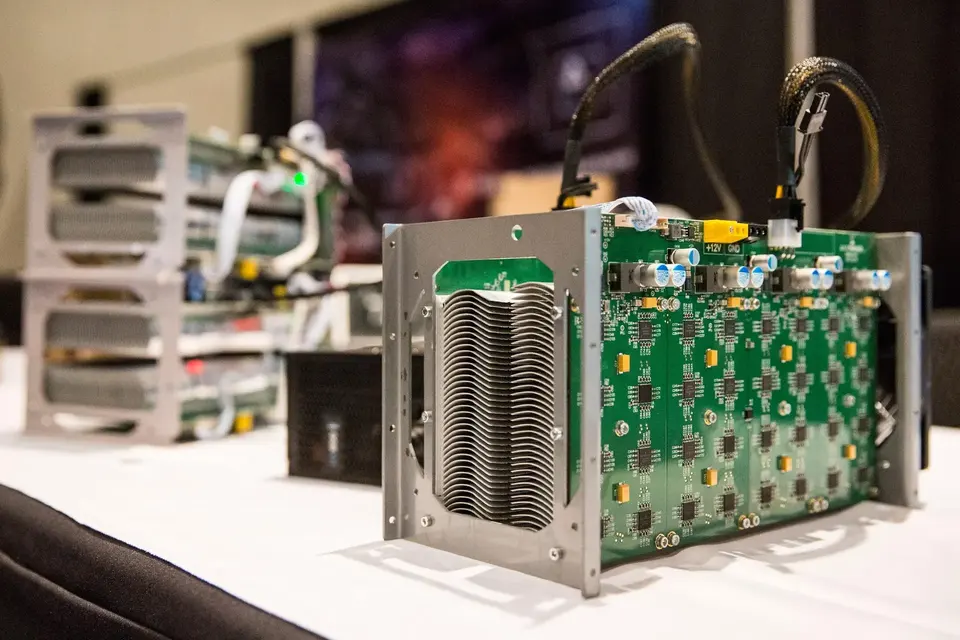
Americans are using Bitcoin mining to heat their homes during winter
TechFlow Selected TechFlow Selected
Americans are using Bitcoin mining to heat their homes during winter
This emerging cryptocurrency heating market is inefficient in providing warmth and controlling energy costs.
 Navigating Web3 tides with focused insights
By: Kevin Williams, CNBC
Translation: AididiaoJP, Foresight News
Summary
-
Entrepreneurs are putting into practice efforts to convert waste heat from cryptocurrency mining into valuable products.
-
Data from digital asset brokerage K33 shows that the residual heat generated annually by Bitcoin mining could meet Finland's total heating demand, yet most of it is currently released directly into the atmosphere.
-
This reality has spurred new products—such as a $900 space heater that doubles as a Bitcoin miner. However, skeptics argue that this emerging crypto-heating market is inefficient when it comes to providing warmth and controlling energy costs.
As cold waves sweep across the United States, electricity bills have become a major factor in household budgets. While most Americans still rely on traditional heating methods (home heating oil, natural gas, and electric heaters), in some homes, cryptocurrency mining is becoming a source of heat. If early pioneers in the crypto-heating industry are correct, this novel form of heating may one day be common in households everywhere.
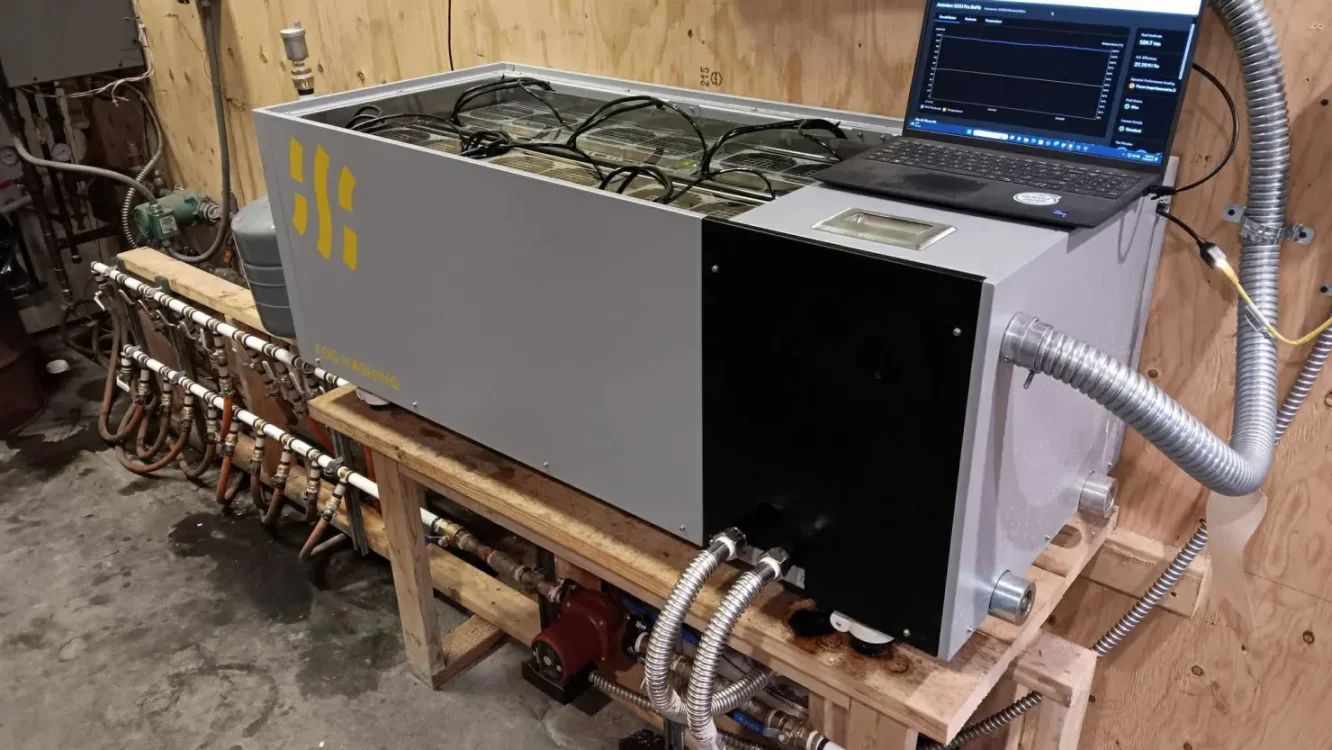
The principle is simple: cryptocurrency mining generates substantial heat, most of which ends up being expelled as waste. According to K33, the Bitcoin mining industry produces around 100 terawatt-hours (TWh) of excess heat annually—enough to meet Finland’s entire heating needs. This massive energy waste in an energy-intensive industry is driving entrepreneurs to explore new ways of reusing waste heat, particularly for heating homes, offices, and other spaces during winter.
During this year’s cold spell, The New York Times tested HeatTrio, a $900 product that functions both as a space heater and a Bitcoin miner. Some users also report using heat from home-based cryptocurrency miners to warm entire houses.
Jill Ford, CEO of Dallas-based sustainable Bitcoin mining company Bitford Digital, said: "I’ve seen Bitcoin miners quietly running in attics, channeling heat into living spaces via home ventilation systems to offset heating costs. It’s a clever use of waste heat." She emphasized: "With creativity, using mining heat is a prime example of how miners can become energy partners."
While such setups may not necessarily reduce electricity bills directly—the economic benefit depends on local electricity prices, miner efficiency, and other factors—they could potentially cover part of the heating cost through mining revenue.
Ford did the math: "The heating cost is comparable to traditional methods, but the added benefit is earning Bitcoin simultaneously."
Even older mining hardware can suffice. Individual miners can join mining pools to share computing power and receive steady payouts proportionally, changing the cost-benefit equation.
Andrew Sobko, founder of Argentum AI, which is building a computing power-sharing market, analyzed: "The theory of using crypto mining or GPU computing for residential heating is elegant because nearly all computational energy consumption ultimately turns into heat." But he added that the model is more viable at scale, especially in high-density buildings like data centers in cold regions, where industrial-level waste heat recovery truly shows its potential.
The key lies in spatial matching—heat cannot be transported by vehicles. Computing equipment must be deployed exactly where heat is needed, with applications ranging from industrial parks to residential neighborhoods.
Sobko revealed: "We’re working with partners to channel computing heat into building heating systems and even agricultural greenhouses. These are the scenarios where true economic and environmental benefits can be achieved." He illustrated: "It’s not about moving heat, but about bringing computation to where heat is needed."
Skepticism: Why Crypto Heating Struggles to Scale
Opposition remains strong.
Derek Moore, clinical associate professor at the Simon Business School, University of Rochester, believes cryptocurrency is not the future of home heating—and even at industrial scales, it has flaws.
According to him, Bitcoin mining has become highly specialized. It’s nearly impossible for home computers or home networks to successfully mine blocks, as professional mining farms use custom chips with far greater computing power than consumer devices.
"Home Bitcoin mining might have worked a decade ago, but times have changed," Moore stated bluntly.
He dissected commercial products: "These so-called Bitcoin heating devices are essentially ordinary electric heaters. Using residential electricity rates, they’re hardly efficient." He highlighted the core contradiction: "Although Bitcoin mining generates significant heat, when used in homes, the electricity consumed ultimately comes from the homeowner’s own supply."
Moore also ran the numbers: continuous computer operation does generate heat, but the probability of successfully mining Bitcoin is extremely low.
"This is fundamentally a false premise—capitalizing on public misunderstanding of Bitcoin’s waste heat and mining rewards to create the illusion that individuals can profit from it," he concluded.

Glimmers of Hope: The Potential of Distributed Miners
Still, experts note that as plug-and-play standalone miners become widespread, this model could become viable in more settings. At the very least, given the inherent truth that "mining always produces heat," its dual benefits merit deeper study.
Nikki Morris, executive director of the Ralph L. O’Donnell Energy Institute at Texas Christian University, explained: "The key is capturing and utilizing waste heat—whether for home heating, hot water, or even swimming pool heating—it all improves energy efficiency."
She pointed out that crypto heating is still in its infancy, with public understanding lagging. "That’s precisely where the research value lies. We’re collaborating with industry partners to build technical frameworks and business models."
Morris especially emphasized crypto’s unique advantage: "Mining produces tradable digital assets, effectively creating a new revenue stream from electricity consumption." She drew an analogy with EV charging stations: "Imagine apartment building mining units generating both digital currency and usable heat—this opens a new window for distributed energy innovation."
Despite challenges in efficiency optimization, multi-energy integration, and regulatory policy, Morris predicts: "As technology evolves, crypto heating will evolve from a novelty into a glimpse of a future where the digital world and physical energy systems increasingly converge."
Practice Makes Perfect: A Heating Experiment in Idaho
The future of crypto heating is quietly taking shape in Challis, Idaho. Kade Peterson’s company Softwarm uses Bitcoin waste heat to battle harsh winters.
Multiple local businesses are testing Softwarm miners for heating and mining. TC Auto Truck RV Wash previously spent $25 daily heating water to melt snow; the owner reported: "Traditional heaters only consume energy, but now our Bitcoin miner generates more revenue than it costs to run." An industrial concrete company uses miner waste heat to warm a 2,500-gallon water tank, saving thousands of dollars monthly.
Peterson has used Bitcoin miners to heat his home for two and a half years. He firmly believes heat will drive the future: "Soon, water heaters you buy will come with data ports, and Bitcoin will become an everyday heat source."
Join TechFlow official community to stay tuned
Telegram:https://t.me/TechFlowDaily
X (Twitter):https://x.com/TechFlowPost
X (Twitter) EN:https://x.com/BlockFlow_News
 @CNBCi