If encryption were an online RPG game, how would you choose your class and level up by fighting monsters?
TechFlow Selected TechFlow Selected
If encryption were an online RPG game, how would you choose your class and level up by fighting monsters?
This is the origin of "monetizing the metaverse."
 Navigating Web3 tides with focused insights
Author: jez
Translation: TechFlow
Traditional finance (tardfi) has decades of experience and a well-established regulatory framework. While these "investor protection" mechanisms are often mocked, they do effectively reduce risk. In contrast, the cryptocurrency space is like the Wild West—a relatively niche arena where people relearn traditional financial rules through hard-earned lessons. In such an environment, competition is unequal, and some understand the "unwritten rules" better than others.
The purpose of this guide is to share these hard-won lessons. Unfortunately, those who need this advice most are probably watching funny videos on YouTube or following lilmoonlambo instead of reading my article (this is always how writers think). Still, I hope you, as an informed reader, can find something useful here.
I compare crypto to a massively multiplayer online game (MMO), because there are indeed many similarities: health points, leveling up, online friends, player versus player (PvP), player versus environment (PvE), a bustling town square, and an economic system—except that the “gold” here is worth more than in World of Warcraft. This is where the concept of the “monetized metaverse” originates.
The following content is ordered by potential impact on your investment outcomes (if you haven’t already implemented or understood them).
Teamwork: Don’t Be a Lone Wolf
Many people entering the crypto world are naturally contrarian or prefer to go solo. After all, it takes courage to ignore warnings from family and friends (if they even know what you’re doing). And once you taste a bit of success, it’s easy to feel like you’re “ahead of everyone.” “I just need to listen to the market!” says the archetypal lone wolf.

But let me tell you: drop that “lone wolf mindset.” The market is lagging—it only tells you you’re wrong after you’ve made the mistake, and the speed of change in crypto leaves no time for slow learning.
You need to find a group of strong teammates to fight alongside. These teammates should be ethical, hardworking, and like-minded “grinders.” The most important quality is resilience—befriend those who acknowledge mistakes and act quickly, and avoid those who merely engage in self-soothing. A high-trust chat group covers more ground than going solo and can quickly tell you what’s right and wrong. The most helpful feedback is often blunt, even harsh—and even indifference is a form of feedback.
If you can't find a team, reflect on your own "value proposition." Generally, unless you've met people offline and built friendships, invitations to join teams are usually based on "what value you bring" and "whether you fit in." The best teams are made up of strong individuals—improve your skills and reputation until you can join your desired team as an equal, not as someone being pitied.
Here are some types of “legendary teammates” I’ve seen around:
-
Mentors: People who provided valuable early guidance, just as I’m doing now by writing this guide.
-
Partners: Those who spend 10 hours daily with you during critical moments, exchanging 2,000 messages to plan strategies.
-
Signalers: Sharp-eyed allies who help distinguish solid ideas from wild speculation.
-
Prospectors: Bolder allies responsible for discovering new opportunities for the group to evaluate.
-
Guides: Technical experts who solve complex technical problems.
-
Experts: Advisors who provide specialized input in specific situations.
Many assume so-called "secret societies" are mysterious conspiracies, but they're often just groups of friends in a chat room. They grew together and now wield some influence.
The Importance of a “Home Base”
Not all group chats are equal. There's a special kind called a “home base”—the first place you log into each day, the first place you reply, and most importantly, the first place you share information.
When deciding whether to invite someone into your high-trust group (to improve team efficiency), here’s a counterintuitive tip: try to avoid inviting accounts with high public visibility, as they likely already have their own “home base.” Instead, prioritize motivated newcomers without an established team—they’re the most valuable additions.
The Risk of Complacency
Every group chat has a lifecycle.
In its prime, most members are passionate and hungry. This momentum often comes from intelligent newcomers who haven’t yet succeeded but show great promise.
However, over time, the group inevitably becomes complacent. Members reach higher levels, the “game” slows down and becomes more structured. Daily discussions decrease, and topics shift toward lifestyle, politics, etc.
If you want to stay at the forefront of the industry, befriend emerging, promising individuals and join groups still in a “hungry” state. Recall the passion and hunger you felt when starting out—immerse yourself in that energy again.
Choose Your Role, Find Your Edge
To succeed long-term in this field, you must develop real advantages. Simply buying tokens that rise during bull markets isn’t an edge—but identifying the signals of a bull market is key. Joining a hand-holding group may benefit you short-term, but such edges quickly fade. Consistently profiting in a specific domain is true advantage.
Different strategies suit different personalities. If you're patient and risk-averse, you shouldn't jump into high-risk arenas like pump.fun; similarly, if you're naturally adventurous, you'll struggle to stick with yield farming for long before getting distracted.
Below are some skill categories sorted by risk preference.
DPS - Traders
These players focus on directional trading, chasing high-risk, high-reward opportunities. Success stories often overshadow the widespread losses. To be a DPS main, you need high risk tolerance, excellent risk management, strong psychological resilience, and the ability to keep fighting after failure.

Trench Warriors
Shitcoin traders represent one of the most polarized roles—those at the bottom (even average performers) are terrible, while the top ones are exceptional. Players like req and nbs fully leverage on-chain intelligence. If you consider yourself a “shitcoin trader” but haven’t mastered your own on-chain analysis tools, you still have significant room to grow. In my view, this is the only real alpha in the space.
Despite low capital barriers and high potential returns making shitcoin trading a popular entry point, this style doesn’t scale well. The issue is liquidity—newly issued tokens have poor liquidity, and larger positions lead to slippage. Buying too much can even crash the price due to increased distribution pressure. Shitcoin trading also can’t scale horizontally via volume or frequency because failure rates are simply too high.
Those who successfully move beyond the shitcoin market should avoid returning unless under special circumstances or where they truly hold an edge.
Hunters of Quality New Things
The core of the “hunting quality new things” strategy is identifying a new token with strong fundamental logic, getting in early, and riding its appreciation. Unlike “trench warriors” whose holding periods are measured in days or hours, this strategy relies on fundamentals and typically takes weeks or months to pay off. Ideally, the market recognizes the logic quickly. This is my personal favorite style because it doesn’t rely on luck and is highly repeatable. The ideal range: buy when market cap is between $50 million and $100 million, exit around $1 billion. This approach scales easily to larger investment sizes.
Why focus on new things?
The core logic is: “The market hasn’t priced this correctly yet—it should be worth more.” New things are easier targets for several reasons:
-
Time factor: Markets haven’t had enough time to properly price new assets, so value isn’t fully reflected.
-
Cash flow: Fewer existing holders mean more potential buyers and greater room for inflows.
This doesn’t necessarily mean brand-new tokens. Older tokens with clear transformation paths can also present opportunities, though existing supply may create resistance.
How to find quality new things? The answer is “you’ll know it when you see it.” But if you don’t know where to start, consider these points:
Is it novel enough?
-
This is the most important criterion. First movers often gain outsized momentum with excellent risk/reward ratios. A truly new trend sparks fresh industry conversations, and all attention eventually circles back to the original project.
Does it have a flywheel effect?
-
A flywheel effect refers to a self-reinforcing cycle. For example, shitcoins naturally have flywheels—as prices rise, holders become wealthier and more excited, telling more friends, creating positive feedback. Other flywheels may be more complex, like bonding curves, which use deterministic early participation and guaranteed rewards to kickstart activity.
Is there onboarding friction?
-
Onboarding friction is a crucial test of investment logic. If there’s zero friction, ask yourself: why am I so lucky to buy cheap? Maybe the current price is fair. Conversely, friction implies future reduction potential. Examples: Rollbit migrating from Solana to Ethereum, expansion of ultra-liquid spot ecosystems, or even Bitcoin ETF launches—all classic cases of reducing friction. Lowering barriers often brings in more capital, benefiting those who invested effort early.
Meme Priest
If “gem hunters” rely on fundamentals, Meme Priests completely abandon such boring concepts. Meme Priests are the NFT traders of this cycle, using intuition to catch market sentiment and find alpha. Like NFT investing, “HODLing” after buying is often the best strategy—until it stops working.
However, this path requires immense conviction. You must withstand drawdowns and the emotional toll they bring. The best meme priests can even alter the odds through their actions—examples include baproll and spx6900, or dbl and fartcoin.

On a broader level, Bitcoin itself can be seen as one giant meme. Looking back at my investment history, I notice that whenever I bought a meme and just HODLed without touching it, my returns often exceeded active trading. I wonder—does this apply to you? Perhaps it’s worth considering.
Leverage Wizard
Among all trading styles, leveraged traders face the highest risk of failure. Their behavior sometimes mirrors that of problem gamblers. From experience, most leveraged traders suffer from excessive leverage, holding losing positions too long, and overtrading. I once joked: “There are no successful leveraged traders—only those who haven’t blown up yet.”
Leverage seems simple—there are a few times each year when it feels “easy,” like during Bitcoin ETF approval or major events. But at other times, leveraged trading is a brutal PvP battlefield. Even when profitable, gains rarely match asymmetric spot opportunities.
If you’re considering this path, I strongly advise against it.
Farmers - Tanky Tanks
Tanks are nearly indestructible (unless facing smart contract risks). They rarely lose money, but their upside is capped. This playstyle suits patient, risk-averse, or time-constrained investors.
Stablecoin Stakers
By providing liquidity to users or projects, they earn steady returns. Current revenue sources include:
-
Funding Rate Trading
During periods of strong demand (e.g., Bitcoin hitting ATHs), demand for margin trading surges, pushing funding rates (annualized fees paid by longs to shorts) higher. On major assets like BTC and ETH, these rates can exceed 20% and spill into stablecoin markets.
-
RWA Yields
Government bonds are currently the most common and liquid RWA, successfully integrated into crypto. Real estate and other real-world asset yields, however, are less liquid and riskier—I don’t recommend them.
-
Token Incentive Yields
Rewarding liquidity providers with tokens is a key DeFi innovation. Though incentive structures have grown more complex, surprise opportunities still exist. This is true PvE—projects happily exchange their printed tokens for liquidity.
Beyond this, “market-making liquidity providers” are an emerging role this cycle, offering high and stable yields. Examples include GMX liquidity pools, and projects like Jupiter and Hyperliquid.
Sybil/Wash Strategies
For deeply involved “degen farmers,” this strategy currently offers the best risk/reward ratio, requiring minimal capital. The core idea is participating in a new protocol (as user or volume contributor) when expected rewards outweigh costs. However, this approach is fading as more projects recognize extractive farming behavior and adopt linear reward designs to suppress it.
The essence lies in an implicit agreement—projects need certain metrics (user count, TVL, volume) to boost valuations and attract new users. Unlike genuine liquidity providers, Sybil/wash actors (fake identities or fabricated trades) create only artificial growth. Yet, many projects still pay in native tokens just to display nice dashboards on Dune Analytics.
The most aggressive operations I’ve heard of are automated and constantly battle detection systems. Once, upon learning of a 12,000-bot operation on a project, I decided never to touch zkSync again.
If you want to try this, a practical approach is interacting with promising new projects using a few of your normal accounts.
Support Roles - Other Categories
These styles aren’t pure trading or staking, but distinct enough to warrant their own category.
Insiders
Insiders come in many forms—some help projects grow, others may be malicious. Either way, being an insider is a privilege—far lower risk than for ordinary investors.
What separates investor insiders from seed-round insiders? Usually, project quality. Previously, VC backing signaled quality, but that standard is shifting.
In reality, most founders are more open to DMs than you’d think, especially early on. For example, NBS’s presale strategy—joining near the end and messaging developers—is a form of insider access.
Builders
If you’re a builder, my only advice is: stop reading this and go build! Maybe this article helps you understand user personas, but nothing beats iterating relentlessly and finding product-market fit (PMF). Think about the best builders you know—would they be reading this?
Onchain Rogue
The blockchain space holds many underexplored opportunities for those with technical skills, curiosity, and energy. Front-running (sniping), sandwich attacks, randomness exploits, and other edge cases await discovery and exploitation.
Leveling Guide
When attempting to level up, clarify whether you're playing “speed run” or “hardcore mode.”
-
Speed Run: Allows restarting after failure. Similar to “hypergambling,” suitable for those with other income sources or students with high future earning potential. With less fear of failure, speed runs can take bigger risks.
-
Hardcore Mode: Low tolerance for failure. If your funds are life savings, you live in an economically disadvantaged region, or support dependents, you cannot afford total loss—this is hardcore mode.
Four-Digit Portfolio Stage and Below
If you already have a job or are in school, skip to the next section.
At this stage, your time is better spent earning fiat—one minimum wage job equals ~150% APR. And I believe in you, dear reader, you can do even better.
Truthfully, at this portfolio size, returns won’t justify massive time investment. The only exception is Sybil airdrop farming, but even that doesn’t require full-time effort. 10x opportunities are rare and should be saved for larger portfolios.
If you live in an area with scarce job opportunities, consider joining a protocol as a community manager or similar role. The easiest path: become an active community member during early development, so when hiring happens, you’re already a core insider.
Five-Digit Hell - Focus on Increasing Fiat Income
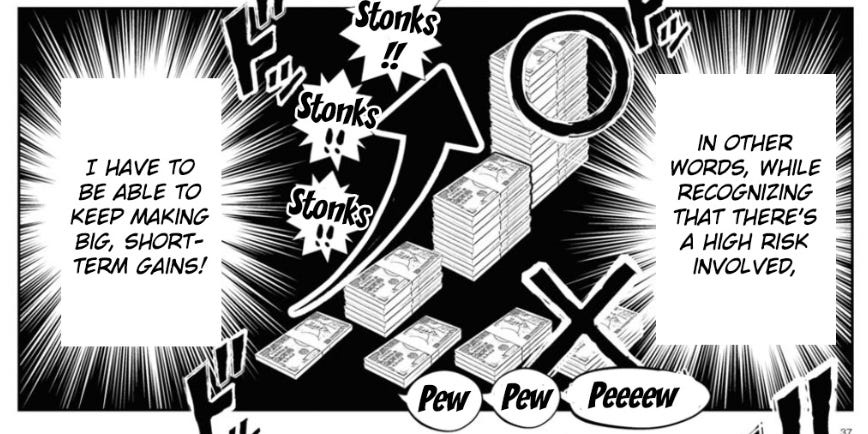
Welcome to trench warfare. Here, every dollar is precious ammunition—saved to fund your shot at a 10x opportunity.
Many try to be “trench warriors” without mastering the required skills, or recklessly attempt to become “leverage wizards.” These people often get stuck in five-digit hell, only pulled out by a bull market—and soon fall back in.
Yet, I’ve found long-term MemeCoin holders or skilled “good new thing” hunters often break through. Their strategy is simple: firmly buy and hold spot assets.
Regardless of playstyle, Sybil airdrop farming is a low-cost entry. Just one big nonlinear airdrop can graduate you from this stage.
Six-Digit Hell - Hunting for 10x Returns

Strike at the sweet spot. At this scale, you can easily capture 10x gains without worrying about size or slippage. As mentioned in the “hunter” section, ideal opportunities grow from $50M–$100M to $1B market cap.
I’ve personally escaped six-digit hell four times and luckily never fell back. Each time, the same strategy:
-
Watch for new opportunities: Constantly monitor promising new projects or trends.
-
Test assumptions with small bets: Deploy small capital to validate your thesis.
-
Go all-in and HODL: Once confirmed, commit most of your capital and wait patiently.
-
Exit when hype peaks: When everyone’s talking about it, cash out.
Looking back, one common thread: I bet on exchange tokens. After all, speculation remains crypto’s most powerful product-market fit.
Seven-Digit Hell - Seek Several 2–3x Returns
At seven figures, finding a few 2–3x opportunities is key to escaping. The overall strategy resembles the six-digit stage but demands more patience and repetition. As capital grows, execution gets harder, especially maintaining flexibility amid volatility.
The biggest challenge becomes capital allocation. Some projects lack sufficient liquidity to absorb your desired position size, forcing diversification. In the six-digit phase, you could concentrate everything on your best idea; at seven digits, that’s often impractical.
When no compelling new opportunities arise, parking capital in stablecoin farms (Stable Farms) is wise. It delivers steady returns while waiting for better setups. Patience is crucial here.
Additionally, moving capital between different “good new things” via stablecoin farming becomes increasingly attractive. Patience matters more than ever.
Eight Figures and Beyond
At this level, what more needs to be said? Those who reach it need only remember one thing: “Don’t fuck it up.”
Don’t Stand in the Fire
Avoid these common mistakes.
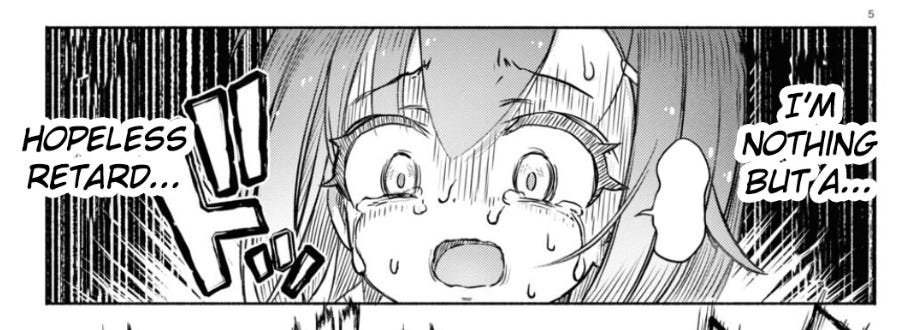
Avoid Trading When Emotionally Unstable
Learn to recognize emotional shifts. When you feel失控, sell positions and step away. Chasing losses never ends well—calm reflection is wiser.
Avoid Reckless Bets After Big Wins
Big wins often lead to overconfidence and foolish losses. I call this “euphoria trading.” No matter how triumphant, maintain discipline and avoid emotional decisions.
Avoid Circular Cash-Outs
Always ask: “Who’s left to buy?” Markets are about flows, not static holdings. Sometimes assets seem safe because everyone owns them—but that doesn’t mean they’re risk-free.
Forget Floating PnL and All-Time Highs
Obsessing over past mistakes wastes energy. Fixating clouds your judgment and harms future decisions. Let go of the past and focus on future opportunities.
“Insider info often hurts the most” – cl207
When hearing “insider info,” assess your position in the information chain. The farther from the source, the more likely you are to become liquidity for those exiting.
Never Average Down on Losing Positions
“Losers average down on losing bets”—a common market error. If the market clearly tells you you’re wrong, don’t add more without strong justification.
Old Coins Are Weak—New Coins Are Stronger
New projects often have greater growth potential, while older ones may have lost appeal. For details, see my prior analysis on capital flows.
Qualities of the Best Players in Any Game – David Sirlin
David Sirlin is a competitive fighting game champion who wrote a book titled *Playing to Win*, sharing his strategies and insights. For anyone who’s competed at a high level, these ideas aren’t new. But his summary of traits needed for success applies equally to crypto investors. These include:
-
Deep market understanding: Knowledge of historical trends and precedents helps predict future moves.
-
Love for the market: You must love the “game” to invest the time and effort needed to win.
-
Psychological resilience: This market will break you countless times—you must keep going.
-
Right mindset: When facing loss or bad luck, do you respond calmly or with anger and blame?
-
Technical skill: Do you possess unique abilities or edges?
-
Adaptability: Can you flexibly apply your strengths in new environments or rule sets?
-
Yomi (prediction): Can you accurately anticipate other market participants’ actions?
-
Evaluation skill: Can you relatively assess value and potential?
Join TechFlow official community to stay tuned
Telegram:https://t.me/TechFlowDaily
X (Twitter):https://x.com/TechFlowPost
X (Twitter) EN:https://x.com/BlockFlow_News
 @izebel_eth