YesNoError: What Is Its Strength with AI-Powered Scientific Paper Review and Dual Attributes of DeSci + AI?
TechFlow Selected TechFlow Selected
YesNoError: What Is Its Strength with AI-Powered Scientific Paper Review and Dual Attributes of DeSci + AI?
Will projects with both DeSci and AI attributes have a future? Andrew Kang is extremely bullish.
 Navigating Web3 tides with focused insights
Written by: TechFlow

Tomorrow, $BIO—the long-anticipated token—will officially launch. As a DeSci project directly backed by Binance, the market is speculating whether $BIO’s listing could spark a bull run in the DeSci sector and potentially draw liquidity away from the AI narrative.
But must AI and DeSci be competitors? Not necessarily. A recently trending Solana-based project, YesNoError, has taken a different path by merging DeSci with AI—specifically, using AI technology to detect and correct errors in scientific research papers.
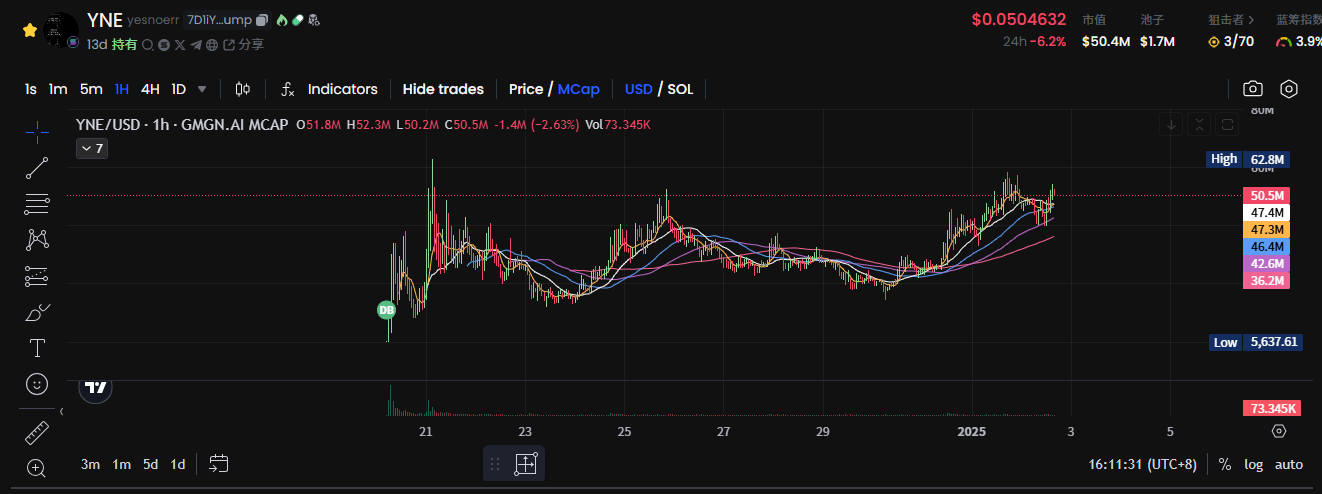
The project’s token, $YNE, surged to a 60 million USD market cap on its listing day (December 20) and has since been heavily promoted by Twitter KOL Andrew Kang (hereafter referred to as AK). It currently holds a market cap of around 50 million USD.
Is AI Review of Scientific Papers Really Necessary?
If you're still unsure about YesNoError's practical value, team member Ben Parr illustrated the importance through a real-world example:
In October 2024, a research paper claimed that black plastic kitchenware contained toxins, sparking widespread media coverage. The Atlantic even published an article titled "Throw Away Your Black Plastic Kitchenware," triggering public panic. Ben Parr himself began discarding his kitchen tools. However, Joe Schwartz, Director of McGill University’s Office for Science and Society, uncovered a critical mathematical error in the study—a simple multiplication mistake had inflated the reported toxicity levels by 10 times. This case highlights how even seemingly authoritative studies can contain major flaws, significantly impacting everyday lives.
AI-powered review of research papers could minimize such basic calculation errors. YesNoError was born precisely to address this need.
Founded by Matt Schlicht, YesNoError leverages OpenAI’s o1 model as its technical foundation. The operation is straightforward: the team uses AI to audit research papers and publicly shares findings on their website yesnoerror.com and official X account.
This transparent approach enables both the scientific community and the public to promptly identify potential issues in influential studies. Although still in its early stages, the project has already achieved notable results, uncovering errors in several papers.
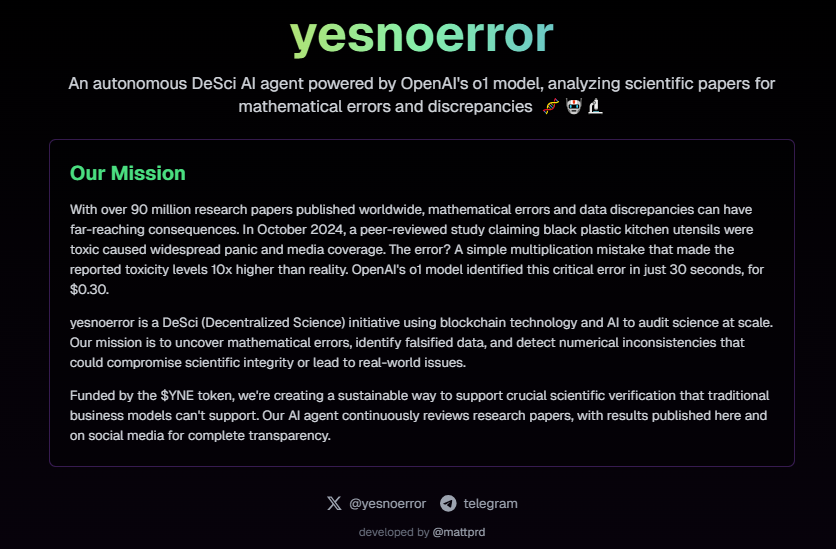
The $YNE token also has utility: holders can spend $YNE to prioritize AI review of their own papers.
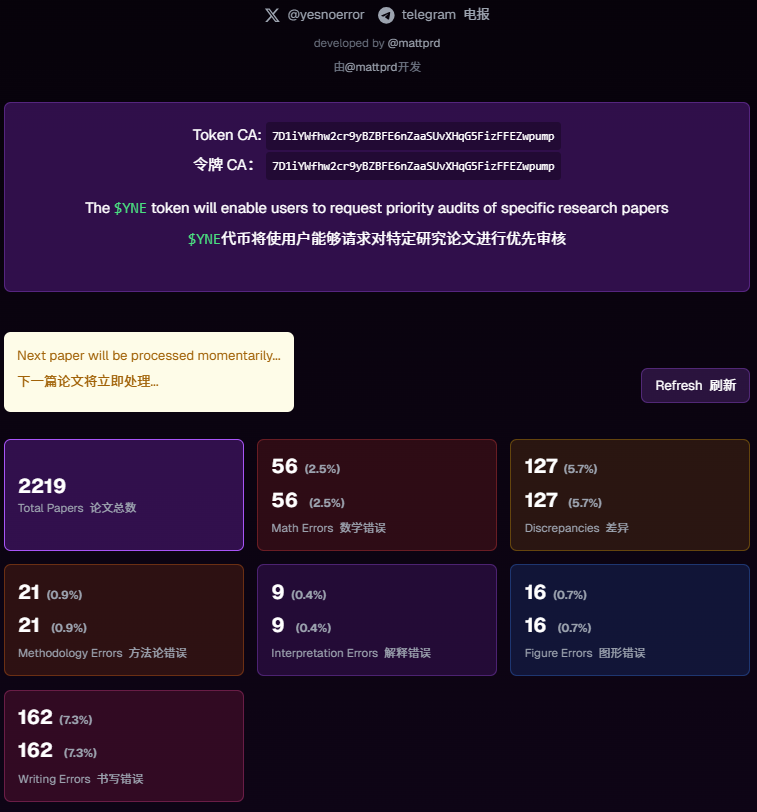
To date, YesNoError AI has reviewed 2,219 papers and identified numerous errors.
Support or Skepticism: Voices from the Market
AK is Bullish – Vocal Support
On the day $YNE launched, AK—who has long supported DeSci—expressed strong admiration for YesNoError.
He stated: “The core value of YesNoError lies in the real-world convergence of crypto x AI x DeSci.”
YesNoError leverages the unique characteristics of the crypto ecosystem, where capital doesn’t necessarily demand traditional ROI. As long as a project attracts attention, it can secure funding (i.e., attention economics—attention leads to token purchases).
At the same time, YesNoError offers a compelling use case for crypto: in the right context, tokens aren’t just vaporware but can support public goods that traditional business models struggle to sustain.
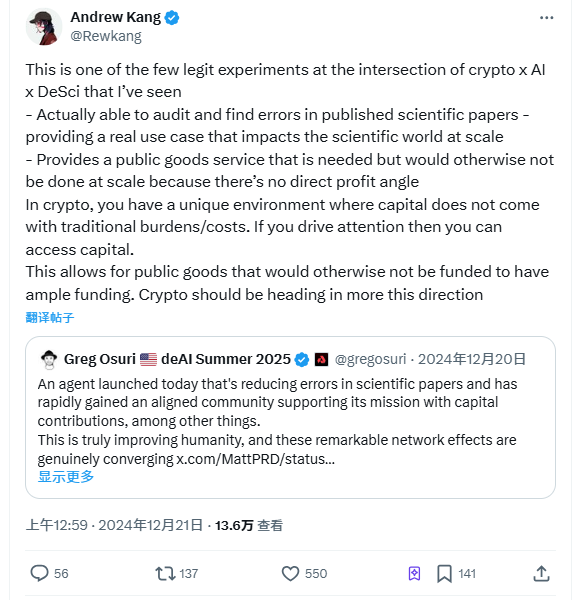
Possibly due to genuine belief (or a significant position?), AK doubled down on December 31, publishing another post praising YesNoError’s necessity and practicality with data-driven arguments.
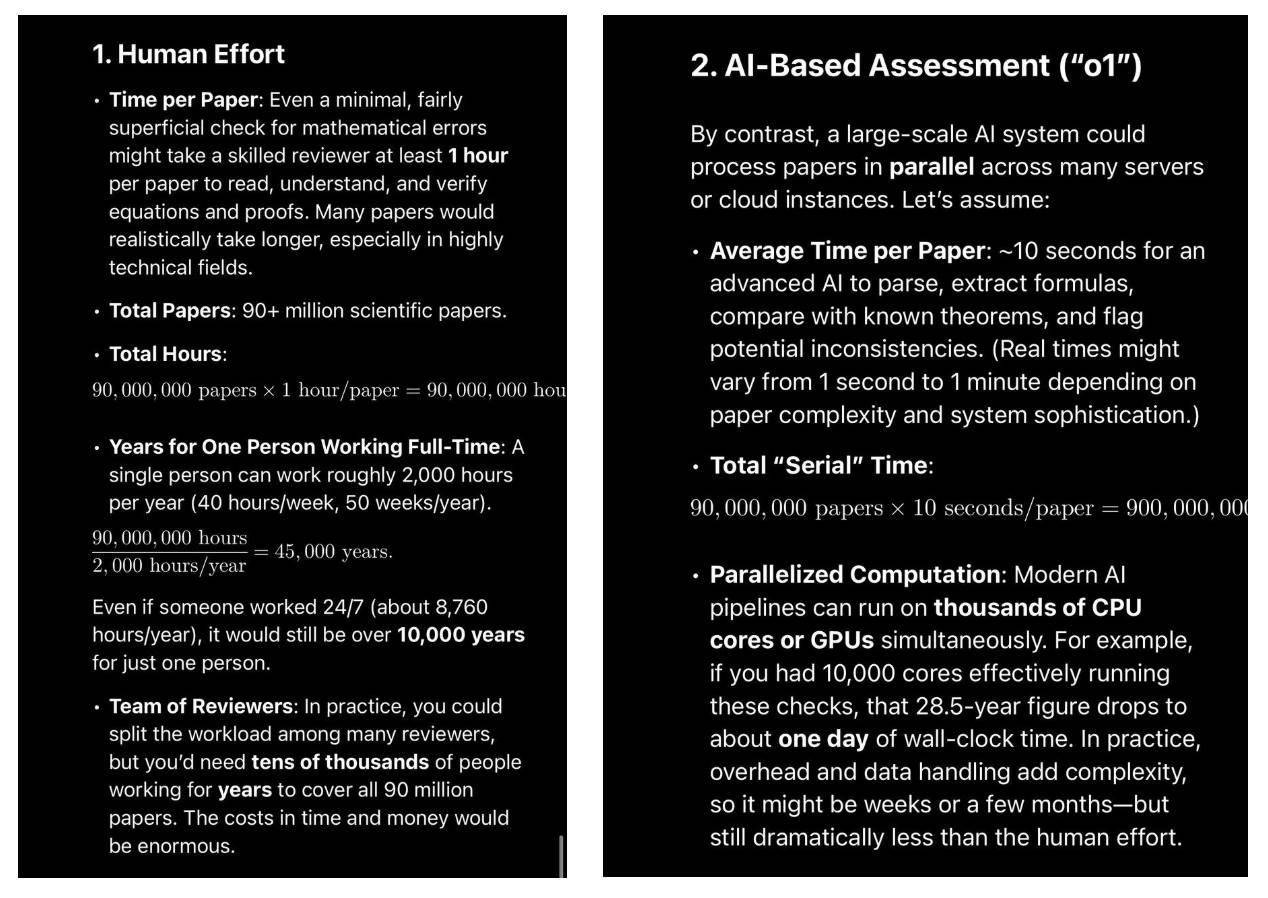
AK noted that YesNoError’s AI has the capacity to audit errors across over 90 million papers in the global scientific literature database—achievable within weeks or months. By contrast, manual review would take tens of thousands of years. Even a 5,000-person PhD team would require nearly a decade (and couldn’t keep up with new publications), at an estimated cost of 5.4 billion USD.
Meanwhile, an optimized AI model could accomplish more accurate, standardized reviews for approximately 30 million USD (about $0.30 per paper)—less than 1% of the human cost.
Raising 30 million USD in traditional science would be a major undertaking, but in crypto, it’s far more feasible. (Despite speculative elements, $YNE reached a 50 million USD market cap within ten days.)
Currently, the AI agent has reviewed over 1,700 papers, identifying errors at a rate of 3–4%. With ongoing optimization, processing speed will continue to improve. Among 90 million papers, many critically important ones may contain major errors—and correcting them could have substantial positive impacts globally.
BIO Protocol’s official account echoed AK’s perspective:

Is It a Fake Need? Consider the Other Side
Amid the praise, some remain skeptical about YesNoError’s actual demand.
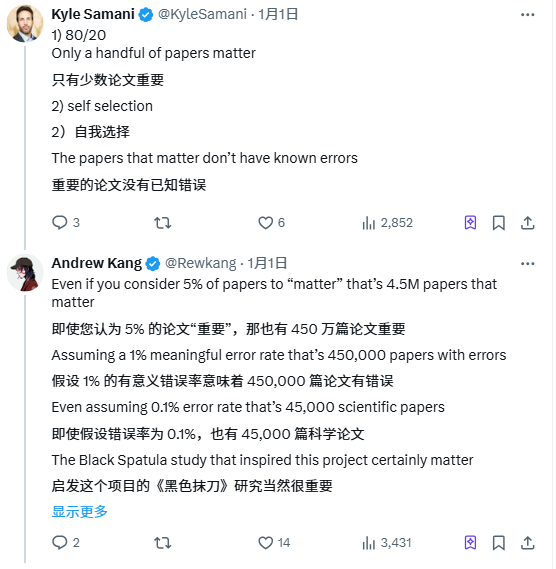
Kyle Samani, co-founder of Multicoin Capital, pushed back under AK’s post:
Kyle argued that per the 80/20 rule, only a small fraction of papers are truly important—and these high-impact papers receive enough scrutiny that known errors are unlikely.
Yet Andrew Kang countered with data: even if only 5% of 90 million papers are important, that’s still 4.5 million significant papers. If just 0.1% of them contain errors, that amounts to 4,500 flawed yet impactful studies needing correction. The earlier "black spatula study" example clearly demonstrates that even high-profile papers can be wrong and influence society.
Conclusion
Using AI to review papers isn’t entirely new—even since ChatGPT’s debut, various AI-assisted peer review applications have emerged. But within crypto, YesNoError represents a step toward solving real problems in science while offering tangible, non-speculative use cases for cryptocurrency (though the project is still early, and part of its current value likely stems from market hype).
Regarding market behavior, while much enthusiasm can be attributed to “cognitive bias driven by vested interest,” if a project is genuinely viable and delivers practical utility beyond speculation, then “making money while doing good” should earn lasting market recognition.
As for YesNoError’s future, we’ll need to see whether the team can maintain momentum after the initial hype fades. We’ll be watching.
Here’s hoping to see more projects that truly benefit the world.
Join TechFlow official community to stay tuned
Telegram:https://t.me/TechFlowDaily
X (Twitter):https://x.com/TechFlowPost
X (Twitter) EN:https://x.com/BlockFlow_News
 深潮TechFlow
![In-depth Analysis of Trade[XYZ]: How Were 92 Markets and 98% HIP-3 Trading Volume Established?](https://upload.techflowpost.com/upload/images/20260716/20260716061117965147.jpeg?x-oss-process=image/resize,p_50/quality,q_80)