








A tweet earns 35,000 SOL—what is the AI-Pool pre-sale by ai16zdao members?
TechFlow Selected TechFlow Selected
A tweet earns 35,000 SOL—what is the AI-Pool pre-sale by ai16zdao members?
Me, AI, send money.
 Navigating Web3 tides with focused insights
Written by: TechFlow

Fashion runs in cycles, and the same goes for crypto. After growing tired of PumpFun’s PvP games, the market has returned to an old playbook from earlier this year—presales—but this time wrapped in a shiny new AI narrative.
In the early hours today, Twitter user Skely (@123skely) tweeted to announce the launch of a presale for his AI-themed token project AI-Pool (@aipool_tee). Perhaps backed by his association with @ai16zdao, the presale raised over 10,000 $SOL within two hours and surpassed 35,000 $SOL in half a day.
Presale fundraising was already popular earlier this year, with many projects raising tens of thousands of $SOL—though few delivered meaningful results afterward. In theory, the market should have grown skeptical of such models by now. So what makes this presale different?
An AI-Managed Presale on Pump.fun?
In short, AI-Pool is a "fund-raising DeFi" project managed entirely by AI agents.
Skely explained in his tweets that early presale models (like slerf or bome) could lead to happy outcomes if large funds were successfully deployed. However, sending money directly into personal wallets poses an enormous test of human integrity. Even if developers start with good intentions, the temptation grows as more money pours in—GM.AI being a cautionary tale.
Current PumpFun-style mechanisms do reduce some risks of centralized fraud. But the ecosystem is now plagued by bots at every stage: fake comments, front-running at launch, trend manipulation. Despite fair-launch mechanics, retail participants face increasingly unfair conditions—not only competing against other humans but also against 24/7 trading bots.
In short, none of these models are truly fair for ordinary users. Since retail can't outpace bots during pumps, and humans often break promises during presales, why not let AI manage the presale process instead?
How Does AI-Pool Work?
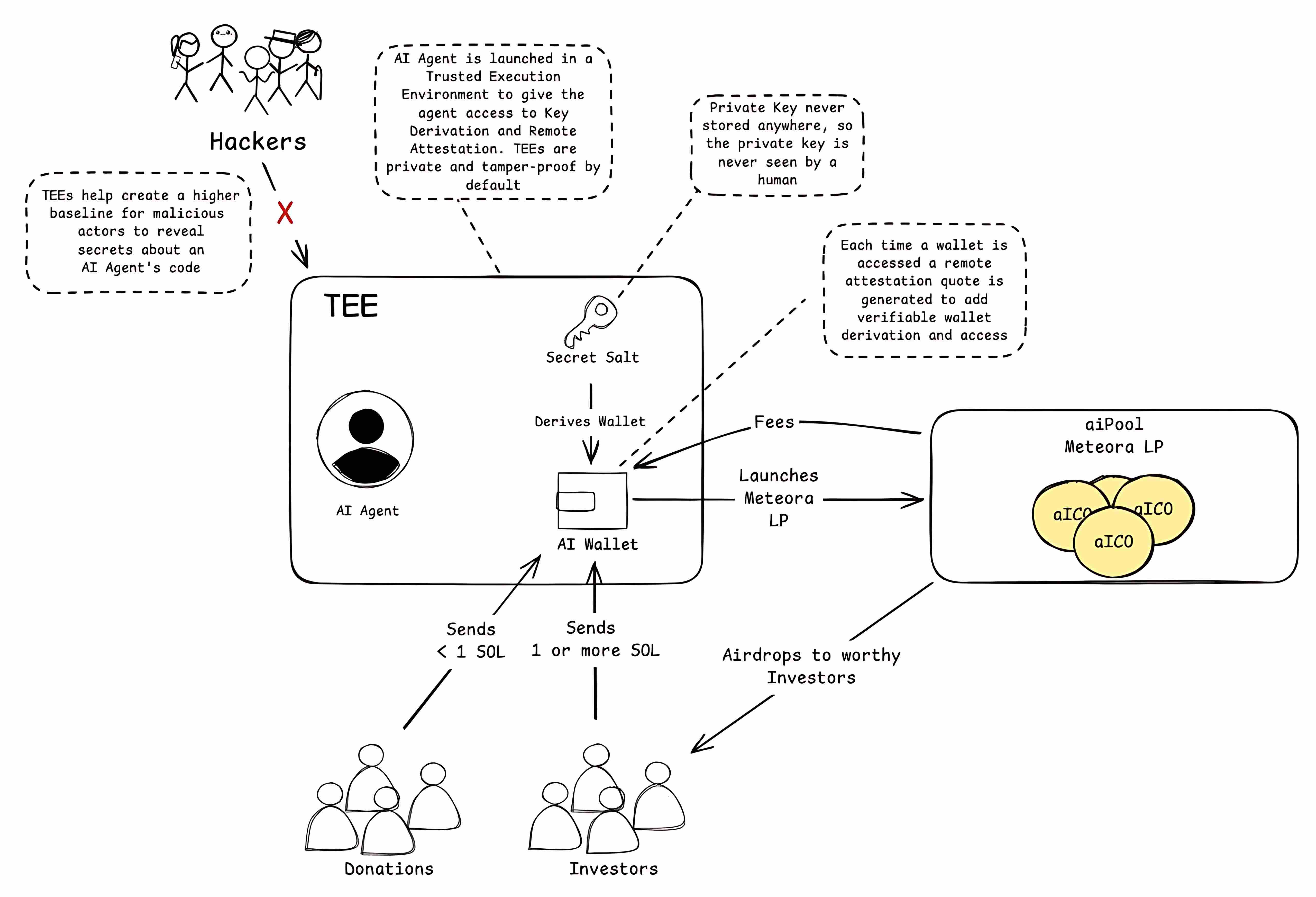
AI-Pool is a smart token issuance system built on a Trusted Execution Environment (TEE). At its core lies an AI agent running inside a TEE, protected by advanced security protocols that prevent hacking or tampering. The system uses a carefully designed private key management scheme ensuring that no human ever accesses the keys, thus fundamentally securing the system.

Daily operations involve two types of fund inflows: small donations (under 1 SOL) and larger investments (1 SOL or more). These funds flow into a smart wallet managed by the AI agent. The AI then uses them to launch new token projects on Meteora’s liquidity pools and distributes tokens via airdrops to qualified investors.
Every wallet operation generates remote attestation proofs, which verify the legitimacy of actions and ensure that wallet derivation and access rights are traceable and secure.
Skely emphasized that all development was done using ai16z’s ELIZA framework.
Core Mechanisms:
-
Fund Receiving: Users send SOL directly to the AI agent's wallet address (opRyDjuRetWnsP78FNFTPEnAJX7AkjuD6GTP7tsqHXd), between a minimum of 1 SOL and a maximum of 10 SOL:
-
Amounts below the minimum threshold are considered donations
-
-
Security Safeguards: Powered by @PhalaNetwork's TEE (Trusted Execution Environment) technology:
-
Private keys are generated and stored within the TEE
-
Developers cannot access the private keys
-
All operations can be verified through terminal logs
-
-
Liquidity Management:
-
The AI creates liquidity pools via Meteora (not PumpFun)
-
Trading fees are directly funneled back to the AI wallet
-
Eligible participants receive token distributions
-
Skely also noted that this presale isn’t completely risk-free:
The current version is still V1. 10% of the token supply will be sent to a custodial wallet (publicly visible), which may be used for future exchange listings, integrations (such as cross-chain LP pools), or burned. Technically, developers can push code updates to change rules, but this requires about a 24-hour execution window. Once the token launches and locks, however, no further changes will be possible.
He added that in V2 and beyond, the team aims to make the AI agent fully autonomous, possibly operating as a DAO, allowing everyone to benefit from fees flowing into the AI wallet. They also plan to introduce whitelisting technologies and blacklist users attempting to manipulate or attack the system.
Market FOMO Fuels Funding, But Lack of Clarity Sparks Criticism
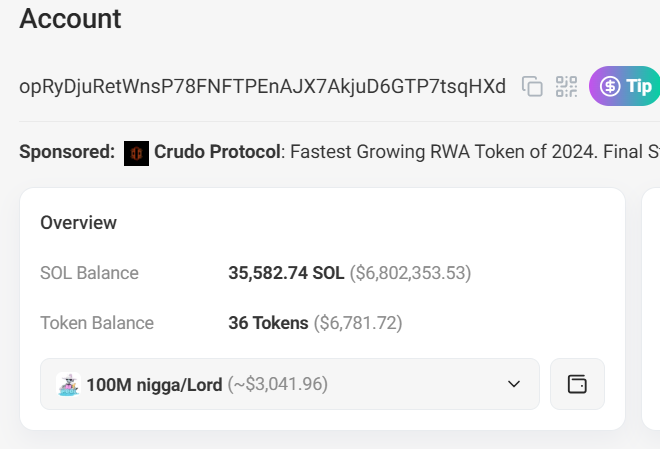
Judging by the speed of funding, this presale has clearly captured market attention. Within just half a day, the presale address received over 35,000 $SOL—worth nearly $7 million. Although the cap was set at 10 $SOL per address, some users sent over 500 $SOL in a single transaction.
Presale Address:
opRyDjuRetWnsP78FNFTPEnAJX7AkjuD6GTP7tsqHXd
Skely himself admitted he didn’t expect such intense FOMO and paused contributions when the balance approached 30,000 $SOL, stating that additional funds would only be used for LP pooling (though it remains unclear what the hard cap is or how excess SOL will be allocated).
While the money poured in, several serious issues have sparked user dissatisfaction:
-
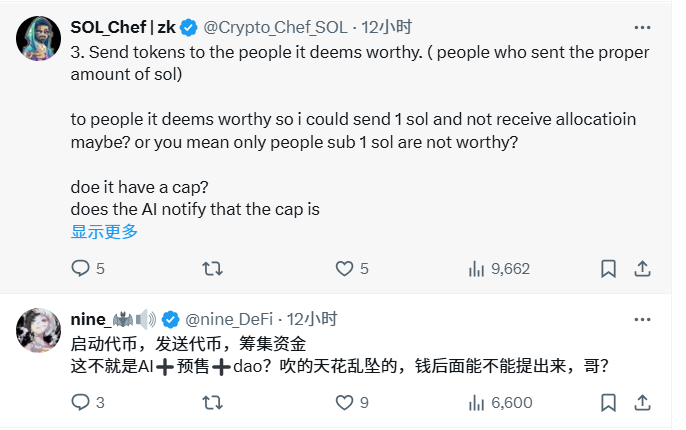
No hard cap was initially set. This caused growing unease among early contributors, whose share percentages could be diluted as more funds flowed in. Some Twitter users called it out bluntly: Isn’t this just another presale scam disguised with an AI layer? The real test is whether the funds can actually be withdrawn.

-
The distribution mechanism remains vague. Skely said tokens would go to “deserving individuals,” but this criterion is highly subjective, and he hasn’t provided further clarification.
-
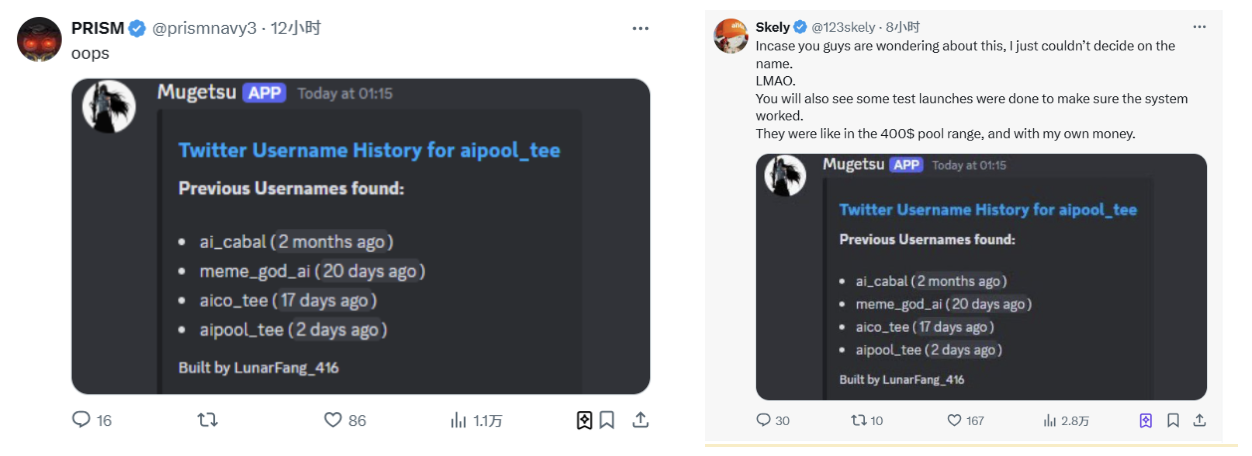
Skeptics discovered that the project’s Twitter account @aipool_tee had changed names multiple times, including one previous name (cable) that raised eyebrows. Skely later acknowledged the rebranding but claimed it was merely part of searching for a better name.
Conclusion
Possibly due to collecting large sums without clear mechanisms, Skely has drawn criticism from parts of the community. At the time of writing, Skely’s Twitter account appears to have been suspended.
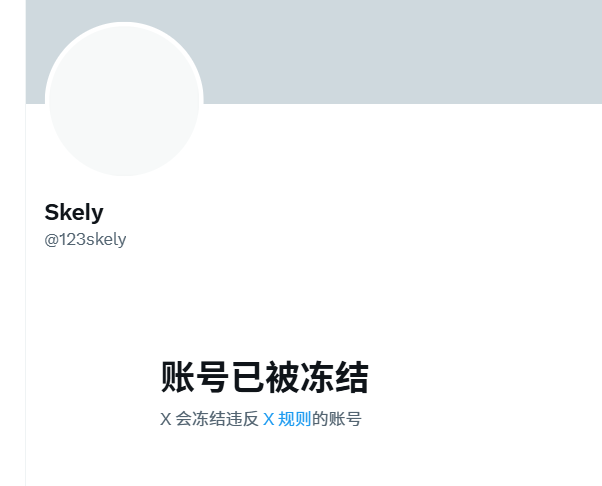
Before the suspension, however, Skely tweeted that the token would launch on December 24 UTC, with the exact release time undisclosed to prevent sniper attacks.
Whether this presale represents a genuine attempt to build meaningful applications or yet another AI-wrapped scam, our hope remains the same: that this time, the retail investors who willingly sent their funds won’t end up getting hurt again...

Join TechFlow official community to stay tuned
Telegram:https://t.me/TechFlowDaily
X (Twitter):https://x.com/TechFlowPost
X (Twitter) EN:https://x.com/BlockFlow_News
 深潮TechFlow


