








Placeholder partner: Don't set excessively high expectations for bull markets; preserving profits is the key.
TechFlow Selected TechFlow Selected
Placeholder partner: Don't set excessively high expectations for bull markets; preserving profits is the key.
Some asset prices still have room to rise 2-5 times or even higher before reaching their peak.
 Navigating Web3 tides with focused insights
Author: Chris Burniske, Partner at Placeholder
Translation: 1912212.eth, Foresight News
If a friend reaches out to you asking about Bitcoin, Ethereum, and other cryptocurrencies, it’s not easy to guide them—especially given the current market (BTC nearing $100K). It becomes even harder when they’re inexperienced, novice investors. Below are some lessons I’ve learned from over a decade of observation.
Make sure they understand that their actions are ultimately their own responsibility. You may have more experience and knowledge, but that doesn’t mean you’re always right. Nobody fully understands everything happening in this market. Anyone who claims otherwise is lying.
You can try explaining which phase of the market cycle we’re currently in. From my perspective, we’ve already been in this bull market for two years. (The bottom in the chart below is November 2022.)
Measured from the lows two years ago, BTC has risen over 6x, ETH over 4x, and SOL over 30x.
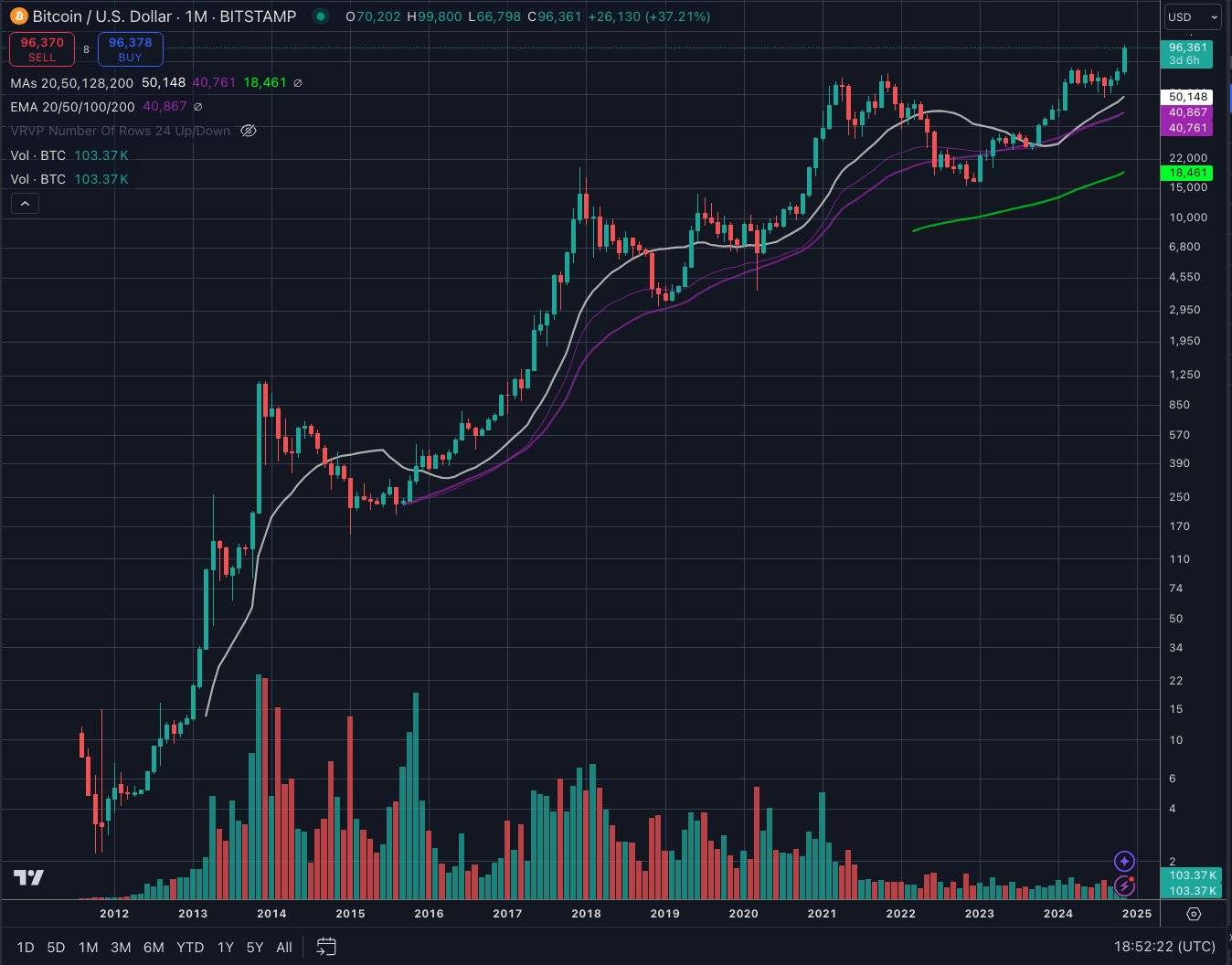
The harsh truth is that as token prices rise, attention grows—and that attention eventually turns into buying power. The more prices go up, the more people focus on potential future returns. But generally, the later we enter this “attention cycle,” the worse our position becomes.
The best time to enter is often when nobody is paying attention—but that was two years ago. So what do you do when they’re eager to buy now, even if timing isn’t ideal?
Keep it simple: Personally, if they’re beginners, I tend to recommend holding a balanced allocation of BTC, ETH, and SOL (50/25/25%), with any additional risk taken entirely on their own. At the very least, if they mess up their “entry and exit” timing, they’ll still preserve some capital. If they want to invest in smaller-cap tokens, encourage them to study first and keep such allocations under 10% of their total portfolio to limit risk.
From current entry prices, if their investment doubles, encourage them to withdraw their initial principal—locking in profits. Then, if their funds triple, they could cash out entirely, or, if they’re willing to take more risk, withdraw the doubled profit and keep the original principal invested. But make sure they understand the extreme drawdowns that can occur during bear markets. (If they’re die-hard Bitcoin maximalists who never want to sell, that’s fine—but they must be prepared to face hardship at some point.)
Selling in bear markets is driven by panic, but exiting during bull markets is psychologically much harder. Sometimes they might resent you for advising an early sale, but they’ll thank you later.
They also need to be cautious: if after taking profits they can’t resist re-entering the market and reinvesting those gains, they risk falling into FOMO—usually leading to negative outcomes.
Because if the market suddenly crashes, they might end up owing taxes on realized gains that exceed the value of the assets they actually have left—a situation that happens all too often.

Every crypto asset sale is a taxable event—even swapping one crypto for another. Once I start realizing gains, I plan to park the proceeds in a principal-protected, interest-bearing account within traditional finance (TradFi) for 12 to 18 months. High-yield crypto stablecoin accounts don’t count as cash preservation because they still carry crypto market risk; leverage built up during the bull run could wipe you out. First, I’ll settle my tax liabilities, then only later begin searching for new investment opportunities—typically when others are panicking and irrational, or ideally, when market excitement fades and apathy sets in (often 12+ months after the peak).
While exchange-traded funds (ETFs) and potential sovereign purchases may suggest Bitcoin (BTC) won’t suffer a brutal bear market again, every bull run brings endless narratives justifying absurdly high price targets—or claiming there will be no bear market at all.
"Super cycles" are invariably collective delusions.
I can see why the cycle might peak in Q4 2025, and I can also see arguments for it extending and breaking the four-year pattern. While we may consolidate after the next U.S. presidential inauguration, I don’t buy the idea that the cycle itself is shortening. That’s just bear market PTSD talking.
That said, structurally, anything that grows 100x is prone to an 80–90% correction at some point—mainly due to massive profit-taking.
If SOL reaches $800 in this cycle, it could fall to $80–$160 in the next bear market (say, by 2027). So someone who bought SOL at $240 and holds through the next bear market will lose money. It’s hard for people to grasp this amid bull market euphoria, but since you’ve lived through it, you now understand—and can teach them :)
At current prices (SOL already up over 30x from its lows), no one can get rich overnight or achieve astronomical returns anymore. But they’ll still see others making big money, so temptation is strong. If you tell them not to buy and instead wait—because the "final crash" will bring prices below current levels—they’ll feel pain, knowing that depending on the asset, prices might still rise 2x, 5x, or even more before peaking. So everything remains highly uncertain.
One final point: Many inexperienced investors think more in terms of dollars ($) rather than multiples (X) or percentages (%). For example, if you say SOL could reach $1,000, they think: Wow! That’s an extra $760 per SOL! But they fail to realize that going from $8 to $240 was a 30x gain, while going from here to $1,000 is only a 4x increase. For investors, truly understanding this difference is crucial.
Join TechFlow official community to stay tuned
Telegram:https://t.me/TechFlowDaily
X (Twitter):https://x.com/TechFlowPost
X (Twitter) EN:https://x.com/BlockFlow_News
 @placeholdervc






