Qiao Wang: The crypto inflection point has arrived, and the industry is entering its best moment
TechFlow Selected TechFlow Selected
Qiao Wang: The crypto inflection point has arrived, and the industry is entering its best moment
Qiao believes now is the best time to move into cryptocurrency.
 Navigating Web3 tides with focused insights
Compiled & Translated: TechFlow
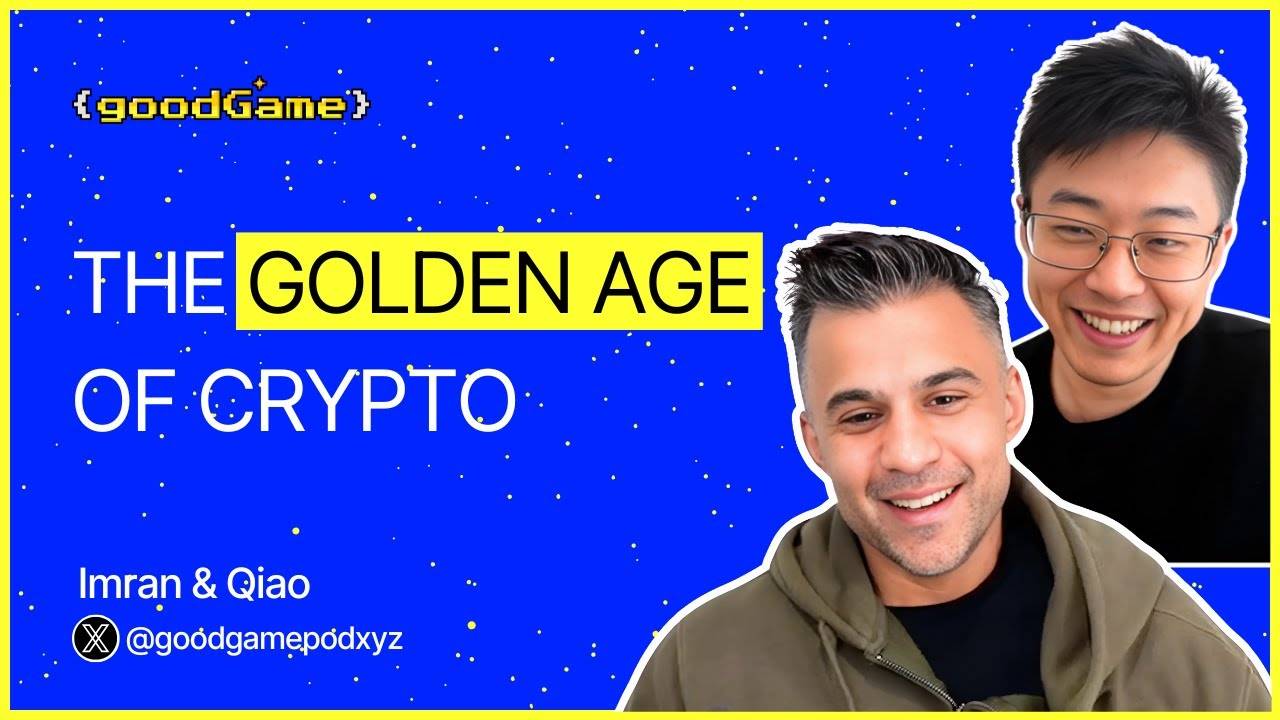
Guest: Qiao Wang, Customer Support at @alliancedao
Host: Imran Khan, Founder of Support at @alliancedao
Podcast Source: Good Game Podcast
Original Title: The Golden Age of Crypto | EP 65
Release Date: November 15, 2024
Background Information
At the beginning of the podcast, Imran and Qiao reflect on their conversations from 2017 or 2018 about when the "final boss" would appear. Imran believes they may have already defeated this "final boss"—a U.S. president who fully supports cryptocurrency. Nevertheless, Qiao remains cautious, noting that some members of Congress still oppose crypto products.
Imran further shares his current mindset, saying he feels excited every day and no longer checks his phone or market movements. He mentions not having felt this level of excitement in the past two years. In contrast, Qiao admits to staying attentive to market volatility and regrets missing an opportunity to buy Tesla during election night. They discuss how, during a bull market, many assets rise simultaneously, which can leave investors confused and struggling to make decisions.
Peanut and Trump's Victory
-
Qiao and Imran explore why Binance listed “Peanut.” Imran shares information he received from a major exchange, explaining that Binance is adjusting its positioning—shifting from infrastructure toward low-market-cap new tokens to give users future wealth opportunities. He notes that although Peanut initially had a $15 million market cap, it holds significant potential, similar to “Neiro,” which quickly rose to a $1 billion valuation after listing.
-
Qiao recalls their discussion six months ago, criticizing how many centralized exchanges list high-FDV (fully diluted valuation) tokens, leading users to lose money post-listing—a practice that ultimately harms the exchanges themselves. Imran agrees, believing Binance’s strategic shift is correct and expects other exchanges to follow suit.
-
When discussing their portfolios, Imran jokes that 95% of his holdings are meme coins, prompting Qiao to express disapproval, calling such allocations unwise. They also touch on AI-related tokens, with Imran admitting unfamiliarity with some projects.
AI Tokens
-
Imran states that he sees now as a pivotal moment for AI tokens, which are forming a distinct subcategory akin to cultural or animal-themed tokens. He believes AI tokens will perform strongly in the market.
-
Qiao highlights the speculative nature of many tokens, suggesting most are simply “pump coins.” Imran agrees, joking that if a token isn’t a pump coin, it might just be a joke. However, he adds that if a token survives market testing, it becomes “battle-tested” and thus worthy of investment.
-
Qiao raises a question: Why don’t exchanges list gold-related tokens, given gold’s strong liquidity?
-
Imran explains that gold may be better suited for perpetual futures (perps) rather than tokens. They discuss various AI tokens, with Qiao observing high trading volumes and suggesting centralized exchanges should prioritize listing these more liquid options.
"DAOS.fun Could Be the Next Big Trend"
-
Imran suggests DAOS.fun could become the next big trend. He recalls noticing the project early but not taking it seriously at the time. He mentions several projects he has observed—Luna, Virtual Goat, and Far Coin—and shares insights, emphasizing these aren't investment recommendations.
-
Imran believes platforms like DAOS.fun could define the next wave, comparing them to early Crypto Punks when NFT awareness was just rising. He notes that ai16z once reached a $100 million market cap before falling back to $10–15 million, which gives him optimism about DAOS.fun’s future trajectory.
-
Qiao confirms Imran’s point, asking whether DAO tokens represent the emerging trend. Imran affirms this, highlighting DAOS.fun as an incubator platform backed by a powerful team.
Advanced Insights on ai16z
-
Imran shares insider-level details about ai16z, including conversations with Shah, a key figure behind the project. Recently, they held a call or Twitter Space with Dao Zafan’s Miao and Bao. During the session, Imran raised numerous questions due to confusion about the space’s long-term direction.
-
Imran offers high-level observations: AI bot automation isn’t mature yet, but he anticipates major progress within the next two to four months—when bots could autonomously control private keys and conduct transactions on crypto networks.
-
He emphasizes that ai16z team members possess strong research backgrounds in both AI and crypto. He observes that many founders typically have skill sets composed of roughly 70% crypto knowledge and 30% AI expertise. If they can’t answer AI-related questions, he argues, their understanding is insufficient. Therefore, Imran believes ai16z strikes the right balance—perhaps 70% AI and 30% crypto, or 60%-40%—which aligns well with building a top-tier AI-crypto startup.
What Changes After Trump Wins?
-
Qiao notes everyone is wondering what changes will come with the new president. He considers this the top-of-mind issue for people.
-
Imran shares his view: For the past decade, crypto discussions centered around defeating the “final boss”—a pro-crypto president. Now, it seems that battle has been won. While certain factions in Congress and the Senate still resist crypto products, overall progress has been substantial.
-
He points out that recent regulatory shifts have made launching tokens in the U.S. easier, allowing founders to focus more on product development rather than getting bogged down in complex governance structures. Imran sees this as a positive change, enabling founders to concentrate on user needs and innovation.
-
Qiao agrees but urges caution, questioning whether they’ve truly seen the final boss. Imran acknowledges the concern but counters that major institutions like BlackRock are actively investing in Bitcoin—an indicator of shifting tides. He also references Trump’s recent ICO, which raised modest funds but remains an interesting phenomenon.
-
Finally, Imran believes Trump’s election will positively impact founders, despite ongoing market uncertainty. Qiao seeks deeper insight into specific implications for founders under the new administration.
Shifts in Market Sentiment
-
Qiao stresses that the most critical shift is governments becoming more welcoming toward crypto founders—a reversal from the previous three years, during which the number of U.S.-based crypto startups plummeted. According to their data, the proportion dropped from 80% to 20%. He underscores how political climate heavily influences crypto entrepreneurship and recalls stating on election night that America’s crypto fate would be decided that day.
-
Qiao believes the new administration will restore confidence among founders who previously avoided crypto due to political hostility—especially those in the San Francisco Bay Area. Over recent years, the region’s startup culture has shifted from crypto to AI, with AI entrepreneurs now occupying former crypto hacker houses.
-
Imran elaborates, recounting a conversation with their lead engineer Carter. Carter participates in many AI groups in San Francisco and noticed crypto hacker spaces have nearly died out, now dominated by AI developers. When Imran asked if any crypto projects were still active, he found only a few highly technical ones remained—the average crypto founder had vanished.
-
Qiao adds that many startups they supported abandoned their products over the past two years, most based in San Francisco. He attributes this to intense peer pressure. He recounts one founder calling him before pivoting, expressing frustration that her peers were working on world-changing projects while she felt stuck building “speculative” or “casino-like” products.
America Will Once Again Become the Center of Crypto
Qiao and Imran discuss the potential impact of the new government on the crypto industry, particularly the possibility of the U.S. reclaiming its position as the global center of crypto.
-
Qiao expresses confidence that within four years, the U.S.—especially New York—will reestablish itself as the global hub for crypto. He believes domestic founders will be more open to crypto development, and international founders will be more inclined to launch ventures in the U.S.
-
Qiao also suggests that if Trump fires Gary Gensler on Day One and appoints a crypto-friendly Treasury Secretary, it would bring positive change. He anticipates new legislation on stablecoins, securities law, token issuance, and crowdfunding—all helping unlock novel use cases. Though change takes time, he believes effects will emerge quickly.
-
Imran then addresses the “Choke Point 2.0” issue: the lack of suitable banking infrastructure makes it hard for founders to open crypto accounts. They’re often forced to use fintech apps like Mercury, which impose restrictions on what types of products they can support. During application, they must classify themselves as fintech, not crypto, creating barriers for crypto entrepreneurs.
-
Imran notes this forces most products toward speculation and gambling, causing potential Silicon Valley founders to lose interest in non-speculative applications. This creates a vicious cycle where only gambling-related content dominates, further damaging crypto’s reputation.
-
Lastly, Imran says clearer regulatory frameworks are expected within the next year, potentially opening new opportunities for the industry.
Now Is the Best Time to Move Into Crypto
-
Qiao and Imran express optimism about the crypto industry in the coming years. Qiao emphasizes that their startups faced government crackdowns and challenges in recent years, making the new administration’s arrival energizing. He believes now is the ideal time to enter crypto—with full confidence and even excitement.
-
Imran brings up the concept of “luck,” stressing that for founders, the key is to work persistently in the right direction regardless of current conditions. By continuing to build in this space, good outcomes will eventually follow. He sees this as a pivotal moment—not just for them, but for all crypto founders.
-
Imran calls it the “golden age of crypto” and predicts the next four to five years will be transformative, possibly birthing unprecedented business models.
Crowdfunding and Tokenization of New Things
-
Qiao mentions they’ve onboarded a batch of startups centered around crowdfunding concepts for the next incubation cycle, especially ideas involving cross-domain crowdfunding and tokenizing novel assets. He notes that historically, crowdfunding focused on popular projects like tokenized memes, but many other things can be tokenized. Thus, amid regulatory shifts, they’ve made significant investments in these emerging startups.
-
Imran adds that almost any project with substance can be crowdfunded. He feels optimistic about the new cohort of founders, believing this will allow more users previously unfamiliar with crypto to enter the ecosystem. Their positive outlook on crowdfunding and tokenization reflects confidence in crypto’s future and a desire to attract new users through innovation.
Crypto Awareness and Adoption
-
Imran expresses hope to shift external perceptions of crypto, noting that when collaborating with founders, many traditional industries hold negative views. For example, gaming, creator art communities, and sports teams often reject crypto. He believes this divide reflects a broader gap between the crypto world and other sectors.
-
Qiao offers a counterpoint, mentioning that while watching Premier League football, he noticed OKX branding on Manchester City’s jerseys—indicating some sports teams are partnering with crypto brands. While Imran argues brand partnerships differ from actual crypto usage, Qiao responds that tokenizing sports teams requires openness from those teams in the first place.
-
Imran concedes this is a promising first step and suggests more innovative products may emerge as regulations evolve. He expresses excitement about the potential of crypto products and references Coinbase developments, hinting that the industry is moving forward. This dialogue reflects their hopes for greater crypto adoption and improved public image through collaboration and innovation.
Coinbase Developments
-
Qiao shares that two weeks before the election, he managed his parents’ retirement portfolio at $160 per share by purchasing Coinbase stock. Now, the price exceeds $300, leading his parents to believe he’s made substantial gains in crypto.
-
Imran shares a similar story—he once advised investing his mother’s retirement funds in Coinbase and recalls discussing earlier how Coinbase might outperform Bitcoin. Qiao jokes that now Imran’s mother also believes he’s gotten rich.
-
Imran humorously recounts his mother asking after Trump’s win why Coinbase’s price hadn’t gone up. He explained markets close at night and prices don’t react instantly. These interactions reveal their understanding of crypto market dynamics.
-
Toward the end of the conversation, they discuss investor expectations around the upcoming presidential inauguration. Imran believes it’s now market consensus—many are waiting for this event to decide whether to sell Coinbase shares.
-
Qiao advises holding at least until inauguration, reflecting their attention to market timing and judgment of future trends.
Future Predictions for Tech Stocks
-
Qiao mentions awaiting macroeconomic analysis from Jack Miller. Miller recently expressed optimism about tech stocks in an interview, which bodes well for Bitcoin’s growth.
-
Qiao believes economic conditions remain healthy with no signs of recession. He sees Trump’s policies as supportive of economic recovery—a positive signal for the next three to six months.
-
However, Qiao voices medium-term concerns about inflation and recommends monitoring it closely next year. He suggests investing in commodities as a hedge against inflation risks.
Inflation and Commodity Investments
-
Qiao discusses his copper investments, viewing copper as an effective inflation hedge. He links copper demand to AI data centers, which require increasing power. Thus, Qiao sees copper not only as an inflation hedge but also tied to long-term AI trends.
-
Imran asks whether copper is the best way to invest in AI beyond holding AI stocks. Qiao agrees and further mentions uranium as another option related to nuclear power plant construction.
-
On energy stocks, Qiao says he researched them months ago but didn’t find compelling investment opportunities, especially among utility companies. He notes most digital firms are government-backed and regulated, making him cautious about investing in them.
Thoughts on American Politics
-
Imran delves into his views on U.S. politics and society. Reflecting on lifelong experiences with war and economic hardship, he expresses concern about employment, wage stagnation, and rising living costs. He says it feels like being trapped in perpetual debt.
-
Imran mentions considering relocating abroad to provide a more organized and efficient environment for his children. Yet, he resonates with JD Vance’s perspective, appreciating Vance’s emphasis on “America First” and opposition to endless wars. He finds Vance’s background relatable to ordinary Americans, lending credibility to his views.
-
Imran feels conflicted about the future—wondering whether America is entering a new phase capable of building a better society for millennials and Gen Z, or whether surface-level changes mask enduring globalist elites still pulling the strings.
Hopes for a New America
-
Qiao expresses support for JD Vance, seeing him as a trustworthy leader. He also notes his own evolving view of Trump. Both feel optimistic about small-government and deregulation ideals, believing these will yield higher efficiency and better governance.
-
Imran voices dissatisfaction with the current political system, especially conflicts of interest. He criticizes the close ties between government officials and large corporations, arguing this undermines public voice and power. Citing Elon Musk, he stresses regulation should start from the grassroots—not be managed by individuals rotating between government and corporate roles.
-
Qiao and Imran both hope for a new political direction—one that breaks the old elite systems and fosters a more transparent, efficient government. Their hopes center on leaders who can drive economic reform, reduce deficits, and improve governance structures.
Predictions for Future Politics
-
Imran notes that millennials and Gen Z—especially young leaders like JD Vance and Vivek—are gradually reclaiming power. He believes Vance’s role as vice president could lay the groundwork for a future presidential run.
-
Qiao shares optimism about the political landscape, suggesting Vivek might run for president in 2028. Both are excited by the rise of younger leaders and believe this will bring fresh changes and opportunities to America.
-
Discussing Indian influence in global politics, Imran humorously notes growing Indian presence in the UK, referencing achievements of Indian-origin politicians. They touch on historical India-UK relations and acknowledge India’s rising prominence in economics and technology.
Emerging Crypto Apps and Products
-
Imran asks Qiao about his experience in crypto, shifting the discussion toward crypto products and revealing their shared interest in technological and financial innovation. Overall, this dialogue reflects their positive outlook on future politics and anticipation of transformative change led by a new generation of leaders.
Tribe.run Development
-
Imran and Qiao discuss emerging crypto applications, focusing on a platform called "Tribe.run." Imran expresses interest, seeing it as an innovative alternative to existing social platforms like Facebook and Friend.tech.
-
Token System: Users purchase access to creators via tokens instead of traditional keys. This allows more flexible participation without relying solely on expensive key prices.
-
Limited Interaction: The platform enables only the top 12 token holders to chat directly with creators, adding exclusivity and scarcity to interactions.
-
Pay-to-Ask: Users can pay fees to ask questions without needing to buy tokens, lowering entry barriers.
-
Divisible Tokens: Users can buy partial tokens, making participation accessible even for those unable or unwilling to afford full token prices.
-
Imran sees Tribe.run’s experiment on Solana as a fresh approach already attracting loyal users. He remains optimistic about its future potential and wider adoption.
-
Qiao mentions using the app but became frustrated after an update prevented him from sending messages. They recall competitive bidding dynamics, with Imran noting Qiao stopped using the app after losing a bid competition.
Features of "Defined" Mobile App
-
Imran introduces a new app he’s recently adopted—DeFi Mobile App—and says he now relies entirely on it for discovering new tokens and tracking trading data. He highlights its usefulness in daily crypto activities.
Key Features of DeFi Mobile App:
-
Comprehensive Data Access: Imran emphasizes the app’s effectiveness in researching and analyzing new tokens, meeting his mobile crypto trading needs.
-
User Feedback: Imran mentions receiving audience feedback after negatively reviewing another app (Deck Screener), prompting him to refrain from direct criticism. This shows his respect for user opinions and willingness to adapt communication.
-
Imran's evolution reflects his exploration of emerging apps and attention to user experience, mirroring the fast-paced nature of the crypto space and evolving user demands. His positive review of DeFi Mobile App signals openness to new tools and determination to find better solutions in crypto trading.
How to Turn $100K into $10M
-
Imran and Qiao explore strategies for turning $100,000 into $10 million. Imran outlines several approaches, while Qiao expresses skepticism about feasibility.
Imran’s Strategy:
-
Dive Deep into New Tokens: Imran stresses total immersion in the crypto market. He notes many new tokens (“shitters”) can surge rapidly, requiring constant vigilance.
-
Leverage Information and Intuition: He uses tools like Pump Pro to track new tokens and makes buying decisions based on market trends and meme narratives. He believes intuition plays a crucial role in token selection.
-
Phased Investing:
-
Short-Term High-Risk Bets: Target low-market-cap tokens and sell once they reach a certain valuation threshold.
-
Long-Term Stable Holdings: After securing profits, shift toward larger, more stable tokens. For instance, he cites tokens with $80–90 million market caps that still have room to grow.
-
-
Navigate Market Noise: Imran believes market noise actually makes meme coin investing easier by uncovering overlooked opportunities.
Qiao’s View:
-
Qiao doubts the practicality of turning $100K into $10M. He argues achieving this requires full-time commitment and refined intuition. He notes:
-
High-Risk Play: Invest the entire $100K into small-cap tokens hoping for a 10x return, turning $100K into $1M.
-
Move to Large-Cap Tokens: Once reaching $1M, transition into larger tokens (e.g., $100M+ market cap), as opportunities in micro-caps diminish at higher capital levels.
The State of NFTs and Their Communities
Imran’s Perspective:
-
Bullish on Ricardios: Imran expresses strong enthusiasm for the Ricardios community, calling it “a cult.” He believes powerful NFT communities often exhibit cult-like loyalty and cohesion.
-
Market Trends:
-
He names influential NFT communities like Pudgy Penguins and Crypto Punks, asserting their significance in the NFT space.
-
He references Morad’s NFT list, which may include other noteworthy projects.
-
-
Thoughts on Malaysia: Imran sees Malaysia as one of the strongest NFT projects today, with many others being spin-offs. He participates in multiple Telegram groups and observes numerous projects orbiting around Malaysia.
-
Ethereum vs. Solana: Imran estimates speculative capital in NFTs is split ~70% on Solana and ~30% on Ethereum. He notes acquiring speculative capital for NFT projects is challenging and riskier.
-
Specific Projects:
-
He mentions NFT projects based on SPX 6900 and Harry Potter-inspired Proto Gremlins.
-
He also highlights legacy NFTs like Crypto Punks and Pudgy Penguins, which retain strong influence in the market.
-
Qiao’s View:
-
Qiao takes a more conservative stance on the NFT market, hinting at potential volatility. He mentions his plan to buy a Cybertruck, which could affect his investment choices.
Year-End Price Predictions
Imran’s Outlook
-
Bitcoin Prediction: Imran is highly bullish on Bitcoin’s future. He bets $500 that Bitcoin will surpass $100,000 by 2026. He calls it a “simple bet” and believes this target is achievable in the near term.
-
Market Dynamics: He notes large investors (like Taylor) recently poured massive sums ($200 million) into Bitcoin, signaling growing market confidence.
-
View on Ethereum: While optimistic about Bitcoin, Imran remains uncertain about Ethereum and Solana’s future prices. He believes their trajectories depend on multiple factors, including tech upgrades and market demand.
Qiao’s Outlook
-
Bullish on Bitcoin: Qiao is also optimistic about Bitcoin’s short-term performance, even suggesting it could break $100,000 next month—or possibly next week.
-
Focus on Ethereum: Qiao acknowledges Ethereum’s tech and ecosystem but points out a shortage of key developers and builders, which may hinder its future growth.
Outlook for Ethereum 3.0
-
Imran and Qiao dive deep into crypto market dynamics, especially the future paths of Bitcoin and Ethereum, alongside personal investment experiences.
Imran’s View:
-
Bitcoin Forecast:
-
Imran remains bullish on Bitcoin’s future, betting $500 it will exceed $100,000 by 2026. He sees this as a straightforward wager, confident in Bitcoin’s upside potential.
-
-
Market Dynamics:
-
He notes recent large inflows into Bitcoin (e.g., Taylor’s $200M), indicating growing confidence that could push prices higher.
-
-
Thoughts on Ethereum:
-
Despite Bitcoin optimism, Imran is uncertain about Ethereum and Solana’s future. He believes their performance hinges on tech progress and market demand.
-
Qiao’s View:
-
Bullish on Bitcoin:
-
Qiao shares confidence in Bitcoin’s short-term momentum, expecting it to surpass $100,000 soon—possibly within weeks.
-
-
Focus on Ethereum:
-
Qiao recognizes Ethereum’s tech and ecosystem but highlights a lack of essential developers and builders, which may limit its long-term prospects.
-
Personal Investment Experiences:
-
Cybertruck Purchase:
-
Both share their Cybertruck buying experiences. Imran felt scammed after the price dropped shortly after his purchase. In contrast, Qiao is satisfied with his decision but regrets not buying Cyber Bees, reflecting differing emotional responses to investment outcomes.
-
Will ETH Rebound?
Qiao’s View:
-
Execution Matters: Qiao stresses Ethereum’s future depends on execution of existing plans. He references Justin Drick’s opinion, questioning whether internal consensus has been reached.
-
Historical Performance: He notes Ethereum failed to execute quickly over the past decade, putting it at a competitive disadvantage.
Imran’s View:
-
Network Effect: Imran highlights the enduring strength of the Ethereum Virtual Machine (EVM), with about 60–70% of developers still building on EVM, giving him optimism about Ethereum’s future.
-
Execution Challenges: He agrees with Qiao that Ethereum moves slowly in rolling out new features and must achieve broad consensus to advance effectively.
Philosophical Differences:
-
Ethereum vs. Solana: Qiao and Imran discuss fundamental philosophical differences. Solana embraces “move fast, fail fast,” while Ethereum adopts a more conservative stance prioritizing stability and security.
Other Discussions:
-
Research-Oriented Approach: Imran notes Ethereum’s emphasis on research and community feedback, advocating for multiple feedback loops and debates to inform better decisions.
-
Vitalik’s Article: Imran references Vitalik Buterin’s article on prediction markets and information finance, highlighting Ethereum’s ongoing exploration of new ideas and technologies.
Vitalik’s Article – “From Prediction Markets to Information Finance”
-
Qiao and Imran discuss Vitalik Buterin’s article “From Prediction Markets to Information Finance,” sharing thoughts on Vitalik’s product perspectives.
Qiao’s View:
-
Disconnected from Users: Qiao feels Vitalik’s understanding appears disconnected from real user needs. While respecting his views, he believes Vitalik’s insights on product development may not align closely with actual users.
Imran’s View:
-
Respectful but Disagreeing: Imran respects Vitalik and acknowledges the value of his technical contributions. However, he believes Vitalik should delegate more authority to actual product builders rather than speculate excessively on product design.
Core Discussion:
-
Separating Product from Technology: Both agree that while Vitalik’s technical insights are profound, real product developers understand user needs and market dynamics better when it comes to product design.
Year-End Predictions for ETH and Solana
-
Imran poses a question about future forecasts for Ethereum and Solana, hinting at their reflections on the competitive potential and development paths of these two blockchain platforms.
Qiao’s Predictions:
-
Solana: He suggests Solana could reach $420.
-
Ethereum: Qiao predicts Ethereum will hit $3,314.
-
Bitcoin: He expects Bitcoin to reach $96,000.
Join TechFlow official community to stay tuned
Telegram:https://t.me/TechFlowDaily
X (Twitter):https://x.com/TechFlowPost
X (Twitter) EN:https://x.com/BlockFlow_News
 深潮TechFlow